
News
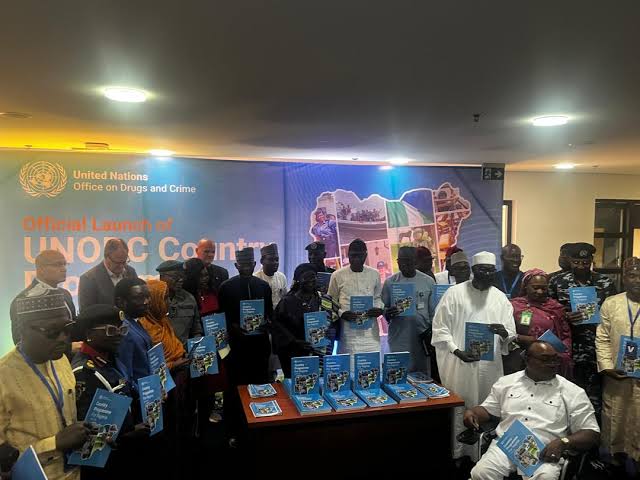
UNODC: Human Trafficking, Assault on Human Dignity Not Just A Crime

UNODC: Human Trafficking, Assault on Human Dignity Not Just A Crime
By: Michael Mike
The United Nations Office on Drugs and Crime (UNODC), has described human trafficking as an assault on human dignity not just a crime.
Speaking at the 27th National Stakeholders’ Consultative Forum (NSCF) on Human Trafficking organised by the National Agency for the Prohibition of Trafficking in Persons (NAPTIP) on Wednesday in Abuja, the Country Representative of the UNODC in Nigeria, Cheikh Toure, while lauding Nigeria’s fight against Human trafficking, said: “Human trafficking isn’t just a crime, it’s an assault on dignity, a drag on development, and a threat to national security.”
Toure added that: “This forum remains a cornerstone of Nigeria’s national response to trafficking. It’s where policy meets practice, federal and state actors converging around a shared vision of a trafficking-free Nigeria.”
He noted that “the importance of a multisectoral, victim-focused, and relentless response,” while acknowledging the joint efforts of NAPTIP and UNODC under the “From Policy to Action” project, supported by the Swiss government.
He also lauded the DG of NAPTIP for her leadership role and also commended contributions from the Attorney General, of the federation, Lateef Fagbemi (SAN), state governments, development partners including the European Union (EU), France, Italy, Netherlands, Spain, International Organisation for Migration (IOM), the Economic Communities of West African States (ECOWAS), the International Centre for Migration Policy Development (ICMPD, and various Civil Society Organisations (CSOs) in the war against human trafficking.
The Attorney-General of the Federation and Minister of Justice, Lateef Fagbemi (SAN), who gave the keynote address, called on state’s Commissioners for Women Affairs to leverage on their strategic positions to advocate and influence state budgets and policies.
He said: “I urge Commissioners for Women Affairs across the country to leverage their strategic positions to advocate and influence state-level policies, budgets, and programmes that directly or indirectly impact trafficking and exploitation.
“Creation of a budget line for State Task Force activities is highly recommended as it would also guarantee the institutionalization of State Task Forces on human Trafficking in the states.”
In his words “The Federal Ministry of Justice remains committed to supporting NAPTIP through continuous policy formulation, legal reforms, strategic coordination, and high-level advocacy. Let me assure you that we will continue to work closely with NAPTIP and other partners to ensure that the legal and institutional frameworks for tackling trafficking remain dynamic, responsive, and effective.
The Swiss Ambassador to Belgium and NATO, Jacques Pitteloud, in his goodwill message also lauded Nigeria’s progress and reaffirmed Switzerland’s long-term support.
He called for international cooperation in addressing root causes of trafficking and commended NAPTIP’s efforts under the “From Policy to Action” project.
“Our partnership with Nigeria goes beyond financial contribution. It is built on trust, shared priorities, and joint ownership. We’re especially encouraged by the involvement of local governments, signaling a grassroots approach to combating trafficking,” Pitteloud said.
He also noted the development of a new dashboard and reporting hub, as well as the inclusion of critical actors like the Association of Local Governments of Nigeria (ALGON) in the national response.
Speaking earlier, the Director-General of the National Agency for the Prohibition of Trafficking in Persons (NAPTIP), Binta Bello, in her welcome address highlighted key achievements under the agency’s 5Ps strategy: Policy, Prevention, Protection, Prosecution, and Partnership.
She noted that over 7,000 victims have been rescued between 2022 and 2024, with 205 convictions secured within the same period.
She also announced the development of new digital tools to enhance data reporting, increased public awareness campaigns, the inauguration of over 200 Anti-TIP school vanguards, and the expansion of State Task Forces to 24 states.
“We are proud of the milestones achieved, from setting up the Human Trafficking Digital Centre in Katsina to revamping our training center with German support. Yet, the road ahead requires deeper collaboration and renewed commitment at all levels,” Bello said.
UNODC: Human Trafficking, Assault on Human Dignity Not Just A Crime


Nigeria Positions Itself for Global Space Leadership at Satellite Week 2026
Nigeria Positions Itself for Global Space Leadership at Satellite Week 2026
By: Michael Mike
Nigeria is set to sharpen its policy direction in the global space ecosystem as Nigerian Communications Satellite Limited prepares to host the 2026 Nigerian Satellite Week in Abuja.
The Managing Director of Nigerian Communications Satellite Limited, Jane Egerton-Idehen, disclosed this in a statement issued by the agency’s Head of Corporate Communications, Stephen Kwande, noting that the event will convene top government officials, regulators, and international stakeholders to shape the future of satellite governance and digital infrastructure.
Egerton-Idehen said the forum is coming at a critical time when countries around the world are strengthening their space capabilities as part of broader national development strategies.
According to her, satellite technology is increasingly linked to economic growth, national security, and digital connectivity, making strategic investments in space infrastructure a priority for many nations.
She explained that the conference is expected to attract high-level participation, including cabinet members, defence authorities, development finance institutions, and technology innovators from across Africa.
The NIGCOMSAT boss also highlighted Nigeria’s growing influence in global space policy, pointing to her emergence as Vice Chair of the Global Satellite Operators Association as a sign of the country’s expanding role in international satellite governance.
She further cited ongoing collaboration between Nigeria and the Kenya Space Agency as part of broader efforts to strengthen partnerships within Africa’s evolving space ecosystem.
Egerton-Idehen described the upcoming satellite week as both a reflection of Nigeria’s 20-year journey in satellite development and a strategic platform to define the country’s next phase in an increasingly competitive global space economy.
Nigeria Positions Itself for Global Space Leadership at Satellite Week 2026
Burundi Presses Nigeria to Resume Crude Oil Supply, Seeks Deeper Economic Partnership
By: Michael Mike
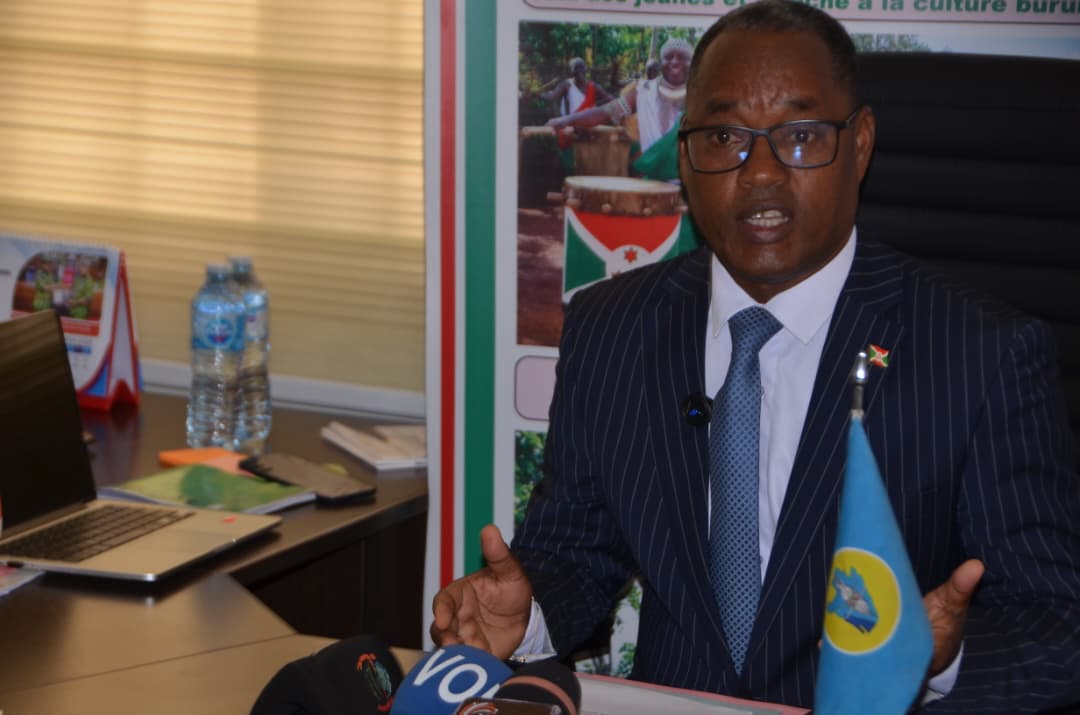
The Ambassador of Burundi to Nigeria, Edward Nduwimana, has urged Nigeria to urgently resume the supply of crude oil to his country, warning that the suspension of the long-standing energy arrangement has continued to impact Burundi’s ability to address its energy deficit.
Nduwimana made the appeal during an interaction with journalists in Abuja, where he also called for the immediate convening of the Permanent Mixed Commission for Cooperation between both countries to revive stalled agreements and unlock new economic partnerships.
Nigeria had supplied Burundi with about 45,000 barrels of crude oil per day under a bilateral arrangement that ran between 2008 and 2014 before the agreement was halted amid reforms in Nigeria’s petroleum sector.
The envoy said the arrangement had played a crucial role in stabilising Burundi’s energy supply and supporting economic activities, stressing that its suspension created a significant gap in the country’s energy needs.
“Burundi wishes to express its gratitude to the Nigerian people, through their institutions, for the support provided since 2008 through the supply of crude oil,” he said.
“This support helped mitigate the effects of the energy deficit in my country. We understand that the suspension that occurred in 2014 took place in a particular context, driven by the government’s desire to restructure the sector.”
Despite the interruption, the ambassador expressed confidence that Nigeria would consider restoring the cooperation in the spirit of African solidarity and mutually beneficial partnership.
According to him, discussions are already underway to revive the arrangement as part of broader efforts to deepen bilateral relations between the two countries.
Nduwimana stressed that reconvening the Permanent Mixed Commission for Cooperation in 2026 has become urgent, noting that the last session of the commission was held in Bujumbura in 2021.
He explained that the proposed meeting would provide a platform for both governments to review previous commitments, resolve outstanding issues and chart a new roadmap for cooperation.
“The second session will represent an important step in strengthening bilateral cooperation between Burundi and Nigeria,” he said.
The envoy added that the meeting is expected to drive concrete progress in key sectors including trade, education, tourism, mining and agro-industry.
He said the discussions would also focus on strengthening legal frameworks and sector-specific agreements needed to accelerate joint projects and investment flows.
“Our ambition is to achieve concrete commitments that deliver tangible results for our two countries and their populations,” Nduwimana added.
Beyond diplomatic engagement, the ambassador extended an open invitation to Nigerian businesses and investors to explore opportunities in Burundi, which he described as an emerging investment destination in East Africa.
According to him, Burundi serves as a strategic gateway to the regional market of the East African Community and offers promising prospects in sectors such as agriculture, mining, energy, infrastructure and tourism.
“Burundi is a stable country, open for business, and committed to improving its investment climate,” he said.
“We invite economic operators from the West African region in general, and Nigeria in particular, to explore these opportunities and establish lasting and mutually beneficial partnerships.”
The renewed push for cooperation signals Burundi’s determination to revive its energy partnership with Nigeria while expanding economic ties beyond oil into trade, investment and regional market access.
Burundi Presses Nigeria to Resume Crude Oil Supply, Seeks Deeper Economic Partnership
Former Kaduna governor El-Rufai loses mother
By: Zagazola Makama
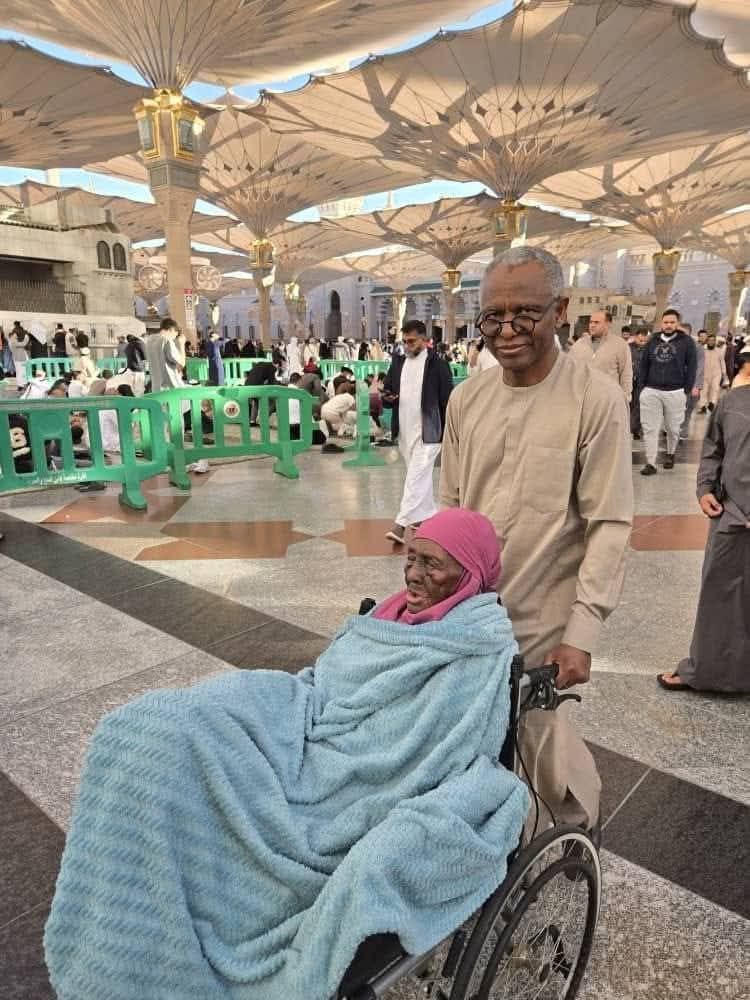
The former Governor of Kaduna State, Nasir Ahmad El-Rufai, has lost his mother, Hajiya Umma, who passed away on Friday.
The announcement of her death was announced by the Elrufai Family on Friday.
Family sources said the deceased had been battling age-related health challenges, which worsened in recent times.
According to the sources, her condition reportedly deteriorated further after she learned of the detention of her son by the Independent Corrupt Practices Commission (ICPC).
They noted that El-Rufai had been closely managing his mother’s health prior to her demise.
The family prayed for Almighty Allah to forgive her shortcomings and grant her Aljannatul Firdaus.
Former Kaduna governor El-Rufai loses mother


Easter: Church Targets Spiritual Renewal, Community Impact with Power-Packed Programme

NIGCOMSAT to Host Nigerian Satellite Week 2026 as Nigeria Marks 20 Years in Space Economy

Roger Federer’s Shock as DNA Results Reveal Myla and Charlene Are Not His Biological Children

THE PLIGHT OF FARIDA

FAILED COUP IN BURKINA FASO: HOW TRAORÉ NARROWLY ESCAPED ASSASSINATION PLOT AMID FOREIGN INTERFERENCE CLAIMS
-
 News2 years ago
Roger Federer’s Shock as DNA Results Reveal Myla and Charlene Are Not His Biological Children
-
Opinions4 years ago
THE PLIGHT OF FARIDA
-
 News11 months ago
FAILED COUP IN BURKINA FASO: HOW TRAORÉ NARROWLY ESCAPED ASSASSINATION PLOT AMID FOREIGN INTERFERENCE CLAIMS
-

 News2 years ago
EYN: Rev. Billi, Distortion of History, and The Living Tamarind Tree
-
 Opinions4 years ago
POLICE CHARGE ROOMS, A MINTING PRESS
-

 ACADEMICS2 years ago
A History of Biu” (2015) and The Lingering Bura-Pabir Question (1)
-

 Columns2 years ago
Army University Biu: There is certain interest, but certainly not from Borno.
-

 Opinions2 years ago
Tinubu,Shettima: The epidemic of economic, insecurity in Nigeria
