
News
UNODC: Human Trafficking, Assault on Human Dignity Not Just A Crime


UNODC: Human Trafficking, Assault on Human Dignity Not Just A Crime
By: Michael Mike
The United Nations Office on Drugs and Crime (UNODC), has described human trafficking as an assault on human dignity not just a crime.
Speaking at the 27th National Stakeholders’ Consultative Forum (NSCF) on Human Trafficking organised by the National Agency for the Prohibition of Trafficking in Persons (NAPTIP) on Wednesday in Abuja, the Country Representative of the UNODC in Nigeria, Cheikh Toure, while lauding Nigeria’s fight against Human trafficking, said: “Human trafficking isn’t just a crime, it’s an assault on dignity, a drag on development, and a threat to national security.”
Toure added that: “This forum remains a cornerstone of Nigeria’s national response to trafficking. It’s where policy meets practice, federal and state actors converging around a shared vision of a trafficking-free Nigeria.”
He noted that “the importance of a multisectoral, victim-focused, and relentless response,” while acknowledging the joint efforts of NAPTIP and UNODC under the “From Policy to Action” project, supported by the Swiss government.
He also lauded the DG of NAPTIP for her leadership role and also commended contributions from the Attorney General, of the federation, Lateef Fagbemi (SAN), state governments, development partners including the European Union (EU), France, Italy, Netherlands, Spain, International Organisation for Migration (IOM), the Economic Communities of West African States (ECOWAS), the International Centre for Migration Policy Development (ICMPD, and various Civil Society Organisations (CSOs) in the war against human trafficking.
The Attorney-General of the Federation and Minister of Justice, Lateef Fagbemi (SAN), who gave the keynote address, called on state’s Commissioners for Women Affairs to leverage on their strategic positions to advocate and influence state budgets and policies.
He said: “I urge Commissioners for Women Affairs across the country to leverage their strategic positions to advocate and influence state-level policies, budgets, and programmes that directly or indirectly impact trafficking and exploitation.
“Creation of a budget line for State Task Force activities is highly recommended as it would also guarantee the institutionalization of State Task Forces on human Trafficking in the states.”
In his words “The Federal Ministry of Justice remains committed to supporting NAPTIP through continuous policy formulation, legal reforms, strategic coordination, and high-level advocacy. Let me assure you that we will continue to work closely with NAPTIP and other partners to ensure that the legal and institutional frameworks for tackling trafficking remain dynamic, responsive, and effective.
The Swiss Ambassador to Belgium and NATO, Jacques Pitteloud, in his goodwill message also lauded Nigeria’s progress and reaffirmed Switzerland’s long-term support.
He called for international cooperation in addressing root causes of trafficking and commended NAPTIP’s efforts under the “From Policy to Action” project.
“Our partnership with Nigeria goes beyond financial contribution. It is built on trust, shared priorities, and joint ownership. We’re especially encouraged by the involvement of local governments, signaling a grassroots approach to combating trafficking,” Pitteloud said.
He also noted the development of a new dashboard and reporting hub, as well as the inclusion of critical actors like the Association of Local Governments of Nigeria (ALGON) in the national response.
Speaking earlier, the Director-General of the National Agency for the Prohibition of Trafficking in Persons (NAPTIP), Binta Bello, in her welcome address highlighted key achievements under the agency’s 5Ps strategy: Policy, Prevention, Protection, Prosecution, and Partnership.
She noted that over 7,000 victims have been rescued between 2022 and 2024, with 205 convictions secured within the same period.
She also announced the development of new digital tools to enhance data reporting, increased public awareness campaigns, the inauguration of over 200 Anti-TIP school vanguards, and the expansion of State Task Forces to 24 states.
“We are proud of the milestones achieved, from setting up the Human Trafficking Digital Centre in Katsina to revamping our training center with German support. Yet, the road ahead requires deeper collaboration and renewed commitment at all levels,” Bello said.
UNODC: Human Trafficking, Assault on Human Dignity Not Just A Crime



Troops recover five cattle rustle by Berom Militia in Plateau
By Zagazola Makama
Troops of Sector 5, Operation ENDURING PEACE, have recovered five cattle rustled by Berom Militia from a resident of Tenti Ratatat Village in Forop District, Bokkos Local Government Area of Plateau State.
The troops responded at about 0230 hours on Aug. 28 following a report that five cattle belonging to one Mallam Karimu had been stolen by suspected cattle rustlers.
According to sources, the troops immediately commenced search-and-rescue operations within the general area to track the perpetrators and recover the stolen livestock.
The operation led to the successful recovery of all five rustled cattle, which were subsequently handed over to the owner. Efforts are ongoing to apprehend the perpetrators, who reportedly fled before the arrival of the troops.
The recovery forms part of ongoing operations by Operation ENDURING PEACE to protect rural communities and livestock owners and prevent criminal elements from exploiting vulnerable farming and pastoralist settlements in Plateau State.
Troops have continued to intensify patrols and surveillance across the Bokkos axis to deny cattle rustlers and other criminal elements freedom of action.
Troops recover five cattle rustle by Berom Militia in Plateau
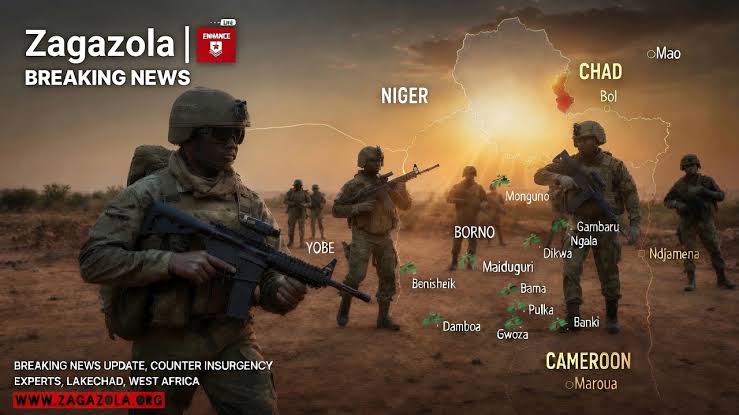
UPDATE: Heavy gunfire, explosions rock Niamey as reports of military mutiny emerge
By Zagazola Makama
Heavy gunfire and explosions rocked Niger’s capital, Niamey, from the early hours of Saturday, with intense clashes reportedly continuing around the Diori Hammani International Airport, the 101 Airbase and areas around the Presidential Palace.
The situation, according to security reports monitored by Zagazola, began at about 0230 hours local time and continued until around 0600 hours, although tension remained high in several parts of the capital thereafter.
Mortar fire and explosions were reportedly heard in the vicinity of the Presidential Palace, while electricity was cut in parts of the city. Security forces were also said to have blocked access routes leading to the Presidential Palace and the International Airport as they responded to the incident.
Reports indicated that reinforcements from Operation ALMAHAOU moved into Niamey from the direction of Ouallam, while other security formations were mobilised within the capital.
The most intense exchanges were reportedly concentrated around the 101 Airbase and the International Airport, both strategically important military and aviation facilities.
Conflicting accounts
The exact nature of the incident remained unclear as of Saturday, with conflicting accounts circulating on social media and among local sources. Some reports described the incident as a possible terrorist attack, while others suggested an internal military confrontation involving junior soldiers.
There were also unverified claims that the incident could represent an attempted counter-coup against the military authorities governing Niger under the National Council for the Safeguard of the Homeland (CNSP).
However, there was no independent confirmation that a coup or counter-coup had taken place.
Major international and regional news organisations had not, at the time of filing, independently corroborated claims of a military takeover or an organised attempt to overthrow the CNSP. Similarly, Nigerien authorities had yet to issue an official statement establishing the cause of the fighting, identifying those involved or providing casualty figures.
A prominent Hausa-language broadcaster in Niger, Mu Duba Mu Gani, however, reported that the incident was not a terrorist attack but an uprising involving young members of Niger’s Defence and Security Forces (FDS).
In a commentary circulated on social media, the broadcaster claimed that the young soldiers had rebelled against what they described as worsening insecurity, corruption, nepotism and poor treatment of Nigeriens under the CNSP administration.
According to the account, the soldiers were allegedly demanding changes in the way the country was being governed and had moved into parts of Niamey, resulting in heavy fighting.
The broadcaster further questioned whether the development could mark the beginning of the end of the CNSP’s rule, while acknowledging that it remained unclear whether the alleged mutineers had taken control of any strategic locations.
The claims, however, could not be independently verified by Zagazola News.
Strategic locations under security lockdown
The reported closure of routes around the Presidential Palace and Diori Hammani International Airport suggests that security forces were treating the incident as a major threat to strategic national installations.
The movement of reinforcements from Ouallam into Niamey also points to a significant mobilisation by the authorities to contain the situation. The reported fighting around the 101 Airbase is particularly significant because the area forms part of the capital’s broader military-security infrastructure and has previously featured in Niger’s counter-terrorism operations.
The airport area has also previously come under attack amid the worsening jihadist insurgency affecting Niger and the wider Sahel.
Niger facing mounting security pressure
The latest development comes as Niger continues to face significant security challenges from jihadist groups operating across the country’s western and southern regions.
The country has also experienced increasing political and diplomatic tensions since the military takeover of July 2023, which removed President Mohamed Bazoum from power.
The CNSP, led by Gen. Abdourahamane Tiani, has since consolidated its control over the country while withdrawing from several regional security and political arrangements and deepening cooperation with fellow Alliance of Sahel States members Mali and Burkina Faso.
The military authorities have repeatedly presented their administration as necessary to restore national sovereignty and defeat armed groups. However, persistent attacks and casualties among security personnel have continued to place pressure on the junta.
Situation remains fluid
Security assessments circulating following Saturday’s fighting have raised concerns about possible internal divisions within Niger’s security establishment. Nevertheless, claims of an imminent collapse of the CNSP or an approaching civil war remain speculative at this stage.
There is currently no verified evidence establishing that the reported clashes constitute a coordinated military coup, a counter-coup, or a broader armed uprising. Likewise, there has been no confirmed casualty figure or credible claim of responsibility for the explosions and gunfire.
The immediate priority for authorities is expected to be securing the Presidential Palace, airport, airbase and other strategic installations while determining the identity and objectives of those involved.
Any prolonged confrontation between rival elements of the security forces could have serious implications for Niger’s already fragile security environment and potentially affect neighbouring countries, particularly those sharing borders with Niger. For now, Niamey remains tense, with security forces deployed across key parts of the capital and access restrictions reported around strategic installations.
Zagazola News will continue to monitor the situation and provide updates as credible information emerges.
UPDATE: Heavy gunfire, explosions rock Niamey as reports of military mutiny emerge
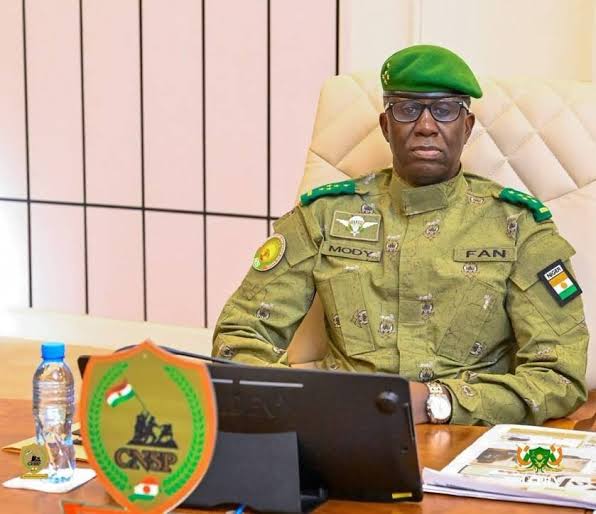
Niger: Mutiny tensions reportedly deepen within military in Niamey
By Zagazola Makama
Tensions have reportedly escalated within Niger’s military in the capital, Niamey, amid growing anger over heavy losses suffered by troops during recent operations.
According to security information obtained by Zagazola News, what initially began as a protest movement among some military personnel has reportedly evolved into a mutiny, leaving elements of the armed forces in a state of uncertainty.
The development is said to have created heightened tension around strategic locations in Niamey, including the airport area.
Sources said the Presidential Guard, reportedly acting on the orders of Niger’s military leader, Gen. Abdourahamane Tiani, is considering a response against military personnel in the airport area.
The reported standoff has raised concerns over the possibility of confrontation between members of the Nigerien armed forces.
The development comes amid continued security challenges facing Niger, particularly militant attacks and heavy casualties among government forces operating in parts of the country.
The situation in Niamey remains fluid, and details surrounding the reported mutiny, the number of personnel involved and the immediate cause of the confrontation could not be independently verified as of the time of filing this report.
Zagazola News will continue to monitor developments and provide updates as credible information emerges.
Niger: Mutiny tensions reportedly deepen within military in Niamey

Troops foil kidnapping attempt, rescue two victims in Plateau

Troops recover five cattle rustle by Berom Militia in Plateau

Troops investigate suspected Malicious poisoning of cattle in Plateau

Roger Federer’s Shock as DNA Results Reveal Myla and Charlene Are Not His Biological Children

THE PLIGHT OF FARIDA

FAILED COUP IN BURKINA FASO: HOW TRAORÉ NARROWLY ESCAPED ASSASSINATION PLOT AMID FOREIGN INTERFERENCE CLAIMS
-
 News2 years ago
Roger Federer’s Shock as DNA Results Reveal Myla and Charlene Are Not His Biological Children
-
Opinions5 years ago
THE PLIGHT OF FARIDA
-
 News1 year ago
FAILED COUP IN BURKINA FASO: HOW TRAORÉ NARROWLY ESCAPED ASSASSINATION PLOT AMID FOREIGN INTERFERENCE CLAIMS
-

 News2 years ago
EYN: Rev. Billi, Distortion of History, and The Living Tamarind Tree
-
 Opinions5 years ago
POLICE CHARGE ROOMS, A MINTING PRESS
-

 ACADEMICS3 years ago
A History of Biu” (2015) and The Lingering Bura-Pabir Question (1)
-

 Columns2 years ago
Army University Biu: There is certain interest, but certainly not from Borno.
-

 Politics1 year ago
2027: Why Hon. Midala Balami Must Go, as Youths in Hawul and Asikira/Uba Federal Constituency Reject ₦500,000 as Sallah Gift
