
News
US Invasion of Venezuela: ECOWAS Urges Restraint, Backs Dialogue

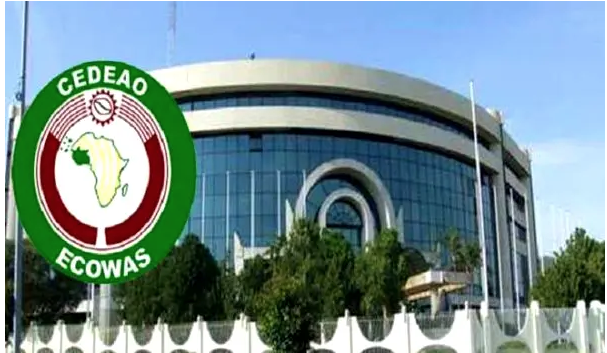
US Invasion of Venezuela: ECOWAS Urges Restraint, Backs Dialogue
By: Michael Mike
The Economic Community of West African States (ECOWAS) has expressed concern over the recent developments in the Bolivarian Republic of Venezuela, calling on all parties to exercise restraint and respect international law.
In a statement issued in Abuja on Sunday, ECOWAS acknowledged the right of states to combat international crimes such as terrorism and drug trafficking but stressed that such efforts must be carried out in line with established principles of international law.
The regional bloc reminded the international community of the obligation to respect the sovereignty and territorial integrity of all nations, as provided under Article 2(4) of the United Nations Charter.
ECOWAS said it fully aligns with the African Union’s position, articulated in a statement released on 3 January 2026, which urged restraint and encouraged inclusive dialogue among the people of Venezuela as a means of addressing the country’s challenges.
The statement comes amid heightened tensions in Venezuela following reports of foreign military actions and growing international reactions to the evolving security and political situation in the South American country. Venezuela has in recent years faced prolonged political instability, economic hardship, and international pressure, leading to sharp divisions both domestically and globally over how best to address the crisis.
ECOWAS reiterated its solidarity with the Venezuelan people and called on all states to respect Venezuela’s independence and territorial integrity. The bloc expressed support for efforts by Venezuelans to determine the future of their country through an inclusive and peaceful process.
The West African regional body joins a growing list of international and regional organisations advocating de-escalation and dialogue as tensions continue to draw global attention.
US Invasion of Venezuela: ECOWAS Urges Restraint, Backs Dialogue



NSCDC Deploys 3,000 Personnel Across Abuja for Independence Anniversary
By: Michael Mike
Commandant orders surveillance of malls, markets, motor parks, recreational centres, critical infrastructure
The Nigeria Security and Civil Defence Corps (NSCDC), Federal Capital Territory Command, has deployed 3,000 personnel across the Federal Capital Territory (FCT) as part of intensified security arrangements for Nigeria’s 66th Independence Anniversary celebrations.
The deployment, ordered by the FCT Commandant, Dr. Olusola Odumosu, is designed to strengthen security, maintain law and order and protect lives and property before, during and after the anniversary celebrations.
The Command said the operation would cover strategic locations and areas considered vulnerable to security breaches, including shopping malls, markets, motor parks, amusement and recreational centres, as well as Critical National Assets and Infrastructure (CNAI) across the nation’s capital.
Personnel drawn from specialised units of the Corps—including the Arms Squad, Female Strike Force, Crack Squad, Agro Rangers, Chemical, Biological, Radiological and Nuclear Explosives (CBRNE) Unit and Counter-Terrorism Unit—are participating in the operation.
The Commandant has also activated the Corps’ undercover operatives for covert surveillance and intelligence-gathering, with particular attention being paid to locations regarded as potential hideouts for criminals.
According to the Command, uncompleted buildings and other identified black spots across the FCT are also being monitored as part of measures to prevent criminal activities and possible security breaches.
Dr. Odumosu has directed Area Commanders and Divisional Officers to maintain a strong operational presence in their respective Area Councils and ensure that personnel remain alert throughout the celebration period.
“As usual, I will not tolerate any form of security breach. All hands must be on deck. Ensure your personnel comply wholesomely,” the Commandant warned.
He further directed officers and men to maintain discipline, work closely with other security agencies and adhere strictly to the rules of engagement.
The NSCDC chief specifically cautioned personnel against harassment and intimidation of citizens, while also directing them to guard against accidental discharge during operations.
The Command said the security operation was not limited to physical deployment, as surveillance and intelligence-led measures had already commenced ahead of the celebrations.
Dr. Odumosu also appealed to residents of the FCT to play an active role in maintaining security by remaining vigilant and promptly reporting suspicious movements, individuals or groups to the nearest security agency.
“We are ready to ensure the celebration is peaceful. You have a responsibility to carry out; you must be proactive, vigilant and ready to cooperate with us for our common good,” he said.
The Commandant warned criminals and vandals against targeting Critical National Assets and Infrastructure, stressing that NSCDC covert operatives and patrol teams had been deployed across the capital.
He assured residents that the Command would sustain security operations before, during and after the Independence Anniversary to ensure a peaceful celebration.
The deployment comes as Abuja prepares for activities marking Nigeria’s 66th Independence Anniversary, with the NSCDC urging residents to celebrate peacefully and cooperate with security agencies throughout the period.
NSCDC Deploys 3,000 Personnel Across Abuja for Independence Anniversary

Anambra Moves to Prosecute Those Denying Women Property Inheritance
…Attorney-General directs police to investigate cases, forward files for prosecution
By: Michael Mike
The Anambra State Government has commenced moves to prosecute individuals who deny women and girls their right to inherit property on the basis of their sex, warning that the practice constitutes a criminal offence under state law.
The State Attorney-General and Commissioner for Justice, Tobechukwu Nweke, SAN, has consequently directed the Nigeria Police Force to investigate reported cases of gender-based disinheritance and transmit the case files to his office for prosecution.
Nweke made the position known in a letter personally signed by him and addressed to the police, a copy of which was made available to journalists on Monday.
The Attorney-General said the denial of women and girls the right to inherit property because they are female amounted to a criminal act under Section 22 of the Violence Against Persons (Prohibition) Law, 2017 of Anambra State.
According to the letter, offenders are liable to up to four years’ imprisonment under the provision.
Nweke directed the police to thoroughly investigate complaints relating to gender-based disinheritance and forward the resulting case files to the Ministry of Justice for appropriate legal action.
“In light of the foregoing, you are kindly requested to ensure that your office thoroughly investigates all reported cases of gender-based disinheritance and that the case files are transmitted to this Ministry for further action,” the Attorney-General stated.
He disclosed that the Ministry had designated its Sexual and Gender-Based Violence (SGBV) Unit to prosecute offenders under the law.
“To effectively combat this practice, this Ministry has designated the Sexual and Gender-Based Violence (SGBV) Unit to handle the prosecution of offenders under the above-mentioned law, alongside other forms of domestic violence and sexual offences,” he added.
The move comes against the background of a long-running legal and social battle over customary practices that exclude women from property ownership and inheritance in parts of south-eastern Nigeria.
The Supreme Court, in landmark 2014 decisions including Ukeje v. Ukeje and Anekwe v. Nweke, rejected customary rules that discriminated against female children and widows in inheritance matters. The decisions established that a customary rule denying a woman or female child inheritance solely because of her sex could not stand against constitutional protections and the principles of justice and equality.
Despite those judicial pronouncements, reports and legal advocacy efforts have continued to highlight cases in which women and girls are allegedly excluded from family property through customary practices.
The problem has particularly affected widows and female children in communities where traditional inheritance systems have historically favoured male heirs. Studies and reports on women’s rights in Nigeria have identified inheritance discrimination as one of the customary practices that can leave women economically vulnerable.
Anambra has its own additional legal framework aimed at addressing such practices. The state domesticated the Violence Against Persons (Prohibition) legislation in 2017, providing a legal basis for tackling various forms of gender-based and socioeconomic violence. The law recognises economic abuse, including the denial of inheritance or succession rights, as a form of abuse.
The state’s legal framework also operates alongside the Anambra State Malpractices Against Widows and Widowers (Prohibition) Law 2005, which provides protections against the dispossession and mistreatment of widows.
The state government has in recent years continued to identify girl-child disinheritance and other harmful cultural practices as part of the wider gender-based violence challenge. At a state stakeholders’ conference on gender-based violence, officials identified girl-child disinheritance, widowhood practices and gender inequality among factors contributing to violence against women and girls.
The latest directive by the Attorney-General therefore seeks to shift the response from legal declarations and public advocacy to criminal enforcement, with the police tasked with investigating complaints and the Ministry of Justice taking cases forward for prosecution.
The government’s action also places responsibility on law enforcement authorities to ensure that complaints are not left at the level of traditional or family disputes where the conduct complained of may constitute an offence under state law.
Nweke urged the police to ensure that all reported cases were properly investigated and transmitted to the Ministry for further action, effectively establishing a prosecution channel for victims of gender-based disinheritance.
The initiative is expected to test the extent to which existing statutory protections and Supreme Court decisions can be translated into practical protection for women and girls facing exclusion from family property.
Beyond the immediate question of inheritance, the enforcement drive touches on the wider issue of women’s economic security, particularly for widows and female children who may depend on access to family property for housing and livelihood.
With the state already having statutory provisions criminalising forms of economic abuse and harmful traditional practices, the latest directive signals an effort by the Ministry of Justice to make enforcement a more prominent part of the fight against discriminatory inheritance practices.
Anambra Moves to Prosecute Those Denying Women Property Inheritance

Shettima Woos Investors for Nigeria’s Green Energy Transition
…Nigeria needs $410bn additional investment to achieve net-zero pathway, says Presidency
By: Michael Mike
Vice President Kashim Shettima has called for urgent policy reforms, stronger public-private partnerships and innovative risk-sharing mechanisms to attract domestic and foreign investment into Nigeria’s green infrastructure, saying the country requires about $410 billion in additional investment by 2060 to achieve its net-zero pathway.
Shettima made the call on Tuesday at the second edition of the Decarbonising Infrastructure in Nigeria (DIN) Summit in Abuja, where policymakers, development finance institutions, private investors, members of the diplomatic corps and climate experts examined ways of closing the huge financing gap confronting Nigeria’s green transition.
Represented by his Deputy Chief of Staff, Senator Ibrahim Hadejia, the Vice President said the scale of funding required presented not only a challenge but also a significant investment opportunity for domestic and international investors.
“Our Energy Transition Plan estimates that Nigeria will require about $410 billion in additional investment above business-as-usual through 2060 to achieve its net-zero pathway.
“That is a significant financing requirement. But it also tells us something else: there is a very large investment opportunity ahead of us,” Shettima said.
He stressed that while government would remain an important player in financing the transition, it could not provide all the capital required to achieve Nigeria’s long-term energy and infrastructure objectives.
“We need the private sector. We need development finance institutions. We need domestic financial institutions and institutional investors. And, perhaps most importantly, we need projects that are properly prepared and capable of attracting that capital,” he said.
The summit, held at the United Nations House in Abuja, was organised by the Office of the Vice President with support from the National Council on Climate Change and the United Nations Industrial Development Organisation (UNIDO).
It was themed, “De-risking Green Infrastructure Investment in Nigeria: Enabling Policy, Project Readiness and Risk-Sharing Solutions.”
Shettima said the central issue was no longer simply the availability of ideas, policies or climate ambitions, but the ability to convert them into projects that investors could assess, finance and implement.
He identified the questions investors would ordinarily ask before committing capital, including whether the policy environment was clear, whether the revenue model was credible, whether technical issues had been adequately addressed and how risks would be allocated among the parties involved.
“These are practical questions. And I believe that is where DIN Summit 2.0 can make a useful contribution,” he said.
The Vice President acknowledged that investment in green infrastructure in Nigeria faced policy, financial, technical and institutional challenges, but said the obstacles could be addressed through collaboration among stakeholders.
He said Nigeria’s NDC 3.0 had recognised the need to develop a stronger pipeline of projects with viable financing propositions, increase private-sector participation and improve access to climate finance.
The Presidency also pointed to developments across Africa aimed at using early-stage project preparation, blended finance and risk-sharing mechanisms to attract private capital into green infrastructure.
It cited the African Development Bank’s Alliance for Green Infrastructure in Africa, which is seeking to mobilise $500 million in early-stage blended finance to help develop a project pipeline capable of catalysing substantially larger investments.
The Personal Assistant to the President on Subnational Infrastructure, Mr Musaddiq Adamu, who welcomed participants on behalf of the DIN Summit Steering Committee, said the summit was designed to answer a practical question: what would it take to move green infrastructure projects from ideas to investment?
Adamu said the DIN initiative had evolved considerably since its first edition, with pre-summit workshops conducted across energy, transport, urban development and agriculture.
He recalled that last year’s summit attracted more than 400 stakeholders and resulted in the launch of the first DIN State Summit Report, while engagements generated between project developers and potential investors had already produced tangible outcomes.
One such outcome, he said, followed a presentation by APM Terminals on the electrification of port operations at last year’s summit.
According to him, the engagement subsequently contributed to a $60 million agreement with the Nigerian Ports Authority to advance port electrification, with Onne Port positioned to become Nigeria’s first green port.
“For me, that is an important lesson. The objective is not simply to have a good conversation. The goal is to create real investment opportunity,” Adamu said.
He said Nigeria had “no shortage of ambition”, with policies, plans and ideas already in place, but stressed that the greater challenge was transforming those ideas into projects that investors could understand, finance and deliver.
Adamu said the ultimate value of the summit would be determined by what happened after the event, urging participants to focus on tangible outcomes rather than discussions alone.
The financing challenge was further highlighted by the UNIDO Sub-Regional Representative in Nigeria and ECOWAS, Ambassador Philbert Abaka Johnson, who said Nigeria’s physical infrastructure investment needs were estimated at approximately $3 trillion by 2050.
Johnson, in his opening remarks, said tracked climate finance flows into Nigeria averaged only $2.5 billion annually in 2021 and 2022, compared with estimated annual requirements of $29.7 billion.
This, he said, left an estimated annual financing gap of about $27.2 billion.
He identified policy and regulatory uncertainty, fragmented approval processes, unclear institutional mandates and undefined revenue or offtake arrangements among the factors preventing otherwise credible projects from attracting financing.
“These projects sit at very different stages of maturity, from concepts which require feasibility work to projects ready to seek finance,” Johnson said.
He said the task before stakeholders was to address the constraints sequentially and ensure that projects were developed to a stage where investors could properly assess their risks and financing prospects.
Johnson said UNIDO remained committed to working with the Federal and state governments and other stakeholders beyond the summit to advance identified project pipelines.
He disclosed that the organisation would deploy its Computer Model for Feasibility Analysis and Reporting (COMFAR) software and Digital Investment Promotion Platform to support project development.
According to him, the tools are already being used by more than 11,000 practitioners across 160 countries.
The UNIDO official said the agency’s support for Nigeria’s industrial transformation was anchored on its Programme for Country Partnership (PCP), 2024-2028, signed in Abuja in April 2025 and valued at approximately $175 million.
He said the programme covered industrial policy and strategic governance, start-ups and enterprise development, special economic zones and industrial parks, agricultural and mineral value chains, sustainable energy and environmental management, as well as trade capacity building under the African Continental Free Trade Area (AfCFTA).
Johnson said the DIN Summit aligned with the sustainable energy, environmental management, special economic zones and industrial parks components of the programme, stressing that Nigeria’s industrial development and infrastructure decarbonisation agenda were closely connected.
He recalled that the inaugural summit brought together more than 400 stakeholders and produced green investment pipelines and a policy communiqué that strengthened coordination among institutions responsible for Nigeria’s infrastructure and climate priorities.
Johnson specifically called for the operationalisation of the Climate Change Act and sanctity of power purchase agreements as part of efforts to unlock carbon finance in Nigeria and across Africa.
The stakeholders argued that improving project preparation would be critical to attracting private capital, particularly for projects that currently remain at the concept or feasibility stage.
The summit therefore sought to establish a more coordinated approach to identifying, preparing and financing green infrastructure projects, while creating mechanisms for sharing risks between government, development finance institutions and private investors.
The Director-General of the National Council on Climate Change, Mrs Tenioye Majekodunmi, who participated virtually, said green infrastructure had the capacity to create more than 300,000 jobs.
The summit also heard calls for standardised public-private partnership agreement templates and dedicated early-stage project development funding to create a pipeline of bankable projects in mini-grids, clean transportation and green buildings.
Participants stressed that investors needed greater certainty around power purchase agreements, revenue structures, regulatory processes and contractual obligations before committing long-term capital to green infrastructure.
With Nigeria’s green transition requiring hundreds of billions of dollars in additional investment, the summit placed project readiness, policy certainty and risk-sharing at the centre of efforts to mobilise private capital and turn the country’s climate ambitions into investable infrastructure.
Shettima Woos Investors for Nigeria’s Green Energy Transition

Nigeria, Indonesia target bigger trade as economic ties deepen

NSCDC Deploys 3,000 Personnel Across Abuja for Independence Anniversary

Anambra Moves to Prosecute Those Denying Women Property Inheritance

Roger Federer’s Shock as DNA Results Reveal Myla and Charlene Are Not His Biological Children

THE PLIGHT OF FARIDA

FAILED COUP IN BURKINA FASO: HOW TRAORÉ NARROWLY ESCAPED ASSASSINATION PLOT AMID FOREIGN INTERFERENCE CLAIMS
-
 News3 years ago
Roger Federer’s Shock as DNA Results Reveal Myla and Charlene Are Not His Biological Children
-
Opinions5 years ago
THE PLIGHT OF FARIDA
-
 News1 year ago
FAILED COUP IN BURKINA FASO: HOW TRAORÉ NARROWLY ESCAPED ASSASSINATION PLOT AMID FOREIGN INTERFERENCE CLAIMS
-

 News3 years ago
EYN: Rev. Billi, Distortion of History, and The Living Tamarind Tree
-
 Opinions5 years ago
POLICE CHARGE ROOMS, A MINTING PRESS
-

 ACADEMICS3 years ago
A History of Biu” (2015) and The Lingering Bura-Pabir Question (1)
-

 Columns3 years ago
Army University Biu: There is certain interest, but certainly not from Borno.
-

 Politics1 year ago
2027: Why Hon. Midala Balami Must Go, as Youths in Hawul and Asikira/Uba Federal Constituency Reject ₦500,000 as Sallah Gift
