
News
Vice President of NigeriaShettima lays foundation of nedc HQ in maiduguri

Vice President of Nigeria
Shettima lays foundation of nedc HQ in maiduguri
…. Flags off economic road construction in Jere
… Commissions agro equipments for north east farmers
By: Bodunrin Kayode
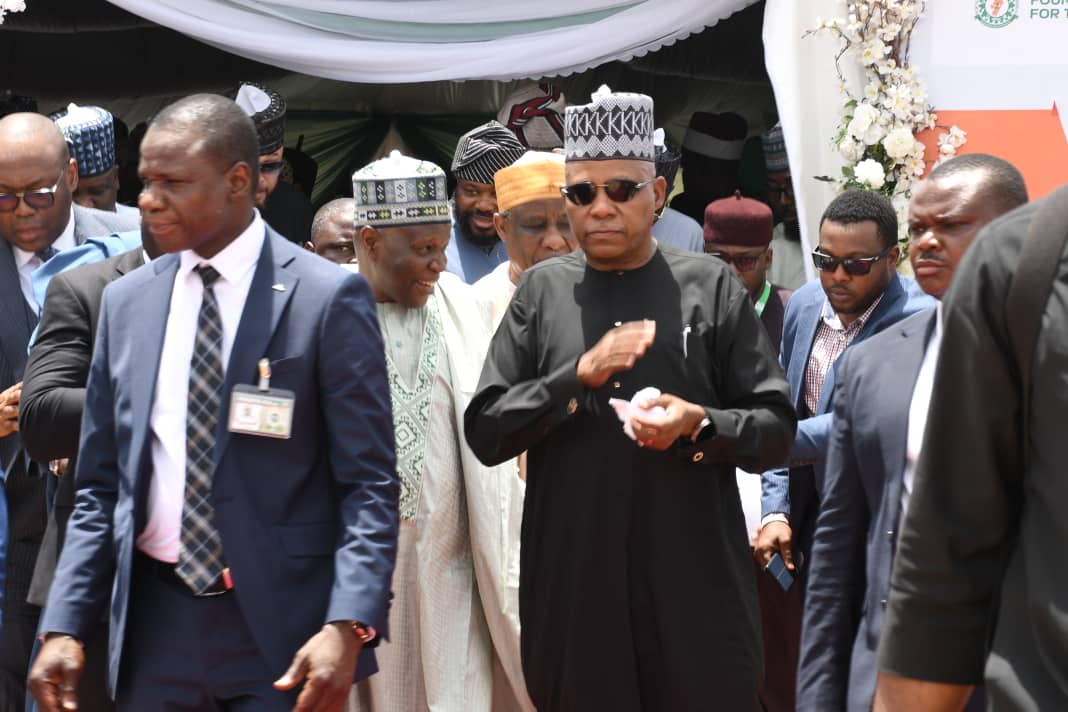
Vice President of Nigeria Senator Kashim Shettima, has laid the foundation stone for the head office of the north east development commission (NEDC) in Maiduguri the Borno State capital.
Senator Kashim Shettima, who came home for the sallah holiday recently, was at the Foundation-Laying Ceremony of the North East Development Commission (NEDC) Head Office on Wednesday, with the chair of the northern governors forum Inuwa Yahaya and the acting Governor of Borno State Umar Kadafur.
Shettima described the proposed new project as one born out of the resilient people of the north eastern region of Nigeria adding that the head office shall symbolize the strength of the people and Nigerians in general.
He described the project as a great achievement and a conduit of hope for north east of Nigeria which has gone through fifteen years of devastation by the insurgent Boko Haram.
Before the foundation laying ceremony of the multi billion naira project Shettima assured that much more will be the leadership of the country to make the region comfortable.
“We are not gathered here today to merely witness the architectural ambition of an organization that has become a conduit of hope for the North-East.
” Today is a demonstration of our promise, an assurance of our commitment, and a reminder of what this sub-region means to the nation. So, I am deeply honored to witness the making of a history of service that will outlive each of us.
” The North East Development Commission (NEDC) is a product of the people, and it shall serve the interests of the nation. Every organization that aspires to influence the welfare and future of society must draw its core from the people it sets out to serve. It is this foundational principle that guides the North East Development Commission (NEDC).” he noted.
The Vice President reiterated that the institution, therefore, embodies the collective resolve to transform the narrative of the region—from one marred by despair and devastation to one defined by renewal and triumph.
He posited that the NEDC is a critical engine driving the development of the North-East region of the country adding that in the face of adversity, it has demonstrated resilience, vision, and an unyielding dedication to its mission.
Shettima hinted that the laying of new infrastructure for its head office doesn’t only bring it closer to the people but invites them to be first-row stakeholders in the implementation of programs aimed at economic revitalization.
“Today’s foundation-laying ceremony is a step towards fulfilling His Excellency, President Bola Ahmed Tinubu’s promise to prioritize initiatives that safeguard the interests of the North-East.
” This promise is not merely a political commitment but a moral obligation to the people who have endured so much and deserve nothing less than a future defined by peace, stability, and prosperity.
“The head office we gather to commence today is not just a building. It is a fortress of our shared aspirations as a people with shared objectives.
” This head office shall symbolize the strength of our collective will to rebuild, to restore, and to rise above the challenges that have long hindered the progress of the North-East.
“As we lay this foundation, we do so with a vision of a North-East that is vibrant, resilient, and forward-looking. We do so imagining our contributions to building a nation where every child has access to quality education, where healthcare is accessible to all, where infrastructure supports thriving economies, and where peace and security are the bedrock of daily life.” he pointed.
Shettima noted that the region can only reclaim and shape the narrative of this region if the people stand together adding that every part of this country looks to them to transform their story of anguish into one of revival and triumph.
” This is an opportunity for us to do so, and this new head office shall serve as a hub of innovation and a center for strategic planning that guides the North-East towards a brighter future.”
In his remarks, the Managing Director of the nedc Mohammed alkali maintained that.” Section 9 (1) of the NEDC Act provides that “The Commission shall have its head office in Maiduguri, Borno State and shall establish an office in each Member State of the North-East Zone’.
” Therefore, the foundation laying ceremony we are about to witness is in fulfilment of the law establishing the Commission.
” Also, regarding State Offices, we have already achieved over 90% progress in the construction of such offices in most Member States.
” The upcoming edifice is an iconic 8-floor structure with Basement and Mezzanine Floors. Apart from its adequate and conducive office spaces, the complex will have other state-of-the-art ancillary facilities such as an expansive Parking Space, Conference Rooms, Prayer Halls, Restaurants and Catering Facilities, Sick Bay,
Gymnasium/Creche, Exhibition Halls and Humanitarian Center, among others.
“The Commission is currently implementing the North-East Stabilization and Development Master Plan (NESDMP), a holistic roadmap consisting of 11 Pillars that cut across various sectors.
” The Pillars are fashioned to propel the Socio- economic development and long-term prosperity in the North-East Region.
The Master Plan, which is in tandem with the Renewed Hope Agenda of the Present Administration requires synergy, cooperation and collaboration by all Stakeholders to make meaningful impact.
“In sync with the Master Plan, His Excellency, the Vice President will also today perform the ground-breaking ceremony for the Phase 2 of the Jere Bowl Road Network which spans 22.38Km.
” it is gratifying to note that the ground-breaking ceremony for the first phase covering 22.5km was done by His Excellency, the Vice President in 2023 and is now over 95% completed. This road network of 44.88Km that passes through the famous rice producing Communities of Galamari, Dusuman, Ngowom, Koshebe, Gongulong, Zabarmari and Khaddamari will improve freer movement of people and goods, thereby stimulating economic activities through food production, processing agrobusiness, as well as enhance security in the area.” said the MD.
Launch of agro interventions in North east Nigeria
The MD noted that another milestone event today was the official launch by the Vice President of the Commission’s Agricultural Interventions in the North-East Region towards boosting food production, processing and food security in general.
He revealed that the Commission has acquired and is set to distribute assorted and diverse units of agricultural machines, implements, inputs and other processing equipment to eligible farmers across all the 18 Senatorial Districts in the region.
“These include Tractors, Tillage Implements, Trailers, Planters, Harvesters, Rice and Oil Mills, among others. There would be an interfacing Committee between the States and the Commission for effective distribution and monitoring.
“There are many other infrastructural projects being executed simultaneously in other Member States including inter-and intra-State Roads, Mass Housing and Mega School projects and of most prominence is our Plan to introduce E-Mobility within the entire region.
” Your Excellency, within this year alone, many on-going multisectoral milestone projects will be completed, and we will respectively invite you for their commissioning.
“We will continue to roll out relevant and demand-driven Human Capital Development Initiatives, Youth and Women Empowerment Programmes, Stabilization and Sustainable Development Infrastructural Projects for the Short, Medium and Long-term Socio-Economic benefit of the people of the North-East Region.
“We call on all Stakeholders, including Federal MDAs, Development Partners and the Private Sector, to key into the Regional Master Plan and join us in re-building a Safe, Peaceful, Enterprising and Prosperous Region.
Acting Governor of Borno State Umar Kadafur called on the Nedc to collaborate with the state government in the area of energy generation which is important to them.
Present at the ground breaking ceremony of the 26.2 billion naira head quarters building were representatives of Governors of North east states of Nigeria
Others were political chieftains and representatives from the entire region, Religious figures, the board chair Paul Tarfa, the pioneer board members of the nedc including Dr Theodore Ekechi and the entire security apparatus in the Borno State capital maiduguri.
Vice President of Nigeria
Shettima lays foundation of nedc HQ in maiduguri


NCYP Seeks Probe of Viral Video Allegedly Threatening Christians in Jos, Enugu
By: Michael Mike
The Northern Christian Youth Professionals (NCYP) has called for an urgent security investigation into a viral video allegedly showing members of the JIBWIS First Aid Youth Group calling for Christians to be killed in Jos and Enugu with AK-47 rifles.
The organisation warned that inflammatory religious rhetoric could trigger another crisis in Northern Nigeria, urging security agencies to establish the authenticity and circumstances of the video and prosecute anyone found culpable.
In a press statement issued on Tuesday, the National Chairman of NCYP, Isaac Abrak, condemned the alleged incitement, describing the development as disturbing and calling for a lawful response to prevent an escalation of religious tensions.
Abrak said religious extremism, hate speech and incitement to violence had contributed to the insecurity affecting Northern Nigeria, where Christians and Muslims continued to suffer deaths and displacement from terrorism and banditry.
He urged security agencies to investigate the video, identify those responsible for any unlawful statements and ensure that appropriate legal action was taken where necessary.
The NCYP chairman also called on Islamic scholars, Muslim leaders and traditional rulers to condemn attempts to exploit religion to promote hatred, intolerance and violence.
He stressed, however, that Christian leaders and communities must resist provocation, reject reprisals and allow the authorities to handle the matter through established legal channels.
According to him, failure to address inflammatory rhetoric could undermine efforts to rebuild peaceful coexistence between Christians and Muslims after years of religious and communal tensions.
Beyond its security implications, Abrak said persistent insecurity had inflicted severe damage on Northern Nigeria’s economy, contributing to the decline of once-thriving textile factories, confectionery industries, tanneries and other businesses.
He said the resulting business closures and economic disruption had contributed to job losses and deepening poverty across the region.
The organisation maintained that lasting peace and economic recovery would remain difficult to achieve without mutual respect, religious tolerance and accountability for those who promote violence.
It warned against allowing the alleged actions of individuals to undermine the future of communities whose livelihoods and development depend on peaceful coexistence.
“Northern Nigeria cannot achieve lasting peace, security or economic prosperity without mutual respect and religious tolerance,” the statement said.
The NCYP urged residents to remain calm as the authorities investigate the matter, warning that retaliatory actions could further endanger lives and worsen existing religious divisions.
It reiterated that anyone found to have engaged in unlawful incitement should be held accountable under the law, stressing that the protection of lives and the preservation of peace must take precedence over religious or communal differences.
The statement did not independently establish the authenticity of the viral video or whether the people featured in it were acting on behalf of the JIBWIS First Aid Youth Group.
NCYP Seeks Probe of Viral Video Allegedly Threatening Christians in Jos, Enugu
ECOWAS: E-commerce Can Raise West African Trade to 35%, Boost Small Businesses
By: Michael Mike
The Economic Community of West African States (ECOWAS) is looking to digital commerce to increase intra-regional trade from its historically low level of below 15 per cent to between 30 and 35 per cent, while expanding market access for women, young people, persons with disabilities and small businesses.
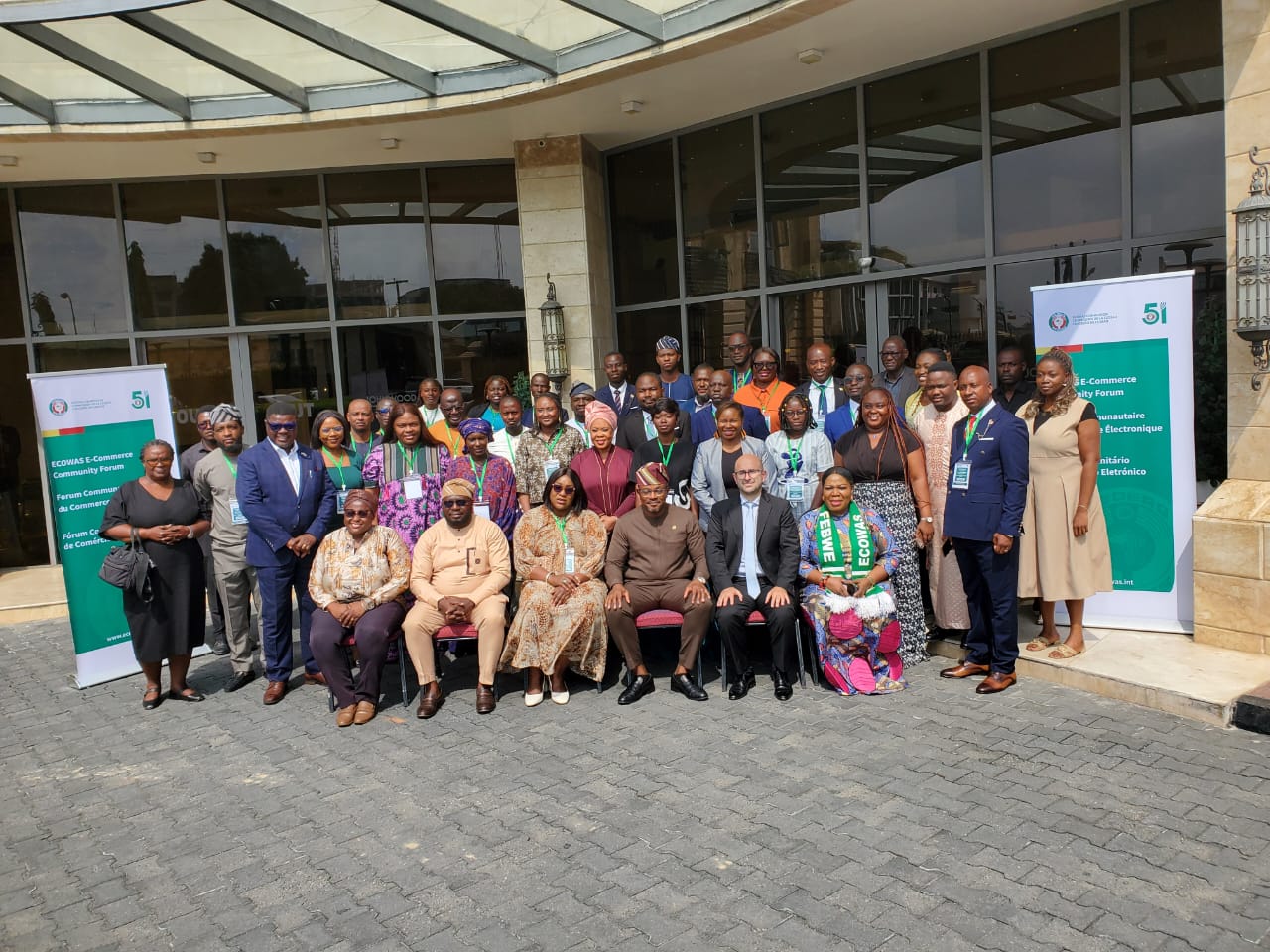
The Director, Directorate of Trade, Kolawole Sofola made this revelation on Tuesday, during the meeting of the E-Commerce Community Forum organized by ECOWAS Commission in Abuja, said e-commerce could dismantle longstanding barriers to trade by enabling entrepreneurs to sell goods across borders without the cost of renting physical shops or maintaining conventional business premises.
He said the meeting was called for the implementation of the region’s e-commerce strategy and identifying additional interventions to make digital trade more inclusive.
The meeting brought together economic stakeholders to assess progress in implementing the strategy and develop recommendations to expand participation in the digital economy, particularly among groups that face barriers to accessing markets.
“We believe e-commerce will open up many doors. It will certainly bring the barriers to trade down,” Sofola said.
According to the official, digital platforms could enable entrepreneurs to operate from their homes, reach customers beyond their immediate communities and access markets across the region without incurring the substantial costs associated with conventional retail businesses.
The approach is expected to create opportunities for micro and small enterprises, which often struggle to compete with larger businesses because of limited capital, inadequate infrastructure and restricted access to customers.
By connecting buyers and sellers through digital platforms, e-commerce could also improve access to information about products, facilitate business connections and enable traders to identify commercial opportunities beyond their national borders.
Sofola, however, acknowledged that the benefits of digital commerce would remain limited unless governments and regional institutions addressed the infrastructure and affordability challenges preventing many people from participating.
Access to reliable internet services and the cost of digital facilities remain significant obstacles, particularly for entrepreneurs and communities in rural areas.
He said regional programmes aimed at improving broadband connectivity and extending internet access would be important to ensuring that e-commerce reached ordinary citizens rather than remaining the preserve of businesses and individuals with better digital resources.
The emphasis on inclusivity is also intended to ensure that women, young people and persons with disabilities can benefit from the opportunities offered by digital trade.
For these groups, online platforms could provide alternative routes into business by reducing the need for expensive commercial premises and making it easier to connect with customers and suppliers.
He noted that the stakeholders’ meeting would examine the progress made under the existing e-commerce strategy, identify gaps in implementation and generate further recommendations for improving participation.
Beyond expanding individual businesses, ECOWAS sees digital commerce as a potential instrument for strengthening regional economic integration by enabling traders to connect more easily across national boundaries.
He also noted that intra-regional trade had historically remained below 15 per cent, although the figure did not fully reflect informal cross-border transactions, which account for a significant share of commercial activity in West Africa.
He expressed optimism that e-commerce could help improve the situation by connecting traders with buyers across the region, making product information more readily available and opening up new channels for commercial transactions.
The region’s longer-term ambition, the official said, was to increase intra-regional trade to between 30 and 35 per cent in the coming years, with targets for 2035 and 2050 expected to guide its broader development objectives.
Sofola also stressed the need to assess the progress made over the past 50 years of regional development while identifying additional measures needed to deepen economic cooperation.
However, achieving the proposed trade expansion will require more than the adoption of digital platforms. Reliable internet connectivity, affordable access, effective implementation of regional policies and the capacity of small businesses to use digital tools will be critical to translating the strategy into measurable economic gains.
The ongoing review is therefore expected to help determine how regional interventions can make e-commerce more accessible, strengthen commercial links among member states and enable a broader section of West African society to participate in the regional economy.
ECOWAS: E-commerce Can Raise West African Trade to 35%, Boost Small Businesses

37 Miners Suffocated in NSCDC Custody, Panel Recommends N1.4bn Compensation
By: Michael Mike
A Federal Government investigative panel has found that 37 suspected illegal miners who died in the custody of the Nigeria Security and Civil Defence Corps (NSCDC) in Niger State died from asphyxiation, recommending N1.4 billion in compensation for affected families and survivors.
The panel also recommended the summary dismissal of the Niger State NSCDC Commandant and other officers found to have been directly involved in the incident, describing the deaths as avoidable and calling for measures to prevent a recurrence.
The chairman of the 10-member independent investigative committee, Jonathan Kure, a retired Deputy Director-General of the Department of State Services, disclosed the findings on Tuesday while presenting the panel’s report to the Minister of Interior, Olubunmi Tunji-Ojo, in Abuja.
The recommendations followed investigations into the deaths of 37 suspected illegal miners who died on September 17, 2026, while being detained by the NSCDC in Minna, the Niger State capital.
The victims were among dozens of people arrested during anti-illegal mining operations in the M.I. Wushishi and Lukoto areas of the state.
According to reports on the panel’s findings, the committee recommended N1.4 billion in compensation for the families of 33 deceased victims and 44 survivors affected by the incident.
The panel also called for the dismissal of the state commandant and officers whose involvement in the arrests, detention and circumstances surrounding the deaths was established.
Fourteen of the deceased were reportedly minors, raising further concerns about the treatment of young people detained during the operation.
The Federal Government constituted the independent committee following public outrage over the deaths and President Bola Tinubu’s directive for a comprehensive, transparent and unhindered investigation.
The committee was mandated to establish the circumstances surrounding the arrests and detention, determine the cause of death, identify possible negligence or misconduct and recommend appropriate sanctions and compensation.
The incident had earlier triggered protests in Minna, with residents and relatives of the deceased demanding answers over how so many detainees could die while in government custody.
Initial accounts from the authorities suggested a possible disease outbreak, while survivors subsequently described overcrowded and poorly ventilated detention conditions.
Some survivors also alleged that an unidentified substance was sprayed into the cell before detainees began experiencing breathing difficulties and other unusual symptoms.
Those accounts raised questions about the conditions in which the suspects were held and whether security personnel responded adequately to their distress.
The allegations, however, required independent verification, including forensic examinations, before responsibility for the deaths could be conclusively established.
In September, the Minister of Interior announced the suspension of the Niger State NSCDC Commandant and 20 other officers pending the outcome of the investigation.
The committee subsequently inspected the detention facility, visited relevant locations, conducted autopsies and obtained statements from NSCDC personnel, survivors, relatives of the deceased and other witnesses.
It also reviewed documentary and forensic evidence as part of efforts to reconstruct the events leading to the deaths.
Before the submission of its final report, the panel had identified institutional weaknesses, alleged overzealousness among personnel and inadequate training as issues requiring attention.
The committee had sought additional time to complete its work, citing the volume of evidence and the need to obtain and review medical and forensic reports while allowing persons implicated in the incident to respond.
The latest findings and recommendations now place the responsibility on the relevant authorities to determine and implement appropriate disciplinary measures, address compensation for affected families and survivors, and strengthen safeguards against deaths in custody.
Receiving the report, Tunji-Ojo pledged that the Federal Government would implement the committee’s recommendations to ensure justice for the victims and prevent a recurrence.
The minister also directed the NSCDC leadership to suspend officers allegedly involved in cleaning the detention facility in an attempt to destroy evidence, according to reports on the presentation of the panel’s findings.
The circumstances surrounding the deaths have renewed concerns about accountability within Nigeria’s security agencies and the protection of the rights of people held in detention.
The implementation of the panel’s recommendations, particularly the proposed compensation, disciplinary sanctions and institutional reforms, will be a key test of the government’s commitment to accountability in the case.

NCYP Seeks Probe of Viral Video Allegedly Threatening Christians in Jos, Enugu

ECOWAS: E-commerce Can Raise West African Trade to 35%, Boost Small Businesses

37 Miners Suffocated in NSCDC Custody, Panel Recommends N1.4bn Compensation

Roger Federer’s Shock as DNA Results Reveal Myla and Charlene Are Not His Biological Children

THE PLIGHT OF FARIDA

FAILED COUP IN BURKINA FASO: HOW TRAORÉ NARROWLY ESCAPED ASSASSINATION PLOT AMID FOREIGN INTERFERENCE CLAIMS
-
 News3 years ago
Roger Federer’s Shock as DNA Results Reveal Myla and Charlene Are Not His Biological Children
-
Opinions5 years ago
THE PLIGHT OF FARIDA
-
 News2 years ago
FAILED COUP IN BURKINA FASO: HOW TRAORÉ NARROWLY ESCAPED ASSASSINATION PLOT AMID FOREIGN INTERFERENCE CLAIMS
-
 Opinions5 years ago
POLICE CHARGE ROOMS, A MINTING PRESS
-

 News3 years ago
EYN: Rev. Billi, Distortion of History, and The Living Tamarind Tree
-

 ACADEMICS3 years ago
A History of Biu” (2015) and The Lingering Bura-Pabir Question (1)
-

 Columns3 years ago
Army University Biu: There is certain interest, but certainly not from Borno.
-

 Politics1 year ago
2027: Why Hon. Midala Balami Must Go, as Youths in Hawul and Asikira/Uba Federal Constituency Reject ₦500,000 as Sallah Gift
