News
Violence in Borno Displaces Over 5,000 as Humanitarian Needs Surge in Pulka

Violence in Borno Displaces Over 5,000 as Humanitarian Needs Surge in Pulka
By: Michael Mike
A fresh wave of armed violence in northeast Nigeria has forced more than 5,000 people from their homes in Ngoshe, pushing already fragile communities in Gwoza Local Government Area deeper into crisis.
The international medical humanitarian organisation Médecins Sans Frontières (MSF) confirmed it has launched an emergency response in Pulka, where displaced families have sought refuge following deadly attacks on March 3. The assault reportedly left scores dead and many others abducted, triggering mass displacement to the nearby town, located about 15 kilometres away.
Survivors arriving in Pulka described scenes of devastation and hurried escape. Many fled with nothing, leaving behind homes and livelihoods destroyed by violence.
“Our homes were bombed, everything we owned was gone,” said Safiya Mohammed Aga, a displaced resident of Ngoshe told MSF: “We ran for our lives. Some of us arrived here without clothes or anything at all.”

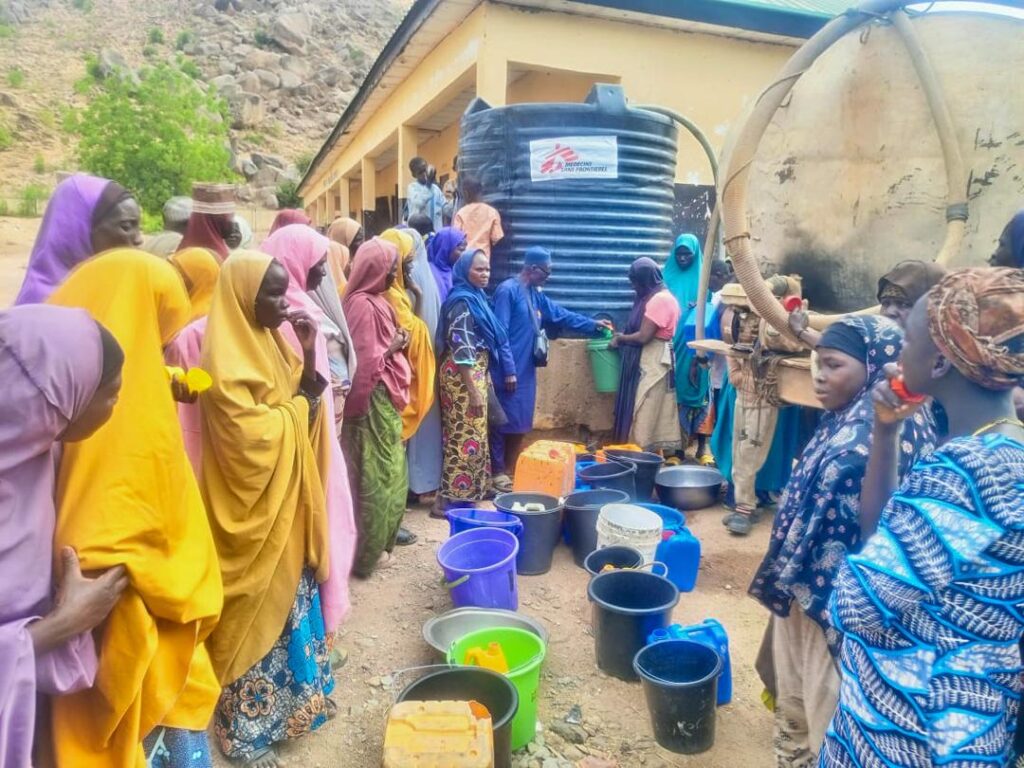
With no formal shelter available, thousands are now sleeping in open spaces and along streets, exposed to harsh conditions and growing insecurity. Women, children and the elderly are among the most vulnerable, facing acute shortages of food, clean water and basic sanitation.
MSF said the lack of essential services is increasing the risk of disease outbreaks, particularly among children. In response, the organisation began a four-week emergency intervention on April 10, targeting the most urgent needs.
So far, more than 900 families have received non-food items such as cooking utensils, sleeping mats, mosquito nets and water containers. Additionally, 884 dignity kits—containing menstrual hygiene supplies, soap and oral care items—have been distributed to vulnerable individuals.
To address water shortages, MSF teams are delivering approximately 16,000 litres of safe drinking water daily, while also rehabilitating sanitation facilities and conducting hygiene awareness campaigns to prevent the spread of disease.
Despite these efforts, MSF officials warn that the scale of the crisis far exceeds current assistance.
“People urgently need food and improved access to water, sanitation and hygiene services,” said Abdoulaye Mahmoudoune, MSF’s emergency field coordinator. “We are responding, but we cannot meet these overwhelming needs alone.”
The crisis in Gwoza reflects a broader pattern of protracted conflict across Borno State, where years of insurgency have repeatedly displaced communities and strained already limited infrastructure. Health facilities remain under pressure, while humanitarian funding continues to decline.

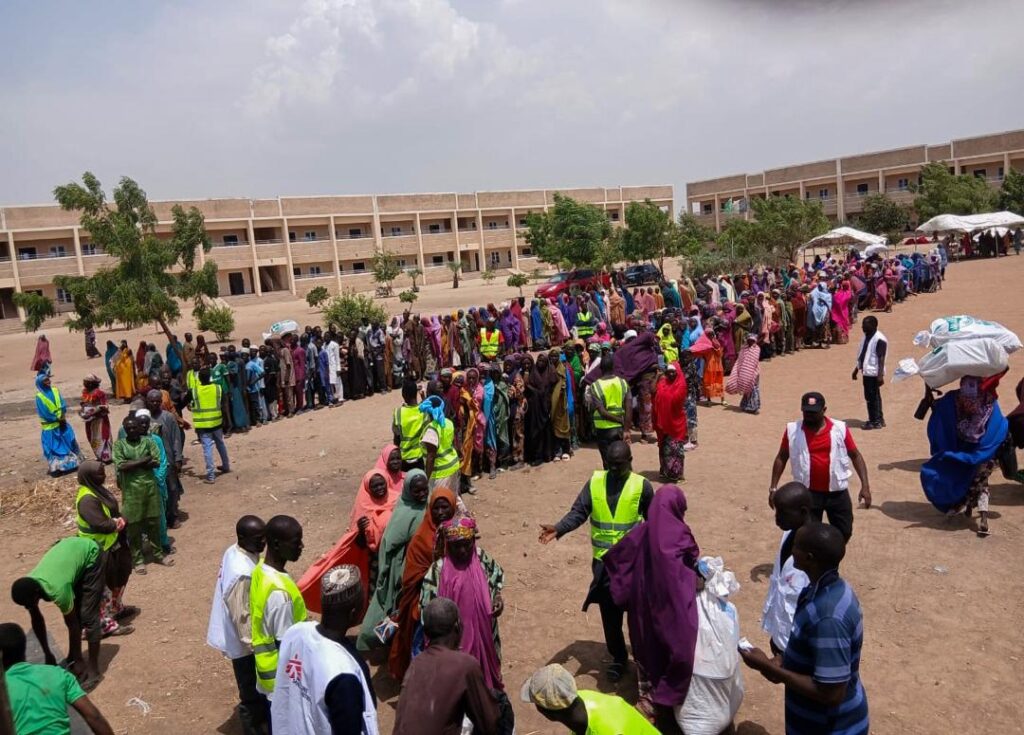
MSF has been supporting healthcare services in the area, including operations at Gwoza General Hospital since August 2025, alongside maternal and child health programmes in surrounding communities and nutrition interventions for malnourished children in Maiduguri.
However, the organisation warns that funding gaps and reduced humanitarian presence are placing life-saving services at serious risk.
MSF is now calling on other humanitarian agencies to urgently scale up assistance in Pulka, particularly in food distribution and water, sanitation and hygiene services. It also appealed to international donors to increase sustained funding for healthcare in northeast Nigeria to prevent further deterioration of an already dire humanitarian situation.
As displacement continues and needs grow, thousands of families in Pulka remain caught in a cycle of violence and survival, with limited support and an uncertain future.
Violence in Borno Displaces Over 5,000 as Humanitarian Needs Surge in Pulka