
Crime
Violence Kills 4,654, Kidnaps 3,141 Across Nigeria in 2025 – Security Report Warns of Escalating Threats

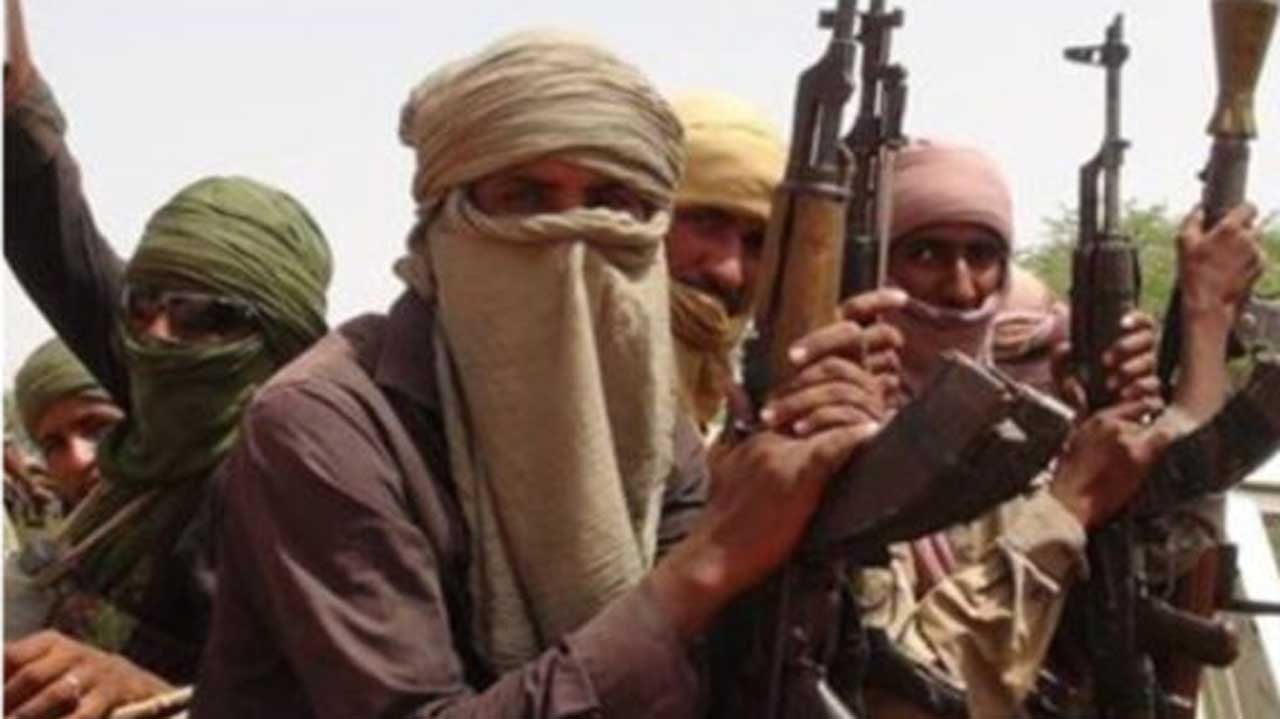
Violence Kills 4,654, Kidnaps 3,141 Across Nigeria in 2025 – Security Report Warns of Escalating Threats
By: Michael Mike
Violent conflicts across Nigeria claimed at least 4,654 lives in 2025, while 3,141 people were kidnapped in 1,274 separate incidents nationwide, according to the Nigeria Violent Conflicts Database 2025 released by Nextier Advisory Ltd. on Wednesday.
The report, a partnership between Nextier, and SPRiNG Programme, titled “Nigeria Security and Conflict Outlook 2026: When Capability Meets Resolve,” highlights a worsening security landscape fueled by banditry, terrorism, communal clashes, and organized crime.
Presenting the findings in Abuja, the Managing Partner of Nextier, Dr. Ndubuisi Nwokolo, said banditry remained the deadliest driver of violence. In 2025, bandit attacks accounted for 599 incidents and 2,724 fatalities, a sharp rise from 256 incidents and 1,585 deaths recorded in 2024.
“The North-West recorded the highest number of attacks, while the North-Central zone experienced more fatalities, showing a disturbing increase in brutality,” Nwokolo said.
The report also noted a dramatic spike in kidnapping, including mass abductions in rural areas, marking one of the highest levels in recent years.
Terrorism and insurgency continued to claim lives, with 43 terror-related incidents reported. Borno State remained the epicentre, accounting for 397 casualties. Farmer-herder conflicts also intensified, rising from 58 incidents and 188 deaths in 2024 to 87 incidents and 322 fatalities in 2025. Climate pressures, ethnic tensions, political factors, and banditry were cited as key contributors.
Nextier highlighted the role of illicit mining as a major funding source for criminal networks, noting that a prominent bandit leader, Kachalla Mati, reportedly earns up to N300 million weekly from illegal gold sales. Porous borders, proliferation of small arms, and instability in the Sahel region were also identified as key enablers of violence.
Looking ahead, the report warned that insecurity could worsen in 2026 due to growing alliances between terrorists and bandits, the expansion of armed groups into new states such as Kwara and Kano, and rising political tensions ahead of the 2027 general elections. It projected that election-related violence, cult clashes, communal disputes, and gunmen attacks would remain concentrated but increasingly lethal.
Economic pressures, youth unemployment, and inflation were also cited as factors aggravating the country’s security challenges. Nextier identified 14 major threat clusters driving instability, including banditry, terrorism, kidnapping, secessionist unrest, communal violence, and illegal mining activities.
To address these threats, the report called for strengthened intelligence coordination, community policing, and closer collaboration with international partners. It urged the Nigerian Armed Forces and intelligence agencies to improve operational security, while the Department of State Services and the Economic and Financial Crimes Commission were advised to intensify financial surveillance to dismantle ransom networks.
The report also recommended full implementation of livestock reforms, including the National Livestock Transformation Plan, alongside early warning systems and dialogue to mitigate farmer-herder clashes. It criticized reactive electoral security measures, advocating for preventive strategies and reconciliation mechanisms post-election.
Delivering a keynote address, Deputy Inspector-General of Police, Idegwu Okuoma, represented by Commissioner of Police Edwin Ogbehagha, said the report offers “critical insights into Nigeria’s security realities,” urging agencies to bridge the gap between government capacity and citizens’ experiences.
He added that public safety should not be measured only by arrests or deployments, but by whether citizens feel secure, noting that the Nigeria Police Force is expanding community policing and grassroots intelligence initiatives.
Air Commodore Ademola Adejimi, representing the Chief of Air Staff, reaffirmed the Nigerian Air Force’s commitment to stabilizing the country through sustained aerial operations. Zissimo Vergos, Deputy Head of Delegation and Head of Political, Press and Information, stressed the need for a whole-of-society approach, calling on communities, traditional and religious leaders, civil society, and the media to collaborate with security agencies in building trust and preventing violence.
“Transparency, accountability, and respect for human rights are essential to achieving lasting security,” Vergos said.
The report paints a sobering picture of Nigeria’s security environment and highlights the urgent need for coordinated action to address the interconnected threats driving violence and instability across the nation.
Violence Kills 4,654, Kidnaps 3,141 Across Nigeria in 2025 – Security Report Warns of Escalating Threats



Wanted Boko Haram spy arrested in Monguno over Cross Kauwa attack, kidnappings
By Zagazola Makama
Security operatives have arrested a wanted Boko Haram spy in Monguno, Borno State, in connection with the recent terrorist attack on Cross Kauwa, intelligence sources told Zagazola Makama.
The suspect, identified as Abulfatahi, was apprehended on July 27 during an intelligence-led operation following efforts to track members of a terrorist intelligence network operating in the area.
Sources disclosed that two other members of the same network had earlier been arrested and transferred to the Joint Intelligence Fusion Centre (JIFC) for further investigation.
During preliminary interrogation, Abulfatahi reportedly confessed to working for a Boko Haram commander identified as Akilu, who is said to control terrorist activities in Dabar Masara and Garin Mace.
According to the sources, the suspect admitted to collecting taxes on behalf of the terrorist leader and facilitating the selection of individuals for abduction around Monguno.
Investigators also recovered two telephone numbers allegedly linked to Akilu from the suspect’s mobile phone as part of ongoing efforts to dismantle the terrorist network.
The sources said security agencies are conducting further investigations to identify additional collaborators, establish the full extent of the network’s activities, and support ongoing counter-terrorism operations in the Lake Chad region.
A comprehensive investigation report is expected to be submitted upon the conclusion of the ongoing inquiry.
Wanted Boko Haram spy arrested in Monguno over Cross Kauwa attack, kidnappings
Crime
Three suspected ISWAP fighters surrender to troops in Damasak after fleeing sustained bombardment

Three suspected ISWAP fighters surrender to troops in Damasak after fleeing sustained bombardment
By Zagazola Makama
Three suspected Boko Haram/Islamic State West Africa Province (ISWAP) fighters have surrendered to troops of the Nigerian military in Damasak, Borno State, citing exhaustion and sustained military bombardment of their camps.
Intelligence sources told Zagazola Makama that the suspects surrendered at about 4:50 p.m. on July 28 to troops of Headquarters 5 Brigade in Damasak during ongoing counter-insurgency operations under Operation Hadin Kai.
The surrendered suspects were identified as Abba Musa Dogo, 24; Abubakar Bargaji, 28; and Ibrahim Abubakar, 16.
Preliminary interrogation revealed that they escaped from terrorist camps at Sabon Gari and Tunbun Mota, reportedly controlled by ISWAP commanders Abu Fatima and Abu Ayuba.
According to the sources, the suspects attributed their decision to surrender to fatigue and the sustained aerial and ground bombardment of their enclaves by Nigerian troops, which they said had made survival increasingly difficult.
The suspects also disclosed that they had been trained as gunboat operators and anti-aircraft gunners for operations in the Lake Chad region.
They further confessed that weapons were only issued to them before specific operations and were retrieved by their commanders immediately after the missions, suggesting a tightly controlled weapons management system within the terrorist group.
The sources said the three suspects expressed their readiness to renounce insurgency and embrace peace.
They are currently in military custody and are undergoing further profiling and investigation in line with established procedures.
The latest surrender adds to the growing number of terrorists abandoning the insurgency amid sustained military offensives targeting terrorist enclaves across the Lake Chad region under Operation Hadin Kai.
Three suspected ISWAP fighters surrender to troops in Damasak after fleeing sustained bombardment

Police arrest man for allegedly hacking father to death with axe in Benue
By Zagazola Makama
Operatives of the Benue State Police Command have arrested a man for allegedly hacking his father to death with an axe following a family dispute in Katsina-Ala Local Government Area of the state.
Police sources told Zagazola Makama that the incident was reported at about 8:00 a.m. on July 25 by the Clan Head of Turan-Tse Twar, Injorov Tongov, Zaki Akor Kpan.
According to the report, the tragic incident occurred at about 2:00 p.m. on July 24 after the suspect, identified as Terfa Nyikwagh, engaged in a heated argument with his father, Mr. Nyikwagh Abor, over the death of his brother, Ternenge Uwuh.
The sources said the disagreement escalated, during which the suspect allegedly attacked his father with an axe, inflicting fatal injuries.
Upon receiving the report, the Divisional Police Officer (DPO) in Katsina-Ala led a patrol team to the scene, where the suspect was arrested without resistance.
The body of the deceased was evacuated and deposited at the Gondozua Hospital Mortuary for a post-mortem examination.
The suspect remains in police custody, while investigations are ongoing to determine the full circumstances surrounding the incident before prosecution.
Police arrest man for allegedly hacking father to death with axe in Benue

Fubara Swears in 12 Permanent Secretaries, Tasks Them on Integrity, Service

Pandemic Preparedness Model Flawed as Study Identifies Inequality as Biggest Killer

Nigeria Seeks AUDA-NEPAD Backing to Unlock Economic Opportunities for Youth, Women

Roger Federer’s Shock as DNA Results Reveal Myla and Charlene Are Not His Biological Children

THE PLIGHT OF FARIDA

FAILED COUP IN BURKINA FASO: HOW TRAORÉ NARROWLY ESCAPED ASSASSINATION PLOT AMID FOREIGN INTERFERENCE CLAIMS
-
 News2 years ago
Roger Federer’s Shock as DNA Results Reveal Myla and Charlene Are Not His Biological Children
-
Opinions4 years ago
THE PLIGHT OF FARIDA
-
 News1 year ago
FAILED COUP IN BURKINA FASO: HOW TRAORÉ NARROWLY ESCAPED ASSASSINATION PLOT AMID FOREIGN INTERFERENCE CLAIMS
-

 News2 years ago
EYN: Rev. Billi, Distortion of History, and The Living Tamarind Tree
-
 Opinions5 years ago
POLICE CHARGE ROOMS, A MINTING PRESS
-

 ACADEMICS2 years ago
A History of Biu” (2015) and The Lingering Bura-Pabir Question (1)
-

 Columns2 years ago
Army University Biu: There is certain interest, but certainly not from Borno.
-

 Politics1 year ago
2027: Why Hon. Midala Balami Must Go, as Youths in Hawul and Asikira/Uba Federal Constituency Reject ₦500,000 as Sallah Gift
