
Politics
VP Kashim Shettima: Tinubu, APC leaders must reject divisive tactics ahead of 2027.

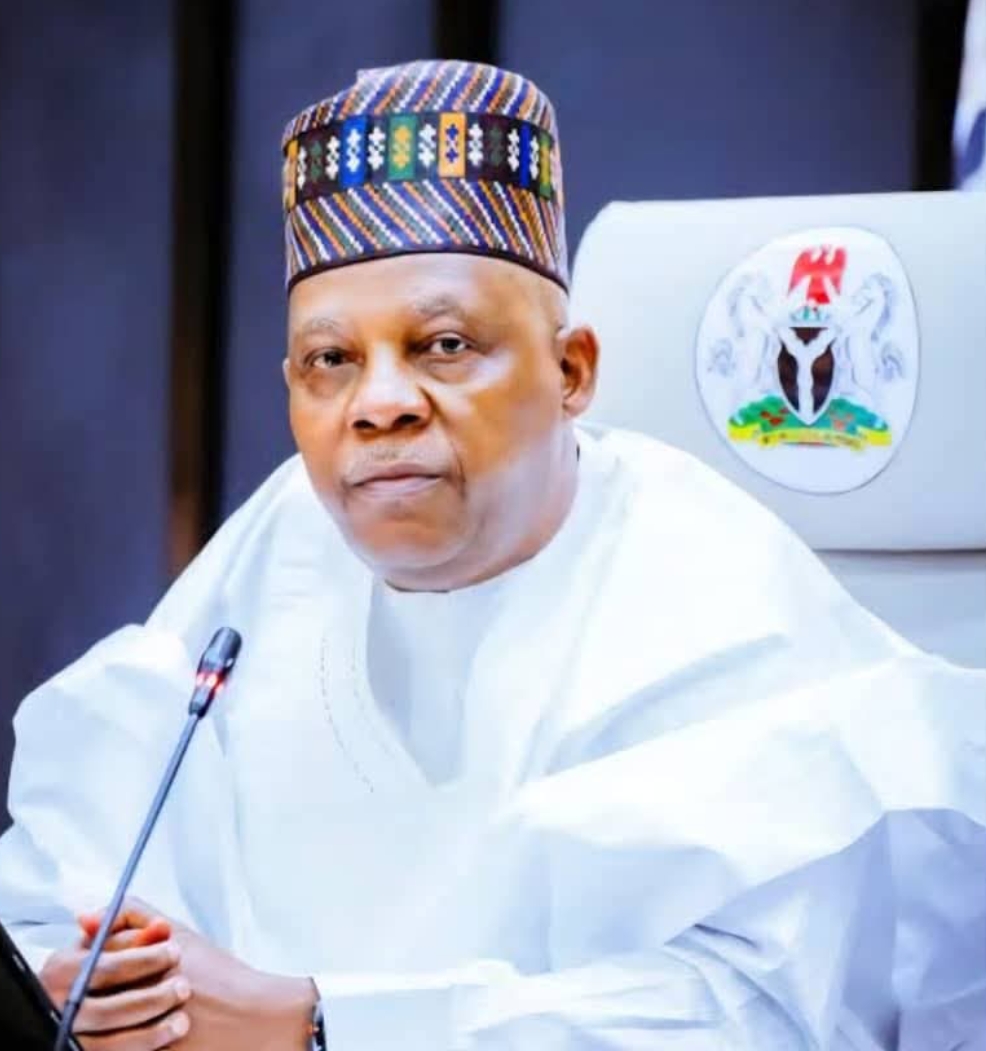
VP Kashim Shettima: Tinubu, APC leaders must reject divisive tactics ahead of 2027.
By: Dr. James Bwala
In the intricate landscape of Nigerian politics, few figures have evoked as much scrutiny and discourse as Vice President Kashim Shettima. His role in the administration of President Bola Ahmed Tinubu has become a focal point of both support and dissent, leading many to call for his replacement. Those against Shettima often cite no reason to back their claims. These are individuals who lack loyalty as a key benchmark for leadership. They are often individuals who did not stand beside President Tinubu during his arduous journey to the presidency. But they feel they could now take center stage in deciding for Tinubu his next move towards 2027.
They never understood who Kashim Shettima was and who he is now as Vice President of Nigeria. While this perspective warrants a deeper examination, it reveals an underlying current of discord among political factions and, more importantly, misreads the dynamics of governance and loyalty. To understand why calls for Shettima’s replacement could be ultimately misguided, one must first recognize the value of stability and continuity within the ranks of leadership. The relationship between a president and vice president is critical; it must be rooted in trust and mutual understanding.
READ ALSO: https://newsng.ng/vp-kashim-shettima-leadership-loyalty-and-when-truth-laughs-last/
Vice President Shettima has consistently demonstrated his commitment to the administration’s vision, even amid challenges. His background as a former governor of Borno State provides him with unique insights into governance, particularly in addressing security issues that plague regions like northeast Nigeria.
Those advocating for his ousting seem to overlook the fact that political maneuvers often serve self-interest rather than the collective aspirations of the citizenry. Many of the names being floated as potential successors were not part of President Tinubu’s inner circle during his campaign. This raises questions: what qualifications do these individuals possess that make them more suited for the vice presidency than Shettima? Is their allegiance more than a matter of convenience? It is alarming to witness individuals who once stood on the sidelines suddenly positioning themselves as viable contenders when the political tide appears favorable.
READ ALSO: https://newsng.ng/vp-kashim-shettima-leadership-loyalty-and-when-truth-laughs-last/
The tactics employed by those pushing for a change reflect a troubling trend of undermining a sitting administration from within. By attempting to sideline Shettima at gatherings and shaping narratives intended to discredit him, these dissenters inadvertently undermine the unity that is pivotal for the All Progressives Congress (APC). Such actions can erode the party’s strength as they sow division and foster an environment of mistrust. These are not the behaviors of loyalists; rather, they are characteristic of opportunists seeking personal aggrandizement at the expense of collective goals.
Critically, we also must consider President Tinubu’s position in all of this. He has shown steadfastness in his leadership style, often prioritizing the long-term vision of his administration over transient political gamesmanship. President Tinubu is unlikely to succumb to pressures from factions seeking to manipulate his choices, especially from among those who have displayed questionable loyalty. His leadership ethos appears to prioritize unity and strategic forward-thinking, suggesting that he values collaboration over division.
READ ALSO: https://newsng.ng/vp-kashim-shettima-leadership-loyalty-and-when-truth-laughs-last/
The current political climate requires deliberate engagement and cooperation among all stakeholders in the APC. President Tinubu’s commitment to governance will not be swayed by the antics of those seeking to destabilize his administration from within. To strengthen the party and fulfill its mandate, it is imperative that leaders focus on fostering an environment of inclusivity and shared purpose rather than resorting to backbiting and discord.
Kashim Shettima’s appointment as vice president should also be viewed through the lens of meritocracy rather than mere political allegiance. He emerged as a candidate uniquely equipped to contribute to national governance, possessing vital experience and a nuanced understanding of the socio-political challenges confronting Nigeria today. His investment in dialogue around security reform and economic recovery strategies underscores his dedication to not just the party but the nation at large.
READ ALSO: https://newsng.ng/vp-kashim-shettima-leadership-loyalty-and-when-truth-laughs-last/
There is an inherent risk in the proposed approach to leadership transitions within the APC. By promoting individuals based on perceived loyalty or personal connections rather than demonstrated competence, the party risks entrenching mediocrity. The nation’s challenges require leaders who can engage robustly with complex issues—leaders like Shettima, who understand the stakes and act decisively in the nation’s best interest.
The calls for Vice President Kashim Shettima’s replacement unveil a deeper societal malaise predicated on factionalism and opportunism rather than a genuine concern for effective governance. The refusal to appreciate the merits of stability, expertise, and continuous support for an experienced vice president diminishes the potential for collaborative success. It is essential for the APC and its leaders, including President Tinubu, to reject such divisive tactics and reaffirm their commitment to a cohesive governance structure. In doing so, they can build a stronger foundation for Nigeria’s future, one that is devoid of petty infighting and focused squarely on the needs of the Nigerian people. The quest for true leadership in Nigeria demands that unity, loyalty, and competence be prioritized over personal ambition and the politics of exclusion.
* James Bwala, PhD, writes from Abuja.
VP Kashim Shettima: Tinubu, APC leaders must reject divisive tactics ahead of 2027.



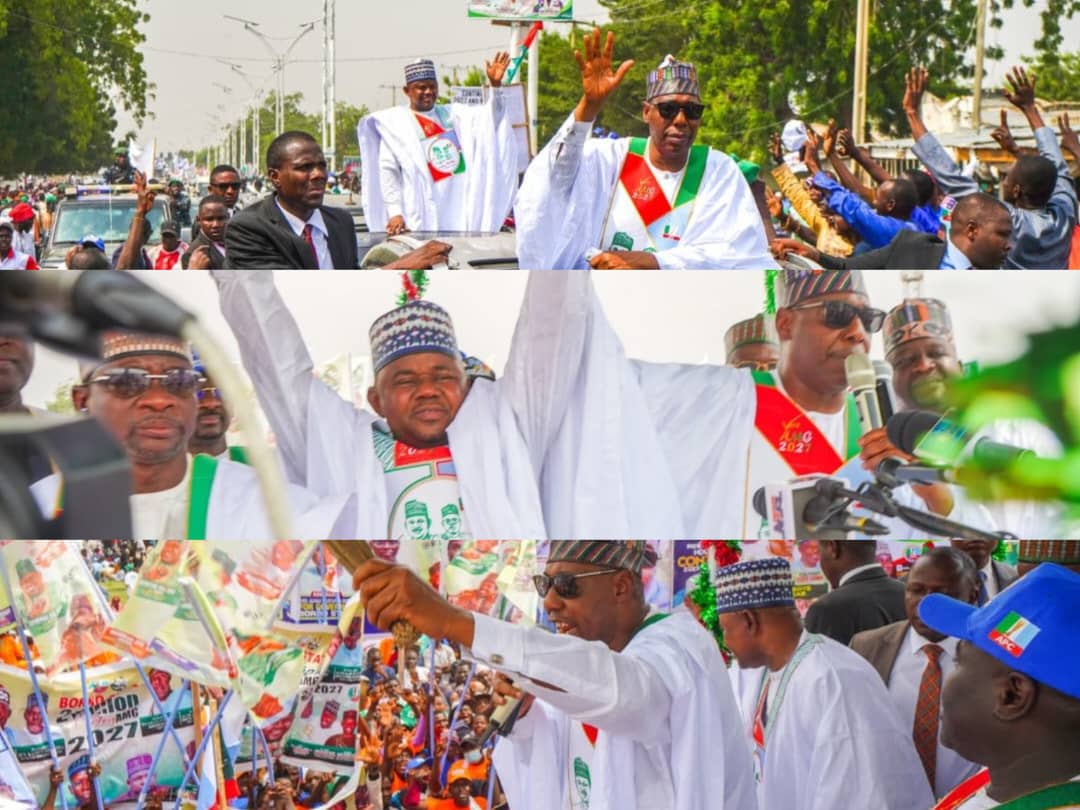
Borno 2027: The General’s Charge and How Zulum Unleashes Borno’s Heavyweight Political Squad
By Abubakar M. Kareto
In Nigerian politics, elections are rarely won on auditorium stages; they are decided in the quiet corridors of rural wards and the long queues of remote polling units.
The formal inauguration of the Borno State All Progressives Congress (APC) Campaign Council at the Government House followed by a massive, open-air campaign flag-off at the Sports Centre in Maiduguri represents a calculated departure from routine rally-making toward micro-targeted grassroots mobilization.
By commanding party stalwarts to abandon executive comfort and embed themselves directly within their local communities, Governor Babagana Umara Zulum is deploying a bottom-up doctrine aimed at locking down political legitimacy where it matters most.
At the heart of this strategy is the critical task of maintaining party cohesion after intense internal primaries. Zulum’s explicit instruction for victorious candidates to reach out and heal rifts with aggrieved aspirants reflects a realistic understanding of political arithmetic: internal resentment erodes turnout faster than any opposition campaign. By coupling reconciliation with firm warnings against subversion, the leadership is attempting to forge an unbreakable front out of potentially volatile factions.
The sheer scale of political unity displayed in Maiduguri underscores the formidable nature of this campaign structure. Bringing together political titans including former Governors Senator Maina Ma’aji Lawan and Senator Ali Modu Sheriff, alongside APC Deputy National Chairman Ali Bukar Dalori and the state’s complete senatorial delegation demonstrates an unprecedented level of internal alignment.
This public display of solidarity among historical heavyweights signals organizational stability, minimizing space for opposition inroads while keeping rank-and-file members firmly aligned.
Beyond local dynamics, Borno State occupies a unique position on the national political chessboard as the home state of Vice President Senator Kashim Shettima. In this high-stakes arena, sheer victory is insufficient; the turnout margin itself serves as a barometer of political influence.
Delivering a massive vote tally is therefore both a local objective and a strategic demonstration of national strength, cementing the state’s leverage within the governing alliance.
To turn political influence into actual votes, the campaign relies heavily on record-based persuasion and visible governance dividends. By grounding the campaign pitch in key developmental gains achieved despite severe security challenges and highlighting major federal institutions acquired in Gwoza, Bama, and Azare canvassers are equipped with a tangible policy narrative. Framing voter turnout for President Bola Ahmed Tinubu, gubernatorial candidate Engr. Mustapha Gubio, and all legislative candidates as a direct return on investment gives party workers a clear, evidence-backed story for every doorstep across the state’s 27 local government areas.
A vital strength of this expanded outreach is the deliberate inclusion of women and youth as core engines of voter mobilization. The strong presence of the women’s delegation led by Borno First Lady Dr. Falmata Babagana Umara Zulum alongside the wife of the Deputy Governor and the wives of party candidates highlights an organized effort to engage families and community networks directly. Demanding structured participation across all demographics ensures that campaign directives actively translate into voter registration and turnout.
Deputy Governor Umar Usman Kadafur’s commitment to an issue-based, unit-by-unit campaign outlines the operational mechanics needed to execute this vision. Requiring regular field reports creates a system of measurable accountability across every precinct. In a vast state with complex logistics, such systematic tracking ensures that high-level strategy is actively carried out at every single polling station.
Lastly, the Maiduguri launch demonstrates how strategic discipline, elite reconciliation, and precinct-level focus converge to shape electoral outcomes. In an increasingly competitive political landscape, the Borno APC has laid out a clear blueprint: harness the full weight of a unified leadership squad, but win the election one polling unit at a time.
About the Author
Abubakar M. Kareto is a Public Affairs Analyst and Communications Strategist focusing on governance, policies, economy, and institutional reforms across Nigeria and Africa. He can be reached on X @amkareto and via email at amkareto@gmail.com.
Borno 2027: The General’s Charge and How Zulum Unleashes Borno’s Heavyweight Political Squad
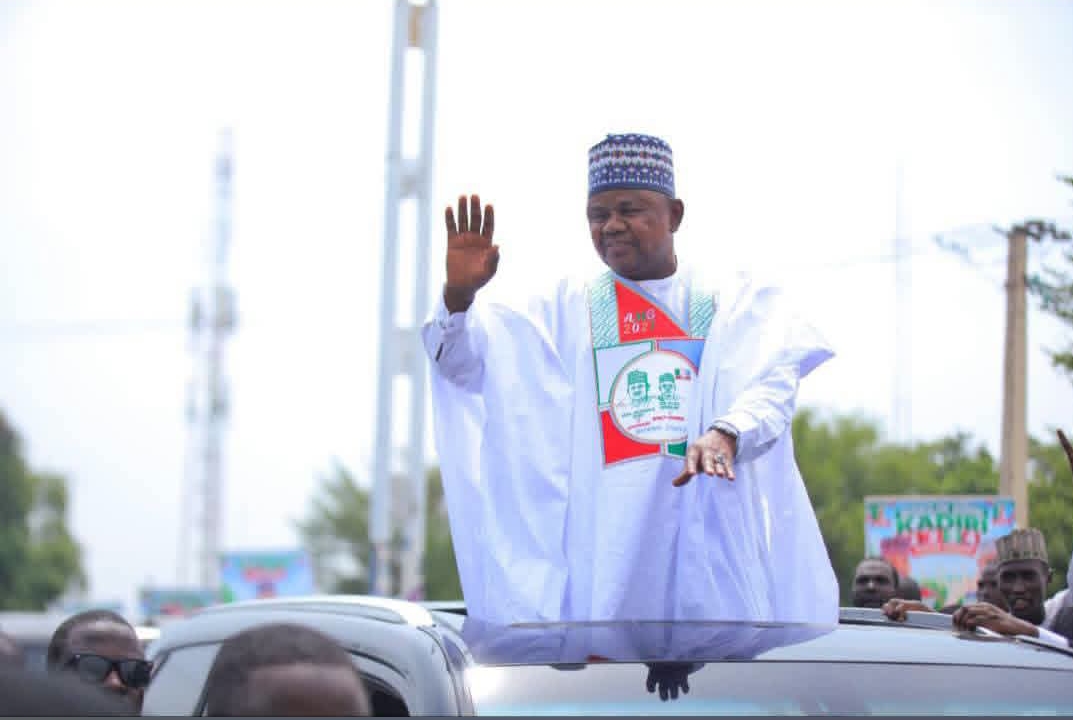
FROM A SILVER SPOON TO A GREATER BORNO: THE GUBIO RISE
By: Dr James Bwala
In politics, no one grows in isolation. Leadership is not developed in a vacuum; it is shaped by mentorship, experience, relationships, and a sincere commitment to the people. This truth is reflected in the words of the APC gubernatorial candidate and prospective governor of Borno State, Engr. Mustapha Gubio, who acknowledged the influential roles of His Excellency, Vice President Kashim Shettima, and His Excellency, Professor Babagana Umara Zulum, in his political and leadership journey. Describing the vice president as a grandfather and Governor Zulum as a father, Engr. Gubio recognised the strong pillars upon which he is learning the art of governance and the politics of peace.
This statement is more than an expression of personal gratitude. It represents a philosophy of leadership founded on continuity, mentorship, humility, and service. Borno State requires leaders who understand its history, appreciate its challenges, and are prepared to build on the progress already achieved. Engr. Mustapha Gubio’s close association with two of the state’s most important political figures provides him with a valuable foundation. Through their experience, he has been exposed to the complexities of governance, the importance of stability, and the responsibilities that come with public office.
Borno has faced challenges that demand more than political slogans. For many years, the state has contended with insecurity, displacement, economic hardship, destroyed infrastructure, disrupted education, and the painful consequences of conflict. Yet, despite these difficulties, Borno has also demonstrated remarkable courage and resilience. Its people have continued to hope, rebuild, work, and support initiatives aimed at restoring peace and development. Therefore, the state needs a leader who will protect the gains made so far while introducing practical and sustainable solutions to its remaining problems.
Engr. Gubio’s political outlook appears to be rooted in this understanding. By recognising that no politician develops alone, he acknowledges the value of experience and collective wisdom. This is especially important in governance, where decisions affect millions of lives and where errors can carry serious consequences. A leader who learns from experienced mentors is more likely to appreciate the complexity of public administration, understand the need for consultation, and avoid the dangers of arrogance and isolation.
Vice President Kashim Shettima’s political career offers an important example of commitment to public service. Before becoming vice president of Nigeria, he served as governor of Borno State and played a significant role during one of the most difficult periods in the state’s history. His experience in managing security challenges, coordinating development efforts, and maintaining public confidence gives him a profound understanding of Borno’s needs. His influence on the next generation of leaders is therefore significant. As a political grandfather, in Engr. Gubio’s words, he represents institutional memory, wisdom, and the continuity of a political tradition focused on service.
Similarly, Governor Babagana Umara Zulum has become widely associated with compassion, courage, and purposeful leadership. His administration has worked to address insecurity, rebuild communities, support displaced individuals, improve education, strengthen healthcare, and expand infrastructure. Although challenges remain, his government has demonstrated that effective leadership requires both vision and personal commitment. Governor Zulum’s regular presence in affected communities and his willingness to engage directly with citizens have strengthened public confidence in government.
To describe Governor Zulum as a father is to recognise the value of guidance and practical mentorship. A father does not merely provide instructions; he teaches through example, corrects with wisdom, encourages growth, and prepares the next generation to assume responsibility. In this context, Engr. Gubio’s relationship with Governor Zulum suggests that he is not seeking office without preparation. Rather, he is learning from a leader who understands the burdens of governance and the importance of placing the interests of the people above personal ambition.
The most compelling aspect of Engr. Gubio’s statement is about his emphasis on the politics of peace. For Borno, peace is not a decorative political phrase. It is the foundation upon which every other form of development depends. Without peace, schools cannot function properly, farmers cannot cultivate their land safely, businesses cannot grow, healthcare services cannot reach vulnerable communities, and investors will remain cautious. Peace is therefore not simply the absence of violence; it is the presence of security, justice, opportunity, and social trust.
A politics of peace requires a leader who is willing to build bridges rather than deepen divisions. Borno is a diverse state with different communities, ethnic groups, religious identities, social interests, and political opinions. Responsible leadership must recognise this diversity as a strength. It must promote fairness, inclusion, and mutual respect. The government must ensure that every community feels seen, heard, and protected. Engr. Mustapha Gubio’s stated commitment to peace offers an encouraging indication that his administration, if elected as governor of Borno State, would seek to unite the people.
However, peace must be supported by development. A young person without access to education, employment, or productive opportunities can easily become vulnerable to manipulation and criminality. Communities that lack roads, electricity, clean water, healthcare, and economic support may lose confidence in government. For this reason, a successful administration must link security with human development. The restoration of peace must be accompanied by investments in education, agriculture, entrepreneurship, public health, and social protection.
Borno has enormous potential in agriculture, trade, livestock, solid minerals, culture, and human capital. A government that creates the right environment can transform these resources into opportunities for its people. Farmers need improved access to seeds, fertilisers, irrigation, storage, markets, and security. Small businesses need affordable credit, reliable electricity, skills training, and simplified regulations. Young people need education that combines academic knowledge with vocational and technological skills. Women need greater access to economic opportunities and support systems. These measures would not only reduce poverty but also strengthen peace by giving citizens a meaningful stake in the future.
Another important responsibility of the next administration will be the continued rehabilitation and reintegration of displaced individuals and communities affected by conflict. Rebuilding homes and infrastructure is essential, but recovery must also include emotional healing, access to livelihoods, education for children, and support for families that have suffered loss. The process must be transparent, inclusive, and sensitive to local realities. Citizens should not merely be recipients of government policies; they should be active participants in designing and implementing them.
Engr. Gubio’s background and political relationships may help him understand the importance of continuity. Every new administration should introduce fresh ideas, but it should not abandon successful programmes simply because they were initiated by a previous government. Good governance requires the ability to preserve what works, correct what does not, and improve policies through innovation. Continuity does not mean refusing change. Instead, it means building responsibly on existing foundations while responding to new realities.
His statement also reveals a sense of humility that is essential in public office. A politician who recognises the contributions of others is more likely to respect institutions, listen to advisers, and value teamwork. Governance is not a personal possession. It is a public trust involving civil servants, traditional rulers, religious leaders, security agencies, community organisations, businesses, development partners, and ordinary citizens. No governor can succeed alone. The ability to unite these groups around a common vision will be critical to the future of Borno State.
At the same time, mentorship must be accompanied by independent judgement. While Engr. Gubio can draw wisdom from Vice President Shettima and Governor Zulum, he must also be prepared to respond to the unique challenges of his own time. Every administration inherits both achievements and unfinished tasks. The next governor will need to make decisions based on evidence, consultation, and the changing needs of the people. Political loyalty should never replace accountability, and continuity should never become an excuse for complacency.
The people of Borno will rightly expect measurable results. They will want to see safer communities, improved schools, functional hospitals, better roads, expanded employment, stronger agricultural production, and transparent public finances. They will expect leaders to communicate openly and to explain the reasons behind major policies. They will also expect justice and fairness in the distribution of projects and opportunities. The success of any administration should ultimately be judged by the improvement it brings to the lives of ordinary citizens.
For this reason, Engr. Gubio’s message must be transformed into a clear social contract with the people. His commitment to peace should be reflected in policies that address the roots of conflict. His respect for mentorship should be reflected in a government that values competence and experience. His promise of development should be demonstrated through realistic programmes with clear timelines and measurable outcomes. Above all, his leadership should remain centred on service rather than personal prestige.
Borno stands at an important point in its history. The state has endured tremendous suffering, but it has also shown extraordinary strength. With the right leadership, it can move from recovery to sustainable prosperity. The next phase will require patience, discipline, courage, and cooperation. It will require leaders who understand that political office is not a reward but a responsibility.
Engr. Mustapha Gubio’s recognition of Vice President Kashim Shettima as a grandfather and Governor Babagana Umara Zulum as a father presents him as a candidate who values experience, guidance, and continuity. More importantly, his commitment to the politics of peace speaks directly to the central aspiration of the people of Borno. If translated into inclusive policies, accountable governance, and practical development initiatives, this vision can help move the state towards a more secure and prosperous future.
Indeed, Borno needs a leader who will inherit the wisdom of the past, respond intelligently to the challenges of the present, and prepare the state for the opportunities of the future. A leader who understands that peace is the beginning of progress, that development must include every community, and that governance is most meaningful when it improves the lives of the people is that leadership that Borno is aspiring for and Engr. Mustapha Gubio is standing tall and positioned in a square peck.
* James Bwala, PhD, writes from Maiduguri.
FROM A SILVER SPOON TO A GREATER BORNO: THE GUBIO RISE
Politics
Beyond Politics: The Betara Leadership Question – An Independent Assessment of Hon. Muktari Betara Aliyu
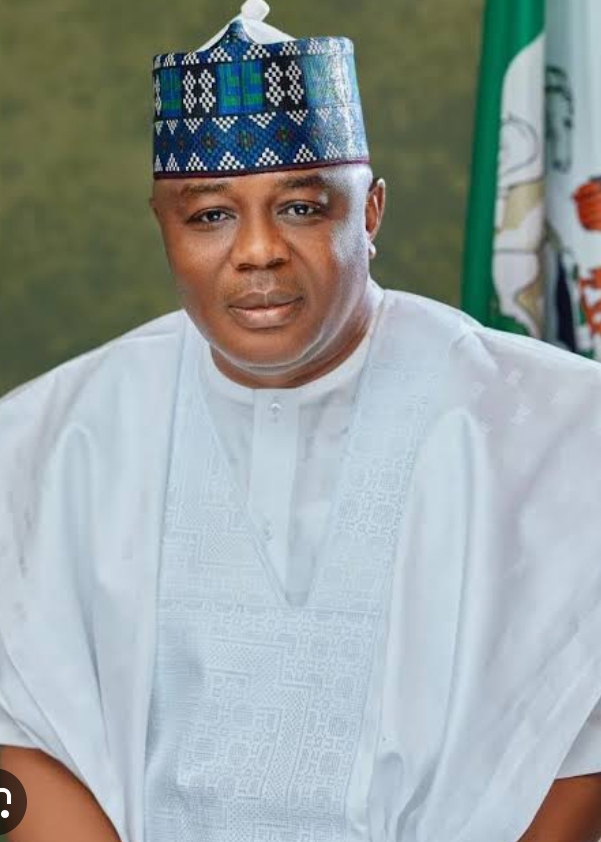
Beyond Politics: The Betara Leadership Question – An Independent Assessment of Hon. Muktari Betara Aliyu
By: Dr. James Bwala
Habib Mohammed Biu’s open letter to Rt. Hon. Muktari Aliyu Betara appears genuine at first reading. Its concerns seem to emerge from a citizen’s desire to draw attention to issues affecting the people of Biu, Kwaya-Kusar, Bayo, and Shani Federal Constituency. Such interventions are important in a democracy because elected representatives must remain accountable to the people they serve. Citizens have the right to question priorities, demand explanations, and express disappointment when they believe their needs are not being adequately addressed.
However, when the letter is examined more critically, it appears to reflect a misplaced priority and an incomplete understanding of the responsibilities of a leader operating at the national level. Habib’s position seems to be that of an ordinary citizen thinking through immediate community concerns, while Hon. Betara’s approach is necessarily broader, more strategic, and more complex. The difference between the two perspectives is substantial. One focuses primarily on what is visible and immediately desired by the people; the other must consider competing demands across local governments, the state, and the nation.
This distinction is essential to a fair assessment of Hon. Muktari Aliyu Betara. He should not be reduced to the identity of a local champion whose value is measured only by how quickly he responds to every local appeal. He has become a national figure, particularly because of his contributions and influence across different levels of governance. His responsibilities extend beyond a single constituency, even though the constituency remains central to his political mandate. A leader in his position must simultaneously respond to local needs, participate in national decision-making, support colleagues, manage political relationships, and contribute to broader developmental efforts. Judging him exclusively through the narrow lens of immediate constituency expectations risks producing an unfair conclusion.
Hon. Betara is widely regarded as one of the busiest politicians from Borno State today. His schedule, responsibilities, and political engagements reflect the demands of his position. It is easy for citizens to see only the outcomes they desire, but leadership involves dealing with numerous challenges that may not be visible to the public. A leader has many problems to confront, but he is also expected to provide solutions to many of them. This dual responsibility requires time, resources, patience, and political judgment.
The public often assumes that a prominent politician has unlimited capacity. Because a leader has influence, people expect him to intervene in every matter, assist every individual, and respond to every appeal. Yet no politician, however powerful or generous, can see all things or do all things for the people. The fact that a leader does not respond to one demand does not necessarily mean that he is indifferent. It may indicate that he is dealing with a more urgent matter, working through institutional channels or balancing several competing priorities.
This is why criticisms of Hon. Betara should be constructive and proportionate. Accountability is necessary, but it should not be confused with condemnation. A politician can have weaknesses, make mistakes, or fail to meet certain expectations without being judged as a complete failure. Leadership should be assessed in its totality. The failure to accomplish one task does not erase the achievements recorded in other areas. A balanced evaluation must recognize both shortcomings and contributions.
It is therefore encouraging that Malam Habib Mohammed Biu acknowledged Hon. Betara’s intervention in the Joint Admissions and Matriculation Board registration process. That intervention reportedly benefited many people on whose behalf Habib was appealing. This acknowledgement is significant because it demonstrates that Betara has responded to real needs within the constituency. Educational support, especially assistance with examination registration, can make a meaningful difference in the lives of young people. For families facing financial hardship, such support may determine whether a student is able to participate in an important stage of his or her education.
However, Hon. Betara is not the only politician representing the people of that constituency. Responsibility for development and public welfare must be shared among elected officials, political leaders, community organizations, and citizens. It would be unfair to place every expectation on one individual. Other representatives and stakeholders should also be encouraged to contribute. If one politician is doing something beneficial, the appropriate response should be recognition and encouragement, while others are urged to do more.
Political leadership is not a one-man assignment. Members of the National Assembly, state officials, local government authorities, and community leaders all have distinct responsibilities. Constituents should demand performance from everyone, not focus exclusively on a single prominent figure. When citizens expect only one politician to solve every problem, they unintentionally weaken democratic accountability by allowing others to escape scrutiny.
There is also a need to understand the relationship between a leader and the people who support him during difficult times. The funds Hon. Betara has recently provided to colleagues and musicians may raise questions, especially when public needs remain pressing. Such expenditures may appear to some observers as misplaced when compared with the urgent demands of ordinary citizens. Nonetheless, they require context and clarification rather than immediate condemnation.
Political colleagues can serve as important pillars during periods of difficulty. Politics is a demanding and often unpredictable enterprise. Leaders depend on alliances, relationships, and networks of support, particularly when facing political crises or challenging assignments. Supporting colleagues may be part of maintaining those relationships, securing cooperation, and ensuring the continuation of political work. While such spending should not be above scrutiny, it cannot automatically be dismissed as meaningless or irresponsible.
Similarly, musicians and praise singers often occupy a distinctive place in Nigerian political culture. Their performances can encourage public figures, celebrate achievements, and create an atmosphere that motivates leaders to act. In some cases, their influence may stir a politician to respond to appeals, make donations, or support people in need. The relationship between political leaders and cultural figures is therefore more complex than it may appear. It may involve recognition, social influence, encouragement, and mobilization.
This does not mean that every financial gesture should be accepted without questions. Public officeholders must be transparent, disciplined, and conscious of the difference between personal resources and public funds. Any concern about the use of public resources deserves proper examination. But criticism must be based on facts, not assumptions. Before concluding that a leader’s expenditure is wasteful, the public should seek to understand the source of the funds, the purpose of the spending, and its relationship to the leader’s broader responsibilities.
The central issue, therefore, is not whether Hon. Betara is perfect. He is not. No leader is. The more important question is whether his overall contribution demonstrates commitment to the people and to public service. Based on the interventions attributed to him, including support for JAMB registration, it is clear that he has made efforts to assist members of his constituency. Those efforts should not be ignored simply because there are areas where he has not met expectations.
A fair political culture must learn to combine criticism with appreciation. In many communities, public figures are praised only when they provide immediate financial assistance but condemned when they are unable to meet every demand. This creates an unhealthy environment in which leaders are encouraged to pursue popularity rather than sustainable development. It also reduces public service to personal distribution of money instead of legislation, policy influence, education, infrastructure, and institutional development.
Hon. Betara’s responsibilities as a national figure should be evaluated through a broader framework. His role includes representing constituents, contributing to national lawmaking, influencing policy, engaging with government institutions, and maintaining relationships that can benefit his people. Some of these responsibilities may not produce instant or visible results. Nevertheless, they may have long-term effects on the constituency and the state.
At the same time, describing Betara as a national figure should not place him beyond criticism. National relevance must be accompanied by transparency and responsiveness. His constituents should continue to ask questions, present their concerns, and demand explanations where necessary. The appropriate response is not to silence criticism but to ensure that it is informed, fair, and directed toward improvement. A leader who has accomplished much can still be encouraged to do more.
The open letter by Habib Mohammed Biu should therefore be viewed as part of a wider democratic conversation. It may contain valid concerns, but its judgment of Hon. Betara appears too limited if it overlooks the complexity of his political responsibilities and previous contributions. The fact that one issue remains unresolved does not justify the conclusion that the representative has failed entirely. Nor should a leader’s support for colleagues or musicians automatically be interpreted as proof that he has abandoned his constituency.
What is required is balance. Constituents should acknowledge what Hon. Betara has done, identify what remains to be done, and encourage him to address those gaps. Hon. Betara, for his part, should continue to listen to his people, communicate more clearly, and ensure that his national responsibilities do not weaken his connection to the constituency. Other politicians in the area should also be reminded that they have obligations to the people and cannot leave all responsibilities to one individual.
Ultimately, leadership should be judged by both intention and impact, both visible achievements and long-term influence. Hon. Muktari Aliyu Betara may have his errors and shortcomings, but those limitations do not cancel his contributions. A leader can fail in one area and still succeed in several others. The proper response is not to reduce him to a local champion or portray him as incapable of leadership, but to recognize his wider role while demanding continued improvement.
For this reason, Hon. Betara deserves respect, constructive criticism, and encouragement. He should not be expected to do everything, but he should be urged to do more where genuine needs exist. His accomplishments should be acknowledged, his weaknesses should be addressed, and his actions should remain open to public scrutiny. That is the essence of responsible citizenship and effective leadership.
- James Bwala, PhD, writes from Maiduguri.
Beyond Politics: The Betara Leadership Question – An Independent Assessment of Hon. Muktari Betara Aliyu

UNFPA, Signify partner to illuminate 10,000 healthcare facilities in seven states

Nigeria, India Sign Human Rights Agreement as Fagbemi Pledges Support for Implementation

19 Nigerian Pension Funds Express Interest in Proposed $750m Infrastructure Fund

Roger Federer’s Shock as DNA Results Reveal Myla and Charlene Are Not His Biological Children

THE PLIGHT OF FARIDA

FAILED COUP IN BURKINA FASO: HOW TRAORÉ NARROWLY ESCAPED ASSASSINATION PLOT AMID FOREIGN INTERFERENCE CLAIMS
-
 News3 years ago
Roger Federer’s Shock as DNA Results Reveal Myla and Charlene Are Not His Biological Children
-
Opinions5 years ago
THE PLIGHT OF FARIDA
-
 News2 years ago
FAILED COUP IN BURKINA FASO: HOW TRAORÉ NARROWLY ESCAPED ASSASSINATION PLOT AMID FOREIGN INTERFERENCE CLAIMS
-
 Opinions5 years ago
POLICE CHARGE ROOMS, A MINTING PRESS
-

 News3 years ago
EYN: Rev. Billi, Distortion of History, and The Living Tamarind Tree
-

 ACADEMICS3 years ago
A History of Biu” (2015) and The Lingering Bura-Pabir Question (1)
-

 Columns3 years ago
Army University Biu: There is certain interest, but certainly not from Borno.
-

 Politics1 year ago
2027: Why Hon. Midala Balami Must Go, as Youths in Hawul and Asikira/Uba Federal Constituency Reject ₦500,000 as Sallah Gift
