
Politics
VP Shettima Allegations: Paul Ibe Must Bring Proof, Not Just Headlines.”

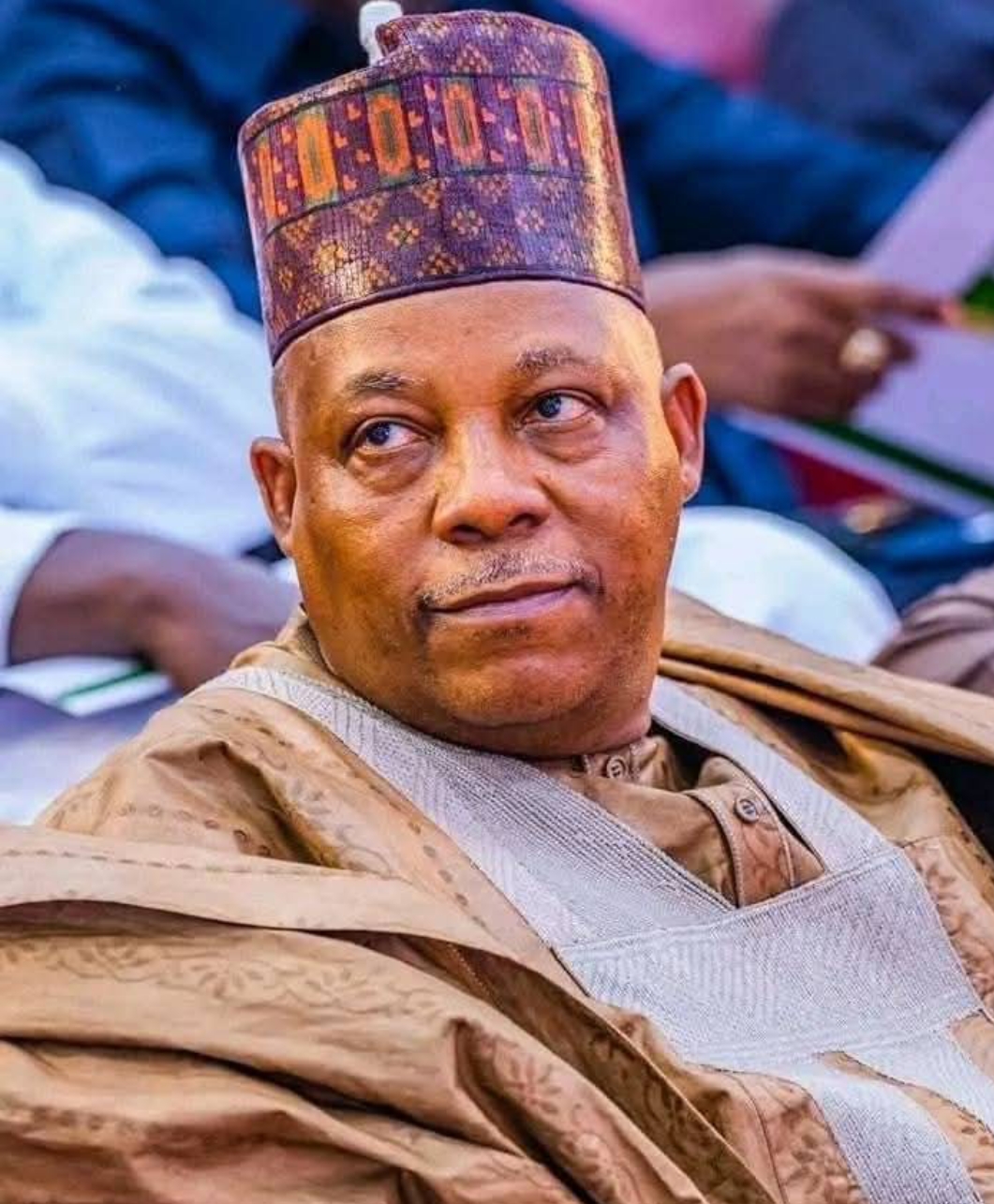
VP Shettima Allegations: Paul Ibe Must Bring Proof, Not Just Headlines.”
By: Dr James Bwala
When Vice President Kashim Shettima referred to former Vice President Atiku Abubakar as “the Jaramogi Odinga of Nigeria,” it was predictable that the Atiku camp would respond. Political supporters rarely allow such comparisons to pass without searching for a way to strike back. In this case, the response focused on the 2012 arrest of Boko Haram commander Kabiru Sokoto at the Borno State Government Lodge in Abuja and demanded that Shettima explain the circumstances surrounding the incident.
That demand is not, in itself, unreasonable. The arrest of a high-profile terrorism suspect at a government facility was a serious security breach, and Nigerians have every right to ask questions about what happened. However, the manner in which the matter is being used politically reveals a recurring problem in public discourse: the tendency to convert an unexplained security incident into an allegation of personal complicity without presenting evidence.
Those attacking Shettima often act on narratives promoted by individuals who know little about the history and complexities of the Boko Haram insurgency in North-east Nigeria. The most reliable accounts of that conflict do not come exclusively from politicians who appeared before television cameras after reading newspaper reports or receiving briefings from others. They come from the communities that suffered the violence and from journalists who lived, worked and reported from the front line for years.
READ ALSO: https://newsng.ng/2027-inside-tinubu-shettimas-campaign-strategy-and-the-battle-for-advantage/
As a journalist who worked in Maiduguri and covered the North-east for the Nigerian Tribune and other media platforms during the height of the Boko Haram insurgency, I consider myself well placed to discuss the realities of that period. I witnessed the fear, confusion and institutional weaknesses that defined the conflict. I also observed how easily facts were distorted for political purposes. For that reason, I was particularly interested in the recent reaction by Paul Ibe, Atiku Abubakar’s spokesman, demanding that Vice President Shettima answer questions about Kabiru Sokoto’s arrest.
I am not speaking for Shettima in his official capacity as vice president. He has an official spokesperson whose responsibility it is to respond to political and public questions on his behalf. I am speaking as an analyst and journalist who has followed the events of that period closely. Since many people are now presenting themselves as defenders of Atiku or Shettima, it is important to refresh the public record and insist that political arguments remain anchored in facts.
Kabiru Sokoto’s arrest at the Borno State Government’s lodge in Abuja in January 2012 was undoubtedly a major security incident. Sokoto was wanted in connection with the bombing of St Theresa’s Catholic Church in Madalla, Niger State, on Christmas Day in 2011. The attack killed and injured worshippers and shocked the nation. His presence at a government facility naturally raised serious concerns about how he gained access, who facilitated his movement and whether security officials failed in their duties.
READ ALSO: https://newsng.ng/2027-inside-tinubu-shettimas-campaign-strategy-and-the-battle-for-advantage/
These questions deserve clear answers. Yet, the existence of a security breach is not automatically proof that the governor of Borno State, Kashim Shettima, was involved in terrorism or knowingly assisted a terrorist suspect. That distinction is fundamental. A person may enter a government facility because of negligence, deception, unauthorised assistance or a failure of security procedures. None of these possibilities, without more, establishes the personal involvement of the political head of the state.
The explanation provided by the Borno State Government at the time was that accommodation had been approved for Ibrahim Umar Abba, who arrived with two other men. One of those men was Kabiru Sokoto. The government maintained that the governor and senior state officials did not know the visitors and characterised the incident as a security breach. Whether that explanation is satisfactory is a matter for evidence and investigation. But it should not be dismissed merely because it does not serve a partisan narrative.
The central question that Paul Ibe and others must answer is not whether Sokoto was arrested at a government lodge. That fact is already known. The important question is what evidence demonstrates that Shettima personally knew Kabiru Sokoto, authorised his entry, or knowingly provided assistance to him. If such evidence exists, it should be made public and examined. If it does not exist, then the arrest should not be presented as proof of complicity.
READ ALSO: https://newsng.ng/2027-inside-tinubu-shettimas-campaign-strategy-and-the-battle-for-advantage/
Political debate cannot be governed by the principle that association equals guilt. If that standard is applied consistently, many public officials could be accused of wrongdoing because a criminal, terrorist or corrupt individual once entered a public building, attended a political gathering or had contact with someone connected to them. In a country where public institutions are often weakened by poor security and inadequate coordination, such a standard would produce endless allegations without establishing responsibility.
There were also reports that Kabiru Sokoto may have intended to target Shettima’s children. That dimension of the case deserves proper examination. It does not, by itself, resolve every question surrounding his presence at the lodge, but it demonstrates why the incident cannot be interpreted from only one angle. If a terrorist suspect was seeking access to a political leader’s family, the possibility that he exploited the identity or connections of another person must be considered. Investigators would need to establish whether the suspect was invited, hidden, deceived officials or used someone else’s credentials.
Has Paul Ibe considered that possibility? Has he examined the investigation records, witness statements or court materials connected to the case? Has he identified evidence showing that Shettima knew Sokoto personally or was aware of the plan to shelter him? These are not attempts to prevent accountability. They are necessary questions if the discussion is to rise above political accusation.
READ ALSO: https://newsng.ng/2027-inside-tinubu-shettimas-campaign-strategy-and-the-battle-for-advantage/
The broader problem is that the Boko Haram conflict is frequently recalled selectively. Politicians and commentators sometimes reduce complex events to convenient stories that serve present political interests. But the insurgency was not a simple contest between two political parties. It involved terrorism, criminal networks, intelligence failures, local grievances, compromised institutions, community fear and the collapse of trust between citizens and security agencies. The people of Borno and other Northeastern states paid the highest price for those failures.
Journalists who covered the region during that period understood the difference between what was said in official statements and what was happening on the ground. We reported attacks, displacement, arrests, military operations and political reactions. We saw how rumours moved faster than verified information and how officials sometimes spoke before investigations were complete. We also saw how individuals who had never visited the affected communities confidently presented simplistic explanations on television.
That experience should encourage caution. The public deserves transparency, but transparency is not the same as political sensationalism. A demand for explanation is legitimate when it seeks documents, timelines, testimony and verifiable findings. It becomes irresponsible when it implies guilt before the relevant evidence has been established.
READ ALSO: https://newsng.ng/2027-inside-tinubu-shettimas-campaign-strategy-and-the-battle-for-advantage/
Paul Ibe is entitled to demand answers from Vice President Shettima. Nigerians are equally entitled to ask Atiku Abubakar’s camp whether it is pursuing accountability or merely searching for a political weapon. If the purpose is accountability, then the focus should be on the investigation: Who approved the accommodation? Who authorised the visitors’ entry? What security procedures were followed? Which officials were interviewed? What did the police and intelligence agencies conclude? Was anyone prosecuted, and on what evidence?
These questions should be addressed through official records rather than partisan declarations. If the investigation established that officials acted negligently, appropriate sanctions should have followed. If it established deliberate assistance, those responsible should have faced prosecution. If it found no evidence linking Shettima personally to the suspect, then the public should not be encouraged to treat the incident as proof of guilt.
The same standard must apply to all public officials, regardless of political affiliation. Supporters of Atiku should not demand a lower burden of proof for allegations against Shettima than they would accept for allegations against their own principal. Likewise, supporters of Shettima should not dismiss legitimate questions merely because they come from an opposition figure. Democracy requires scrutiny, but scrutiny loses its value when it is motivated exclusively by revenge.
READ ALSO: https://newsng.ng/2027-inside-tinubu-shettimas-campaign-strategy-and-the-battle-for-advantage/
The argument also exposes the danger of importing unrelated political grievances into security matters. Shettima’s reference to Atiku as Nigeria’s “Jaramogi Odinga” may have been interpreted by Atiku’s supporters as provocative or dismissive. They may believe the comparison was historically inaccurate or politically insulting. They are free to challenge it. But responding to a political analogy by reviving an old security incident does not automatically strengthen their case. It may instead create the impression that they are changing the subject because they are unhappy with the original remark.
There is a legitimate debate to be had about Atiku Abubakar’s political career, electoral struggles and public role. There is also a legitimate debate about Shettima’s record as governor and national political figure. Those debates should be conducted with evidence, historical accuracy and intellectual honesty. Turning every disagreement into an accusation of terrorism-related complicity damages public discourse and trivialises the suffering of victims of Boko Haram.
The “Jaramogi Odinga” comparison may continue to generate controversy, particularly because historical analogies carry political and cultural meanings. But whatever one thinks of the comparison, it should not be allowed to produce reckless allegations. Political communication should be judged on its accuracy and intention, while security accusations should be judged on evidence.
READ ALSO: https://newsng.ng/2027-inside-tinubu-shettimas-campaign-strategy-and-the-battle-for-advantage/
The Kabiru Sokoto incident remains a matter worthy of public examination. Government facilities must be protected, security breaches must be investigated, and citizens have a right to know whether officials failed in their responsibilities. But fairness requires a clear distinction between institutional failure and personal criminal intent. Until evidence establishes that Kashim Shettima knowingly assisted Kabiru Sokoto, his presence at the lodge remains evidence of a serious breach—not proof that the governor was involved in terrorism.
If Paul Ibe has evidence to the contrary, he should present it. If the relevant records contain findings that implicate Shettima, those findings should be scrutinised openly. But if no such evidence exists, the allegation should not be treated as established fact simply because it is politically useful. As a journalist, Paul Ibe should know better.
* James Bwala, PhD, writes from Abuja
VP Shettima Allegations: Paul Ibe Must Bring Proof, Not Just Headlines.”


Politics
2027: Unmasking the Double Standard Behind Seyi Tinubu and Amir Kashim Shettima’s Participation

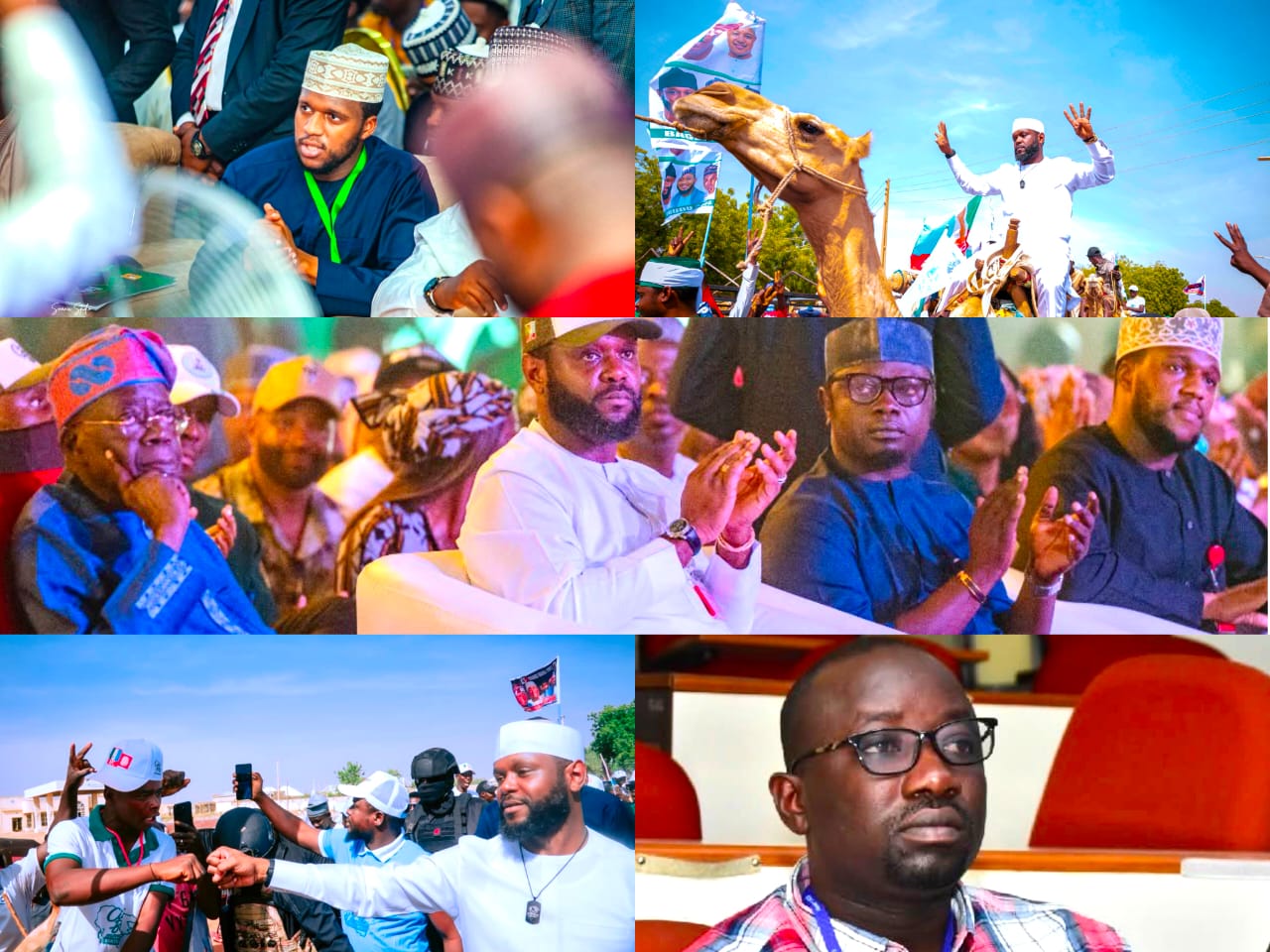
2027: Unmasking the Double Standard Behind Seyi Tinubu and Amir Kashim Shettima’s Participation
By Abubakar M. Kareto
In Nigeria’s ever-heated political discourse, few things attract sharper criticism than the visible involvement of a leader’s child in campaign activities. Suddenly, words like dynasty, entitlement, and nepotism fill the air. Yet a calm, objective look at reality reveals a much simpler truth. Seyi Tinubu and Amir Kashim Shettima are actively participating in political campaigns to support their parents in retaining office, doing precisely what any supportive and loyal child would do. Public participation remains a fundamental right for every citizen, and the fierce, knee-jerk outrage directed at their engagement exposes a profound level of misplaced cynicism and partisan hypocrisy.
Seyi Tinubu’s energetic mobilisation through the City Boy Movement and Amir Kashim Shettima’s active presence in rallying youth ahead of upcoming electoral cycles represent a natural expression of family loyalty and civic duty. Critics often resort to cynical distractions, questioning whether these young men are the ones actually contesting an elective post. Such queries are not only unnecessary; they are intellectually lazy. Neither Seyi Tinubu nor Amir Kashim Shettima has ever declared a run for public office. They are simply mobilising for their parents, performing the natural support and solidarity anyone would extend to their own family. Their active engagement is an exercise of support, not a self-serving ballot entry, making the resulting public outrage entirely hollow.
This principle of family support and legacy stewardship extends far beyond politics into virtually every professional sphere of human endeavor. In global corporate business empires, multi-generational legal chambers, and specialized medical practices, children routinely step in to support, manage, or expand enterprises built by their parents. When the child of a renowned surgeon assists in running a family hospital, or when the offspring of an accomplished industrialist joins a corporate board to protect shared institutional values, society does not scream nepotism; it recognizes stewardship, dedication, and continuity. Proximity to a craft naturally breeds expertise and a desire to preserve hard-won milestones, making professional or political support a universally accepted standard of loyalty.
Consider the United States for a broader historical perspective on political continuity and institutional resilience. George H.W. Bush served as President, and his son, George W. Bush, later occupied the same office following a rigorous democratic contest. No serious American commentator argued that the younger Bush had no right to enter politics or to support his father’s vision. The same country produced the political legacies of the Kennedys, the Roosevelts, and the Clintons. Democracy did not collapse under these famous names. Instead, voters decided based on performance and preference, proving that electorate scrutiny remains the ultimate safeguard.
Closer to home, look at the music world and cultural preservation. Fela Anikulapo-Kuti remains one of Africa’s greatest cultural and political voices. His sons, Femi and Seun Kuti, did not abandon the family craft because critics might shout dynasty. They continued the tradition, refined it, and built their own distinct musical legacies. No one of goodwill has ever suggested that Femi or Seun should have chosen a different profession simply because their father was a giant. Continuity of passion, mentorship, and skill was celebrated rather than condemned by society.
When examining public critique objectively, a profound hypocrisy underpins the anti-participation narrative. If leaders’ children chose to step back, remain entirely detached, and avoid public service or grassroots mobilisation, the very same critics would launch a barrage of cynical counter-attacks. They would loudly demand to know where the leaders’ children are hiding, accusing them of elitism or aloofness. Public commentators would ask why politicians are shielding their own families while allowing or using underprivileged citizens and poor children as political foot soldiers on the streets. Stripped of emotion, fairness dictates a simple conclusion: citizens cannot hypocritically condemn leaders’ children for participating in politics to support their parents, while simultaneously attacking them if they chose not to. The outrage is entirely manufactured; active participation is an expression of civic duty, not a crime.
A famous name can certainly open doors, secure platforms, and attract initial attention, but it cannot manufacture sustained public goodwill or electoral victory. In a democracy, the electorate retains the ultimate veto power. Ultimately, it is left for Nigerians to decide whether they are convinced or not when making their choice on election day. Voters evaluate candidates based on tangible outcomes, governance track records, and responsiveness rather than mere lineage, meaning that children of public figures must ultimately work twice as hard to prove their individual competence in the public arena.
Intelligent political analysis requires separating genuine governance malfeasance from predictable partisan anxieties and emotional bias. Familial association is never a disqualifier for civic participation. Whether in corporate enterprises, legal practices, musical dynasties, or unfolding Nigerian political alignments, children leveraging networks to support their parents represent loyalty and active citizenship. They do not bypass democracy because they simply exercise their fundamental right to participate in it while enriching the broader national conversation.
Abubakar M. Kareto is a Public Affairs Analyst and Strategic Communications Specialist focusing on governance, political economy, and public policy across Nigeria and Africa. He can be reached via X (@amkareto) or email (amkareto@gmail.com).
2027: Unmasking the Double Standard Behind Seyi Tinubu and Amir Kashim Shettima’s Participation

APC gubernatorial candidate Wali promises to sustain youth development if elected in Yobe
By: Yahaya Wakili
Yobe state APC governorship candidate Alhaji Baba Malam Wali mni has assured that, if elected, his administration would sustain the development initiatives of Governor Buni, particularly those focused on youth development, economic empowerment, and improved living standards.
Baba Wali stated this today in Gadaka while flagging off the distribution of 500 empowerment items for youths and women in zone B on behalf of Governor Mai Mala Buni CON, COMN.
Wali said the initiatives reflected the government’s commitment to creating economic opportunities for the people, especially youths, by equipping them with the means to become self-reliant and productive members of society.
He maintained that the distribution of the empowerment items was designed to support beneficiaries in establishing sustainable means of livelihood.
The governorship candidate seeks reelection of President Bola Ahmed Tinubu GCFR and other APC candidates, citing examples of the developmental projects and programs initiated in the state and the country as a whole.
Baba Malam Wali further called on the people to come out and massively vote for Asiwaju and all other party candidates and emphasized that continuity would remain a guiding principle of Buni’s administration with renewed attention to programs that create opportunities for young people and enable them to contribute meaningfully to the state’s economic growth.
The distribution of the 500 items, which include 200 motorcycles, 100 tricycles (Jega), and 100 sewing machines, with beneficiaries cutting across youths and women, among others, is geared towards promoting inclusive economic participation and addressing unemployment through practical empowerment interventions.
APC gubernatorial candidate Wali promises to sustain youth development if elected in Yobe

ADC Massive Crowds Welcome Atiku, Intimidates APC in Yobe
By: Yahaya Wakili
A massive crowd of supporters today welcomed the former Vice President and ADC Presidential candidate, Alhaji Atiku Abubakar, in Potiskum, the largest and most commercial city in Africa, and Yobe State in continuation of his political campaign across the country.
A large number of supporters, including youths, women and elderly residents, gathered to welcome Atiku and his entourage. The rally attracted a large turnout of supporters and marked what the campaign described as a historic event in the north-east.
Addressing a massive crowd of ADC supporters in Dabo Aliyu Stadium, Potiskum, the former Vice President and presidential candidate, Atiku Abubakar, said, ‘As I mentioned in other places, I swear if elected, I would return the oil and electricity subsidies, and nobody will increase your tax.’
“I would restore peace in Yobe and Nigeria, and for those youths who oppose peace in Nigeria, we will address them, assuring the people of Yobe that the ADC party is committed to empowering our youths to become self-reliant,” Atiku Abubakar said.
“Vote for competent persons; don’t vote for those who would steal your money.” Please note that all the promises I made will not become a reality unless you come out, cast your votes, protect them, count them, and ensure they are counted. Don’t allow somebody to snark at your votes.
He revealed that “I want you to promise in the presence of your leaders, in the presence of Almighty Allah, that you will vote for ADC from top to bottom.”
ADC Massive Crowds Welcome Atiku, Intimidates APC in Yobe

Fiscal Responsibility Commission Seeks Stronger Enforcement Powers, More Funding, Act Amendment

NHRC Seeks Stronger Dutch Partnership to Protect Civic, Political Spaces Ahead of 2027 Elections

Berom Militia Kill Three Fulani in Riyom injured One Other

Roger Federer’s Shock as DNA Results Reveal Myla and Charlene Are Not His Biological Children

THE PLIGHT OF FARIDA

FAILED COUP IN BURKINA FASO: HOW TRAORÉ NARROWLY ESCAPED ASSASSINATION PLOT AMID FOREIGN INTERFERENCE CLAIMS
-
 News3 years ago
Roger Federer’s Shock as DNA Results Reveal Myla and Charlene Are Not His Biological Children
-
Opinions5 years ago
THE PLIGHT OF FARIDA
-
 News2 years ago
FAILED COUP IN BURKINA FASO: HOW TRAORÉ NARROWLY ESCAPED ASSASSINATION PLOT AMID FOREIGN INTERFERENCE CLAIMS
-
 Opinions5 years ago
POLICE CHARGE ROOMS, A MINTING PRESS
-

 News3 years ago
EYN: Rev. Billi, Distortion of History, and The Living Tamarind Tree
-

 ACADEMICS3 years ago
A History of Biu” (2015) and The Lingering Bura-Pabir Question (1)
-

 Columns3 years ago
Army University Biu: There is certain interest, but certainly not from Borno.
-

 Politics1 year ago
2027: Why Hon. Midala Balami Must Go, as Youths in Hawul and Asikira/Uba Federal Constituency Reject ₦500,000 as Sallah Gift
