
News
VP SHETTIMA AND THE WINGLESS KITE OF SUBSTITUTION: THE KWANKWASO ANGLE.

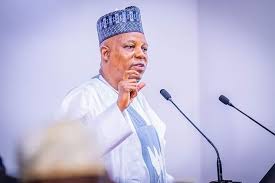
VP SHETTIMA AND THE WINGLESS KITE OF SUBSTITUTION: THE KWANKWASO ANGLE.
By Inuwa Bwala
They want to make it look like a game, much larger than the topic being discussed, and the intrigues are also quite familiar.
They want to make it look as if it is more the issue of a particular region, trying to force itself back into reckoning, having effectively lost out in the political chess game in Nigeria.
But it is a ploy to sway public attention and to divert the government from pursuing its lofty programmes.
A similar narrative played out when the El-Rufais and the Gandujes were in power reckoning in the race to 2023 when they tried to pitch the North East against the North West. It woefully failed that time, but they seem not to have learnt their lessons.
Unfortunately, it is an agenda flying on a wingless kite and an in a coach less locomotive. The North East and North West have historically been allies in Nigeria’s power equation. Trying to change the narrative to please a few will always fail.
They are few, but very rich and powerful. It is the case of a few people desperately in search of a political oracle amongst them, around whom the political fortunes of a whole region will now oscillate.
I could not therefore help smiling to myself, as I watched the recorded encounter between my brother Daniel Bwala and one TV presenter Gimba Umar: discussing a presumed 2027 Vice Presidential race, between the Vice President Kashim Shettima and former Kano State Governor, Rabiu Musa Kwankwaso.
The presumptions that there is going to be a change of a running mate to President, Bola Ahmed Tinubu in 2027, is in itself funny to those who knew the existing bond between Tinubu and Shettima, as well as those who were familiar with the circumstances surrounding the emergence of Kashim Shettima, as the Vice President, in the first place.
I smiled because I am familiar with the narrative in this agenda setting game, which the presenter is trying to push.
But I smiled because, as usual, Daniel Bwala, also saw through the plot and presented lucid arguments, often leaving the interviewer scavenging for counter naratives, which turned out to sound rather politically infantile and naive to a discerning mind.
As a journalist, I know the anchor must have realised he made the wrong choice in inviting Daniel to kick-start that rather unpopular narrative.
From all indications, those writing the script of a change in the Vice President in 2027 are both uncharitable to President Tinubu and calous in featuring Rabiu Kwankwaso as the protagonist of that, absurd theatre.
Be that as it may, I wish to briefly discuss a few posers, which could serve as a clue as to why that topic should not be given the garb of an issue, but confined to the dustbin, where it rightfully belongs.
Firstly, one needs to ask whether there is a break in the relationship between the president and the vice president. If there is none, then one needs to ask where Vice President Kashim Shettima may have faltered in the discharge of his duties to warrant the need for a change.
Again, given the tight political fusion between the President and the Vice President, what makes anybody think that, Rabiu Kwankwaso or any of his ilks in the Northwest could make a better trusted ally to the President more than Kashim Shettima?
With the outcome of the 2023 elections, which clearly rubbished earlier hypotheses of political and regional influence futile, what makes anybody think that President Tinubu will want to revisit the futile permutations of the old?
Against the background of Vice President Kashim Shettima’s excellent outing as Vice President, coupled with his growing political sagacity, is Rabiu Kwankwaso a competent rival, even in a contest of public court?
Unless Kwankwaso, like the stubborn fly, forgets to let go of the coffin, which is being lowered, he risks being buried with this unpopular political thesis.
But more importantly, with less than one year into the life of an administration, who knows who will be well and alive to think of a challenge in a presumptions race in 2027, when the ultimate judgement rests with the almighty.
I will deliberately skip exposing the unseen hands in pushing for that narrative, but not without cautioning, that we are familiar with the trenches, where they are firing.
Inuwa Bwala was two times Commissioner for Home Affairs, Information and Culture in Borno State.
VP SHETTIMA AND THE WINGLESS KITE OF SUBSTITUTION: THE KWANKWASO ANGLE.


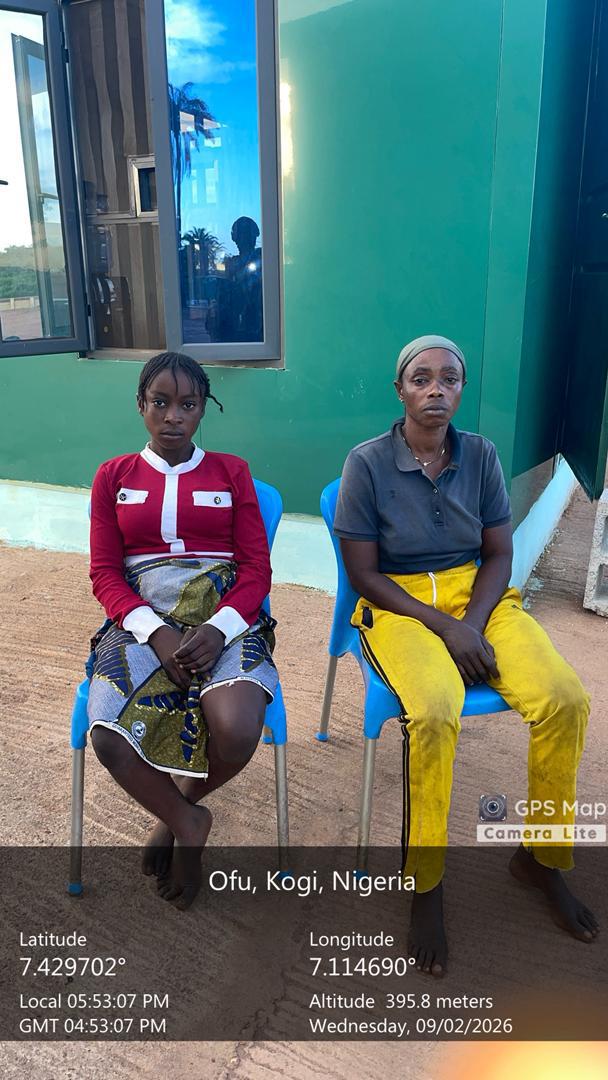
Troops rescue two female kidnap victims in Kogi
By: Zagazola Makama
Troops of the Nigerian Army have rescued two female kidnap victims after suspected bandits invaded a farmland in Ajodomodo Village, Dekina Local Government Area of Kogi State.
The incident occurred at about 10:30 a.m. on Wednesday, Sept. 2, when the suspected bandits reportedly invaded the farmland and abducted the two victims before fleeing the area.
Troops of the 21 Battalion Quick Reaction Force swiftly responded to the incident and pursued the fleeing criminals along their withdrawal route towards Agbodakodo Forest.
According to sources the pressure from the troops forced the abductors to abandon the victims in the forest.
The victims, identified as 15-year-old Miss Mohammed Rahinat and Mrs Hassanatu Mohammed, 30, were subsequently rescued unharmed.
The two women were evacuated to the 21 Battalion Medical Reception Station for medical attention and further assessment.
The military said troops have continued operations in the area to track the fleeing suspects and prevent further attacks on farming communities.
The rescue illustrates the importance of rapid military response and timely information sharing in countering kidnapping and other criminal activities in rural communities.
Troops rescue two female kidnap victims in Kogi
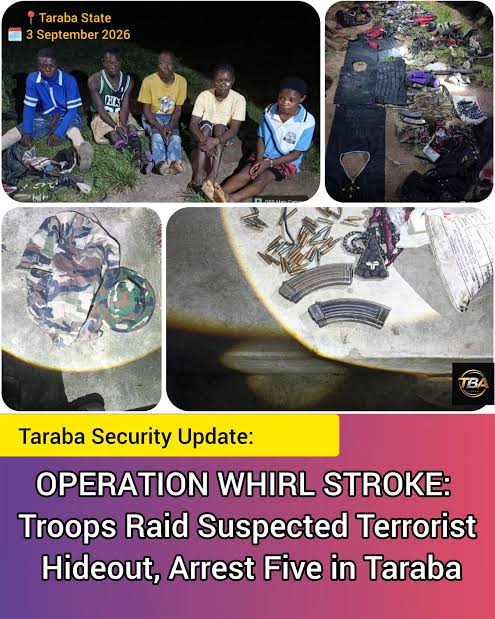
Operation Whirl Stroke troops raid suspected terrorist hideout, arrest five in Taraba
By: Zagazola Makama
Troops of Joint Task Force, Operation Whirl Stroke, have raided a suspected terrorist hideout in Peva, Takum Local Government Area of Taraba State, arresting five persons believed to be associates of a notorious bandit operating in the area.
The operation was conducted in the early hours of Thursday, Sept. 3, following credible intelligence received by the troops at about 12:30 a.m. regarding the location of the suspected criminal hideout.
Acting on the information, troops of Sector 1, in conjunction with personnel of Sector 3, both under Operation Whirl Stroke, swiftly mobilised and launched a raid on the identified location.
However, the suspected terrorists reportedly received information about the advancing troops and fled the hideout before the arrival of the security forces.
Undeterred, the troops conducted a thorough search of the area, leading to the arrest of five persons suspected to be associates of the fleeing criminal.
Items recovered during the operation included two AK-47 rifle magazines, 46 rounds of 7.62mm special ammunition, one woodland camouflage jacket, one jungle hat, four charm vests and assorted charms.
The military said the arrests and recovery of the items had provided useful leads that could support ongoing efforts to identify and apprehend other members of the criminal network.
The arrested suspects are expected to undergo further profiling and interrogation as troops intensify efforts to establish their roles and track the fleeing members of the group.
Operation Whirl Stroke assured residents across Taraba and other parts of its Joint Operations Area of continued intelligence-driven operations aimed at sustaining pressure on terrorists, bandits and other criminal elements.
The task force also urged residents to remain vigilant and provide timely and credible information to security agencies to support ongoing operations and enhance the protection of communities.
Operation Whirl Stroke troops raid suspected terrorist hideout, arrest five in Taraba
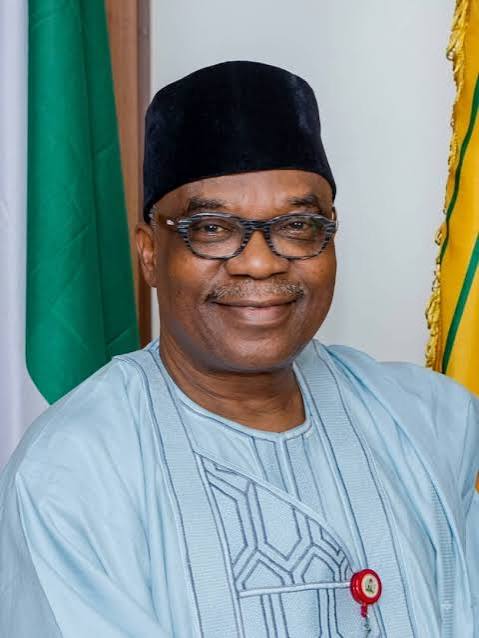
Nigeria Rejects Alleged Support for Niger Coup, Reaffirms Commitment to Democracy
By: Michael Mike
The Federal Government has rejected claims that Nigeria or the Economic Community of West African States (ECOWAS) backed the recent failed coup attempt in Niger Republic, describing the reports circulating on social media as false, mischievous and intended to damage Nigeria’s image.
Minister of State for Foreign Affairs, Ambassador Sola Enikanolaiye, said Nigeria had never supported, and would not support, any military coup or unconstitutional change of government in any country.
In a statement issued on Thursday, Enikanolaiye said Nigeria remained a defender of constitutional order, democracy and regional stability, stressing that the country would not endorse illegality “no matter who is involved or which country is concerned.”
He recalled the ministry’s August 30 statement on the situation in Niger, in which Nigeria expressed concern over developments in the neighbouring country and called for a peaceful, inclusive and participatory return to stability and constitutional order.
According to him, Nigeria’s position on unconstitutional changes of government remains unequivocal, adding that the use of force to resolve political differences was contrary to the country’s longstanding foreign policy.
“While Nigeria is a proud and committed member of ECOWAS, it is unfair, mischievous and entirely false to suggest that Nigeria endorses or condones the military coup,” the minister said.
He urged Nigerians at home and abroad to disregard videos and narratives circulating online which, he said, were aimed at sowing discord and misleading the public.
Enikanolaiye reaffirmed Nigeria’s commitment to the ECOWAS Protocol on Democracy and Good Governance as well as the African Union’s zero-tolerance policy on unconstitutional changes of government.
He said Nigeria would continue to work with ECOWAS, the AU and the international community to defend democracy, uphold the rule of law and promote peace and stability across West Africa, the Sahel and the wider African continent.
Nigeria Rejects Alleged Support for Niger Coup, Reaffirms Commitment to Democracy

Troops rescue two female kidnap victims in Kogi

Operation Whirl Stroke troops raid suspected terrorist hideout, arrest five in Taraba

Nigeria Rejects Alleged Support for Niger Coup, Reaffirms Commitment to Democracy

Roger Federer’s Shock as DNA Results Reveal Myla and Charlene Are Not His Biological Children

THE PLIGHT OF FARIDA

FAILED COUP IN BURKINA FASO: HOW TRAORÉ NARROWLY ESCAPED ASSASSINATION PLOT AMID FOREIGN INTERFERENCE CLAIMS
-
 News2 years ago
Roger Federer’s Shock as DNA Results Reveal Myla and Charlene Are Not His Biological Children
-
Opinions5 years ago
THE PLIGHT OF FARIDA
-
 News1 year ago
FAILED COUP IN BURKINA FASO: HOW TRAORÉ NARROWLY ESCAPED ASSASSINATION PLOT AMID FOREIGN INTERFERENCE CLAIMS
-

 News2 years ago
EYN: Rev. Billi, Distortion of History, and The Living Tamarind Tree
-
 Opinions5 years ago
POLICE CHARGE ROOMS, A MINTING PRESS
-

 ACADEMICS3 years ago
A History of Biu” (2015) and The Lingering Bura-Pabir Question (1)
-

 Columns3 years ago
Army University Biu: There is certain interest, but certainly not from Borno.
-

 Politics1 year ago
2027: Why Hon. Midala Balami Must Go, as Youths in Hawul and Asikira/Uba Federal Constituency Reject ₦500,000 as Sallah Gift
