
News
VP SHETTIMA AT 26TH DEMOCRACY DAY LECTURE:

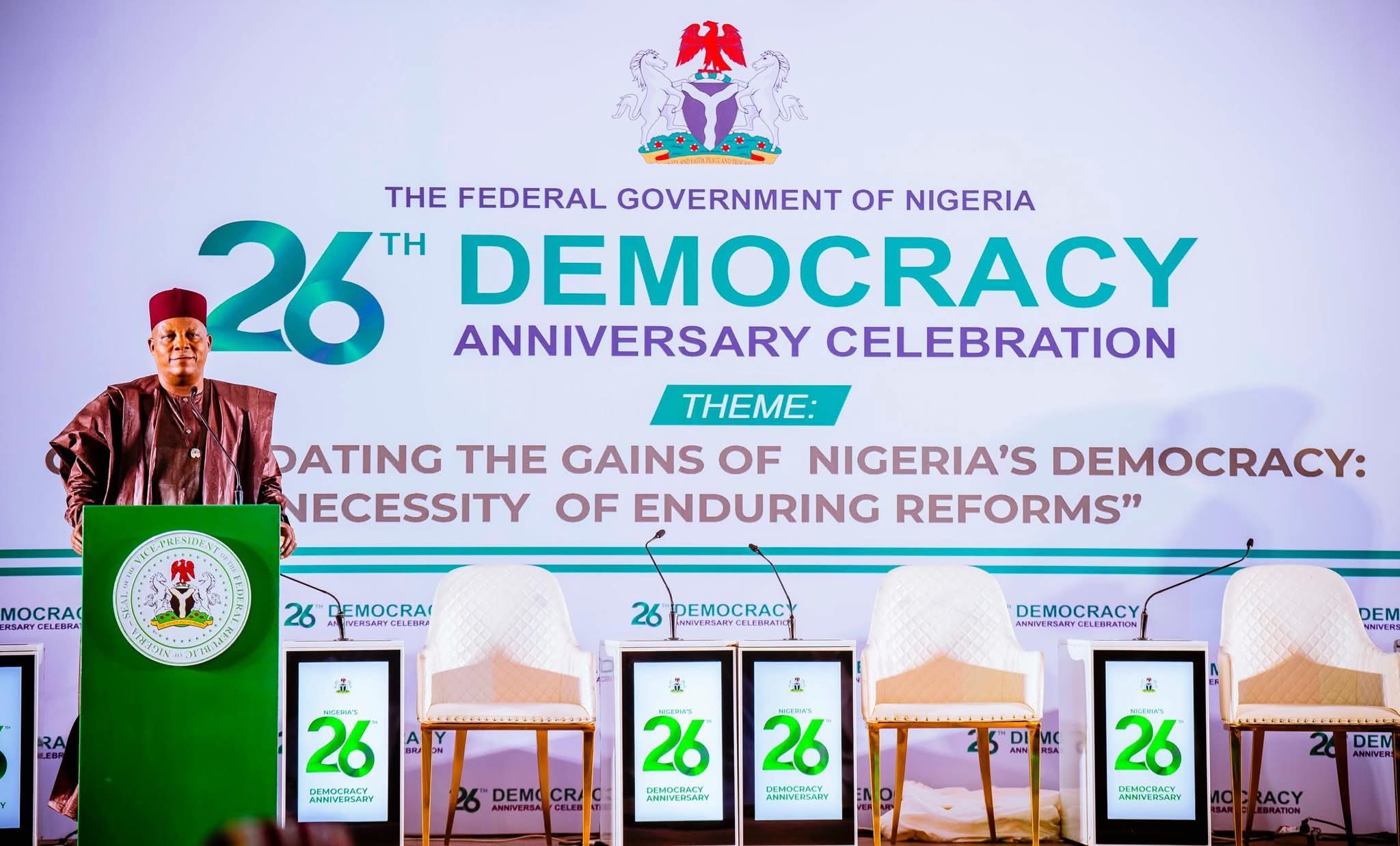
VP SHETTIMA AT 26TH DEMOCRACY DAY LECTURE:
History Has Returned The Baton Of Democratic Struggle To Abiola’s Most Trusted Lieutenant
** Says President Tinubu has kept the covenant of building a Nigeria that works for the people
By: Our Reporter
The Vice President, Senator Kashim Shettima, has said history chose to return the baton in the struggle for the soul of democracy to one of the late Chief Moshood Kashimawo Olawale Abiola’s most trusted lieutenants, President Bola Ahmed Tinubu, decades after the June 12 debacle.
He noted that while hope was one thing that they could not take or extinguish from the final account of Abiola’s life, it is the faith in the promise of Abiola’s vision that has renewed the nation’s hope in what he termed the great theatre of providence.
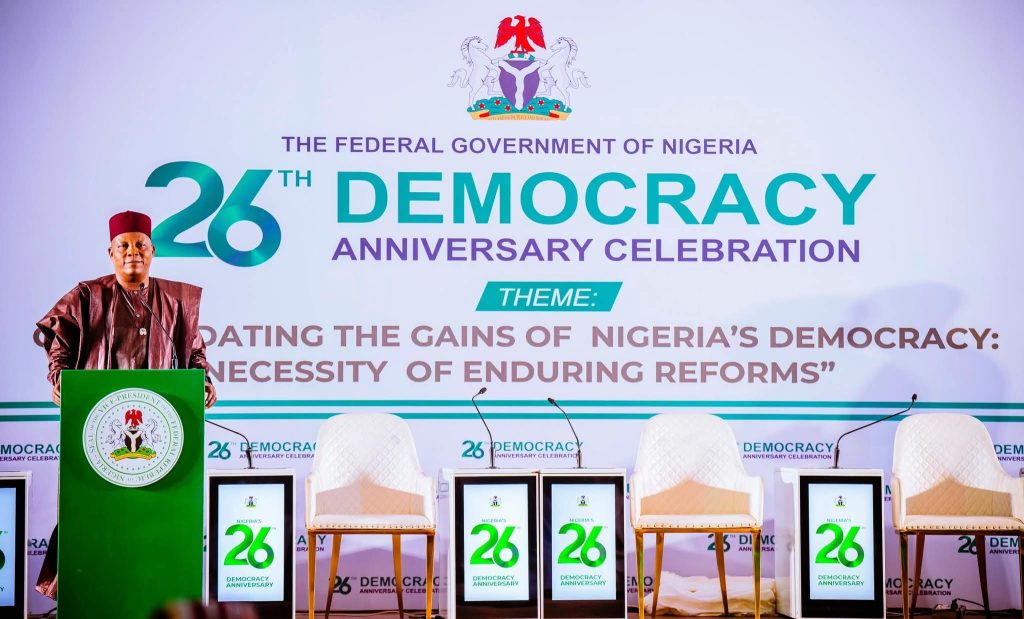
Senator Shettima, who represented President Bola Ahmed Tinubu, made the observation on Thursday during the Public Lecture Commemorating Nigeria’s 26th Democracy Anniversary held at the Presidential Villa, Abuja, and described the late MKO Abiola as a patriot who surrendered all he had for the soul of Nigeria, and whose sacrifice became the compass of the nation’s democracy.
According to him, rather than dying in vain, the late Chief Abiola’s dream became a collective covenant and unbroken resolve for Nigerians “to stand for what is right, to defend the sanctity of choice, and to honour the blood that watered the roots of” the nation’s democracy.
The Vice President said, “It is this faith in the promise of Abiola’s vision that has renewed the hope of this nation. And in the great theatre of providence, history has returned the baton to one of Abiola’s most trusted lieutenants in the struggle for the soul of democracy in Nigeria: His Excellency, President Bola Ahmed Tinubu, GCFR.
“The ticket once denied Nigerians—the Abiola-Kingibe ticket—has found resonance and vindication in a second coming that mirrors it in composition and conviction, in President Bola Ahmed Tinubu, a man who has kept the democratic flame alive through seasons of fire and storm. I am honoured to share in the weight of this history and the depth of this memory.”
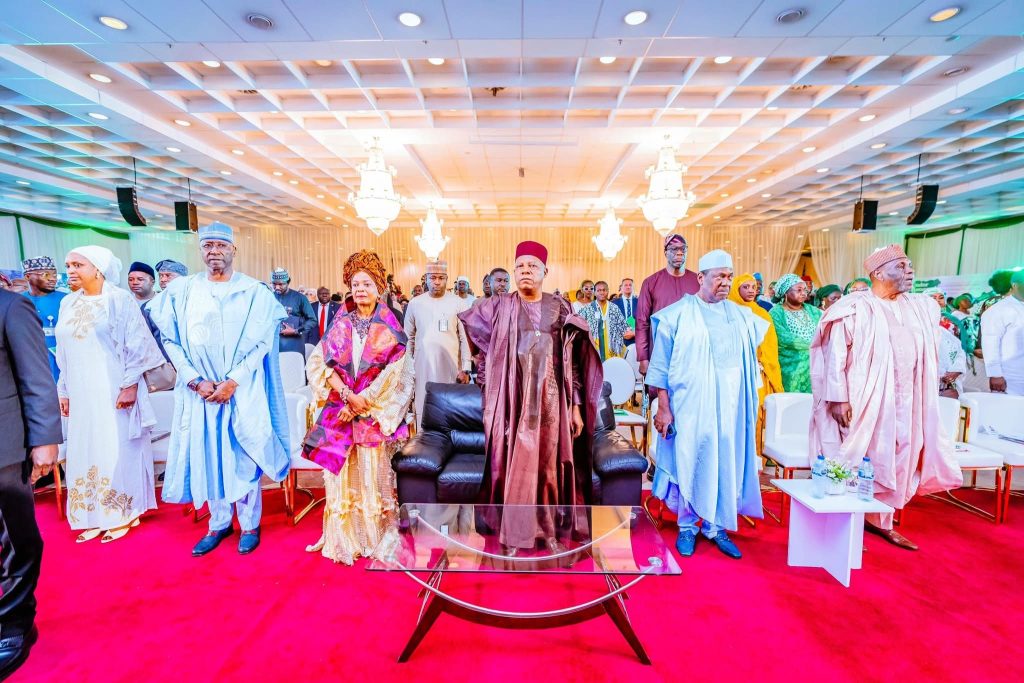
VP Shettima further observed that while Nigeria currently stands on the shoulders of unsung heroes and unheard voices, who sacrificed their comfort, freedom, and even their lives for the nation’s democracy, Nigerians – including him – will ever remain grateful to be “stewards of a government that listens to all.”
“And there is no doubt that President Tinubu has kept that covenant, extending a hand across political divides, ethnic frontiers, and generational gaps to build a Nigeria that works for everyone,” he added.
Maintaining that the life and times of the late MKO Abiola is “a reminder that the burden of democracy is not to be carried by one man alone,” the Vice President urged Nigerians to rise collectively and build a fortress around the nation’s democracy, describing it as “an impenetrable edifice that no force of anarchy can breach, not even in imagination.”
Canvassing unflinching support for President Tinubu’s Renewed Hope Agenda, Senator Shettima said, “Each of us here owes a sacred duty to support the President’s quest not just to renew hope, but to institutionalise governance, to deepen the roots of democracy, and to build a nation immune to the threats of regression.”
Earlier, Secretary to the Government of the Federation, Senator George Akume, acknowledged the heroes of Nigeria’s struggle for democratic governance, applauding their legacies, continuous contributions for the sustenance of democratic structures and transformation of the nation’s economy.
He urged stakeholders to rededicate themselves to the ideals of democratic rule by supporting the Tinubu administration in its task of guiding Nigeria on the path of prosperity, progress, peace and security.
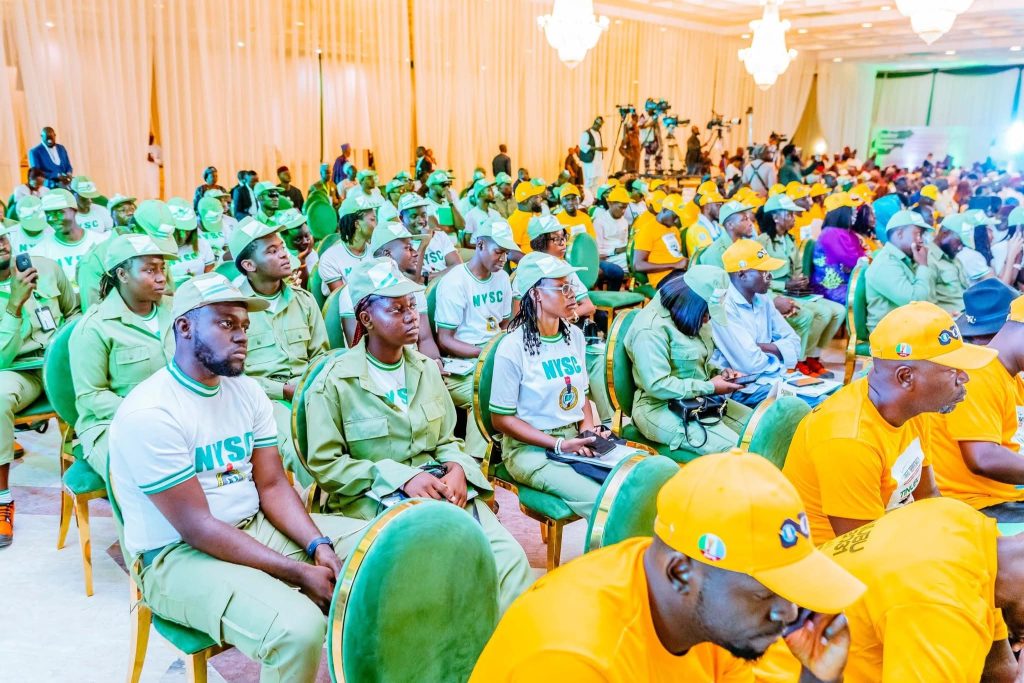
In his keynote address, Prof. Samuel Egwu, who pointed out that the hallmark of democratic governance anywhere in the world is commitment, however said for the dividends of democracy to fully manifest across all levels of governance in Nigeria, all citizens and leaders must show commitment in words and action.
He added that building on the gains of 26 years of democracy in Nigeria is a herculean task that requires political office holders to put the interest of all citizens and society above personal goals and aspirations.
On his part, the longest serving diplomat and Dean of the Diplomatic Corps in Nigeria, the Cameroonian High Commissioner to Nigeria, HE Salaheddine Abbas Ibrahim, commended Nigeria’s unity regardless of the challenges.
The Cameroonian envoy urged leaders and all citizens not to relent in preserving democracy in the country.
In his remarks, Chairman of the Progressive Governors Forum and Imo State Governor, Senator Hope Uzodimma, noted that the recognition and celebration of June 12 as Nigeria’s Democracy Day was not accidental, even as he said the choice was made by the collective will, effort and sacrifice of a people.
He urged active participation of all stakeholders, including citizens, young and old across the country, stressing that democracy does not depend on ceremonies and niceties alone.
Uzodimma drew attention to President Tinubu’s trajectory, legacies and current efforts, saying they are all examples of the courage and determination required to nurture a vibrant democracy.
The highpoint of the event was the unveiling of three books titled, “Tinubunomics”, “Leading With Courage”, and “Turning Challenges into Opportunities”, all examining the gains of the Tinubu administration.
VP SHETTIMA AT 26TH DEMOCRACY DAY LECTURE:


Troops Arrest Suspected Military Impostor in Katsina
By Zagazola Makama
Troops of 17 Brigade have arrested a suspected military impostor during a fighting patrol in Malumfashi Local Government Area.
Security sources told Zagazola Makama that the suspect was apprehended at about 1:30 p.m. on July 4 by troops deployed at the Forward Operating Base (FOB) Malumfashi while conducting routine patrols within Malumfashi town.
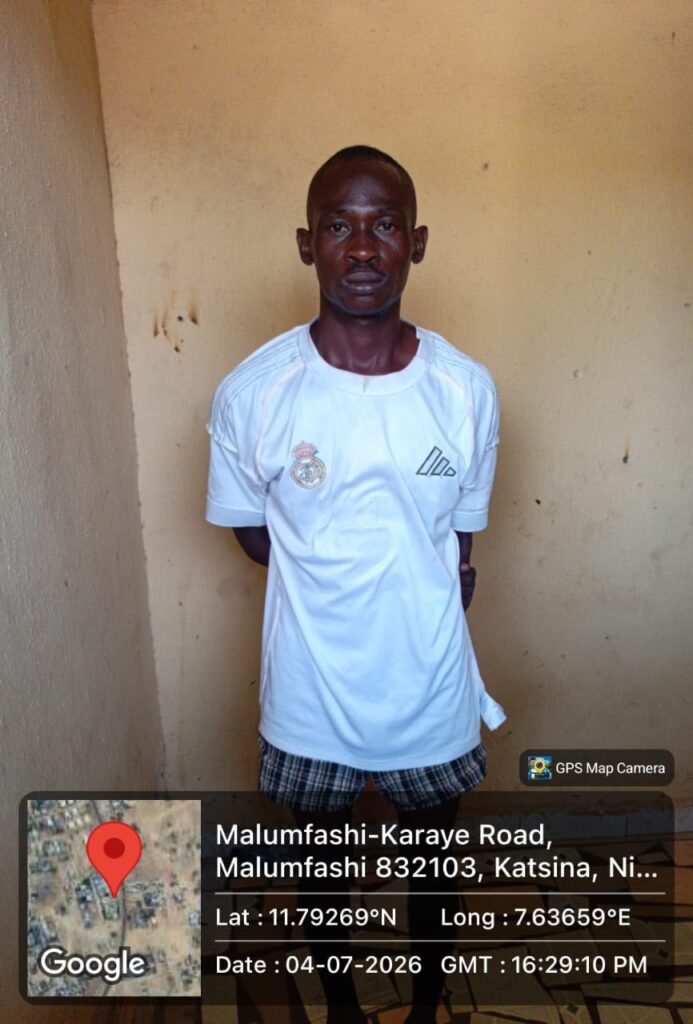
According to the sources, the suspect was intercepted while wearing a woodland camouflage three-quarter short, raising suspicion among the troops.
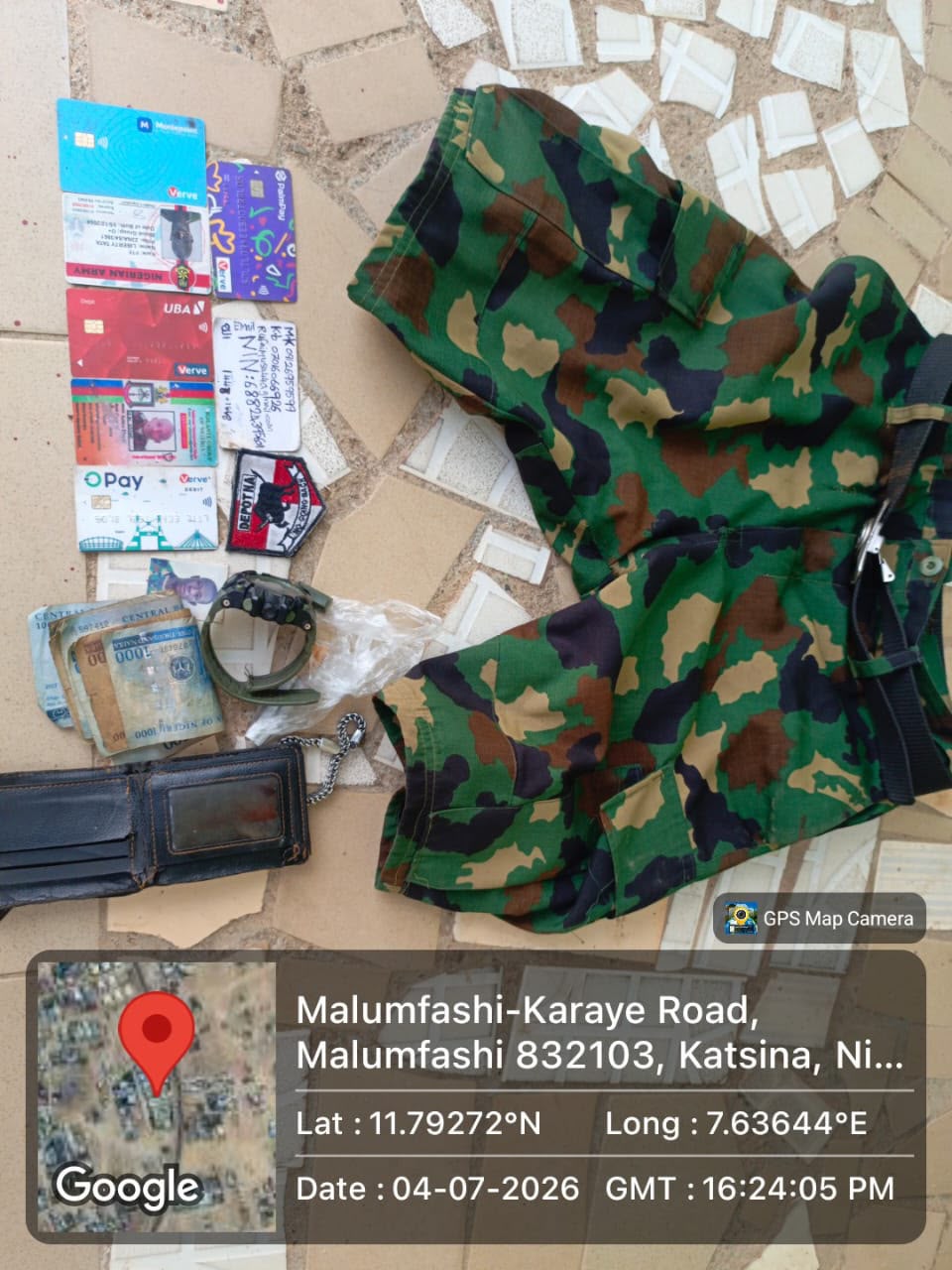
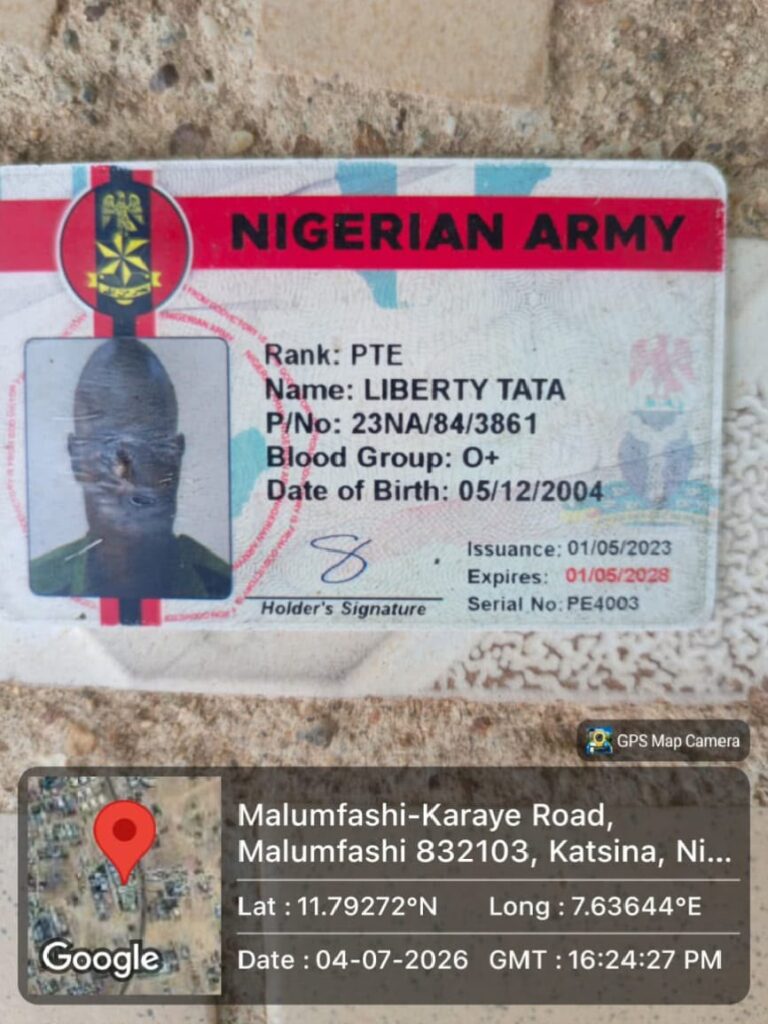
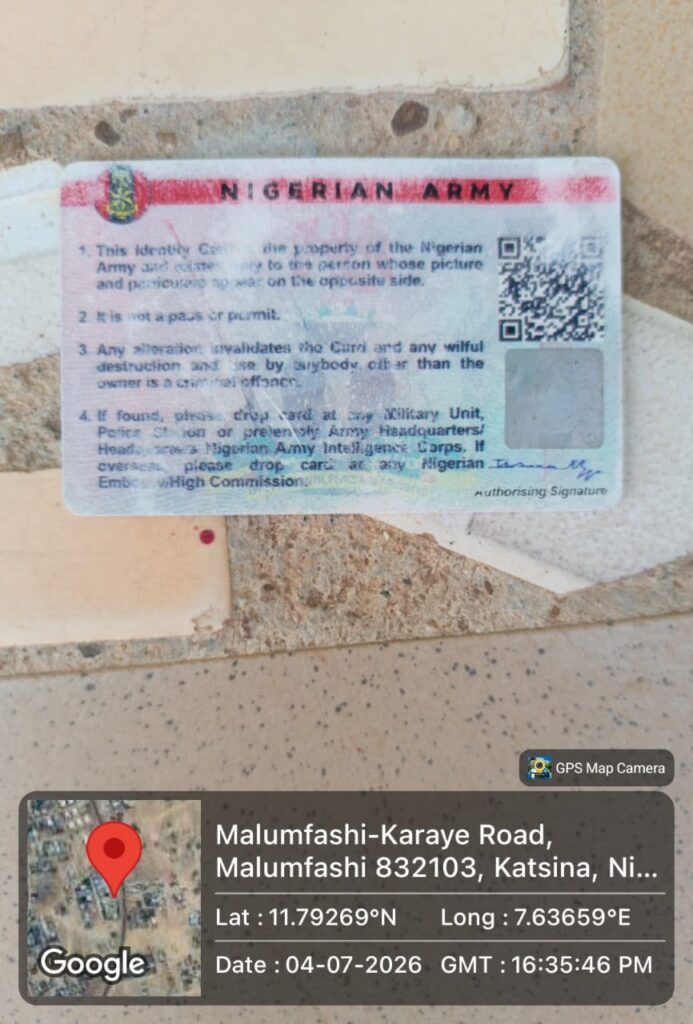
A search conducted on the suspect led to the recovery of a fake Nigerian Army identity card, four Automated Teller Machine (ATM) cards, one woodland camouflage three-quarter short, a wristwatch and the sum of ₦17,000.
The suspect and the recovered exhibits are currently in military custody pending further investigation.
Military sources said the arrest forms part of ongoing efforts to curb impersonation of security personnel and other criminal activities within the area.
Troops Arrest Suspected Military Impostor in Katsina
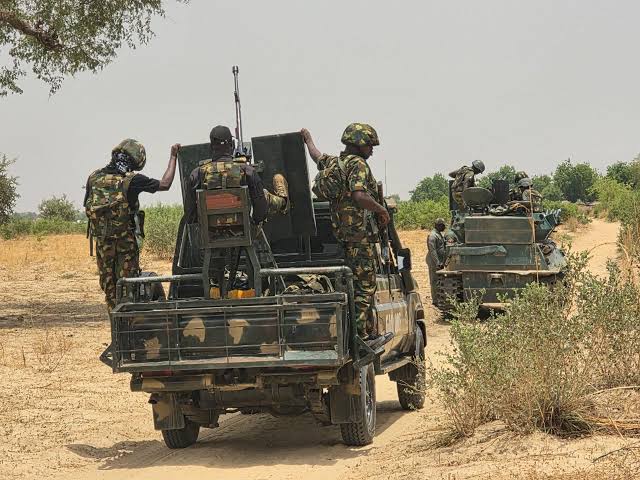
Troops Recover 50 Rustled Cattle, Repel Suspected Rustlers in Kaduna
By Zagazola Makama
Troops deployed at the Forward Operating Base (FOB) Kankomi have recovered 50 rustled cattle after repelling suspected cattle rustlers during an ambush operation in Chikun Local Government Area.
Security sources told Zagazola Makama that the troops responded to a distress call at about 9:55 a.m. on July 4 over the activities of suspected rustlers at Ungwan Gontu community.
According to the sources, the troops swiftly laid an ambush and made contact with the fleeing suspects, forcing them to abandon the stolen livestock and escape into the surrounding area.
During the operation, the troops recovered 50 rustled cattle, which were subsequently identified and handed over to their rightful owner.
Military sources said efforts are ongoing to track down the fleeing suspects as security operations continue to combat cattle rustling and other criminal activities across Kaduna State.
Troops Recover 50 Rustled Cattle, Repel Suspected Rustlers in Kaduna
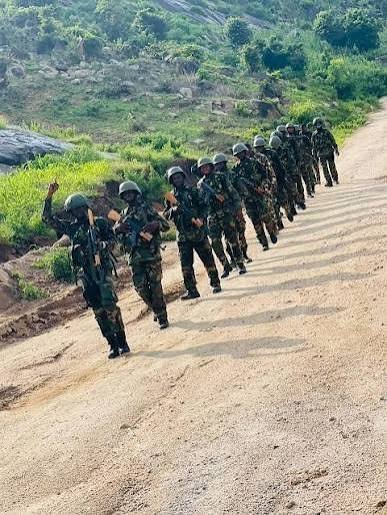
Troops Arrest Suspected Terrorist in Kogi, Suspect Confesses to Group Membership
By Zagazola Makama
Troops of 12 Brigade, in collaboration with Office of the National Security Adviser (ONSA) Hybrid Forces, have arrested a suspected terrorist during an operation in Lokoja Local Government Area.
Security sources told Zagazola Makama that the troops responded at about 1:00 p.m. on July 4 to reports of a confrontation between local residents and a suspected terrorist at a Ruga settlement behind Obajana community.
According to the sources, the troops swiftly intervened and arrested one suspect at the scene.
During preliminary interrogation, the suspect reportedly confessed to being a member of a terrorist group led by an individual identified as Haruna, which allegedly operates within the Okene general area.
The suspect is currently in military custody and is undergoing further investigation to establish the extent of his involvement and identify other members of the group.
Military sources said the arrest forms part of ongoing security operations aimed at dismantling terrorist and criminal networks across Kogi State.
Troops Arrest Suspected Terrorist in Kogi, Suspect Confesses to Group Membership

Troops Arrest Suspected Military Impostor in Katsina

Troops Recover 50 Rustled Cattle, Repel Suspected Rustlers in Kaduna

Troops Arrest Suspected Terrorist in Kogi, Suspect Confesses to Group Membership

Roger Federer’s Shock as DNA Results Reveal Myla and Charlene Are Not His Biological Children

THE PLIGHT OF FARIDA

FAILED COUP IN BURKINA FASO: HOW TRAORÉ NARROWLY ESCAPED ASSASSINATION PLOT AMID FOREIGN INTERFERENCE CLAIMS
-
 News2 years ago
Roger Federer’s Shock as DNA Results Reveal Myla and Charlene Are Not His Biological Children
-
Opinions4 years ago
THE PLIGHT OF FARIDA
-
 News1 year ago
FAILED COUP IN BURKINA FASO: HOW TRAORÉ NARROWLY ESCAPED ASSASSINATION PLOT AMID FOREIGN INTERFERENCE CLAIMS
-

 News2 years ago
EYN: Rev. Billi, Distortion of History, and The Living Tamarind Tree
-
 Opinions5 years ago
POLICE CHARGE ROOMS, A MINTING PRESS
-

 ACADEMICS2 years ago
A History of Biu” (2015) and The Lingering Bura-Pabir Question (1)
-

 Columns2 years ago
Army University Biu: There is certain interest, but certainly not from Borno.
-

 Politics1 year ago
2027: Why Hon. Midala Balami Must Go, as Youths in Hawul and Asikira/Uba Federal Constituency Reject ₦500,000 as Sallah Gift
