
News
VP Shettima Commissions 4,000 Job-capacity Garment Factory, Revenue Service House In Kwara

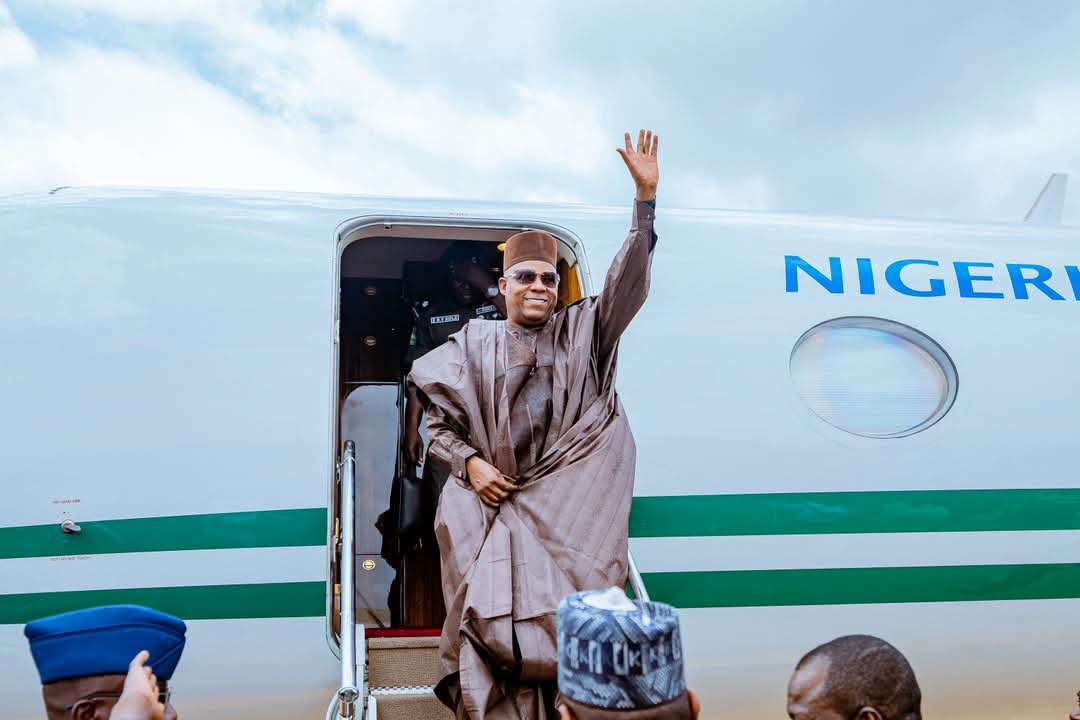
VP Shettima Commissions 4,000 Job-capacity Garment Factory, Revenue Service House In Kwara
Hails AbdulRazaq’s legacy of continuity at governor’s turbaning as Sardauna Of Ilorin
By: Our Reporter
The Vice President, Senator Kashim Shettima, Wednesday, in Ilorin, the Kwara State capital, commissioned the state Garment Factory, a signature project of the administration of Governor AbdulRahman AbdulRazaq designed to employ at least 4,000 people at full capacity, and the 11-storey Kwara Revenue Service (KWRS) House.
The commissioning of the projects was part of activities marking the turbaning of Governor AbdulRahman AbdulRazaq as the Sardauna of Ilorin (the Defence Minister of Ilorin Emirate), by the Emir of Ilorin, HRH Alhaji (Dr.) Ibrahim Kolapo Sulu-Gambari, making the governor the first person to hold the title.

Speaking during the turbaning ceremony at the Emir’s Palace in Ilorin, Senator Shettima applauded the legacy of continuity sustained by Kwara State Governor AbdulRazaq following his turbaning as the first Sardauna of Ilorin.
He recalled that the governor’s late father, Alhaji AbdulGaniyu Folorunsho AbdulRazaq (SAN), carried an Ilorin name into history as the first lawyer of Northern Nigeria and the first Mutawalle of Ilorin—a title he said remains in the family in celebration of their bond with the emirate.

The Vice President observed that a deserving service honoured is a declaration about the conduct the people wish their children to inherit, noting that the man at the centre of the turbaning ceremony is no stranger to the Ilorin Emirate.
“His father, Alhaji AbdulGaniyu Folorunsho AbdulRazaq, SAN, OFR, carried an Ilorin name into history as Northern Nigeria’s first lawyer. Every path begins with someone willing to walk without familiar footprints. Through law and diplomacy, his story became part of Nigeria’s own.
“The branch may reach towards another horizon, yet it carries within itself the memory of the root. His father was the first Mutawalle of Ilorin, a title that remains in the family in celebration of their bond with the Emirate. Today, another chapter enters the family’s relationship with this palace,” he said.
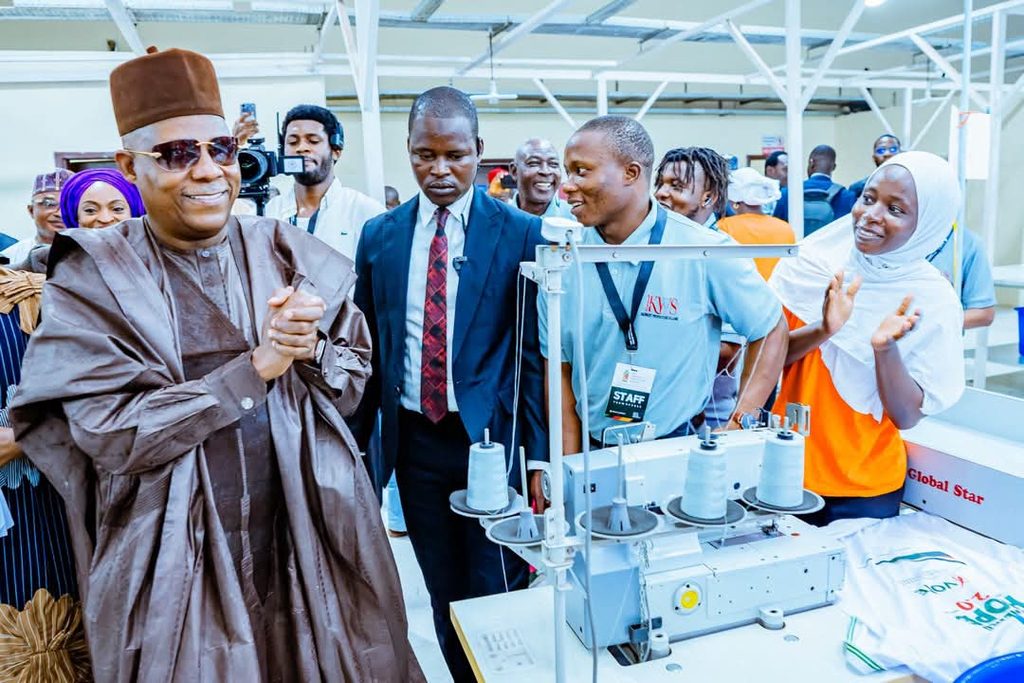
Noting that the continuity of a legacy—such as the one made by Governor AbdulRazaq—summons reflection on what a name can carry across generations, the Vice President said although a surname may be received by a child at birth, the responsibilities attached to that surname must be undertaken afresh.
“As Governor AbdulRazaq receives his turban, we remember those who preceded him, and we offer prayers for the generations who will encounter this occasion through the stories their elders preserve,” he maintained.
VP Shettima revealed the strong bond of friendship he shares with the governor, noting that they consistently discuss matters and share responsibilities beyond ceremonial occasions.
He continued: “There is something sobering about celebrating a friend while both of you remain answerable to the demands of public office. Titles will eventually pass into the record of our lives. The human bonds formed along the way should endure beyond the appointments through which other people first came to know us.
“At the National Economic Council, our responsibilities meet in discussions concerning the federation and its states. We consider how economic proposals connect with implementation, financing and the circumstances of communities. That work requires listening across different experiences and respecting the obligations each government carries.
“A federation is sustained through the patient conversation between those who share responsibility for its people. No boundary on an administrative map can divide the dignity Nigerians are entitled to expect.”
The VP said Governor AbdulRazaq participates in engagements with the federal government and development partners as Chairman of the Nigeria Governors Forum, adding that behind this institutional language lies the core responsibility of meeting the needs of farmers, households, and businesses
He lauded the governor’s governance record in Kwara, pointing out that it extends from renewed classrooms to medical coverage and roads connecting communities.
“These are chapters in the story of a state as its people encounter it: the lesson a child can attend, the treatment a household can seek, and the market a farmer can reach. Such investments must be sustained so that those who inherit them can build upon them. A legacy takes its fullest measure in the generations it continues to serve,” he added.
Dignitaries who graced the occasion include the governors of Imo, Kebbi, Plateau, Ekiti, Ogun, Niger, Bayelsa, and Kaduna.
Others are First Lady of Nigeria, Senator Oluremi Tinubu, represented by wife of the Vice President, Hajiya Nana Shettima; Minister of Trade, Industry and Investment, Jumoke Oduwole; Attorney General of the Federation and Minister of Justice, Prince Lateef Fagbemi (SAN); the Emir of Zazzau, HRH Nuhu Bamali, the Seun of Ogbomosho, Oba Ghandi Afọlábí Ọlaoye, Orumogege III, among others.
VP Shettima Commissions 4,000 Job-capacity Garment Factory, Revenue Service House In Kwara


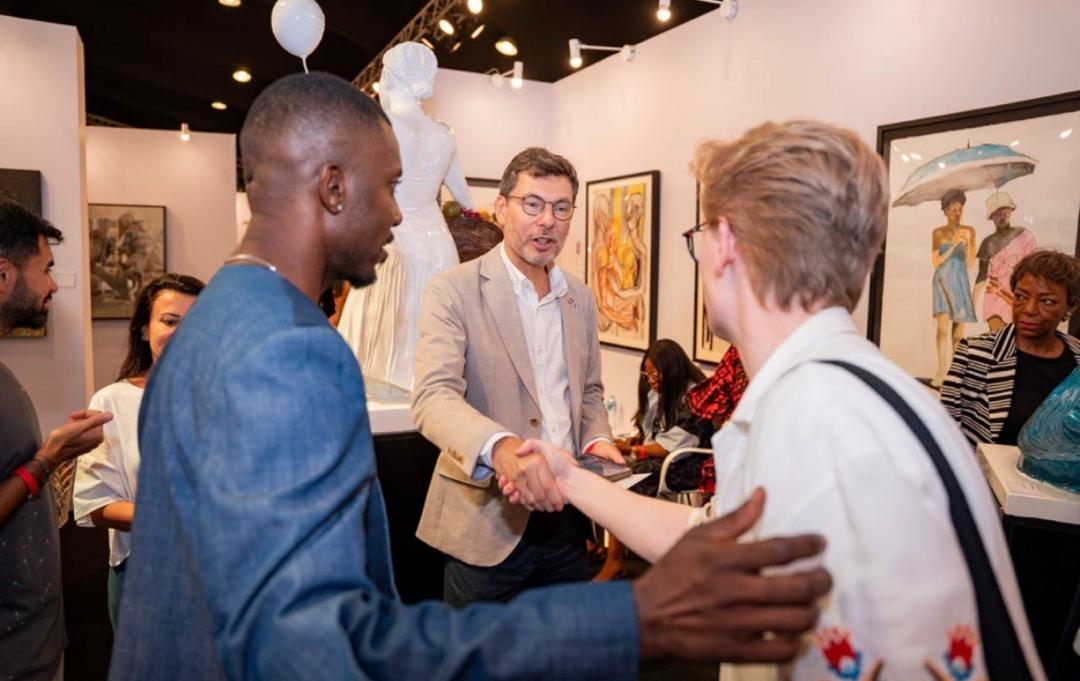
UK, Nigeria Deepen Creative Partnerships Ahead of 2028 Season of Culture
By: Michael Mike
The United Kingdom and Nigeria have strengthened efforts to expand creative-sector partnerships, promote international collaboration and unlock new commercial opportunities ahead of the 2028 UK-Nigeria Season of Culture.
The renewed push followed a series of engagements in Lagos involving 17 UK creative professionals and Nigerian industry leaders, policymakers, businesses and cultural institutions, aimed at building partnerships, facilitating access to new markets and strengthening the commercial potential of both countries’ creative industries.
The UK Creative Sector Delegation, which comprised professionals from England, Scotland, Wales and Northern Ireland, engaged Nigerian counterparts across film, television, music, fashion, design, literature, theatre and visual arts.
The engagements, held around the Africa International Film Festival, Creative Africa Nexus Weekend, Lagos Fringe and Art X Lagos, featured targeted meetings, roundtable discussions and networking activities designed to facilitate knowledge exchange and establish professional relationships.
A major focus was how to address structural challenges limiting the growth of creative businesses, particularly skills development, intellectual property protection, rights management, access to finance, production capacity, commissioning, distribution and access to local and international audiences.
British Deputy High Commissioner in Lagos, Jonny Baxter, said the UK was committed to supporting Nigeria’s creative industries through access to expertise, networks, finance and international markets.
Baxter said the engagements were designed to create the conditions for meaningful collaboration, adding that their success would ultimately depend on sustained relationships, the removal of barriers and opportunities that deliver lasting benefits for businesses and professionals in both countries.
He described Nigeria’s creative industries as a combination of exceptional talent, entrepreneurial energy and global influence, stressing the importance of a practical and long-term partnership.
The initiative also advances the UK-Nigeria Enhanced Trade and Investment Partnership Creative Industries Technical Working Group, established in March 2025 to identify commercial opportunities, address regulatory and non-tariff barriers and promote cooperation across film and television, music, design and fashion, architecture, advertising and gaming.
Country Director of the British Council in Nigeria, Donna McGowan, said the delegation had created opportunities for creative practitioners and institutions in both countries to exchange ideas, develop professional skills and establish trusted cross-border relationships.
McGowan said the British Council was particularly interested in ensuring that cultural exchange translated into lasting value through wider access to international networks and inclusive partnerships.
She added that the relationships and insights generated by the programme would contribute to shaping an ambitious UK-Nigeria Season of Culture in 2028.
Director-General of the National Council for Arts and Culture (NCAC), Obi Asika, said Nigeria’s creative talent and intellectual property held enormous commercial potential that remained largely untapped.
Asika said the Enhanced Trade and Investment Partnership and the forthcoming Season of Culture offered opportunities to connect Nigerian creativity with wider audiences and international markets.
He stressed that the success of the initiative should be measured by tangible outcomes beyond 2028, including international tours, publishing deals, television productions, fashion partnerships and new businesses emerging from the collaborations.
According to him, the objective is to develop sustainable commercial projects that can be traced to relationships established through the cultural partnership.
Founder and Chief Executive Officer of the Black British Book Festival and member of the UK delegation, Selina Brown, described her experience in Lagos as inspiring, citing the city’s creative energy and the opportunities for professional exchange.
Brown said her engagements with emerging and established artists, writers, publishers and industry leaders had reinforced the potential for deeper UK-Nigeria cooperation.
She called for a genuinely reciprocal partnership in which both countries shared knowledge, expertise and opportunities rather than treating cultural exchange as a one-way transfer of knowledge.
Following the engagements, UK and Nigerian partners are expected to pursue priority introductions, policy discussions and partnership opportunities identified during the visit.
The programme forms part of broader efforts by both countries to position creativity as a driver of cultural connections, innovation, employment, exports and shared prosperity, with the 2028 Season of Culture expected to provide a platform for co-creation, audience development, professional exchanges and commercially viable collaborations.
UK, Nigeria Deepen Creative Partnerships Ahead of 2028 Season of Culture
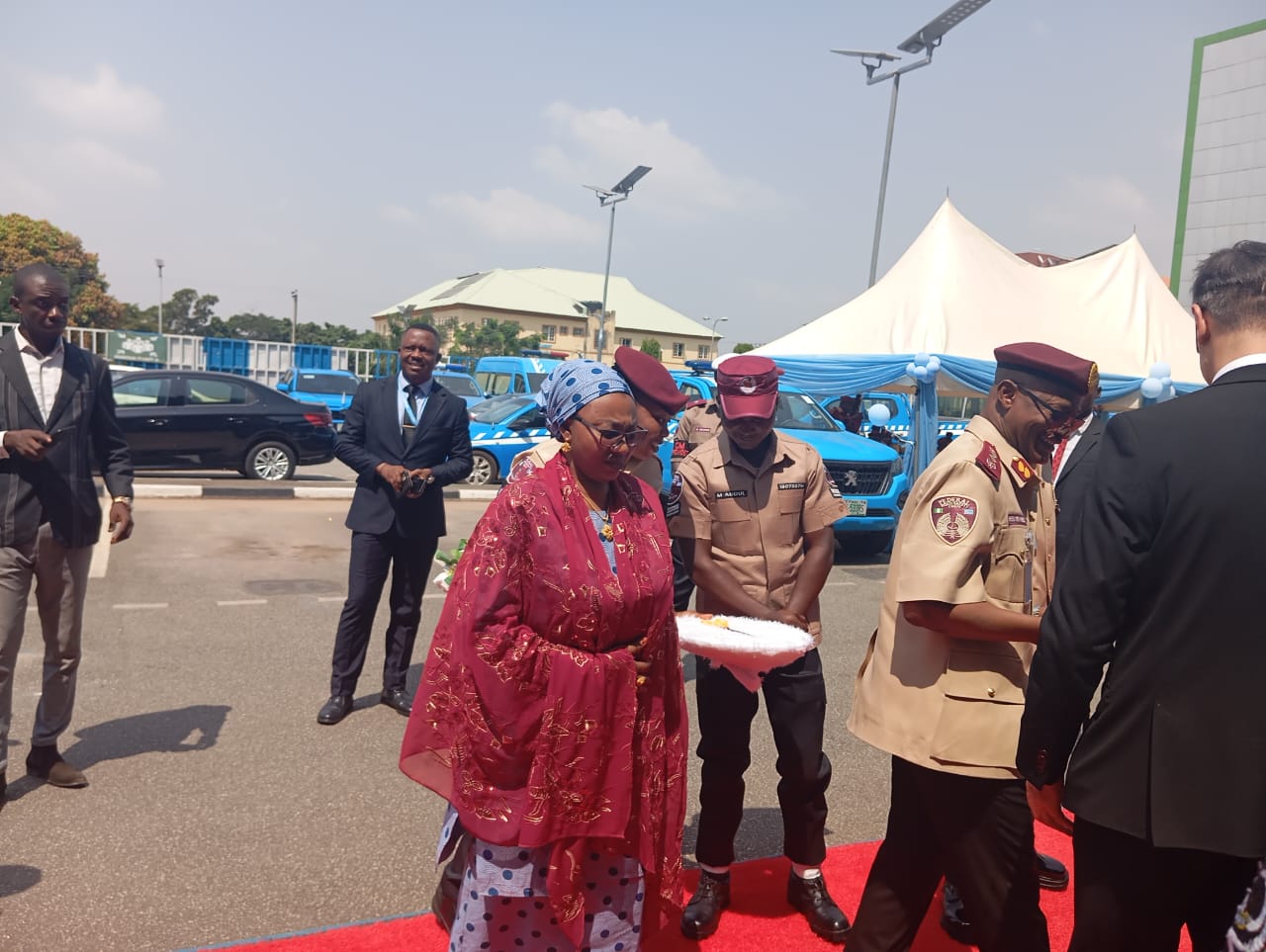
ROSOWA Urges Motorists to Drive Responsibly, Protect Lives
Association calls for strict adherence to traffic rules, says every family deserves to see loved ones return home safely
By: Michael Mike
The Road Safety Officers’ Wives Association (ROSOWA) has called on motorists to embrace responsible driving and strict compliance with traffic regulations to curb avoidable road crashes and prevent further loss of lives.
The President of ROSOWA, Dr Nafisat Shehu-Mohammed, made the call at a joint press briefing organised by the Federal Road Safety Corps (FRSC) to commemorate the 2026 World Day of Remembrance for Road Traffic Victims.
Shehu-Mohammed said the annual commemoration was not merely an occasion to remember those who had died in road crashes but also an opportunity to recognise the pain, trauma and enduring losses suffered by affected families.
She expressed sympathy with mothers who had lost children, children who had lost parents and families whose lives had been shattered by road crashes.
According to her, this year’s theme, “A Light That Unites Us”, underscores the need for collective commitment and action to prevent road traffic deaths and injuries.
She said every road crash represented more than a statistic, as behind each incident were broken families, lost dreams and loved ones whose absence left lasting emotional scars.
“Behind every road crash is a broken heart, an empty seat, and a dream that may never be fulfilled. Looking at the theme, ‘A Light That Unites Us’, reminds us that even in our grief, we can unite to save lives,” she said.
The ROSOWA president urged motorists to recognise their responsibility to other road users, stressing that reckless driving and disregard for traffic regulations could have devastating consequences for families and communities.
She reminded drivers that their loved ones were waiting for them at home and urged them to make safety a priority whenever they took to the roads.
She also reaffirmed the association’s commitment to promoting road safety, saying every life mattered and every family deserved to see their loved ones return home safely.
“Let the light we kindle today shine through our actions by driving responsibly, obeying traffic rules, and protecting one another on our roads,” she said.
She further expressed solidarity with bereaved families and survivors, urging Nigerians to translate the lessons of the commemoration into practical actions that would make the nation’s roads safer.
“To the bereaved families, we share in your pain. To the survivors, we stand with you. And to every road user, please remember, someone is waiting for you at home.
“Let us turn remembrance into responsibility, grief into action, and our collective light into hope for safer roads. May the souls of the departed rest in peace,” she said.
ROSOWA Urges Motorists to Drive Responsibly, Protect Lives
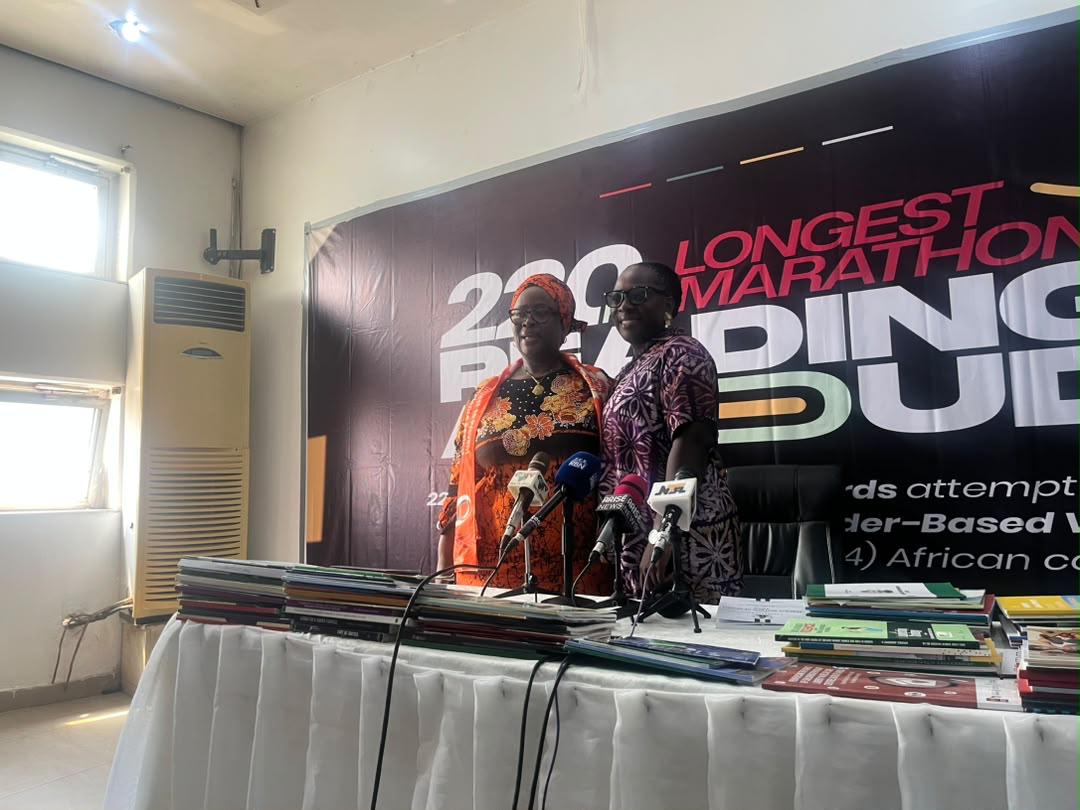
UN Women, Disability Advocates Back 220-Hour Marathon to Combat Gender-Based Violence
…Eyong says legal awareness key to protecting women, girls; Alta demands accessible police stations, courts, hospitals for survivors with disabilities
By: Michael Mike
The United Nations Entity for Gender Equality and the Empowerment of Women (UN Women) and disability rights advocates have thrown their weight behind a 220-hour reading marathon aimed at exposing gaps in the protection of women and girls against sexual and gender-based violence (SGBV) across Nigeria and 14 other African countries.
The initiative, spearheaded by Olubunmi Uluba, seeks to raise public awareness of existing laws, human rights instruments and survivor protection frameworks through a nine-day, four-hour marathon reading aloud, while drawing attention to the persistent disconnect between legal protections and the ability of women and girls to access justice.
The exercise, which also seeks to set a Guinness World Record for the longest marathon reading aloud, has been described by UN Women as an opportunity to turn legal knowledge into an instrument of public education, human rights advocacy and social transformation.
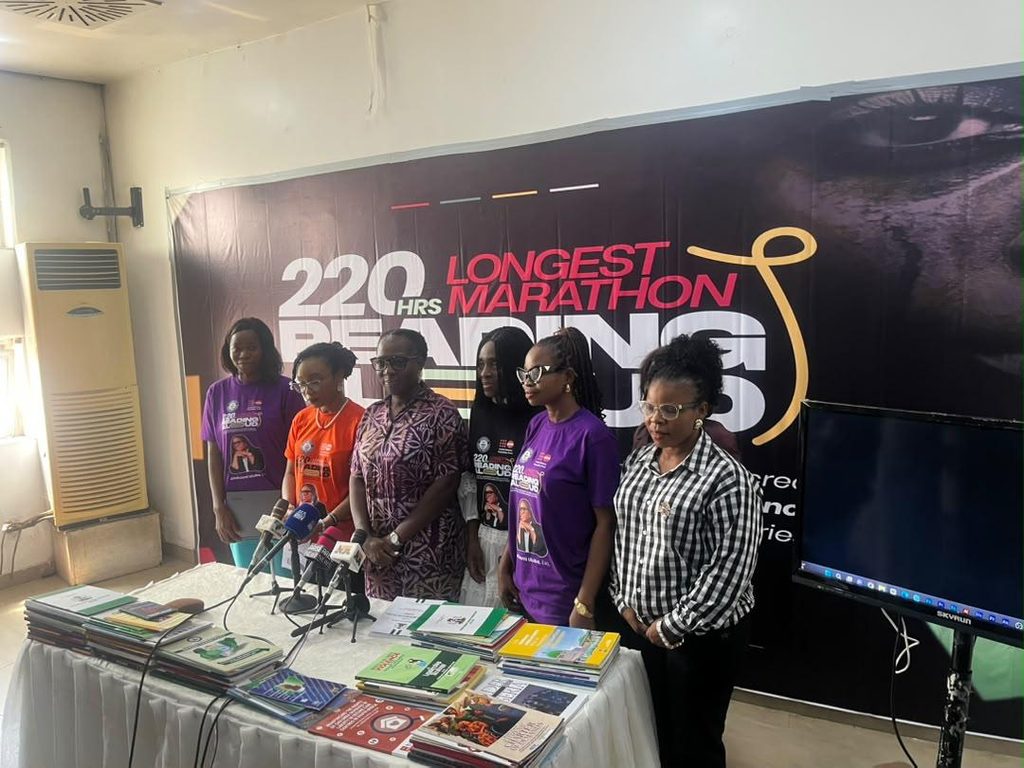
Speaking at a press conference, UN Women Country Representative to Nigeria and the Economic Community of West African States (ECOWAS), Beatrice Eyong, said the fight against gender-based violence must move beyond statistics, policies and legislative reforms to address the human experiences behind the figures.
She said behind every statistic was a survivor seeking justice, a young girl yearning for safety and a community striving to protect human dignity.
Eyong noted that SGBV remained one of the most persistent human rights challenges confronting Nigeria, Africa and the international community, identifying the gap between existing laws and public awareness of legal protections as a major obstacle to tackling the menace.
According to her, many women and girls remain unaware of their rights, the legal safeguards available to them and where to seek assistance when their rights are violated.
She said the 220-hour marathon was significant because it would bring legal frameworks and human rights instruments from 15 African countries closer to the people they were designed to protect.
Through the exercise, Uluba is expected to read relevant legal provisions and survivor protection laws, helping to translate often inaccessible legal documents into practical knowledge that can empower individuals and communities.
Eyong said every hour devoted to reading presented an opportunity for someone to understand their rights, recognise different forms of violence, appreciate the importance of consent or discover where survivors could obtain assistance.
She stressed that knowledge was an essential tool for preventing violence, protecting vulnerable populations and improving access to justice.
The UN Women representative said the initiative reflected the organisation’s conviction that gender equality and the elimination of violence against women and girls were non-negotiable.
She also situated the campaign within the framework of the United Nations Sustainable Development Goals, particularly Goal 5 on gender equality, Goal 4 on quality education and Goal 16 on peace, justice and strong institutions.
Eyong, however, emphasised that ending gender-based violence could not be left to governments or development organisations alone, calling for a collective response involving traditional and religious leaders, civil society groups, the media, families, men and boys.
She urged stakeholders to challenge harmful social norms, promote accountability and build communities where violence against women and girls was neither tolerated nor normalised.
Commending Uluba’s courage and determination, Eyong said the initiative demonstrated how individual commitment and public advocacy could inspire wider movements for social change.
She expressed UN Women’s solidarity with the organiser, wishing her strength, good health and success throughout the marathon.
However, the intervention by the disability rights community highlighted another critical dimension of the campaign: the additional barriers confronting women and girls with disabilities in accessing protection and justice when they experience sexual and gender-based violence.
Founder and President of the Network of Women with Disabilities, Hon. Lois Auta, said her organisation’s support for the initiative was driven by the need to break the silence surrounding violence against women, particularly those living with disabilities.
She observed that survivors with disabilities often faced multiple obstacles when attempting to report abuse, obtain medical attention or pursue justice.
Among the challenges she identified were inaccessible police stations, the absence of sign language interpreters, inadequate medical facilities and discriminatory practices within the justice system.
According to her, these barriers frequently discourage survivors from reporting violations and pursuing justice, leaving perpetrators with opportunities to evade accountability.
Auta argued that the existence of laws protecting women and persons with disabilities would have limited impact if survivors could not access the institutions responsible for enforcing them.
She therefore insisted that the reading marathon must go beyond reciting legal provisions to ensuring that their contents were understood, accessible and effectively implemented.
She called for legal information to be translated into Braille for visually impaired persons, simplified and easy-to-read formats for individuals with intellectual and learning disabilities, and sign language interpretation for people with hearing impairments.
The disability rights advocate also urged governments to domesticate, adequately fund and enforce disability rights legislation, while calling on the police and judiciary to strengthen the capacity of their personnel to respond appropriately to cases involving survivors with disabilities.
She stressed the need to make police stations, hospitals and courts physically and institutionally accessible, noting that equal protection under the law must extend to women and girls regardless of their disabilities.
Auta further challenged civil society organisations to move beyond token representation by actively involving women with disabilities in the design, implementation and evaluation of programmes affecting them.
She invoked the disability rights principle, “Nothing about us without us”, arguing that women with disabilities must be recognised as active participants in decisions concerning their safety, rights and welfare.
She also appealed to the media to sustain coverage throughout the nine-day exercise rather than concentrating attention on its opening ceremony, stressing that continuous public engagement was necessary to achieve the campaign’s broader objectives.
Both speakers called for a coordinated national and regional response to gender-based violence, emphasising that legislation alone could not eliminate abuse without sustained public education, effective enforcement and changes in social attitudes.
While Eyong underscored the importance of making legal protections known to the public, Alta drew attention to the practical barriers that prevent some of the most vulnerable survivors from benefiting from those protections.
Their positions converge on a fundamental challenge confronting the campaign against gender-based violence: ensuring that the rights guaranteed by law translate into protection, support and justice for every woman and girl.
For Uluba, the 220-hour marathon represents an attempt to use an extraordinary endurance challenge to sustain public attention on an issue that continues to affect millions of women and girls.
But Eyong said the ultimate achievement must extend beyond breaking a Guinness World Record to breaking the silence surrounding violence, changing attitudes and ensuring that women and girls can live with dignity, safety and freedom from abuse.
The broader test of the initiative, therefore, will be whether the knowledge generated translates into greater awareness of legal rights, improved access to support services, stronger institutional accountability and an inclusive justice system that leaves no survivor behind.
UN Women, Disability Advocates Back 220-Hour Marathon to Combat Gender-Based Violence

UK, Nigeria Deepen Creative Partnerships Ahead of 2028 Season of Culture

Troops Neutralise Suspected Fulani Bandits, Recover Four Motorcycles in Plateau

AURÄI Launches Platform to Strengthen AI Governance, Assurance

Roger Federer’s Shock as DNA Results Reveal Myla and Charlene Are Not His Biological Children

THE PLIGHT OF FARIDA

FAILED COUP IN BURKINA FASO: HOW TRAORÉ NARROWLY ESCAPED ASSASSINATION PLOT AMID FOREIGN INTERFERENCE CLAIMS
-
 News3 years ago
Roger Federer’s Shock as DNA Results Reveal Myla and Charlene Are Not His Biological Children
-
Opinions5 years ago
THE PLIGHT OF FARIDA
-
 News2 years ago
FAILED COUP IN BURKINA FASO: HOW TRAORÉ NARROWLY ESCAPED ASSASSINATION PLOT AMID FOREIGN INTERFERENCE CLAIMS
-
 Opinions5 years ago
POLICE CHARGE ROOMS, A MINTING PRESS
-

 News3 years ago
EYN: Rev. Billi, Distortion of History, and The Living Tamarind Tree
-

 ACADEMICS3 years ago
A History of Biu” (2015) and The Lingering Bura-Pabir Question (1)
-

 Columns3 years ago
Army University Biu: There is certain interest, but certainly not from Borno.
-

 Politics1 year ago
2027: Why Hon. Midala Balami Must Go, as Youths in Hawul and Asikira/Uba Federal Constituency Reject ₦500,000 as Sallah Gift
