
News
Waidi Shuaibu: from Theartre Commander to Army Chief — chronicling a transformative leadership journey

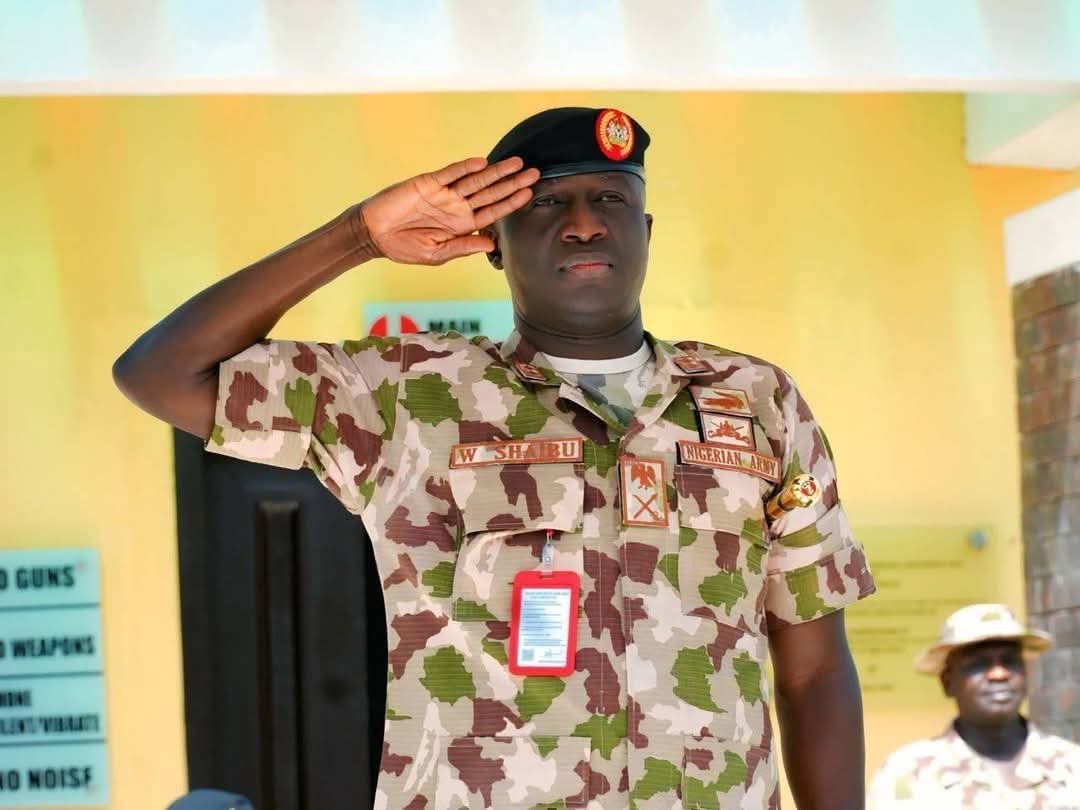
Waidi Shuaibu: from Theartre Commander to Army Chief — chronicling a transformative leadership journey
By: Zagazola Makama
Maj.-Gen. Waidi Shuaibu’s appointment as the new Chief of Army Staff marks a significant milestone in Nigeria’s ongoing efforts to consolidate gains in the fight against insurgency and strengthen national security.
Before his elevation to the apex position in the Nigerian Army, Gen. Shuaibu served as Theatre Commander of Operation Hadin Kai (OPHK) in the North-East, where his 14-month tenure was defined by tactical innovation, operational success, and deep civil-military engagement. His leadership transformed the counter-insurgency landscape, restoring relative stability to vast areas once dominated by Boko Haram and ISWAP terrorists.
Upon assuming command of OPHK, Maj.-Gen. Shuaibu prioritized operational readiness, launching an extensive refurbishment of key military assets to boost troop morale and combat capability. He spearheaded the repair of vital armoured platforms, including ten VP1 Type 89 APCs, five BMPs, three Steyr APCs, and six Camel MRAPs, ensuring optimal deployment for the 2024 dry-season operations.
These efforts culminated in the historic deep-clearance operations into Sambisa Forest and the Tumbuktu Triangle in early 2024, which dealt devastating blows to terrorist hideouts, supply chains, and command structures. His coordinated offensive operations neutralized more than 567 terrorists and dismantled several high-value enemy enclaves between February 2024 and March 2025.
Under his leadership, the integration of air and ground components reached new heights. The Nigerian Air Force component executed over 230 sorties and 232 interdiction missions, clocking more than 567 flight hours, while the UAV Command carried out 760 ISR operations totaling 6,674 hours. These precision missions enhanced battlefield awareness, enabling ground troops to conduct over 9,800 patrols, 2,700 ambushes, and 990 clearance operations with high success rates.
Intelligence-led operations resulted in the arrest of 161 terrorist logisticians and the surrender of over 121,000 insurgents and their families — a remarkable milestone that shifted the dynamics of the North-East conflict toward peacebuilding and reintegration.
Maj.-Gen. Shuaibu’s counter-insurgency philosophy went beyond the battlefield. He introduced the Local Community Policing and Peace Enforcement (LCPPE) model in February 2024 — an initiative that deepened trust between the military and local communities. This approach paved the way for stabilization operations, including the resettlement of more than 4,000 internally displaced persons (IDPs) in Kukawa and other restored communities.
He also promoted civil-military cooperation through humanitarian and religious initiatives, including a Qur’anic Recitation Competition aimed at fostering moral resilience and unity among troops and civilians. Three participants were later sponsored for the Hajj pilgrimage — a gesture that reinforced goodwill and trust.
A hallmark of his tenure was the focus on infrastructure and troop welfare. He initiated the renovation and modernization of the Joint Task Force (North-East) Headquarters complex, constructed new escort and drivers’ lounges, refurbished soldiers’ accommodation, and built 30 two-bedroom community-based quarters for military families.
Additionally, the installation of long-range surveillance cameras in Monguno, Gajiram, and Kekeno enhanced operational intelligence and perimeter monitoring, further strengthening theatre-wide security.
Maj.-Gen. Shuaibu’s command period witnessed the elimination of several notorious terrorist leaders, including Tahir Baga and Abu Rijal, whose deaths crippled jihadist coordination and recruitment. His effective decapitation strategy was complemented by humanitarian outreach, leading to a steady return of normalcy in major population centres across Borno, Yobe, and Adamawa states.
In recognition of these achievements, the North-East Theatre under his command received the Security Watch Africa Award in December 2024 as the Most Outstanding Defence Command in Africa, underscoring the effectiveness of his leadership and innovation in asymmetric warfare.
Now as Chief of Army Staff, Gen. Waidi Shuaibu is expected to replicate his transformative approach on a national scale. Security analysts and defence watchers believe his deep operational experience and emphasis on community-driven stability will guide the Nigerian Army toward renewed efficiency and professionalism.
His appointment signals continuity, discipline, and modernization — values he consistently championed throughout his command. Stakeholders within defence and civil sectors alike express optimism that his era will usher in strategic reforms to fortify Nigeria’s military capabilities and accelerate victory against insecurity.
Maj.-Gen. Shuaibu’s rise from Theatre Commander to Army Chief embodies the success of merit, dedication, and results-oriented leadership, a journey rooted in courage, intellect, and an unyielding commitment to peace and stability in Nigeria.
Waidi Shuaibu: from Theartre Commander to Army Chief — chronicling a transformative leadership journey


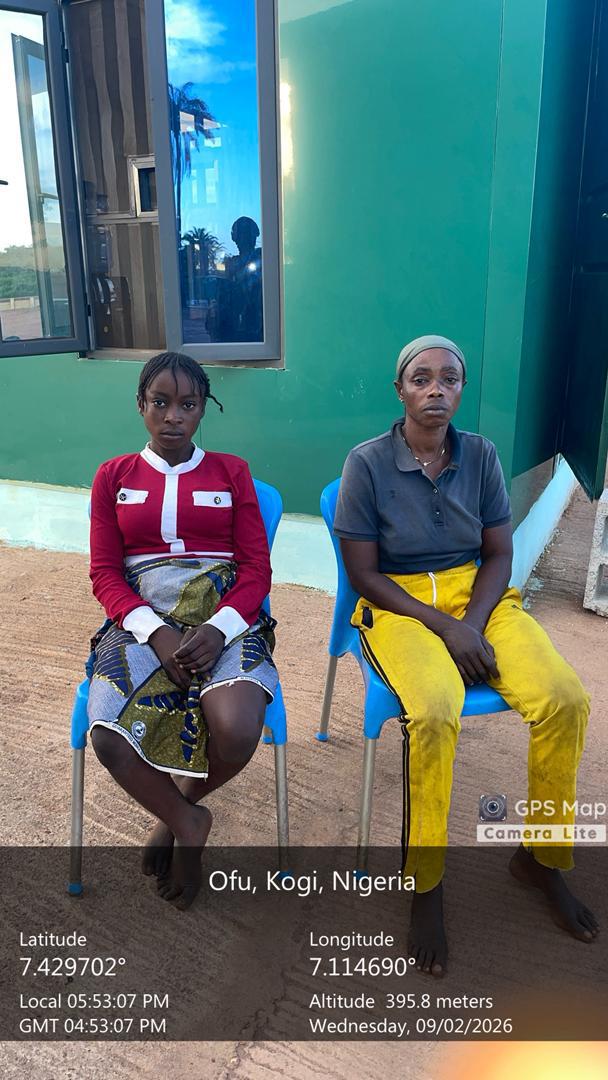
Troops rescue two female kidnap victims in Kogi
By: Zagazola Makama
Troops of the Nigerian Army have rescued two female kidnap victims after suspected bandits invaded a farmland in Ajodomodo Village, Dekina Local Government Area of Kogi State.
The incident occurred at about 10:30 a.m. on Wednesday, Sept. 2, when the suspected bandits reportedly invaded the farmland and abducted the two victims before fleeing the area.
Troops of the 21 Battalion Quick Reaction Force swiftly responded to the incident and pursued the fleeing criminals along their withdrawal route towards Agbodakodo Forest.
According to sources the pressure from the troops forced the abductors to abandon the victims in the forest.
The victims, identified as 15-year-old Miss Mohammed Rahinat and Mrs Hassanatu Mohammed, 30, were subsequently rescued unharmed.
The two women were evacuated to the 21 Battalion Medical Reception Station for medical attention and further assessment.
The military said troops have continued operations in the area to track the fleeing suspects and prevent further attacks on farming communities.
The rescue illustrates the importance of rapid military response and timely information sharing in countering kidnapping and other criminal activities in rural communities.
Troops rescue two female kidnap victims in Kogi
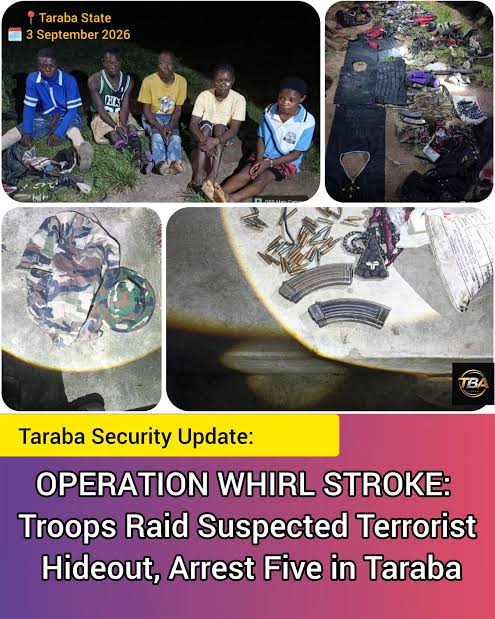
Operation Whirl Stroke troops raid suspected terrorist hideout, arrest five in Taraba
By: Zagazola Makama
Troops of Joint Task Force, Operation Whirl Stroke, have raided a suspected terrorist hideout in Peva, Takum Local Government Area of Taraba State, arresting five persons believed to be associates of a notorious bandit operating in the area.
The operation was conducted in the early hours of Thursday, Sept. 3, following credible intelligence received by the troops at about 12:30 a.m. regarding the location of the suspected criminal hideout.
Acting on the information, troops of Sector 1, in conjunction with personnel of Sector 3, both under Operation Whirl Stroke, swiftly mobilised and launched a raid on the identified location.
However, the suspected terrorists reportedly received information about the advancing troops and fled the hideout before the arrival of the security forces.
Undeterred, the troops conducted a thorough search of the area, leading to the arrest of five persons suspected to be associates of the fleeing criminal.
Items recovered during the operation included two AK-47 rifle magazines, 46 rounds of 7.62mm special ammunition, one woodland camouflage jacket, one jungle hat, four charm vests and assorted charms.
The military said the arrests and recovery of the items had provided useful leads that could support ongoing efforts to identify and apprehend other members of the criminal network.
The arrested suspects are expected to undergo further profiling and interrogation as troops intensify efforts to establish their roles and track the fleeing members of the group.
Operation Whirl Stroke assured residents across Taraba and other parts of its Joint Operations Area of continued intelligence-driven operations aimed at sustaining pressure on terrorists, bandits and other criminal elements.
The task force also urged residents to remain vigilant and provide timely and credible information to security agencies to support ongoing operations and enhance the protection of communities.
Operation Whirl Stroke troops raid suspected terrorist hideout, arrest five in Taraba
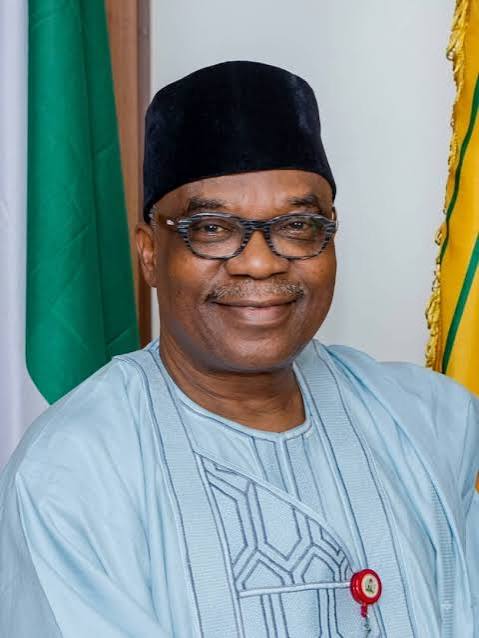
Nigeria Rejects Alleged Support for Niger Coup, Reaffirms Commitment to Democracy
By: Michael Mike
The Federal Government has rejected claims that Nigeria or the Economic Community of West African States (ECOWAS) backed the recent failed coup attempt in Niger Republic, describing the reports circulating on social media as false, mischievous and intended to damage Nigeria’s image.
Minister of State for Foreign Affairs, Ambassador Sola Enikanolaiye, said Nigeria had never supported, and would not support, any military coup or unconstitutional change of government in any country.
In a statement issued on Thursday, Enikanolaiye said Nigeria remained a defender of constitutional order, democracy and regional stability, stressing that the country would not endorse illegality “no matter who is involved or which country is concerned.”
He recalled the ministry’s August 30 statement on the situation in Niger, in which Nigeria expressed concern over developments in the neighbouring country and called for a peaceful, inclusive and participatory return to stability and constitutional order.
According to him, Nigeria’s position on unconstitutional changes of government remains unequivocal, adding that the use of force to resolve political differences was contrary to the country’s longstanding foreign policy.
“While Nigeria is a proud and committed member of ECOWAS, it is unfair, mischievous and entirely false to suggest that Nigeria endorses or condones the military coup,” the minister said.
He urged Nigerians at home and abroad to disregard videos and narratives circulating online which, he said, were aimed at sowing discord and misleading the public.
Enikanolaiye reaffirmed Nigeria’s commitment to the ECOWAS Protocol on Democracy and Good Governance as well as the African Union’s zero-tolerance policy on unconstitutional changes of government.
He said Nigeria would continue to work with ECOWAS, the AU and the international community to defend democracy, uphold the rule of law and promote peace and stability across West Africa, the Sahel and the wider African continent.
Nigeria Rejects Alleged Support for Niger Coup, Reaffirms Commitment to Democracy

Troops rescue two female kidnap victims in Kogi

Operation Whirl Stroke troops raid suspected terrorist hideout, arrest five in Taraba

Nigeria Rejects Alleged Support for Niger Coup, Reaffirms Commitment to Democracy

Roger Federer’s Shock as DNA Results Reveal Myla and Charlene Are Not His Biological Children

THE PLIGHT OF FARIDA

FAILED COUP IN BURKINA FASO: HOW TRAORÉ NARROWLY ESCAPED ASSASSINATION PLOT AMID FOREIGN INTERFERENCE CLAIMS
-
 News2 years ago
Roger Federer’s Shock as DNA Results Reveal Myla and Charlene Are Not His Biological Children
-
Opinions5 years ago
THE PLIGHT OF FARIDA
-
 News1 year ago
FAILED COUP IN BURKINA FASO: HOW TRAORÉ NARROWLY ESCAPED ASSASSINATION PLOT AMID FOREIGN INTERFERENCE CLAIMS
-

 News2 years ago
EYN: Rev. Billi, Distortion of History, and The Living Tamarind Tree
-
 Opinions5 years ago
POLICE CHARGE ROOMS, A MINTING PRESS
-

 ACADEMICS3 years ago
A History of Biu” (2015) and The Lingering Bura-Pabir Question (1)
-

 Columns3 years ago
Army University Biu: There is certain interest, but certainly not from Borno.
-

 Politics1 year ago
2027: Why Hon. Midala Balami Must Go, as Youths in Hawul and Asikira/Uba Federal Constituency Reject ₦500,000 as Sallah Gift
