
Military
War Against Rebels at an End- Sudanese Government

War Against Rebels at an End- Sudanese Government
By: Michael
Mike
Sudanese government has said the war against the rebel group, the Rapid Support Forces (RSF) is at its end as major factors are now against the militias.
Speaking to journalists in Abuja on Monday, the Charge d’ Affaires of the Embassy of the Republic of Sudan in Nigeria, Mr Ahmed Omer Jaboul said the take over of Al Jazeera by the Sudanese force was a major victory for the Sudanese Army, adding that the condemnation of the activities of the rebel force by United States is a big plus to the people of Sudan.
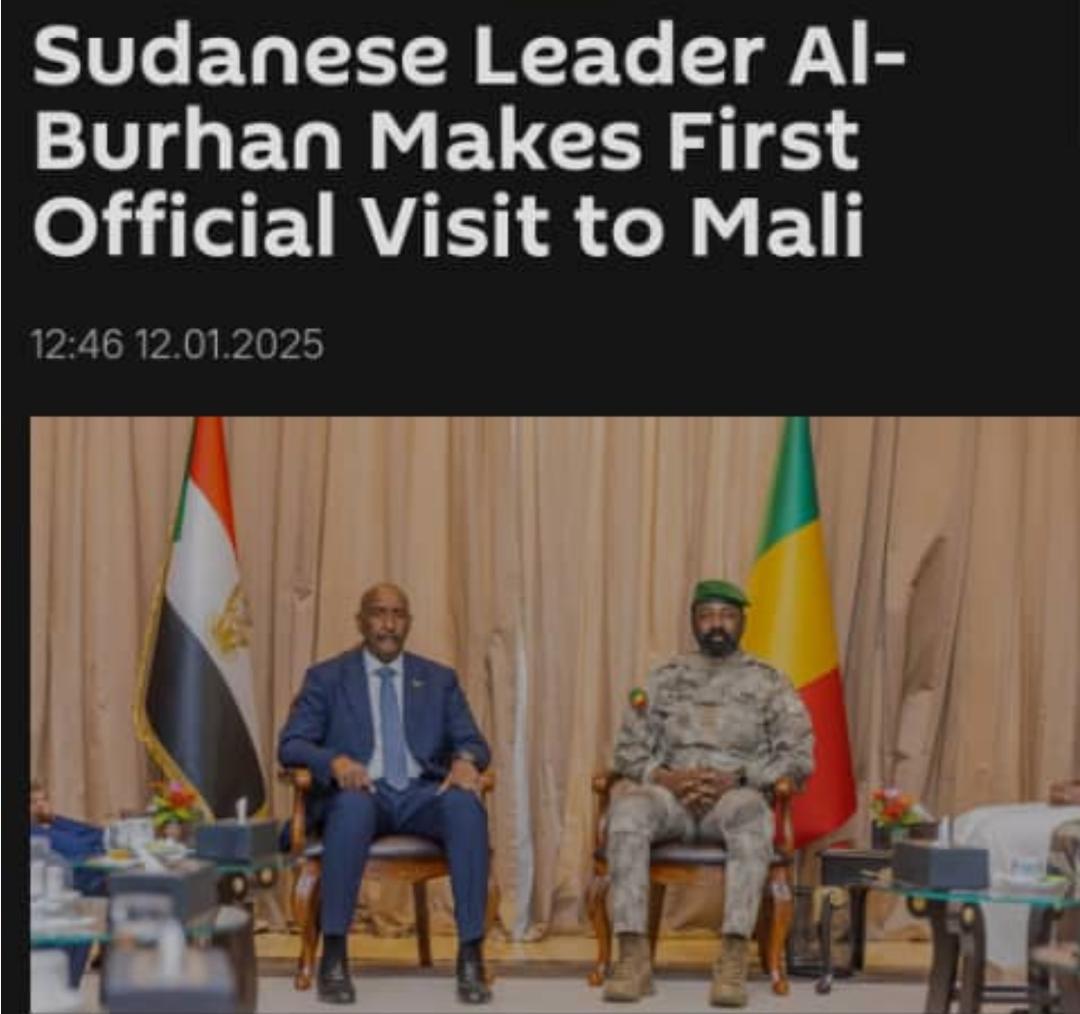
He noted that the President of the Sudanese Transitional Sovereignty Council Abdel Fattah al-Burhan is presently consolidating on the gains recorded so far by embarking on diplomatic visits to Mali, Sierra-Leone, Guinea Bissau and Sierra to drum support for his government and seek cooperation.
The Sudanese Armed Forces (SAF) and the Rapid Support Forces (RSF) since over a year ago have continued to launch a conflict of unmitigated brutality that has resulted in the world’s largest humanitarian catastrophe, leaving 638,000 Sudanese experiencing the worst famine in Sudan’s recent history, with over 30 million people in need of humanitarian assistance, and tens of thousands dead.
Reports have shown that the RSF and RSF-aligned militias have continued to direct attacks against civilians, systematically killing men and boys—even infants—on an ethnic basis, and deliberately targeted women and girls from certain ethnic groups for rape and other forms of brutal sexual violence.
The United States Secretary of State, Antony Blinken, in a recent statement while condemning the excesses of the militias, said: “Those same militias have targeted fleeing civilians, murdering innocent people escaping conflict, and prevented remaining civilians from accessing lifesaving supplies. Based on this information, I have now concluded that members of the RSF and allied militias have committed genocide in Sudan.
“The United States is committed to holding accountable those responsible for these atrocities. We are today sanctioning RSF leader Mohammad Hamdan Daglo Mousa, known as Hemedti, for his role in systematic atrocities committed against the Sudanese people. We are also sanctioning seven RSF-owned companies located in the United Arab Emirates and one individual for their roles in procuring weapons for the RSF. In addition, we are today announcing Hemedti’s designation under Section 7031(c) for his involvement in gross violations of human rights in Darfur, namely the mass rape of civilians by RSF soldiers under his control. As a result of this designation, Hemedti and his immediate family members are ineligible for entry to the United States.
“Hemedti has wantonly ignored commitments under international humanitarian law, the 2023 “Jeddah Declaration of Commitment to Protect the Civilians of Sudan,” and the 2024 Code of Conduct produced by the Advancing Lifesaving and Peace in Sudan initiative. This code includes commitments to allow the unimpeded passage of humanitarian relief and prevent war crimes such as sexual violence, which the RSF and aligned militias under Hemedti’s leadership have committed.”
Reacting to the US action, the Sudanese ambassador to Nigeria, urged other countries to follow suit and brand the RSF a terror group.
He said: “The allegation by American government that the militias have committed some atrocities like genocide and ethnic cleansing would go a long way in dictating the outcome of the war. This condemnation will have positive impact on the other countries to take the same step and take the same decision.
“The evidence against the militias has been shared by the Sudanese government to international organisations and agencies among them UN agencies and AU.”
War Against Rebels at an End- Sudanese Government


Nigerian Army activates three new battalions in Zamfara
By: Zagazola Makama
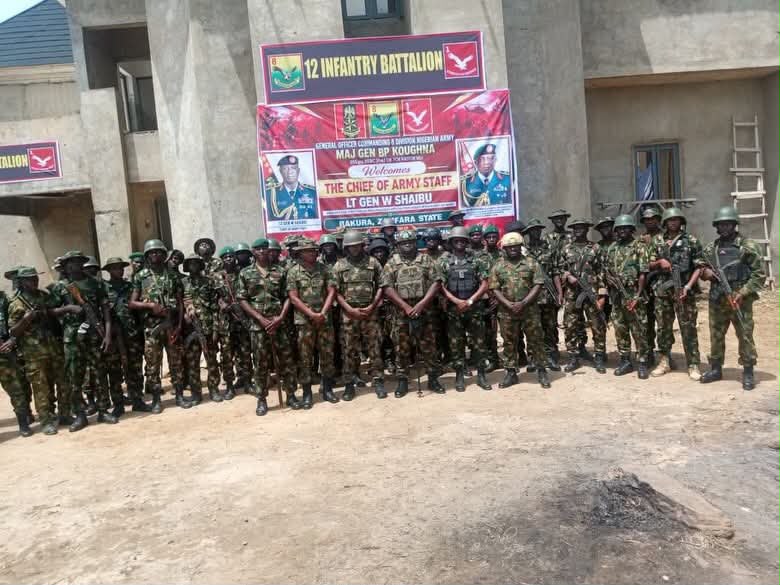
The Nigerian Army has operationalised three new Infantry Battalions in Zamfara State as part of efforts to strengthen security operations and enhance rapid response to emerging threats across the state.
The newly activated formations are the 12 Infantry Battalion, Bakura; 23 Infantry Battalion, Kaura Namoda; and 28 Infantry Battalion, Anka.

A statement by the General Officer Commanding 8 Division Nigerian Army and Commander, Sector 2, Joint Task Force, Operation FANSAN YAMMA, Maj.-Gen. B.P. Koughna, said the development would expand the Army’s operational coverage and improve security within the battalions’ respective Areas of Responsibility.
The statement, issued by the Acting Brigade Commander, Col. Umaru, said the Army remained committed to sustained operations aimed at protecting law-abiding citizens and restoring lasting peace across Zamfara.
Col. Umaru called for stronger collaboration among the military, other security agencies, traditional institutions and communities, stressing that timely and credible intelligence remained critical to successful security operations.
He also charged the newly deployed troops to maintain discipline, professionalism and vigilance while operating within their constitutional mandate and established Rules of Engagement.

The Acting Brigade Commander urged the troops to remain responsive to the security needs of the communities within their areas of responsibility and to sustain close engagement with local stakeholders.
In separate remarks, the Emirs of Bakura, Anka and Kaura Namoda commended the Nigerian Army for establishing the additional battalions.
The traditional rulers described the move as an important step towards strengthening security and restoring normalcy in communities across the state.
They pledged the continued support of traditional institutions through community mobilisation, cooperation and information sharing with security agencies.
The activation of the three battalions is expected to further enhance the Army’s presence and operational reach in Zamfara State, particularly in areas requiring faster response to security threats.
Nigerian Army activates three new battalions in Zamfara
GOC 3 Division engages Bokkos stakeholders over farmer-herder conflicts
By: Zagazola Makama
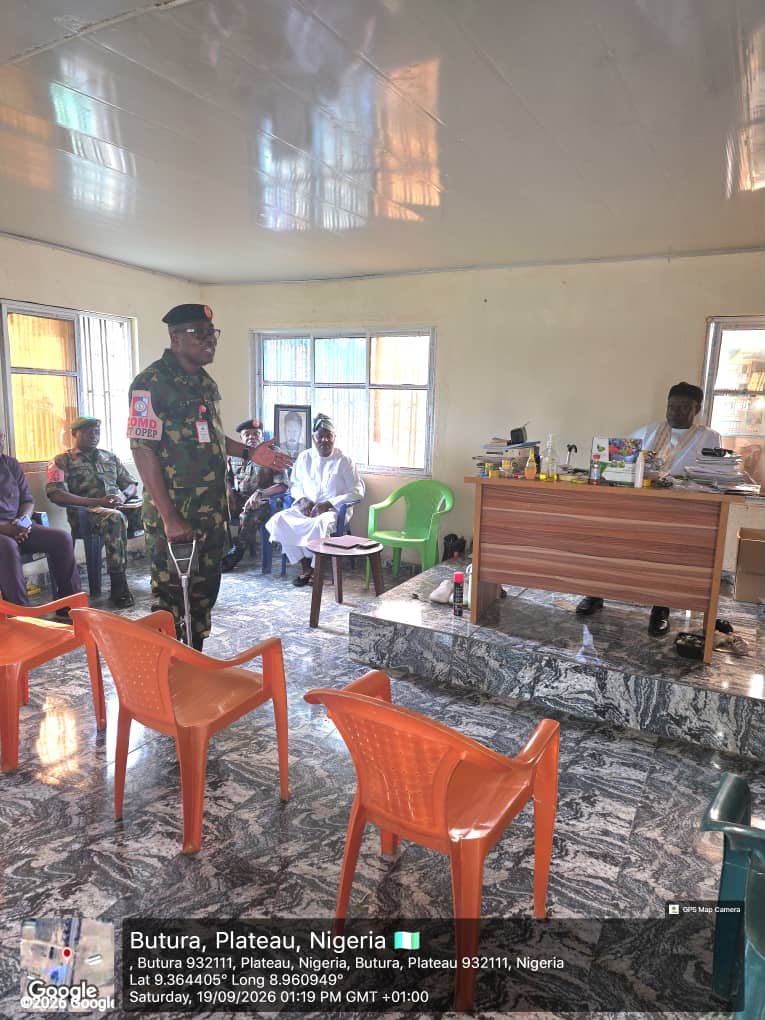
The General Officer Commanding 3 Division and Commander, Operation Enduring Peace, Maj. Gen. W.M. Dangana, has engaged district heads and other stakeholders in Bokkos Local Government Area of Plateau State as part of efforts to address recurring farmer-herder conflicts in the area.
Maj. Gen. Dangana arrived at the headquarters of Sector 5, Operation Enduring Peace, in Bokkos at about 1:00 p.m. on September 19, 2026, where he was received by the Sector Commander.
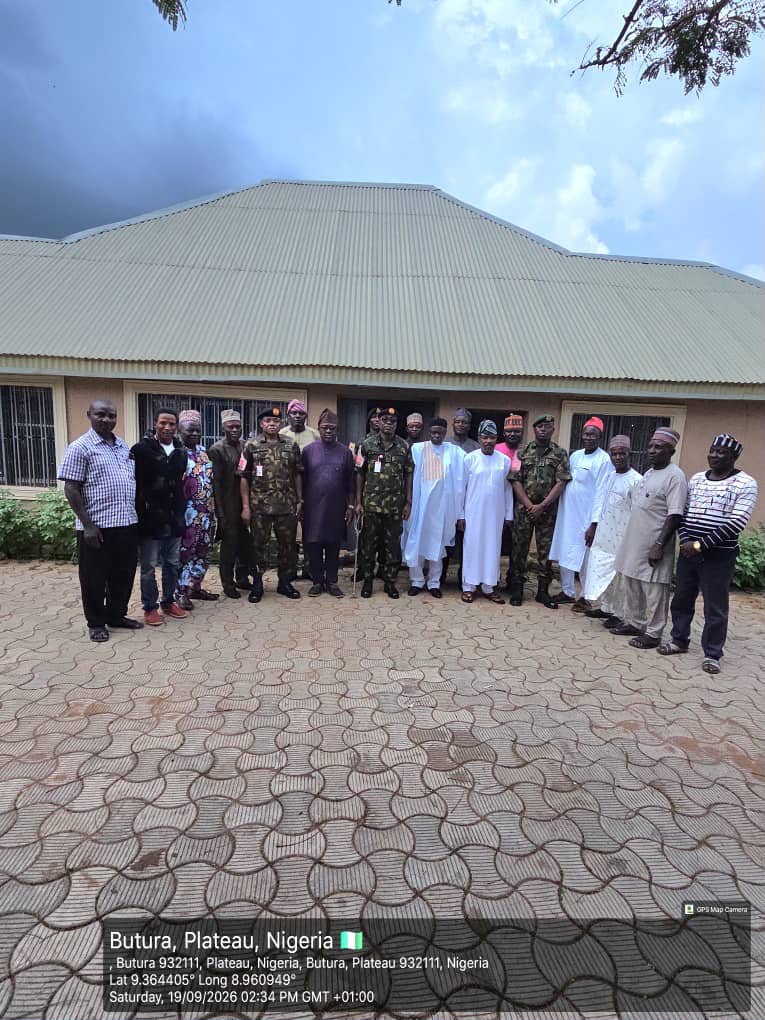
The GOC thereafter proceeded to the Palace of the Saf Bokkos, where he held an engagement meeting with district heads and other stakeholders from across the local government area.
The engagement formed part of ongoing non-kinetic efforts by the military and other stakeholders to address the underlying tensions between farming and herding communities and promote peaceful coexistence.
Discussions with traditional leaders and community stakeholders are expected to support the identification of local grievances, strengthen communication with security agencies and help prevent disputes from escalating into violence.
The engagement was conducted peacefully and without any incident.
GOC 3 Division engages Bokkos stakeholders over farmer-herder conflicts
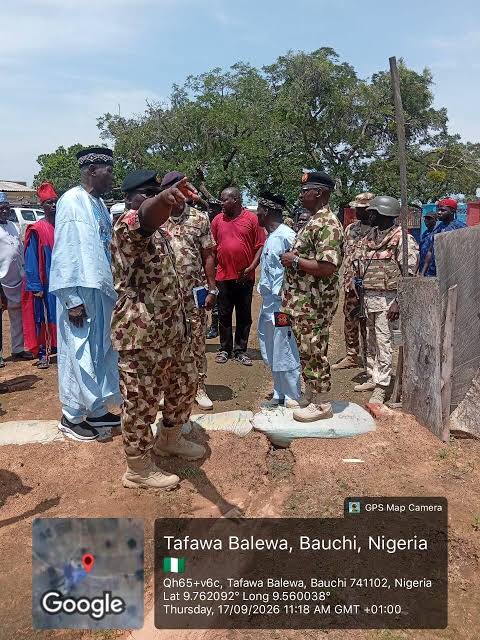
Army committee inspects sites for new 237 Tank Battalion in Bauchi
By Zagazola Makama
A high-level military committee has inspected proposed locations for the establishment of the newly formed 237 Tank Battalion in Tafawa Balewa Local Government Area of Bauchi State.
The inspection was conducted on Sept. 17, 2026, by a committee led by the Commander, 33 Artillery Brigade, Brig.-Gen. S.S. Shehu.
The delegation included the Bauchi State Commissioner for Lands, the Chief Security Adviser to the Bauchi State Government and the Chairman of Tafawa Balewa Local Government Area, among other officials.
On arrival at the headquarters of Sector 8, Sub-Sector 82, Operation ENDURING PEACE, in Tafawa Balewa, the delegation was received by the Sub-Sector Commander, Maj. F. Ogunleke.
Ogunleke subsequently led the committee on an inspection of selected temporary facilities being considered to accommodate the battalion.
Among the facilities inspected were the ATBU Annex and the Government Girls Secondary School, Tafawa Balewa.
The committee also assessed two locations being considered for the permanent establishment of the battalion one in Tafawa Balewa and another in Murno, Boto District of the local government area.
The inspection ended at about 1:30 p.m., after which the committee proceeded to Toro for further engagements as part of the ongoing process for establishing the battalion.
The development is part of efforts to identify suitable facilities and locations for the operational deployment and long-term accommodation of the newly established military formation.
Army committee inspects sites for new 237 Tank Battalion in Bauchi

Tinubu: Economic outlook has improved, reforms have laid foundation for prosperity

A year of military reform, operational expansion and democratic professionalism under President Tinubu

The Armed Forces and Nigeria at 66: What Does History Say?

Roger Federer’s Shock as DNA Results Reveal Myla and Charlene Are Not His Biological Children

THE PLIGHT OF FARIDA

FAILED COUP IN BURKINA FASO: HOW TRAORÉ NARROWLY ESCAPED ASSASSINATION PLOT AMID FOREIGN INTERFERENCE CLAIMS
-
 News3 years ago
Roger Federer’s Shock as DNA Results Reveal Myla and Charlene Are Not His Biological Children
-
Opinions5 years ago
THE PLIGHT OF FARIDA
-
 News1 year ago
FAILED COUP IN BURKINA FASO: HOW TRAORÉ NARROWLY ESCAPED ASSASSINATION PLOT AMID FOREIGN INTERFERENCE CLAIMS
-

 News3 years ago
EYN: Rev. Billi, Distortion of History, and The Living Tamarind Tree
-
 Opinions5 years ago
POLICE CHARGE ROOMS, A MINTING PRESS
-

 ACADEMICS3 years ago
A History of Biu” (2015) and The Lingering Bura-Pabir Question (1)
-

 Columns3 years ago
Army University Biu: There is certain interest, but certainly not from Borno.
-

 Politics1 year ago
2027: Why Hon. Midala Balami Must Go, as Youths in Hawul and Asikira/Uba Federal Constituency Reject ₦500,000 as Sallah Gift
