
News
We will soon submit the report on the research into kidney disease prevalence in Borno state… Prof Umate

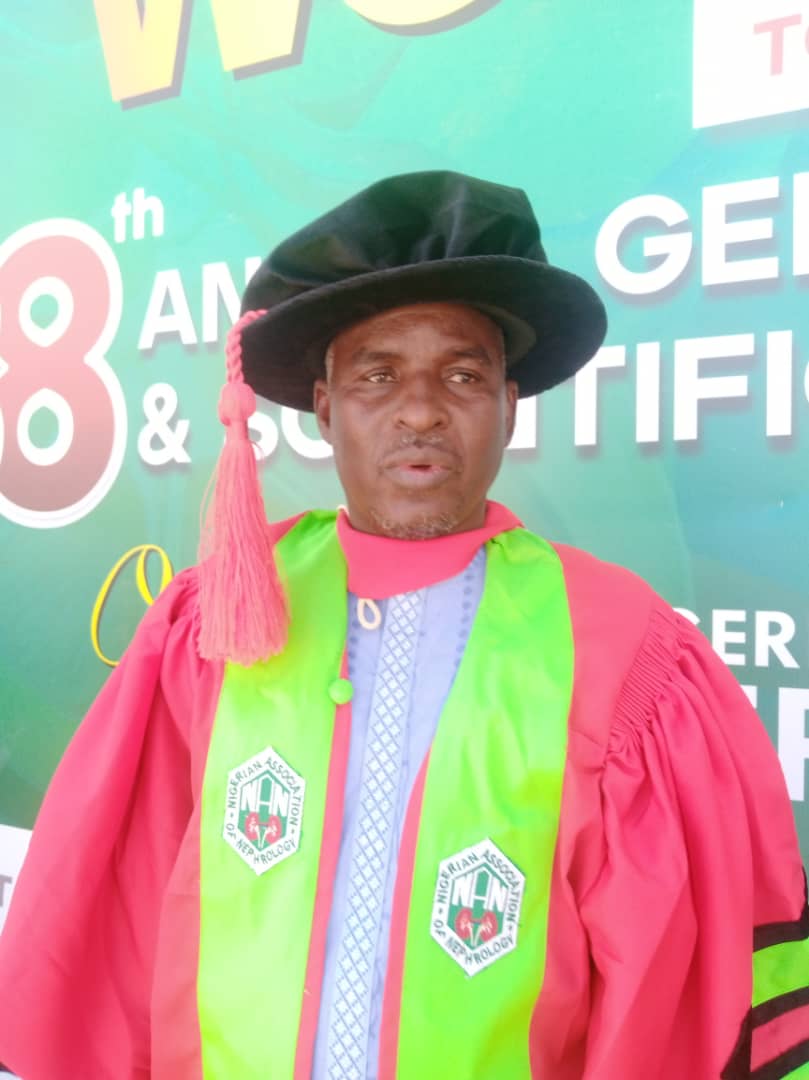
We will soon submit the report on the research into kidney disease prevalence in Borno state… Prof Umate
The Nigerian Association of Nephrologists (NAN) recently met in Maiduguri for their annual meeting. This exclusive interview with Professor Ibrahim Umate was conducted recently after the opening session where he was honored with a fellowship of the award. Below are extracts of the interview
By: Bodunrin Kayode
Q: Governor Babagana Zulum and his directive for the UMTH to embark on research on prevalence of kidney diseases in Borno
A: We have gone very far in the sense that we have been able to find out the real militating factors responsible for the prevalence of the disease. But there is something we are waiting for to be able to conclude. In all the research we have been doing so far, we have been searching for genetic components igniting the problem.
This genetics research involves taking samples to the molecular laboratory and assessing the genetic components within each sample. There are other genes that may also be responsible like NHY genes which we are looking into how it influences kidney diseases. So we have taken samples to the molecular lab and results will soon be ready. People that have this kinds of genes are more likely to have these kinds of diseases.
Q: Cuts in….So the results will be ready before the Governor leaves office next year?
A: It will be ready within a month or so. We will present the official details to the Governor as soon as we are done with the details.
Q: How about the Challenges you are faced within the realm of the nephrology practice at UMTH?
A: Challenges are always there especially when people come to the hospital with very late presentation of the disease. Its a major and worrying challenge. If only people will come early with their ailments, some of these challenges would become reversible but if they come late there is almost nothing for us to do. Some of them come so late that you have nothing left to do other than to start dialysis. Or even begin to bother about transplant of another kidney to keep them alive. This is all due to the Challenges of late reporting.
Another challenge is about the facilities. Its not as if we don’t have, but you know as the patients population is growing, the machines are over stretched. For now, we have about 20 functional machines and we have to do two to three sessions on some of the machines on a daily bases depending on the number of patients waiting in the queue. Sometimes we have 30, 40 or even more patients waiting in a day for the same service. So sometimes we finish the first session and embark on the second session and these kinds of daily routines affects the machines badly. So ideally, after using the machines that day we can’t use again till the next day. Another challenge is that many people can’t afford the funds for the dialysis.
Again our daily challenge is not only around dialysis alone. There are other aspects of treatment which are far more expensive than dialysis. Example if you are to maintain the red blood vessels of a patient to avoid anemia, electro-positive stimulating agents are very important but its quite expensive. And it is expected that the patients should take it daily while just a vile of it is about 18,000. So if a patient is taking it just twice a week, he must have about 36,000 naira to take it.
Q: The CMD once hinted in a news conference about a foundation to help kidney patients, is it functional now?
A: Yes we have the Kashim Shettima foundation that is helping out with anyone that has transplant issues. As it stands today, anyone that does a transplant will not buy drugs again as long as the operation was done in Maiduguri. And this is courtesy of the Kashim Shettima foundation which will enable them to access the drugs and consumables.
Q: You seem to be having a good time with consumables Prof. What is the reality in the kidney centre?
A: Indeed, government is trying its best on that. We are getting them at subsidized rates. Instead of patients paying over 50,000 naira, they pay just 12,000 for a session of dialysis. So it is about 80% subsidized. That is a good deal to me.
We will soon submit the report on the research into kidney disease prevalence in Borno state… Prof Umate



Borno: Kwaya Kusar stakeholders seek investment in grains processing
Farmers and some stakeholders in Kwaya Kusar community have urged governments at all levels and industrialists to establish grain processing factories in their community.
They stated that having such facilities would help prevent post-harvest losses, create jobs, stabilise food prices and create wealth for the state and country.
They made the call in separate interviews with our Correspondent in Kwaya Kusar town of Borno State on Monday.
They said processing maize, wheat and local grains into staple foods like flour, semolina, and livestock feeds would further strengthen national food security while transforming the agricultural value chain.
Alhaji Abdullahi Gidado, the Secretary of Kwaya Kusar Grains Market said that the area has enough grains to feed any industry established in the area.
Gidado said that grains from the market were taken to other parts of the country on a weekly basis throughout the year.
He said that over 15, 000 bags leave the market weekly during dry season while over 40, 000 bags were being taken out of the market weekly immediately after harvest.
He said that with such a factory, more youths would be employed while farmers would get better value for their efforts.
“We want the government and other industrialists to take advantage of our strength in grain cultivation to set up mini factories to process our grains into staple foods.
“The more we take these grains out without processing it, the more we lose; from post harvest losses to rains spoiling our grains during the rainy season.
“We take over 30 to 40 trucks of assorted grains from this market weekly and each truck carries 400 bags; after harvest, the number reaches over 100 trucks weekly,” he said.
Also, Malam Hassan Musa, the Chairman of All Farmers Association of Nigeria, AFAN, Kwaya Kusar Local Government corroborated Gidado’s call to establish mini flour milling factories to reduce post-harvest losses.
Musa said farmers within the five local government areas of Biu, Kwaya Kusar, Hawul, Bayo and Shani all in Borno South have the capacity to produce grains that would feed any factories.
“Today, we (farmers) no longer get good returns on investment because we take out our produce raw to feed industries in other parts of the country.
“If we cultivate and process the grains here, the prices of these staple foods will drop and post harvest losses will greatly reduce,” he said.
For Malam Yusuf Abu, a grain dealer at the market said that over 7,000 jobs have been created because of the market as youths engage in grading, loading, transportation and many other areas.
Abu said “we will gain more if we process and take finished products out than taking our raw grains to feed flour mill industries elsewhere.
Borno: Kwaya Kusar stakeholders seek investment in grains processing
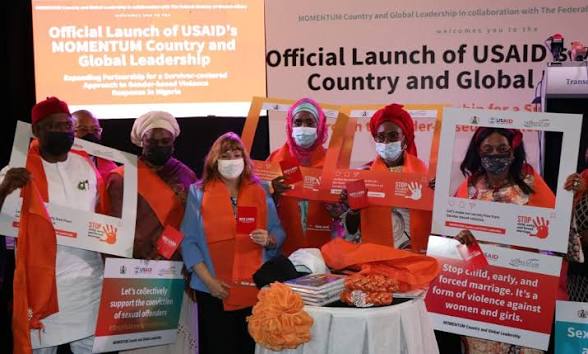
Nigeria Deploys Nationwide Platform to Track Violence Against Women Cases
…New system to provide visibility on investigations, prosecutions, conviction
By: Michael Mike
Nigeria has deployed a new nationwide reporting platform designed to track cases of violence against women from the point of reporting through investigation, prosecution and conviction, in a move aimed at strengthening accountability and access to justice for survivors.
The platform, developed by the Federal Ministry of Justice with support from the EU Support to End Sexual and Gender-Based Violence (ESGBV) Programme in Nigeria and implemented by the International Institute for Democracy and Electoral Assistance (International IDEA), is expected to address persistent gaps in case documentation, data coordination and justice-sector monitoring.
The initiative was unveiled on Monday in Abuja during the Deployment and Operationalisation of the Violence Against Women (VAW) Reporting Platform and National Validation and Capacity-Building Workshop on the VAW Reporting System.
The organisers described the platform as Nigeria’s first standardised justice-sector VAW reporting system, designed to consolidate information on cases from different states into a central database.
Speaking at the event, GBV Policy and Strategy Development Specialist, ESGBV Programme, International IDEA, Melissa Omene, said the initiative was developed to address one of the major weaknesses in Nigeria’s response to violence against women — the fragmentation of data and inadequate tracking of cases after they are reported.
“Reporting violence is only the beginning of a survivor’s journey. What happens after reporting matters just as much as the reporting itself,” Omene said.
She disclosed that an assessment involving 112 respondents from 32 institutions across the Federal Capital Territory, Benue, Kaduna and Oyo states identified gaps in data coordination, investigations, evidence management and justice-sector monitoring.
Omene said the National GBV Dashboard recorded 4,449 GBV cases in the first half of 2023, taking the nationwide number recorded since the dashboard was launched in 2020 to more than 19,000.
The figures, she said, highlighted the need for a stronger system capable of following cases beyond the initial reporting stage.
Also speaking, the Head of the Sexual and Gender-Based Violence Unit at the Federal Ministry of Justice, Yewande Gbola-Awopetu, said the success of the new platform would depend significantly on the accuracy and consistency of information supplied by designated desk officers.
“Every field you complete, every case status you update, and every follow-up you log becomes part of the evidence base,” she said.
Gbola-Awopetu disclosed that the National Human Rights Commission had recorded more than 33,000 SGBV cases between January and May, while the National Agency for the Prohibition of Trafficking in Persons (NAPTIP) documented more than 3,000 cases of violence against women in the FCT.
She said the figures reinforced the need for improved documentation and tracking of cases to determine what happens after victims report violations.
The National Consultant for the VAW Reporting System at International IDEA, Agharinma Ehiedu, said the platform would bring together information previously scattered across state-level systems into a single national database.
According to him, justice institutions would be able to access national data without having to contact individual states separately.
“You can know how many offenders you have, how many cases have been convicted, and those that are pending trial across the country,” Ehiedu said.
He added that the platform would also enable members of the public to report violations, with cases subsequently routed to relevant state desk officers.
He described the system as providing “full visibility of what is happening” to violence-against-women cases across the country.
Violence against women remains a major human rights, public health and justice challenge in Nigeria. It includes physical, sexual and psychological violence, domestic violence, harmful practices, trafficking and other forms of abuse.
One of the longstanding difficulties in addressing the problem has been the absence of a consistently integrated system for documenting cases and tracking their progression through Nigeria’s multiple justice and response institutions.
Cases can pass through the police, health facilities, social welfare structures, human rights institutions, prosecutors and courts, while information is often held separately by each institution. This can make it difficult to establish how many reported cases resulted in investigation, prosecution or conviction.
The problem is compounded by under-reporting. Survivors may choose not to report incidents because of stigma, fear of retaliation, economic dependence, lack of confidence in institutions or concerns about the consequences of pursuing cases.
Nigeria has also established legal and institutional mechanisms aimed at addressing gender-based violence. The Violence Against Persons (Prohibition) Act (VAPP) 2015 criminalises a range of harmful acts, including physical, sexual and psychological violence, while providing protections and remedies for victims and survivors. Its implementation, however, depends substantially on effective enforcement and, in states where necessary, domestication.
The country’s response also involves institutions including the Federal Ministry of Justice, Nigeria Police Force, National Human Rights Commission, NAPTIP, health and social welfare agencies, state ministries and civil society organisations.
The new VAW reporting platform is therefore expected to complement these existing structures by providing a mechanism for capturing and following cases across the justice chain.
Beyond statistics, the system could allow authorities to identify bottlenecks — including cases delayed at investigation or prosecution stages — and improve evidence-based planning and accountability.
For survivors, the ultimate test will be whether reported cases receive timely attention and whether perpetrators are brought to justice.
The ESGBV Programme and International IDEA said the deployment was intended to move Nigeria’s response beyond simply recording incidents towards ensuring that cases remain visible until appropriate justice outcomes are achieved.
The initiative also comes as Nigeria prepares for continued efforts to strengthen its institutional response to sexual and gender-based violence, with stakeholders stressing that better data is essential for effective policy, resource allocation and accountability.
Nigeria Deploys Nationwide Platform to Track Violence Against Women Cases
News
Several Killed, 45 Fulani Shelters Destroyed, Crops Razed In Targeted attack by suspected Mwaghavul miltia in Plateau Community
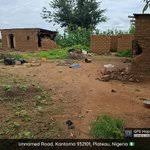
Several Killed, 45 Fulani Shelters Destroyed, Crops Razed In Targeted attack by suspected Mwaghavul miltia in Plateau Community
By Zagazola Makama
Troops of Operation Enduring peace have intensified security operations in Jwak Maitumbi community of Mangu Local Government Area of Plateau State following the killing of several fulani residents and destruction of about 45 Fulani residential shelters and large quantities of crops by suspected Mwaghavul militia.
The incident was reported at about 7:45 a.m. on Sunday, August 16, 2026, prompting troops of Sector 8, Operation Enduring Peace, deployed at Sabon Gari to move to the affected community.
A military security source told Zagazola Makama that upon arrival, the troops discovered that about 45 Fulani accommodation structures had been destroyed, while valuables belonging to the residents were allegedly looted by the assailants.
In the early hours of the attack, several residents were gunned down by the attackers before slaughtering them. The attack immediately triggered mass displacement with women and children and elderly ran for safety.
The assailants also reportedly entered farms belonging to Fulani residents and used cutlasses to destroy a large quantity of crops.
Following the incident, troops summoned the Galadima and youth leader of Jwak Maitumbi community, directing the community leadership to assist security agencies in identifying and producing those responsible for the attack.
The development is particularly sensitive because the conflict in parts of Plateau has frequently been characterised by tit-for-tat attacks, in which an attack on one community is followed by retaliation against another community, often resulting in further deaths, destruction of property and displacement.
The destruction of the shelters and crops could therefore become a trigger for revenge if affected residents or their associates believe that the perpetrators have not been identified or brought to justice. Failure to establish accountability could deepen perceptions of impunity and increase the temptation for affected communities to seek their own form of justice.
Plateau has experienced several episodes of this nature, with targeted attacks and reprisals often spreading beyond the location where the initial incident occurred. The danger is that the latest incident could similarly be interpreted through the lens of previous attacks rather than as an isolated criminal act.
The intervention was aimed at ensuring accountability and preventing possible reprisal attacks capable of escalating tensions between communities in the area.
Troops have continued to dominate the general area while engaging community and traditional leaders as part of efforts to de-escalate tensions, prevent retaliatory violence and restore calm.
Several Killed, 45 Fulani Shelters Destroyed, Crops Razed In Targeted attack by suspected Mwaghavul miltia in Plateau Community

Borno: Kwaya Kusar stakeholders seek investment in grains processing

Nigeria Deploys Nationwide Platform to Track Violence Against Women Cases

EU Releases €2.3m to Fight Cholera as Nigeria Gets €1.5m

Roger Federer’s Shock as DNA Results Reveal Myla and Charlene Are Not His Biological Children

THE PLIGHT OF FARIDA

FAILED COUP IN BURKINA FASO: HOW TRAORÉ NARROWLY ESCAPED ASSASSINATION PLOT AMID FOREIGN INTERFERENCE CLAIMS
-
 News2 years ago
Roger Federer’s Shock as DNA Results Reveal Myla and Charlene Are Not His Biological Children
-
Opinions5 years ago
THE PLIGHT OF FARIDA
-
 News1 year ago
FAILED COUP IN BURKINA FASO: HOW TRAORÉ NARROWLY ESCAPED ASSASSINATION PLOT AMID FOREIGN INTERFERENCE CLAIMS
-

 News2 years ago
EYN: Rev. Billi, Distortion of History, and The Living Tamarind Tree
-
 Opinions5 years ago
POLICE CHARGE ROOMS, A MINTING PRESS
-

 ACADEMICS2 years ago
A History of Biu” (2015) and The Lingering Bura-Pabir Question (1)
-

 Columns2 years ago
Army University Biu: There is certain interest, but certainly not from Borno.
-

 Politics1 year ago
2027: Why Hon. Midala Balami Must Go, as Youths in Hawul and Asikira/Uba Federal Constituency Reject ₦500,000 as Sallah Gift
