
Politics
When Former Borno Council Chairmen Pitched Tent With Buratai

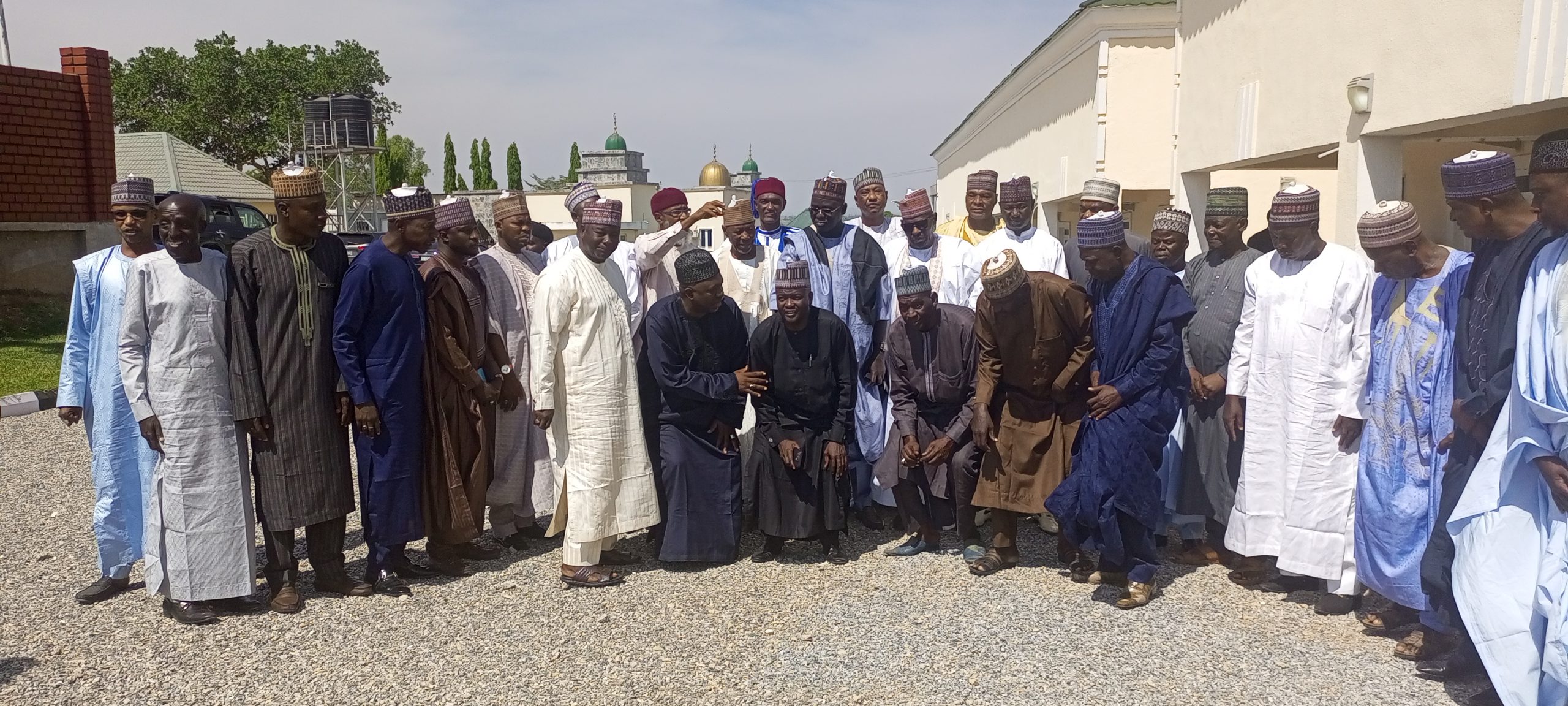
When Former Borno Council Chairmen Pitched Tent With Buratai
By: James Bwala
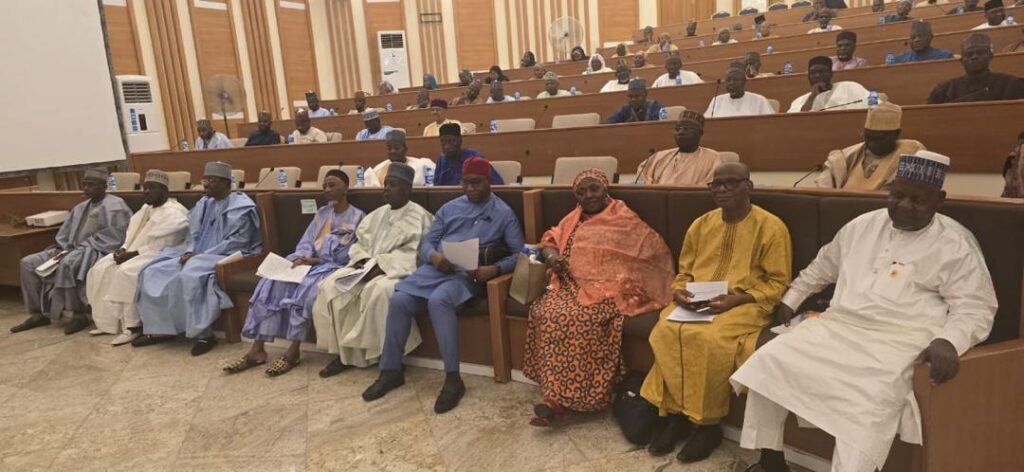
Lt. General Tukur Yusuf Buratai, the former head of the army, received two messages from former Borno state local government Chairmen forum, who paid a courtesy call on him at the famous snake farm along Abuja, Keffi road. Alhaji Malum Bulin, the forum’s chairman, said the former local government chairmen in Borno state have been observing the political atmosphere in the state as well as the former army chief to look for a chance to express their admiration for his bravery in leading Nigeria out of the dangers of terrorism. The height which left almost all of the local governments in the state vacant. That is also the time when he (Buratai) assumed command of the Nigerian Army.
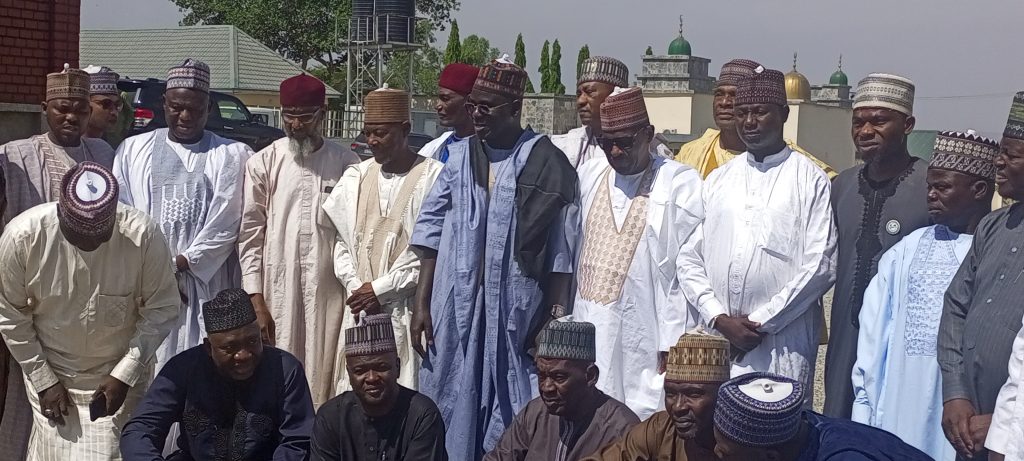
For many locals, who struggled to breathe through numerous nights of fear and days filled with blood to save the once-peaceful region from the fiery sword of death and its messengers. Buratai, who headed the Nigerian Army from 2015 until his retirement in 2021, has come to symbolize bravery. When he intervened to save the state, the Boko Haram insurgency was extensive and thick. As he began visiting one town and hamlet after another to brighten the faces of those hoping for tomorrow, it was a chilling scene with many worn faces.
From Kukawa to Gwoza, a journey that appeared to last on forever, he finally found calm after riding in the pitch black to bring the day and riding beside it through the longest night. Although he and his warriors were hungry and thirsty, they went to rescue the people and reclaim the lost calm.
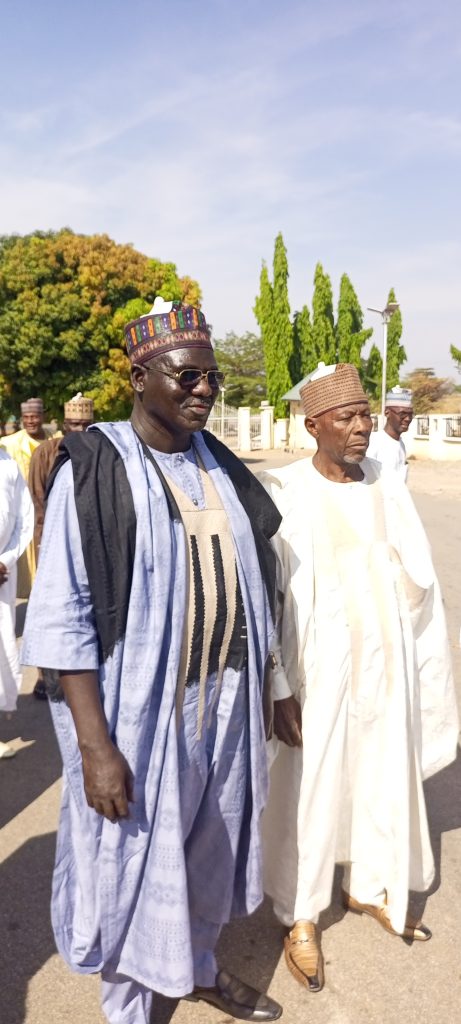
The Forum Chairman, Alhaji Malum Bulin, spoke on behalf of the former local government chairmen in Borno state when he told General Buratai that their initial message to him was one of gratitude for always standing by the people of Borno and northeastern Nigeria to help lead the area toward peace while commanding the Nigerian Army.
“We’ve been waiting. We have looked at what we can do to make this day happen. We appreciate the chance to express our gratitude for everything you did for us by leading the Nigerian Army to liberate our local governments from the control of the rebels. We are grateful to you and will always be grateful. As I mentioned, we are standing here on behalf of the previous local government chairmen in Borno state, and we have two messages. I can guarantee that more than 30% of the people in Borno State are behind each and every one of us who is present and who is speaking on behalf of the state’s 27 local government areas. This is to let you know that, taken individually, we are still holding steady.” The Forum Chairman said
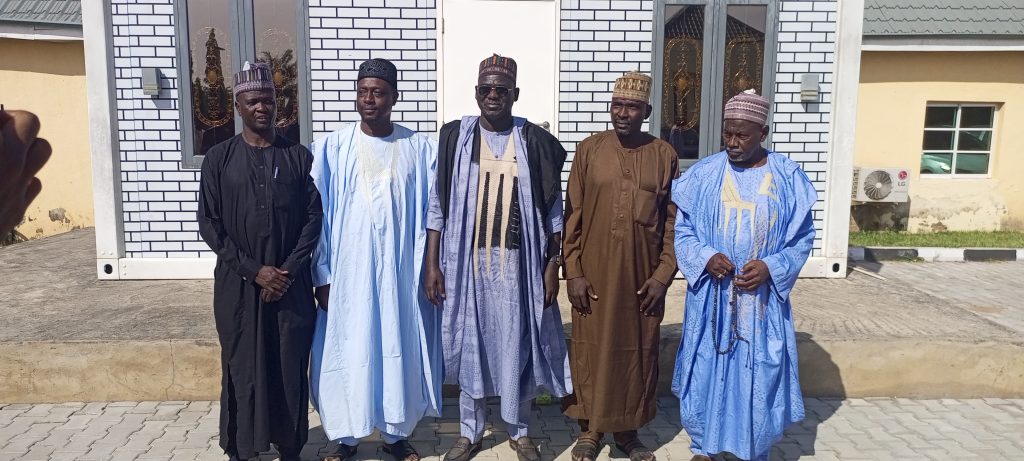
He claims that the second reason they are there is because General Buratai, who has successfully led an army through numerous battles and emerged victorious, will also make a good political general who can give the people of Borno state and Nigeria guidance in the nation’s expanding political landscape. Alhaji Malum Bulin further noted that because the infantry general is a prominent figure in Nigeria’s current political events and is a member of the ruling party, they are positioning themselves as his eyes and ears on the ground.
READ ALSO: https://newsng.ng/unicef-celebrates-world-childrens-day-calls-for-ends-to-discrimination/
“We’ve also come to let you know that all we needed was your blessings since we were confident that the decisions we made were in line with the hopes and aspirations of our followers throughout Borno State. As a result, by pitching our tents alongside you, we are also recognizing your leadership abilities and expertise in strategic planning. We will follow your lead and travel with you in all directions. We will continue to serve as your foot soldiers, traveling through the hinterlands to carry out your orders whenever necessary. We committed to this.” Alhaji Bulin said.
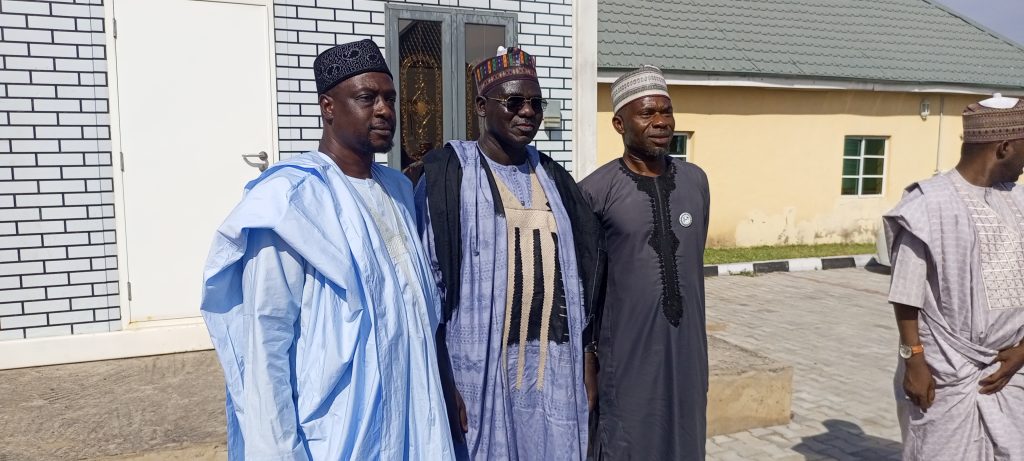
Speaking as well, Ali Umar, a former head of the Maiduguri Metropolitan Council, informed the General that they had come to him for a variety of reasons. “Our forum’s chairman has covered everything. However, I must say that as a result of what you accomplished, the majority of our villages, which were before nothing more than ghost towns, are now thriving. Our folks were able to go to the farm last year and this year, plant their crops, and reap a good harvest. Prior to the operations under your direction that liberated all these villages and towns throughout the state and the region as a whole, we were unable to do this for a number of years.”
Abubakar Mai Derive, who supported the speakers, reaffirmed the chairmen’s commitment to supporting the political aspirations and objectives General Tukur Yusuf Buratai sets out to pursue in his political investigations.
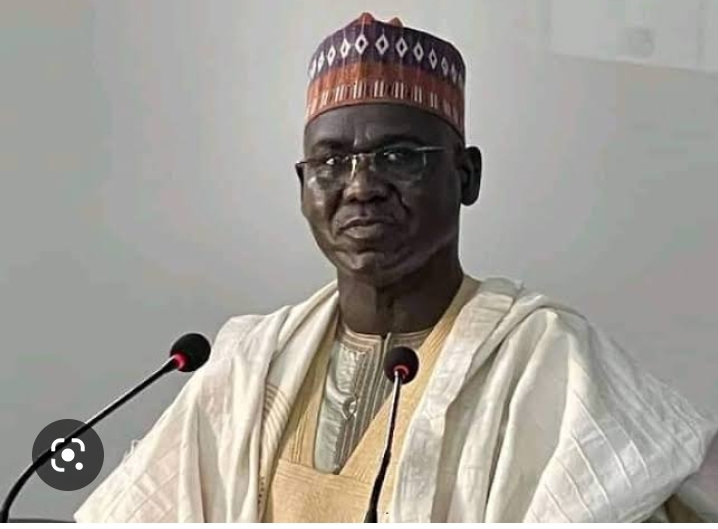
The former Army Chief expressed his satisfaction at having people pay attention to his work as an Army General and now in the political arena while praising their dedication and support. “I appreciate your compassion and encouragement as well. To ensure that our candidates win the upcoming elections, I will however urge us to maintain our concentration and take the necessary action. We are concentrating on our Presidential Candidate and his running mate. We have a bright future, and we’ll make sure to take the necessary steps to instill hope in our people.” Buratai said.
When Former Borno Council Chairmen Pitched Tent With Buratai



PDP faults appointment of permanent secretaries in Gombe
The Peoples’ Democratic Party (PDP), Gombe State Chapter, has faulted the recent appointment of permanent secretaries by Gov Inuwa Yahaya of Gombe State.
This is contained in a press statement issued in Gombe on Tuesday by Mr Abdulkadir Dukku, the party’s State Publicity Secretary.
Dukku said that the party acknowledged the constitutional authority of Yahaya to appoint permanent secretaries under Section 208 of the Constitution of the Federal Republic of Nigeria.
According to him, the exercise of that authority should, however be guided by due process, merit, and the applicable Public Service Rules and other extant administrative regulations.
He stated that the PDP expressed concerns by reports that some long serving and qualified career officers were overlooked, while others reportedly drawn from institutions of higher learning and non-scheduled
services were appointed as permanent secretaries.
“The party does not contend that persons from outside the established career structure are automatically disqualified.
“However, where such appointments are made, the Government should clearly explain the legal and administrative basis, eligibility requirements, and procedures through which the affected persons entered the State Public Service and became eligible for appointment to
the position of permanent secretaries.”
The PDP publicity secretary called on the Gombe State government to disclose the broad criteria and procedures used in selecting the 19 permanent secretaries.
He further urged the state government to review any appointment where credible evidence of nepotism, favouritism, conflict of interest, or procedural irregularity was discovered.
PDP faults appointment of permanent secretaries in Gombe
Yilwatda at 58: Embrace Culture of Giving, APC Chairman Urges Nigerian Leaders
By: Michael Mike
National Chairman of the All Progressives Congress (APC), Prof. Nentawe Yilwatda, has challenged Nigerian leaders to make service to humanity and the culture of giving central to their leadership, insisting that political positions should translate into tangible improvements in the lives of ordinary citizens.
Yilwatda made the call on Saturday in Jalingo, Taraba State, where he marked his 58th birthday by sponsoring a medical and surgical outreach that reached thousands of residents across the state’s three senatorial districts.
Rather than holding a conventional birthday celebration, the APC chairman chose healthcare intervention as the centrepiece of his anniversary, saying the decision reflected his belief that leadership must be measured by its impact on the people.

The birthday programme, held at the Multipurpose Conference Hall of the Federal Medical Centre (FMC), Jalingo, also featured the commissioning of landmark projects at the medical centre.
Yilwatda said the choice of Taraba was deliberate, explaining that the intervention was designed to respond to the needs of underserved communities, particularly residents who struggle to access quality healthcare because of distance, poverty and other socioeconomic barriers.
He said the exercise followed a needs assessment carried out before the commencement of the programme and was deliberately spread across the state to ensure that beneficiaries were drawn from different parts of Taraba.
The outreach began on August 3 at Takum General Hospital before moving to the Federal University Teaching Hospital, Wukari; First Referral Hospital, Sunkani, in Ardo-Kola Local Government Area; General Hospital, Bali; General Hospital, Gembu; and finally FMC Jalingo.
Thousands of residents received medical attention during the exercise, while hundreds of patients requiring surgical intervention were also attended to.
For Yilwatda, however, the intervention was more than a birthday gesture. It was a statement about the kind of leadership he believes Nigeria needs at a time when citizens are increasingly demanding that those entrusted with public responsibility deliver measurable benefits to society.
“Leadership is about service,” he said, urging political office holders and other public leaders to see giving back to society not as an occasional gesture but as an important component of their responsibility to the people.
He said Nigeria could only achieve sustainable development when its institutions were strong and when the welfare of citizens remained at the heart of governance.
Yilwatda also reaffirmed his personal commitment to service, declaring that his overriding ambition was to make his life useful to humanity.
“Every day that I live, the vision is: let it be useful to humanity,” he said.
The intervention attracted commendation from the Taraba State Government, with Governor Agbu Kefas describing the initiative as a timely demonstration of compassion and responsible leadership.
Kefas commended Yilwatda for choosing Taraba as the venue for his birthday celebration and, more importantly, for converting the occasion into an opportunity to provide healthcare to residents across the state.
He described the medical and surgical outreach as a significant intervention, particularly for residents who might otherwise have been unable to afford or access specialised medical services.
The governor also underscored the importance of partnerships between governments, institutions and individuals in addressing the needs of vulnerable citizens.
Minister of Health and Social Welfare, Prof. Muhammad Ali Pate, equally praised Yilwatda for making healthcare the focus of his 58th birthday celebration.
Pate said the decision to mark the occasion in the North-East, particularly Taraba, carried significance, noting that healthcare remained one of the most effective avenues for improving human welfare and strengthening national unity.
He described the health sector as a critical foundation for national development, stressing that no society could make meaningful progress without a healthy population.
The minister commended the Taraba State Government, the National Assembly and residents of the state for supporting and embracing the intervention.
The host of the celebration, Dr. Aisha Adamu Mohammed, said the choice of FMC Jalingo further demonstrated a commitment to strengthening medical excellence and improving healthcare delivery.
She described the projects commissioned at the medical centre and the outreach as important contributions to ongoing efforts to expand access to quality healthcare in Taraba.
The ceremony culminated in the cutting of Yilwatda’s 58th birthday cake and the commissioning of the projects at FMC Jalingo.
But beyond the ceremony and birthday symbolism, the anniversary carried a broader message: that leadership should not be defined merely by the office occupied, the privileges attached to it or the political influence it confers, but by the lives touched and the problems solved.
For Yilwatda, turning 58 was therefore not simply an occasion to celebrate another year of life. It was an opportunity to give, serve and demonstrate his conviction that public leadership ultimately finds its greatest meaning in humanity.
Yilwatda at 58: Embrace Culture of Giving, APC Chairman Urges Nigerian Leaders

2027: Nigeria Needs Issue-Based Political Discourse and Genuine Leadership
By: Dr James Bwala
Going through the pages of newspapers, the drama that is taking over Nigeria’s approaches to the 2027 presidential elections is disconcerting. The pattern that dominates the political landscape speaks less of the personalities falling over themselves as the days unfolded. Politicians are fixated more on personal attacks and partisan squabbles than on substantive discussions about national challenges and solutions. This trend is not only counterproductive but also detrimental to Nigeria’s democratic progress and socio-economic development. For a country grappling with profound insecurity, widespread poverty, and pervasive corruption, the electorate deserves leaders who prioritise meaningful dialogue about policies and governance rather than engage in divisive rhetoric and political mudslinging.
The current state of political discourse reveals a troubling shift away from issue-based debates towards an obsession with personalities and irrelevant vendettas. A glaring example is the recent exchange between supporters of President Bola Tinubu and former Vice President Atiku Abubakar. When an Atiku supporter lambasted President Tinubu by questioning the public’s knowledge of his father, it exposed not only the pettiness of political arguments but also their irrelevance to the electorate’s pressing concerns. Ironically, the same critic forgets that Atiku himself has little public discourse about his own paternal background, underscoring how such personal attacks add no value to the presidential contest. More importantly, the lineage or parentage of these candidates bears absolutely no relevance to their ability to govern Nigeria effectively or address the nation’s myriad problems. Yet, this shallow focus distracts from urgent national issues that demand serious attention.
Similarly, Tinubu’s supporters have largely resorted to celebratory chants like “On your mandate we shall stand” instead of articulating and showcasing the tangible achievements or policy successes under the Tinubu-Shettima administration. Such displays may cultivate loyalty among core supporters but do little to persuade undecided voters or sceptics who seek evidence of competent governance. What Nigerians require are detailed outlines of policy frameworks and measurable progress reports on security, economic reforms, healthcare, education, and anti-corruption efforts—outcomes that directly impact daily lives. The absence of these critical conversations speaks volumes about the superficiality permeating political campaigns.
The disturbing episode involving Bishop Onayinkon and the Sultan of Sokoto further exemplifies the politics of distraction. While these revered figures occasionally become embroiled in political controversies, the essential “table” where politicians should lay down concrete plans remains conspicuously empty. Whether in the ruling party or the opposition, there is scant evidence of genuine engagement with the core issues undermining Nigeria’s stability and prosperity. Instead, time and resources are expended on symbolic gestures or media-driven theatrics rather than strategic policymaking and governance innovation.
As the opposition coalition attempts to regroup, with Atiku and Peter Obi supporters exploring alliances like the new G-100 coalition, numerous questions arise. For the new G-100 coalition, numerous questions loom large. Can these groups, historically divided by ideology and political ambition, genuinely reconcile and formulate a cohesive governance blueprint? Or will their efforts devolve into another round of factionalism and power struggles that fail to address Nigeria’s fundamental needs? The success or failure of such coalitions will significantly influence Nigeria’s political trajectory, underscoring the imperative for unity premised on substantive policy alignment rather than mere electoral arithmetic.
Giving this background, the broader socio-political context cannot be ignored. Nigeria’s challenges are deeply entrenched and multifaceted. Insecurity remains pervasive, with insurgency, banditry, kidnappings, and communal conflicts destabilising communities and eroding citizens’ confidence in government protection. Simultaneously, poverty continues to ravage millions, with economic inequality starkly visible in urban slums and rural hinterlands alike. Corruption, the perennial cancer afflicting governance structures, persists despite institutional anti-corruption agencies’ existence, largely due to weak enforcement, political interference, and lack of transparency.
Regrettably, government bodies tasked with combating these challenges have yet to deliver tangible results that speak at the grassroots level. Public trust in institutions is waning, and this vacuum often fuels apathy or cynicism during elections. Adding to the complexity, grassroots conversations across Nigerian towns and villages reveal a palpable anxiety about the future. Voters whisper tentative plans, alliances, and expectations ahead of 2027, signifying both hope and uncertainty. These silent discourses often escape mainstream political narratives but are crucial indicators of public sentiment and priorities.
From all indications, a critical juncture lies ahead. The political actors have a clear choice: continue with self-serving battles and distractions that risk further destabilising Nigeria’s fragile democracy, or rise above partisan bickering to offer authentic leadership grounded in ideas, solutions, and national interest. Nigerians deserve a “full table” of ideas—a comprehensive agenda addressing insecurity, poverty alleviation, systemic corruption, economic diversification, infrastructure development, education reform, and social cohesion. Without this, the elections risk becoming a mere spectacle of personalities rather than a genuine exercise in democratic renewal.
The fact remains that the 2027 Nigerian presidential elections must transcend the current culture of personal attacks and symbolic posturing. For Nigeria to progress, politicians must shift focus from criticising each other’s lineage or engaging in hollow celebrations to presenting substantive plans that respond to the nation’s critical challenges. The electorate deserves leaders who speak boldly about what they can contribute to Nigeria’s development and who demonstrate commitment to transparent governance and inclusive growth. Only through such a transformation in political discourse can Nigeria hope to build a more secure, prosperous, and united future. The days ahead will reveal whether Nigerian politicians choose to build bridges or deepen divisions—but the stakes could not be higher for the country and its people.
- James Bwala, PhD, writes from Abuja.
- 2027: Nigeria Needs Issue-Based Political Discourse and Genuine Leadership

NIDEC 2026: No Room for Jamboree Under Tinubu’s 4Ds Agenda — Enikanolaiye

PDP faults appointment of permanent secretaries in Gombe

Troops Foil Armed Herders’ Attack, Recover AK-47 Rifle in Benue

Roger Federer’s Shock as DNA Results Reveal Myla and Charlene Are Not His Biological Children

THE PLIGHT OF FARIDA

FAILED COUP IN BURKINA FASO: HOW TRAORÉ NARROWLY ESCAPED ASSASSINATION PLOT AMID FOREIGN INTERFERENCE CLAIMS
-
 News2 years ago
Roger Federer’s Shock as DNA Results Reveal Myla and Charlene Are Not His Biological Children
-
Opinions4 years ago
THE PLIGHT OF FARIDA
-
 News1 year ago
FAILED COUP IN BURKINA FASO: HOW TRAORÉ NARROWLY ESCAPED ASSASSINATION PLOT AMID FOREIGN INTERFERENCE CLAIMS
-

 News2 years ago
EYN: Rev. Billi, Distortion of History, and The Living Tamarind Tree
-
 Opinions5 years ago
POLICE CHARGE ROOMS, A MINTING PRESS
-

 ACADEMICS2 years ago
A History of Biu” (2015) and The Lingering Bura-Pabir Question (1)
-

 Columns2 years ago
Army University Biu: There is certain interest, but certainly not from Borno.
-

 Politics1 year ago
2027: Why Hon. Midala Balami Must Go, as Youths in Hawul and Asikira/Uba Federal Constituency Reject ₦500,000 as Sallah Gift
