
News
Where Justice Mark Chidiebere Crossed the Line


Where Justice Mark Chidiebere Crossed the Line
By Zagazola Makama
The recent arrest and handover of Justice Mark Chidiebere, popularly known as Justice Crack, to the Department of Security Services has sparked predictable debates about free speech, accountability, and the limits of online activism. But beneath the noise lies a more serious issue one that goes beyond blogging and into the sensitive terrain of national security.
From available details, the turning point was not mere criticism of the military. Democracies tolerate, and even benefit from, scrutiny of their institutions. The red line appears to have been crossed when private conversations between the blogger and serving soldiers suggested alignment around “change of government.” In any country, that phrase, especially when involving active-duty personnel is not taken lightly. No professional military, whether in Nigeria or elsewhere, would ignore such signals once credible evidence emerges.
The Nigerian Army’s response, therefore, should be viewed through that lens. This is an institution that has, in recent months, remained alert to internal and external threats, including failed attempts by rogue elements to destabilise the system. When a civilian is perceived rightly or wrongly to be encouraging disaffection or coercing soldiers within the ranks, it triggers an entirely different category of concern. At that point, it is no longer about opinion, it becomes a question of discipline, cohesion, and national stability.
This is where many content creators must draw a hard lesson. The digital space is not a vacuum. Conversations especially with uniformed personnel carry consequences. Amplifying unverified allegations, engaging soldiers in sensitive political discussions, or projecting narratives that could be interpreted as incitement can quickly move from advocacy into dangerous territory. The line is not always visible, but it is very real.
There is also the broader issue of responsibility. Too often, fragments of internal grievances are pushed into the public domain without context or verification, feeding a cycle where the military is portrayed only through its shortcomings. While criticism is legitimate, a pattern of reckless amplification erodes public confidence and, more importantly, can embolden hostile actors who thrive on internal discord.
If indeed the conversations attributed to Justice Mark Chidiebere reflect attempts to influence serving soldiers toward political ends, then the response by authorities was not just expected; it was inevitable.
What we must all know is that freedom of expression does not extend to actions that could undermine the stability of the state. In an era where a single message can travel faster than any bullet, knowing where the line is and choosing not to cross it has never been more important.
Where Justice Mark Chidiebere Crossed the Line


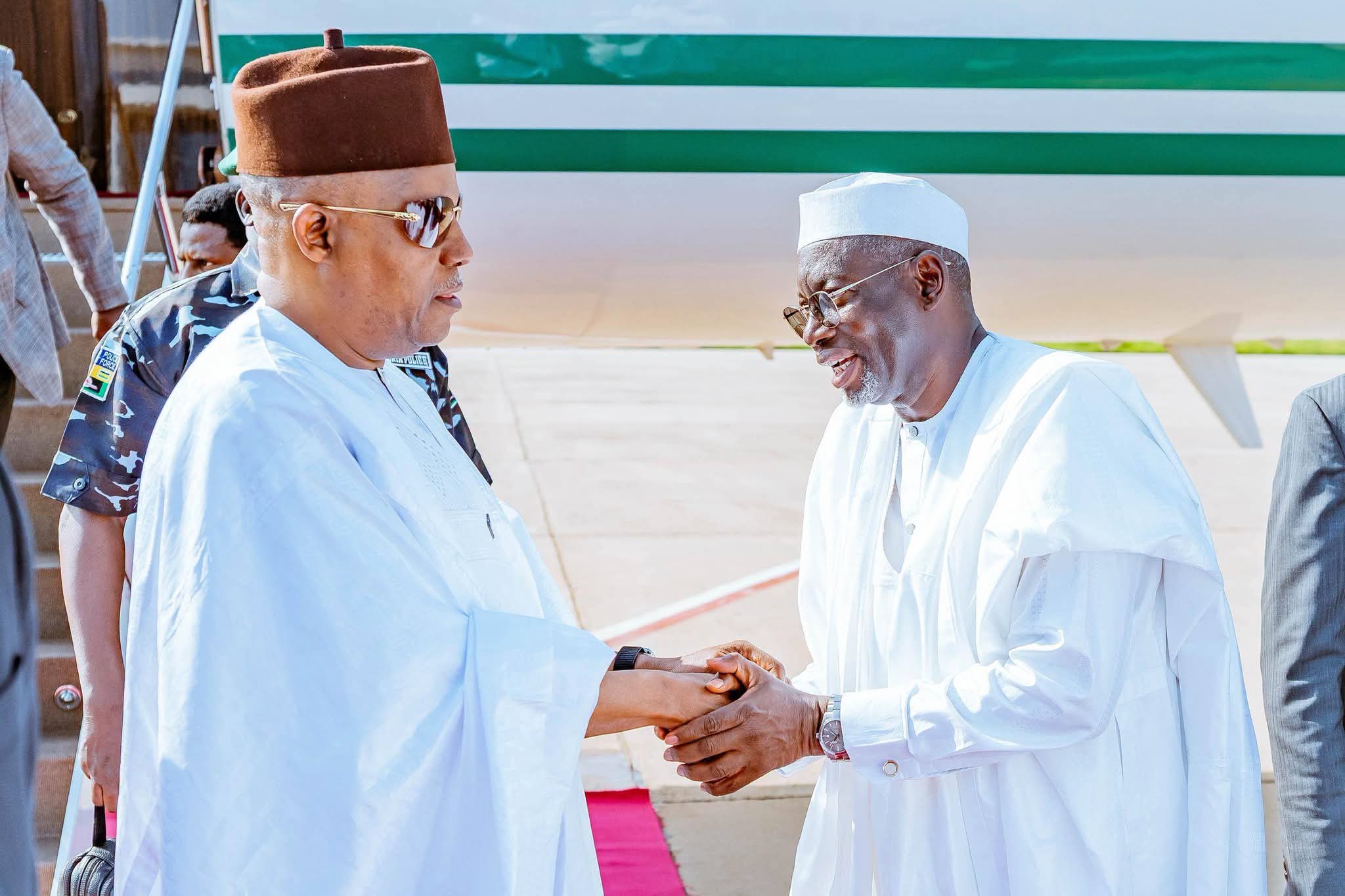
VP Shettima: Emir Of Gumel’s Death, Huge Loss To Our Nation, Traditional Institution
***Says late monarch devoted decades to peace, education, community development
By: Our Reporter
Vice President Kashim Shettima described the death of the Emir of Gumel, HRH Alhaji Dr. Ahmed Muhammad Sani II, CON, as a profound loss to Jigawa State and Nigeria.
He stated that the late monarch represented a generation of traditional rulers whose influence extended beyond the palace to peacebuilding, education, community development, and national cohesion.
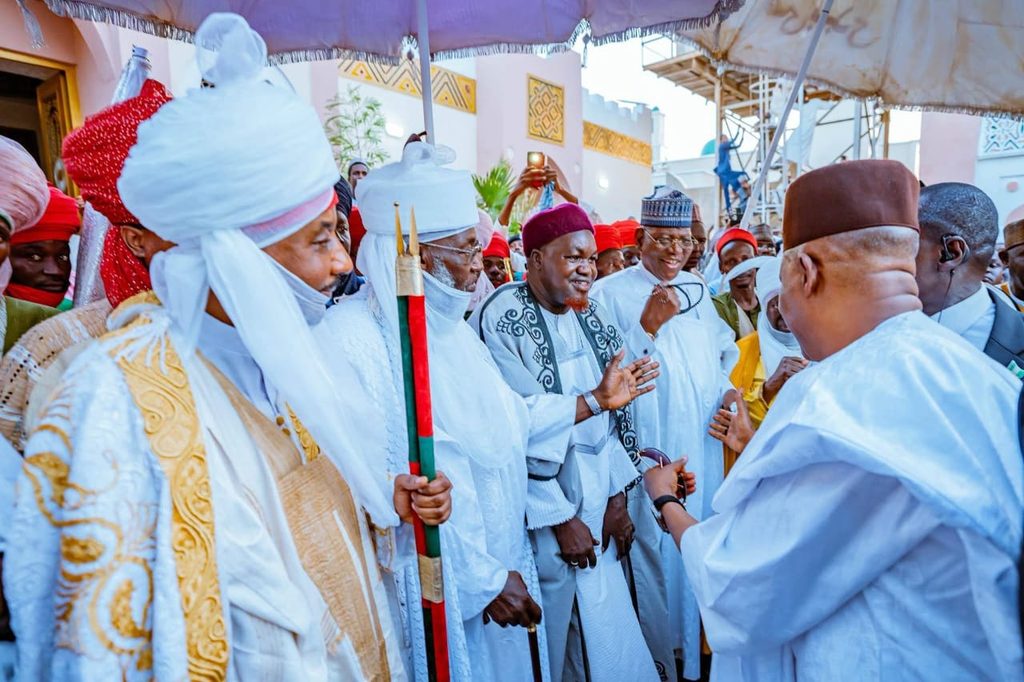
The Vice President, who spoke on Friday in Jigawa State while on a condolence visit, conveyed the sympathies of President Bola Ahmed Tinubu and the Federal Government to the royal family, the Gumel Emirate Council, Governor Umar Namadi, the government and people of Jigawa State over the passing of the 16th Emir of Gumel.
The royal father passed away in Cairo, Egypt, on September 3, 2026, after a nearly 46-year reign that began when he ascended the throne on December 16, 1980.

Speaking during the condolence visit, VP Shettima said the late Emir would be remembered for the length of his reign, and for the stability, wisdom and sense of duty with which he served his people.
“His Royal Highness was more than a traditional ruler. He was a father, a bridge-builder and a stabilising voice whose wisdom served his people and the nation for almost half a century.
“He belonged to that distinguished generation of traditional leaders who understood that the palace must remain a place of refuge, counsel and unity for all. His passing has taken from us a repository of history, experience and institutional memory,” he said.
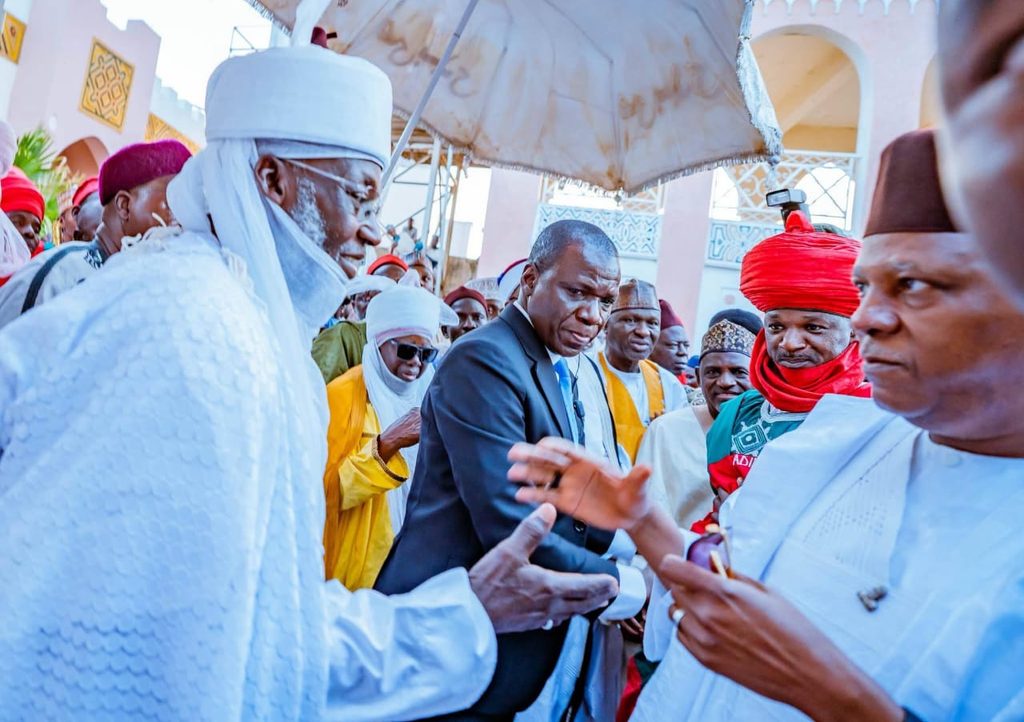
Senator Shettima noted that the Late Emir’s reign spanned decades of major political and social change in Nigeria, yet he remained committed to peace, education, Islamic scholarship and harmonious coexistence among his people.
He added that President Tinubu held the late monarch in high esteem, particularly for his contributions to peacebuilding and community development, noting that the Federal Government continues to regard traditional institutions as critical partners in strengthening national unity and stability.
“On behalf of President Bola Ahmed Tinubu, the Federal Government and the people of Nigeria, I extend our profound condolences to the royal family, the Gumel Emirate Council, the government and people of Jigawa State.
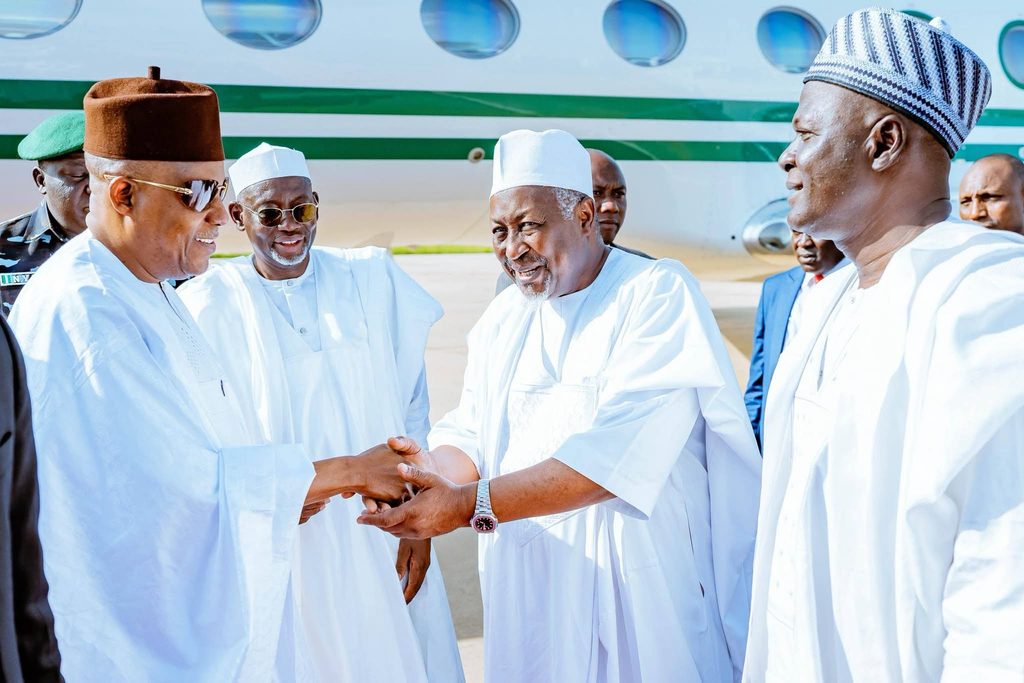
“May Almighty Allah forgive his shortcomings, accept his good deeds and grant him Aljannah Firdaus. May Allah also grant his family, the Emirate and the people of Jigawa State the fortitude to bear this irreparable loss,” the Vice President prayed.
VP Shettima: Emir Of Gumel’s Death, Huge Loss To Our Nation, Traditional Institution

Okrika Deaths: Bassey Warns of Toxic Environmental Crisis in Niger Delta
By: Michael Mike
Environmental activist and President of the Health of Mother Earth Foundation (HOMEF), Nnimmo Bassey, has warned that the reported death of at least 37 people at Okrika in Rivers State has exposed the deepening environmental and public health crisis confronting communities across the Niger Delta.
Bassey, in a statement, said the incident should serve as an urgent wake-up call to the Federal Government, oil companies and regulatory agencies over decades of hydrocarbon pollution, gas emissions and deteriorating oil infrastructure in the region.
At least 37 people reportedly died at the Okari Jetty in Okrika in the early hours of Thursday after allegedly inhaling toxic fumes while attempting to siphon petroleum products from an illegally tapped pipeline. Several others were reportedly missing.
The incident has been confirmed by the Rivers State Police Command, although the police have not released an official death toll and said investigations were ongoing. Other reports have also put the possible number of fatalities higher than 37.
According to Bassey, the victims were reportedly involved in illegal siphoning of a petroleum product locally referred to as “Indorama fuel” from a pipeline operated by Indorama Eleme Petrochemical Company.
He said the exact cause of the deaths should be established through an independent investigation, noting that the victims could have died from inhaling noxious gases released under pressure, asphyxiation or drowning after losing consciousness and falling into the river.
The Youths and Environmental Advocacy Centre (YEAC-Nigeria), which also reported the incident, said more than 100 people had reportedly arrived at the area in boats to collect petroleum products from an illegally tapped point. Some victims reportedly collapsed after being overcome by fumes, while others fell into the river.
Bassey said the tragedy should not be allowed to become another statistic in the long history of environmental disasters in the Niger Delta.
“Then silence. And the dead will become dead statistics,” he warned, arguing that the silence surrounding environmental degradation in the region was itself part of the problem.
The environmentalist drew parallels between the Okrika deaths and the continuing gas emergency in Bille, also in Rivers State, where methane and other gases have reportedly been bubbling from rivers, swamps and wells.
Reports indicate that residents of Bille began observing bubbling water accompanied by a sulphurous smell in October 2025, with the phenomenon subsequently spreading to other locations in the community.
A later assessment by the National Oil Spill Detection and Response Agency (NOSDRA) reportedly detected methane, volatile organic compounds and hydrogen sulphide in ambient air around affected areas. Methane concentrations were also reported to have reached levels posing significant fire and explosion risks.
Bassey criticised what he described as inadequate government responses to the Bille emergency, arguing that relief materials, fire extinguishers and the provision of a fire truck were insufficient in the face of the potential risks.
He said residents, particularly children and elderly people, had been experiencing health problems which, in his view, suggested that the consequences of the gas emissions extended beyond the immediate risk of fire.
“Truth is that Bille community is being gassed while the government and the oil companies are wringing their hands and watching from the sidelines,” he said.
Bassey also pointed to continuing oil fires and pollution elsewhere in the Niger Delta, citing the Ofiomina-Ama/Alakiri area of Okrika, where an oil-well fire has reportedly continued for years, and the Ororo-1 well off Awoye in Ondo State.
The Ororo-1 oil well fire, which began in 2020, has continued for more than six years, with residents and environmental groups raising concerns over prolonged exposure to smoke, soot and hazardous substances, as well as damage to fishing livelihoods.
According to Bassey, the persistence of such incidents demonstrates what he described as a systemic failure to properly decommission ageing infrastructure, prevent oil spills and protect communities living around oil and gas facilities.
He further cited the recent oil spill at Nembe Creek on OML 29, which he said was reportedly linked to operational failure.
The environmentalist argued that the problem could not be addressed simply by condemning oil theft while ignoring the broader conditions that have allowed illegal oil activities and environmental degradation to persist.
He acknowledged that those who tampered with the pipeline could be regarded as criminals, but maintained that oil theft itself involved a wider network of actors and could not be reduced to the actions of individuals operating at the bottom of the chain.
“Oil thievery is an industrial activity with a long value chain, and players, so to speak,” he said.
Bassey warned that the environmental consequences of oil spills, gas flaring and burning oil wells went beyond visible pollution, pointing to the release of hazardous substances, including benzene, hydrogen sulphide and other volatile hydrocarbons.
He called for urgent action to clean up polluted areas of the Niger Delta, extinguish long-running oil-well fires, remove or replace obsolete infrastructure and improve the security of pipelines.
He also called for the implementation of recommendations contained in the Bayelsa State Oil and Environment Commission Report, as well as a transition strategy centred on what he described as “just decommissioning” rather than an unjust transition.
Bassey said the Okrika tragedy should therefore be treated not merely as another case of illegal oil theft, but as a warning about the broader environmental and human consequences of Nigeria’s decades-old petroleum industry.
“How many more tragedies before we know it is time to clean up the Niger Delta, quench the roaring flames, dismantle and remove decrepit facilities and secure all pipelines by replacing and burying them in the ground?” he asked.
He added: “Our lives are worth more than crude oil.”
Okrika Deaths: Bassey Warns of Toxic Environmental Crisis in Niger Delta
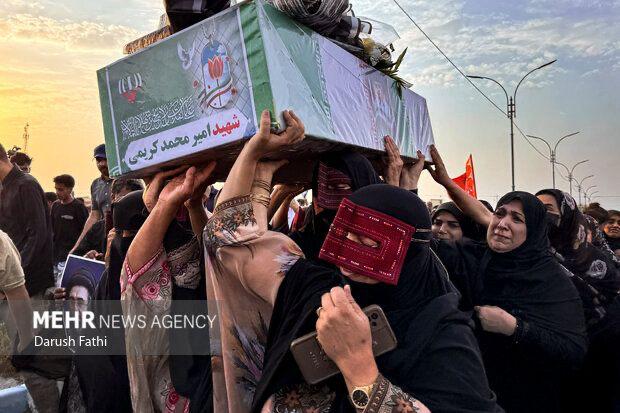
Iran Condemns Alleged US Strike on Wedding Ceremony, Says 68 Civilians Killed or Injured
By: Michael Mike
The Embassy of the Islamic Republic of Iran has condemned an alleged United States military strike on a wedding ceremony in southern Iran, saying the attack killed or injured 68 civilians and turned a family celebration into a scene of tragedy.
In a statement issued by its Press Department, the embassy said the incident occurred on September 1 at a wedding ceremony in Bandar Kuhestak, Sirik County, southern Iran.
It alleged that U.S. munitions directly struck the site where families had gathered for the private ceremony, resulting in deaths and injuries among civilians, including women and children.
The embassy described the victims as ordinary people who had no involvement in military decision-making and posed no threat to the United States.
It questioned the justification for what it described as a U.S. military attack on a residential location where a wedding was taking place, urging the international community to examine the circumstances surrounding the incident.
The Iranian government also linked the reported incident to an earlier U.S. attack on Shajareh Tayyebeh School in Minab, which it said resulted in the deaths of a large number of Iranian children and other civilians.
According to the embassy, reports concerning the Minab attack had similarly pointed to the use of U.S. missiles.
“From the school in Minab to the wedding ceremony in Kuhestak,” the embassy said, “ordinary Iranian people are paying the price of U.S. military aggression.”
The statement also raised questions about the distinction between civilian and military targets, asking what military connection a school or a wedding ceremony could have and what threat children, women and families could pose to U.S. national security.
The embassy’s condemnation comes against the backdrop of heightened tensions and military confrontation between Iran and the United States, with both sides facing international scrutiny over attacks and their impact on civilians.
Invoking international law, the Iranian embassy maintained that Iran did not initiate what it described as the latest aggression and argued that the United States had attacked the territory of a sovereign state.
It cited Article 51 of the United Nations Charter, which recognises the inherent right of states to individual or collective self-defence in the event of an armed attack.
The embassy argued that a country subjected to military attack should not subsequently have its defensive actions automatically characterised as a threat or destabilising conduct.
It nevertheless stressed that the protection of civilians remained a fundamental principle of international humanitarian law and should be applied without discrimination.
“The life of an Iranian child, an Iranian woman, or an ordinary Iranian citizen is no less valuable than the life of any other human being,” the statement said.
The embassy urged the international community not to allow civilian deaths in Iran to become normalised, warning that silence over attacks on civilians could encourage further tragedies.
It said the reported deaths and injuries at the wedding should not be treated merely as another headline in the cycle of war, but should prompt scrutiny of the circumstances and legality of attacks affecting civilian populations.
“A wedding ceremony should never become a battlefield,” the embassy declared, adding that civilians should not bear the cost of military ambitions.
The statement did not include a response from the U.S. government to the allegations.
Iran Condemns Alleged US Strike on Wedding Ceremony, Says 68 Civilians Killed or Injured

VP Shettima: Emir Of Gumel’s Death, Huge Loss To Our Nation, Traditional Institution

2027: Borno will never witness another Gubio tragedy

Okrika Deaths: Bassey Warns of Toxic Environmental Crisis in Niger Delta

Roger Federer’s Shock as DNA Results Reveal Myla and Charlene Are Not His Biological Children

THE PLIGHT OF FARIDA

FAILED COUP IN BURKINA FASO: HOW TRAORÉ NARROWLY ESCAPED ASSASSINATION PLOT AMID FOREIGN INTERFERENCE CLAIMS
-
 News2 years ago
Roger Federer’s Shock as DNA Results Reveal Myla and Charlene Are Not His Biological Children
-
Opinions5 years ago
THE PLIGHT OF FARIDA
-
 News1 year ago
FAILED COUP IN BURKINA FASO: HOW TRAORÉ NARROWLY ESCAPED ASSASSINATION PLOT AMID FOREIGN INTERFERENCE CLAIMS
-

 News2 years ago
EYN: Rev. Billi, Distortion of History, and The Living Tamarind Tree
-
 Opinions5 years ago
POLICE CHARGE ROOMS, A MINTING PRESS
-

 ACADEMICS3 years ago
A History of Biu” (2015) and The Lingering Bura-Pabir Question (1)
-

 Columns3 years ago
Army University Biu: There is certain interest, but certainly not from Borno.
-

 Politics1 year ago
2027: Why Hon. Midala Balami Must Go, as Youths in Hawul and Asikira/Uba Federal Constituency Reject ₦500,000 as Sallah Gift
