
News
Why Borno Will Continue to Praise Zulum Long After He Leaves Office

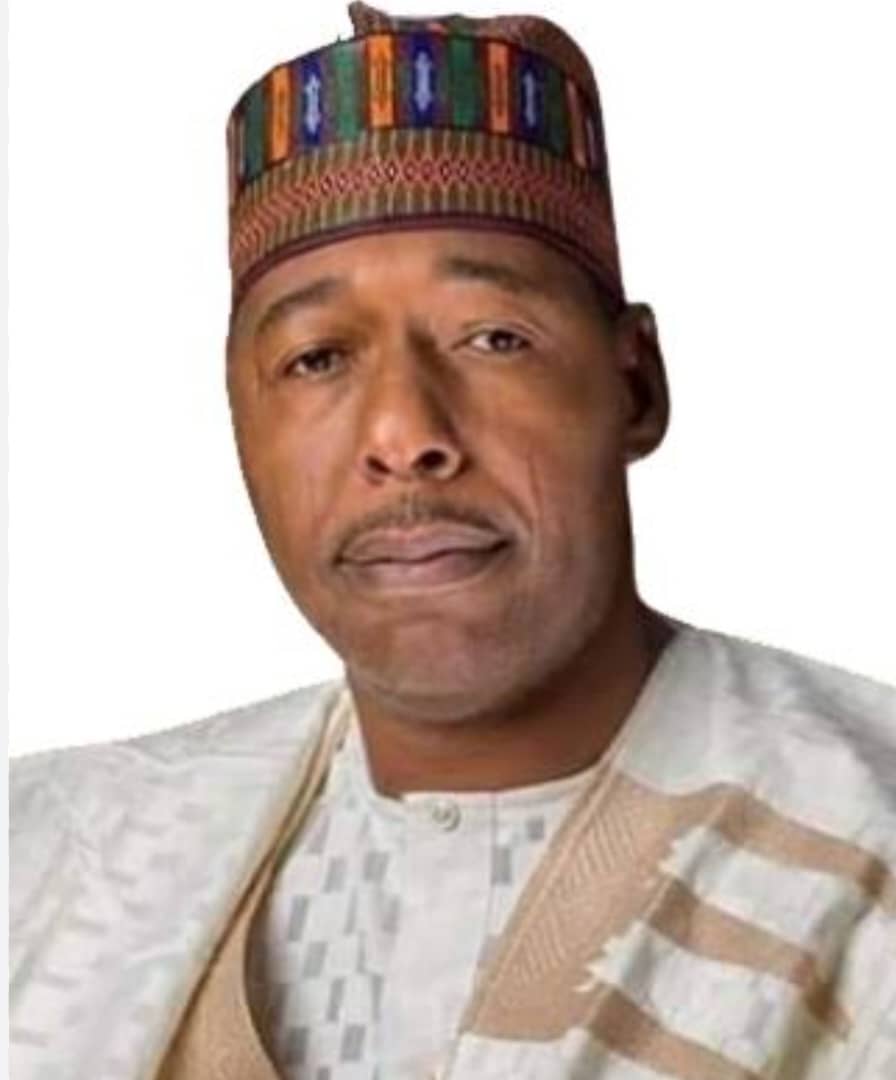
Why Borno Will Continue to Praise Zulum Long After He Leaves Office
By: Hon. Yusuf Adamu
Leadership is the cornerstone of progress in any society. In Borno State, Nigeria, the tenure of Governor Babagana Umara Zulum exemplifies how visionary, pragmatic, and resolute leadership can transform a region grappling with immense challenges into a beacon of hope and development. Even as his administration nears its conclusion, it is clear that Borno will continue to extol his virtues and celebrate his achievements for generations to come. This enduring admiration is rooted in Governor Zulum’s steadfast commitment to infrastructural renaissance, his insistence on accountability and quality, and his profound dedication to the welfare of the people. It is this rare convergence of qualities that sets him apart and ensures that his legacy will persist long after he steps down.
From the beginning of his administration, Governor Zulum demonstrated a unique pragmatism that swiftly endeared him to the people of Borno. Unlike many leaders who make lofty promises devoid of actionable plans, Zulum approached governance with a hands-on mindset, personally visiting ongoing projects, engaging contractors, and setting clear deadlines for completion. This direct involvement signaled a break from the norm—the governor was not just a figurehead; he was an active participant dedicated to delivering tangible results. On numerous occasions, he gave marching orders to contractors to complete projects within specified timelines and emphasized adherence to government-mandated standards. This approach was not merely bureaucratic micromanagement but a deliberate strategy to ensure that public assets meet international standards and stand the test of time.
The significance of this cannot be overstated. In regions such as Borno, ravaged by insurgency and economic instability, infrastructural development is not a mere luxury; it is a lifeline. Roads, schools, hospitals, and public utilities are fundamental to restoring normalcy and enabling socioeconomic recovery. Under Governor Zulum’s leadership, ongoing projects have reflected a remarkable transformation, marked by high-quality construction that aligns with global norms. Whether it is modernizing educational facilities or upgrading healthcare centers, the meticulous attention given to these developments underscores a leadership style that values durability and sustainability over fleeting gestures. The physical manifestations of this vision are visible across the state and serve as daily reminders to residents of their government’s dedication to excellence.
Another critical aspect of Governor Zulum’s administration that fuels continued praise is his transparent and responsible financial stewardship. At a time when public trust in governance is fragile, Zulum has repeatedly assured the citizenry that funds are available and deliberately allocated for developmental projects. This assurance is more than rhetoric; it reflects a well-managed system of resource mobilization and utilization that prioritizes the people’s interests. By establishing clear budgets and holding contractors accountable for timely and quality delivery, the governor has mitigated the common pitfalls of misappropriation and project abandonment that have plagued previous administrations. The availability of funds, coupled with stringent oversight, sends a powerful message: the government is serious about growth and refuses to compromise on standards.
Governor Zulum’s leadership transcends mere infrastructure and financial management; it embodies a profound empathy for the people of Borno. His regular interactions with local communities during project site visits demonstrate that governance is not an abstract exercise but a service aimed at improving lives. He addresses the concerns of citizens directly and incorporates feedback into project execution, ensuring that development resonates with the population’s needs and aspirations. This participatory approach fosters a sense of ownership and pride among the people, reinforcing trust between the government and its constituents. It is this human-centered leadership that endears Governor Zulum to the people and solidifies his place in their collective memory.
The enduring praise for Governor Zulum also stems from the seamless transition he has facilitated for his successor. Recognizing that leadership changes can derail progress, he has consciously prepared the ground for continuity. His successor, described as equally strong and determined, has been entrusted with the mandate to build upon the foundation laid by Zulum’s administration. This deliberate succession planning demonstrates political maturity and a commitment to the greater good beyond personal ambition. It ensures that Borno’s developmental trajectory will not only be sustained but accelerated, thereby cementing the long-term impact of Governor Zulum’s policies. The reassurance that good leadership will persist offers solace to citizens and investors alike, affirming that the state’s prosperity is no accident but the result of deliberate, strategic governance.
The projects initiated and overseen by Governor Zulum carry symbolic weight beyond their physical presence. They represent a narrative of resilience and rebirth for Borno State, which has endured years of insurgency and hardship. These developments communicate to the world that Borno is reclaiming its place on the map as a vibrant and thriving community. When citizens witness roads being constructed, schools refurbished, and healthcare facilities upgraded to international standards, it instills hope and confidence that the future holds promise. This positive outlook is vital for social cohesion and economic revitalization, as it encourages investment, entrepreneurship, and education. Governor Zulum’s leadership thus goes beyond administrative tasks; it is a catalyst for transformation in mindset and circumstance.
The lasting praise for Governor Babagana Umara Zulum in Borno State is well-deserved and rooted in substantive achievements that address both the immediate and long-term needs of the people. His pragmatic approach, insistence on quality and accountability, transparent management of resources, empathetic engagement with the populace, and thoughtful succession planning collectively define a leader whose legacy will endure. As the torch passes to his successor, the groundwork laid by Zulum ensures that Borno will continue to flourish, and his name will remain synonymous with good governance and visionary leadership. Generations hence, when the story of Borno’s resurgence is told, the chapter on Governor Zulum’s tenure will undoubtedly be celebrated as a pivotal moment in the state’s history—an era when leadership truly transformed lives.
- Hon. Yusuf Adamu writes from Maiduguri.
Why Borno Will Continue to Praise Zulum Long After He Leaves Office



Chad Accuses Sudanese Forces of Crossing Border, Bombing Convoy Deep Inside Chadian Territory
By Zagazola Makama
The Chadian General Staff has accused the warring parties in Sudan of violating Chad’s territorial integrity after aircraft and drones allegedly pursued and bombarded a convoy more than 100 kilometres inside Chadian territory.
The incident reportedly occurred at about 8 p.m. on Thursday, August 20, 2026, near Chad’s common border with Sudan, particularly around the Mourdi Department in the Ennedi-Est Province.
In a communiqué issued to the national and international public, the Chadian General Staff said aerial and ground assessments conducted throughout Friday, August 21, confirmed that the fighting in Sudan had once again spilled into Chadian territory.
According to the military authorities, aircraft and drones identified as belonging to the Sudanese Armed Forces (SAF) and/or forces supporting them were involved in the pursuit of a convoy.
The Chadian military said the operation initially took place on Sudanese territory but subsequently extended deep into Chad, with the convoy reportedly pursued and bombarded more than 100 kilometres inside Chadian territory.
The military authorities did not provide details on the identity of the convoy, the nature of its cargo, or the circumstances that led to the pursuit across the border.
However, the Chadian General Staff described the incident as a fresh violation of the country’s territorial integrity and warned all parties involved in the Sudan conflict against attempting to extend the war into Chad.
“Although no Chadian casualties have been recorded to date,” the military said, it strongly condemned what it described as the latest violation of Chad’s territorial integrity.
The General Staff issued a stern warning to the Sudanese belligerents, saying continued attempts to expand the Sudanese conflict into Chadian territory could have serious consequences.
It described such actions as a “suicidal risk” for those seeking to bring the Sudanese war onto Chadian soil.
The latest incident comes amid the continuing conflict in Sudan between the Sudanese Armed Forces and the paramilitary Rapid Support Forces, which has increasingly generated security concerns for neighbouring countries.
Chad shares a long and porous border with Sudan, particularly along its eastern frontier, where the security situation has remained fragile due to the movement of armed groups, refugees, weapons and combatants fleeing the Sudanese conflict.
The Chadian military said its defence and security forces remain on the highest level of alert to prevent further violations and protect the country’s population.
It further assured citizens that the security forces are prepared to respond forcefully to any threat capable of undermining the peace and security of the Chadian people.
The statement did not indicate whether Chad had identified the specific aircraft or drones involved through direct visual confirmation, radar data or other intelligence means, but said assessments conducted through aerial and physical means established that the operation had crossed into Chadian territory.
The development raises concerns over the potential regionalisation of the Sudan conflict, particularly as fighting and military operations continue to take place close to Sudan’s borders with Chad and other neighbouring countries.
For Chad, the alleged incursion represents a particularly sensitive security issue given the country’s proximity to the conflict and the potential for cross-border military operations to trigger a broader confrontation.
The Chadian authorities have therefore placed their forces on heightened alert while warning the Sudanese belligerents that further violations of its territory could provoke an energetic response.
The Chadian General Staff stressed that its priority remains the protection of the country’s territorial integrity and the safety of its citizens amid the continuing instability along its eastern border.
Chad Accuses Sudanese Forces of Crossing Border, Bombing Convoy Deep Inside Chadian Territory
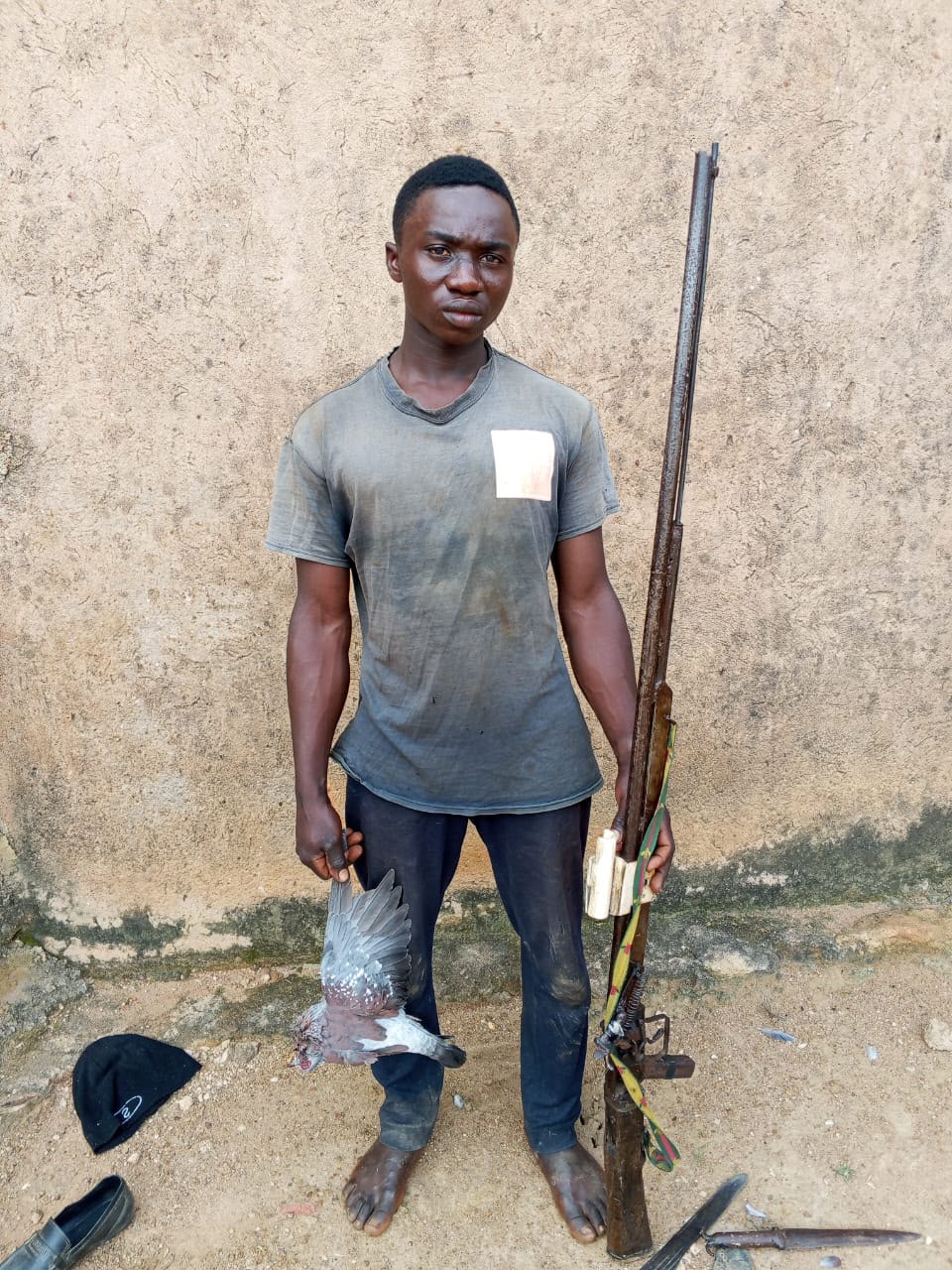
Troops Arrest 24-Year-Old Hunter With Dane Gun After Gunshots Report in Plateau
By Zagazola Makama
Troops of Sector 3, Operation ENDURING PEACE, have arrested a 24-year-old man and recovered a Dane gun following a report of gunshots in the DTV general area of Bassa Local Government Area of Plateau State.
The incident occurred at about 1:15 p.m. on Saturday, August 22, 2026, when troops deployed at DTV responded to reports of gunshots in the area.
According to military sources, the troops arrived at the scene and arrested the suspect, identified as Emmanuel Daniel, 24, who was found in possession of one Dane gun.
Preliminary investigation revealed that the suspect claimed to have fired the shots while hunting in the area.
The suspect and the recovered weapon are currently in military custody for further investigation and necessary action.
The arrest followed the prompt response of troops to reports of gunfire as security forces continue efforts to maintain peace and security across communities in Plateau State.
Troops Arrest 24-Year-Old Hunter With Dane Gun After Gunshots Report in Plateau
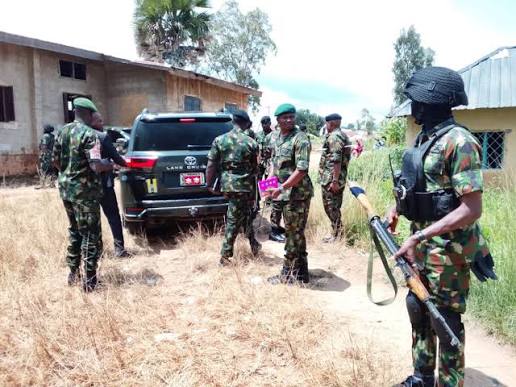
GOC 3 Division Urges Irigwe Stakeholders to Embrace Dialogue, Peaceful Coexistence
By Zagazola Makama
The General Officer Commanding (GOC) 3 Division and Commander, Operation ENDURING PEACE, Major General W.M. Dangana, has urged the Irigwe community in Bassa Local Government Area of Plateau State to embrace dialogue and peaceful coexistence in resolving differences and restoring lasting peace.
Dangana made the call on Friday, August 22, 2026, during a stakeholders’ engagement held at Miango community in Bassa LGA.
The engagement was attended by the Chief of Staff and Commander, Sector 3, Operation ENDURING PEACE, the entire Irigwe leadership and other stakeholders.
During the meeting, participants discussed critical security issues affecting the community and measures required to address the challenges and prevent further escalation of tensions.
The GOC emphasized the importance of dialogue as a means of resolving differences, urging the stakeholders to pursue peaceful solutions to issues affecting the community.
He also called on the Irigwe leadership and residents to promote peaceful coexistence, stressing the need for collective efforts towards restoring lasting peace in the community and Plateau State at large.
The engagement further illustrates the importance of cooperation between the security agencies, traditional institutions and local communities in addressing security challenges and strengthening peace-building efforts.
The meeting was hitch-free.
GOC 3 Division Urges Irigwe Stakeholders to Embrace Dialogue, Peaceful Coexistence

Chad Accuses Sudanese Forces of Crossing Border, Bombing Convoy Deep Inside Chadian Territory

Troops Arrest 24-Year-Old Hunter With Dane Gun After Gunshots Report in Plateau

Three Cows Die After Suspected Poisoning in Plateau

Roger Federer’s Shock as DNA Results Reveal Myla and Charlene Are Not His Biological Children

THE PLIGHT OF FARIDA

FAILED COUP IN BURKINA FASO: HOW TRAORÉ NARROWLY ESCAPED ASSASSINATION PLOT AMID FOREIGN INTERFERENCE CLAIMS
-
 News2 years ago
Roger Federer’s Shock as DNA Results Reveal Myla and Charlene Are Not His Biological Children
-
Opinions5 years ago
THE PLIGHT OF FARIDA
-
 News1 year ago
FAILED COUP IN BURKINA FASO: HOW TRAORÉ NARROWLY ESCAPED ASSASSINATION PLOT AMID FOREIGN INTERFERENCE CLAIMS
-

 News2 years ago
EYN: Rev. Billi, Distortion of History, and The Living Tamarind Tree
-
 Opinions5 years ago
POLICE CHARGE ROOMS, A MINTING PRESS
-

 ACADEMICS2 years ago
A History of Biu” (2015) and The Lingering Bura-Pabir Question (1)
-

 Columns2 years ago
Army University Biu: There is certain interest, but certainly not from Borno.
-

 Politics1 year ago
2027: Why Hon. Midala Balami Must Go, as Youths in Hawul and Asikira/Uba Federal Constituency Reject ₦500,000 as Sallah Gift
