
News
Why the Diomaye–Sonko Split Became Almost Inevitable Amid Senegal’s Power Struggle

Why the Diomaye–Sonko Split Became Almost Inevitable Amid Senegal’s Power Struggle
By: Zagazola Makama
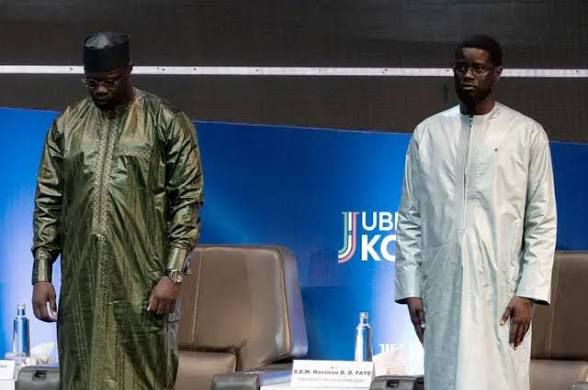
The dismissal of Senegalese Prime Minister Ousmane Sonko by President Bassirou Diomaye Faye marks the culmination of a political rupture that many observers had long considered unavoidable.
What once appeared to be one of the strongest political alliances in contemporary Senegalese politics gradually evolved into a tense rivalry shaped less by ideology than by competing ambitions, institutional contradictions and the struggle for control of executive authority.
For months, tensions within the ruling camp had become increasingly visible. Though both men emerged from the same political movement and jointly embodied the rise of the PASTEF coalition against former President Macky Sall, the coexistence between a highly charismatic political mentor and a constitutionally empowered head of state proved difficult to sustain.
The crisis is anchored in a fundamental institutional reality:Senegal’s constitutional system ultimately concentrates executive legitimacy in the presidency.
While the Prime Minister exercises substantial governmental authority, the President remains the central pillar of executive power, deriving legitimacy directly from universal suffrage and serving as the supreme authority of the state.
Sources say that the conflict emerged because Sonko increasingly projected himself not merely as head of government, but as an alternative center of political gravity within the state apparatus.
Public speeches, political positioning and repeated demonstrations of personal influence created the perception that two competing executives were operating simultaneously within the same administration.
In highly presidential systems, such arrangements rarely survive for long.
Political theorists have often observed that leaders who attain supreme office tend to resist the emergence of rival figures whose popularity, influence or visibility may overshadow their own authority. The situation in Senegal increasingly reflected that classic tension between institutional legitimacy and political charisma.
Sonko’s political trajectory has long been built around a populist and confrontational style that resonated strongly with segments of Senegalese youth and anti-establishment voters. His appeal stemmed from a mixture of direct rhetoric, anti-system positioning, nationalist discourse and his ability to embody political resistance during years of confrontation with the former administration.
However, the same qualities that fueled his rise may also have contributed to his political isolation. Sourcds note that charismatic populist figures often struggle to adapt from opposition politics to the discipline and compromise required in governance. A political strategy built around constant confrontation can become difficult to reconcile with the institutional restraints of executive power-sharing.
Over time, Sonko appeared increasingly convinced that he remained the true engine behind the ruling coalition’s legitimacy and electoral success. That perception may have encouraged attempts to expand his political influence beyond the traditional boundaries of the prime ministerial office.
For President Diomaye Faye, allowing such an imbalance to persist carried political risks.
The removal of Sonko ultimately reaffirmed a basic constitutional principle, regardless of personal popularity, a Prime Minister remains subordinate to presidential authority in Senegal’s current institutional framework.
By dismissing his Prime Minister, Diomaye signaled that he intended to fully exercise the powers attached to the presidency rather than govern under the shadow of a more dominant political personality.
The decision may also represent an attempt to consolidate state authority, reassure institutional actors and prevent the emergence of dual centers of power capable of paralysing governance. Yet the move is not without danger.
Sonko still commands significant grassroots support and retains strong influence within sections of PASTEF and among politically mobilized youth constituencies. His removal could deepen divisions inside the ruling coalition and potentially reshape Senegal’s political landscape ahead of future elections.
One of the major questions now facing Senegalese politics is whether PASTEF can survive the split without suffering a major internal fracture. Political history across Africa shows that when alliances forged in opposition reach power, tensions often emerge over authority, succession and control of state institutions.
Some party officials and elected representatives may rally behind the President, who controls the state apparatus and constitutional legitimacy. Others may remain loyal to Sonko due to his personal popularity and historical role in the movement’s rise.
The outcome of that struggle could determine whether Senegal experiences a relatively stable political recomposition or enters a prolonged period of institutional tension.
Another key factor will be public sentiment. During years of opposition politics, confrontation and political mobilisation energized large sections of the electorate. However, governing presents different expectations. Many Senegalese citizens now appear increasingly concerned with economic management, institutional stability, governance reforms and social calm rather than perpetual political conflict.
That shift may strengthen Diomaye’s position if he succeeds in presenting himself as a stabilizing statesman capable of governing above partisan rivalries. At the same time, any perception that Sonko has been politically sidelined or unfairly neutralized could trigger renewed political mobilisation among his supporters.
The crisis illustrates a recurring lesson in political systems across the world. Conquering power together is often easier than sharing it afterward. The Diomaye–Sonko alliance was extraordinarily effective as an opposition force united against a common adversary. But once in office, the unresolved question of who truly embodied executive authority became increasingly difficult to avoid.
What began as political complementarity gradually transformed into institutional competition.
The final outcome remains uncertain. Diomaye may emerge stronger by consolidating presidential authority, or Sonko could retain enough political capital to remain a major force capable of reshaping Senegal’s future political balance.
Either way, the rupture marks a turning point in Senegalese politics and may redefine the future trajectory of one of West Africa’s most closely watched democracies.
Why the Diomaye–Sonko Split Became Almost Inevitable Amid Senegal’s Power Struggle



Centre lauds Kaduna Govt over life skills, gender education policies approval
By Aisha Gambo
The Centre for Girls’ Education (CGE) has commended the Kaduna State Executive Council for approving the Kaduna State Life Skills Policy and the State Policy on Gender in Education (SPGE 2026–2030).
The Executive Director of the organisation, Habiba Mohammed, made this known in a statement issued on Wednesday in Kaduna.
She said the approval marked a transition from donor-supported, time-bound interventions to a sustainable, government-led framework for delivering life skills education and promoting gender equity in schools.
According to her, the Life Skills Policy will equip young people with the knowledge, skills, attitudes and values required to succeed in education, employment and life, while the Gender in Education Policy providzbves a framework to promote equity, inclusion, participation, retention, completion and improved learning outcomes.
“The approval moves life skills and gender equity from the margins of the classroom into the core of Kaduna State’s education system,” she said.
Mohammed said CGE contributed to the development and validation of the policies through its system-strengthening project supported by Co-Impact, OASIS Initiative and the Malala Fund, in collaboration with the Adolescent Girls Initiative for Learning and Empowerment (AGILE) and the Kaduna State Ministry of Education.
She said the policies built on more than 18 years of the organisation’s Safe Space model, which independent evaluations showed had helped reduce child marriage, increase school enrolment and delay early marriage.
According to her, the AGILE programme in Kaduna has reached more than 127,319 girls and 6,250 boys between the ages of 14 and 18, while over 1,400 female and male teachers have been trained as mentors.
She added that institutionalising the model through public policy would ensure that life skills education became a permanent component of the state’s education system.
Mohammed said the policies would address barriers to school access, retention and completion, particularly for girls and other vulnerable learners.
She added that they would also institutionalise life skills as a co-curricular programme, strengthen evidence-based decision-making across the state’s 23 local government areas and guarantee continuity beyond donor-funded programmes.
The executive director commended Gov. Uba Sani for providing the leadership that made the policy approval possible.
She also appreciated the Commissioner for Education, Prof. Abubakar Sani Sambo, the Kaduna State Ministry of Education, the AGILE State Project Implementation Unit, the World Bank and other stakeholders for their contributions to the process.
Mohammed reaffirmed CGE’s commitment to supporting the Kaduna State Government with technical assistance during the implementation phase, including teacher training, gender-responsive education sector budgeting and monitoring.
She said the ultimate goal was to ensure that every girl and boy in Kaduna State had the opportunity to learn, develop and thrive.
Centre lauds Kaduna Govt over life skills, gender education policies approval
Troops Kill Six ISWAP Fighters, Wound Seven in Failed Attack on Borno Military Base
By: Zagazola Makama
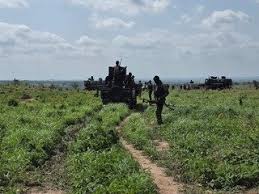
Six fighters of the Islamic State West Africa Province (ISWAP) were reportedly killed and seven others seriously wounded during a failed attack on a Forward Operating Base (FOB) at Logomani in Borno State, credible intelligence sources have disclosed.
The sources told Zagazola Makama that the terrorists launched the attack on the military position in the early hours of July 7 but suffered significant casualties after troops mounted a fierce resistance.
According to the intelligence assessment, the attackers had assembled at Garal before advancing on the military base.
Following the failed assault, surviving insurgents were reportedly seen regrouping at Chukun Gudu, where they buried six of their fighters killed during the encounter.
Among those reportedly buried was a senior fighter identified as Munzir, also known as Ba Alayi, who was said to be an indigene of Wulgo.
The development comes as troops of Operation HADIN KAI continue sustained clearance operations aimed at dismantling terrorist enclaves and disrupting insurgents’ logistics and mobility across the Lake Chad region.
Troops Kill Six ISWAP Fighters, Wound Seven in Failed Attack on Borno Military Base
Cholera Outbreak Kills Nine ISWAP Terrorists in Timbuktu Triangle
By: Zagazola Makama
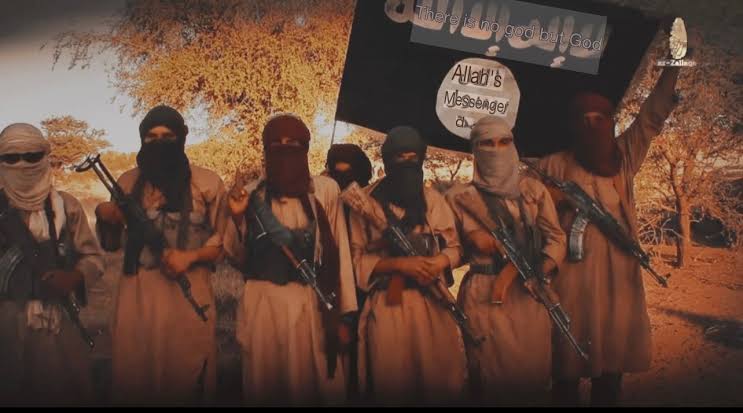
A cholera outbreak has reportedly claimed the lives of nine fighters of the Islamic State West Africa Province (ISWAP) in the Timbuktu Triangle, a known terrorist stronghold in Borno State, intelligence sources have disclosed.
The sources told the News Agency of Nigeria (NAN) that the outbreak had spread through the group’s enclaves, highlighting deteriorating sanitary conditions and limited access to medical care within the insurgents’ camps.
According to the intelligence, two additional ISWAP fighters infected with the disease were allegedly executed by fellow terrorists after attempts to manage their condition at Kimba village proved unsuccessful.
The sources said the development pointed to the worsening health conditions within the terrorist hideouts, where sustained military pressure has disrupted logistics, including access to medicines and treatment facilities.
The sources added that commanders had also been urged to intensify efforts to intercept medical supplies and pharmaceuticals intended for terrorist camps in order to further degrade ISWAP’s treatment capability and operational resilience.
The reported outbreak comes amid sustained offensives by troops of Operation HADIN KAI, who continue to target terrorist enclaves and logistics networks across the Lake Chad region in a bid to degrade the insurgents’ fighting capacity.
Cholera Outbreak Kills Nine ISWAP Terrorists in Timbuktu Triangle

Centre lauds Kaduna Govt over life skills, gender education policies approval

Troops Kill Six ISWAP Fighters, Wound Seven in Failed Attack on Borno Military Base

Cholera Outbreak Kills Nine ISWAP Terrorists in Timbuktu Triangle

Roger Federer’s Shock as DNA Results Reveal Myla and Charlene Are Not His Biological Children

THE PLIGHT OF FARIDA

FAILED COUP IN BURKINA FASO: HOW TRAORÉ NARROWLY ESCAPED ASSASSINATION PLOT AMID FOREIGN INTERFERENCE CLAIMS
-
 News2 years ago
Roger Federer’s Shock as DNA Results Reveal Myla and Charlene Are Not His Biological Children
-
Opinions4 years ago
THE PLIGHT OF FARIDA
-
 News1 year ago
FAILED COUP IN BURKINA FASO: HOW TRAORÉ NARROWLY ESCAPED ASSASSINATION PLOT AMID FOREIGN INTERFERENCE CLAIMS
-

 News2 years ago
EYN: Rev. Billi, Distortion of History, and The Living Tamarind Tree
-
 Opinions5 years ago
POLICE CHARGE ROOMS, A MINTING PRESS
-

 ACADEMICS2 years ago
A History of Biu” (2015) and The Lingering Bura-Pabir Question (1)
-

 Columns2 years ago
Army University Biu: There is certain interest, but certainly not from Borno.
-

 Politics1 year ago
2027: Why Hon. Midala Balami Must Go, as Youths in Hawul and Asikira/Uba Federal Constituency Reject ₦500,000 as Sallah Gift
