
News
Why US–Nigeria counter-terrorism cooperation remains critical to defeating insurgency

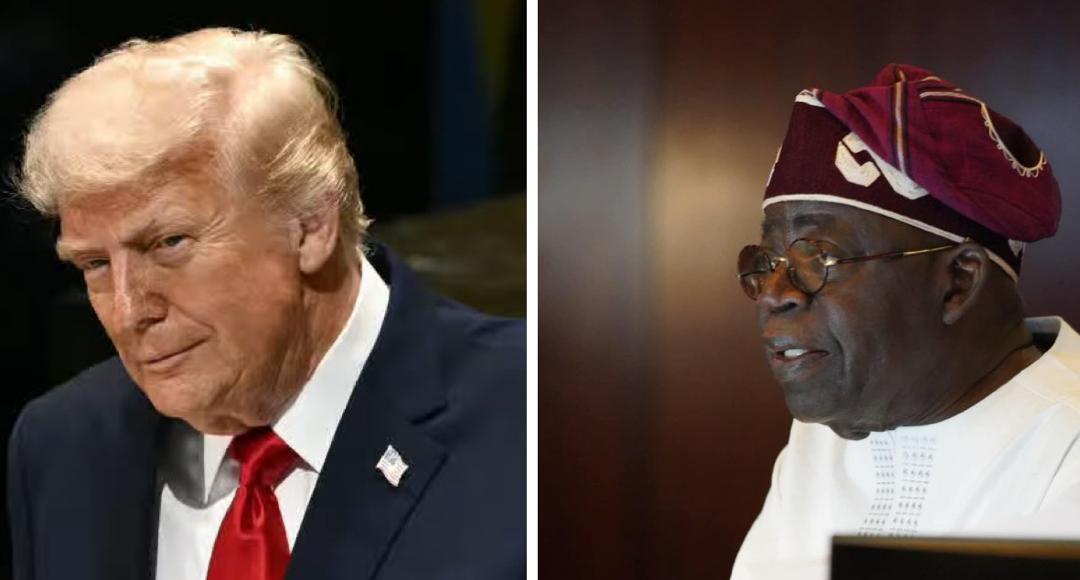
Why US–Nigeria counter-terrorism cooperation remains critical to defeating insurgency
By: Zagazola Makama
The ongoing United States–Nigeria counter-terrorism operations are critical not only to degrading terrorist networks, but also to helping the international community, particularly the U.S., better understand the scale, complexity and human cost of Nigeria’s long-running war against terrorism.
Nigeria has battled multiple terror and extremist groups for over a decade, with attacks spanning the North-East, North-West and North-Central zones, claiming thousands of lives, displacing millions and overstretching security and humanitarian resources.
Therefore, deeper operational cooperation allows the U.S. to see firsthand the terrain, tactics and evolving threat environment Nigerian forces contend with daily from suicide bombings and IED warfare to cross-border terrorism, banditry and extremist collaboration.
Joint operations provide a clearer picture of what Nigeria is passing through. It is different from reading intelligence reports. When partners operate together, there is a better appreciation of the sacrifices, the operational difficulties and the resilience required to fight terrorism in this environment.
Though, nothing new in what the Nigeria Air Force was already doing but the cooperation, will enhanced intelligence sharing, surveillance, training and technical support, while also improving Nigeria’s capacity to disrupt terrorist logistics, communication and financing networks.
Nigeria brings critical advantages to the partnership, including local knowledge, community structures and long-term operational presence, while the U.S. contributes advanced intelligence, surveillance and reconnaissance capabilities, precision strike support and global counter-terrorism experience.
This synergy will help narrow intelligence gaps, improve early warning systems and strengthen the ability of Nigerian forces to respond to threats more proactively. Beyond military gains, the partnership helps place Nigeria’s security challenges in proper global context, correcting misconceptions that often underestimate the intensity of terrorist violence in the country.
The collaboration helps the U.S. and other international partners understand that Nigeria is not facing isolated incidents but a sustained, multi-front war. That understanding is essential for sustained diplomatic, technical and humanitarian support, rather than the rhetoric being purported about the conflict.
The partnership also sends a strong message to terrorist groups that Nigeria is not isolated in its fight, and that attacks on civilians and security personnel attract international attention and consequences.
However, counter-terrorism cooperation must go beyond kinetic operations. Those executing these operations must put emphasized on the importance of civilian protection, community engagement and post-conflict stabilisation, as lasting peace cannot be achieved through force alone.
Why US–Nigeria counter-terrorism cooperation remains critical to defeating insurgency


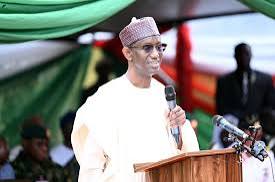
Nigeria Launches National Strategy to Dismantle Organised Crime, Break Agency Silos
By: Michael Mike
Nigeria has launched a new National Strategy for Combating Organised Crime, signalling a major shift towards a coordinated, intelligence-led national response to criminal networks involved in cybercrime, drug trafficking, human trafficking, migrant smuggling and other transnational crimes.
The strategy, launched in Abuja with the participation of key government institutions, law enforcement agencies, international partners and civil society organisations, seeks to break down institutional silos and establish a unified framework for preventing, detecting, investigating, prosecuting and dismantling organised criminal groups operating within and across Nigeria’s borders.
The initiative was developed through extensive multi-agency consultations and technical collaboration with the United Nations Office on Drugs and Crime (UNODC).
Delivering the keynote address on behalf of the National Security Adviser, Major General Adamu Laka, National Coordinator of the National Counter Terrorism Centre, said a coordinated front against organised crime was essential to Nigeria’s national security and stability.
Laka stressed that inter-agency coordination could no longer be treated as optional, urging stakeholders to make concerted efforts to ensure that criminal networks are effectively disrupted.
He said building an effective response would require stronger collaboration and sustained commitment across institutions responsible for national security and criminal justice.
The strategy places particular emphasis on intelligence sharing, coordinated investigations, specialised operational capacity and stronger regional and international cooperation, reflecting the increasingly sophisticated nature of organised criminal networks.
It also provides for the protection of victims and witnesses, recognising that the fight against organised crime must extend beyond the disruption of criminal networks to protecting the people and communities affected by them.
The strategy comes amid growing concerns over the ability of criminal groups to exploit technology, cross-border mobility, economic vulnerabilities and illicit financial networks to expand their activities.
According to the UNODC World Drug Report 2025, an estimated 316 million people used drugs globally in 2023, while organised criminal groups have continued to adapt to global crises and expand illicit markets, including into Africa.
The UNODC Global Report on Trafficking in Persons 2024 also reported a global increase in identified trafficking victims following the COVID-19 pandemic, with children accounting for nearly 40 per cent of identified victims.
The reports underscore the increasingly transnational character of organised crime and the need for countries to strengthen cooperation among law enforcement, criminal justice institutions and other stakeholders.
Speaking at the launch, UNODC Country Representative Cheikh Toure welcomed Nigeria’s commitment to a whole-of-government and whole-of-society approach to tackling organised crime.
Toure, alongside Tolliver Derrick, Director of the United States Department of State’s Bureau of International Narcotics and Law Enforcement Affairs (US INL), expressed support for the strategy and its emphasis on coordinated, victim-centred and rights-based responses.
The approach is consistent with international best practices promoted by UNODC, including its Organised Crime Strategy Toolkit, which encourages countries to develop integrated responses that bring together government institutions, civil society, communities and international partners.
Participants at the Abuja launch identified stronger inter-agency and regional collaboration, operational readiness, specialised capacity and adherence to the rule of law as key pillars of the new framework.
They emphasised that no single institution could effectively confront the increasingly complex ecosystem of organised crime on its own.
According to participants, effective implementation would therefore depend on timely intelligence sharing, joint investigations, intelligence-led operations and sustained partnerships among security and law enforcement agencies, communities, civil society organisations and international partners.
The project coordinator from the National Counter Terrorism Centre and national consultants subsequently presented the strategy’s core objectives, implementation roadmap, assessment of organised crime in Nigeria and the Gulf of Guinea, as well as its monitoring and evaluation framework.
The presentations marked what stakeholders described as the beginning of the implementation phase, with emphasis now shifting from policy commitments to measurable results.
The strategy is expected to provide a common framework for confronting multiple forms of organised crime, including cybercrime, illicit drug markets, trafficking in persons, migrant smuggling and environmental crimes.
For communities affected by these crimes, the strategy represents an attempt to connect national security priorities with the protection of livelihoods, human rights and community safety.
The initiative received financial support from the United States Department of State’s Bureau of International Narcotics and Law Enforcement Affairs.
Nigeria Launches National Strategy to Dismantle Organised Crime, Break Agency Silos
News
Borno Moves to Extend New Salary Structure to Local Government Workers, Plans Fresh Recruitment
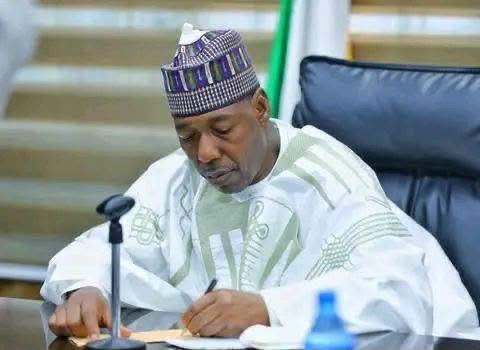
Borno Moves to Extend New Salary Structure to Local Government Workers, Plans Fresh Recruitment
By: Michael Mike
Borno State Government has commenced moves to extend the enhanced salary structure to local government workers, while preparing a fresh recruitment plan to address manpower shortages caused by retirements and the loss of skilled personnel.
Governor Babagana Zulum approved the measures on Monday following a closed-door meeting with the leadership of the Nigerian Labour Congress (NLC), Trade Union Congress (TUC) and National Union of Local Government Employees (NULGE) at the Government House, Maiduguri.
As part of the plan, Zulum established a task force headed by the Commissioner for Local Government and Emirate Affairs, Sugun Mai Mele, to review and recommend options for implementing the new salary scale and gratuity scheme for local government staff across the state.
The task force is expected to consult widely with stakeholders, review existing regulations and assess the state-wide local government workforce before proposing a viable and sustainable framework for implementing the enhanced salary scheme.
It has been given two weeks to submit its report for the governor’s consideration.
The governor also directed the Directorate of Establishment to prepare a blueprint for new employment and recruitment into the state civil service.
The recruitment plan will be based on an internal review of the existing workforce, gap analysis and needs assessment, with particular attention to critical professions and areas where manpower has been depleted by retirements and capacity flight.
The measures form part of the state government’s broader response to the implementation of the national minimum wage and efforts to reform the public service workforce.
Zulum also approved the immediate implementation of promotion benefits for civil servants for the 2023/2024 and 2024/2025 sessions, as well as the payment of leave grants to all entitled civil servants for the 2025 session.
He further directed a review of salary arrears affecting secondary and tertiary education workers, with a view to possible implementation in September 2026.
The state government said the measures followed a service proposal from the Directorate of Establishment, Office of the Head of Service, which provided analysis and recommendations on implementing the national minimum wage policy across different levels of the state public service.
Borno Moves to Extend New Salary Structure to Local Government Workers, Plans Fresh Recruitment

3 Division Commander Engages Mangu Communities, Calls for Peace Between Mhagavul and Fulani
By Zagazola Makama
The General Officer Commanding (GOC) 3 Division Nigerian Army and Commander, Operation ENDURING PEACE, Maj. Gen. W.M. Dangana, has called on Mhagavul and Fulani communities in Mangu Local Government Area of Plateau State to embrace peace and work together to end recurring conflicts in the area.
Dangana made the call on Monday during a stakeholders’ engagement with leaders of the two communities held at the 3 Division headquarters conference room.
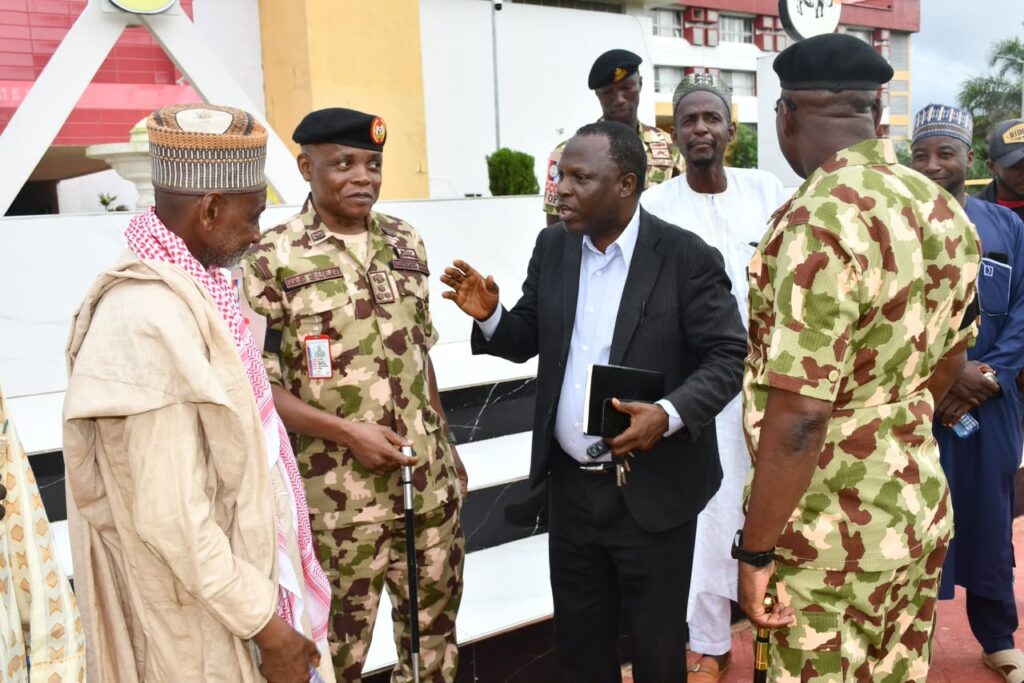
The meeting, which was attended by the Chiefs of Staff of Headquarters 3 Division and Operation ENDURING PEACE, was convened to address grievances affecting the communities and explore measures towards finding lasting solutions to lingering disputes.
The GOC urged the stakeholders to put aside animosity, avoid violence and pursue dialogue as a means of resolving their differences.

He stressed that sustained peace and community cohesion were essential to enabling security agencies and local communities to effectively confront emerging security threats in the area.
According to him, cooperation between the communities would strengthen confidence, improve information sharing and create an environment conducive to peaceful coexistence and development.
Dangana further encouraged the community leaders to engage their people and discourage acts capable of escalating tensions, while supporting security agencies in maintaining peace and stability.
The engagement formed part of ongoing efforts by the Nigerian Army and other stakeholders to strengthen peacebuilding initiatives and promote harmonious relations among communities in Mangu and other parts of Plateau State.
Zagazola Makama reports that Mangu has witnessed recurring communal tensions in recent years, making sustained dialogue and confidence-building between the affected communities critical to preventing further escalation.
3 Division Commander Engages Mangu Communities, Calls for Peace Between Mhagavul and Fulani

NDLEA Destroys N301bn Drugs, Vows to Cripple Cartels’ Financial Networks

Nigeria Launches National Strategy to Dismantle Organised Crime, Break Agency Silos

AWALCO Nominates NUJ FCT Chair Grace Ike for November Award

Roger Federer’s Shock as DNA Results Reveal Myla and Charlene Are Not His Biological Children

THE PLIGHT OF FARIDA

FAILED COUP IN BURKINA FASO: HOW TRAORÉ NARROWLY ESCAPED ASSASSINATION PLOT AMID FOREIGN INTERFERENCE CLAIMS
-
 News2 years ago
Roger Federer’s Shock as DNA Results Reveal Myla and Charlene Are Not His Biological Children
-
Opinions5 years ago
THE PLIGHT OF FARIDA
-
 News1 year ago
FAILED COUP IN BURKINA FASO: HOW TRAORÉ NARROWLY ESCAPED ASSASSINATION PLOT AMID FOREIGN INTERFERENCE CLAIMS
-

 News2 years ago
EYN: Rev. Billi, Distortion of History, and The Living Tamarind Tree
-
 Opinions5 years ago
POLICE CHARGE ROOMS, A MINTING PRESS
-

 ACADEMICS2 years ago
A History of Biu” (2015) and The Lingering Bura-Pabir Question (1)
-

 Columns2 years ago
Army University Biu: There is certain interest, but certainly not from Borno.
-

 Politics1 year ago
2027: Why Hon. Midala Balami Must Go, as Youths in Hawul and Asikira/Uba Federal Constituency Reject ₦500,000 as Sallah Gift
