
News
Wives of detained soldiers in the 7 Division of the Nigerian Army ask President Tinubu for clemency for husbands

Wives of detained soldiers in the 7 Division of the Nigerian Army ask President Tinubu for clemency for husbands
By: Bodunrin Kayode
A group of women under the aegis of wives of soldiers detained for violating army rules have called on President Bola Tinubu to intervene and pardon their husbands for any offence they must have committed before being locked up by the military while awaiting trial.
They maintained that in the spirit of the 65th independence anniversary of Nigeria, their country which they served before theses court Marshall offences were slammed on their necks the President should pardon them.
Speaking on behalf of about 30 other women whose bread winners have been incarcerated for various offences by the 7 division of the Nigerian Army, Rose David, a mother of three said if the federal government can pardon surrendered and deradicalised insurgents, their spouses should be pardoned too.
In her statement, she noted that she “humbly appeal for mercy and forgiveness” for the detained soldiers of the Nigerian Army who are at the 7 Division Military Police Facility in Maiduguri.
She regretted that their husbands have been held for months over various offences adding that they acknowledged their mistakes, having deeply reflected over it and now are seeking for a second chance to serve their country with renewed loyalty.
“We respectfully call on His Excellency, President and Commander-in-Chief of the Armed Forces, Asiwaju Bola Ahmed Tinubu, to grant them a presidential pardon.
“We also appeal to the National Assembly, the Executive Governor of Borno State, and all Nigerians of goodwill to support this plea.
” It is important to remember that amnesty has been extended to repentant insurgents and bandits who once raised arms against the state.
“These soldiers are Nigerians too — men who once risked their lives to defend our people and preserve our nation. They deserve the same mercy, so they can once again fight for peace, unity, and security.
“This is not a call for sympathy, but for justice with compassion. Their service and sacrifices should not be forgotten. Granting them pardon will not only restore their dignity but also strengthen the bond of trust between the nation and those who defend it.
” We appeal for mercy. We appeal for a Presidential Pardon. We appeal for the support of all Nigerians. God bless the President. God bless the Federal Republic of Nigeria.” Said Rose.
Esther Steven, her brother was arrested because of bullets found on him.
Wives of detained soldiers in the 7 Division of the Nigerian Army ask President Tinubu for clemency for husbands


IPCR Urges Nigerians to Invest in Peace Ahead of 2027 Elections
…Ochogwu seeks stronger social cohesion, early warning systems, inclusive governance
By: Michael Mike
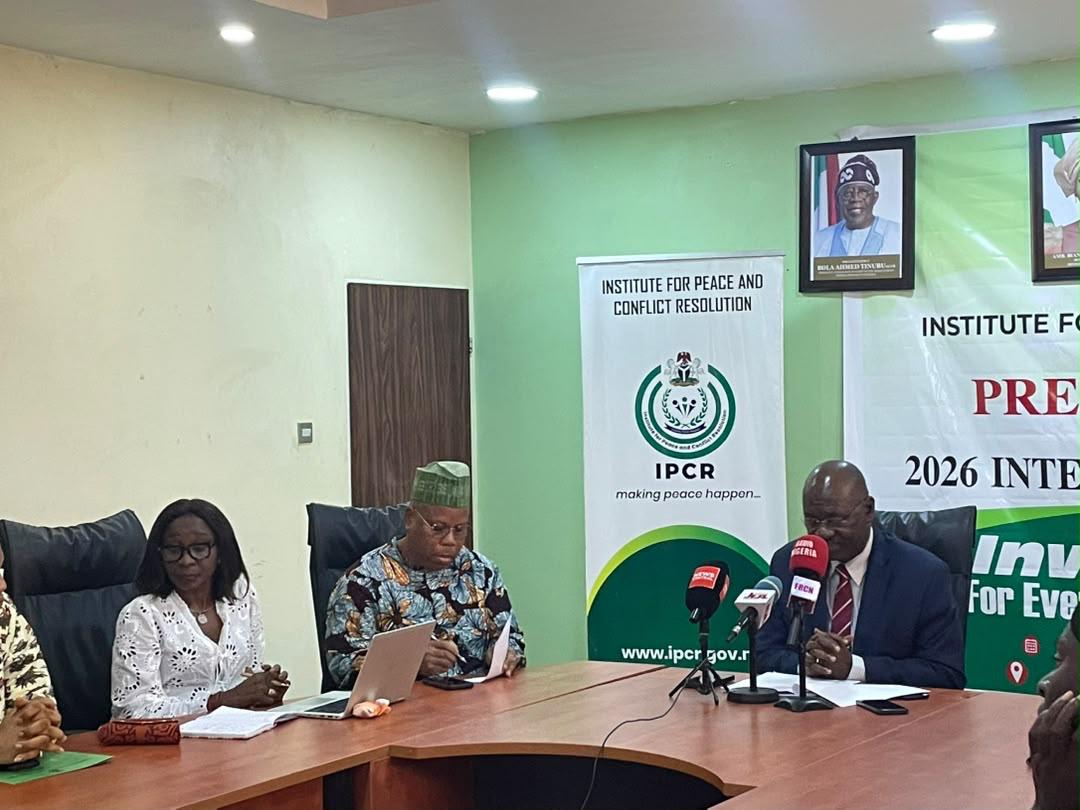
The Institute for Peace and Conflict Resolution (IPCR) has called for urgent and sustained investment in peacebuilding, warning that Nigeria’s democratic stability and development prospects ahead of the 2027 general elections depend on the ability of stakeholders to address conflict before it escalates.
The Director-General of the Institute, Dr Joseph Ochogwu, made the call on Wednesday in Abuja at a world media briefing to herald the 2026 International Day of Peace, stressing that peace must be treated as a national infrastructure requiring deliberate funding, institutional commitment and collective action.
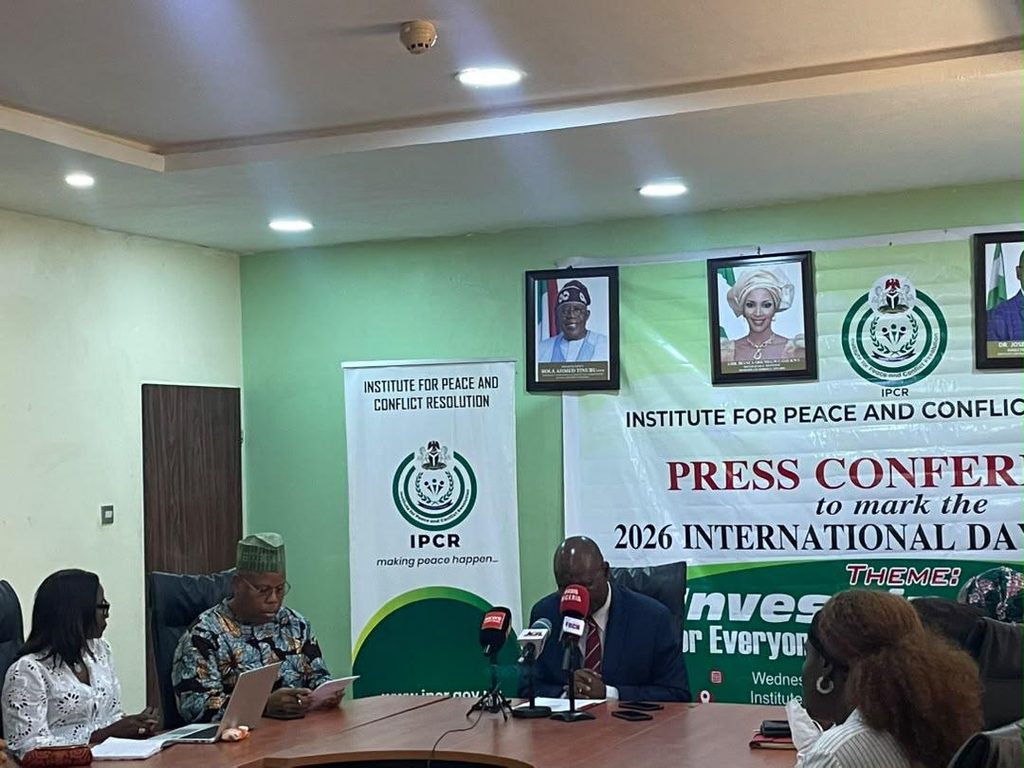
The 2026 commemoration, marked annually on September 21 in accordance with a United Nations General Assembly resolution, is themed, “Investing in Peace for Everyone, Everywhere, Every Day.”
Ochogwu said the theme represented a shift from viewing peace merely as the absence of war to recognising it as a continuous investment essential to national survival.
He noted that Nigeria’s interconnected security, social and economic challenges—including violent extremism, farmer-herder conflicts, banditry, youth restiveness, communal tensions, climate-induced competition for resources, misinformation and the strain associated with economic reforms—made the need for stronger peacebuilding mechanisms particularly urgent.
“Without peace, we cannot have food security. Without peace, we cannot have quality education, healthcare, or attract investment,” he stated.
According to him, the absence of peace undermines the foundations of development by disrupting livelihoods, weakening public institutions, discouraging investment and limiting citizens’ access to essential services.
He therefore urged governments, security agencies, the private sector, traditional and religious institutions, civil society organisations and the media to strengthen investments in early warning and early response systems, dialogue platforms, community mediation centres, youth engagement hubs, traditional institutions and psychosocial support.

Such mechanisms, he said, should receive the same level of attention and investment as physical infrastructure such as roads and electricity.
“Every naira, every hour, every platform invested in dialogue is an investment in Nigeria’s survival,” he declared.
The IPCR boss maintained that peacebuilding should not be left to government alone, urging the Federal and state governments to prioritise it in budgetary allocations and policy formulation.
He also called on the National Assembly to strengthen legislation supporting social cohesion and conflict-sensitive governance, while appealing to security agencies to deepen non-kinetic and community-centred approaches to conflict management.
Ochogwu acknowledged the sacrifices of security personnel but stressed the importance of complementing security operations with dialogue, mediation and other measures that address the underlying causes of conflict.
He urged private sector operators to regard peace as a business imperative, noting that businesses could not thrive in environments characterised by instability and violence.
Traditional and religious leaders, he said, must continue to promote tolerance and peaceful coexistence, while civil society organisations, women’s groups and youth organisations should remain advocates for non-violence, inclusion and social cohesion.
Addressing the media, Ochogwu called for greater investment in peace journalism to counter hate speech, misinformation and divisive narratives, particularly as the country approaches another general election cycle.
He said the media had a responsibility to promote informed public discourse and avoid narratives capable of deepening existing social divisions.
The Director-General also identified several policy directions of the present administration which, according to the Institute, could contribute to peace by addressing structural drivers of conflict and social instability.
He cited the Students Loan Scheme, support programmes for micro, small and medium enterprises, the new minimum wage regime and social investment initiatives as measures capable of reducing unemployment, inequality and economic frustration.
He also highlighted local government autonomy and grassroots governance, arguing that stronger governance at the local level could bring government closer to citizens and reduce grievances that may fuel conflict.
Ochogwu further pointed to the establishment of the Ministry of Youth Development and investments in the digital economy and skills acquisition through agencies such as the National Information Technology Development Agency (NITDA) and the Nigerian Communications Commission (NCC).
According to him, such initiatives could provide alternative pathways for young people away from crime and extremism, particularly when combined with inclusive policymaking that is gender-responsive, youth-sensitive and disability-inclusive.
He stressed that sustainable peace could not be achieved if sections of society were excluded from national development efforts, describing outreach to the six geopolitical zones, women, youths and persons with disabilities as important investments in national cohesion.
On the Institute’s own activities, Ochogwu said the IPCR was being repositioned under its 2024–2028 strategic framework, built around three pillars: knowledge, people and partnerships.
Under the knowledge pillar, he said the Institute would scale up evidence-based research, early warning analysis and the publication of its Contemporary World Nigeria policy series to support informed government decision-making.
The people pillar, he added, would focus on investing in the next generation through initiatives such as the Renewed Hope Agenda for Young Peacebuilders, youth engagement on China-Nigeria relations, capacity building for early warning and early response, peace clubs in schools and collaboration with stakeholders to mainstream peace education.
He said the Institute was also working towards building a national peace infrastructure by strengthening its zonal offices and community resilience networks.
Ochogwu disclosed that the IPCR was coordinating the National Conflict Early Warning and Early Response Platform (NCEWER), which connects state-level platforms to improve conflict monitoring and response.
He stressed that partnerships remained essential to the Institute’s objectives, noting that the IPCR could not accomplish the task independently.
The Institute’s activities for the 2026 International Day of Peace include religious prayers, a peace walk, a national peace lecture, humanitarian outreach and a novelty football match.
The commemorative programme began on Wednesday with the world press briefing and the flag-off of the Peace Day media campaign, “Every Day is Peace Day.”
A commemorative peace prayer is scheduled for September 18 at the National Mosque in Abuja and nationwide, while another will hold on September 20 at the National Christian Centre and across the country.
The main commemoration on September 21 will feature a peace walk and a national peace lecture titled, “Renewed Hope Agenda: Investing in Peace for Democratic Stability—Pathways to Justice and Inclusion Ahead of Nigeria’s 2027 General Elections,” at the IPCR Conference Hall.
A humanitarian outreach programme, “Investing in Peace by Visiting IDP Camp,” will take place in Abuja on September 22, while the grand finale, featuring a novelty football match between the IPCR team and the National Great Green Wall Agency team, is scheduled for September 25 at the Old Parade Ground, Abuja.
Ochogwu expressed appreciation to organisations supporting the commemoration and the Institute’s broader peacebuilding initiatives, including the Strengthening Peace and Resilience in Nigeria (SPRiNG) Programme, funded by the UK Government; the United Nations System in Nigeria; the Nigerian Communications Commission; the Ufuk Dialogue Foundation; ministries, departments and agencies; civil society organisations; and development partners.
He described the collaboration as evidence that peacebuilding was a collective enterprise requiring sustained cooperation among public institutions, private organisations and civil society.
The IPCR Director-General called on Nigerians at home and in the diaspora to make individual and collective investments in peace, urging citizens to make peace a way of life rather than an activity observed only during commemorative events.
“Speak peace. Share peace. Fund peace. Teach peace,” he urged.
IPCR Urges Nigerians to Invest in Peace Ahead of 2027 Elections

Nigeria, Guinea-Bissau, Sierra Leone Move to Overhaul Waste Management Frameworks
…UNEP-backed project seeks stronger laws, institutional oversight, protection for informal waste workers
By: Michael Mike
Nigeria, Guinea-Bissau and Sierra Leone are moving to overhaul their waste management frameworks, with stakeholders in the three countries calling for stronger laws, better institutional coordination and the integration of informal waste workers into systems designed to protect public health and the environment.
The move followed the conclusion of a UNEP-supported project aimed at developing environmentally sounder and safer waste management frameworks across the three countries, amid growing pressure on governments to address the environmental and social consequences of poorly managed waste.

At a two-day Final Regional Closing Workshop hosted by the Nigeria’s National Environmental Standards and Regulations Enforcement Agency (NESREA), stakeholders reviewed and validated the project’s findings, legislative proposals and recommendations, setting out pathways for implementation, resource mobilisation and long-term sustainability.
The workshop also placed emphasis on gender inclusion, the protection of children’s rights and the need to recognise the contribution of the informal waste sector, whose activities are often central to waste collection, sorting and recovery but may not be adequately covered by formal regulatory systems.
Declaring that the project had provided a basis for addressing persistent weaknesses in waste governance, the Director-General of NESREA, Prof. Innocent Barikor, said the next challenge was to translate its outcomes into concrete reforms.
He said the participating countries would develop a post-project implementation and sustainability roadmap to guide policy and legislative changes, strengthen institutional capacity and improve waste management outcomes.
“Together we shall produce a set of concrete post-project implementation and sustainability roadmap that will inform policy and legislative reforms, strengthen institutional capacity, ensure gender inclusion, protect the rights of the children and improve overall waste management outcomes,” Barikor pledged.
The NESREA Director General said the initiative was particularly relevant to Nigeria’s drive towards a circular economy and resource efficiency, linking improved waste management to economic growth and environmental protection.
The circular economy approach seeks to reduce waste by keeping materials and products in use for as long as possible through prevention, reuse, recycling and recovery, rather than relying primarily on disposal. For countries facing increasing volumes of waste, the approach also offers an opportunity to recover economic value from materials that would otherwise be discarded.
However, stakeholders at the workshop stressed that achieving such a transition would require more than policy declarations. They called for clearer legal responsibilities, stronger technical capacity, effective enforcement and sustained financing to ensure that waste management reforms are implemented beyond the life of the project.
The Deputy Minister of Environment of Sierra Leone, Hon. Mima Yema Mimi Sobba-Stephens, said the changing nature of waste streams had made comprehensive regulation increasingly urgent.
She identified plastics, healthcare waste, electronic waste, used oils, chemicals and mining-related waste among the emerging and hazardous waste streams requiring clearer rules, stronger technical capacity and more effective oversight.
“Through consultation and technical review, we have identified the need for a comprehensive and harmonised legal framework that addresses the full waste hierarchy: prevention, reduction, reuse, recycling, recovery and, only as a last resort, environmentally sound disposal,” she said.
Her remarks underscored the need for waste management systems to move beyond the traditional focus on collection and disposal to a hierarchy that prioritises prevention and reduction, followed by reuse, recycling and recovery, with disposal reserved as a last resort.
For Guinea-Bissau, the project also provided an opportunity to address the role of workers operating outside formal waste management structures.
The Director of Chemical Product Waste Service in the country, Per Infali Cassama, said the initiative had enabled Guinea-Bissau to recognise the contribution of the informal sector and created a platform for engagement among stakeholders at different levels.
The inclusion of the informal sector is significant because waste pickers and other informal operators often contribute to the recovery of recyclable materials, even where formal systems remain limited. Stakeholders said future frameworks must therefore combine environmental safeguards with measures that recognise and protect the people whose livelihoods depend on waste recovery.
Representing Nigeria’s Minister of Environment, Balarabe Lawal, the Director of Pollution Control and Environmental Health, Mrs Omotunde Adeola, described the workshop as the beginning of implementation rather than the conclusion of the reform process.
“These initiatives are essential for improving waste management practices, strengthening environmental compliance, and delivering tangible benefits to communities across Nigeria,” she said.
Also speaking, Valentina Ricca of the UNEP Law Division said the project, which commenced in 2023, was designed to strengthen waste management frameworks while supporting the inclusion and protection of the informal waste sector.
The closing workshop therefore marked the transition from technical reviews and stakeholder consultations to the more difficult task of implementing the proposed reforms. Its recommendations are expected to guide legislative and institutional action in the three countries, with the broader objective of establishing waste management systems that are safer, more coordinated and better equipped to respond to changing waste streams.
For Nigeria, the process comes as the country seeks to align environmental regulation with resource efficiency and circular economy principles, making the effectiveness of the proposed reforms dependent on the ability of institutions to enforce standards, mobilise resources and sustain collaboration beyond the project’s formal completion.
Nigeria, Guinea-Bissau, Sierra Leone Move to Overhaul Waste Management Frameworks
News
OPWS troops arrest suspected gunrunner, recover locally fabricated pistol, ammunition in Nasarawa
OPWS troops arrest suspected gunrunner, recover locally fabricated pistol, ammunition in Nasarawa
By Zagazola Makama
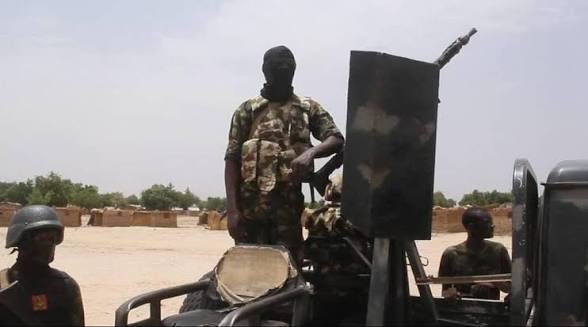
Troops of Operation WHIRL STROKE (OPWS) have arrested a suspected gunrunner and recovered a locally fabricated pistol and four rounds of 7.62mm Special ammunition in Nasarawa State.
The arrest was carried out at about 7:30 a.m. on Sept. 13, 2026, when troops of Sector 2, OPWS, deployed at Obi, apprehended the suspect at Agwatashi in Obi Local Government Area.
Security sources said the troops recovered one locally fabricated pistol and four rounds of 7.62mm Special ammunition from the suspect.
The suspect and the recovered items have since been handed over to the Police Division in Obi for further investigation and appropriate legal action.
The operation is part of ongoing efforts by security forces under OPWS to disrupt the illegal movement of firearms and ammunition and prevent such weapons from reaching criminal elements operating across Nasarawa and neighbouring communities.
OPWS troops arrest suspected gunrunner, recover locally fabricated pistol, ammunition in Nasarawa

IPCR Urges Nigerians to Invest in Peace Ahead of 2027 Elections

Nigeria, Guinea-Bissau, Sierra Leone Move to Overhaul Waste Management Frameworks

OPWS troops arrest suspected gunrunner, recover locally fabricated pistol, ammunition in Nasarawa

Roger Federer’s Shock as DNA Results Reveal Myla and Charlene Are Not His Biological Children

THE PLIGHT OF FARIDA

FAILED COUP IN BURKINA FASO: HOW TRAORÉ NARROWLY ESCAPED ASSASSINATION PLOT AMID FOREIGN INTERFERENCE CLAIMS
-
 News3 years ago
Roger Federer’s Shock as DNA Results Reveal Myla and Charlene Are Not His Biological Children
-
Opinions5 years ago
THE PLIGHT OF FARIDA
-
 News1 year ago
FAILED COUP IN BURKINA FASO: HOW TRAORÉ NARROWLY ESCAPED ASSASSINATION PLOT AMID FOREIGN INTERFERENCE CLAIMS
-

 News2 years ago
EYN: Rev. Billi, Distortion of History, and The Living Tamarind Tree
-
 Opinions5 years ago
POLICE CHARGE ROOMS, A MINTING PRESS
-

 ACADEMICS3 years ago
A History of Biu” (2015) and The Lingering Bura-Pabir Question (1)
-

 Columns3 years ago
Army University Biu: There is certain interest, but certainly not from Borno.
-

 Politics1 year ago
2027: Why Hon. Midala Balami Must Go, as Youths in Hawul and Asikira/Uba Federal Constituency Reject ₦500,000 as Sallah Gift
