
News
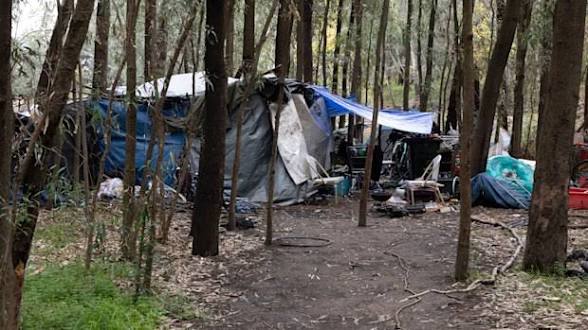
Woman gives birth in bandits camp

Woman gives birth in bandits camp
By: Sam Kayode
A woman who was among those kidnapped from Ariko village during their Easter church service has given birth to a child in the bandits’ camp. Remember, women, little children, and some men have now been in captivity for 58 days. However, this woman gave birth a week ago. A woman who emerged from the camp after trekking for 3 days in the bush said the birth was difficult because the pregnant woman, like others in the camp, was malnourished.
According to her, the pregnant woman was ill when labour began, but with the help of other women experienced in traditional birth, they managed to help her give birth. She said the women pooled bits and pieces of their clothes that hadn’t been washed since they arrived and wrapped the child.
When the bandits refused to give them anything sharp to cut the umbilical cord, after about an hour, a woman, out of desperation, used her teeth to cut it. Later, they pleaded for water to clean the child and the mother, but the bandits refused, saying they wouldn’t waste water on a child who wouldn’t survive. They wanted to go to a nearby stream to wash the child, but the bandit said no.
They also pleaded with the bandits to release the women so she could go home with the baby, but the bandits refused. The next problem was that the mother’s breasts had no milk, as nothing came out because she was so malnourished. A while later, the child began to suck the little that started to come. Hours later, they were still pleading for water to wash the child and the mother when it began to rain.
The woman said they resorted to wetting a cloth in the rain and using it to wipe the child. She said the child was still alive five days later when she came out, though part of the umbilical cord attached to the navel had not yet fallen off.
She described acute hunger and pus-filled rashes covering most of their skin, especially the children’s. She described little children and the women with heads full of lice. She spoke of how young children in the camp are persuaded to drink large amounts of river water just to fill their bellies and reduce hunger. She spoke of how the bandits will lead women into the bush to forage for leaves, which they boil and eat. She spoke of a time when they went 5 days without anything to eat except boiled leaves and water.
She spoke of how the men are always chained with bicycle chains. She said that sometimes the bandits lead some men into the bush to pluck mangoes, which are then shared out as meals. She spoke of taking a bath only every 7 or 10 days. She said the bandits would escort women and men, in batches, to bathe in the river and then watch them, especially the women, while they bathe naked.
She said other sensitive things that can’t be mentioned, but please include them in your prayers.
Woman gives birth in bandits camp


Suspected Fulani Bandits Kill 19-Year-Old, Injure Two in Plateau Attack
By Zagazola Makama
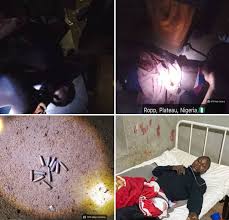
Suspected Fulani Bandits have killed a 19-year-old woman and injured two others in an attack at Gana Ropp village in Barkin Ladi Local Government Area of Plateau State.
Credible security sources told Zagazola Makama that the incident occurred at about 10:45 p.m. on Aug. 14, when troops of Sector 4, Operation ENDURING PEACE (OPEP), responded to a distress report of an attack in the community.
The troops arrived at the location and found that the assailants had shot dead Miss Asamau Saleh, 19.
Two other victims, identified as Aminu Saleh, 26, and Stephen Monday, 28, sustained gunshot wounds during the attack.
The injured victims were evacuated by the troops and taken to the Barkin Ladi General Hospital for medical attention.
Security personnel have commenced a manhunt for the attackers, while efforts are ongoing to establish the circumstances surrounding the incident and identify those responsible.
The latest attack illustrates the continued security challenges in parts of Plateau State, resulting from farmers and herders crises, where security forces have sustained operations to protect vulnerable communities and prevent further attacks.
Suspected Fulani Bandits Kill 19-Year-Old, Injure Two in Plateau Attack
News
Zagazola Media Hails Army for Reinstating Zamfara Cadet Cleared of Indigene Certificate Allegation

Zagazola Media Hails Army for Reinstating Zamfara Cadet Cleared of Indigene Certificate Allegation
By: Zagazola Makama
The Nigerian Army has reinstated Habila Ezra, a Direct Short Service Course cadet who was withdrawn from training over allegations that he submitted a forged Zamfara State certificate of indigeneship.
Credible sources informed Zagazola Makama that Habila has returned to the training institution and resumed military training following a review of his case by the Army authorities.
Investigations into the matter exonerated Habila Ezra of all the allegations and confirmed that the certificate of indigeneship he submitted was genuine.
The findings established that he is a Hausa indigene of Salankawa Ward in Bungudu Local Government Area of Zamfara State.
Family and community records identified him as a son of the late Ezra Mohammed Dawa, a member of the larger Dawa family in Bungudu. His mother, Indo Mohammed Bawa, was also identified as an indigene of Tsafe Local Government Area of the state.
He attended primary and secondary schools in Zamfara State.
He later proceeded to the Nigerian Army University, Biu, in Borno State, where he graduated with a degree in cybersecurity. He subsequently completed his National Youth Service Corps programme.
At the time he applied for and was selected to join the Direct Short Service Course, Habila was pursuing postgraduate studies in cybercrime at the Nigerian Defence Academy.
Zagazola Makama further gathered that suspicions about Habila’s identity arose following protests reportedly made by some unsuccessful candidates in March 2026. The matter later resurfaced in July, months after he had made significant progress in his training.
The candidates allegedly argued that the names “Ezra” and “Habila” were not associated with indigenous people of Zamfara State. Sources said the objections appeared to question, on religious grounds, the existence and indigene status of Christian communities in the state.
Subsequent investigations and verification by the relevant authorities, however, confirmed Habila’s identity, family background and ancestral ties to Zamfara State.
The investigations found no evidence that he forged the certificate or knowingly presented a false document during screening for the Army’s 2026 Direct Short Service Course.
Sources said an error during the initial verification of the certificate further compounded the controversy. Additional checks established that the document was genuinely issued by Bungudu Local Government Area.
Following the findings, the Army authorities reviewed the circumstances surrounding Habila’s withdrawal and directed him to return to training.
The Zagazola Makama Media Network commended the Nigerian Army for reviewing the case and reinstating the cadet, describing the decision as a demonstration of fairness, justice and institutional accountability.
The network also praised the Army authorities for acting on the findings of the investigation and ensuring that Habila’s military ambition was not derailed by allegations found to be unsubstantiated.
Habila has since resumed training, bringing an end to the controversy surrounding his admission into the military programme.
As a matter of principle and conviction, the Zagazola Makama Media Network reaffirmed its commitment to exposing injustices arising from religious and ethnic extremism, profiling, stereotyping and harmful generalisations. It also pledged to challenge practices that shield individuals whose actions undermine justice and societal progress.
Zagazola Media Hails Army for Reinstating Zamfara Cadet Cleared of Indigene Certificate Allegation
Girl Child Education Paramount To Nation Building, First Lady Emphasises
** *Commissions renovated High School for Girls in Lagos
By: Our Reporter
The First Lady of Nigeria, Senator Oluremi Tinubu @SenRemiTinubu, has commissioned the renovated Alternative High School for Girls in Agboju, Amuwo-Odofin local government area of Lagos State, insisting that education for the girl child is paramount to nation building.
The school, established in 2007 during the tenure of President Bola Ahmed Tinubu as governor of Lagos State, was created to provide girls whose education had been interrupted by early pregnancy and other socio-economic challenges with an opportunity to return to school, complete their secondary education and acquire vocational skills.
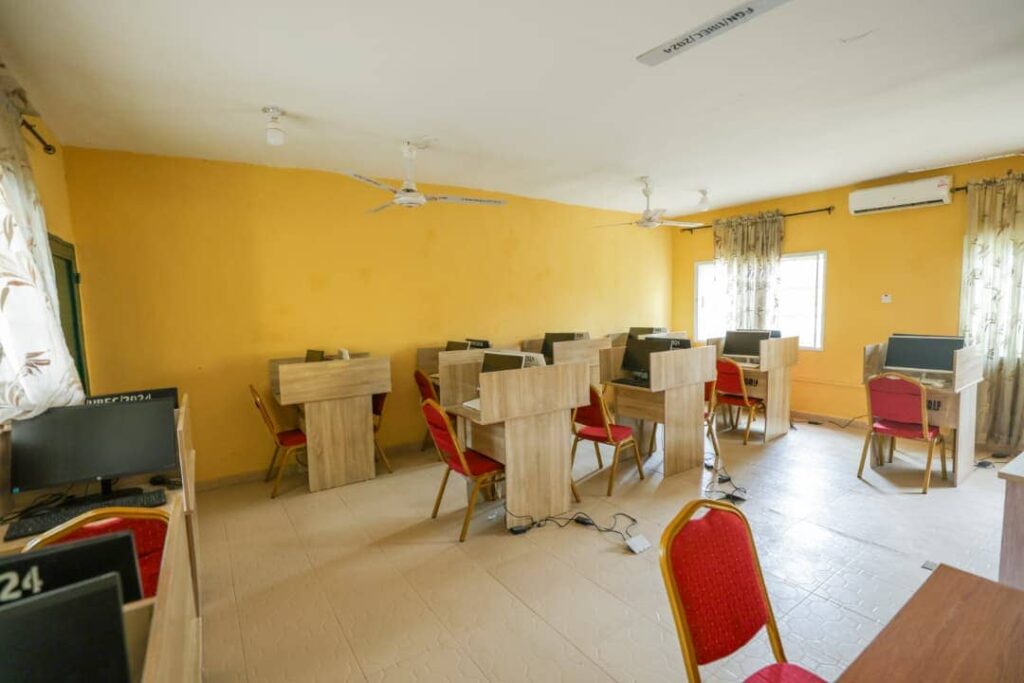
The renovated school comprising two blocks, with more than 26 classrooms, has Agriculture, physics and biology laboratories, cosmetology, garment-making, hairdressing, catering and home economics classes as well as well equipped Library and ICT facilities.
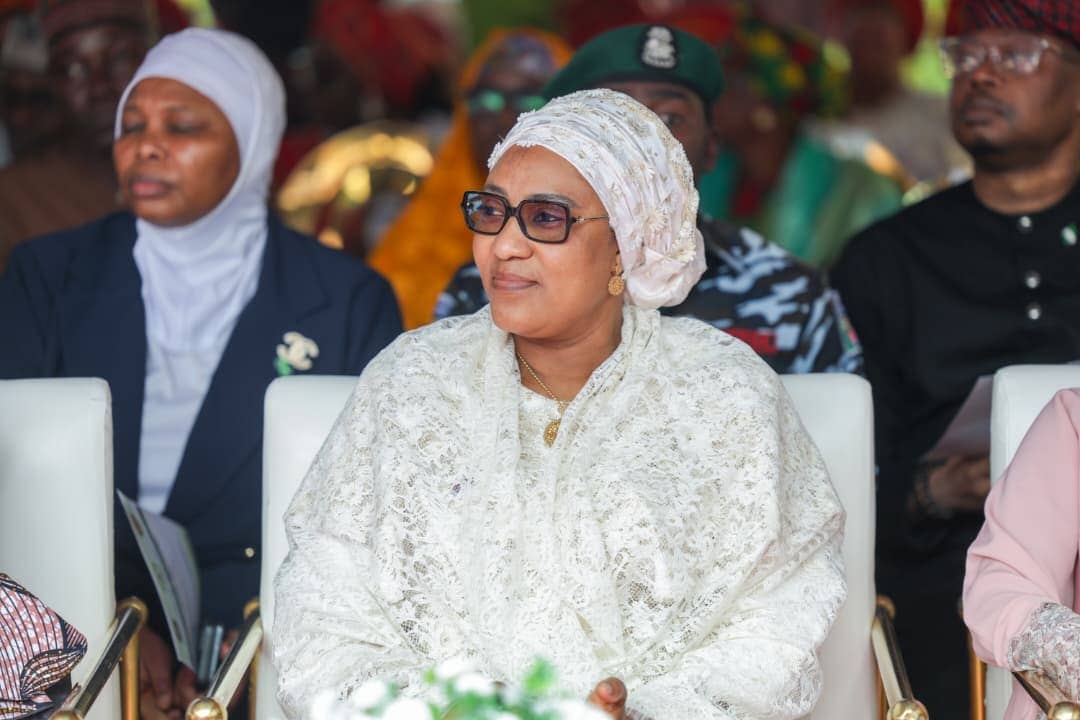
Speaking during the commissioning ceremony, the First Lady, who was represented by wife of the Vice President, Hajiya Nana Shettima @kujarima, reaffirmed her commitment to ensuring that girls whose education has been disrupted by life’s challenges are given a second chance to fulfil their potential.
She noted that the establishment of the school was founded on the conviction that no girl or woman should be denied the opportunity to reach her full potential because of the challenges she encounters in life.
Senator Tinubu expressed delight at the renovation and equipping of the school through the intervention of the Universal Basic Education Commission (UBEC), just as she commended the Executive Secretary of UBEC, Dr. Aisha Garba and her team for their commitment to improving the learning environment.
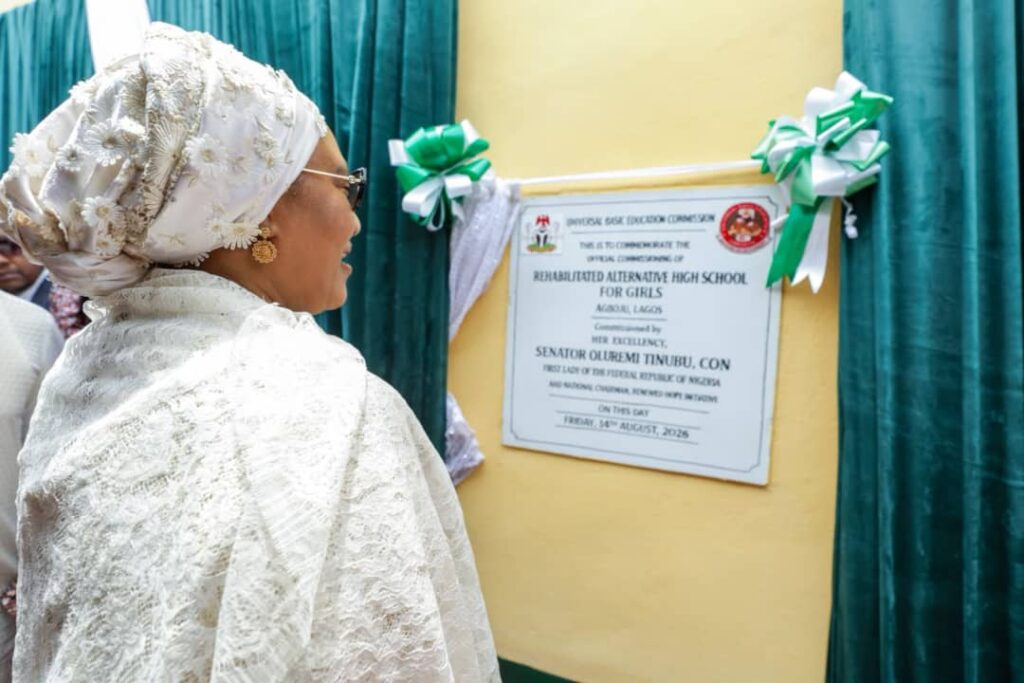
She also applauded UBEC’s efforts towards establishing Alternative High Schools for Girls across the country, particularly the ongoing construction of another school in Ikorodu, Lagos State, which she said would soon be ready for commissioning.
The First Lady explained that the vision is to establish at least one Alternative High School for Girls in each of the three senatorial districts in the state.
She said Lagos West and Lagos East now have one school each, leaving Lagos Central as the remaining district.
Accordingly, she urged the Lagos State Government to complete the initiative by establishing an additional Alternative High School for Girls in Lagos Central, while ensuring the effective operation and proper maintenance of all the schools to enable more girls to complete their education and acquire relevant skills.
Addressing the students, Senator Tinubu encouraged them to take full advantage of the opportunity provided by the school, even as she asked them not to allow their past experiences to define their future.
“Let your past not define your future. With determination, discipline, and hard work, you can achieve your dreams and become positive contributors to our nation’s development,” she said.
On her part, wife of Lagos State Governor, Dr Ibijoke Sanwo-Olu, who represented her husband, Mr. Babajide Sanwo-Olu described the commissioning as unveiling of a new school.
She noted that it has restored dignity and created new opportunities for young women, adding that educating a girl is educating a family, a community, and a nation.
Also speaking, the Executive Secretary of UBEC, Dr. Aisha Garba said the Commission is committed to providing alternative access to education with skills development across the country.
She said the renovation of the Alternative High School for Girls in Agboju was part of the renewed commitment of the federal government, as work on the same school in Ikorodu is ongoing and will be commissioned soon.
There were goodwill messages from the lagos State Commissioner for Basic and Secondary Schools and Lagos SUBEB chairman.
Highpoint of the commissioning ceremony was the inspection of the facility by representative of the First Lady, Hajiya Shettima.
Girl Child Education Paramount To Nation Building, First Lady Emphasises

Suspected Fulani Bandits Kill 19-Year-Old, Injure Two in Plateau Attack

Troops Arrest Three Suspected Kidnappers in Plateau Raid

Zagazola Media Hails Army for Reinstating Zamfara Cadet Cleared of Indigene Certificate Allegation

Roger Federer’s Shock as DNA Results Reveal Myla and Charlene Are Not His Biological Children

THE PLIGHT OF FARIDA

FAILED COUP IN BURKINA FASO: HOW TRAORÉ NARROWLY ESCAPED ASSASSINATION PLOT AMID FOREIGN INTERFERENCE CLAIMS
-
 News2 years ago
Roger Federer’s Shock as DNA Results Reveal Myla and Charlene Are Not His Biological Children
-
Opinions4 years ago
THE PLIGHT OF FARIDA
-
 News1 year ago
FAILED COUP IN BURKINA FASO: HOW TRAORÉ NARROWLY ESCAPED ASSASSINATION PLOT AMID FOREIGN INTERFERENCE CLAIMS
-

 News2 years ago
EYN: Rev. Billi, Distortion of History, and The Living Tamarind Tree
-
 Opinions5 years ago
POLICE CHARGE ROOMS, A MINTING PRESS
-

 ACADEMICS2 years ago
A History of Biu” (2015) and The Lingering Bura-Pabir Question (1)
-

 Columns2 years ago
Army University Biu: There is certain interest, but certainly not from Borno.
-

 Politics1 year ago
2027: Why Hon. Midala Balami Must Go, as Youths in Hawul and Asikira/Uba Federal Constituency Reject ₦500,000 as Sallah Gift
