
News
Women Farmers Say Nigeria Faces Severe Hunger with Proposed Budget to AgricultureAdvocate for 10% of Budget to Agriculture

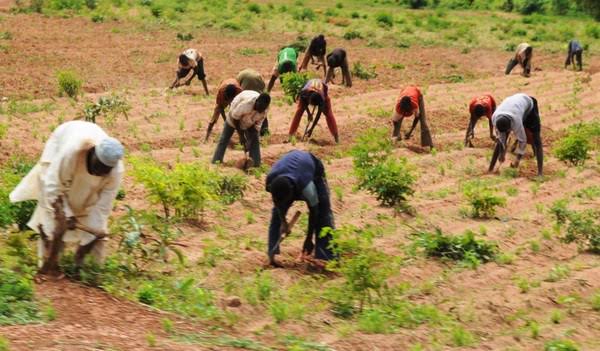
Women Farmers Say Nigeria Faces Severe Hunger with Proposed Budget to Agriculture
Advocate for 10% of Budget to Agriculture
By: Michael Mike
The women under the umbrella body of Small-scale Women Farmers Organisation in Nigeria (SWOFON) have called for an upgrade in the proposed budget for agriculture, noting amount proposed for 2025 recorded a decline of 36.19% from N996.901 billion in 2024 to N633 billion.
They noted that it may further drive the country into hunger and a let off from President Bola Tinubu’s promise to alleviate poverty and hunger in the country.
The group which briefed alongside the Comprehensive Africa Agriculture Development Programme (CAADP), a non-state actor, noted that the country is currently in a precarious situation that needs great investment rather than reduction.
The groups therefore urged President Bola Tinubu to address what they called insufficient allocation to the agricultural sector to address food security and hunger in the land.
They argued that the current proposed budget represented 1.28 percent of the entire proposed over N53 trillion budget.
They said the 2025 budget proposal for the sector therefore represents 36.19% decline. The sector got 2.84% allocation in the 2024 budget with N996.901 billion.
The group stressed that: “You can’t be increasing the national budget and also be reducing the agricultural budget. And we are clamouring for security in the sector.
The government should give more money to agriculture to support farmers, especially women and small-scale farmers. The government should also plan better to make sure that the agricultural sector plans are aligned with the National Agricultural Technology and Innovation Policy.”
They urged that the government should declare a state of emergency in the agricultural sector, stressing that every government pronouncement or policy pronouncement also has economic implications.
They said: “We are calling on the government to declare a state of emergency and also that the allocation for the sector is poor.
“We are trying to draw their attention. We are not trying to put the blame on anybody but the necessary departments that are working on the budget should be able to draw the attention of the Federal Government and say that the allocation for this sector on key farmers that are practising in the field is unacceptable. And that is why we are here to say let them look at it the second time before they do the final passing, which there is still room for that.”
They called for 10% of the budget to be set aside for agriculture. “These are what we are advocating for in accordance with the Maputo declaration.
“So, against the 10%, we are not even moving close. We are moving far away from the 10% allocation that we want the president to even start, not to even talk about more.”
The group made the following demands from the government for the country to be able to address food insecurity and hunger in the country.
“ There is a need to increase the budget allocation to the FMAFS in the 2025 budget of the federal government of Nigeria. This is necessary as funding gaps were observed in critical areas of investment, ranging from extension services and access to farm inputs to investment in smallholder women farmers, as well as in addressing the various aspects of climate change and agroecology that are affecting the optimal performance of the agricultural sector. The need for enhanced funding is also necessitated by the 1.28% of the total federal government budget committed to the sector against the 10% that is recommended by the Maputo Declaration. This will enhance the capacity of the ministry to coordinate and support actions to attain food and nutrition security in Nigeria. Engagement with subnational governments in this direction to shore up their funding efforts will also be essential.
“Whereas every programme and project of the FMAFS should feed into the implementation of the NATIP, evidence from the projects and programme provided for in the 2025 budget proposal of the ministry shows only 34% alignment in this direction.
“There is a need for the FMAFS to ensure that planning for the sector is anchored on the NATIP policy. This will ensure a strong plan-budget link that will deliver on the overall goal for the sector, including attaining the SDG 2.
“Budgetary allocations should be increased and should go to strategic areas of investments which include Extension Services, Access to Credit, Women in Agriculture, Youth in Agriculture, Appropriate Labour-Saving Technologies, Inputs, Post-Harvest Losses Reduction Supports (processing facilities, storage facilities, trainings, market access, etc.), Irrigation, Climate Resilient Sustainable Agriculture (CRSA)/Agroecology, Research and Development, Monitoring and Evaluation, as well as Coordination.
“The allocation to the National Agricultural Development Fund (NADF) should be increased as NADF is an important aspect of the NATIP and also vital for the overall development of the agricultural sector, but 97% of its capital should not be allocated for the Renewed Hope Fertilizer Support Program. Allocation for capital expenditure for NADF should be targeted to achieving the commitments in the President’s declared state of emergency on the food security situation in the country, therefore should focus on Extension Services, Access to Credit, Women in Agriculture, Youth in Agriculture, Appropriate Labour-Saving Technologies, Inputs, Post-Harvest Losses Reduction Supports (processing facilities, storage facilities, trainings, market access, etc.), Irrigation, Climate Resilient Sustainable Agriculture (CRSA)/Agroecology. It is also vital to ensure timely and total releases to the NADF.”
Women Farmers Say Nigeria Faces Severe Hunger with Proposed Budget to Agriculture
Advocate for 10% of Budget to Agriculture


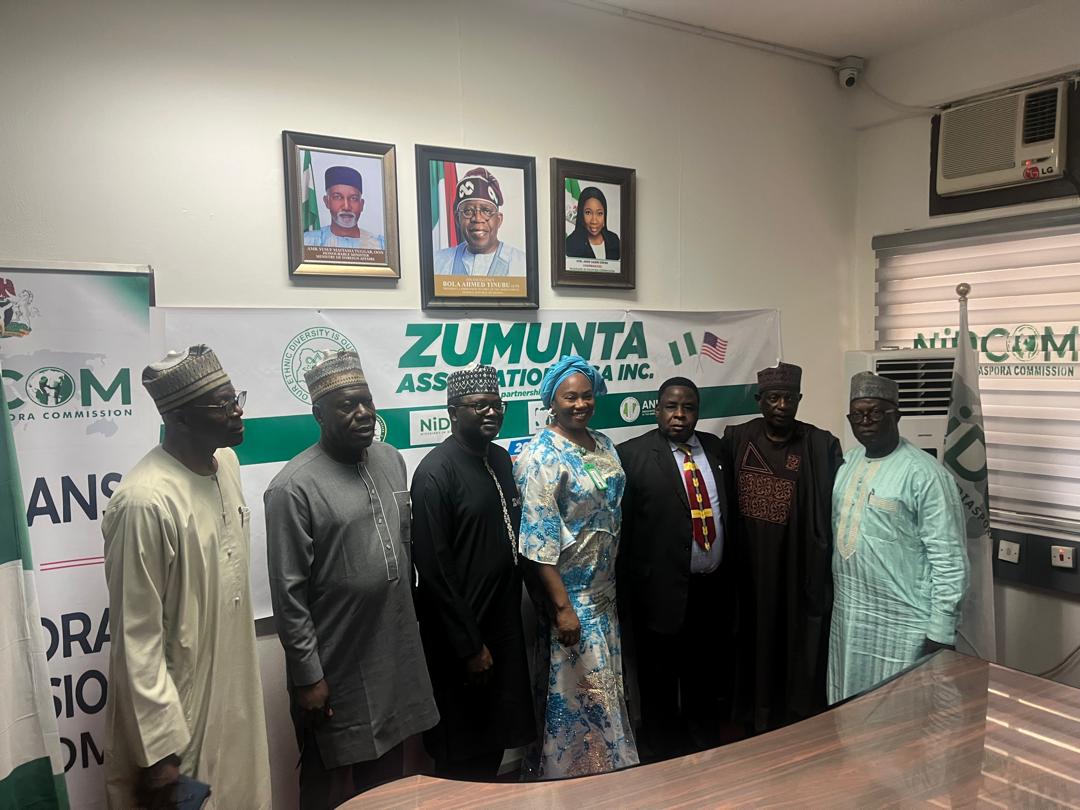
1,000 Northern Youths to Receive Training in ICT
By: Michael Mike
A thousand youth from across northern states of the country are to be trained on Information and Communication Technology (ICT) as part of efforts at empowering youth from the region.
The training is part of efforts of United States (US) based organisation, Zumunta Association USA Inc. which planned to host its 2025 Annual Convention between July 14-25 in Lafia, Nasarawa State.
The association which was formed in New York, US in 1991 has since its inception given scholarships to over 5,000 science students in Northern Nigeria in the value of above N100 million.
Addressing a press conference in Abuja on Monday, the President of the Association, Mr. Sunday Bitrus, said apart from the ICT Training, a medical outreach would be organised between June 14-23 at the Gudi General Hospital, Akwanga, Nasarawa State to provide top medical care for members of the public.
Bitrus, while disclosing that the association is non-partisan and non-religious organisation dedicated to representing the rich cultural heritage and traditions of Nigeria, while also promoting a positive image of the country globally through the impactful actions of its members, said Zumunta Association remains committed to serving the needs of members, partnering with host communities and promoting unbiased, inclusive discourse on national development.
He noted that: “Our flagship Scholarship Programme has transformed the lives of
over 5,000 science students in Northern Nigeria, with over N100 million disbursed since inception. We receive more than
810,000 applications annually, a testament to the scale of need—and a call to action for donors and partners.
“We’ve spearheaded numerous palliative projects through partnerships with over 30 NGOs. Our work includes: School renovations; Health interventions; Community development initiatives across all 19 northern states and the FCT.
“In 2024, we joined hands with the government to enroll vulnerable populations into Essential Health Care Package
programmes, combating illnesses such as malaria, typhoid, and reducing under-5 mortality rates.”
He noted that during the Convention apart from the ICT Training and Medical Outreach, other activities lined up include Zumunta Golf Classic Tournament; Tennis Tournament, Business Meeting on Strategic Sectors such as Agriculture, Mining and Minerals, Health, and Housing; Gala, Awards and Fundraiser; Engagement with Traditional Rukers and Stakeholders.
Earlier, the Chairman/CEO, (NIDCOM), Hon. Abike Dabiri-Erewa, commended the efforts of the organisation towards development of the country.
Dabiri-Erewa, who was represented by the Secretary of the Commission, Dr. Sule Yakubu Bassi said the scholarships to 5,000 students was highly commendable and that NIDCOM would want to collaborate with the association in more areas.
End

Gunmen ambush patrol team in Imo, one officer killed, Police ASP missing
By: Zagazola Makama
A police patrol team was ambushed on Sunday morning by suspected members of the proscribed Eastern Security Network (ESN) along the Okigwe–Umuahia Expressway in Imo State, resulting in the death of one officer and the disappearance of another.
Zagazola Makama learnt that the attack occurred at about 8:20 a.m. near Umuaka in Okigwe while the team was on routine patrol duties.
According to security sources, the patrol team was ambushed by heavily armed assailants who opened fire without provocation.
Police Constable Oluebube Onwubuariri, one of the patrol officers, sustained gunshot wounds to the ribs and was rushed to the General Hospital, Okigwe, where he was confirmed dead.
The team leader, Assistant Superintendent of Police Casmir Eronobi, has been declared missing. He was last seen with his AK-47 rifle bearing breech number 12592 and 13 rounds of 7.62mm ammunition.
A massive manhunt is underway to locate the missing officer and recover the service weapon.
Security reinforcements comprising tactical teams from Owerri, the military, local vigilantes, and hunters have been deployed to comb the surrounding forests and restore order.
Gunmen ambush patrol team in Imo, one officer killed, Police ASP missing

Turji Surrenders Not Out of Repentance, but Survival Instinct — Sources**
By: Zagazola Makama
A recently released video showing notorious bandit kingpin Bello Turji expressing interest in surrendering and accepting peace has left many Nigerians speculating whether the once-feared warlord has finally developed a conscience.
However, contrary to popular assumptions, Turji’s decision appears less about remorse and more about reality. The video, which went viral over the weekend, is not the result of a moral awakening but rather a product of desperation.
“Turji is not laying down arms because he suddenly loves peace. He is doing so because his operational capabilities have been severely weakened.”
Three days before the video surfaced, Zagazola reported that Turji was actively seeking surrender following the killing of his operational commander, Danbokolo, who was the true engine behind Turji’s terror enterprise.
Danbokolo was reportedly neutralized during a joint operation coordinated by the State Services and the Hybrid Forces, a local security team made up of Civilian JTF.
“Let’s be honest, Turji was more of a spokesman. Danbokolo handled the heavy lifting — the ambushes, raids, and executions,” the source said. “Once Danbokolo was gone, so was Turji’s swagger.”
The once-fire-spitting Turji now finds himself walking a tightrope, stripped of influence and hunted by the very people he once terrorized.
While the circumstances surrounding his potential disarmament are still being delicately managed, insiders confirm that the collapse of his network has been swift and decisive.
It is believed this recent development points to the impact of sustained, intelligence-driven offensives against high-value targets in the region.
Now, the question remains: will the government accept Turji’s amnesty after the atrocities he committed against peaceful communities in the Northwest? That remains uncertain.
Will his surrender end banditry in the Northwest? CERTAINLY NOT.
Turji Surrenders Not Out of Repentance, but Survival Instinct — Sources**

Brazilian VP Visit: The leadership and humility in VP Kashim Shettima reaffirms the rich cultural heritage in Africa.

Ishaq Kunle Sanni and his warped view about Aregbesola/Oyetola feud

Charterhouse Lagos purpose-built secondary boarding school set to open in September

Roger Federer’s Shock as DNA Results Reveal Myla and Charlene Are Not His Biological Children

THE PLIGHT OF FARIDA

POLICE CHARGE ROOMS, A MINTING PRESS
-
 News1 year ago
Roger Federer’s Shock as DNA Results Reveal Myla and Charlene Are Not His Biological Children
-
Opinions3 years ago
THE PLIGHT OF FARIDA
-
Opinions4 years ago
POLICE CHARGE ROOMS, A MINTING PRESS
-

 News1 year ago
EYN: Rev. Billi, Distortion of History, and The Living Tamarind Tree
-

 Columns1 year ago
Army University Biu: There is certain interest, but certainly not from Borno.
-

 ACADEMICS1 year ago
A History of Biu” (2015) and The Lingering Bura-Pabir Question (1)
-

 Opinions1 year ago
Tinubu,Shettima: The epidemic of economic, insecurity in Nigeria
-

 Politics4 weeks ago
2027: Why Hon. Midala Balami Must Go, as Youths in Hawul and Asikira/Uba Federal Constituency Reject ₦500,000 as Sallah Gift
