
News
Women groups laud association for addressing malnutrition in Gombe


Women groups laud association for addressing malnutrition in Gombe
Women groups in Shongom Local Government Area of Gombe State have commended Sasakawa Association Africa (SAA) for the improvement of nutritional status of women on the country.
They said the training organied on how to use the local food produced within the communities for women had yeilded good results.
They stated this on Tuesday while sharing their experiences with journalists during the media field day, organised by SAA to access the activities of the project and the impact made on their communities.
Mrs Elizabeth Danlami, leader Kwada Multipurpose society Lalaipido Shongom LGA, said the crops cultivated through the advice of SAA had improved their nutritional status in the community.
“SAA has given us training on how to process the food we cultivate in various forms in order to balance our diet and now, our children are no longer malnourished.
“As you can see, we have displayed some of the foods we made locally with high nutritional value which we use for our consumption as well as business purpose.
“Apart from balancing our diet, the association empowered us, especially in the area of processing and marketing our produce, to be self-reliant,” she said.
Sharing her experience, Mrs Ladi Naphtali said she would forever remain grateful to the association for the training given to them in the area of child-spacing, exclusive breast feeding and production of baby food which containing all the nutrients needed for healthy growth.
”We do not buy baby food any longer in this community, instead we use the available crops we produced to prepare it.
“As you can see our babies are looking healthy; they even double their birth weight, this was a result of the nutrient contained in the food we locally made,” she said.
Naphtali stressed that even the pastoralists in the community could testify to how their nutritional status and that of their children had improved because due to the training for them.
Mrs. Ruth Bitrus, leader Mirmu Women Multipurpose Society Diga Community of Shongom LGA said Sassakawa had empowered women, especially in the area of processing and marketing of agricultural produce.
She also said SAA taught them how to process the food they produced in so many ways, to improve their nutritional status and their children.
“Especially our children, they are growing healthy because their nutritional status has improved, we do not have cases of kwashiorkor and malnutrition in our community,” she said.
Bitrus said even their spouses were happy with them because of the way they now prepared their food.
”Women in my community are treated with dignity because they now have income to cater for their immediate needs and children,” she said.
In his remark Mr Isaac Eni, Technical Coordinator, Market Oriented Agriculture SAA, said the women communities that displayed the crops produced used organic means of production.
He said since fertiliser became expensive and scarce, they tried to substitute it with organic fertiliser such as animal manure.
“We have seen the various recipes they have produced which have to be with our nutritional-sensitive agriculture and also to get source of income.
“Our aim was to promote a good living among the communities we are intervening ,” he said.
NAN reports that highlights of the event included display of local foods with nutritional values prepared by the women groups.
Also a lecture was delivered by Mr Yahuza Yahaya, Technical Coordinator, Nutrition Sensitive Agriculture, on the six classes of food and their work in human body.
Women groups laud association for addressing malnutrition in Gombe


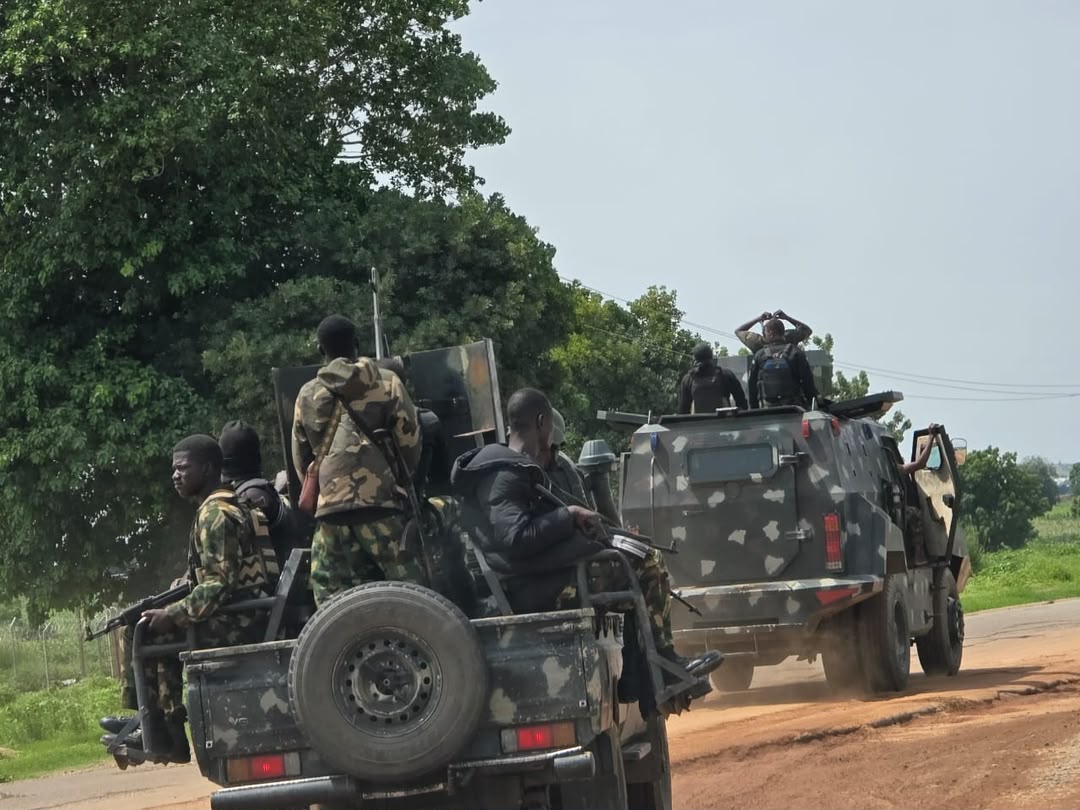
Troops Foil Armed Berom Militias Moving To Attack Fulani Communities in Mangu, Plateau
By Zagazola Makama
Troops of Operation Enduring Peace (OPEP) have engaged armed Berom militias following reports of their movement from Barkin Ladi Local Government Area to carry out attacks in some fulani communities in Mangu Local Government Area of Plateau State.
A military source told Zagazola Makama that troops of Sub-Sector 81, reinforced by additional personnel from Headquarters Sector 8, mobilised to the general area at about 7:00 a.m. on August 11, 2026, following an advance report on the movement of the armed group.
The militias were reportedly moving towards Gwomgada, Dorong and Kaduno communities in Langai District of Mangu LGA.
The troops subsequently made contact with the armed group at Makera and Kaduno communities, leading to a firefight.
The engagement forced the militias to withdraw towards the general area of Jos East Local Government Area.
The troops are currently pursuing the fleeing group to deny them freedom of action and prevent further attacks on communities.
In a reinforcement effort, a detachment of the Special Forces has also been dispatched from Headquarters, Operation Enduring Peace, to support the troops operating in the area.
Further details on the operation are expected as the military continues its efforts to contain the threat and secure affected communities.
Troops Foil Armed Berom Militias Moving To Attack Fulani Communities in Mangu, Plateau
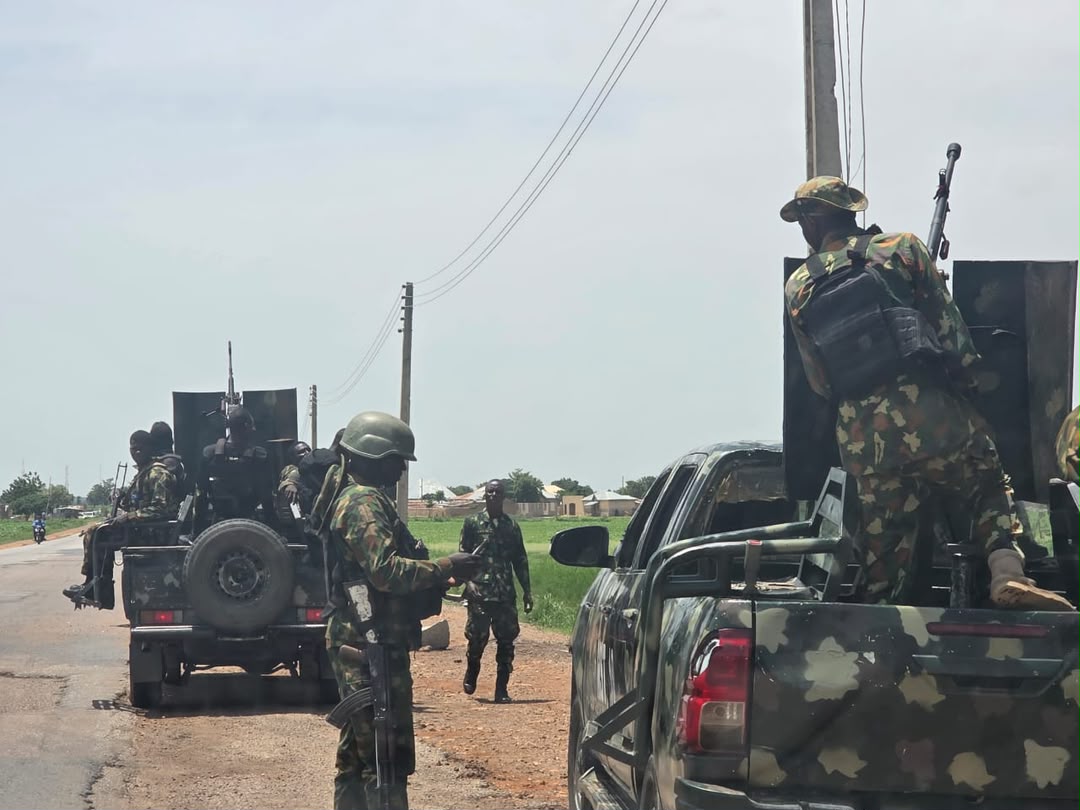
Troops Repel Fulani Bandits Attack, Secure Farmlands in Mangu, Plateau
By Zagazola Makama
Troops of Sector 8, Operation Enduring Peace (OPEP), have repelled an attack by suspected armed Fulani bandits during a response to reports of farmland destruction at Manja Forest in Mangu Local Government Area of Plateau State.
A military source told Zagazola Makama that the incident occurred at about 12:45 p.m. on August 11, 2026, following reports that armed herders suspected to be Fulani militias were destroying farmlands in the area.
The troops swiftly mobilised to the location and made contact with the armed group.
A firefight ensued, during which the troops employed superior firepower and forced the militias to withdraw in disarray.
The source said the troops expended 10 rounds of 7.62mm x 54mm ammunition and 19 rounds of 12.7mm x 108mm ammunition during the engagement.
Following the encounter, the troops maintained dominance of the area to prevent the attackers from regrouping or launching further attacks against farmers and other residents.
The troops also engaged community leaders and members of the Vigilante Group of Nigeria (VGN), urging them to sustain neighbourhood watch activities and promptly report suspicious movements to security agencies.
The operation is part of ongoing efforts by Operation Enduring Peace to protect farming communities, prevent attacks and maintain security across vulnerable areas of Plateau State.
Troops Repel Fulani Bandits Attack, Secure Farmlands in Mangu, Plateau
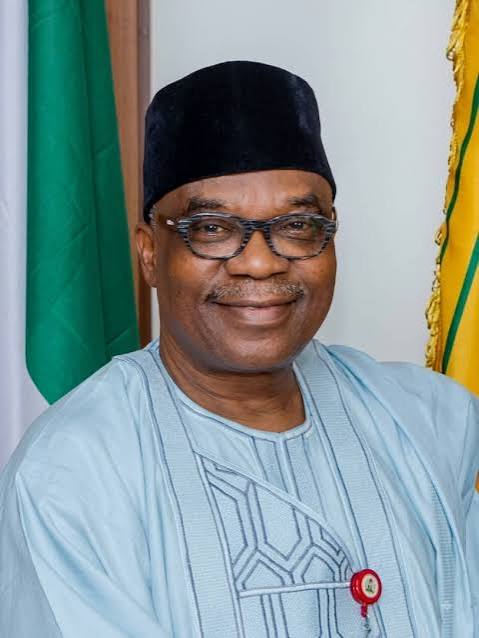
NIDEC 2026: No Room for Jamboree Under Tinubu’s 4Ds Agenda — Enikanolaiye
By: Michael Mike
The Minister of State for Foreign Affairs, Ambassador Sola Enikanolaiye, has said the 2026 Nigeria Diaspora Investment Economic Conference (NIDEC), scheduled to hold in Toronto, Canada, is not a diplomatic jamboree but a strategic platform to attract investment, create jobs and increase foreign exchange inflows into Nigeria.
Enikanolaiye stated this in Abuja, while addressing journalists ahead of his departure with a Federal Government delegation to the four-day conference.
Responding to concerns that previous international engagements had yielded limited tangible results, the Minister said the Tinubu administration had no room for ceremonial or unproductive foreign trips.
“This administration does not travel for jamborees. We travel for results. Mr. President has mandated a high-powered delegation led by the Chief of Staff to the President, Hon. Femi Gbajabiamila, because NIDEC 2026 is a deal room for Nigeria’s growth,” he said.
According to the Minister, the conference aligns with President Bola Ahmed Tinubu’s realigned 4Ds Foreign Policy Agenda — Demography, Development, Democracy and Diaspora.
Enikanolaiye said NIDEC 2026 would provide an opportunity to deepen Nigeria-Canada economic relations, with senior Canadian officials, including Treasury Board President Shafqat Ali and ministers from Ontario, expected to participate.
He said discussions would focus on new trade agreements, SME partnerships and improved market access for Nigerian products in North America.
The Minister also highlighted the participation of key Nigerian economic agencies, including the Central Bank of Nigeria, the Nigerian Investment Promotion Commission (NIPC), the Nigerian Export Promotion Council (NEPC) and the Nigeria Revenue Service (NRS).
He said the delegation would promote incentives for diaspora capital repatriation, export expansion and remittance-backed investment vehicles, with the aim of increasing foreign exchange inflows and creating jobs in Nigeria.
Enikanolaiye said the participation of five governors from Anambra, Borno, Kaduna, Plateau and Zamfara would strengthen sub-national investment partnerships.
The governors, he explained, would directly engage potential investors on projects spanning infrastructure, agriculture, technology and mining, thereby extending investment opportunities beyond Abuja.
The Minister said the participation of NITDA Director-General Kashifu Inuwa would support Nigeria’s efforts to secure partnerships in digital innovation, fintech and information technology capacity building.
He said such partnerships would contribute to the Federal Government’s broader digital economy and skills development agenda.
On diaspora engagement, Enikanolaiye said NIDEC was designed to connect investment-ready Nigerian projects with high-net-worth Nigerians in the diaspora, while also addressing bottlenecks faced by Nigerians abroad who want to invest in the country.
He noted that Nigeria received more than $20 billion in diaspora remittances last year, stressing that the objective was to transform the goodwill represented by those remittances into equity, factories and businesses capable of employing Nigerians.
@NIDEC 2026 is economic diplomacy in action. Nigeria is open for business. And we are going to Toronto to close deals,” he said.
The four-day NIDEC 2026, themed “Invest Nigeria, Thrive Abroad,” is scheduled for August 12–15, 2026, in Toronto, Canada.
The conference is being organised by the Nigerians in Diaspora Commission (NiDCOM), in collaboration with the Nigerian High Commission in Ottawa and the Canadian High Commission in Abuja.
The Ministry of Foreign Affairs said the conference is intended to serve as a bridge connecting global capital with bankable investment opportunities in Nigeria.
NIDEC 2026: No Room for Jamboree Under Tinubu’s 4Ds Agenda — Enikanolaiye

Troops Foil Armed Berom Militias Moving To Attack Fulani Communities in Mangu, Plateau

Troops Repel Fulani Bandits Attack, Secure Farmlands in Mangu, Plateau

Troops Rescue Nine Kidnap Victims After Gun Battle With Abductors in Kogi

Roger Federer’s Shock as DNA Results Reveal Myla and Charlene Are Not His Biological Children

THE PLIGHT OF FARIDA

FAILED COUP IN BURKINA FASO: HOW TRAORÉ NARROWLY ESCAPED ASSASSINATION PLOT AMID FOREIGN INTERFERENCE CLAIMS
-
 News2 years ago
Roger Federer’s Shock as DNA Results Reveal Myla and Charlene Are Not His Biological Children
-
Opinions4 years ago
THE PLIGHT OF FARIDA
-
 News1 year ago
FAILED COUP IN BURKINA FASO: HOW TRAORÉ NARROWLY ESCAPED ASSASSINATION PLOT AMID FOREIGN INTERFERENCE CLAIMS
-

 News2 years ago
EYN: Rev. Billi, Distortion of History, and The Living Tamarind Tree
-
 Opinions5 years ago
POLICE CHARGE ROOMS, A MINTING PRESS
-

 ACADEMICS2 years ago
A History of Biu” (2015) and The Lingering Bura-Pabir Question (1)
-

 Columns2 years ago
Army University Biu: There is certain interest, but certainly not from Borno.
-

 Politics1 year ago
2027: Why Hon. Midala Balami Must Go, as Youths in Hawul and Asikira/Uba Federal Constituency Reject ₦500,000 as Sallah Gift
