Uncategorized
Women Rally as Political Force, Signal Shift from Inclusion to Power

Women Rally as Political Force, Signal Shift from Inclusion to Power
By: Michael Mike
A new political current is gathering momentum in Nigeria—one that seeks to transform women from participants in governance to a decisive, organised force capable of shaping power itself.
At the centre of this shift is the Minister of Women Affairs, Iman Suleiman, who on Thursday framed the forthcoming 2026 Women Mega Empowerment and Rally not as a ceremonial gathering, but as the launch of a structured national movement with clear political, economic and social intent.
Addressing a world press briefing in Abuja, Suleiman described the initiative—anchored on the theme “The Power of 10 Million: One Voice, One Movement, One Choice”—as a strategic pivot in Nigeria’s democratic evolution.

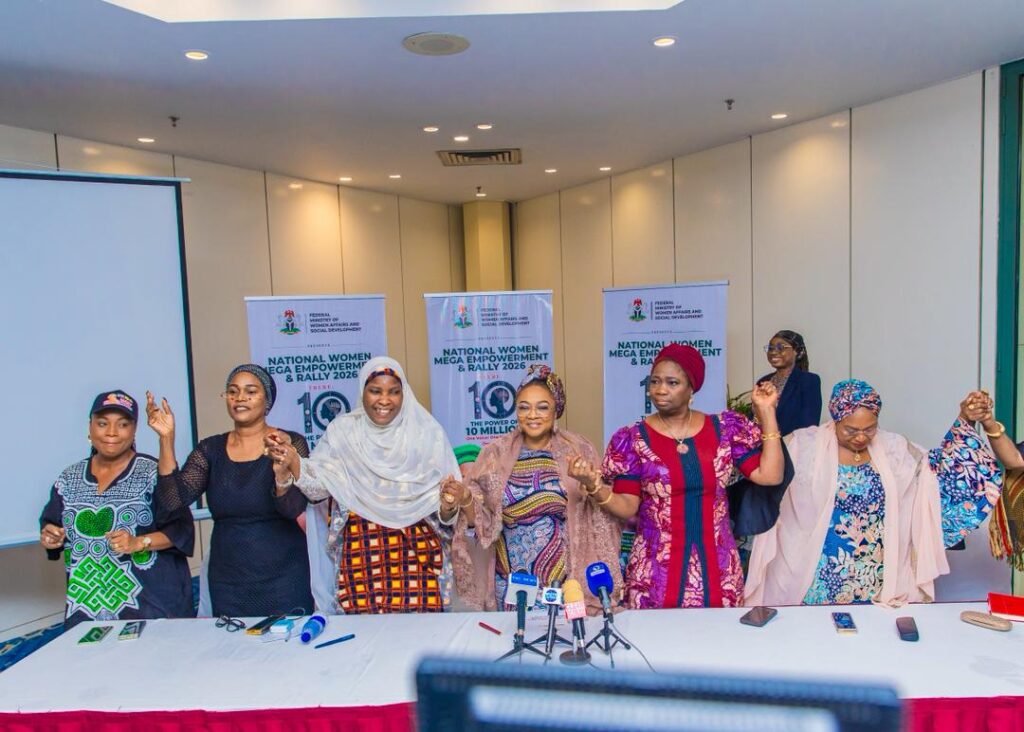
“This is not a programme. It is a paradigm shift,” she declared. “It is a movement from participation to power, from inclusion to influence—one that establishes women as organised constituents with voice, structure and agency.”
⸻
Beyond Optics: Building a National Women’s Bloc
While political rallies are a familiar feature of Nigeria’s democratic landscape, the minister’s framing suggests something more deliberate: the construction of a nationwide women’s bloc capable of exerting coordinated influence.
Rather than attempting to gather millions physically, the rally—scheduled for May 5 at the Moshood Abiola National Stadium—will bring together delegates from all 9,410 wards, embedding what organisers describe as a bottom-up mobilisation model.

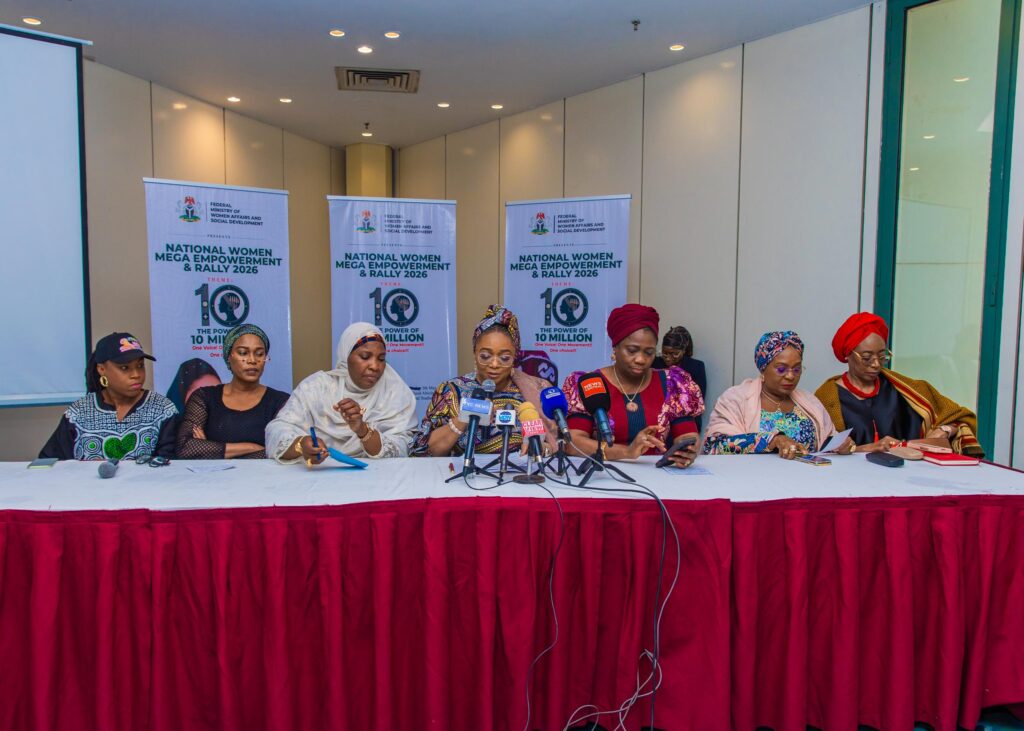
“It is not about filling a stadium with 10 million people,” Suleiman explained. “It is about mobilising 10 million voices and ensuring that empowerment reaches the grassroots.”
The approach signals a shift from symbolic inclusion to structured participation—where representation is decentralised, but influence is unified.
⸻
Aligning Power with Policy
The movement is explicitly tied to the Renewed Hope Agenda of President Bola Ahmed Tinubu, reflecting a growing convergence between gender advocacy and state policy.
Suleiman credited the administration with repositioning women, families and vulnerable groups at the centre of national development, arguing that the rally represents both endorsement and expansion of that framework.
“Inclusive growth is not optional—it is fundamental,” she said. “Women are not beneficiaries; they are drivers of transformational change.”
The minister pointed to policy instruments such as the Renewed Hope Social Impact Intervention 774 programme, which targets women across all local government areas with grants, skills development, enterprise support and access to markets.
⸻
Economic Power as Political Leverage
Underlying the mobilisation is a clear economic argument: that women’s empowerment is not merely social policy but a macroeconomic strategy.
With women forming a significant share of Nigeria’s informal economy—particularly in agriculture, trade and small-scale enterprise—the minister argued that closing systemic gaps in access to finance, land and opportunity could unlock exponential national growth.
“When women are empowered, the nation multiplies its productivity,” she said, framing the initiative as both an empowerment pipeline and an economic engine.
⸻
The First Lady Factor
The rally also draws legitimacy from the visible involvement of the First Lady, Oluremi Tinubu, whose grassroots engagements have positioned her as a central figure in the administration’s social development agenda.
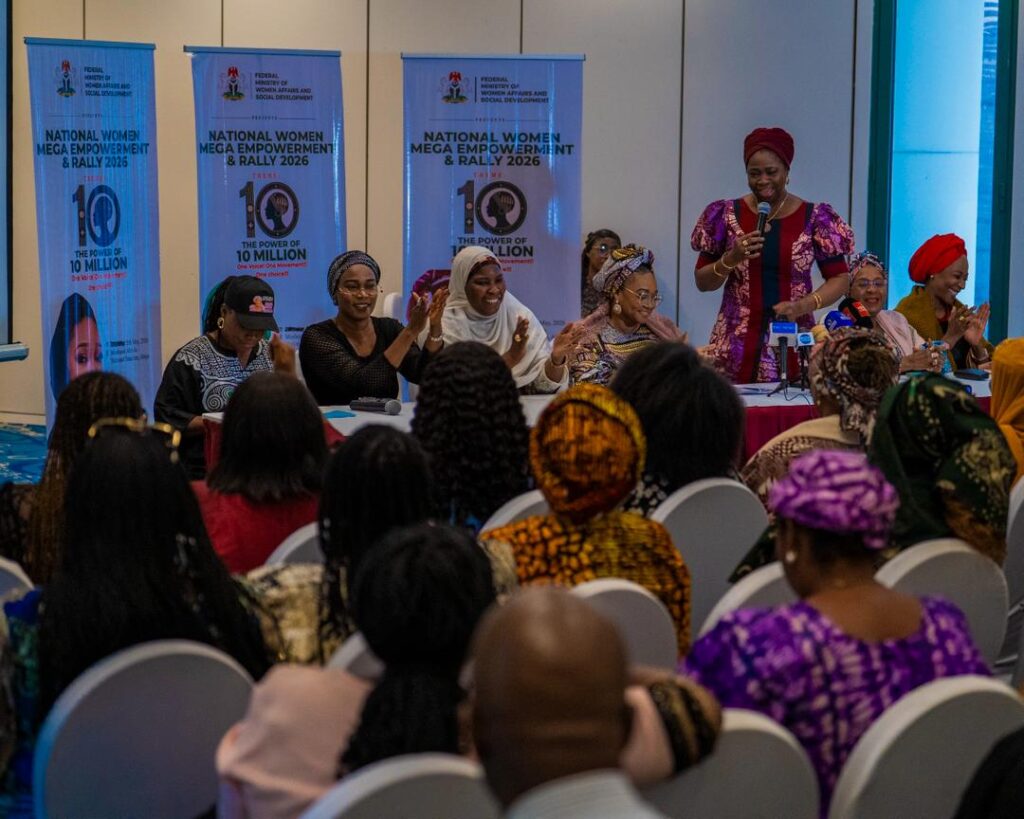
Suleiman described her role as going “beyond ceremonial duty,” noting that her interventions have helped bridge the gap between policy and community-level impact. She is expected to attend the rally as Special Guest of Honour.

⸻
Three Strategic Outcomes
Beyond mobilisation, the rally is designed to produce tangible political and institutional outcomes.
First, it will serve as a unified platform for endorsing President Tinubu ahead of the general election—an indication that the movement is not neutral but aligned with existing power structures.
Second, it will generate a national charter of women’s demands, intended to function as both a policy roadmap and a social contract between women and the state.
Third, it aims to integrate women’s groups across all wards into a coordinated network, strengthening grassroots organisation and ensuring continuity beyond the event itself.
⸻
A Narrative of Unity—and Control
Speakers at the briefing reinforced the idea of collective identity as a source of strength. Chairman/CEO of the Nigerians in Diaspora Commission, Abike Dabiri-Erewa, argued that women must take ownership of the national narrative.
“We are not telling the story enough,” she said. “When women come together, they can speak more powerfully than anyone.”
Similarly, Organising Committee Chairman, Zainab Ibrahim, framed the initiative as a unifying force across political, social and regional divides.
“This is not just a rally—it is a movement,” she said. “It allows women to think, plan and act as one.”
⸻
From Momentum to Power
What distinguishes this initiative is not its scale, but its intent. By combining political endorsement, economic empowerment and grassroots structuring, the organisers are attempting to convert numerical strength into coordinated influence.
The emphasis on ward-level integration suggests a long-term strategy—one that could reshape how women engage with elections, policy advocacy and governance.
Whether it evolves into a sustained political force or remains within the orbit of existing power structures will depend on how effectively it translates mobilisation into measurable outcomes.
For now, the message from Abuja is unmistakable: Nigerian women are no longer content with inclusion—they are organising for power.
“The rise of Nigerian women,” Suleiman said, “is not a possibility. It is inevitable.”
Women Rally as Political Force, Signal Shift from Inclusion to Power