
News
Yobe Goes Spiritual On Insurgents Destroying Electricity Towers

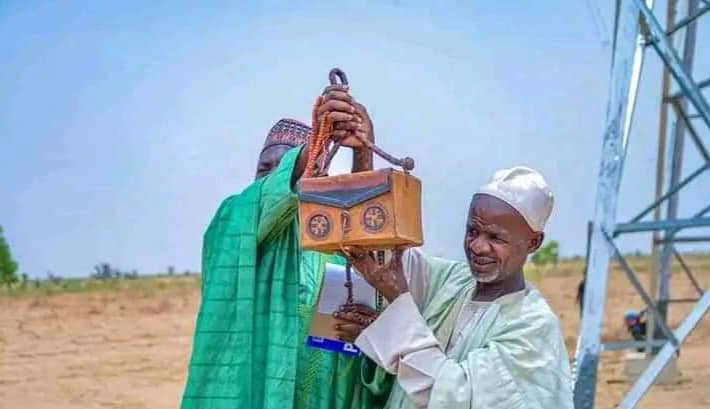
Yobe Goes Spiritual On Insurgents Destroying Electricity Towers
By: Our Reporter
Yobe State government has launched a spiritual war against the Boko Haram insurgents destroying electricity towers which has cut Borno and Yobe states from the national grid for months now.
The towers are part of the Jos – Gombe grid serving Borno and Yobe states with electricity.
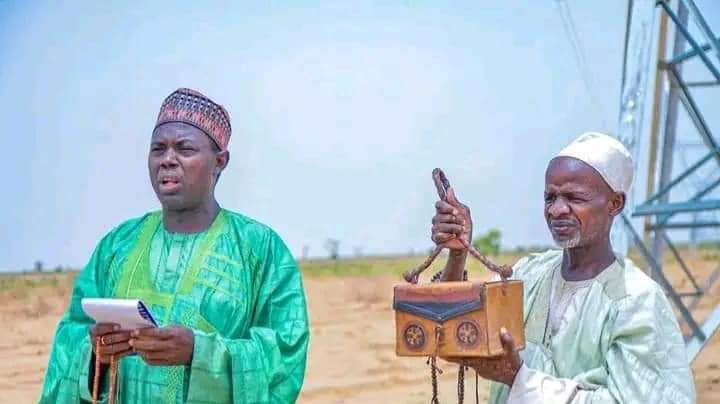
After repairing the 330 KVA towers crumbled last February by the insurgents near Kasaisa village, Gujba LGA, cutting the two sister states from electricity supply from the national grid, Governor Mai Mala Buni, on Wednesday, May 15 led a crowd of Muslim clerics in the recitation of the Holy Quran and prayers for God to punish the insurgents crumbling the towers.
The decision followed Governor Buni’s warning that after repairing the towers, he would lead the recitation of the Holy Quran and prayers against the criminals hellbent on denying the two states electricity from the national grid.
It could be recalled that the Yola Electricity Distribution Company (YEDC) recently disclosed that the criminals, for the first time, crumbled the towers in December, 2023, and for the second time, in February, 2024, both of which were repaired by Yobe State government.
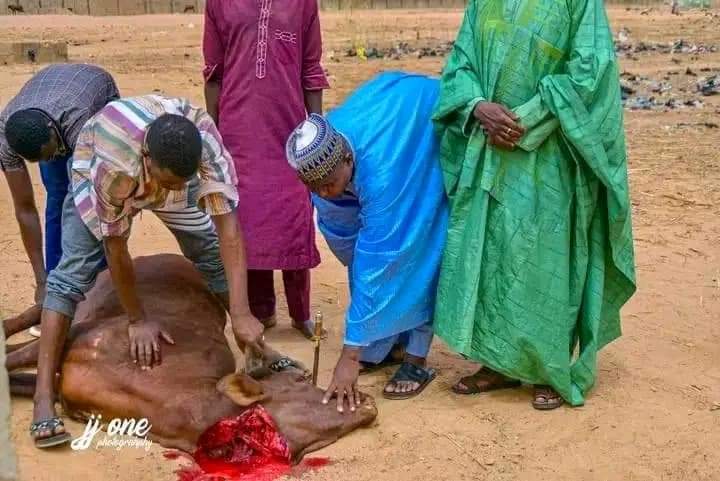
Leading Muslim clerics and students of the Holy Quran participated at Wednesday’s recitation and prayers session, where cows were sacrificed for Allah to expose and punish the insurgents crumbling the electricity towers.
The prayer session was for Allah to expose and punish the criminals, their sponsors, their supporters, those who help them with the tools used in the destruction of the towers, their transporters to the scene of the crime, whoever knows but refuses to expose them; buyers of the vandalized tower parts, and transformers thieves.
Yobe Goes Spiritual On Insurgents Destroying Electricity Towers


Climate Crisis Threatens Human Rights, Development Gains — Danish Expert, NHRC Warn
By: Michael Mike
The National Human Rights Commission (NHRC) has raised concerns over the growing impact of climate change on human rights in Nigeria, warning that flooding, drought, extreme heat, displacement and food and water insecurity are increasingly threatening the dignity and livelihoods of vulnerable communities.
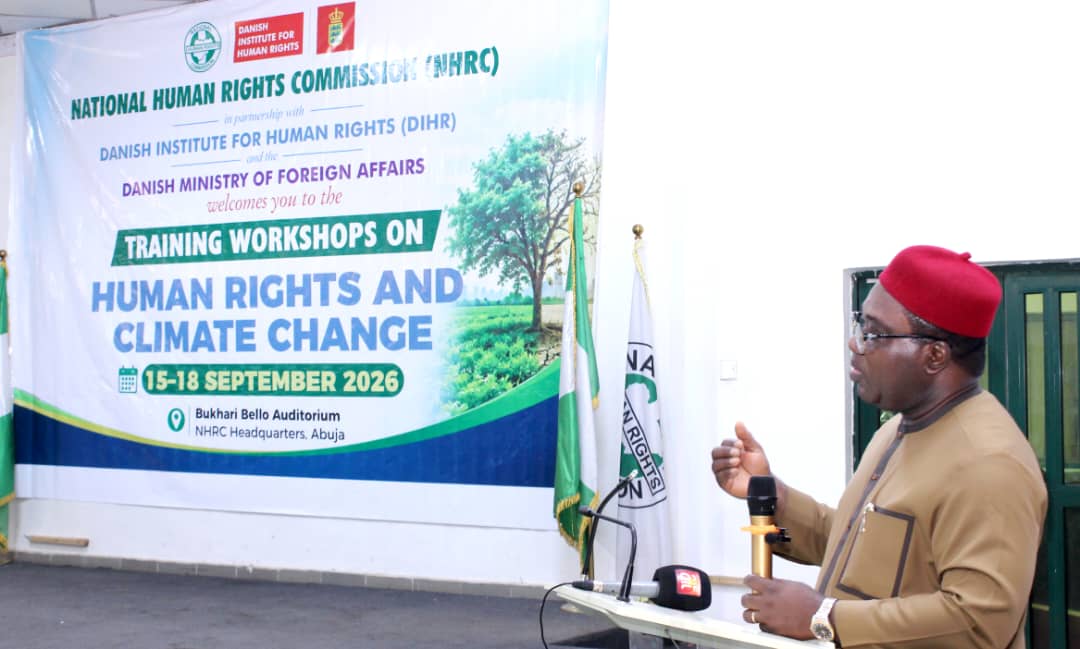
The Commission’s Executive Secretary, Dr Tony Ojukwu, gave the warning on Tuesday in Abuja at a two-day staff training workshop on Human Rights and Climate Change, organised by the NHRC in partnership with the Danish Institute for Human Rights.
Ojukwu said climate change could no longer be treated merely as an environmental or development issue, stressing that its consequences were increasingly being felt through violations of fundamental rights.
He identified women and children, persons with disabilities, older persons, farmers, rural communities, internally displaced persons and other vulnerable groups as among those facing disproportionate risks from the changing climate.
“Climate change is no longer simply an environmental or development concern,” Ojukwu said, noting that its effects were being experienced through flooding, drought, desertification, extreme heat, changing rainfall patterns, food and water insecurity, displacement and loss of livelihoods.
He said the NHRC had responded by establishing a dedicated Climate Change Unit following a 2025 academic conference on Climate Justice, jointly hosted by the Commission, the Raoul Wallenberg Institute and the University of Nigeria, Nsukka.
According to him, the unit was created to ensure that climate considerations were integrated into the Commission’s monitoring, investigations, complaints handling, research, human rights education, advocacy and policy engagement.
The NHRC boss also disclosed that the Commission had inaugurated a National Working Group on Climate Change and Human Rights, bringing together government institutions, civil society organisations and other stakeholders.
The group includes the National Council on Climate Change and the Federal Ministry of Environment and is co-chaired by the two institutions.
Ojukwu said the initiative reflected the Commission’s recognition that the human rights consequences of climate change could not be effectively addressed by a single institution.
He explained that the current training was designed to strengthen the capacity of NHRC staff across the country to identify, document and respond to climate-related human rights violations.
The participants include Climate Change Focal Officers from the Commission’s 36 state offices, the Abuja Municipal Office and various departments at its headquarters.
He described the officers as a critical component of the Commission’s response architecture because of their proximity to communities directly experiencing the effects of climate change.
“You are often closest to the communities and individuals who experience the effects of climate change,” Ojukwu told the participants, urging them to use their positions to identify emerging rights concerns and ensure that affected communities receive appropriate institutional attention.
He said the Commission expected the focal officers to become centres of knowledge, coordination and action within their respective areas of responsibility.
Ojukwu, however, stressed that the officers would not be expected to work in isolation, noting that effective climate action required cooperation among government agencies, communities, civil society, development partners and academia.
He said the Commission would follow up on action plans to be developed by participants during the training, emphasising that the programme should translate into measurable interventions rather than remain a theoretical exercise.
“We do not want participants to leave this auditorium with knowledge that remains only in notebooks or presentations. We want to see that knowledge translated into action,” he said.
The Executive Secretary said a pre-training survey had already helped the Commission identify climate-related vulnerabilities and human rights concerns across states, adding that the findings would be used to develop practical and context-specific action plans.
He said the Commission would monitor implementation, identify challenges, share good practices and provide additional technical support after the training.
Earlier, Chief Advisor at the Danish Institute for Human Rights, Maria Paul Peterson, said climate change was increasingly undermining development gains and the enjoyment of economic, social and cultural rights.
Peterson, who spoke on “Climate Change and Human Rights,” said the climate crisis should be viewed through the lens of human rights, equality, accountability and justice, rather than solely as an environmental problem.
She observed that the consequences of climate change were unevenly distributed, with communities and countries that had contributed least to global climate change often suffering some of its most severe consequences.
She urged National Human Rights Institutions to strengthen their response to climate-related rights violations through data collection, documentation, evidence gathering, public awareness and human rights education.
Peterson also identified advocacy for stronger climate policies and legislation, handling complaints from affected individuals and communities, and influencing government climate initiatives as key areas where human rights institutions could make a difference.
She stressed the importance of strengthening the capacity of such institutions to understand the intersection between climate change and human rights and to respond effectively to affected populations.
The two-day training, holding at the Bukhari Bello Auditorium of the NHRC headquarters in Abuja, also features facilitators from the Network of African National Human Rights Institutions (NANHRI) and the Nigerian Meteorological Agency (NiMet).
Ojukwu commended the Danish Institute for Human Rights for its technical support, recalling that the partnership had earlier produced a general staff webinar in July attended by more than 300 NHRC staff.
He said the high participation in the webinar demonstrated growing recognition within the Commission that climate change must increasingly be understood as a human rights issue.
The Executive Secretary said the NHRC’s ultimate objective was to build a network of officers capable of monitoring, identifying, investigating, documenting and reporting climate-related human rights impacts while ensuring that affected communities had access to participation, justice and effective remedies.
He added that the Commission also sought to ensure that human rights principles were reflected in climate policies, programmes and responses across the country.
The workshop therefore places climate change firmly within the NHRC’s broader mandate of protecting human dignity, with the Commission seeking to move from documenting the consequences of climate-related disasters to influencing policies and responses that protect vulnerable Nigerians.
Climate Crisis Threatens Human Rights, Development Gains — Danish Expert, NHRC Warn
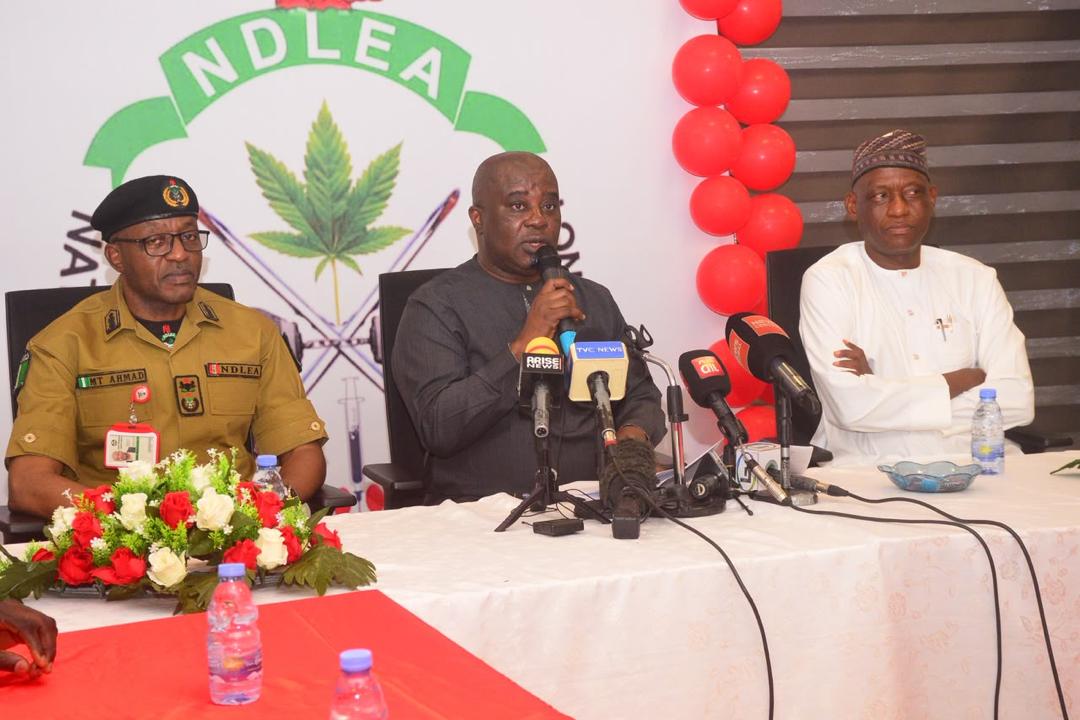
NDLEA Arrests Another Mexican Drug Kingpin, Dismantles Ebonyi Meth Lab
…Marwa vows Nigeria will not become safe haven for transnational cartels
By: Michael Mike
The National Drug Law Enforcement Agency (NDLEA) has arrested a Mexican methamphetamine kingpin attempting to flee Nigeria and dismantled another industrial-scale clandestine laboratory, exposing an expanding international network seeking to establish drug production facilities in the country’s forests and rural communities.
The suspect, identified as 56-year-old Arturo Carrera Loaiza, was arrested by NDLEA operatives on August 19, 2026, while attempting to leave Nigeria through the Lagos airport.
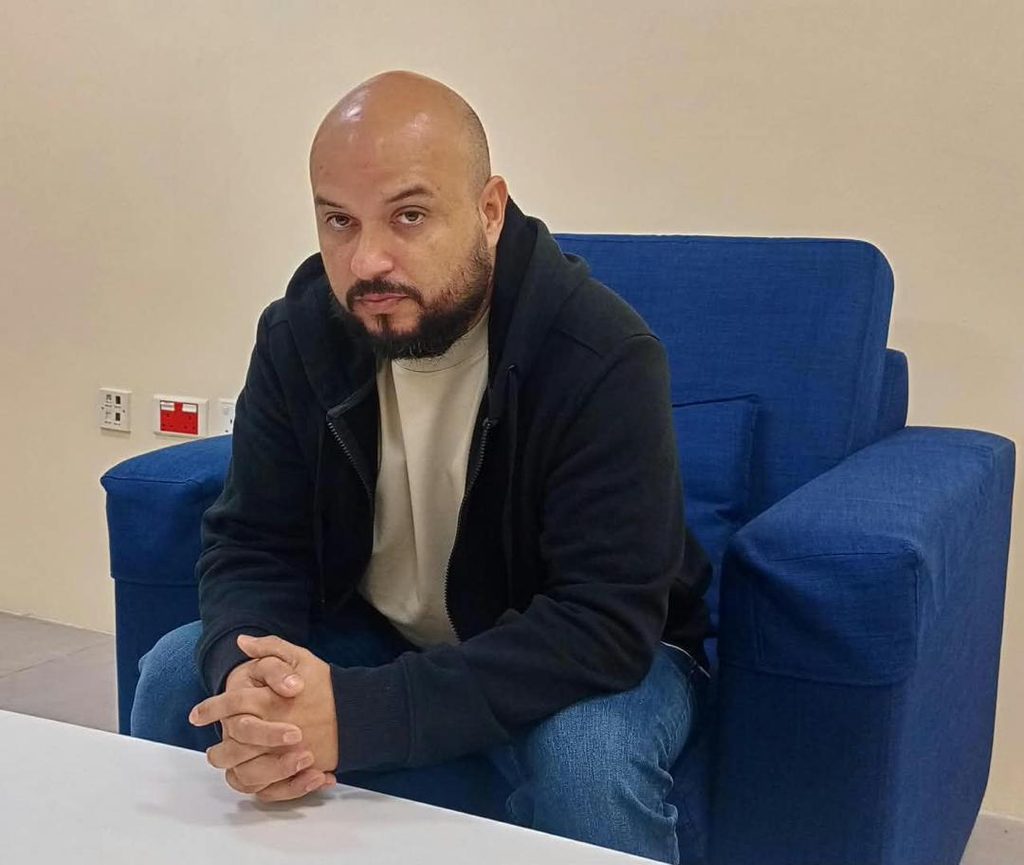
According to The breakthrough followed a painstaking investigation into a network linked to methamphetamine laboratories uncovered in Ogun and Oyo states, which subsequently led investigators to a property in Ebonyi State where laboratory equipment and precursor chemicals were allegedly moved under cover of darkness.
Briefing journalists in Lagos on Tuesday, NDLEA Chairman and Chief Executive Officer, Brig. Gen. Buba Marwa (retd.), represented by the Director of Media and Advocacy, Femi Babafemi, said the latest operation demonstrated the agency’s growing intelligence and forensic capacity to dismantle sophisticated transnational drug syndicates.
Marwa said the arrest of Loaiza and the dismantling of the Ebonyi facility came after operatives established that a Mexican methamphetamine expert arrested at a forest laboratory in Oyo State had been recruited into Nigeria by the kingpin.
The NDLEA had earlier arrested three Mexican nationals and seven Nigerian collaborators at a forest hideout in Ogun State on May 16. On June 17, operatives also arrested another Mexican national and four Nigerian collaborators at a clandestine methamphetamine laboratory concealed in a forested area of Tapa village, Ibarapa North Local Government Area of Oyo State.
Investigations by the agency’s Special Operations Unit (SOU) into the Oyo operation led to the identification of Loaiza as the alleged recruiter of the Mexican national arrested at the forest laboratory.
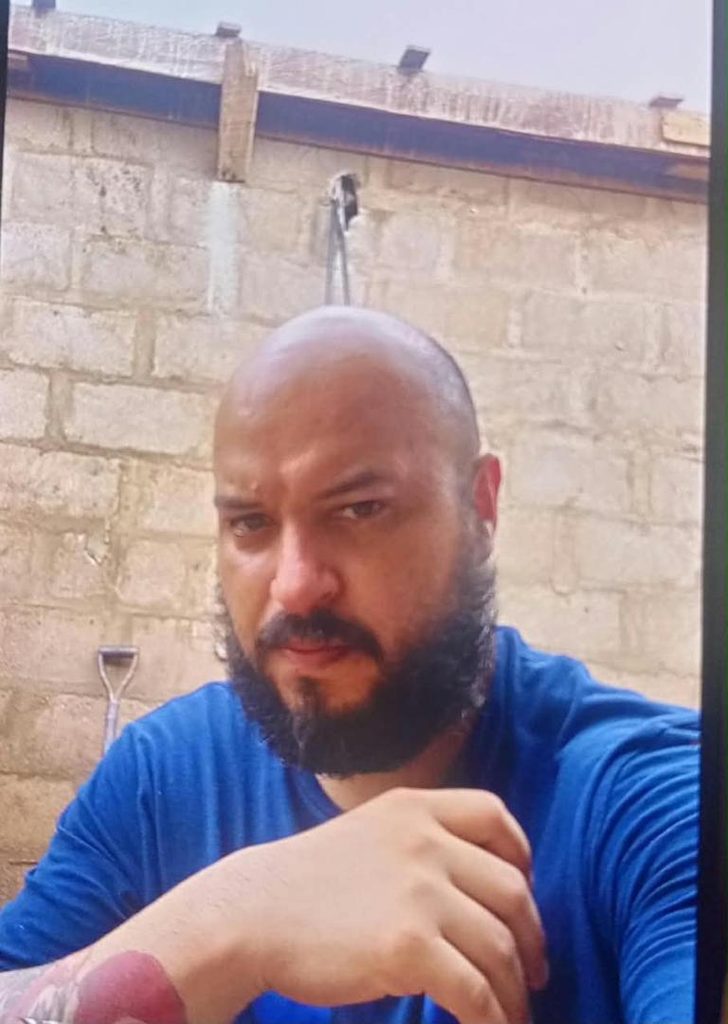
According to the agency, the suspect positively identified Loaiza from a photograph obtained by investigators working with international partners. Intelligence also showed that Loaiza entered Nigeria on June 10 alongside another Mexican national, Jose Ceballos Perez.
Although Loaiza allegedly claimed during interrogation that he had been invited into Nigeria by a Nigerian contact known only as “Henry” for a restaurant business venture, the NDLEA said forensic evidence contradicted his account.
Investigators reportedly recovered images of Loaiza wearing a blue laboratory coat and standing amid equipment consistent with methamphetamine production. Location metadata embedded in the images led operatives to a property under construction at Isiata Ugoni Okposi, Ebonyi State.
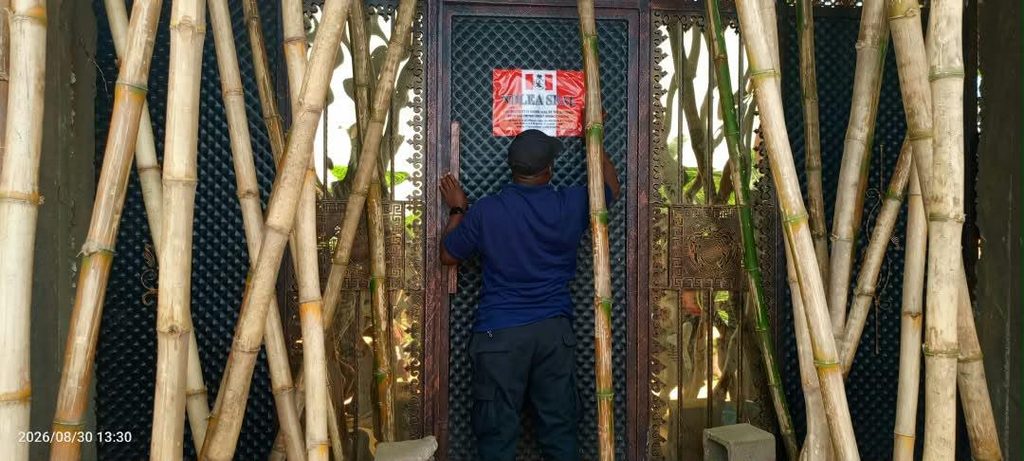
A raid on the property on August 30, linked to one John Okike, uncovered evidence suggesting that a temporary structure had been erected over the septic tank area at the rear of the building. Interviews with the site engineer and caretaker also revealed persistent strong chemical odours emanating from the premises.
Babafemi said that the investigation took a decisive turn after operatives recovered a CCTV memory card from the property. Forensic analysis allegedly showed a foreign national in a blue laboratory coat matching Loaiza’s image, as well as repeated appearances by Okike.
He revealed that the footage also captured, at about 9 p.m. on August 21, the movement of chemicals and laboratory equipment from the property, with Okike allegedly directing the operation alongside other persons assisting in the relocation.
The spokesman said acting on intelligence from a confidential source, NDLEA operatives traced the relocated materials to an isolated house in a neighbouring community, allegedly under the custody of one Nwanja Obasi.
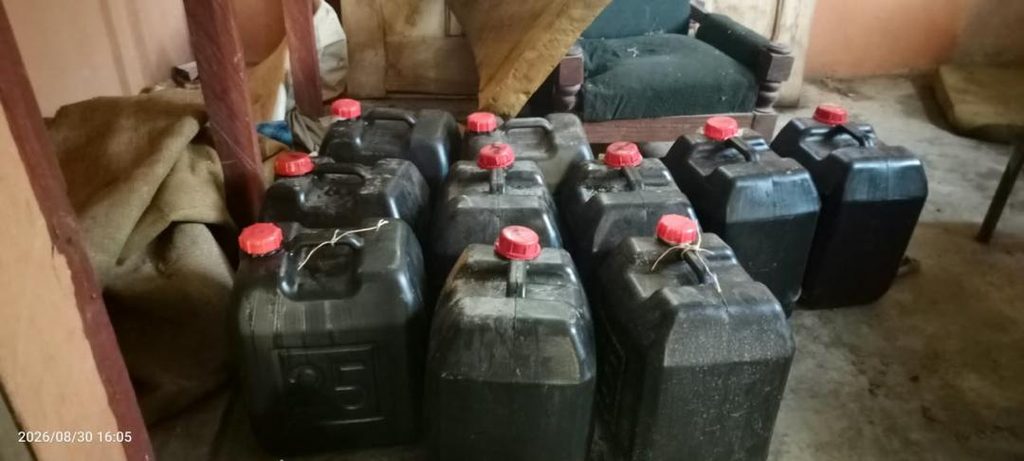
He said the raid on the location led to the recovery of a substantial cache of methamphetamine-related chemicals, equipment and paraphernalia, including a dehydrator containing a white cloth sieve embedded with loose methamphetamine and three additional empty dehydrators.
The agency also recovered 442.8 kilogrammes of acetone, 37.1 kilogrammes of toluene, a 20-kilogramme mixture of acetone and bromobenzene, 1.7 kilogrammes of ethanol, 5.1 kilogrammes of chloride salt, 31.5 kilogrammes of hydrochloric acid, 200 kilogrammes of P2B and one kilogramme of tartaric acid.
Other items recovered included condensing units, a condenser head, a condenser, a fabricated reaction pot, an access pump, weighing scales, mixers, drums, gas burners, gloves and a blue laboratory coat matching the one recovered at the Okike property.
The NDLEA said the recovery, when considered alongside the CCTV footage, forensic findings and eyewitness accounts, had significantly strengthened the case against persons linked to the network.
Issuing a stern warning to international drug cartels, Marwa said Nigeria would not be allowed to become a base for criminal syndicates seeking to relocate their laboratories from other jurisdictions.
“Let me be unequivocal, Nigeria will not be allowed to become a haven for transnational drug cartels seeking to relocate their laboratories from other jurisdictions into our forests and rural communities,” he said.
According to him, the arrest of Loaiza and the dismantling of the Ebonyi facility, coming shortly after the Ogun and Oyo operations, showed that the agency’s intelligence and forensic capabilities were capable of matching the sophistication of international drug syndicates.
Marwa commended officers of the Special Operations Unit, Strike Force, Forensics and the Oyo, Ogun and Ebonyi State Commands for their diligence, professionalism and courage.
He vowed that the agency would continue to pursue every lead until the full network, including its financiers and local enablers, was brought to justice.
The NDLEA also urged Nigerians, particularly residents of rural and forested communities, to report suspicious activities, unusual chemical odours and unfamiliar structures through its toll-free line, 080010203040, or by email at info@ndlea.gov.ng.
NDLEA Arrests Another Mexican Drug Kingpin, Dismantles Ebonyi Meth Lab
MACBAN condemns killing of travellers in Plateau, warns against unverified allegations
By: Zagazola Makama
The Miyetti Allah Cattle Breeders Association of Nigeria (MACBAN), Plateau State Chapter, has condemned the killing of travellers in Jos South Local Government Area of the state, describing the incident as senseless and unacceptable.
The association also warned against what it described as the growing practice of blaming the Fulani community for violent incidents without credible evidence or the conclusion of investigations by security agencies.
In a statement signed by its Plateau State Chairman, Alh. Ibrahim Yusuf Babayo, MACBAN expressed condolences to the families of those killed and prayed for the speedy recovery of those injured in the attack.
The association said the loss of innocent lives was deeply disturbing and urged security agencies to conduct a thorough, professional and impartial investigation to identify the perpetrators and bring them to justice.
MACBAN said it was particularly concerned about what it described as premature accusations against the Fulani community, warning that such claims could further inflame tensions in the state.
“There is no basis for anyone to attribute this unfortunate incident to the Fulani community without evidence,” the association said.
It urged members of the public to avoid spreading unverified information, false accusations and hate speech capable of escalating the situation.
The association further called on anyone deliberately circulating false information or defamatory allegations against the Fulani community to desist, warning that such actions could attract legal consequences.
MACBAN reaffirmed its commitment to peaceful coexistence and cooperation with security agencies, urging residents to remain calm and allow authorities to complete their investigations without interference.
The statement comes amid heightened concerns over attacks on travellers and renewed tensions between communities in Plateau State.
MACBAN condemns killing of travellers in Plateau, warns against unverified allegations

UMTH: Prof. Ahmed Ahidjo, Eight (8) Years of Productive Leadership

Climate Crisis Threatens Human Rights, Development Gains — Danish Expert, NHRC Warn

NDLEA Arrests Another Mexican Drug Kingpin, Dismantles Ebonyi Meth Lab

Roger Federer’s Shock as DNA Results Reveal Myla and Charlene Are Not His Biological Children

THE PLIGHT OF FARIDA

FAILED COUP IN BURKINA FASO: HOW TRAORÉ NARROWLY ESCAPED ASSASSINATION PLOT AMID FOREIGN INTERFERENCE CLAIMS
-
 News3 years ago
Roger Federer’s Shock as DNA Results Reveal Myla and Charlene Are Not His Biological Children
-
Opinions5 years ago
THE PLIGHT OF FARIDA
-
 News1 year ago
FAILED COUP IN BURKINA FASO: HOW TRAORÉ NARROWLY ESCAPED ASSASSINATION PLOT AMID FOREIGN INTERFERENCE CLAIMS
-

 News2 years ago
EYN: Rev. Billi, Distortion of History, and The Living Tamarind Tree
-
 Opinions5 years ago
POLICE CHARGE ROOMS, A MINTING PRESS
-

 ACADEMICS3 years ago
A History of Biu” (2015) and The Lingering Bura-Pabir Question (1)
-

 Columns3 years ago
Army University Biu: There is certain interest, but certainly not from Borno.
-

 Politics1 year ago
2027: Why Hon. Midala Balami Must Go, as Youths in Hawul and Asikira/Uba Federal Constituency Reject ₦500,000 as Sallah Gift
