
International
Zelensky vs Trump: When Character And Ego Stretched Diplomacy Beyond Elastic Limit

Zelensky vs Trump: When Character And Ego Stretched Diplomacy Beyond Elastic Limit
By: A. G. Abubakar
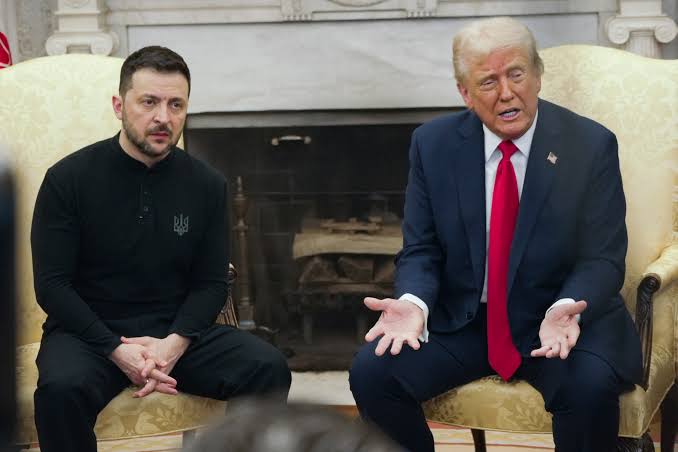
The altercations were as hot as they were undiplomatic. The setting? The Oval Office of the White House, the seat of the US government. The combatants were Presidents Donald Trump of the US and Volodymyr Zelensky of Ukraine. The contention? Trump, trying to stampede Zelensky into commiting to a ceasefire process that Zelensky considered injurious to his nation’s national interest. Trump had wanted the Ukrainian leader to enter into a deal that would give the US the mining right over Ukraine’s rare earth minerals which include lithium, as a repayment of the billions of dollars worth of weapons the US supplied to Ukraine. Zelensky didn’t object to the arrangement but had wanted the agreement to be equitable and also backed by a security guarantee to forestall future Russia invasion.
In the wake of the 2022 full invasion of Ukraine by its neighbouring Russia, the country sought and secured military support of the US that has been allegedly valued by Trump to be worth $350 billion (still counting) under the erswhile President Biden. Trump, who inherited the three-year conflict, bragged and vowed to end the war on his first day in office, as he prides himself the best deal-maker the world has ever seen.
Two months down the line, the war still rages on. A development the self-styled global “peace maker” found difficult to come to terms with, making him to act in desperation. Maybe just to redeem his self-ascribed ability as a negotiator extraordinaire. Narcissist Trump considers himself, the best thing that ever happened to humanity after the invention of sliced bread! It was this inflated ego that Zelensky got bruised and deflated by not submitting to his proposed “deal” on the mineral right so long as it will not include guarantee from future Russian attacks. This set the tune for the heated exchanges that was to follow. In Trump’s corner during the formal dialogue was JD Vance his Vice President and hype-man. Now a recap.
The first trigger was pulled by Vance. He went on the offensive by accusing Zelensky of coming “to the Oval Office of the United States of America and attack the administration that is trying to prevent the destruction of your country.”
Zelensky; “A lot of questions, let’s start from the beginning. First of all during the war, everybody has problems, even you. But you have a nice ocean and don’t feel it now, but you will feel it in the future. God bless, you know.”
Trump; “Don’t tell us what we are going to feel…..you are not in a good position. You don’t have the cards right now. With us, you start having cards.”
Zelensky; “I am not playing cards.”
Trump; “You are gambling with World War III. And what you are doing is very disrespectful to the country, this country that’s backed you.”
He continued, ” You are not winning this. We gave you through this st-pid president $350 billion….If you didn’t have our military equipment, this war would have been over in two weeks.”
Zelensky, (sarcastically); “In three days, I heard it from Putin,” insinuating that Trump was doing Putin’s bidding.
In frustration, Trump ended by saying, “it’s going to be a very difficult thing to do business like this again. And the curtain falls. Trump left sulking and looking furlon. His rough rider approach to diplomacy has failed him. The power balance may be stack against Ukraine a nation of 38 million souls which is about the size of America’s state of California (38.8m), but Zelensky stood on a higher moral ground; a security guarantee for his people.
Wonders shall never end. For Trump of all people to admonish someone against triggering a WW III is really intriguing. For, it was Trump, in pursuit of his isolationist agenda that started the dismemberment of global order by breaking every fabric of rule and regulation, aside pulling the US out of many of the international organisations that sought to promote universal values and unity. Trump’s attitude during the engagement really speaks to his inconsistent mindset. Another takeaway from the encounter was that Trump usually coils back when his victims fight back in equal measure. A trait, other world leaders should leverage on when it comes to engaging with the American President. The strategy is, never give him an inch!
The bully in Trump couldn’t work against Zelensky. The “art of negotiation” failed him, too. In the end planned mineral mining deal could not be signed as well. Americans and indeed the whole world were left in shock at how empty and shallow President Trump turned out to be. A dejavu of his political campaign times.The mediocrity and poor application of “power” in diplomacy by the American president should be a cause for global worry. Trump, phase two, is “bad market” in Nigerian a parlance.
The build-up to the Oval Office showdown wasn’t less checkered either. Trump had wanted to pull a first one on Ukraine and its European sympathisers. He arranged a “peace” meeting to find a solution to the Ukraine-Russia crisis but without Kyiv’s participation. Naturally, Ukraine felt sidelined and dully said so. The EU lent its voice by saying that next time, there should be “no talk about Ukraine/Europe, without Europe/Ukraine.” Trump got livid and called Zelensky a dictator, who may soon have “no country” left.
He accused the EU of being ineffective, even though the region has been behind the major global wars in history. Zelensky shot back by saying Trump was living in “disinformation space.” That was the forerunner to the ill-fated diplomatic talks that were meant to find peace between Russia and Ukraine, under Trump’s brokerage. The current bad blood may also not be unconnected with infamous call between the two in 2019 which led to Trump’s impeachment inquiry. The import of callwas for Zelenskyl to provide an incriminating expose’ on alleged criminal bussiness dealings of Biden’s son Hunter, in Ukraine, which he refused. That was during the build-up to the 2019 elections in which Trump lost. He never forgave Zelensky.
Racism and institutional discrimination brought Trump back to power after a four-year hiatus. It’s however, unlikely that the same primordial sentiments could keep him comfortably in the driver’s seat. Not when his flawed character kept kicking in at every step of the governance way. Trump is a man in search of validation; an unsure character, and a pretender who suffers a reverse inferior complex.
Trump wants to be seen as an intellectual even when he comes across as less than average, intellectually. He wants to go down in history as a great ruler, forgetting that greatness is not measured in tantrums. Great leaders are those who do ordinary things in an extraordinary way with the greatest sustainable impact on society. Many may argue that Trump as a successful businessman, has been more than primed for the role of a political leadership. In reality, except for few overlapping elements, the ability to build a business empire is not a substitute for political craftsmanship. The values, sentiments, expectations etc characterising the two terrains are poles apart. One may handle business “solo,” but success in politics needs team spirit.
Trump is not a team player, unlike the great world leaders he has been posturing for a seat among. He visualises himself in mold of great American and indeed world leaders such as Lincoln, Roosevelt, Kennedy, Reagan, Churchill, Thatcher, etc. Unfortunately, he lacks the philosophical depths, moral values, and emotional intelligence to achieve such an ambition.
Trump is a lover of politics, but he seems to be a conflicted student of the process. He often confuses two major concepts of politics, which are power and influence and the interplay of the two. Power, literally is the ability/capacity to force an action to be taken willingly or otherwise. Influence, on the other hand, has to do more with persuation and appeal. The application of either or a combination of both is a function of the situation at hand; contextual. While political actors seek to spread their influence at all time, they use power sparingly to enforce compliance.
For Trump, its all about raw power all the time. Maybe because of his background in a family business that was built on sole proprietorship where they could lock out other races from being part thereof. A situation where one person’s words are law with little direct check and balance; a free rein that has put his public service life in jeopardy. For, at the time of being sworn in on January 20th 2025, Trump was convicted on about 34 felony counts. He was also one of two US presidents to be impeached. He might have gotten away with baggage, but his place among American greats, which he strives to achieve, may, after all, turn out to be a mirage.
The deluge of executive orders (EOs) being heeped on Americans daily may prove unwieldy, in facilitating good governance. Trump signed about 26 EOs on day one of being sworn on. About six weeks later, the number has surpassed 75! This has put a lot of departments in confusion, as some of the orders are conflicting. His drive for efficiency in public service through the Department of Government Efficiency (DOGE) with hot-headed merverick, South Africa born Elon Musk, in charge, only added to the confusion. Musk, the world’s richest man who made his fortunes from ICT, treats government employees as AI-driven beings, prompting the Department of Justice (DOJ) to put a hold on some of the orders.
The worst hit groups have been the minorities and immigrants. Spurred by racist sentiments, Trump and Musk are poised to eliminate minority programmes such as the DEI (diversity, equity, and inclusion). Even those already in employment are not safe. Trump being an unrepentant or rather unrepentable racist bigot, blamed the unfortunate crash involving two aircrafts over the Potomac River near Washington on the presence of minorities in the aviation industry. Not done, Trump fired Gen. CQ Brown, one of only two people in history, of black extraction to serve as Chairman, Joint Chiefs of Staff of the US forces. The other was the late Collin Powell who served under Bush. Brown’s crime was that, he might have been appointed to the position based on qouta. And the witch hunt goes on or so it seems. He however deserves a big salute for outlawing LGBTQ+, a moral perversion promoted by Obama and Biden governments.
The American foreign policy under Trump too, seems to be in a mess. The isolationist approach (America First, Make America Great Again) seems to be in direct contrast to a fast globalising world. Globalisation underpinned by interdependence through trade, finance, investment, and technology had turned the world into a “global village.” And the village administrator (s) include the US, China, and Russia.
The Trump policy of isolationism at best benefits the other two global claimants to the Super power space. Pulling out of such multilateral organisations like ICC, UNESCO, Paris Agreement on cl
Climate Change, Iran Nuclear Deal, WHO, etc great hegemony for global power contenders, that may hurt America’s future. The icing on the foreign blunder was the right/downsizing the operations of USAID, an international outreach involved in promoting America’s national interests using such clandestine operations like intelligence gathering as well as supporting non-state actors against adversaries.
Tariff has been a priority choice for Trump’s foreign economic policy components. After placing a 25% rate on its immediate neighbours, Mexico and Canada, he has placed between 15% and 20% rates on Chinese import. The countries concerned have reacted similarly. A tariff war is now on. Experts estimate that the new tariffs could add $172 in tax burden on the individual US household and also reduce the US GDP by $200 billion, eventually. A global trade war is an ill wind that blows no good to any country.
To compound the US foreign policy further, Trump came up with a bizarre territorial ambitions. He offered to purchase the Greenland from Finland and also expressed his desire to make Canada, America’s 51st state. He threatened to repossesse the Panama Canal because in his informed opinion the Chinese have taken ever the canal usage.
Another foreign policy blunder under Trump was his proposal to move the 2.5 million inhabitants of Gaza to neighbouring Egypt and Jordan for America to turn the strip into what he referred to as the Riveira of the Middle East. He naively believes that this arrangement would solve the Palestine- Israel perennial conflicts permanently. The Biden administration might not have done much for the Palestinians but supplanting them from Gaza is to take absurdity to the extreme. Not done, and probably acting out an Elon Musk script, Trump accused the South Africa government anti-white discrimination under it’s land redistribution programme. All the moves were pushed back in no uncertain terms across the globe.
.Put together, Trump seems to suffer from a challenged mindset that does not allow him to act according to his age and status. The plethora of crisis he creates both at home and abroad render him more as a psychopath. A big thank you to President Zelensky for demystifying the Trump persona. Henceforth, leaders across the world should stand with him toe to toe because that’s the only language he understands. He recoils under threat. Under the image of a tough guy, Trump is highly vulnerable to manipulation such as currently by Putin and Musk. He doesn’t really have a mind of his own when it comes to serious national and international challenges. He lacks focus and gravitas too.
America and indeed the free world has been sold a trojan house. Unfortunately they will have to live with the choice for the next four years. A price they have to pay for having a near 80 years bumkum on the White House, who too may not be enjoying the power so gotten by him. A case of “beauty can get a woman married, but it takes character and intuition to make the marriage a happy one.” So is national leadership.
A.G.Abubakar agbarewa@gmail.com
Zelensky vs Trump: When Character And Ego Stretched Diplomacy Beyond Elastic Limit


International
Akande Presents Credentials to Swedish King, Sets Stage for Stronger Nigeria-Sweden Ties
Akande Presents Credentials to Swedish King, Sets Stage for Stronger Nigeria-Sweden Ties
By: Michael Mike
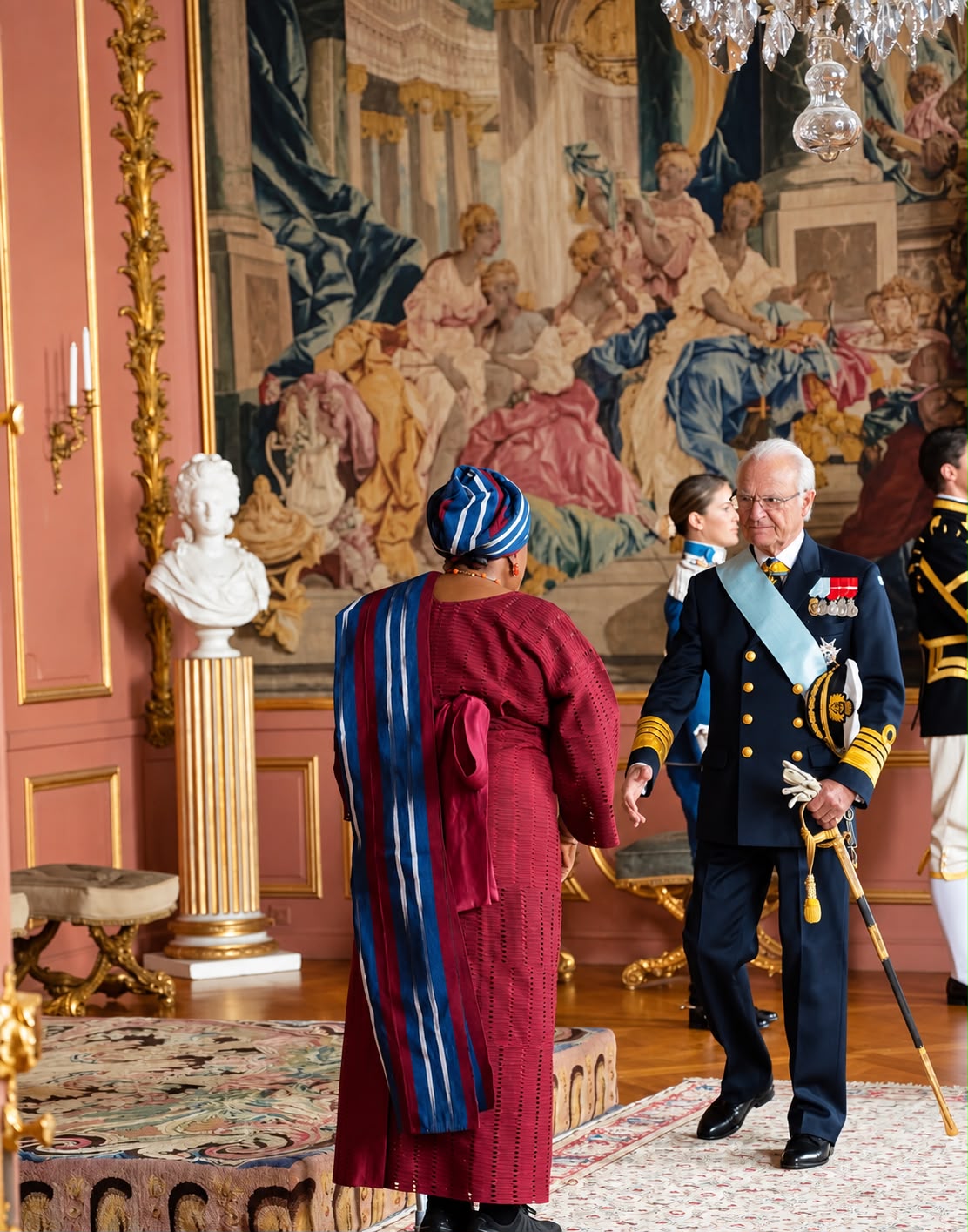
Nigeria’s Ambassador to Sweden, Lola Akande, has formally assumed her diplomatic responsibilities in the Scandinavian country, presenting her Letters of Credence to King Carl XVI Gustaf at the Royal Palace in Stockholm.
The ceremony, held on Wednesday, marked the formal accreditation of Akande as Nigeria’s representative to the Kingdom of Sweden and opened a new phase in bilateral engagement between the two countries.
Akande was accorded ceremonial honours, including a corps marshal and formal procession, in keeping with Sweden’s diplomatic traditions, before presenting her credentials to the Swedish monarch.

The presentation of Letters of Credence is a key diplomatic procedure through which a receiving state formally recognises an ambassador as the accredited representative of the sending country.
Following the ceremony, a reception was held in Akande’s honour at the Nigerian House in Stockholm, bringing together members of the diplomatic community, government officials, business leaders and Nigerians resident in Sweden.
Those in attendance included ambassadors and members of the African diplomatic corps, officials of the Swedish Ministry for Foreign Affairs, members of the Corps of African Women Ambassadors, Swedish nationals, representatives of the Swedish business community and other invited guests.
The reception provided an opportunity to celebrate the ambassador’s accreditation and highlight the longstanding relationship between Nigeria and Sweden, as well as opportunities to deepen cooperation.
Areas identified for enhanced engagement include trade and investment, innovation, cultural exchange and people-to-people relations.
Akande’s formal accreditation comes as both countries continue to explore avenues for strengthening bilateral ties, with expectations that her tenure will promote closer engagement between Nigerian and Swedish institutions, businesses and communities.
The development also signals renewed diplomatic attention to the Nigerian community in Sweden and the broader prospects for expanding cooperation between Africa’s most populous country and the Nordic nation.
Akande Presents Credentials to Swedish King, Sets Stage for Stronger Nigeria-Sweden Ties
NIS enrols 2,296 Nigerians in first week of UK passport intervention
By: Michael Mike
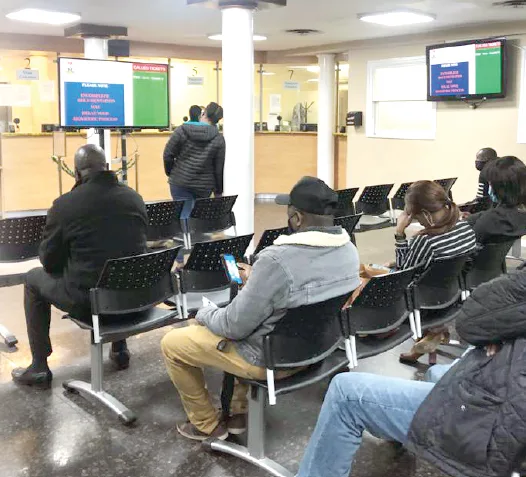
The Nigeria Immigration Service (NIS) has enrolled 2,296 applicants in the first six operational days of its Special Passport Intervention Exercise in the United Kingdom, with the Manchester Centre recording the higher number of enrolments.
The exercise, which commenced on September 7, 2026, recorded 1,709 applicants at the Manchester Centre and 587 at the London Centre, as Nigerians with confirmed appointments continued to turn out for passport services.
Daily enrolment figures across the two centres stood at 245 on September 7, 401 on September 8, 396 on September 9, 429 on September 10, 406 on September 11 and 419 on September 12.
The Service said the sustained turnout reflected steady progress in the processing of applicants with confirmed appointments, adding that passport production and dispatch for those already enrolled had commenced and were progressing steadily.
As part of efforts to ensure effective oversight and quality service delivery, the Comptroller-General of the NIS, Kemi Nanna Nandap, undertook working visits to the intervention centres in Manchester and London.
The visits, according to the Service, were aimed at assessing the exercise firsthand, engaging with members of the Nigerian community and ensuring that the intervention provided efficient, responsive and seamless passport services to applicants.
The NIS said the exercise would continue at both centres, assuring applicants with confirmed intervention appointments of service.
The Service said it appreciates members of the Nigerian community in the UK for their patience, understanding and cooperation, urging all applicants to continue working with officials on the ground to ensure the smooth and efficient delivery of the intervention.
NIS enrols 2,296 Nigerians in first week of UK passport intervention
China’s $2.3bn Nigerian Buy-Up: Beijing Opens Bigger Market for Abuja
By: Michael Mike
Nigeria may be on the verge of a major shift in its trade relationship with China as the Asian economic giant imported almost $2.3 billion worth of Nigerian goods in just six months, marking an almost 80 per cent increase over the same period in 2025.
The sharp rise, disclosed by the Chargé d’Affaires of the Chinese Embassy in Nigeria, Zhou Hongyou,on Thursday in Abuja, comes as total trade between both countries surged by 75 per cent year-on-year to $18 billion.

The figures are significant for Nigeria, which has long struggled to translate its enormous agricultural, mineral and manufacturing potential into sustained export earnings.
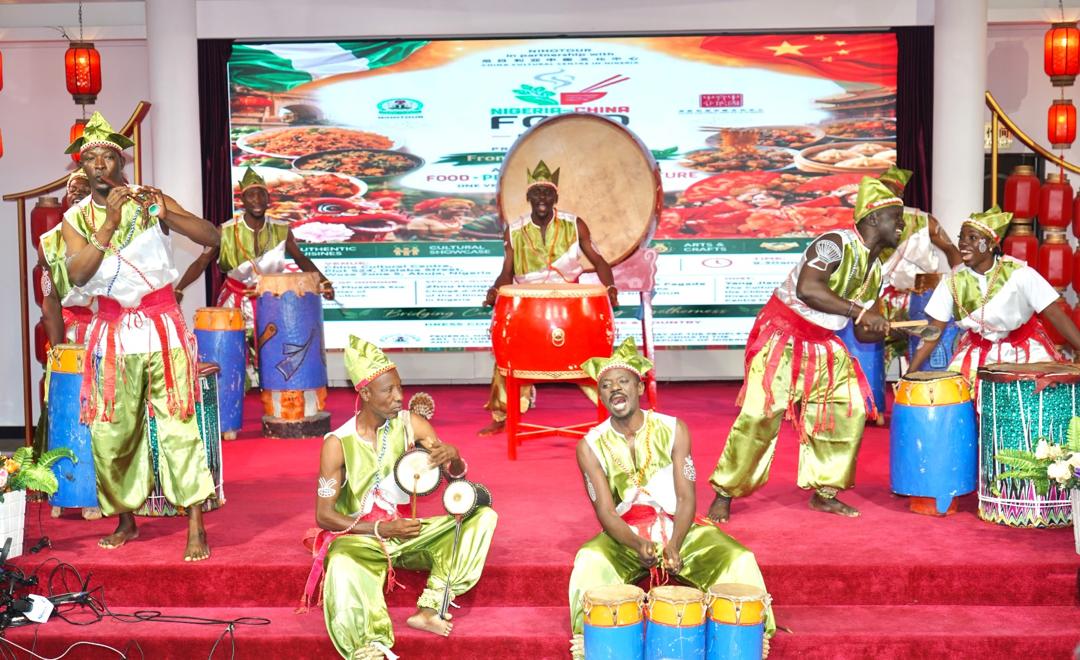
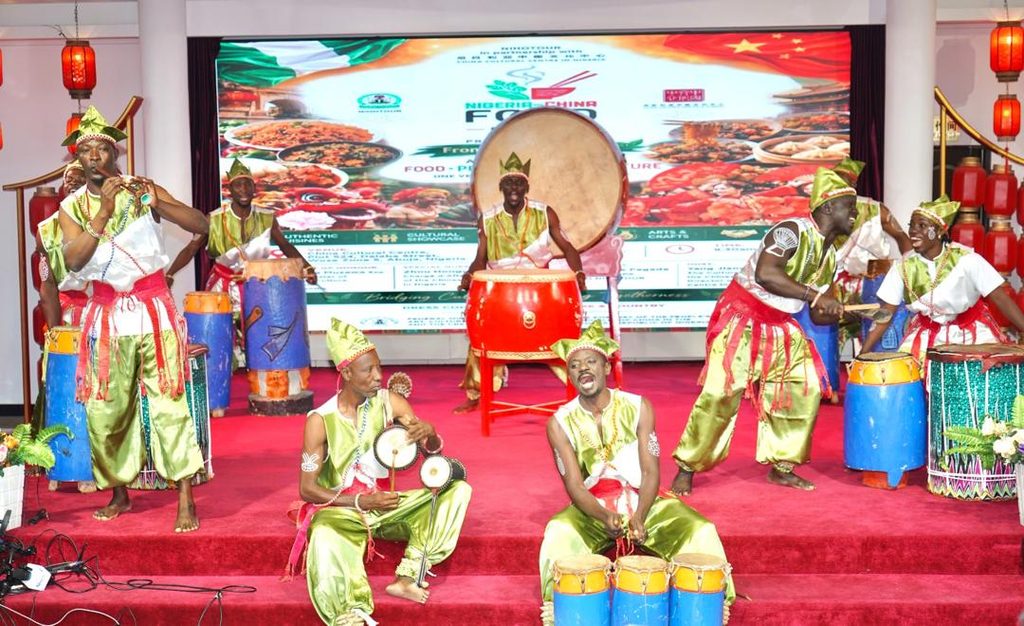
Zhou, speaking at the Nigeria-China Food Festival at the China Cultural Centre, said Beijing’s zero-tariff policy for African countries with diplomatic relations with China presented Nigeria with an opportunity to dramatically expand its exports to the Chinese market.
“This is a great chance for Nigeria to expand exports to China,” the diplomat declared.
The statement effectively puts the spotlight on Nigeria’s ability to exploit preferential access to one of the world’s biggest consumer markets at a time when the Federal Government is under pressure to increase non-oil exports, generate foreign exchange and create jobs through expanded domestic production.
The nearly $2.3 billion already purchased by China from Nigeria in the first half of the year suggests that demand exists. The bigger question, however, is whether Nigerian producers can scale up production, meet international standards and consistently supply the Chinese market.
The latest development also gives fresh significance to efforts to diversify Nigeria’s trade beyond crude oil.
For decades, Nigeria’s export earnings have been heavily dependent on petroleum, while China has emerged as one of Nigeria’s most important trading partners. The latest figures indicate that the relationship is expanding beyond the traditional pattern of trade and could provide a platform for Nigerian agricultural products, processed foods, solid minerals and manufactured goods to gain wider access to China.
Zhou said the growing economic relationship was being matched by increasing cultural and people-to-people exchanges, noting that 2026 marks 55 years of formal diplomatic relations between Nigeria and China.
He urged both countries to deepen cooperation in education, culture, technology, the arts and youth affairs, arguing that stronger people-to-people ties would help sustain the bilateral relationship for future generations.
The Chinese envoy’s remarks came against the backdrop of the Nigeria-China Food Festival, where food was used to demonstrate the potential of cultural exchange and the economic value of Nigeria’s culinary heritage.
Representing the Minister of Arts, Culture, Tourism and the Creative Economy, Hannatu Musawa, the Permanent Secretary, Abdulkarim Ibrahim, said Nigeria’s food industry represented a major economic opportunity, particularly through tourism, hospitality and job creation.
He said food and beverages constituted the largest subsector of Nigeria’s tourism economy and called for greater Nigeria-China collaboration in gastronomy, tourism, hospitality, culinary education and creative entrepreneurship.
The Director-General of the National Institute for Hospitality and Tourism, Aare Abisoye Fagade, said Nigeria’s diverse culinary traditions could be transformed into a globally competitive food-tourism industry if properly packaged, standardised and commercialised.
The event also demonstrated the potential of cultural diplomacy, with Nigerian and Chinese artistes combining traditional Nigerian drums with Chinese percussion instruments.
The National Troupe of Nigeria’s Director-General and Artistic Director/CEO, Hajia Kaltume Bulama Gana, said such collaborations could deepen mutual understanding and open opportunities for Nigerian artistes to perform in China.
Former NIHOTOUR Director-General, Alhaji Munzali Dantata, who studied in Beijing decades ago, also urged stronger cooperation, particularly in education and cultural exchanges.
But beyond the colourful displays of food, music and culture, yesterday’s event highlighted a far bigger economic proposition: Nigeria now has an expanding Chinese market, and the scale of future gains will depend largely on what the country can produce and export.
With Chinese imports from Nigeria already approaching $2.3 billion in six months and bilateral trade reaching $18 billion, the emerging challenge for Abuja is to ensure that the growth translates into more Nigerian-made products, stronger local industries, foreign-exchange earnings and jobs rather than merely higher volumes of trade.
For Nigeria, the opportunity presented by Beijing’s zero-tariff policy could therefore become a test of whether the country can finally convert its vast productive capacity into sustained export power.
China’s $2.3bn Nigerian Buy-Up: Beijing Opens Bigger Market for Abuja

Troops Arrest 15 Suspected Drug Peddlers in Jos Raid

Troops, DIA Team Recover SMG Rifle, Ammunition in Taraba Raid

Troops Recover Two Rustled Cattle After Foiling Attack in Plateau

Roger Federer’s Shock as DNA Results Reveal Myla and Charlene Are Not His Biological Children

THE PLIGHT OF FARIDA

FAILED COUP IN BURKINA FASO: HOW TRAORÉ NARROWLY ESCAPED ASSASSINATION PLOT AMID FOREIGN INTERFERENCE CLAIMS
-
 News3 years ago
Roger Federer’s Shock as DNA Results Reveal Myla and Charlene Are Not His Biological Children
-
Opinions5 years ago
THE PLIGHT OF FARIDA
-
 News1 year ago
FAILED COUP IN BURKINA FASO: HOW TRAORÉ NARROWLY ESCAPED ASSASSINATION PLOT AMID FOREIGN INTERFERENCE CLAIMS
-

 News3 years ago
EYN: Rev. Billi, Distortion of History, and The Living Tamarind Tree
-
 Opinions5 years ago
POLICE CHARGE ROOMS, A MINTING PRESS
-

 ACADEMICS3 years ago
A History of Biu” (2015) and The Lingering Bura-Pabir Question (1)
-

 Columns3 years ago
Army University Biu: There is certain interest, but certainly not from Borno.
-

 Politics1 year ago
2027: Why Hon. Midala Balami Must Go, as Youths in Hawul and Asikira/Uba Federal Constituency Reject ₦500,000 as Sallah Gift
