
News
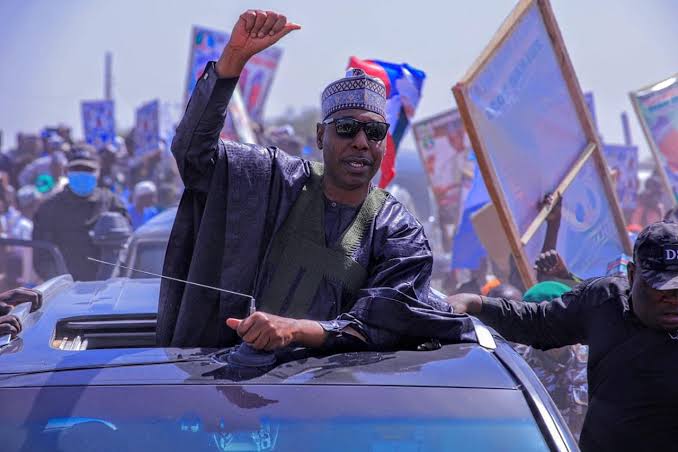
Zulum at Easter: Pray Our Second Term Outperforms First

Zulum at Easter: Pray Our Second Term Outperforms First
By: Our Reporter
Governor Babagana Umara Zulum has felicitated with Christians in Borno State and the rest of Nigeria on the ongoing Easter festival.
Zulum, in his message released by his spokesman, Malam Isa Gusau, urged citizens in Borno State to pray for the full restoration of peace in the state and to also pray that the second term of his administration will be guided by God to deliver on hundreds of infrastructural projects, programmes and policies that will improve living standards in ways that will far surpass what was achieved during the governor’s first term that will soon end on May 29, 2023.
Below is Zulum’s message as quoted in Gusau’s statement:
“On behalf of Borno State Government, I heartily felicitate with our Christian brothers and sisters in Borno and across Nigeria at this Easter season.”
“I urge security agencies to sustain their good efforts in preserving security during the festivities and far beyond.”
“I call on all celebrants to make sacrifices in reaching out to family members, friends, neighbours and other community members who might be in need of help.”
“As we round up our first term, I want to specially request that all the good people of Borno State commit our second term to prayers by devoutly asking God to guide us towards the full restoration of peace, towards the safe resettlement of citizens still displaced, towards the reviving of means of livelihoods across all communities previously affected by insurgents’ destructions and the strengthening of economies in areas less affected by attacks in all senatorial zones.”
“I also seek prayers that God guides us to undertake hundreds of meaningful infrastructural projects, programmes and policies that will fairly impact on all our 27 local government areas.”
“Above all, I seek prayers that God sustains our human efforts to be good leaders whose hearts and minds will remain overwhelmed by the sincerest desire to serve the good people of Borno State.”


Zulum Emerges BusinessDay’s Best Performing Governor SCIRA Award of the Year
By: Our Reporter
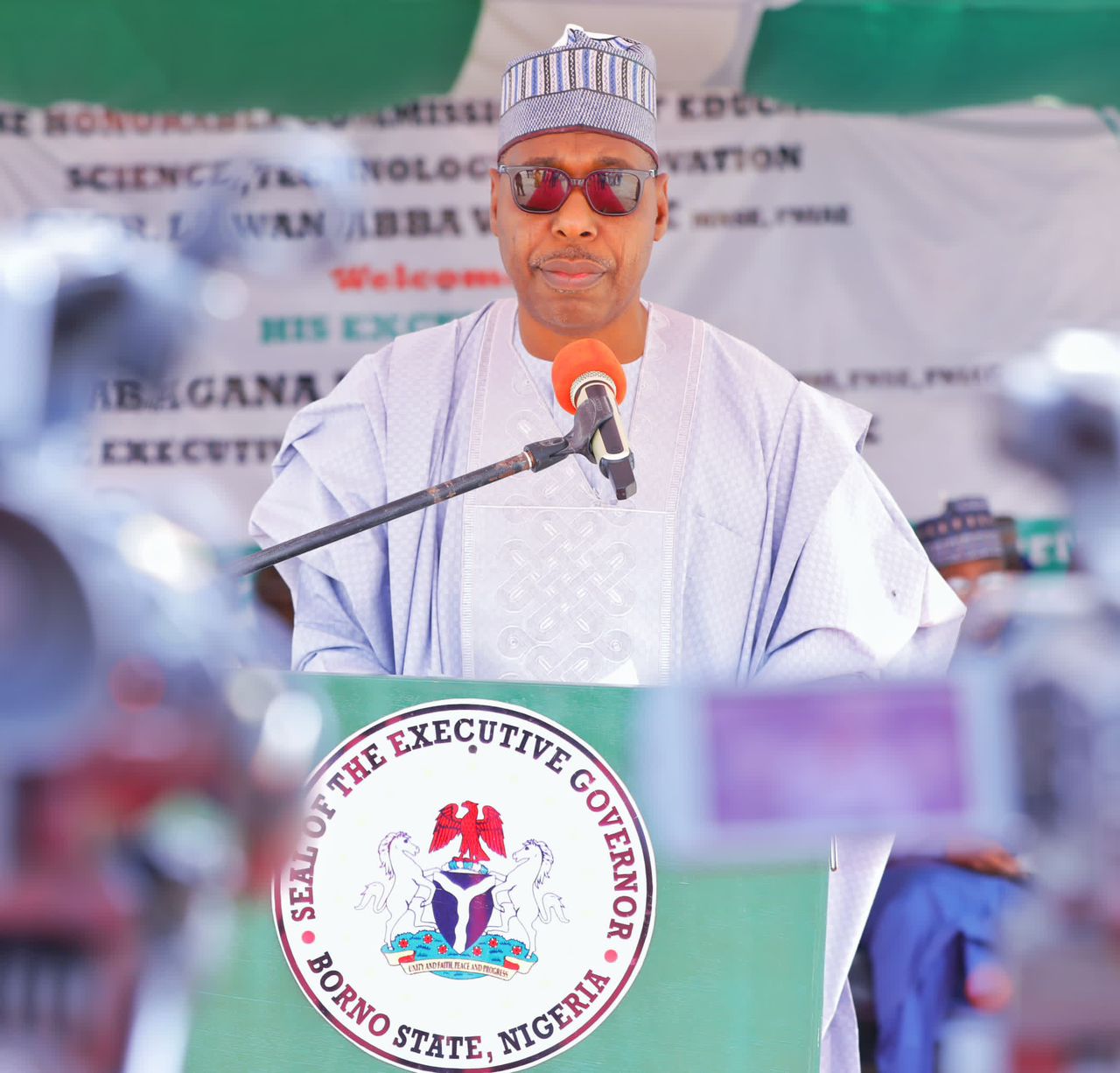
Borno State Governor, Professor Babagana Umara Zulum, has emerged as BusinessDay’s 2025 Governor of the Year on Competitiveness and Investment Readiness Awards (SCIRA) under the category of Infrastructure Competitiveness Category Awards.
The award ceremony is scheduled to be held on Thursday, June 18, 2026, at NAF Conference Center & Suites, Jabi, Abuja.
Zulum’s nomination was contained in a letter by the Publisher/CEO of BusinessDay, Frank Aigbogun, addressed to the Governor.
“On behalf of BusinessDay Media Limited, Nigeria’s foremost business and economic intelligence platform, we are honoured to inform you that Borno State has been nominated for ‘Best Performing Governor’ under the Infrastructure Competitiveness Category for the 2025 States Competitiveness/Investment Readiness Awards (SCIRA),” Aigbogun said.
According to him, Governor Zulum’s nomination acknowledges his administration’s extraordinary strides in rebuilding infrastructure, reviving moribund industries, and restoring livelihoods as part of Borno’s long-term post-conflict recovery.
“Your Excellency, few states embody the spirit of renewal as Borno does. Against the backdrop of a decade-long insurgency, your government has delivered one of Nigeria’s most ambitious reconstruction and reintegration programmes, with infrastructure as its anchor,” he added.
Highlights of this transformation include:
Revival of Industrial Assets: The Borno Plastic Industry and Borno Meat Processing Company, once abandoned, have been progressively rehabilitated, signaling a return of productive capacity and investor confidence.
Industrial Hub Redevelopment: Through the Borno State Industrial Park and Enterprise Centre (BIP), over 2,000 SMEs now operate in structured facilities that provide power, workspace, and logistics support.
Infrastructure-led Recovery: Over 10,000 houses have been reconstructed across local government areas, enabling market access and trade linkages among Maiduguri, Biu, Monguno, and Gwoza.
Energy & Industrial Power Supply: The Maiduguri 50MW Gas Plant and collaboration with the Rural Electrification Agency (REA) have significantly enhanced industrial energy reliability.
Mr Aigbogun said these efforts have repositioned Borno as a credible destination for post-conflict
industrial reinvestment that combines human development with economic diversification.
“Borno’s shortlisting was derived from the BusinessDay Research & Intelligence Unit (BRIU) and BudgIT State Competitiveness Model (2025), using a Composite Infrastructure Competitiveness Index (CICI) based on three weighted dimensions,”
“Across these parameters, Borno ranked among the top five northern states, with its infrastructure recovery index improving by over 41% between 2020 and 2024.
“In the education and health sectors, construction of over 100 secondary schools, Kashim Ibrahim University Teaching Hospital and Staff quarters, doctors’ quarters, as well as take-off support for Federal Polytechnic Monguno, Federal College Gwoza, School of Nursing and Midwifery in Gwoza and Monguno, and the Orthopedic Hospital Azare, amongst others,” he remarked.
The Publisher acknowledged that Governor Zulum’s administration has rebuilt confidence, reconstruct
and resettled communities, revived industries, education, and healthcare, noting that today Borno stands as a model of post-conflict competitiveness in Africa.
Zulum Emerges BusinessDay’s Best Performing Governor SCIRA Award of the Year

Parliamentarians in Sierra Leone mourn colleague Lucinda Kelly
By: Bodunrin Kayode
Following the distressing announcement of the sudden death of Lucinda Kelly, representing Kono District, of Sierra Leone proceedings in the Parliament empathically came to a halt last week and was adjourned to this week in memory of the late politician.
During their last sitting, opposition leader Abdul Kargbo moved a motion, seconded by Deputy Opposition Leader Aaron Koroma, that all businesses on the Order Paper be suspended for the House be adjourned thereby allowing members to pay a condolence visit to the family of the bereaved.
“The remains of our colleague are currently at the mortuary, and I do not believe we can continue with the Sittings,” Kargbo said solemnly.
Acting Leader of Government Business, Bashiru Silikie joined the Opposition in extending condolences and requested that Acting Speaker Ibrahim Conteh adjourn Sittings to allow Members to mourn the late parliamentarian Lucinda Kelly.
Silikie noted that Kelly would have been present to form a quorum for last week’s Sittings, but death had sadly snatched her away from legislative businesses.
He proposed that the Parliament adjourns until tomorrow Tuesday for further deliberations pending announcement of her interment rites.
Acting Speaker Ibrahim Tawa Conteh then called on the House to observe a moment of silence in honour of the late Kelly.
Lucinda Kelly was an All People’s Congress (APC) Opposition Member of Parliament representing Kono District of the Republic of Sierra Leone.
She was a vocal and formidable debater who took her parliamentary responsibilities of representation, lawmaking, and oversight very seriously.
Parliamentarians in Sierra Leone mourn colleague Lucinda Kelly
Kashim Shettima: Of Betrayal, Power, and Survival.
By: Inuwa Bwala.
“March has returned, and with it the Ides. Beware the men who call you brother.”
Julius Caesar was perhaps Rome’s most trusted general. He crossed the Rubicon for Rome, conquered Gaul for Rome, and pardoned enemies for Rome.
Yet it was neither Gaul nor Pompey: his avowed rivals, that killed him. It was Brutus: his friend, and confidant yet his protégé, who was described as “the noblest Roman of them all.”
Julius Caesar did not slump and died because the daggers were too many, rather, bacause he noticed the person he least expected could betray him amongst those stabbing him: Brutus. In utter shock and disbelief, Caesar slumped, but not before he uttered the word,”And you too Brutus?”.
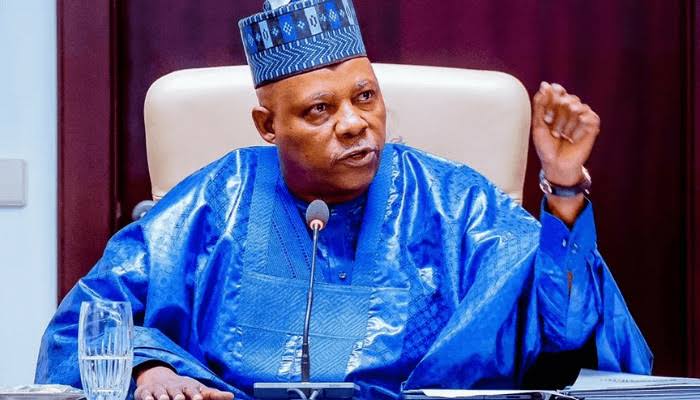
There is no doubt that, Kashim Shettima was Borno’s most tested governor. He walked into boiling areas, when others fled the state. He rebuilt schools bombed by Boko Haram. He chose to stay in Maiduguri when Abuja offered comfort.
As Vice President, he has carried himself as a true statesman abs the face of the Tinubu administration at national and international meets.
He always speaks of “the sanctity of human life” and calked for swifter and total mobilisationagainst terror.
Yet today, whispers from Borno and Abuja suggest the daggers are not in the bush like that of Boko Haram, they are in the hands of his kinsmen, those he hold family meetings and political meetings with.
Those who could read between the line, may be able to tell, when Shettima gave an anecdote at a recent public function, about the visit by his kinsmen to his boss, Bola Ahmed Tinubu, just three months into the life of the administration.
Like Brutus and the conspirators of the Shakespearean fame, who claimed they did not hate Caesar, but loved Rome more, those who visited Tinubu claimed to love Nigeria more and her President, abd not brcause thry hated Shettima.
Brutus in particular played on a so-called republican pride and his fear of tyranny, which he used in convincing himself that betrayal was patriotism. He struck to “save” Rome.
Shettima’s own “Brutuses” use a different script, relying on Shetyima’s perceived ambition and the attendant battle to keep himself in the balance of power as an alibi.
And in the face of contending forces, they recruited people to plsy out the cards, while remaining in the shadows. The charges may appear different with that if Caesar, but the intents are same. And while still smarting from the Muslim-Muslim debacle, Shettima had hradly setyled in office when they began to spread rumours of him, being too Borno, not enough to be a northerner. Too ambitious, fetish, independent minded and growing too popular. One thing they could not take away from him though us the fact that Shettima is intelligent, shrewd and a master schemer, which his boss knows too well.
I had cause to warn of this years ago seeing Shettima’s passive refusal to pick between kinsmen in place of statesmen to work with him.
I could see through the plots to denigrate a fine emergent nationalist by linking him with Boko Haram, painting him as fetish, portraying him as a religious and ethinic checkbox, all in a bud to undo him. The weapon when he was govetnor was insurgency, but the weapon now is political naivity and stereotyping . The tactic includes convincing his Kanuri kinsmen to fight him, so that “when Kanuri fights Kanuri, others will win. But beyond that, even his Kanuri brothers seem to have an axe to grind with him.
The painful truth remains, that, Caesar’s killers were senators in the Capitol, but Shettima’s challengers may be his own kinsmen: some of whom, he nentored snd no one can ever convince him that, they could ever work against him. In both cases, the dagger is dipped in familiarity.
It cuts deeper because the hands holding it, are either those he mentored or once broke bread with him.
Caesar died because he ignored omens. Not even Calpurnia, his wife’s dream could deter him. He ignored the soothsayer, and shunned the Senate’s mood, thinking goodwill was a good sheild and armor.
Shettima’s March 2027 is loaded with omens too, arising from fresh attacks by vested interests, intrigues amongst political players, betrayal by kinsmen, espionage by aides and attachees, dissertion by hitherto close allies, manipulations in the media, ethnic or religious profiling, clandestine meetings that without communiqués, but with lethal intents, contending forces in the party who whisper that 2027 needs a “new pairing.” indeed, the ides are here, because a second term is near, and second terms birth daggers.
As governor, perhaps Shettima survived by moving rather faster than conspiracy. He outrun, those who want to either even scores or shake off his dominace, and those people have remained at daggers drawn with him
How Shettima Survives, will definitely be a refrence point in power struggles in Nigeria.
But unlike Caesar who never learnt, Shettima is a good student of Robert Greens 48 Laws of Power, and must have drawn lessons from the falls of others before him.
To survive, Shettima must learn to trust, but audit the Praetorians. Caesar trusted Brutus with his life. Shettima cannot afford blind trust. The INEC database compromise and probe shows how insider access kills. Shettima must do what he did as governor: forensic audits, no sacred cows. As I earlier said, he must have his own policy, which must not be changed simply because some people want to determine its content.
He must learnt to keep the people, his own trusted people, and must not loose, as Caesar lost Rome due to his belief in his personal prowess and capacity. Shettima still owns Borno’s streets and still conttols the larger and more lethal political forces in the North.
He should be able to name the Brutus, but should not become an Antony, whom at Caesar’s funeral sparked civil unrest. Shettima cannot afford chaos. He should have a machinery on ground that will expose the plot, without burning the Forum. He should expedite action in uniting the North, and rally the support of kinsmen, even as a counterforce, or risks allowing the real enemies to win.
Importantly, he should bear in mind, that, the parabolical March is not the end, the ides pass. For Caesar, it ended at Pompey’s statue, but for Shettima, March can end with a stronger alliance. He must do what he told the nation: “We choose light over shadow, and hope over despair”.
The Verdict of History, had
Brutus dying on his own sword, muttering, “Caesar, now be still.” Betrayal did not save the Republic, rather it buried it.
Shettima’s kinsmen face the same choice. They can strike and wait for the verdict of history, or they can sheathe the dagger and remember: the real enemy still sleeps someehere else.
Twelve years ago, I wrote that Shettima’s ides would test Borno. In 2026, I state without fear of contradiction, that, they will test Nigeria.
Caesar ignored the soothsayer because he was in so much hurry. Shettima, as always, may not be in a hurry, but should he decide to, that hurry may yet save him.
Kashim Shettima: Of Betrayal, Power, and Survival.

Mob Sets Tricycle Ablaze After Suspected Phone Snatchers Attack Woman in Jos

FG To Roll Out 10,000 Electric Tricycles To Nigerian Market In August, Says VP Shettima

Zulum Emerges BusinessDay’s Best Performing Governor SCIRA Award of the Year

Roger Federer’s Shock as DNA Results Reveal Myla and Charlene Are Not His Biological Children

THE PLIGHT OF FARIDA

FAILED COUP IN BURKINA FASO: HOW TRAORÉ NARROWLY ESCAPED ASSASSINATION PLOT AMID FOREIGN INTERFERENCE CLAIMS
-
 News2 years ago
Roger Federer’s Shock as DNA Results Reveal Myla and Charlene Are Not His Biological Children
-
Opinions4 years ago
THE PLIGHT OF FARIDA
-
 News1 year ago
FAILED COUP IN BURKINA FASO: HOW TRAORÉ NARROWLY ESCAPED ASSASSINATION PLOT AMID FOREIGN INTERFERENCE CLAIMS
-

 News2 years ago
EYN: Rev. Billi, Distortion of History, and The Living Tamarind Tree
-
 Opinions4 years ago
POLICE CHARGE ROOMS, A MINTING PRESS
-

 ACADEMICS2 years ago
A History of Biu” (2015) and The Lingering Bura-Pabir Question (1)
-

 Columns2 years ago
Army University Biu: There is certain interest, but certainly not from Borno.
-

 Politics1 year ago
2027: Why Hon. Midala Balami Must Go, as Youths in Hawul and Asikira/Uba Federal Constituency Reject ₦500,000 as Sallah Gift
