
News
Zulum begins 100 houses, inspects 2 other projects in Hawul

Zulum begins 100 houses, inspects 2 other projects in Hawul
By: Our Reporter
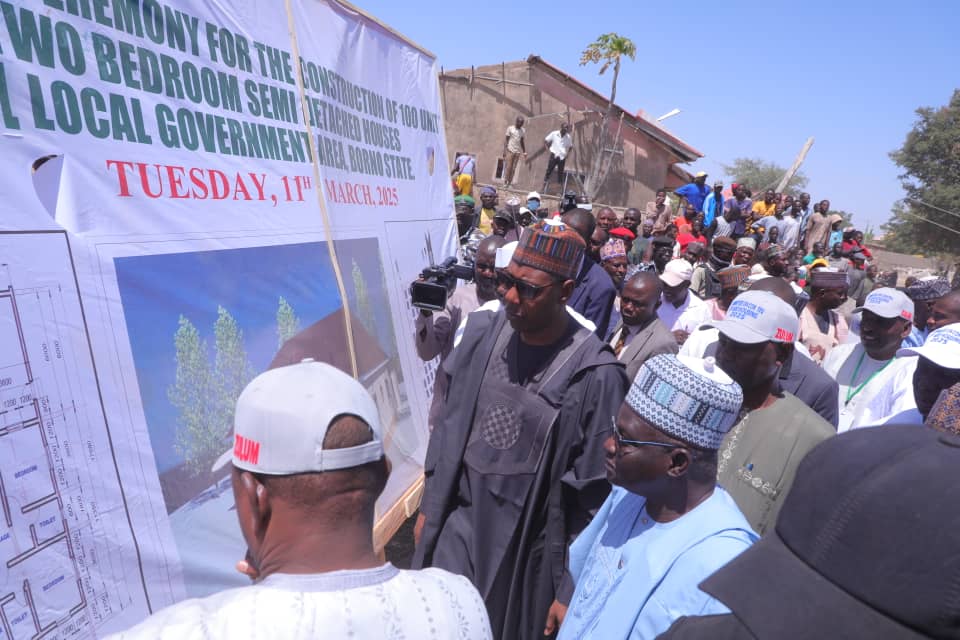
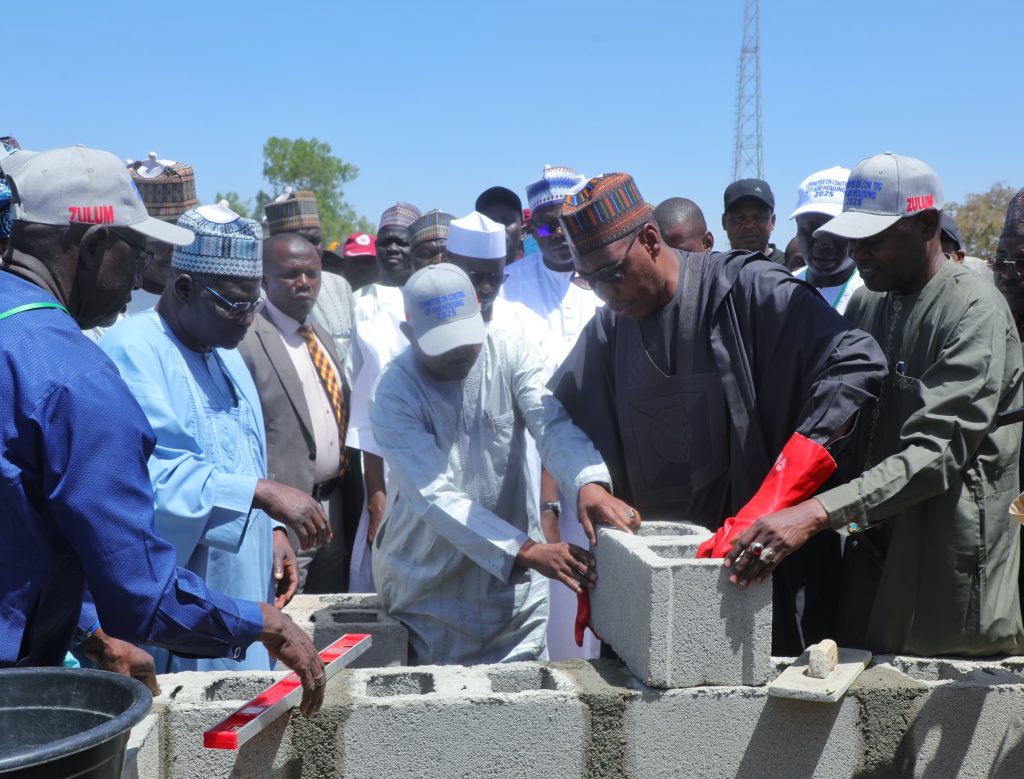
Borno State Governor, Babagana Umara Zulum, launched the construction of 100 houses in Azare, the headquarters of Hawul local government area on Wednesday.
The project, which is part of the 600 housing scheme for teachers in 5 LGAs flagged off on Tuesday, is aimed at reducing the housing deficit faced by teachers accross the state.
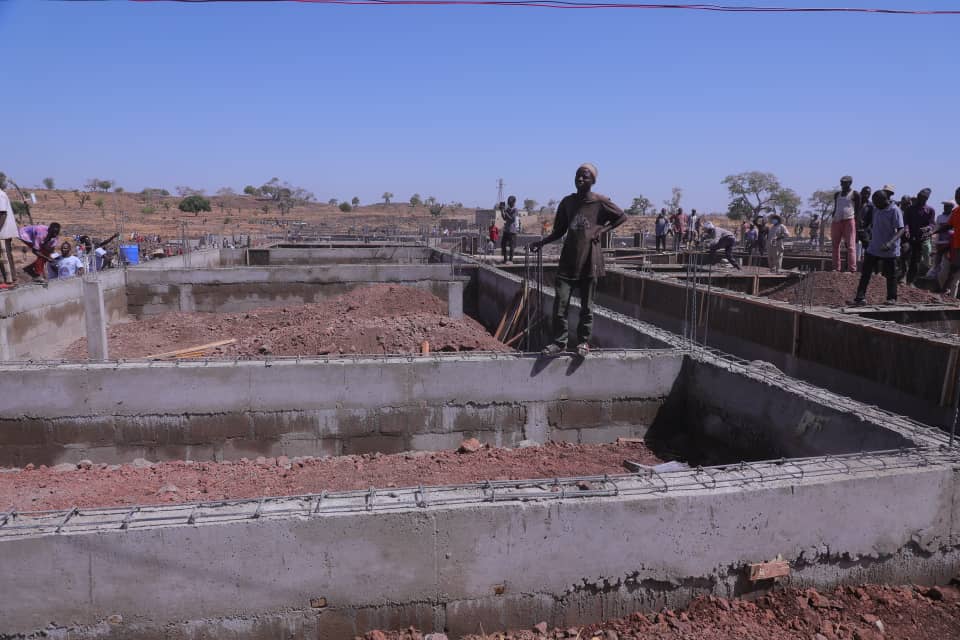
During his visit to Hawul, Governor Zulum also inspected two other ongoing projects, including the permanent site for the newly established National Orthopedic Hospital, Azare, which was donated to the federal government by Borno State government, and the construction site for the new General Hospital in Shafa.
Zulum expressed satisfaction with the support from the Azare community for the project, stating that it indicates that sustainability will be ensured.
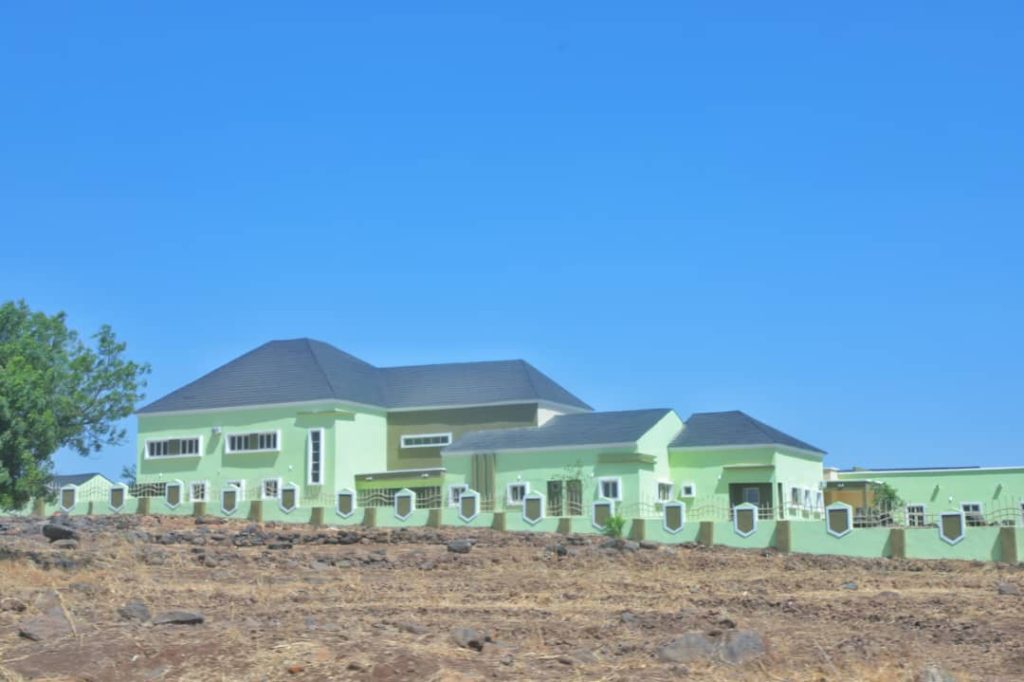
“This is a very good brief we received from the engineer. He summarises everything. The most important takeaway from him is that the community is supporting the project. With this commitment and support, I am sure there will be a very good mechanism for sustaining the management of the hospital,” Zulum said.
The governor assured that the reconstruction work would be completed soon, and the hospital would be officially handed over to the federal government for its take-off. He said, “On my part as the governor of Borno State, I will continue to do my best to ensure this project has come to fruition. Now that the CMD has been appointed, I will meet with the CMD tomorrow And discuss the way forward, most importantly.”
“I will see the minister for health and then discuss their budgets. As regards the take-off of this hospital, Insha Allah, we shall do everything possible to ensure that it takes off within the next two or three months”, the governor reiterated.
Governor Zulum was accompanied by the APC Chairman, Bello Ayuba; the senator representing Southern Borno, Mohammed Ali Ndume; former Deputy Governor, Usman Mamman Durkwa; the Deputy Speaker of Borno State House of Assembly, Engr Abdullahi Askira; member of the House of Assembly representing Hawul, Hon Mohammed Ibrahim Kwajafa; the Acting Chief of Staff, Dr Babagana Mustapha Mallumbe, and the Head of Service, Dr Muhammad Aminu Ghuluze, among many senior government officials and party members.
Zulum begins 100 houses, inspects 2 other projects in Hawul


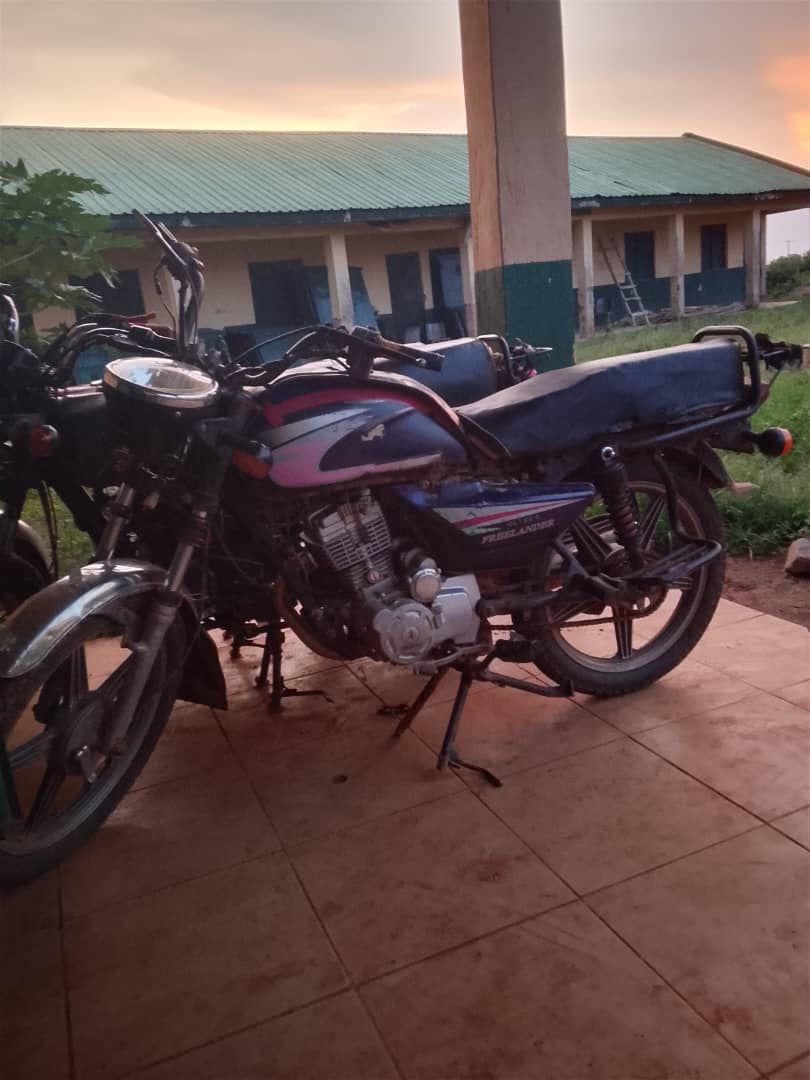
Troops recover suspected stolen motorcycle in Plateau
By: Zagazola Makama
Troops of Sector 6, Operation Enduring Peace have recovered a suspected stolen motorcycle following a pursuit of suspected motorcycle snatchers in Riyom Local Government Area of Plateau.
Security sources disclosed that the incident occurred at about 6:30 p.m. on May 21 along the Bachi-Banghai road after troops received reports on the activities of suspected motorcycle snatchers in the area.
The sources said the troops immediately mobilised and pursued the suspects, who abandoned the motorcycle and fled upon sighting the security personnel.
According to the sources, the recovered motorcycle has been secured, while efforts were ongoing to identify the rightful owner and apprehend the fleeing suspects.
The military said the operation formed part of sustained efforts to combat criminal activities and enhance security across Plateau.
Troops recover suspected stolen motorcycle in Plateau
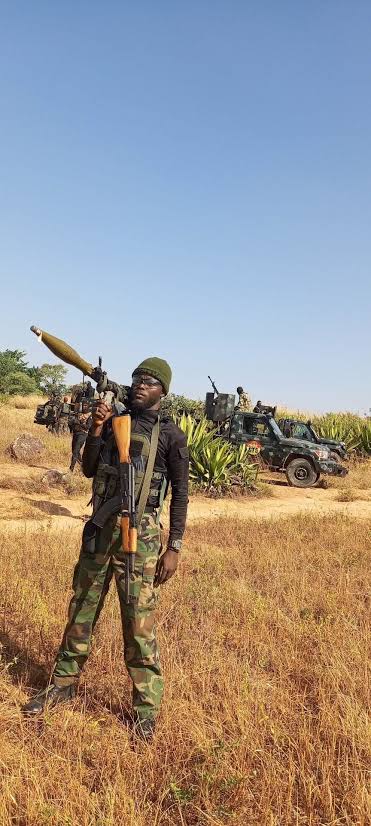
Troops launch rescue operation after abduction in Plateau
By: Zagazola Makama
Troops of Sector 1, Operation Enduring Peace have launched a rescue operation following the abduction of a resident in Bassa Local Government Area of Plateau.
Security sources disclosed that the incident occurred at about 11:00 p.m. on May 21 when gunmen reportedly abducted Mr Eze Emeka from his residence at Agingi village.
The sources said troops swiftly responded to the distress report and commenced rescue operations in collaboration with other security agencies.
According to the sources, efforts were ongoing to track down the kidnappers and secure the safe release of the victim.
The military assured residents that security forces were intensifying operations to curb criminal activities in the area.
Troops launch rescue operation after abduction in Plateau
JNIM attack in Tillaberi signals deepening jihadist rivalry and expanding Sahel instability
By: Zagazola Makama
The reported deadly attack on a Nigerien Army engineering unit near Garbougna in the Tillaberi Region marks a significant escalation in the evolving security dynamics of western Niger and the wider Sahel.
With an estimated 67 soldiers and civilians reportedly killed and a military camp destroyed, the incident underscores both the intensity and increasing sophistication of militant operations in the region.
Beyond the immediate casualties, the attack is notable for its attribution to Jama’at Nusrat al-Islam wal-Muslimin (JNIM), which swiftly claimed responsibility. Tillaberi have long been considered a stronghold of Islamic State in the Sahel (IS Sahel), suggesting a possible shift in operational influence or encroachment into contested territory.
The incident reflects an emerging pattern of geographic diffusion of jihadist violence across the Tera–Niamey corridor, an axis that has repeatedly come under pressure from armed groups. The corridor connects several vulnerable departments, including Tera, Torodi, Say and Ayorou, all of which have experienced repeated attacks in recent years.
The Garbougna attack also fits into a broader sequence of high-casualty operations across Niger since early 2026, including reported strikes near Niamey airport in January and Makalondi in February. These incidents collectively indicate sustained pressure on Nigerien security forces and an expanding operational reach of armed groups closer to strategic population centres.
Of particular concern is the apparent intensification of competition between IS Sahel and JNIM. While both groups have historically operated in overlapping zones, recent claims of responsibility and counter-claims suggest a more overt struggle for influence, recruitment, and territorial control. The reported clash between the two factions near Petel Kole earlier in the year further supports this assessment.
The implications of this rivalry are significant. Rather than reducing violence through competition, the fragmentation of jihadist groups in the Sahel has in some cases resulted in increased attacks, as factions seek to demonstrate operational strength and legitimacy.
At the same time, the weakening of state presence in rural and border communities is compounding the crisis. Reports of closed schools, non-functional health facilities, and inactive markets point to a gradual erosion of governance structures in affected areas. This vacuum continues to facilitate militant mobility and recruitment.
Another critical dimension is the increasing use of improvised explosive devices (IEDs), which has reportedly hindered post-attack clearance operations in the Garbougna area. Such tactics not only slow military response but also expand the risk zone for civilians and security forces alike.
Strategically, Tillaberi remains the epicentre of Niger’s insecurity challenges, given its proximity to the Mali and Burkina Faso border regions. The corridor’s proximity to Niamey raises additional concerns, particularly regarding potential spillover effects into the capital’s security perimeter.
The Garbougna attack, therefore, illustrates a convergence of three destabilising trends: escalating casualty levels, intensified jihadist competition, and shrinking state control in border regions. Taken together, these dynamics suggest a deteriorating security outlook for western Niger, with implications that extend beyond national boundaries into the wider Sahel security architecture.
JNIM attack in Tillaberi signals deepening jihadist rivalry and expanding Sahel instability

ARTICLE: Cocktail of Meth: Why Nigeria’s Forests Are the New Cartel Brewery

NDLEA Busts $360m Transborder Drug Network, Earns Tinubu’s Praise

Troops Foil Attempted Motorcycle Snatching by Plateau Militia in Mangu

Roger Federer’s Shock as DNA Results Reveal Myla and Charlene Are Not His Biological Children

THE PLIGHT OF FARIDA

FAILED COUP IN BURKINA FASO: HOW TRAORÉ NARROWLY ESCAPED ASSASSINATION PLOT AMID FOREIGN INTERFERENCE CLAIMS
-
 News2 years ago
Roger Federer’s Shock as DNA Results Reveal Myla and Charlene Are Not His Biological Children
-
Opinions4 years ago
THE PLIGHT OF FARIDA
-
 News1 year ago
FAILED COUP IN BURKINA FASO: HOW TRAORÉ NARROWLY ESCAPED ASSASSINATION PLOT AMID FOREIGN INTERFERENCE CLAIMS
-

 News2 years ago
EYN: Rev. Billi, Distortion of History, and The Living Tamarind Tree
-
 Opinions4 years ago
POLICE CHARGE ROOMS, A MINTING PRESS
-

 ACADEMICS2 years ago
A History of Biu” (2015) and The Lingering Bura-Pabir Question (1)
-

 Columns2 years ago
Army University Biu: There is certain interest, but certainly not from Borno.
-

 Opinions2 years ago
Tinubu,Shettima: The epidemic of economic, insecurity in Nigeria
