
Uncategorized
Zulum Launches Annual Free Christmas Transport For 1,050 Non Indigenes, Support for Vulnerable

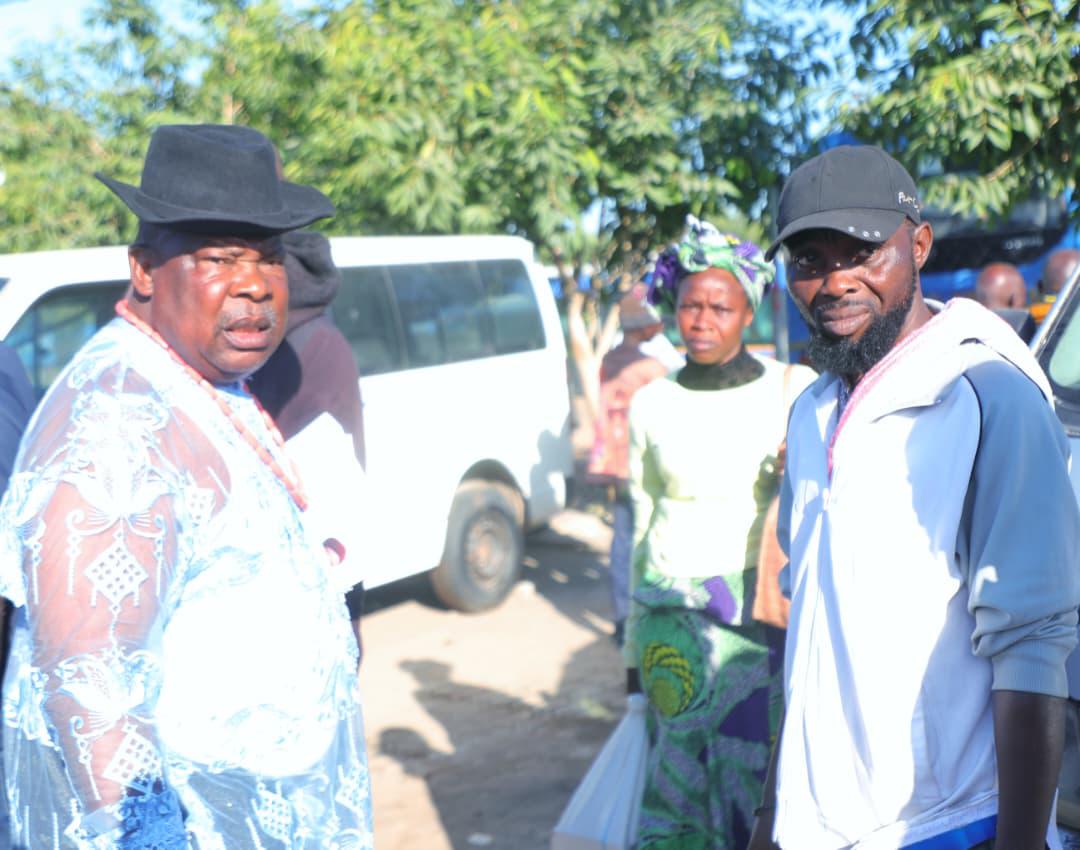
Zulum Launches Annual Free Christmas Transport For 1,050 Non Indigenes, Support for Vulnerable
By: Our Reporter
Borno State Governor, Professor Babagana Umara Zulum, on Sunday, launched the 2025 Free Annual Transportation Programme to 1,050 non-indigenes and support to vulnerable people.
The initiative reaffirms his administration’s commitment to compassion, inclusivity and people-centred governance to residents and inhabitants of the state.
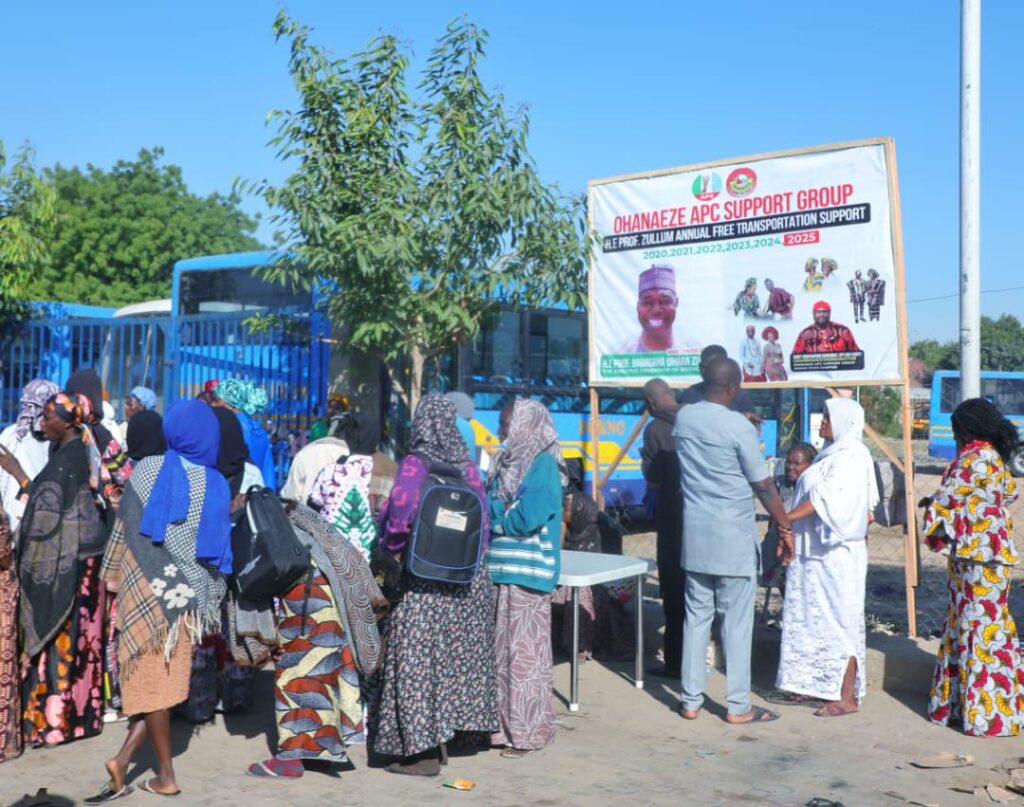
The scheme has continued to provide critical mobility support to thousands of Nigerians since its inception in 2020, facilitating safe interstate travel during the festive season, irrespective of ethnicity, religion, or social background.
The Governor represented by the Chairman of the Implementation Committee, Chief Ugochukwu Egwudike , said the initiative was designed to ease the hardship faced by low-income earners and vulnerable groups, especially during the Christmas and New Year celebrations.
He noted that beyond transportation, the programme aims to promote social cohesion and national unity by reconnecting families separated by economic and security challenges.
Egwudike recalled that “over the years, the scheme has reunited families who had been unable to travel home for three to five years, enabling them to celebrate Christmas with their loved ones”.
He added “during the previous exercise, beneficiaries also received ₦30,000 each, paid directly into their bank accounts to cushion financial pressures and ensure transparency in disbursement”,.
The Chairman of the committee said the 2025 exercise covers all six geopolitical zones of the country, a total of 320 passengers will be transported safely on day one, 280 on day two, and 150 on day three, with all passengers conveyed safely to their destinations, while 300 widows will recieve palliatives.
“A total of 750 people are expected to travel in batches between today, Monday and Tuesday while 300 widows, orphans and other vulnerable groups will receive palliatives on the 4th day of the excercise being 24th December,” Egwudike said.
Secretary of the Christian Association of Nigeria (CAN) Borno State Chapter, Apostle Joshua Akeredolu, commended the initiative, describing it as timely and impactful, particularly for Christian faithful travelling to celebrate Christmas.
He praised Governor Zulum’s inclusive leadership and offered prayers for his continued success and greater service to humanity.
The Chief of Idoma Community in Borno State, Jonah Odo, described the programme as a practical demonstration of Governor Zulum’s humane and responsive leadership, noting its positive impact on social welfare, interfaith harmony, and national integration.
Chief Odo said Idoma community in Borno State is appreciating the Governor for all the good works he has being doing for the non-indigenes in the state and urged other state governors to emulate Zulum’s gesture for the unification of the country.
The Free Annual Transportation Programme remains one of the flagship social intervention initiatives of Governor Zulum’s administration, providing annual relief and mobility support to thousands of Nigerians across the country.
Zulum Launches Annual Free Christmas Transport For 1,050 Non Indigenes, Support for Vulnerable


Three Cows Die After Suspected Poisoning in Plateau
By Zagazola Makama
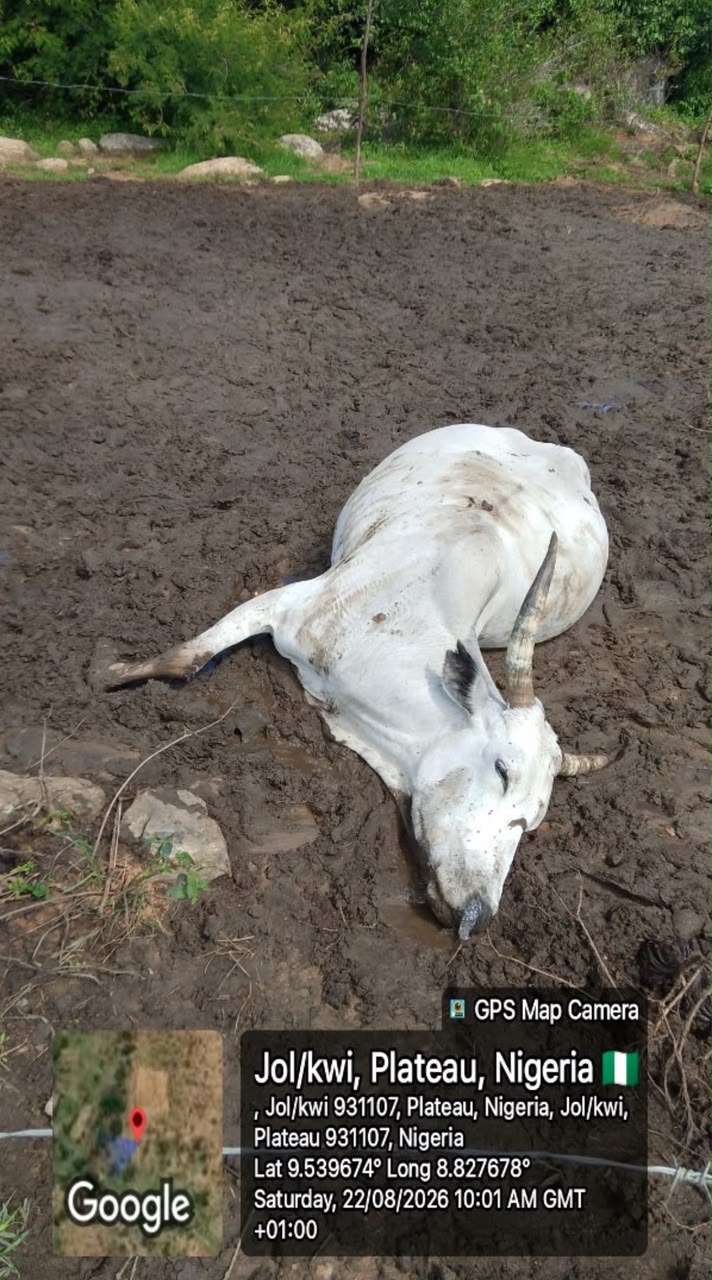
Three cows belonging to one Alhaji Yusuf have died after allegedly grazing on a suspected poisonous substance at Jol area of Riyom Local Government Area of Plateau State.
The incident occurred in the early hours of Saturday, August 22, 2026, when troops of Sector 6, Operation ENDURING PEACE, deployed at Dokku, responded to a report of cattle poisoning in the area.
According to military sources, the troops arrived at the location and discovered three cows dead after reportedly grazing on a substance suspected to be poisonous.
The actual cause of death of the animals has, however, not been established.
An investigation has commenced to determine the substance involved and ascertain the circumstances surrounding the deaths.
Security personnel are also engaging relevant stakeholders as efforts continue to prevent the incident from escalating into further tension within the community.
Three Cows Die After Suspected Poisoning in Plateau
Uncategorized
Attack on NDA Commandant: How Ruth Ogunleye’s Social Media Claims Are Colliding With the Facts
Attack on NDA Commandant: How Ruth Ogunleye’s Social Media Claims Are Colliding With the Facts
By Zagazola Makama
There is a point at which a grievance stops being a grievance and becomes a campaign of accusation, intimidation and reputational destruction. The controversy surrounding ex-Private Ruth Ogunleye has now reached that point.
The Nigerian Army and its senior leadership last week came under renewed attack on social media following a series of fabricated allegations by former Private Ruth Ogunleye, but a review of the available record shows that several of the claims being circulated remain FALSE, unsubstantiated, while some are directly contradicted by established facts.
The latest episode involving Major General Oluyemi Olatoye, Commandant of the Nigerian Defence Academy, illustrates the fundamental problem with Ogunleye’s current method.
In her viral video, Ogunleye spoke about someone she identified as “Abdul” allegedly being connected to the NDA Commandant and threatening to expose her intimate material, which she repeatedly referred to as her “noodles.” She then connected that threat to the NDA Commandant.
The allegation has since triggered a strong response from the NDA, which cautioned the public against relying on unverified social-media claims and disclosed that it had commenced appropriate legal processes over the matter.
The NDA subsequently stated publicly that the dispute involved a staff member, Mr Abubakar Isah, and that the issue was related to social-media infringement. The Academy said Ogunleye had brought the Commandant into the dispute through what it described as false allegations and attempted defamation.
According to the account supplied for this investigation, Ogunleye had already published the damaging video on her TikTok handle against the Commandant before contacting his office to establish who the person behind the alleged online threat was. It is only logical that if a person receives an online threat, the rational course is to preserve the evidence, identify the account holder, report the threat to the authority and allow an investigation to take place.
Instead, the allegation appears to have moved from: “Someone is threatening me” to: “This person may be connected to the Commandant” and then effectively to: “The Commandant is responsible.” That leap is precisely what requires scrutiny.
NDA investigations reportedly found that the person at the centre of the dispute was a civilian staff member of the NDA but was never known to Major General Olatoye. That distinction is crucial. Working around an institution does not automatically make someone an agent of its command structure. A civilian’s alleged conduct on social media cannot simply be attributed to the head of an institution without evidence establishing the connection.
The Most Damaging Part of the Claim
Ogunleye’s own words make the controversy even more complicated. In the video, she suggested that she and the Commandant had previously made an intimate video together and threatened that if her alleged intimate material appeared online, she would release his.
Yet, according to sources, when Ogunleye was subsequently contacted by someone, she denied actually having made such a sexual video with the Commandant. She claimed that she made those claims because she was scared and hoped that she could get his attention over the alleged threat by a staff member of the NDA.
If accurately documented, that contradiction is enormous. A claim made publicly as an apparent factual assertion cannot simply become a tactical statement whenever the consequences become uncomfortable. If she did not have such a video with the Commandant, then the public allegation was not merely an emotional complaint. It was a potentially devastating assertion about a serving senior military officer.
However, the NDA controversy cannot be properly understood without returning to the allegations that originally made Ogunleye nationally known.
In January 2024, while still a serving soldier, Ogunleye publicly accused Colonel I.B. Abdulkareem and other senior officers of sexual harassment, intimidation and other forms of mistreatment. Her allegations were extremely serious.
She alleged that Abdulkareem requested sex from her, that she refused, and that she subsequently suffered retaliation. She also made allegations involving attempted assault, injections, eviction, confinement and interference with her military career. Contemporary reports documented these claims.
The Army did not simply dismiss the allegations.
It investigated them. The Nigerian Army said the matter was referred to the Nigerian Army Corps of Military Police and that the investigation examined the available facts, testimonies and evidence. The Army subsequently announced that Colonel Abdulkareem had not committed the sexual-harassment offence alleged against him.
On September 24, 2024, Army spokesperson Major General Onyema Nwachukwu said the investigation had examined the available facts, testimonies and evidence and found that Colonel Abdulkareem did not commit the offences alleged against him. Ogunleye made many videos insulting the late COAS.
She later apologised to then-Chief of Army Staff Lieutenant General Taoreed Lagbaja (late) while seeking a review of the case, saying she believed someone may have interfered with the result. That history matters because it demonstrates that the current false controversy did not begin with Major General Olatoye. But the important development in 2026 is that the allegations have moved to an entirely different level.
Her deliberate campaign of calumny later expanded beyond the original accused officer. Former Army spokesperson Major General Onyema Nwachukwu (rtd) became one of Ogunleye’s targets because he was the one who publicly announced the Army’s position at that time. The spokesperson did not conduct the investigation. He communicated the institution’s findings. Yet she made him another target of her controversial campaign in 2026. The same pattern is now visible in the treatment of Army public-relations personnel generally.
Ogunleye has reportedly made FALSE and deeply personal allegation against the current Army spokesperson, Col. Apollonia Anele in a targeted campaign of reputational destruction.
The escalation becomes even more striking when the target moves from individual officers to the highest level of current Army leadership.
The Dangers of Media Trial on TikTok
There is a broader lesson here. Social media has created an environment where an accusation can reach millions before anyone has had the opportunity to examine the evidence. A person can make a claim in a three-minute video.
Thousands can repost it. Commentators can repeat it. Bloggers can turn it into headlines.
The original allegation then returns to the public as though it has been independently confirmed.
It has not. It has merely been repeated. That is dangerous for everybody, including genuine victims of abuse. When unverified accusations become common, genuine victims can eventually find themselves competing for public attention with fabricated claims. That damages the credibility of legitimate whistleblowing.
A Repeated Formula
The emerging pattern is worth examining.
An allegation is made. A senior officer becomes the target. The allegation is amplified online.
The officer or institution responds. The response is interpreted as further evidence of persecution.
The dispute then expands to another senior officer. Eventually, the institution itself becomes the target. This creates a situation in which every response can be presented as evidence of guilt. If the Army speaks, it is accused of covering up. If it remains silent, the silence is presented as confirmation. If it investigates, the investigation is dismissed if the result is unfavourable. If it takes legal action, that becomes “intimidation.” Society will then become a battlefield of manufactured narratives.
The Military Must Remain Accountable—but Officers Also Have Rights
This does not mean that military officers should be immune from investigation. Far from it. If an officer sexually harasses a subordinate, he should face justice. If an officer abuses authority, he should be held accountable. If the Army conducts a flawed investigation, that investigation should be challenged. But accountability must operate in both directions. A person who is accused also has a right to due process. A senior officer does not lose his right to reputation simply because he wears a uniform. And a military institution does not become guilty merely because an allegation against it goes viral on social media.
The danger of the allegation against the Commandant is not simply that it is potentially defamatory. It demonstrates how easily a chain of assumptions can become a public accusation. This is where social-media trials become dangerous. An allegation can be emotionally compelling especially when it is told by the opposite gender. It can be delivered through tears. It can be repeated thousands of times. It can generate millions of views. None of those things converts an allegation into evidence. An allegation becomes established fact only after it survives appropriate scrutiny.
But rather than immediately engaging in a public argument with Ogunleye, the Commandant reportedly directed that the matter be taken to court. And that is precisely what a responsible and professional institution should do when confronted with an allegation like this. If Ogunleye possesses evidence against the Commandant, she should produce it before the competent authorities. But if the evidence is absent, just like she later admitted, the NDA Commandant must seek redress through a competent court of law.
Zagazola is a Counter-Insurgency Expert and Security Analyst in the Lake Chad Region.
Attack on NDA Commandant: How Ruth Ogunleye’s Social Media Claims Are Colliding With the Facts

FG, Borno Intensify Efforts to Rescue 44 Abducted Mussa Schoolchildren
…Zulum tells anxious parents Tinubu has directed security agencies to secure children’s release
By: Michael Mike
The Federal Government and Borno State Government have stepped up efforts to secure the safe release of the 44 primary school pupils abducted from Mussa community in Askira/Uba Local Government Area of the state, Governor Babagana Zulum has said.
Zulum gave the assurance on Friday when he met with parents of the abducted children at the Government House, Maiduguri, amid growing concern over the fate of the pupils who were taken from Mussa Central Primary School on May 15, 2026.

The meeting was convened at the request of the parents, who have been pressing the authorities to intensify efforts to locate and rescue their children.
The governor said President Bola Tinubu had personally directed security agencies to ensure the safe recovery of the pupils, assuring the parents that the Federal Government, Nigerian Armed Forces and Borno State Government were working together towards their release.
“On behalf of the government and people of Borno State, I once again extend my sympathies over what happened at Mussa Central Primary School on the 15th of May 2026 that led to the abduction of about 44 primary school pupils,” Zulum said.
He also conveyed the President’s sympathy to the affected families.
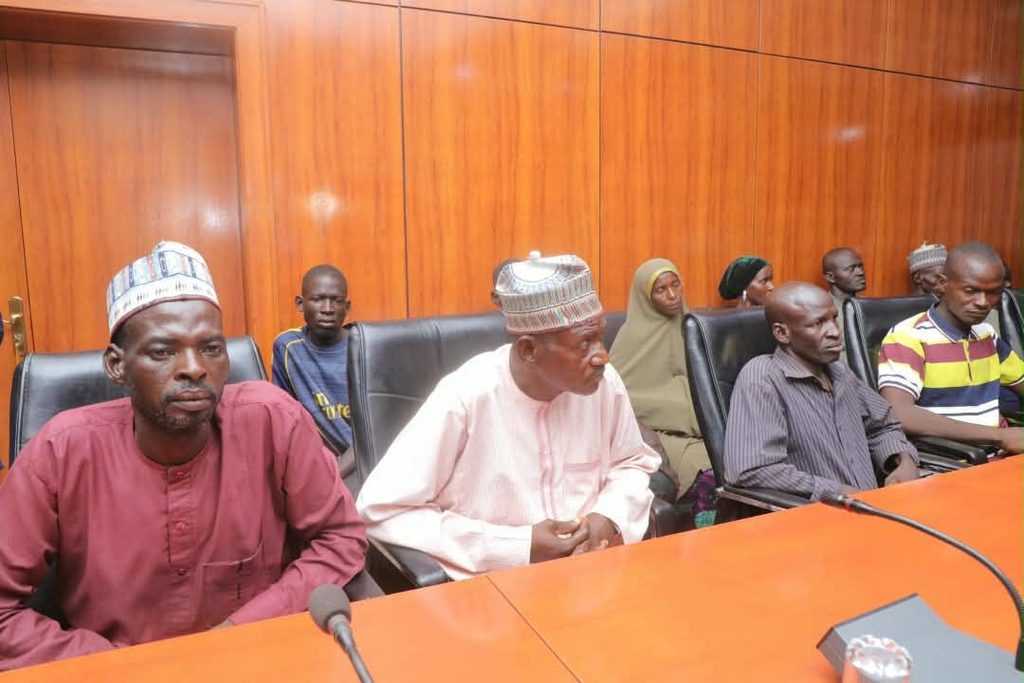
“On behalf of the President of the Federal Republic of Nigeria, Bola Ahmed Tinubu, I want to sympathise with you. I want to assure you that Mr President has since directed security agencies to ensure the rescue of our children, and I believe they are working to ensure their rescue,” he said.
Zulum assured the parents that the authorities would deploy every necessary effort to bring the children home safely.
The development has renewed attention on the security of schools in Borno, where communities continue to face threats from insurgency and other forms of insecurity.
The governor’s meeting with the parents is expected to strengthen coordination between the affected families and government authorities as security agencies continue efforts to secure the children’s release.

The meeting was attended by the Senator representing Southern Borno, Mohammed Ali Ndume; Acting Chief of Staff to the Governor, Dr Babagana Mustapha Mallumbe; Commissioner for Education, Engr Lawan Abba Wakilbe; Commissioner for Inter-Governmental Affairs and Special Duties, Dr Samaila Abdulaziz Satumari; and Permanent Secretary, Ministry of Environment, Dr Juliana Bitrus.
FG, Borno Intensify Efforts to Rescue 44 Abducted Mussa Schoolchildren

Chad Accuses Sudanese Forces of Crossing Border, Bombing Convoy Deep Inside Chadian Territory

Troops Arrest 24-Year-Old Hunter With Dane Gun After Gunshots Report in Plateau

Three Cows Die After Suspected Poisoning in Plateau

Roger Federer’s Shock as DNA Results Reveal Myla and Charlene Are Not His Biological Children

THE PLIGHT OF FARIDA

FAILED COUP IN BURKINA FASO: HOW TRAORÉ NARROWLY ESCAPED ASSASSINATION PLOT AMID FOREIGN INTERFERENCE CLAIMS
-
 News2 years ago
Roger Federer’s Shock as DNA Results Reveal Myla and Charlene Are Not His Biological Children
-
Opinions5 years ago
THE PLIGHT OF FARIDA
-
 News1 year ago
FAILED COUP IN BURKINA FASO: HOW TRAORÉ NARROWLY ESCAPED ASSASSINATION PLOT AMID FOREIGN INTERFERENCE CLAIMS
-

 News2 years ago
EYN: Rev. Billi, Distortion of History, and The Living Tamarind Tree
-
 Opinions5 years ago
POLICE CHARGE ROOMS, A MINTING PRESS
-

 ACADEMICS2 years ago
A History of Biu” (2015) and The Lingering Bura-Pabir Question (1)
-

 Columns2 years ago
Army University Biu: There is certain interest, but certainly not from Borno.
-

 Politics1 year ago
2027: Why Hon. Midala Balami Must Go, as Youths in Hawul and Asikira/Uba Federal Constituency Reject ₦500,000 as Sallah Gift
