
News
Zulum Rewards 149 firemen with N100,000 each for Gallantry During Market Inferno

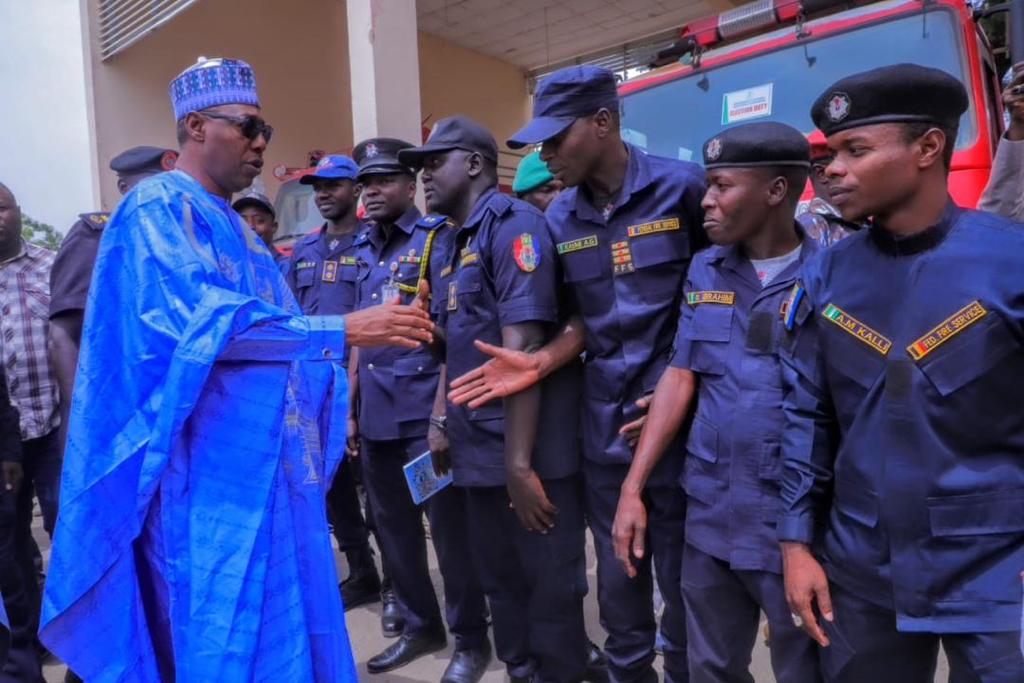
Zulum Rewards 149 firemen with N100,000 each for Gallantry During Market Inferno
By: Michael Mike
Borno State Governor, Prof. Babagana Zulum has approved the release of N14.9 million as grants to about 149 firemen in the state.
The governor gave the approval in appreciate of the gallantry at arresting the inferno at Gamboru Market in Maiduguri over the weekend.
The state is still battling with the rebuilding of the Monday Market, which is expected to gulp several billion Naira, after it was consumed by inferno on the eve of the Presidential and National Assembly election.
Fire fighters from both Borno State and Federal Fire Services did an outstanding job at the weekend to ensure that the inferno that erupted at the Gamboru Market caused minimal damage.
Zulum who paid a ‘thank you’ visit to headquarters of the Borno State Fire Service in Maiduguri on Sunday told the firemen he was impressed with their gallantry.
The governor said for their gallantry, he has approved the release of N14.9 million as grants to about 149 firemen operating under both the federal and state fire services.
He said: “I am here purposely to convey my deep appreciation to all of you for the great work you have been doing. Yesterday (Saturday) we had another fire disaster at Gamboru market and I was informed of your efforts towards quenching the fire. This goes to show how committed you are and we want to once again extend our appreciation to you.”
The beneficiaries comprised of 60 firemen working with Borno State Government, 49 working with the Federal Fire Service, as well as 38 volunteer-fire fighters.
Zulum directed that each of the 149 fire men be given N100,000 and a bag of rice, as part of appreciation from Borno State Government.
Meanwhile, he directed the employment of the 38 volunteer- firemen into the Borno State Fire Service as permanent staff.
The volunteers, 20 of them with the Maiduguri International Hotel and 18 with Borno State Fire Service were offering supportive services without
receiving salaries which permanent staff are entitled to.
The governor also directed the management of Borno State Fire Service to immediately send to his office all of their requirements that will ensure the optimal performance of firemen in prevention and responses to fire incidents.
He also extended similar gesture to the Federal Fire Service, asking them to submit requirements in order to get some intervention from the state government.
Zulum Rewards 149 firemen with N100,000 each for Gallantry During Market Inferno


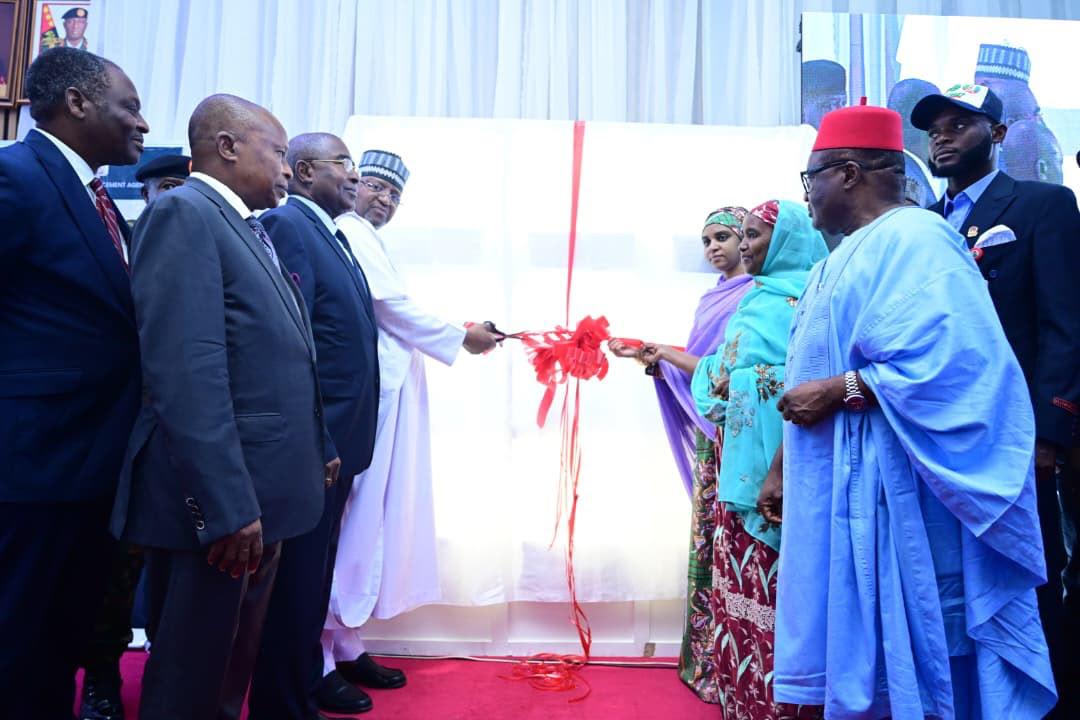
Shettima Tasks Stakeholders to Implement Drug Control Plan with Commitment, Accountability
…New NDCMP will strengthen NDLEA, says Fagbemi; ECOWAS, lawmakers pledge support
By: Michael Mike
Vice President Kashim Shettima has challenged all tiers of government, institutions and private sector stakeholders to translate Nigeria’s National Drug Control Master Plan (NDCMP) 2026–2030 into measurable results, warning that the country cannot afford another policy framework without sustained funding, accountability and implementation.
Shettima said drug control must remain a national priority, describing the drug problem as a public health concern, security threat, development challenge and economic issue requiring a coordinated response beyond arrests and seizures.
Speaking on Monday at the official launch of the five-year Master Plan in Abuja, the Vice President, represented by the Special Adviser to the President on Special Duties, Office of the Vice President, Dr Modibbo Aliyu Umar, urged federal ministries, departments and agencies, state and local governments, the National Assembly, private sector organisations, traditional and religious institutions and international partners to embrace the plan with urgency and discipline.
He said the plan, launched on behalf of President Bola Tinubu, provided a framework for addressing the country’s drug challenges through prevention, treatment, enforcement, rehabilitation, alternative livelihoods and disruption of illicit financial networks.
“A nation cannot secure its future if it fails to protect the people who must build that future,” Shettima said.
He identified the six pillars of the plan as supply reduction, drug demand reduction, access to controlled medicines for scientific and medical purposes, alternative development and sustainable livelihoods, disruption of the illicit drug economy, and governance, financing and coordination.
Shettima commended the National Drug Law Enforcement Agency (NDLEA), under the leadership of Brig. Gen. Mohamed Buba Marwa (retd.), for pioneering alternative development programmes in Africa, noting that its pilot initiative was already transforming three communities in Ondo State.
He urged state and local governments to take ownership of the programme, which seeks to replace illicit drug cultivation with legitimate agricultural activities and sustainable livelihoods.
The Vice President, however, stressed that the success of the plan would depend largely on funding and the willingness of institutions to translate its objectives into concrete actions.
“A national plan without a credible financing pathway risks becoming a declaration of good intentions,” he warned, directing stakeholders to incorporate the plan’s priorities into institutional work plans, budget proposals and implementation schedules.
He challenged each institution to identify its immediate responsibilities towards the plan, insisting that global complexities must not become an excuse for national inaction.
“Five years from now, the significance of today’s launch will not be judged by the ceremony,” he said. “Let this be the moment Nigeria moves from policy to action.”
Earlier, NDLEA Chairman and Chief Executive Officer, Marwa, said the new Master Plan was designed to consolidate previous gains, address identified shortcomings and respond to emerging threats in the drug control landscape.
He disclosed that the evaluation of the 2021–2025 Master Plan recorded 77,736 arrests, seizures of more than 14.8 million kilogrammes of illicit drugs and over 14,200 convictions, while 32,400 people received treatment, counselling and rehabilitation services.
Marwa said the evaluation also exposed gaps in coordination, financing, service delivery, data management, monitoring and accountability, as well as weak capacities at state and local government levels, which informed the development of the new framework.
He said the 2026–2030 plan would strengthen Nigeria’s response to increasingly sophisticated trafficking networks, synthetic drugs, new psychoactive substances and criminal syndicates exploiting encrypted communications and cryptocurrency.
The NDLEA chief cited the agency’s April 28, 2026, joint operation with the United States Drug Enforcement Administration (DEA) and law enforcement partners in Switzerland, France and Greece, which dismantled a transnational criminal organisation, as evidence of the need for intelligence-driven and international cooperation.
The operation led to the arrest of alleged billionaire drug baron Amadi Simon in Switzerland and two female kingpins, Jecinta Amara Ikechi in Anambra and Blessing Ngozi Amadi in Delta.
He said several bank accounts and cryptocurrency wallets linked to the network had been blocked, while the agency secured interim forfeiture of multi-billion-naira properties allegedly connected to Simon, including two hotels in Delta State and an apartment building in Mabushi, Abuja.
Marwa also recalled the dismantling of a Nigerian-Mexican methamphetamine network and a clandestine laboratory in Ogun State, involving drugs and chemicals valued at about $362.9 million, as well as the subsequent discovery of four other Mexican-linked methamphetamine laboratories in Oyo, Ebonyi and Enugu states.
The operations led to the arrest of 10 Mexican nationals and 14 Nigerian collaborators, who are facing criminal charges, he said.
Describing sustainable financing as critical to the success of the new plan, Marwa urged federal budget authorities to incorporate its priorities into annual budgets and the Medium-Term Expenditure Framework, while calling on state and local governments to make dedicated provisions for their drug control committees.
He also sought partnerships with banks, telecommunications and technology companies, agribusinesses and philanthropists to support prevention, treatment and livelihood programmes.
“A policy priority without resources is merely an aspiration,” he said, adding that the NDLEA would develop a resource mobilisation framework supported by costed implementation plans.
Marwa welcomed President Tinubu’s transmission of the National Drug Law Enforcement Agency Bill, 2026, to the National Assembly, noting that it had passed second reading, while assuring that enforcement would remain guided by the rule of law, due process and respect for human rights.
Attorney-General of the Federation and Minister of Justice, Prince Lateef Fagbemi, SAN, described the NDLEA as the bedrock of Nigeria’s drug control architecture, saying the new Master Plan would strengthen the agency by integrating law enforcement with public health, education, social development, financial investigation and community participation.
Fagbemi commended Marwa and the agency’s personnel for their contributions to intelligence operations, drug interdiction, investigation, prosecution and public sensitisation, describing the NDLEA chairman as a consistent achiever.
He pledged that the Ministry of Justice would work with the judiciary to accelerate the prosecution of drug cases in line with the Administration of Criminal Justice Act, ensure that convictions were accompanied by the confiscation of illicit assets, and strengthen mutual legal assistance, extradition and cross-border asset recovery.
The minister also praised the NDLEA’s collaboration between investigators and prosecutors at the early stages of investigations, saying it helped preserve evidence and prevent procedural errors.
He stressed the need to distinguish drug traffickers from people suffering from drug dependence, insisting that while criminal kingpins must face the full weight of the law, persons with drug use disorders required evidence-based treatment, counselling and reintegration.
Fagbemi further applauded the agency’s alternative development programme, which encourages communities to abandon illicit drug cultivation in favour of legitimate cash crops and other agricultural ventures, describing it as consistent with Tinubu’s economic philosophy of turning challenges into opportunities.
The ECOWAS Commission, represented by its Commissioner for Human Development and Social Affairs, Prof. Nassirou Bako-Arifari, described the plan as aligned with regional commitments and a significant contribution to a safer and healthier West Africa.
He said its success would depend on political will, adequate financing and cooperation among governments, civil society, communities, the private sector and international partners.
The commission pledged to support Nigeria through experience-sharing, resource mobilisation and regional coordination, noting that the country’s progress could provide direction for other member states.
The House of Representatives Committee on Drugs and Narcotics, represented by Hon. Dominic Okafor, also pledged legislative support, oversight and policy advocacy, while emphasising the need for adequate funding, accountability and coordination among implementing agencies.
The First Lady of Yobe State, Hajiya Hafsat Kollere Buni, equally assured the NDLEA of partnership in implementing the plan.
The launch, themed “Strategic Action for a Drug-Free Nation,” was attended by ministers, lawmakers, diplomats, representatives of the European Union, UNODC and ECOWAS, members of drug control committees, traditional and religious leaders, civil society organisations, private sector representatives and youth groups.
Shettima Tasks Stakeholders to Implement Drug Control Plan with Commitment, Accountability
News
Nearly 10 Years After Husband’s Abduction, Wife Cries Out ‘My children are still waiting for their father’

Nearly 10 Years After Husband’s Abduction, Wife Cries Out ‘My children are still waiting for their father’
As Lawyers Petition AGF for Prosecution
By: Michael Mike
Nearly 10 years after her husband was allegedly abducted from their family home in Lekki, Lagos, a distraught wife, Nnena Anozie, is still searching for answers to his whereabouts, as she has now petitioned the Attorney-General of the Federation (AGF) to ensure the prosecution of police officers allegedly implicated in his disappearance.
For Mrs Anozie, the years have brought neither reunion nor closure. Her husband, Chukwuemeka John Anozie, was allegedly taken away on June 15, 2017, by operatives of the Special Anti-Robbery Squad (SARS), allegedly led by ASP Ikechukwu Anthony Obiozor. Since then, she says, he has neither been seen nor heard from, leaving her and their children trapped in nearly a decade of uncertainty.
“They return to their children. Mine are still waiting for their father,” she lamented in an emotional appeal, describing the anguish of raising children who have been left without the presence of their father and struggling to explain an absence that has continued for years without answers.
The family’s search for justice has now taken a fresh turn, with its lawyers formally asking the Attorney-General of the Federation and Minister of Justice to intervene and commence prosecution of officers allegedly indicted in the case.
In a petition dated November 17, 2026, Providence Law Firm, acting on behalf of Mrs Anozie, urged the AGF to direct the prosecution of ASP Obiozor, Sergeant Ugochukwu Emeena and other personnel allegedly implicated in the abduction.
The lawyers said an investigation and legal opinion issued by the Commissioner of Police, Legal, Force Headquarters, Abuja, in 2020 had indicted the officers over the abduction and disappearance of Anozie, but alleged that the police had failed to prosecute them despite repeated complaints by the family.
According to the petition, the Inspector-General of Police had caused an investigation to be conducted following complaints by the wife, with the resulting report allegedly identifying the officers for prosecution.
The legal representatives further said the family had secured a judgment of the Federal High Court, Abuja, delivered on September 24, 2025, in a suit against the Inspector-General of Police, directing the police to furnish the Ministry of Justice with the investigation report.
They stated that the Inspector-General subsequently informed the court on July 21, 2026, that the case file had been forwarded to the Federal Ministry of Justice to facilitate prosecution of the indicted officers.
Despite the alleged indictment, court intervention and transfer of the case file, the family said justice remains elusive, with no prosecution yet commenced against those allegedly involved.
The lawyers are therefore asking the Attorney-General to direct the Inspector-General of Police to produce the indicted officers for prosecution and ensure that justice is served. They also demanded compliance with the court’s judgment, including the release of a certified true copy of the duplicate case file and payment of N2 million damages reportedly awarded to their client.
Beyond the legal battle, however, lies the pain of a family whose life has been defined by an unexplained disappearance. Mrs Anozie has described the ordeal as one that has robbed her children of their father and left her carrying the burden of keeping a family together while confronting years of unanswered questions.
The emotional appeal underscores the desperation of a woman who says she has waited long enough for answers, insisting that her husband’s disappearance cannot be allowed to fade into an unresolved case.
Nearly a decade after Anozie was allegedly taken away, his family is still asking the same questions: Where is their husband and father? What happened to him? And why, despite investigations, alleged indictments and court intervention, has nobody been brought to account?
For Mrs Anozie and her children, the passage of time has not diminished the pain or the hope that one day the truth will emerge.
Nine years have passed. A family is still waiting. And the demand for justice remains unanswered.
Nearly 10 Years After Husband’s Abduction, Wife Cries Out ‘My children are still waiting for their father’

2027: ActionAid challenges INEC over voter register errors, result transparency
…Demands state-by-state disclosure of complaints, access to signed collation sheets
By: Michael Mike
ActionAid Nigeria has challenged the Independent National Electoral Commission (INEC) to account for errors in the voters’ register ahead of the 2027 general elections, demanding a state-by-state breakdown of complaints, corrections made and unresolved cases, as well as greater transparency in the collation and publication of election results.
The organisation said Nigerians deserved clear answers on how errors in the voters’ register would be addressed and how results recorded at polling units would be tracked through ward, local government and state collation stages to ensure that votes were not altered or lost in the process.
In a statement issued on Monday in Abuja, ActionAid Nigeria said INEC must explain how voters could inspect results at each stage of collation and identify discrepancies between polling-unit figures and results subsequently announced at higher levels.
The demand comes amid concerns over the commission’s readiness to make collated results publicly accessible through its Result Viewing Portal (IReV). INEC’s Director of Information and Communication Technology, Lawrence Bayode, reportedly said the commission had yet to build and test the system required to upload collated results to the portal, which currently displays polling-unit result sheets.
ActionAid said INEC must disclose where signed result sheets from subsequent collation stages would be published, how quickly they would be made available after announcement and what mechanisms citizens would have to report discrepancies.
“Nigerians should never have to beg to see how their votes were counted. They are entitled to an account of what happened to every vote,” the Country Director, Andrew Mamedu, said.
He said the availability of polling-unit results on IReV should be matched by public access to signed ward results to enable citizens verify whether figures from their polling units were accurately transferred during collation.
ActionAid also questioned INEC’s handling of discrepancies in the voters’ register, particularly following the commission’s acknowledgement of multiple registrations and reported removal of more than 1.6 million records.
With a comprehensive review of the register deferred until after the elections, the organisation demanded explanations on what INEC could still address within the statutory timelines, urging it to publish the number of complaints received, verified, corrected and outstanding in each state and the Federal Capital Territory.
It also called for a timeline for the next public update, warning that unresolved complaints could deepen public distrust in the electoral process before voting begins.
ActionAid said the presence of a deceased relative’s name on the register should be sufficient grounds for a family to request an investigation, but stressed that allegations of voting in the name of deceased persons required separate evidence.
It warned that duplicate and outdated records could distort registration figures and create misleading impressions about voter turnout, adding that failure to respond to complaints could fuel suspicion ahead of the polls.
The organisation further questioned the circumstances surrounding INEC’s decision to postpone a comprehensive review of the voters’ register until after the 2027 elections, asking what changed between its earlier commitment to clean up the register and the decision to defer the exercise.
ActionAid urged the commission to explain when the decision was taken and why it considered the review unnecessary before Nigerians cast their ballots.
Citing Section 19 of the Electoral Act 2026, the organisation said INEC should strengthen public awareness of the procedures for inspecting the register, filing claims and objections, reporting deceased relatives and seeking reinstatement where eligible voters were wrongly omitted.
It called for the use of local radio and community organisations to communicate the procedures in local languages, particularly to voters who may face difficulties accessing INEC offices.
Mamedu said voters displaced by conflict, persons with disabilities and those living far from commission offices should not lose their place on the register because they could not respond to complaints at short notice.
He urged INEC to guarantee affected voters access to their status, a fair hearing where their eligibility was challenged and decisions they could follow up on.
ActionAid Nigeria called on the commission to publish a clear timetable for reporting voter register complaints and establish a transparent framework for public access to signed collation sheets, insisting that Nigerians must know before election day where to obtain the records and which INEC office would be responsible for addressing discrepancies.
2027: ActionAid challenges INEC over voter register errors, result transparency

Shettima Tasks Stakeholders to Implement Drug Control Plan with Commitment, Accountability

Nearly 10 Years After Husband’s Abduction, Wife Cries Out ‘My children are still waiting for their father’

2027: ActionAid challenges INEC over voter register errors, result transparency

Roger Federer’s Shock as DNA Results Reveal Myla and Charlene Are Not His Biological Children

THE PLIGHT OF FARIDA

FAILED COUP IN BURKINA FASO: HOW TRAORÉ NARROWLY ESCAPED ASSASSINATION PLOT AMID FOREIGN INTERFERENCE CLAIMS
-
 News3 years ago
Roger Federer’s Shock as DNA Results Reveal Myla and Charlene Are Not His Biological Children
-
Opinions5 years ago
THE PLIGHT OF FARIDA
-
 News2 years ago
FAILED COUP IN BURKINA FASO: HOW TRAORÉ NARROWLY ESCAPED ASSASSINATION PLOT AMID FOREIGN INTERFERENCE CLAIMS
-
 Opinions5 years ago
POLICE CHARGE ROOMS, A MINTING PRESS
-

 News3 years ago
EYN: Rev. Billi, Distortion of History, and The Living Tamarind Tree
-

 ACADEMICS3 years ago
A History of Biu” (2015) and The Lingering Bura-Pabir Question (1)
-

 Columns3 years ago
Army University Biu: There is certain interest, but certainly not from Borno.
-

 Politics1 year ago
2027: Why Hon. Midala Balami Must Go, as Youths in Hawul and Asikira/Uba Federal Constituency Reject ₦500,000 as Sallah Gift
