
News
Zulum’s Shuttles Of Resilience And Nigerian Borders Security

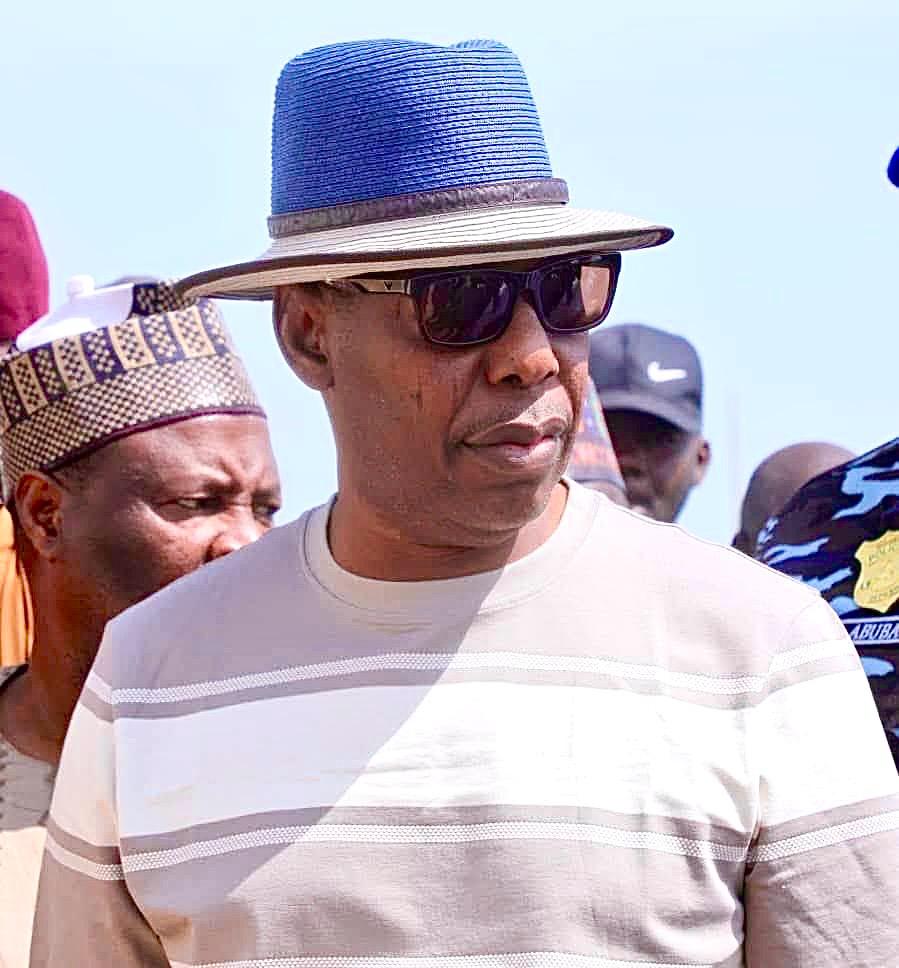
Zulum’s Shuttles Of Resilience And Nigerian Borders Security
By Dauda Iliya
Leadership is indispensable: decisions must be made, trust earned, promises kept, a way forward proposed- Henry Kissinger.
The recent tour undertaken by the Borno state governor, Professor Babagana Umara Zulum to Diffa region in the Republic of Niger, as well as the border towns of Kirawa and Banki was not only strategic but a pragmatic decision.
The visit fulfils the Governor’s pledge to secure a sustainable peace for the state, with its central aim being the repatriation and resettlement of those displaced by the Boko Haram conflict, who have been seeking refuge beyond Nigeria’s borders.
Governor Zulum and Boko Haram/ISWAP terror group seem engaged in a startling clash of strategies that launches a new phase in the 15-year Northeast terror war.
Troops have virtually squeezed the terrorists out of major sections of Borno State and tamed them along Nigeria’s borders with the three neighbouring countries of Chad, Niger and Cameroon, and the Lake Chad Tumbus (islands); but the terrorists seem solid in their resolve to maintain a firm grip of the borders.
They seemingly do so for twin reasons: to maintain their frightening presence to the Nigerian nation, seemingly saying: “We are still very much around; we are only watching you from the borders”; and, therefore to carry out sporadic unsuspected attacks, especially on resettled communities in border local government areas.
Zulum, leveraging the success achieved in the war over the last six years he has governed Borno State, he, with the instrumentality of the UN-hailed 25-year Development Plan and Borno Model, launched a comprehensive and expansive recovery, reconstruction and resettlement phase that has facilitated the return and resettlement of hundreds of communities in their ancestral abodes to rebuild their lives and, consequently, facilitate the rapid restoration of prosperity for the state.
Zulum seems strategically resolved to ensure the terrorists, even if not completely exterminated, remain squeezed to, and tamed along, the borders where the four Chad Basin nations can easily crush them in what may seem a decisive phase in wiping out terror from their respective terrains and the entire Chad Basin.
Over the last one year, the terrorists have been marauding into the Borno terrain from their border enclaves, tormenting resettled communities, killing scores to, apparently, scare Zulum from going ahead with his UN-praised Borno Model of societal recovery.
Zulum, leveraging the fascinating successes of the security agencies – The North-East Operation Hadin Kai Theater Command in Maiduguri and the Multi National Joint Task Force headquartered in Ndjamena, Chad Republic, seem solidly determined to ensure that Borno recovers from the terror-inflicted humanitarian crisis and, as a competent representative of the Nigerian authorities, squeeze terror out of the shores of Nigeria.
Zulum and the terrorists seem in a fierce clash of strategies in a fresh phase of the Northeast terror war, which portrays the incontrovertibly uncommon determination of the governor to snatch his dear Borno from the calamitous fangs of terror.
Excitingly undeterred by the persisting resurgence of terror across the Northern, Central and parts of the Southern zones of the state, the Mr. Resilience called Governor Babagana Zulum, smouldering with an uncommon determination and daredevil stance on recovery, trots round resettling communities and injecting them with the required resilience to withstand the terror resurgence.
He is injecting in them with the determination to rebuild their lives and economic activities as a critical part of the non-kinetic approach to ending the conundrum.
The Zulum administration has so far repatriated over 30,000 families from Diffa in the neighbouring Niger Republic and resettled them in their ancestral homes in Malam Fatori, Abadam Local Government Area of Borno State.
Other communities resettled by the Zulum administration, where socioeconomic activities picked up include, Kekeno, Cross Kauwa, Doron Baga and Kukawa town, all in Kukawa local government area in Northern Borno.
Also resettled are: Ngom, Koshobe, Ajiri, Gajibo, Wulgo, Banki and Darajamal, while efforts have reached advanced stage for the resettlement of Mayanti, Bula Yobe, Tarmu’a in Bama local government.
Majority of these are either border communities or communities close to the borders. He now strategically shuttles among them, planting the seeds of resilience and determination to rebuild their lives amid what seems an unending terror.
While at the Nigeria-Cameroon border community of Kirawa in Gwoza Local Government Area, where the terrorists invaded, during a 5-day strategic shuttle to some border communities to strengthen security and plant the seeds of resilience recently, Zulum assured them that arrangement have been concluded to station a military formation to guard to the border town.
“I want to assure you that we will do everything possible to ensure that Kirawa does not fall to Boko Haram insurgency. We must not allow this town to be displaced again, because once affected, then other adjoining communities like Pulka, Ngoshe and even Gwoza would be vulnerable ,” Zulum warned.
Sowing the seeds of resilience, he declared: “I promised to rehabilitate all the houses destroyed, I promise build a befitting General Hospital in the town because it will not only serve the people of this community but also the Cameroon Republic part of Kirawa, and also look into the possibility of compensating victims of community that lost their assets in the attack.”
The governor continued: “I have discussed with the Theatre Commander, Force Commander Multinational Joint Task Force (MNJTF), and General Officer Commanding (GOC) 7 Division, we have agreed that within the shortest possible period, the military will deploy troops to Kirawa.”
Another measure taken, he disclosed, is to provide additional support to members of Civilian JTF, hunters and vigilante to enable them secure the town.
The storming terrorists burnt down eight vehicles, including heavy equipment and about 50 houses at the border town.
“We are looking into the possibility of getting some technological equipment that will enhance the security operation in the general area. We are also building their resilience
To boost border security, Zulum recently trotted to Diffa in Niger Republic Community, where over a hundred thousand of Borno families are taking refuge from Boko Haram, to review and fine-tune Lake Chad shores and border security with authorities there.
The visit, which comprised a high-level security and economic delegations, focused on strengthening the existing collaboration between Nigerian and Nigerien forces in the ongoing fight against terror and insurgency, particularly around the shores of Lake Chad.
Zulum was received by the Governor of Diffa, Brigadier General Mahamaduo Ibrahim Bagadoma, and other senior officials. The leaders held closed-door meetings centered on joint patrols, intelligence sharing, and sustaining the recent gains that have pushed insurgents out of many of their former strongholds.
At the Nigeria-Cameroon border town of Banki in Bama Local Government Area, Zulum assured residents that robust security measures would be adopted to protect them from further attacks by Boko Haram terrorists.
He commended the people for their courage and resilience in the face of a recent attack, urging them not to be disheartened.
“I purposely came to Banki to salute your courage; your act of bravery is really encouraging,” Governor Zulum stated. “We should not allow a few bad elements to displace this town whose businesses and economic activities have been thriving.”
He continued: “I want to assure you that the insurgents will not succeed, Insha Allah. We will strengthen the security of this border town and will support our youth volunteers, hunters, and vigilantes to further fortify this area.”
Governor Zulum undertook a two-day tour to some frontline locations in the southern and central parts of the state to inspect key resettlement projects as critical ingredients of community resilience building.
The projects include 500 resettlement houses and over 3,000 temporary shelters in Mayinti and DaraJamal.
Zulum’s resilience building initiative has been yielding gladdening socioeconomic results at Dikwa, Marte, Kala Balge, Gamboru-Ngala, Limankara and Gwoza, after his weeklong tours there some few months ago.
With the startling strategies of resilliance building adopted by Governor Zulum, now roaring and reverberating across the border areas, the path to enduring peace is just few a meters away.
Dauda Iliya is the Special Adviser on Media/ Spokesperson to Governor Babagana Umara Zulum.
Zulum’s Shuttles Of Resilience And Nigerian Borders Security


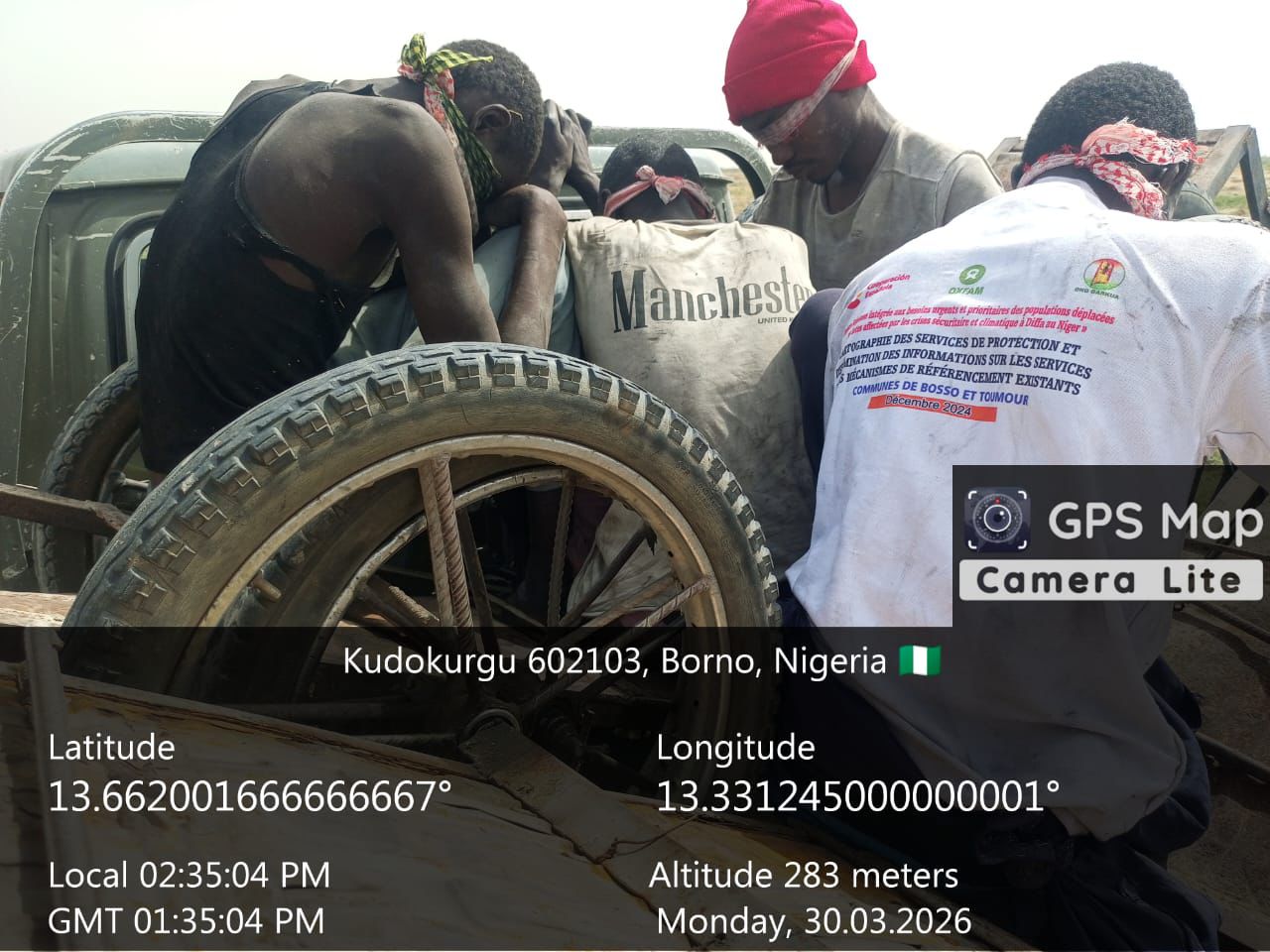
Troops intercept 11 youths with donkeys during patrol in Borno
By: Zagazola Makama
Troops of 68 Battalion have intercepted 11 youths during a routine patrol in Mallam Fatori area of Abadam Local Government Area of Borno State.
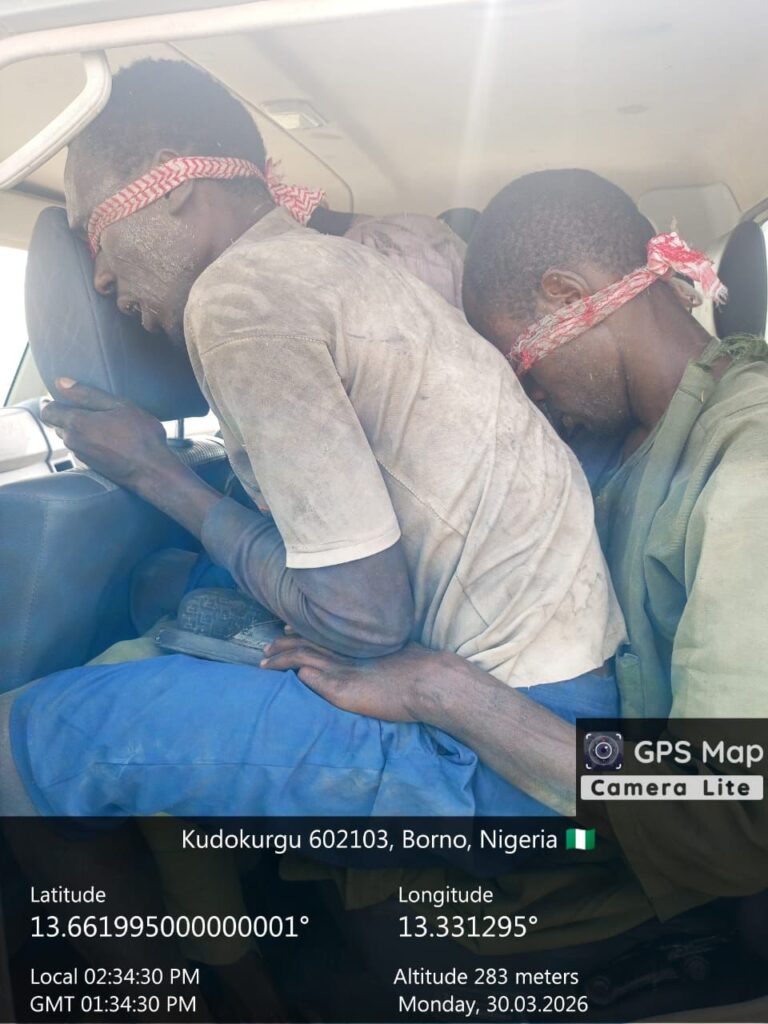
Security sources said the interception occurred along the Bulagana–Cheisa axis on April 2 during ongoing clearance operations in the area.
According to the sources, the individuals were found moving in the area with 12 donkeys when they were stopped and briefly interrogated by troops.
The sources added that the youths were later handed over, alongside the animals, to relevant authorities in a neighbouring country for further necessary action.
The military said the patrol was part of sustained efforts to maintain security dominance and prevent exploitation of border communities by criminal elements.
Troops intercept 11 youths with donkeys during patrol in Borno
Troops recover ammunition, logistics items in Kwara patrol operation
By: Zagazola Makama
Troops of the Nigerian Army under the 22 Brigade have recovered ammunition and other logistics items during a fighting patrol in Ifelodun Local Government Area of Kwara State.
A security source disclosed that the operation was conducted at about 4:00 p.m. on April 2 at Daban Lema, where troops of the brigade, operating from the Patrol Base, encountered signs of suspected terrorist activities in a deserted location.
According to the source, the troops immediately carried out exploitation of the area, leading to the recovery of four rounds of 7.62mm special ammunition and one empty PKT ammunition belt link.
Other items recovered include four mobile phones, two head warmers, two small solar panels, and assorted repair tools believed to have been used by the suspected terrorists.
The source added that the recovery indicates the presence and movement of suspected criminal elements within the area, noting that troops have intensified surveillance and patrols to deny them freedom of action.
Troops recover ammunition, logistics items in Kwara patrol operation
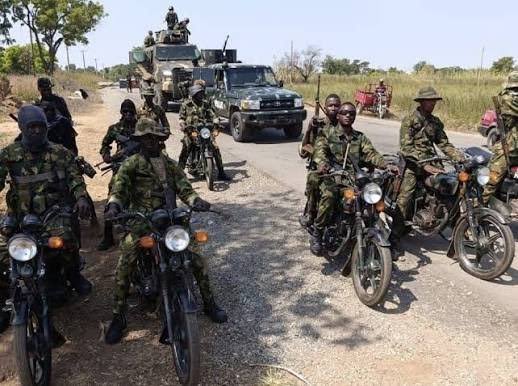
Troops foil attack by Criminal Youths, rescue victims, arrest suspects in plateau
By: Zagazola Makama
Troops of Sector 1, Operation Enduring Peace (OPEP), have foiled an attack on residents at Dutse Uku in Jos North Local Government Area of Plateau State.
A security source said the troops responded swiftly to a report of sporadic gunshots in the area at about 11:50 p.m. on April 2.
According to the source, upon arrival at the scene, the suspected criminals fled, abandoning their operation due to the prompt intervention of the troops.
He said the troops rescued two victims who sustained gunshot wounds during the incident and immediately evacuated them to a hospital for medical attention.
The source further disclosed that two suspects, dressed in black attire, were arrested at the scene.
Items recovered from the suspects include a cutlass and a knife.
He added that the suspects are currently in military custody and undergoing preliminary investigation, while efforts are ongoing to track down other fleeing members of the group.
Zagazola report that despite heightened security, there has been report of pocket of attacks in some communities.
The source reassured residents of the military’s commitment to protecting lives and property and urged the public to continue providing timely information to security agencies.
Troops foil attack by Criminal Youths, rescue victims, arrest suspects in plateau

Troops intercept suspected Boko Haram logistics convoy conveying 13 persons in Borno

Troops intercept 11 youths with donkeys during patrol in Borno

Troops, CJTF arrest three suspected Boko Haram logistics suppliers in Borno

Roger Federer’s Shock as DNA Results Reveal Myla and Charlene Are Not His Biological Children

THE PLIGHT OF FARIDA

FAILED COUP IN BURKINA FASO: HOW TRAORÉ NARROWLY ESCAPED ASSASSINATION PLOT AMID FOREIGN INTERFERENCE CLAIMS
-
 News2 years ago
Roger Federer’s Shock as DNA Results Reveal Myla and Charlene Are Not His Biological Children
-
Opinions4 years ago
THE PLIGHT OF FARIDA
-
 News12 months ago
FAILED COUP IN BURKINA FASO: HOW TRAORÉ NARROWLY ESCAPED ASSASSINATION PLOT AMID FOREIGN INTERFERENCE CLAIMS
-

 News2 years ago
EYN: Rev. Billi, Distortion of History, and The Living Tamarind Tree
-
 Opinions4 years ago
POLICE CHARGE ROOMS, A MINTING PRESS
-

 ACADEMICS2 years ago
A History of Biu” (2015) and The Lingering Bura-Pabir Question (1)
-

 Columns2 years ago
Army University Biu: There is certain interest, but certainly not from Borno.
-

 Opinions2 years ago
Tinubu,Shettima: The epidemic of economic, insecurity in Nigeria
