
News
$1bn Poultry Mega Project to Drive Food Security, Jobs Hit Homestead as Pilot Begins in Three States

$1bn Poultry Mega Project to Drive Food Security, Jobs Hit Homestead as Pilot Begins in Three States
By: Michael Mike
Nigeria’s push to strengthen food security and cut dependence on poultry imports is set to gain fresh momentum as the $1 billion National Integrated Poultry Project moves into its pilot phase in Enugu, Kaduna and Oyo states.
The project, driven under the Nigeria–China Strategic Partnership (NCSP), is designed as one of the most ambitious agricultural investments in the country’s history, targeting large-scale egg and meat production, expanded feed cultivation and direct support for local farmers.
Director-General and Global Liaison of the NCSP, Joseph Tegbe, announced the take-off of the pilot phase at the weekend during the Chinese New Year Temple Fair in Abuja, held to mark the 55th anniversary of diplomatic relations between Nigeria and China.
According to Tegbe, the initiative is structured to go beyond commercial farming. When fully operational, it is expected to produce about six million eggs daily, house more than seven million laying birds and over two million broilers, while supporting the cultivation of more than 60,000 hectares of maize and soybeans for feed.
He said the scale of the project positions it as a game-changer for Nigeria’s poultry value chain, with direct implications for employment, farmer incomes and food affordability.
“This is not just a farming project. It is a strategic intervention to stabilise food supply, create jobs across the value chain and restore dignity to agricultural livelihoods,” Tegbe said.
A key component of the initiative, he explained, is the provision of subsidised feedstock, which will not only serve the integrated farms but also support existing poultry farmers who have been hit by rising feed costs.
Beyond agriculture, Tegbe highlighted parallel Nigeria–China collaboration in heavy industry, particularly the planned revitalisation of the Ajaokuta Steel Complex. He said renewed operations at Ajaokuta are projected to yield up to 10 million metric tonnes of steel annually, potentially reshaping Nigeria’s industrial landscape.
“A functional Ajaokuta will power manufacturing, unlock jobs and reposition Nigeria as an industrial force in Africa,” he said, adding that the government is determined to translate long-standing plans into measurable economic outcomes.
On human capital development, Tegbe noted that educational and knowledge-exchange programmes between Nigeria and China are expanding, with more scholarships, joint research initiatives and industrial parks in the pipeline to support technology transfer and innovation.
China’s Chargé d’Affaires to Nigeria, Zhou Hongyou, said the poultry project and other joint initiatives reflect the maturity of bilateral relations built over 55 years. He described the Year of the Horse—under which the celebration falls—as symbolic of hard work, perseverance and progress, values he said mirror the trajectory of Nigeria–China cooperation.
Also speaking, Director of the China Cultural Center in Nigeria, Yang Jianxing, described the growing partnership as one rooted in mutual trust and shared development, stressing that cooperation must continue to deliver concrete benefits for ordinary Nigerians.
The anniversary celebration featured cultural performances, exhibitions and a showcase of Chinese traditions, underscoring the people-to-people dimension of the Nigeria–China relationship as both countries pursue deeper economic and cultural ties.
$1bn Poultry Mega Project to Drive Food Security, Jobs Hit Homestead as Pilot Begins in Three States


Military
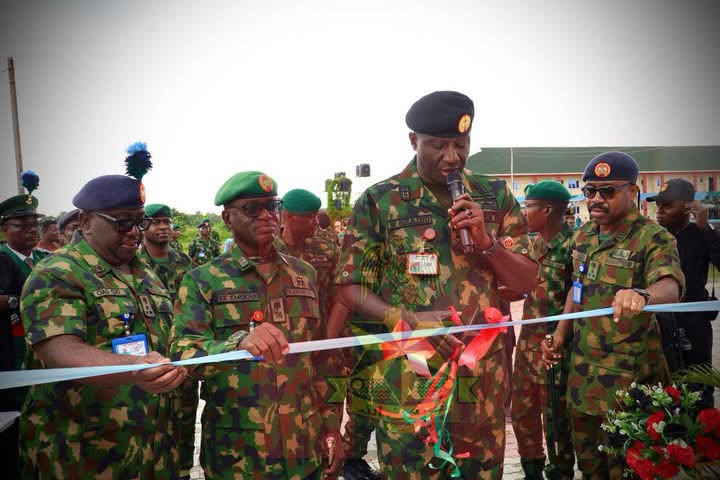
COAS commissions 6 Division RSM House, reaffirms frontline leadership role of regimental sergeant majors
COAS commissions 6 Division RSM House, reaffirms frontline leadership role of regimental sergeant majors
By Zagazola Makama
The Chief of Army Staff (COAS), Lieutenant General Waidi Shaibu, has reaffirmed the critical role of Regimental Sergeant Majors (RSMs) in strengthening discipline, leadership and operational effectiveness across the Nigerian Army.
The COAS made the remarks on Friday during the commissioning of the newly constructed 6 Division Regimental Sergeant Major’s House in Port Harcourt as part of activities marking the 163rd Nigerian Army Day Celebration (NADCEL 2026).
Speaking at the event, Lt.-Gen. Shaibu described RSMs as the backbone of regimental administration and custodians of discipline, standards and morale within the Army.

He said the provision of dedicated accommodation for RSMs was not merely a welfare initiative but a strategic investment aimed at enhancing leadership at the unit level and improving operational efficiency.
According to the Army Chief, RSMs play a vital role in translating command directives into action, maintaining troop cohesion and ensuring effective implementation of operational orders across various theatres of operation.
He added that the senior non-commissioned officers also serve as the crucial link between officers and soldiers, fostering professionalism, mutual trust and esprit de corps within formations and units.

Shaibu noted that the influence of RSMs in mentoring soldiers, enforcing discipline and sustaining troop morale remains indispensable to the success of military operations.
He stressed that providing conducive accommodation for key regimental leaders would enhance their ability to discharge their responsibilities effectively and contribute to improved operational readiness.
The COAS reiterated that under his “Soldier First” philosophy, the welfare of personnel, particularly those occupying critical leadership positions, remains a top priority.
He maintained that sustained investment in welfare infrastructure and leadership development would continue to strengthen the Nigerian Army’s capacity to remain a resilient, professional and combat-ready force capable of addressing the country’s evolving security challenges.
COAS commissions 6 Division RSM House, reaffirms frontline leadership role of regimental sergeant majors
Troops intercept cattle grazing in restricted area in Plateau, herders flee
By: Zagazola Makama
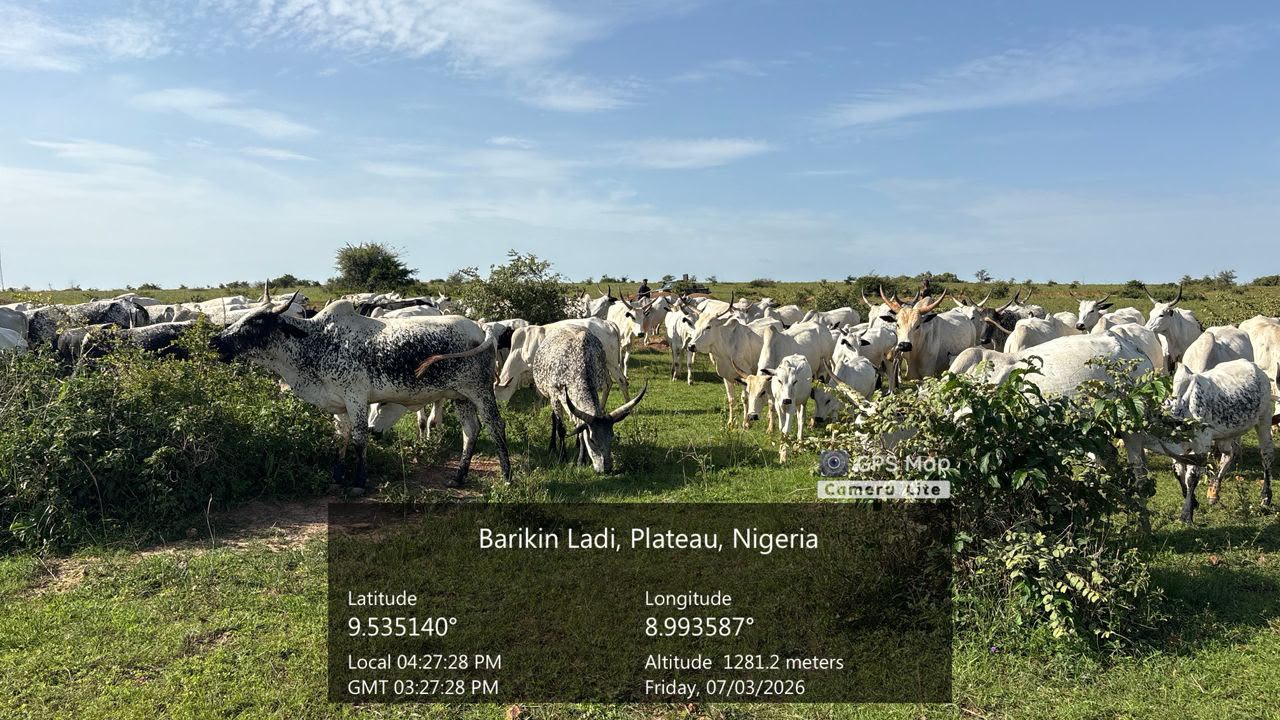
Troops of Operation Enduring Peace (OPEP) have intercepted a herd of cattle found grazing in a restricted area in Barkin Ladi Local Government Area of Plateau State.
Intelligence sources told Zagazola Makama that the troops of Sector 4 OPEP responded to a report of illegal grazing at about 3:30 p.m. on Friday in Nyerwie village.
The sources said that upon arrival at the location, the troops found a herd of cattle grazing in the restricted area.
The herders reportedly fled into nearby bushes on sighting the troops, abandoning the livestock.
The intercepted cattle were subsequently moved to a secure location for necessary administrative action, while efforts are ongoing to identify and apprehend the fleeing herders, the sources said.
Troops intercept cattle grazing in restricted area in Plateau, herders flee
Troops Arrest Two Suspected Vandals, Recover Stolen Construction Materials in Jos
By: Zagazola Makama
Troops of Operation Enduring Peace (OPEP) have arrested two suspected vandals in Jos North Local Government Area of Plateau State for allegedly stealing construction materials from an ongoing road construction site.
Security sources said the suspects, identified as Arin Itse, 21, and Agwom Christopher, 19, were arrested at about 9:30 a.m. on Friday during a routine patrol by troops of Sector 1, Sub-Sector 12, along the Kwanga road in Jos North.
The sources said the suspects were intercepted while in possession of iron rods suspected to have been stolen from a road construction company handling an ongoing project in the area.
According to the sources, the suspects were taken into custody for further investigation, while the recovered iron rods were handed over to the construction company.
The sources added that investigations were ongoing to determine the circumstances surrounding the alleged theft and whether other persons were involved.
Troops Arrest Two Suspected Vandals, Recover Stolen Construction Materials in Jos

COAS commissions 6 Division RSM House, reaffirms frontline leadership role of regimental sergeant majors

Troops intercept cattle grazing in restricted area in Plateau, herders flee

Troops Arrest Two Suspected Vandals, Recover Stolen Construction Materials in Jos

Roger Federer’s Shock as DNA Results Reveal Myla and Charlene Are Not His Biological Children

THE PLIGHT OF FARIDA

FAILED COUP IN BURKINA FASO: HOW TRAORÉ NARROWLY ESCAPED ASSASSINATION PLOT AMID FOREIGN INTERFERENCE CLAIMS
-
 News2 years ago
Roger Federer’s Shock as DNA Results Reveal Myla and Charlene Are Not His Biological Children
-
Opinions4 years ago
THE PLIGHT OF FARIDA
-
 News1 year ago
FAILED COUP IN BURKINA FASO: HOW TRAORÉ NARROWLY ESCAPED ASSASSINATION PLOT AMID FOREIGN INTERFERENCE CLAIMS
-

 News2 years ago
EYN: Rev. Billi, Distortion of History, and The Living Tamarind Tree
-
 Opinions5 years ago
POLICE CHARGE ROOMS, A MINTING PRESS
-

 ACADEMICS2 years ago
A History of Biu” (2015) and The Lingering Bura-Pabir Question (1)
-

 Columns2 years ago
Army University Biu: There is certain interest, but certainly not from Borno.
-

 Politics1 year ago
2027: Why Hon. Midala Balami Must Go, as Youths in Hawul and Asikira/Uba Federal Constituency Reject ₦500,000 as Sallah Gift
