
Uncategorized
2023 Elections: UN Asks Political Parties to Focus Campaign on Policies and Ideas

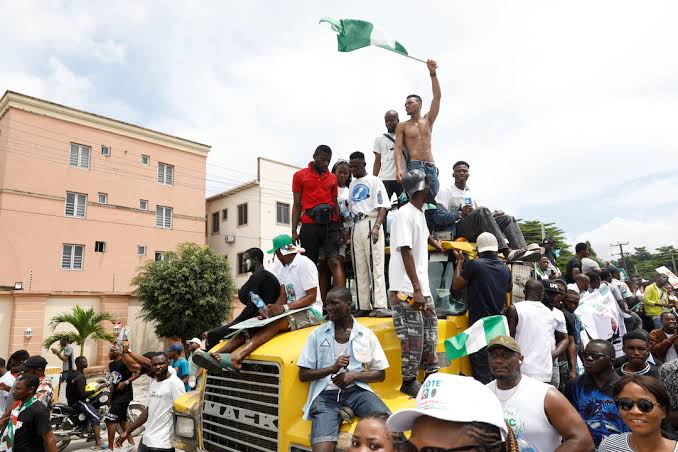
2023 Elections: UN Asks Political Parties to Focus Campaign on Policies and Ideas
By: Michael Mike
As Nigeria gears up for season of electioneering, the United Nations has called on political parties to focus their campaigns on policies and ideas, not insults or divisive rhetorics.
During a speech at the Roundtable on Hate-Free Politics in Nigeria on Monday in Abuja, the United Nations Resident and Humanitarian Coordinator in Nigeria, Mr. Mohamed Fall said as we head to the 2027 elections. “Allow me to share some recommendations. First, political parties must lead by example. Campaigns should focus on policies and ideas, not insults or divisive rhetoric.
“Second, parties should commit to codes of conduct that reject hate speech and promote information integrity. Third, cooperation with media and digital platforms is essential to ensure that harmful content is not amplified, while factual, reliable information reaches voters.
“Above all, we must remember that elections are about people, their dignity, their rights, their future. Hate speech strips people of their dignity and undermines the very foundation of democracy. As leaders, you have the power and the responsibility to set the tone, to show Nigerians that politics can be conducted with respect, truth, tolerance, and integrity.”
Fall added that: “On this International Day of Democracy, I call upon you today: let us work together to make democratic participation in Nigeria free from hate and grounded in information integrity and respect for human rights. Let us affirm that words matter and that in choosing our words carefully, we choose peace, unity, and progress for Nigeria. Let us act collectively to strengthen and protect democracy in and beyond Nigeria.”
He stated that this International Day of Democracy with theme “Democracy and Inclusion in an Age of Insecurity” should remind us that democracy is not only about holding elections, but about ensuring inclusion, pluralism, and public participation of everyone in a respectful and inclusive manner.
He noted that: “When falsehoods spread unchecked, especially during elections, they weaken public trust, mislead citizens, and undermine democratic choices. Promoting information integrity means ensuring that Nigerians can access reliable information, that public debate is grounded in facts, and that voters are empowered to make informed choices free from manipulation.”
He insisted that: “In Nigeria, the stakes are high. Vibrant political discourse and engagement should be moments of ‘no gree for anybody’, unity, and pride. But they can be harmful if hateful language and hostile narratives are allowed and accepted; it can incite hostility and result in violence. We know from history that hate speech has been a precursor to some of the worst atrocities, including genocide.
“The Rabat Plan of Action, endorsed by the United Nations, reminds us that advocacy of national, racial, or religious hatred that incites discrimination, hostility, or violence must be prohibited by law and that these laws must comply with international human rights standards, including the right of association, expression, and assembly.
“This is a cornerstone of democracy. Restrictions must be lawful, necessary, and proportionate, never a pretext to silence debate. The challenge before all of us here today is to strike the right balance: engaging in open political discourse while safeguarding freedom of expression and protecting Nigerians from the harms of hate speech.”
On his part, the Executive Secretary of National Human Rights Commission (NHRC), Dr. Tony Ojukwu noted that since the return to civilian rule in 1999, Nigeria has made notable progress in democratic development.
He said: “We have witnessed successive electoral cycles, the strengthening of civil society, and the expansion of political space. Yet, our democracy remains a work in progress. Challenges such as low voter turnout, weak internal democracy in political parties, electoral violence and malpractices, weak institutional accountability, and limited inclusion of women, youth, and persons with disabilities and harsh political climates continue to undermine public trust and democratic consolidation. Above all of these, our democratic and political processes including communication have often come under immense challenges of poor values, deep-seated hate-filled and divisive rhetoric threatening the core foundation of our nationhood.”
He noted: “The National Human Rights Commission has been at the forefront of efforts to promote ethical and hate-free politicsin Nigeria. In the 2023 elections.”
Ojukwu stated that hate speech is intricately related to human rights, either in its form or outcome, adding that: “To the person spreading hate speech, it is about right to freedom of expression, opinion, speech or belief. To the recipient of hate speech, it is a violation of the rights to dignity of human person and the freedom from discrimination based on religious belief, political, ethnic, gender, cultural or other affiliations, amongst many other human rights.
“When applied to politics, hate speech and unethical communications breed political divisions that facilitate violence, weak voter electoral participation, stifles plurality and social cohesion.”
He said: “As we count down to the 2027 General Elections, the NHRC is alarmed at the high level of hateful politics and unethical practices that seemed to have taken the centre stage with some of our political actors. Achieving a culture of responsible and value-laden political process continues to remain a challenge for Nigeria. From the independence of the election management body to unethical actions of political parties, their candidates and agents to the inappropriate use of security and law enforcement agencies.
“Vote buying and inducements of various sorts during past and recent elections have become worrisome indicators of the fragility of the Nigerian electoral culture with severe consequences on the freedom of association and the right to participation.”
He noted that: “The Roundtable on Ethical and Hate-Free Politics in Nigeria which we are convening today in partnership with the United Nations is aimed at forging a shared understanding of the drivers, patterns, and impacts of hate speech and unethical political communications in Nigerian electoral and democratic processes and to secure practical, rights-based commitments from key actors to promote ethical politics, reduce hate speech and protect pluralism and inclusive participation—especially for women, youth, persons with disabilities, and minority communities in the electoral processes leading to the 2027 elections and beyond.”
2023 Elections: UN Asks Political Parties to Focus Campaign on Policies and Ideas



Troops arrest three Fulani men in Plateau after farmer’s killing
By: Zagazola Makama
Troops of Sector 6, Operation ENDURING PEACE (OPEP), have arrested three persons during a raid on two Fulani settlements in Bachi community, Riyom Local Government Area of Plateau State.
The operation, conducted on Sept. 13, 2026, followed a manhunt for criminal elements responsible for the killing of a farmer at Fang community in Riyom LGA on Sept. 12.
During the raid at Baggat and Shong 2 Fulani hamlets, troops arrested three residents identified as Anas Usman, Nuhu Mohammad and Haruna Ahmed.
Security sources said the three suspects are not necessarily the perpetrators of the killing, but their arrest is part of efforts to mount pressure on local Fulani leaders to assist security agencies in identifying and producing those responsible for the crime.
The suspects are currently in custody for further investigation and intelligence exploitation.
Troops arrest three Fulani men in Plateau after farmer’s killing
Uncategorized
Talata Mafara Attack: ISN Demands Intelligence Overhaul, Special Courts to Crush Banditry
Talata Mafara Attack: ISN Demands Intelligence Overhaul, Special Courts to Crush Banditry
The Institute of Security, Nigeria (ISN) has called for a fundamental overhaul of Nigeria’s approach to terrorism, banditry and kidnapping, warning that criminal groups are becoming increasingly organised and capable of challenging the authority of the state.
The institute made the call while reacting to the reported invasion of Talata Mafara market in Zamfara State, where non-state actors allegedly imposed a ₦50 million levy and demanded 100 livestock, giving residents a seven-day ultimatum.
The ISN said the development exposed the need for security agencies to move beyond reactive operations and adopt stronger intelligence-led strategies capable of identifying and dismantling criminal networks before they launch attacks.
In a statement signed by its Deputy President and Chief Executive Officer, Barr. Adebayo Akinade, the institute said the activities of terrorists and bandits were no longer limited to isolated attacks but increasingly involved the control of economic activities, collection of illegal levies and disruption of legitimate livelihoods.
It warned that such activities could gradually establish a parallel system of criminal authority in affected communities if left unchecked.
The institute consequently urged the Federal and state governments to establish a coordinated security framework bringing together federal security agencies, state security outfits and vetted community guards.
It also called for the creation of a National Security Fusion Centre, supported by state-level fusion desks, to facilitate real-time intelligence sharing and faster responses to emerging threats.
According to the ISN, security agencies should penetrate criminal networks operating around markets, cattle-rustling routes and illicit livestock value chains while targeting the logistics and financial structures sustaining banditry.
It recommended regulated livestock markets and improved tracking systems to prevent stolen cattle from being absorbed into legitimate commercial channels.
The institute further proposed special courts for terrorism, kidnapping and banditry cases, arguing that a faster judicial process would strengthen the fight against organised criminal groups.
It urged the government to deploy modern technologies, including forest geo-fencing, livestock tracking, drones and citizen-reporting platforms, alongside improved tactical mobility and air surveillance.
The ISN also called for a two-hour rapid-response mechanism in vulnerable areas and increased investment in night-vision equipment and other specialised capabilities.
Beyond security operations, the institute advocated stronger community-based early-warning systems and local peace and security forums involving traditional rulers, farmers, market unions, faith organisations and civil society groups.
It urged citizens to report threats rather than surrendering to ransom and illegal levy demands, while encouraging communities to document attacks and preserve evidence for investigations and prosecution.
The institute said professional training in terrorism studies, intelligence management and counter-banditry operations should be strengthened as part of efforts to build a more effective national security architecture.
The ISN reaffirmed its readiness to support government and security agencies through research, training, policy advisory services and professional certification, saying a coordinated response was essential to restoring public confidence and protecting national development.
Talata Mafara Attack: ISN Demands Intelligence Overhaul, Special Courts to Crush Banditry
Uncategorized
2026 Peace and Dialogue Awards: IPCR, Ufuk Foundation Call for Collective Investment in Peace

2026 Peace and Dialogue Awards: IPCR, Ufuk Foundation Call for Collective Investment in Peace
By: Michael Mike

The Director-General of the Institute for Peace and Conflict Resolution (IPCR), Dr. Joseph Ochogwu, has called on governments, businesses, civil society organisations, religious and traditional institutions, communities and individuals to invest deliberately in peacebuilding, warning that the cost of conflict far exceeds the resources required to prevent it.
Ochogwu made the call on Thursday, September 10, 2026, while delivering a lecture titled “Investing in Peace: A Collective Responsibility for Everyone” at the 2026 Peace and Dialogue Awards organised by the Ufuk Dialogue Foundation Nigeria in collaboration with the IPCR in Abuja.

He said the awards should go beyond recognising individuals and organisations contributing to peacebuilding, stressing that Nigeria must begin to treat peace as an investment requiring consistent resources, planning and accountability.
According to Ochogwu, global military expenditure exceeded $2.4 trillion in 2024, while peacebuilding expenditure remained below $60 billion, representing about 2.5 per cent of military spending.

He questioned why trillions of dollars could be mobilised for conflict and military expenditure while significantly smaller amounts remained difficult to commit to conflict prevention and peaceful societies.
Ochogwu said the message was consistent with the 2026 International Day of Peace and International Day of UN Peacekeepers, but noted that the IPCR had further domesticated it as “Invest in Peace for Everyone, Everywhere, Everyday.”
“Peace cannot be a seasonal product for September 21st; it must be deliberate, daily, and for all,” he said.

He identified early-warning systems, peace education, youth employment, interfaith literacy, justice reform, community mediation, psychosocial healing, and greater participation of women and young people as key areas requiring investment.
The IPCR Director-General noted that the benefits of peacebuilding were often measured by conflicts that never occurred, making its returns less visible than conventional security spending.
He stressed that peacebuilding interventions must reflect the specific causes of conflicts in different parts of Nigeria. He identified extremism in the North-East, banditry in the North-West and North-Central, resource-related conflicts across the Middle Belt, separatist agitation in the South-East and urban fragility as major security and conflict challenges.
He also said West Africa and the Sahel were facing a convergence of violent extremism, unconstitutional political transitions, farmer-herder tensions and climate-induced displacement.
“A blanket approach will fail,” he warned, urging policymakers to develop interventions based on the specific drivers of conflict in each community and region.

Ochogwu also linked economic development to sustainable peace, saying the Federal Government’s economic reforms under the Renewed Hope Agenda could contribute directly and indirectly to peacebuilding.
He said job creation, poverty reduction and addressing economic vulnerabilities could help prevent communities and young people from becoming susceptible to conflict and violent mobilisation.
“Economic renewal is not a separate track; it is the bedrock on which peace is sustained,” he said.
He identified a perception gap, fragmentation of interventions, funding misalignment and the absence of effective mechanisms for tracking peace expenditure and its impact as major obstacles to peace investment.
According to him, less than 0.5 per cent of the budgets of Ministries, Departments and Agencies (MDAs) were coded for peacebuilding, while corporate social responsibility (CSR) spending rarely reached peacebuilding initiatives.
He therefore called for a system to track who invests in peace, how much is invested, where resources are deployed and the results achieved.
Ochogwu warned that failure to invest in peace carries significant economic and humanitarian consequences. He cited an estimated $19.1 trillion global economic cost of violence in 2024, equivalent to about 13.5 per cent of global GDP.
He added that every dollar not invested in conflict prevention could ultimately cost significantly more in humanitarian response and reconstruction.
According to him, farmer-herder conflicts had resulted in losses estimated at more than $14 billion over five years, while infrastructure damage in the North-East had exceeded $9 billion, with about 2.2 million people displaced.
“The cost of not investing in peace far exceeds the cost of investing in it,” he said.
To address the challenges, Ochogwu proposed a five-point compact aimed at making peacebuilding a shared responsibility across Nigerian society.
He called for the speedy implementation of the National Peace Policy, the establishment of a National Peace Investment Fund, legislation for a minimum three per cent peacebuilding allocation across relevant MDAs, and stronger coordination and early-warning responsibilities for the IPCR.
He also proposed committing at least one per cent of CSR expenditure to peacebuilding initiatives, including mediation centres, school peace clubs, early-warning technology and youth employment programmes in vulnerable communities.
The IPCR boss urged faith, traditional and community leaders to institutionalise interfaith dialogue and community-level dispute-resolution mechanisms in every ward, saying vulnerable communities often need trusted local mediators more than externally organised workshops.
He further called for stronger action against hate speech and disinformation, the generation of locally relevant evidence and the development of a Peace Investment Tracker Dashboard at the IPCR.
Ochogwu urged individuals and communities to make peace part of their daily conduct by avoiding escalation, accommodating neighbours, reporting early-warning signs and mentoring vulnerable young people.
“Peace must become everyone’s business,” he said.
The Chairperson of the 2026 Peace and Dialogue Awards, Inspector-General of Police Olatunji Rilwan Disu, NPM, also said peace and democracy were mutually reinforcing, stressing the importance of peaceful engagement in strengthening Nigeria’s democratic development.
2026 Peace and Dialogue Awards: IPCR, Ufuk Foundation Call for Collective Investment in Peace

Niger: How 37 Miners Died in NSCDC Custody

The Persistent Political Scar on Nigeria: Fulani Ethnic Groups as the New Target of Demonization
NiDCOM Audit: NIDO Demands Answers, Board Constitution Over 13 Queries

Roger Federer’s Shock as DNA Results Reveal Myla and Charlene Are Not His Biological Children

THE PLIGHT OF FARIDA

FAILED COUP IN BURKINA FASO: HOW TRAORÉ NARROWLY ESCAPED ASSASSINATION PLOT AMID FOREIGN INTERFERENCE CLAIMS
-
 News3 years ago
Roger Federer’s Shock as DNA Results Reveal Myla and Charlene Are Not His Biological Children
-
Opinions5 years ago
THE PLIGHT OF FARIDA
-
 News1 year ago
FAILED COUP IN BURKINA FASO: HOW TRAORÉ NARROWLY ESCAPED ASSASSINATION PLOT AMID FOREIGN INTERFERENCE CLAIMS
-

 News3 years ago
EYN: Rev. Billi, Distortion of History, and The Living Tamarind Tree
-
 Opinions5 years ago
POLICE CHARGE ROOMS, A MINTING PRESS
-

 ACADEMICS3 years ago
A History of Biu” (2015) and The Lingering Bura-Pabir Question (1)
-

 Columns3 years ago
Army University Biu: There is certain interest, but certainly not from Borno.
-

 Politics1 year ago
2027: Why Hon. Midala Balami Must Go, as Youths in Hawul and Asikira/Uba Federal Constituency Reject ₦500,000 as Sallah Gift
