
News
2023 General Elections: INEC assures Nigerians on transparency

2023 General Elections: INEC assures Nigerians on transparency
By: Our Reporter
The Independent National Electoral Commission (INEC), has expressed optimism that it would not disappoint residents in the conduct of the forthcoming Federal Capital Territory Area Council election scheduled for February 12, and the 2023 general elections.
INEC’s National Commissioner for North Central, Sani Mohammed Adamu, made this known during an INEC FCT election monitoring and support red zone implementer’s workshop, in Abuja.
This workshop was organised by INEC in collaboration with the European Center for Electoral Support, ECES and the Planning, Monitoring and Strategic Committee, PSMC, to deliberate, map-out modalities and bring to light some of the weaknesses of INEC, in view of the FCT area council polls and the 2023 general elections.
Delivering his remarks, the National Commissioner for North Central said that the 2022, February 12th FCT area council election would be a positive “model”, “signpost” and “recipe” for which the 2023 general elections would bask.
While commending the national Chairman of INEC, Mahmood Yakubu for the successful elections he has carried out in the country, assured Nigerians that the elections would hold peacefully and transparently, also stating that the commission is well equipped and Hi- tech ready for the success of elections.
In his words: “The professor, Mohamood Yakubu led INEC has done enormously well in conducting elections successfully in Nigeria.
“There’s been a lot of improvement. I like to believe that this coming election in the FCT is very important to all of us.
“It is a signpost to 2023. It is a recipe for 2023. We take this election very seriously. This is the FCT. The Anambra election was held successfully; technology was deployed. The forth coming election is going to be conducted, we believe successfully, transparently.
“It is going to be inclusive because the same technology will be deployed and I want to assure the nation the election will hold peacefully and successfully.
“It is very important for us at this very critical juncture to asses and re-assess our level of preparedness. The essence of coming here today with veterans like professor Kunna, Professor Ayela, the commission is in safe hands with their vast experience in the business of conducting elections.
“INEC rely heavily on professionals that are profoundly known to have engineered, nutured credible election in Nigeria.
“I want to assure the nation that we can not afford for any reason to fail this nation. We have the huge confidence and we have the huge capacity to deliver.
“We trust all of you from the lowest member of staff to the highest we are all prepared. We are adequately equipped to successfully conduct the council election in the FCT, while we do all this preparations.
“We are also well garnered and empowered to conduct the 2023 elections by the grace of God.”
Also speaking, the Chairman of Planning, Monitoring and Strategic Committee, PMSC, Honourable Chairman, Abdulahi Zuru, pointed that the Commission has engaged experts on election risks management for the FCT council election and the 2023 general elections respectively.
He said: “we have assembled some experts on election risk management to engage with us and our stakeholders and share their expertise and skills on the following carefully chosen topics.
“The EMSC Data Collection reporting tools for the red zone, the INEC security and not a notification system, the items and I believe this will also talk about the helmet that allows us to monitor threats on individuals or facilities. And then, of course, the MSC communications strategy at election day operations.
“However, we must keep in mind that when electoral risks are not understood and addressed, they can undermine the credibility of the process, our results, it heals with possible devastating violence.”
“Let me re-echo the honorable chairman of INEC by reminding us that the FCT election is unique in the sense that it is the only local government level election being conducted by INEC. And of course, INEC is the utmost election management body in the country, in the West African sub region, and indeed, in the whole of Africa. We simply cannot afford to perform in the conduct of this election.
“Therefore, the Honorable chairman has declared it is election as the Commission’s election, and he repeatedly have mentioned this at different forum accordingly. On behalf of the chairman, we wish to assure you that the Commission will deploy all necessary human material and managerial resources to ensure that the election is free, fair, credible, peaceful, inclusive, and transparent.
“It will be a model for the forthcoming state and federal constituency by-elections, the Ekiti and Osun governorship election, and indeed, the 20 general election”, he added.
On his side, the ECES project coordinator, Hauza Fassi-Fihr, asserted that it is needful for INEC to ensure that the FCT area council elections go transparently as it would serve as a picture of what the 2023 elections would look like.
The ECES project Coordinator, while commending INEC’s National Chairman on his effort in expanding the process which led to the increase of about 120,000 polling units to now up to more than 176,000 polling units across the country, tasked the commission on transparency and inclusivity against the 2023 general elections
He, furthermore, charged the national chairman to demonstrate strong commitment towards comprehensive scientific and evidence based monitoring of the electoral process.
He said: “This workshop provides an appropriate platform to assess the level of the Commission’s preparedness ahead of the polls. “Incidentally, it is taking place almost one year ahead of the general election 2023.
Also Read: SERAP sues PMB, others over alleged missing N3.1 billion in…
“The commission had noted that this is the second important election where INEC will be deploying the beavers. In a similar notes, the FCT election is also the second important election after the governorship in Anambra governorship election in Anambra where voters can experience voting in new polling units. Open successful completion of its review and expansion process which led to the increase from about 120,000 polling units to now up to more than 176,000 polling units across the country. An effort geared towards ensuring all voters have better access to polling units close to their place of residence.
“For all these reasons, the FCT election is particularly important for I like to draw lessons for future elections, including that of off cycle governorship elections in equity and are shown later this year, and the 2023 general elections.
“In this context, the EMSC is very instrumental being an innovative election management system that monitors critical occurrence along the electoral cycle. The phase the monitoring of the processes that it offers is a critical factor of success.
“It helps election managers adjust to evolving uncertain contexts and take appropriate action to avoid glitches and delays leading to successful outcomes.
“I’m sure that EMSC tool is playing its role in helping the ionic identifying gaps, risks and lapses in the process, and is useful in addressing them.
“In addition to this important role of identifying issues ahead of time, monitoring also ensures accountability and transparency in the electoral process, thereby inspiring stakeholders confidence and acceptability of outcomes.
“It’s my hope that this red zone implementers workshop will be useful for the election managers convened here to critically assess the status of preparations, while identifying necessary actions for a hitch free exercise.”
“It is therefore commendable to note that Ionic has demonstrated strong commitment towards comprehensive scientific and evidence based monitoring of the electoral process through the innovative tool of the EMSC.
2023 General Elections: INEC assures Nigerians on transparency


NDLEA busts drug network as South African woman, US-based grandma arrested
By: Michael Mike
A South African woman allegedly recruited to smuggle 36.65 kilogrammes of cocaine out of Nigeria, a United States-based Nigerian grandmother accused of bringing in 9.45 kilogrammes of high-grade cannabis, and a Lagos car dealer suspected of facilitating the cocaine courier’s movements have been arrested in separate operations by the National Drug Law Enforcement Agency (NDLEA).
The arrests, involving international drug consignments moving through the Murtala Muhammed International Airport (MMIA), Lagos, have exposed fresh leads in investigations into suspected cross-border trafficking networks, as the agency intensifies operations against drug syndicates and their local collaborators.
The South African suspect, identified as 34-year-old Qhina Beauty, allegedly agreed to transport the cocaine for a reward of R20,000, while the 62-year-old Nigerian-American grandmother, Anetor Gloria Ubong, reportedly told investigators that a box containing the cannabis was given to her in the United States for delivery to her daughter’s fiancé in Nigeria.

The arrests formed part of a nationwide crackdown that also uncovered large consignments of pharmaceutical opioids, cannabis and other illicit substances in Lagos, Delta, Kano, Bauchi, Niger, Edo, Ondo, Taraba and Oyo states.
The latest development comes against the backdrop of previous cases involving South African nationals arrested for drug trafficking in Nigeria, including a woman sentenced to a total of 40 years’ imprisonment in September for importing 5.75 kilogrammes of heroin into the country.
According to a statement by the spokesman of the anti-narcotics agency, Femi Babafemi, Qhina was arrested on October 7 by NDLEA operatives at the Lagos airport as she prepared to board a Qatar Airways flight to South Africa through Doha.

He said a search of her two travelling bags uncovered 30 blocks of cocaine weighing 36.65 kilogrammes, wrapped in cellophane tape, mixed with dried pepper and concealed in seven separate parcels.
She was reported to have during interrogation told investigators that she had arrived in Nigeria on September 30 specifically to collect the consignment. She allegedly identified another South African woman as her recruiter and said she had been promised R20,000 upon successful delivery.
She also reportedly identified two other alleged members of the network, one based in the United States and the other a Lagos-based car dealer.
Babafemi said following further investigation and surveillance, NDLEA operatives arrested the suspected local accomplice, 46-year-old Uchenna Umunnakwe, at Apple Junction, Ago Palace Way, Lagos, on October 14.
He said Umunnakwe admitted receiving Qhina at the airport, arranging her accommodation at Santiago Hotel in Amuwo-Odofin and subsequently moving her to Cynarisso Hotel near the airport ahead of her departure.
The arrest of the car dealer has widened the investigation beyond the interception of the cocaine consignment to the alleged logistics supporting the courier’s movements within Lagos.
In another airport operation, NDLEA officers arrested Anetor Ubong on October 21 after she arrived from Houston, Texas, aboard a United Airlines flight.
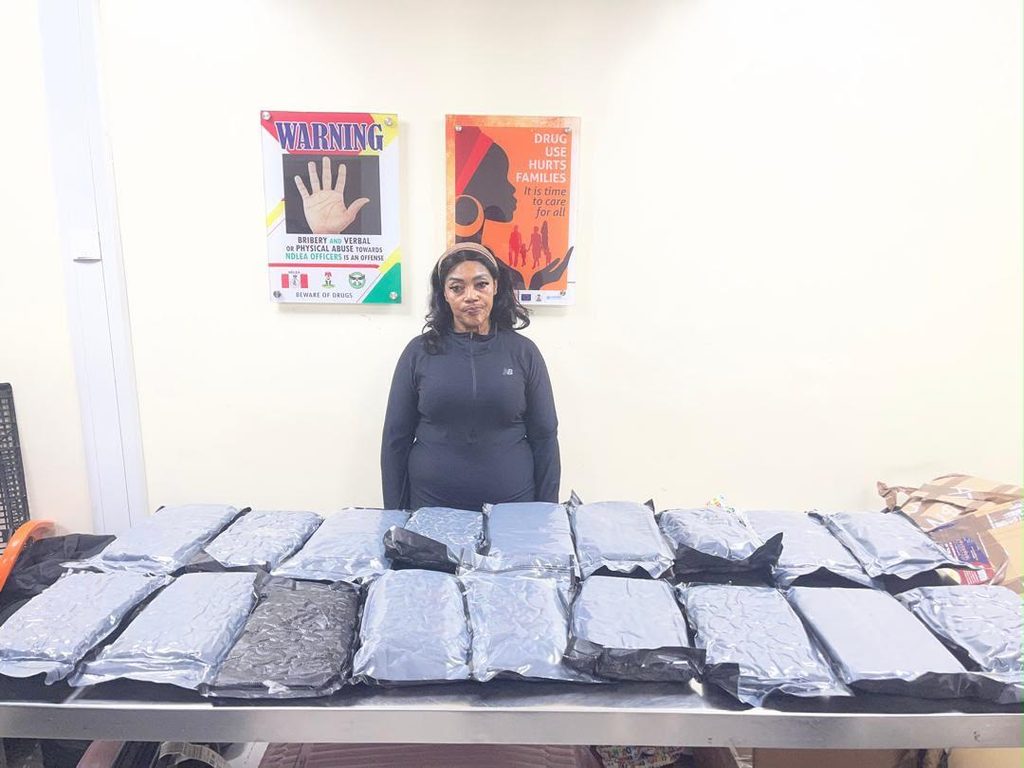
The 62-year-old realtor, who is based in Richmond, Texas, and holds Nigerian and United States passports, was found with 18 parcels of loud weighing 9.45 kilogrammes in her two checked-in boxes.
The substance, a high-potency form of cannabis, was concealed with gift-wrapping paper inside a box.
Ubong reportedly told investigators that her daughter and the daughter’s future brother-in-law had delivered the box to her home in the United States for onward delivery in Nigeria to her daughter’s fiancé, identified as Jibola.
The agency’s investigation into the two airport interceptions comes amid other high-profile cases involving foreign drug couriers.
In September, a Federal High Court in Abuja sentenced South African national Will Jessica Ann to a total of 40 years’ imprisonment for importing 5.75 kilogrammes of heroin into Nigeria.
Ann was arrested at the Nnamdi Azikiwe International Airport, Abuja, on July 6, after arriving from Doha aboard a Qatar Airways flight. NDLEA operatives reportedly discovered 14 blocks of heroin in her luggage.
The agency said further investigations linked her to an alleged international trafficking network involving her husband, Jan Coenraad De Jager, who was arrested in Johannesburg on July 27 over an alleged attempt to traffic 3.2 kilogrammes of illicit drugs to Hong Kong.
Justice Obiora Egwuatu convicted Ann after she pleaded guilty to charges relating to importing heroin and conspiracy to import the substance. The sentences were ordered to run concurrently.
The earlier case underlines the potential international reach of drug trafficking networks that use couriers to move consignments between continents, although there is no established evidence linking Ann’s case to the latest investigation involving Qhina.
Beyond the airport seizures, NDLEA operatives recorded substantial recoveries across the country, including thousands of opioid tablets, codeine syrup, cannabis consignments and cultivated cannabis farms.
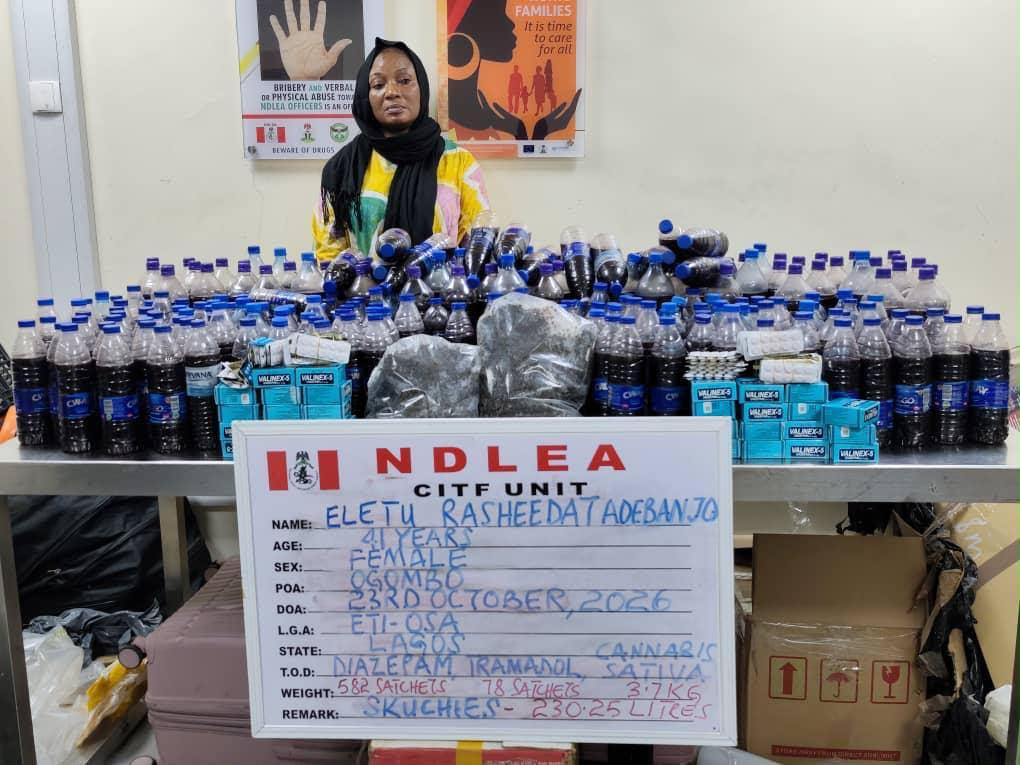
In Lagos, a special operations unit arrested 41-year-old Eletu Rasheedat in the Eti-Osa area on October 23, recovering 5,820 pills of diazepam, 780 tramadol tablets, 3.7 kilogrammes of skunk and 230.25 litres of skuchies.
In Delta State, operatives arrested 51-year-old Peter Ugochukwu in Warri with a large cache of pharmaceutical opioids.
The agency listed the seizures as 29,350 tramadol capsules, 6,620 tablets of tramadol 200mg, 4,116 bottles of codeine syrup, 11,340 Rohypnol tablets, 3,500 diazepam tablets, 300 ampoules of pentazocine injection and 200 ampoules of diazepam injection.
Quantities of tramadol 225mg, Molly and Cocodamol were also recovered. The suspect and a white Hummer bus were transferred from the Nigeria Police Force in Delta State to the NDLEA.
In a separate operation at Enerhen Junction, Warri, operatives arrested 46-year-old Helen Bakporo Samson, a physically challenged woman, on October 19 with six kilogrammes of skunk.
In Oyo State, officers arrested 41-year-old Fajana Dada Oluwaseyi in the Adamasingba area of Ibadan on October 19. The agency said he had earlier escaped arrest after operatives seized 197.8 kilogrammes of cannabis from his residence on September 16.
A raid in the Gerawa area of Kano State on October 22 led to the arrest of 30-year-old Murtala Lawan and the seizure of 159 blocks of cannabis weighing 97.2 kilogrammes.
In Taraba State, operatives at the Lankaviri checkpoint in Yorro Local Government Area intercepted 39-year-old Raiyanu Misa on October 23 with 95 blocks of compressed cannabis weighing 60.175 kilogrammes.
On the same day, the agency received another suspect from the police following his arrest at Dakka village in Bali Local Government Area, where 112 blocks of compressed cannabis weighing 81.49 kilogrammes were recovered.
In Niger State, NDLEA officers arrested 26-year-old Emmanuel Ekene on October 19 along the Sabo-Kainji road in Borgu Local Government Area, recovering 64,000 pills of opioids, including tramadol and diazepam.
In Bauchi State, operatives arrested 45-year-old Jamilu Mustapha, also known as Last Card, at Nasaru town in Ningi Local Government Area on October 21. They seized 379 kilogrammes of cannabis packed in seven large sacks.
The agency also recorded significant seizures from cannabis farms in Ondo and Edo states.
Babafemi said acting on intelligence, operatives raided a farm at Board-Ala in Akure South Local Government Area of Ondo State on October 20, recovering 56 bags of abandoned cannabis weighing 583 kilogrammes.
In Edo State, officers destroyed two cannabis farms in Ugbada Forest, Uzebba, Owan West Local Government Area, on October 18. The farms had an estimated yield of 2,023.14 kilogrammes.
During the operation, operatives destroyed 450 kilogrammes of processed cannabis by burning and took another 97 kilogrammes as exhibits. In a related operation at Ewe community in Owan West, they arrested 42-year-old Mary Edokhai with 35 kilogrammes of the substance.
The agency said its enforcement operations were complemented by public sensitisation campaigns under its War Against Drug Abuse initiative, with lectures delivered to students and staff of schools in Oyo, Niger, Ogun, Kano, Enugu, Anambra and Osun states, among other locations.
NDLEA Chairman and Chief Executive Officer, Brig.-Gen. Buba Marwa (retd.), commended officers of the Lagos airport and the Kano, Lagos, Bauchi, Niger, Edo, Ondo, Taraba, Oyo and Delta commands for what he described as vigilance, professionalism and intelligence-driven operations.
He urged personnel nationwide to sustain the momentum in the fight against drug trafficking and substance abuse.
NDLEA busts drug network as South African woman, US-based grandma arrested
China Takes Taiwan Reunification Campaign to Africa Through Abuja Exhibition
By: Michael Mike
China has stepped up efforts to rally African understanding of its position on Taiwan, using an exhibition in Abuja to draw parallels between Beijing’s reunification agenda and the continent’s historical struggles against colonialism and foreign domination.
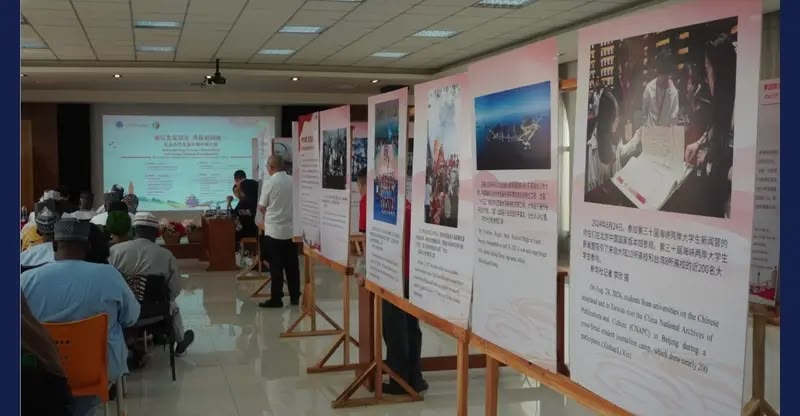
The exhibition, organised by Xinhua News Agency’s Africa Regional Bureau in partnership with other organisations, brought together diplomats, researchers, business leaders and media practitioners on Friday to commemorate the 81st anniversary of Taiwan’s restoration to China after Japan’s defeat in the Second World War.
Held under the theme, “Remembering Taiwan’s Restoration, Advancing National Reunification,” the exhibition featured more than 30 photographs across four thematic sections documenting historical events surrounding Taiwan’s return to Chinese control in 1945.
Beyond the historical displays, the event provided a platform for Chinese representatives and Nigerian scholars to advance Beijing’s position on national sovereignty, territorial integrity and the eventual reunification of China and Taiwan.
Gui Tao, Deputy Editor-in-Chief of Xinhua News Agency’s Africa Regional Bureau, said the exhibition was part of a series of commemorative activities taking place in Nigeria, Kenya, Tanzania, South Africa and Mozambique.
He said the initiative was designed to deepen African understanding of China’s historical experience, adding that the continent’s encounters with colonialism and struggles for independence provided a basis for appreciating Beijing’s position on national unity.
Gui said the historical experiences of China and African countries underscored the importance of sovereignty, national dignity and respect for historical facts.
He maintained that understanding each other’s history was essential to strengthening relations between China and African countries, particularly through cultural engagement and people-to-people exchanges.
Yang Jianxing, Cultural Counsellor at the Chinese Embassy in Nigeria, described Taiwan’s restoration as an important outcome of China’s victory in the War of Resistance Against Japanese Aggression.
He said the photographs and accompanying historical records illustrated China’s determination to defend its sovereignty and territorial integrity, stressing that the commemoration offered an opportunity to reflect on the historical significance of Taiwan’s restoration and Beijing’s commitment to national reunification.
Hu Jieguo, Secretary-General of the China Council for the Promotion of Peaceful National Reunification in Western Africa, also linked the anniversary to the sacrifices made by millions of Chinese during the war against foreign aggression.
Hu said the historical experiences of China and Nigeria offered common ground for discussions about sovereignty and national unity, noting that both countries had experienced the consequences of foreign domination.
The Chinese representatives’ appeal received support from Nigerian scholars who drew parallels between China’s position on Taiwan and Nigeria’s diplomatic commitment to the one-China principle.
Sheriff Ibrahim, Head of the Centre for Contemporary China-Africa Research in Nigeria, said Nigeria had consistently reaffirmed its recognition of the one-China principle.
He compared China’s efforts to preserve national unity with Nigeria’s own experience in protecting its territorial integrity and expressed confidence that Beijing would eventually achieve peaceful reunification with Taiwan.
Similarly, Charles Onunaiju, Director of the Centre for China Studies in Nigeria, said Africa’s experience of colonialism and foreign intervention offered a historical context for understanding China’s concerns about sovereignty and national unity.
The exhibition also sought to reinforce its message through personal accounts of Taiwanese businesspeople living and working on the Chinese mainland, presenting economic and social connections as part of the broader relationship between Taiwan and mainland China.
Chen Chi-An, Executive Vice President of the Guangzhou Taiwan-Funded Enterprises Association, said more than 2,900 Taiwan-funded companies were operating in Guangzhou.
He also highlighted the presence of Taiwanese students in the city, describing his professional interactions with young people from mainland China as one of the rewarding aspects of his experience.
Wu Chun-Jui, President of the Taiwan Businessmen Association in Dongguan, said the city offered a favourable business environment for Taiwanese entrepreneurs. He disclosed that Taiwanese businesspeople had established privately funded hospitals and schools there, contributing to local development.
Hsu Fu-hsien, President of the Taiwan Merchant Association in Shenzhen, said he had lived and worked in the city since 1990, building his career and family there.
Hsu said his experience reflected the connections developed by Taiwanese businesspeople on the mainland, expressing hope that the exhibition would help African audiences better understand their experiences.
The event also featured the presentation of a book edited by Xinhua News Agency, while Taiwan businessmen associations in Guangzhou and Shenzhen donated books to Nigerian officials and experts.
The exhibition formed part of broader activities aimed at promoting cultural exchanges and discussions on China’s historical experience and relations with African countries.
China Takes Taiwan Reunification Campaign to Africa Through Abuja Exhibition
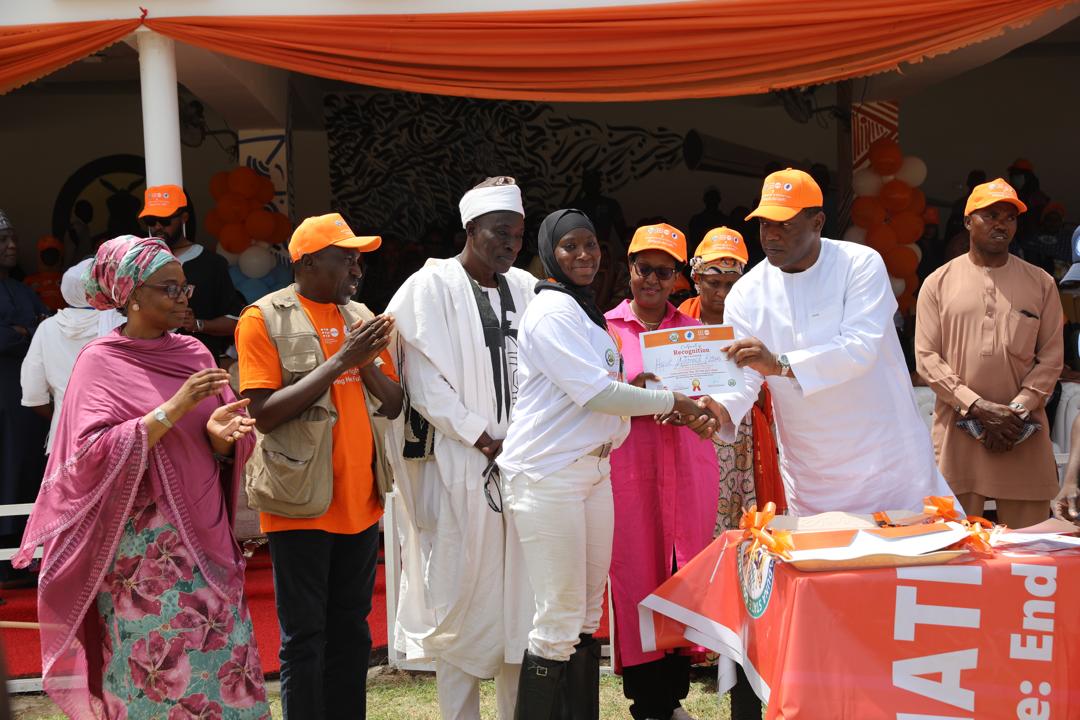
UNFPA, Kaduna Polo Club Use All-Female Match to Champion Girls’ Rights
By: Michael Mike
The United Nations Population Fund (UNFPA) and the Kaduna Polo Club have used an all-female novelty polo match to draw attention to the rights, safety and wellbeing of women and adolescent girls, as concerns grow over teenage pregnancy, child marriage and gender-based violence.
The advocacy initiative, organised in partnership with the Elamin Polo Team on October 21 and 22 in Kaduna, featured a public dialogue with adolescent girls and a special exhibition match tagged Polo for Humanity, introducing an all-female team into a traditionally male-dominated sport.
The events, held to commemorate the 2026 International Day of the Girl Child, sought to challenge restrictive gender norms, promote the inclusion and agency of girls and mobilise influential stakeholders to strengthen efforts to prevent gender-based violence (GBV) and harmful practices.
UNFPA cited findings from the 2024 Nigeria Demographic and Health Survey indicating that 29.9 per cent of adolescent girls aged 15 to 19 had experienced pregnancy, highlighting the challenges facing young girls in accessing opportunities to complete their education and realise their potential.
The agency also warned that violent conflicts, which affect nearly half of young people globally through their impact on health, rights and dignity, further expose adolescent girls to risks, including gender-based violence, female genital mutilation and child marriage.
Speaking at the opening of the novelty polo match, UNFPA Resident Representative, Ms Muriel Mafico, said society must protect girls’ childhoods and ensure they have opportunities to pursue their ambitions.
“No girl should have to exchange her childhood for marriage, her education for motherhood, or her dreams. Investment in girls is the smartest thing we can do,” Mafico said.
She said UNFPA worked with partners to provide critical support to adolescent girls, including those in Nigeria, as part of efforts to protect their rights and improve their wellbeing.
The use of polo as an advocacy platform was designed to take the conversation beyond conventional policy forums by engaging sporting communities, young people, policymakers and other influential stakeholders in promoting the rights of women and girls.
The First Vice-President of the Kaduna Polo Club, Brigadier-General Kapeh Kazir (retd.), said the club was proud to deploy sport in support of social causes.
He said the club would continue to open its doors to initiatives that promote equality and protect the future of Nigerian children.
The UNFPA and its partners expressed appreciation to the participating players, club members, partners and the media, pledging to sustain their collaboration beyond the International Day of the Girl Child commemoration.
They said the partnership would support continued advocacy on gender-based violence prevention, harmful practices, sexual and reproductive health and rights (SRHR), and maternal health interventions.
UNFPA is the United Nations’ sexual and reproductive health agency, working towards a world where every pregnancy is wanted, every childbirth is safe and every young person can fulfil their potential.
UNFPA, Kaduna Polo Club Use All-Female Match to Champion Girls’ Rights

NDLEA busts drug network as South African woman, US-based grandma arrested

China Takes Taiwan Reunification Campaign to Africa Through Abuja Exhibition

UNFPA, Kaduna Polo Club Use All-Female Match to Champion Girls’ Rights

Roger Federer’s Shock as DNA Results Reveal Myla and Charlene Are Not His Biological Children

THE PLIGHT OF FARIDA

FAILED COUP IN BURKINA FASO: HOW TRAORÉ NARROWLY ESCAPED ASSASSINATION PLOT AMID FOREIGN INTERFERENCE CLAIMS
-
 News3 years ago
Roger Federer’s Shock as DNA Results Reveal Myla and Charlene Are Not His Biological Children
-
Opinions5 years ago
THE PLIGHT OF FARIDA
-
 News2 years ago
FAILED COUP IN BURKINA FASO: HOW TRAORÉ NARROWLY ESCAPED ASSASSINATION PLOT AMID FOREIGN INTERFERENCE CLAIMS
-
 Opinions5 years ago
POLICE CHARGE ROOMS, A MINTING PRESS
-

 News3 years ago
EYN: Rev. Billi, Distortion of History, and The Living Tamarind Tree
-

 ACADEMICS3 years ago
A History of Biu” (2015) and The Lingering Bura-Pabir Question (1)
-

 Columns3 years ago
Army University Biu: There is certain interest, but certainly not from Borno.
-

 Politics1 year ago
2027: Why Hon. Midala Balami Must Go, as Youths in Hawul and Asikira/Uba Federal Constituency Reject ₦500,000 as Sallah Gift
