
Politics
2023: Kashim Shettima’s BIG steps in mending fences, saves APC in Southern Borno

2023: Kashim Shettima’s BIG steps in mending fences, saves APC in Southern Borno
By: James Bwala
APC Vice Presidential Candidate, Senator Kashim Shettima has begun the unity move and back to one fold from the home front when he wins back the southern Borno Chief political foot soldier, Hon. Aliyu Mamman Kachallah aka Opanka. The former House of Assembly member and crowd puller left the party to join the opposition PDP after a political brush with the Borno state governor, Professor Babagana Umara Zulum. The feud was over his bid for the Borno state House of Assembly ticket.
Hon. Mamman Kachallah would have become a stumbling block for the ruling APC in the buildup for the general elections in southern Borno. He was known to have a big political bite and his move has changed the political stirs in Biu by painting the street red with PDP flags following his rooting for the opposition.
Many had described Opanka’s move as a bad sign as those who understand the politics of southern Borno especially in Biu know that the people do not mince words when it comes to their interest.
However, Kashim Shettima has always been a sweet talker and is fat on his negotiation skills. He has mastered the act with the ability to win both the devil and the Saint in political calculations. Opanka falls in one of the sides and the root if allowed to grow before 2023 general elections would have been disastrous. He is one of Hon. Betara Aliyu’s strong gatekeepers and a strong holder of position among the frontline foot soldiers.
Also Read: Kashim Shettima: From the steps of the Senate to power
When Hon. Kachallah felt abused by the actions of the Borno state governor towards his ambition to return to the Borno state House of Assembly, he turned out all political foot soldiers in the Federal constituency against the move to support Zulum in the Betara’s stronghold. Many described the situation as a disaster waiting to happen. According to reports, they would do Betara and APC at the National level but vowed to deliver the block votes of the southern Borno to opposition PDP during both the gubernatorial and Senatorial elections in the zone.
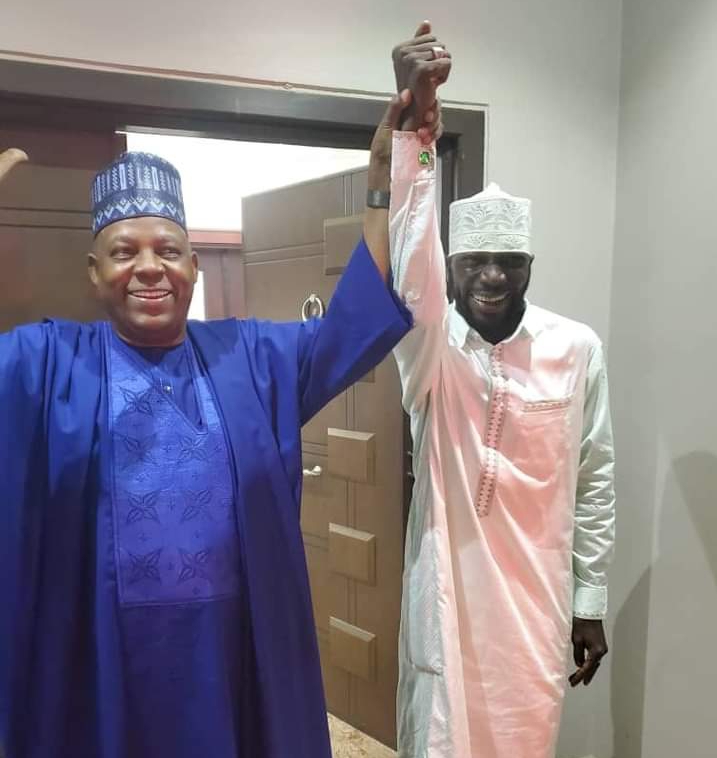
The sins of APC were simply the denial to play by the rules during the Primaries in southern Borno. Despite inaugurating the committee on reconciliation, the southern Borno Senatorial District appeared to be a brick wall for no negotiations. However, with the move by Kashim Shettima, who took time to intervene in the matter, it seemed the coast was clear for the APC to March forward in southern Borno. The young men who are doing the jobs of moving to the left or moving the right were seen calling on one another to move to the right following the ‘Camp Shettima’s ‘ move lifting Opanka’s hand high indicating victory for APC over a successful negotiation.
Winning the home front, makes Shettima’s footprint thick in the ongoing business to mend fences with those aggrieved members of the All Progressive Congress to progressive to the upper level. It is believed that other negotiations will go concurrently and pricelessly with Kashim Shettima doing the magic. The big surprise coming to Nigerians may perhaps be the winning back of NNPP Presidential candidate and former Kano state governor, Engr. Rabiu Musa Kwankwaso. If that happens, APC will be on the top board before noon on Election Day.
The smooth move and gaining grounds across the north shortly after the unveiling of Kashim Shettima promises a good outing for the APC. It appears that in most states especially in the northeast, the move is becoming clearer that the people are announcing where the block votes are already tilting. The Tinubu/Shettima’s flags are taking the streets and the usual voices of victory have been echoing from the rooftops. As the fences are being mended from the home front, the rest of the country will soon witness the overflowing rivers of the songs of victory.
2023: Kashim Shettima’s BIG steps in mending fences, saves APC in Southern Borno


Politics
Gubio 2027: The Next Governor of Borno Is Signalled by Solidarity Visits and Campaign Support
Gubio 2027: The Next Governor of Borno Is Signalled by Solidarity Visits and Campaign Support
By: Dr James Bwala
As Borno State prepares for the 2027 governorship election, political activities are gradually gaining momentum. Across the state, citizens, community leaders, professional groups, youth organisations, women’s associations and political stakeholders are beginning to express their preferences and expectations. Among those receiving increasing attention is the All Progressives Congress (APC) gubernatorial candidate, Engr. Alhaji Mustapha Gubio, FNSE.
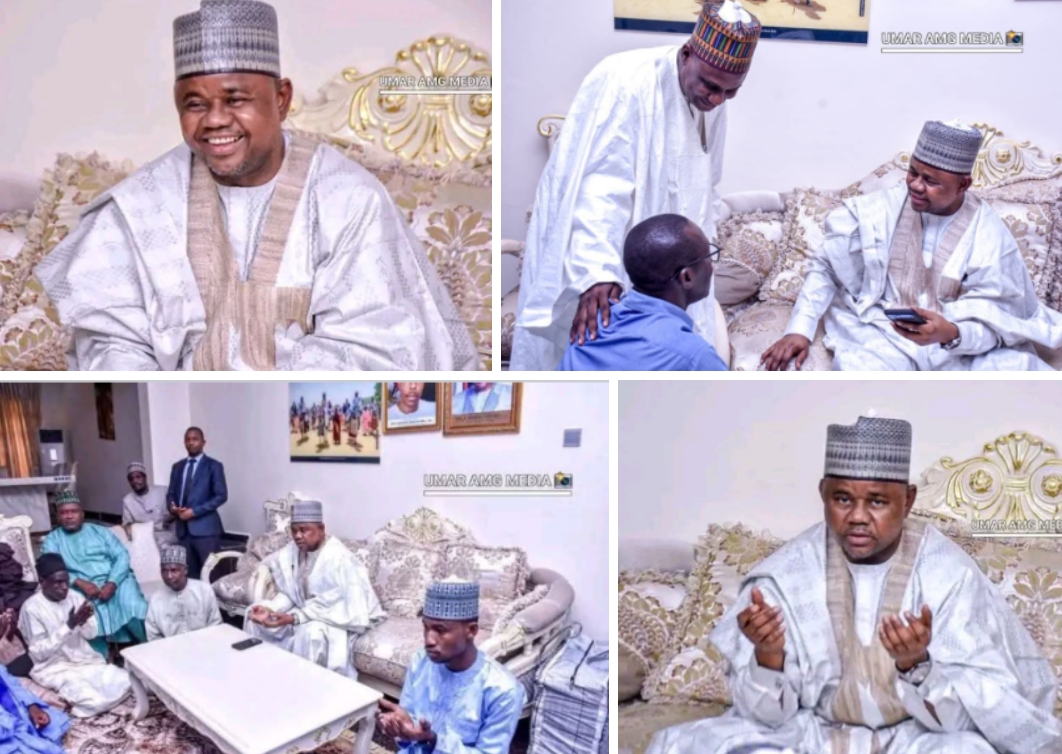
Recently, Gubio has continued to receive solidarity visits and campaign support from various clubs, associations, community groups and stakeholders. These engagements have brought together no fewer than 25 forums and groups, each presenting messages of support, campaign materials and other items to strengthen political mobilisation across Borno. While such activities are part of the normal process of political campaigning, their scale, diversity and consistency suggest something more significant: a growing public confidence in Gubio’s leadership capacity and political vision.
READ ALSO: https://newsng.ng/tinubu-kashim-shettima-and-nigerias-call-for-a-more-representative-united-nations/
The importance of these visits lies not merely in the number of people attending or the quantity of materials presented. Their deeper meaning can be found in the breadth of the groups involved and the shared conviction that Engr. Alhaji Moustache Gubio represents a credible path toward continuity, inclusion and sustainable development in Borno State. Political support is rarely built on one factor alone. It is usually the result of personal reputation, community engagement, trust, competence and the belief that a candidate can respond effectively to the challenges facing society. The solidarity being expressed toward Gubio indicates that many stakeholders see these qualities in him.
One of the strongest features of the recent engagements is the diversity of the groups involved. The groups received by Engr. Gubio includes Gubio Youths Patriotic, Kaumi Group, Gubio Peace & Progress Bura Kime, State Monitor FIRS, Jr. H.E. AMG, Almisikin BG Ali Kawu, Bar Mallum L. Kur, Hon. Mustapha Kur Konduga, Amma B. Lmisula and others, Elefaruk and Zannah Solidarity PVC, Borno Zulum Campaign Organisation, Gubio Youths Generation Club, Monguno Old Boys Prof. Sulumbe, Cap Washing Association, Bolori Community, AMG Progressive Movement, Gubio APC E-Registration Members, Modu Gambo Team Kasuwa Shanu, Dr Zainab Eyn Women Christian, Six Digit Committee Members and Elbash Group, among others.
READ ALSO: https://newsng.ng/tinubu-kashim-shettima-and-nigerias-call-for-a-more-representative-united-nations/
This range of support is politically meaningful because it cuts across different sections of society. It includes youth groups, community forums, women’s organisations, professional networks, political associations, grassroots mobilisers and local stakeholders. A candidate who attracts support from such a broad coalition is better positioned to understand the varied concerns of the electorate. The needs of young people may differ from those of community elders; the priorities of women’s groups may not always be identical to those of professional associations. However, a broad-based support structure creates an opportunity for dialogue and collective problem-solving.
The solidarity visits also show that political mobilisation in Borno extends beyond elite meetings and formal party structures. Grassroots organisations are actively participating in the process. Their involvement shows that citizens want to play a direct role in determining the future direction of the state. When groups make the effort to visit a candidate, present campaign materials and publicly express their support, they are not simply observing politics from a distance. They are investing their time, resources and organisational energy in a political project they consider worthwhile.
READ ALSO: https://newsng.ng/tinubu-kashim-shettima-and-nigerias-call-for-a-more-representative-united-nations/
The materials presented during the visits further illustrate the seriousness of the support. The Lawan Bukar Community Elders Forum presented 1,000 campaign posters, 1,000 wrappers, T-shirts and 500 face caps. The Gubio Youths and Progress Forum, led by its chairman from Bura Kime, presented 300 wrappers and campaign banners. Ahmed Malam Ali, Chairman of Gubio Youths Patriotic, presented six bales and 100 wrappers.
These contributions are significant because they reflect active participation rather than passive endorsement. Campaign materials help communicate political messages, but they also serve as symbols of collective ownership. When supporters contribute posters, wrappers, T-shirts, banners and face caps, they demonstrate their willingness to identify publicly with a candidate. In communities where political loyalty is often expressed through physical presence and direct engagement, such gestures can carry considerable weight.
More importantly, these contributions suggest that supporters are prepared to take responsibility for spreading Gubio’s message. They are not waiting for the candidate or the party to do everything. Instead, they are organising themselves, mobilising their communities and supporting the campaign with available resources. This type of participation can become a powerful foundation for an effective grassroots campaign ahead of the 2027 general elections.
READ ALSO: https://newsng.ng/tinubu-kashim-shettima-and-nigerias-call-for-a-more-representative-united-nations/
Another important aspect of the engagements is the response of Engr Gubio himself. Receiving the groups, he expressed appreciation for their solidarity visits and contributions, commending them for their commitment and support. His response was not limited to gratitude. He also assured the groups of continued engagement and promised that, if elected in 2027, his administration would work with communities and stakeholders toward sustainable development across Borno State.
This commitment to continued engagement is particularly important in contemporary governance. Citizens increasingly expect leaders to maintain communication with them beyond election periods. A government that listens to communities, consults stakeholders and includes citizens in development planning is more likely to design policies that respond to real needs. Sustainable development cannot be achieved through government action alone. It requires cooperation among public institutions, traditional leaders, community associations, youth groups, women’s organisations, private-sector actors and professional bodies.
Gubio’s assurance of partnership therefore presents a governance model based on consultation and inclusion. If translated into practice, such an approach could help strengthen trust between government and citizens. It could also improve accountability, as stakeholders who participate in development discussions are more likely to monitor projects and demand responsible use of public resources.
READ ALSO: https://newsng.ng/tinubu-kashim-shettima-and-nigerias-call-for-a-more-representative-united-nations/
Borno State faces complex challenges that require competent and collaborative leadership. The effects of insecurity, displacement, limited economic opportunities, infrastructure deficits and social disruption cannot be addressed through isolated interventions. The state needs a leadership team capable of combining technical knowledge with political sensitivity and grassroots understanding. As an engineer and professional, Gubio is expected to bring an analytical and development-oriented perspective to governance. His professional background, combined with his current engagement with communities and political stakeholders, may position him to contribute meaningfully to the state’s reconstruction and development agenda.
However, the significance of the current support should not be understood as a substitute for policy debate. Solidarity visits and campaign materials are important expressions of political confidence, but the 2027 election must ultimately be decided by the quality of ideas, programmes and leadership commitments presented to the people. Supporters of Gubio will need to articulate clearly what distinguishes his vision from those of other candidates. They must explain how his administration would improve security, education, healthcare, agriculture, youth employment, women’s empowerment, infrastructure and economic development.
The candidate, for his part, must continue to transform goodwill into a clear and realistic policy platform. He must demonstrate how his proposed programmes would be funded, implemented and evaluated. He must also show that his commitment to stakeholder engagement would extend to all communities, including those that may not initially support his candidacy. True leadership is measured not only by the ability to attract supporters but also by the capacity to serve the entire population fairly after election.
READ ALSO: https://newsng.ng/tinubu-kashim-shettima-and-nigerias-call-for-a-more-representative-united-nations/
The growing solidarity around Gubio nevertheless offers an encouraging foundation. It indicates that many people are already willing to participate in a campaign centred on development and collective action. The presence of elders, youths, women, community groups and professional associations suggests that the campaign has the potential to become a broad movement rather than a narrow political organisation. If properly managed, this coalition can promote peaceful participation, issue-based campaigning and constructive engagement across the state.
Political campaigns should not deepen divisions. In a state that has endured serious challenges, the 2027 election should be an opportunity for citizens to discuss their aspirations and assess the capacity of candidates. Gubio’s engagements with different groups can contribute to this process if they remain focused on respect, unity and the delivery of practical solutions. Supporters should be encouraged to campaign responsibly, avoid inflammatory language and place Borno’s collective interest above personal or sectional considerations.
The current pattern of solidarity visits therefore speaks volumes about the political possibilities surrounding Engr Alhaji Mustapha Gubio. It reflects growing organisation at the grassroots, confidence among diverse stakeholders and a willingness to invest in his campaign. The posters, wrappers, banners, T-shirts and face caps may appear to be simple campaign items, but collectively they represent commitment, identity and shared expectation.
READ ALSO: https://newsng.ng/tinubu-kashim-shettima-and-nigerias-call-for-a-more-representative-united-nations/
Ultimately, the strength of Gubio’s candidacy will depend on how effectively he converts this support into a coherent programme for governance. The people of Borno will expect more than promises. They will demand competence, integrity, inclusiveness and measurable results. If Gubio sustains his engagement with communities, communicates a clear development agenda and remains committed to accountable leadership, the solidarity currently surrounding him could become a decisive political advantage.
The 2027 governorship election is still ahead, but the message from these visits is already clear: a significant number of Borno stakeholders are prepared to stand with Mustapha Gubio and support his journey. Their solidarity suggests that they see in him the possibility of a governor who listens, collaborates and works toward sustainable development. Whether that confidence ultimately translates into electoral victory will depend on the campaign ahead, but the foundation is unmistakable. In Borno’s evolving political landscape, the voices, contributions and organised activities of these groups are speaking loudly—and they are pointing toward Gubio in the 2027 arrangements.
- James Bwala, PhD, writes from Abuja
Gubio 2027: The Next Governor of Borno Is Signalled by Solidarity Visits and Campaign Support


APC Guber Candidate Baba Malam Wali promises to build on Buni’s legacy in Yobe.
By: Yahaya Wakili
The All Progressives Congress (APC) governorship candidate for Yobe State, Alhaji Baba Malam Wali Mni, has assured that he will build on the legacies of His Excellency, the Executive Governor of Yobe State, Hon. Dr. Mai Mala Buni CON, COMN.
Baba Malam Wali disclosed this today while responding to the mommoth crowds gathered to welcome him to the ancient city of Nguru town in Yobe state.
The governorship candidate, Alhaji Baba Malam Wali, thanked the people of Nguru for the historic reception accorded to him and promised not to betray their trust.
“What I have seen today is historic; the people of Nguru have shown me the love, and I will repay you with service, loyalty, and inclusive development, and this project is our project; we would sustain it together,” Baba Malam Wali said.
The massive crowd is a testament to Wali’s acceptability, humility, and deep connection with the grassroots politician, as the political analyst in Yobe state, Dr. Abdu Umar Garba, has said.
The governorship candidate, Alhaji Baba Malam Wali Mni, was accompanied by the Deputy Governor of Yobe State, Hon. Idi Barde Gubana Wazirin Fune; the Deputy Governorship candidate, Hon. Barrister Saleh Samanja; and Yobe State APC chairman, Alhaji Mohammed Gadaka Madakin Gudi.
Others accompanied the governorship candidate include Yobe State Executive Councils, special advisers, special assistants, and other top government functionaries, as well as political heavyweights from within and outside Zone C.
APC Fiber Candidate Baba Malam Wali promises to build on Buni’s legacy in Yobe.
Kashim Shettima At UNGA: A STRONG VOICE FOR NIGERIA AND AFRICA
By: Inuwa Bwala
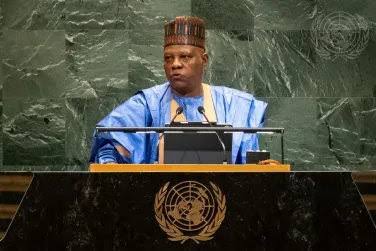
Vice President Kashim Shettima’s appearance on September 24, 2026, delivering Nigeria’s National Statement for the third consecutive year on behalf of President Bola Ahmed Tinubu, was a demonstration of consistency, confidence and statesmanship.
At the risk of sounding immodest, I dare say, that, President Bola Tinubu could not have done it better.
The Vice President’s central message was clear and powerful, to the effect that, “Nigeria believes in multilateralism, but the institutions that govern our world must become more representative, equitable, and responsive to the realities of today.”
This is a positive and mature foreign policy posture. It shows Nigeria is not isolationist, but reformist. Shettima affirmed Nigeria’s commitment to the UN system while boldly advocating for President Tinubu’s long-standing call for reform of global institutions, particularly the UN Security Council and international financial architecture, so as to give developing countries a stronger voice.
To me, it remains Nigeria’s strongest and clearest articulation of where our national interest targets.
His declaration that “Our engagements will be guided by Nigeria’s national interest” resonated well at home and abroad. It frames Nigeria not as a passive aid-recipient, but as a strategic partner negotiating firmly for trade, investment, technology transfer and climate finance. This is exactly the tone Nigerians want to hear on the world stage and the intermitent applause from the delegates was a testimony to this.
Beyond the General Assembly Hall, Shettima scored a major point at the Third High-Level Roundtable of the Africa Minerals Strategy Group. He called for an end to Africa’s dependence on raw mineral exports and advocated for processing and manufacturing industries within Africa.
His argument that Africa’s mineral wealth must translate into jobs, industrial growth and improved living standards is a forward-looking, pan-African economic vision. It positions Nigeria as a leader in the new scramble for critical minerals, demanding value-addition, not exploitation.
The Vice President’s sideline engagement with Nigerians in Diaspora in New York, calling on them to support the economic transformation agenda, shows a holistic approach — using UNGA not just for speeches, but for investment mobilization.
To me, and of vourse many Nigerians, including critics of the Bola Tinu u administration, the verall Verdict, is that, Shettima’s performance at UNGA 81 was presidential, articulate and strategically aligned with the Renewed Hope Agenda.
He projected Nigeria as stable, confident, reform-minded, and ready to lead Africa’s demand for a fairer world order, under the UNGA 81 theme of “Restoring trust, managing transformation.”
It was a positive outing that strengthened Nigeria’s image as the voice of Africa and the Global South.
Kashim Shettima At UNGA: A STRONG VOICE FOR NIGERIA AND AFRICA

Gubio 2027: The Next Governor of Borno Is Signalled by Solidarity Visits and Campaign Support

Two women killed, another injured in suspected armed Fulani attack in Barkin Ladi

Troops intercept six cattle over alleged farm destruction in Jos South

Roger Federer’s Shock as DNA Results Reveal Myla and Charlene Are Not His Biological Children

THE PLIGHT OF FARIDA

FAILED COUP IN BURKINA FASO: HOW TRAORÉ NARROWLY ESCAPED ASSASSINATION PLOT AMID FOREIGN INTERFERENCE CLAIMS
-
 News3 years ago
Roger Federer’s Shock as DNA Results Reveal Myla and Charlene Are Not His Biological Children
-
Opinions5 years ago
THE PLIGHT OF FARIDA
-
 News1 year ago
FAILED COUP IN BURKINA FASO: HOW TRAORÉ NARROWLY ESCAPED ASSASSINATION PLOT AMID FOREIGN INTERFERENCE CLAIMS
-

 News3 years ago
EYN: Rev. Billi, Distortion of History, and The Living Tamarind Tree
-
 Opinions5 years ago
POLICE CHARGE ROOMS, A MINTING PRESS
-

 ACADEMICS3 years ago
A History of Biu” (2015) and The Lingering Bura-Pabir Question (1)
-

 Columns3 years ago
Army University Biu: There is certain interest, but certainly not from Borno.
-

 Politics1 year ago
2027: Why Hon. Midala Balami Must Go, as Youths in Hawul and Asikira/Uba Federal Constituency Reject ₦500,000 as Sallah Gift
