
News
2024 IWD: NHRC Calls on Government to Institutionalize Policies to Empower Women

2024 IWD: NHRC Calls on Government to Institutionalize Policies to Empower Women
By: Michael Mike
As the world celebrates the 2024 International Women’s Day (IWD), the National Human Rights Commission (NHRC) has called on government and other stakeholders to institutionalize policies and programmes that will enable women and girls to fulfill their aspirations and contribute to national development.
The call was made on the eve of the commemoration of this year’s International Women’s Day by the Executive Secretary of the Commission, Dr. Tony Ojukwu.
He noted that a male dominated world has left us with gaps in the overall development index, saying that with the benefit of hindsight we can appreciate the unimaginable impacts made by women both in Nigeria and elsewhere once the opportunity comes their way.
Ojukwu stated that the theme of 2024 celebration of IWD, “Invest in Women: Accelerate Progress”, is apt as it further buttresses the fact that committing resources to train and empower women does not only equip them to support their families but it also has the potential to position them to contribute meaningfully to national and global development.
According to him, we are witnesses to the giant strides being made by women in the few societies where they are recognized as formidable agents of positive change, and indeed a good number of women have proven that they are good managers of resources and materials whenever they are entrusted with positions of authority.
He however regretted that in spite of increased awareness and sensitization on the issue of gender equality and gender inclusiveness, the society still discriminates against women, blaming culture as the root cause of this anomaly, forgetting that such excuses are no longer tenable nowadays.
The NHRC’s Chief Executive Officer decried the near absence of women in key positions like President, State Governors, Senators, captains of industries and Heads of Multinational Oil and Gas Cooperations, saying that discrimination in these areas have continued over the years despite the facts that there are several eminently qualified women to take such positions.
He said: “Women undeniably remain the beacon of hope, the torchbearers of the future and with the increasing advocacy for women support and affirmative action, they will surely change the narratives”.
Besides, he stated that Countries governed by women both in Africa and Europe have really experienced a huge change, thereby making the world a better and greater place for everyone to happily live in”, he said.
The Executive Secretary used the opportunity of the observance of this year’s IWD to call on the Federal Lawmakers to consider passing the Gender and Equal Opportunities Bill, hoping that it will reduce gender-based violations and legally equip women to challenge the inequalities besetting them, which has further been exacerbated by the rising wave of Sexual and Gender Based Violence (SGBV) in various towns and communities in the Country.
The International Women’s Day is marked on 8th March annually.
2024 IWD: NHRC Calls on Government to Institutionalize Policies to Empower Women


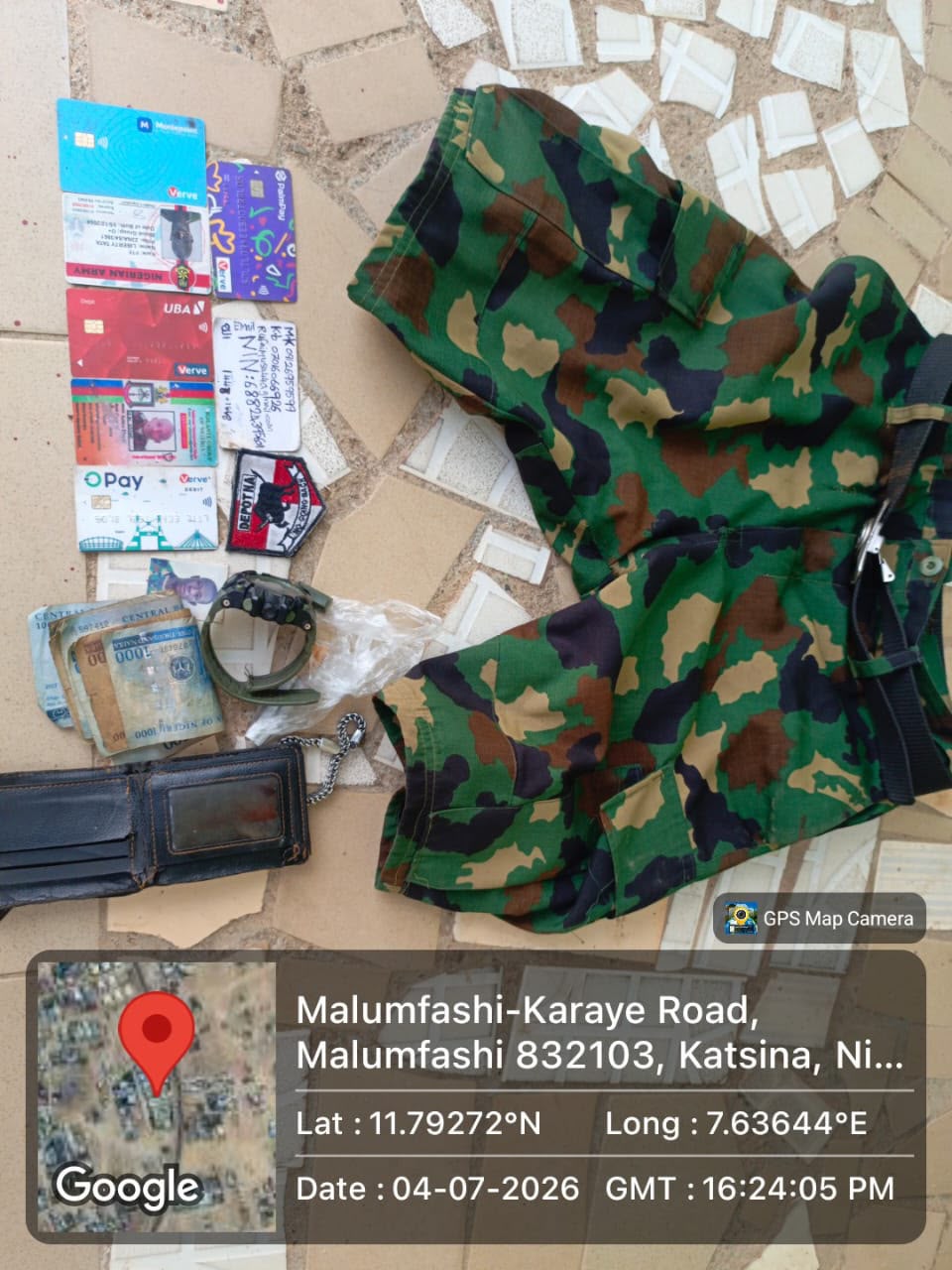
Troops Arrest Suspected Military Impostor in Katsina
By Zagazola Makama
Troops of 17 Brigade have arrested a suspected military impostor during a fighting patrol in Malumfashi Local Government Area.
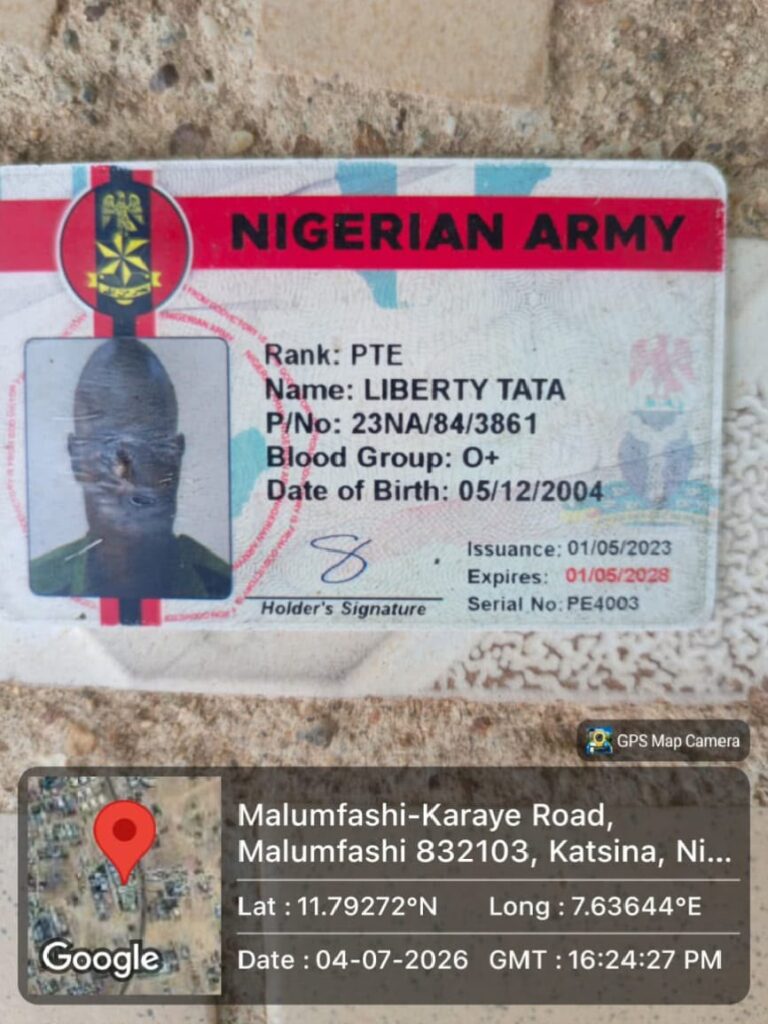
Security sources told Zagazola Makama that the suspect was apprehended at about 1:30 p.m. on July 4 by troops deployed at the Forward Operating Base (FOB) Malumfashi while conducting routine patrols within Malumfashi town.
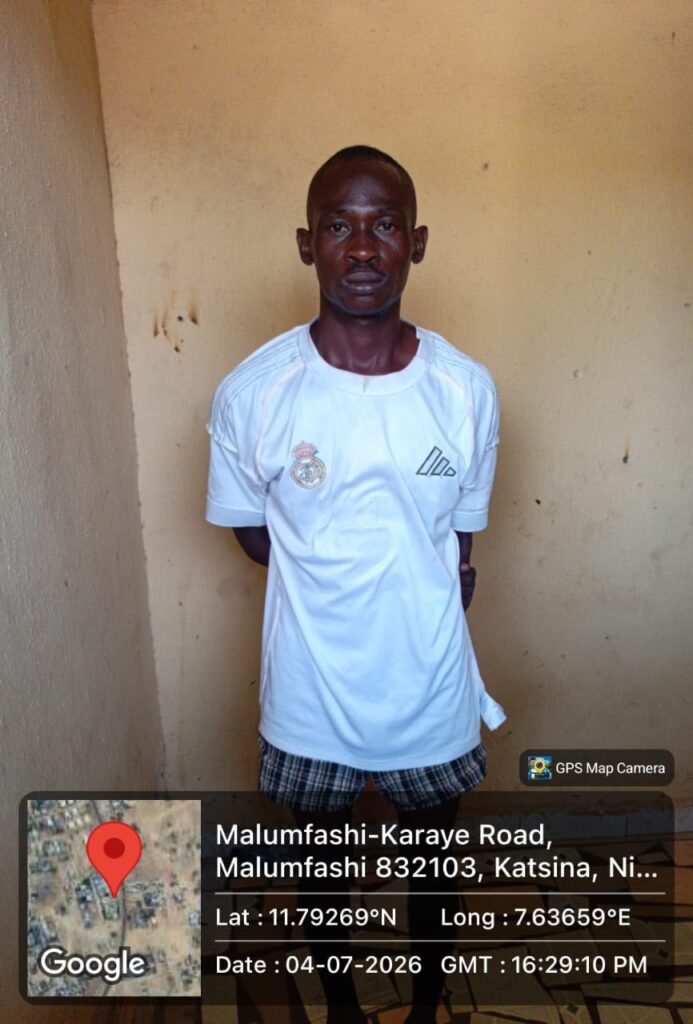
According to the sources, the suspect was intercepted while wearing a woodland camouflage three-quarter short, raising suspicion among the troops.
A search conducted on the suspect led to the recovery of a fake Nigerian Army identity card, four Automated Teller Machine (ATM) cards, one woodland camouflage three-quarter short, a wristwatch and the sum of ₦17,000.
The suspect and the recovered exhibits are currently in military custody pending further investigation.
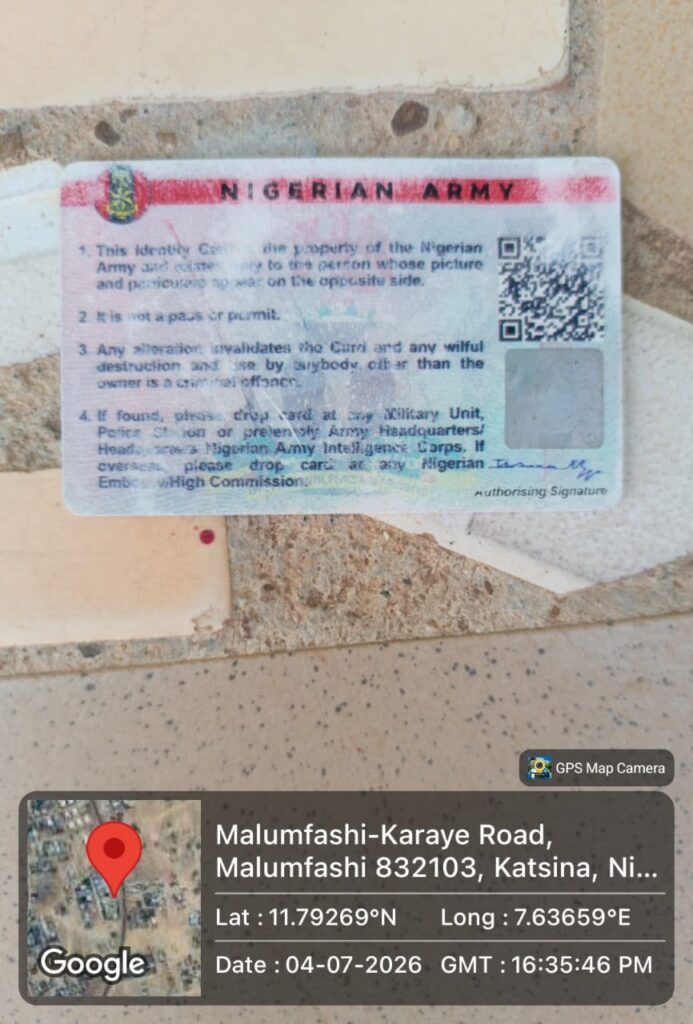
Military sources said the arrest forms part of ongoing efforts to curb impersonation of security personnel and other criminal activities within the area.
Troops Arrest Suspected Military Impostor in Katsina
Troops Recover 50 Rustled Cattle, Repel Suspected Rustlers in Kaduna
By Zagazola Makama
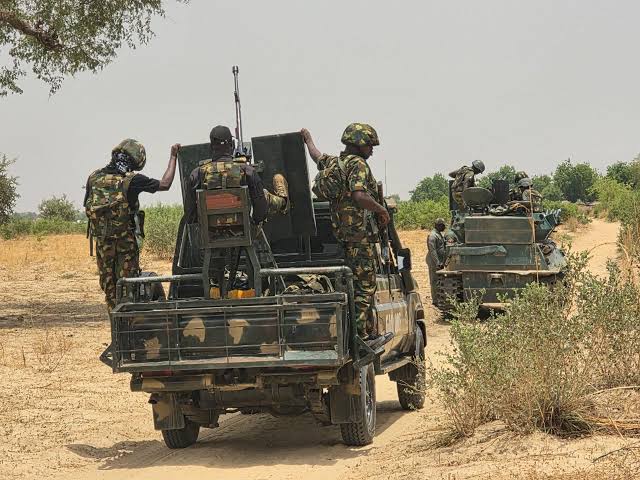
Troops deployed at the Forward Operating Base (FOB) Kankomi have recovered 50 rustled cattle after repelling suspected cattle rustlers during an ambush operation in Chikun Local Government Area.
Security sources told Zagazola Makama that the troops responded to a distress call at about 9:55 a.m. on July 4 over the activities of suspected rustlers at Ungwan Gontu community.
According to the sources, the troops swiftly laid an ambush and made contact with the fleeing suspects, forcing them to abandon the stolen livestock and escape into the surrounding area.
During the operation, the troops recovered 50 rustled cattle, which were subsequently identified and handed over to their rightful owner.
Military sources said efforts are ongoing to track down the fleeing suspects as security operations continue to combat cattle rustling and other criminal activities across Kaduna State.
Troops Recover 50 Rustled Cattle, Repel Suspected Rustlers in Kaduna
Troops Arrest Suspected Terrorist in Kogi, Suspect Confesses to Group Membership
By Zagazola Makama
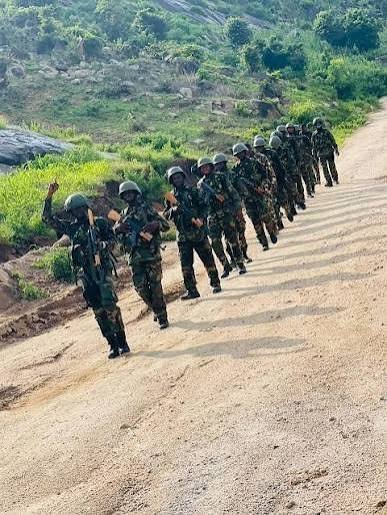
Troops of 12 Brigade, in collaboration with Office of the National Security Adviser (ONSA) Hybrid Forces, have arrested a suspected terrorist during an operation in Lokoja Local Government Area.
Security sources told Zagazola Makama that the troops responded at about 1:00 p.m. on July 4 to reports of a confrontation between local residents and a suspected terrorist at a Ruga settlement behind Obajana community.
According to the sources, the troops swiftly intervened and arrested one suspect at the scene.
During preliminary interrogation, the suspect reportedly confessed to being a member of a terrorist group led by an individual identified as Haruna, which allegedly operates within the Okene general area.
The suspect is currently in military custody and is undergoing further investigation to establish the extent of his involvement and identify other members of the group.
Military sources said the arrest forms part of ongoing security operations aimed at dismantling terrorist and criminal networks across Kogi State.
Troops Arrest Suspected Terrorist in Kogi, Suspect Confesses to Group Membership

Troops Arrest Suspected Military Impostor in Katsina

Troops Recover 50 Rustled Cattle, Repel Suspected Rustlers in Kaduna

Troops Arrest Suspected Terrorist in Kogi, Suspect Confesses to Group Membership

Roger Federer’s Shock as DNA Results Reveal Myla and Charlene Are Not His Biological Children

THE PLIGHT OF FARIDA

FAILED COUP IN BURKINA FASO: HOW TRAORÉ NARROWLY ESCAPED ASSASSINATION PLOT AMID FOREIGN INTERFERENCE CLAIMS
-
 News2 years ago
Roger Federer’s Shock as DNA Results Reveal Myla and Charlene Are Not His Biological Children
-
Opinions4 years ago
THE PLIGHT OF FARIDA
-
 News1 year ago
FAILED COUP IN BURKINA FASO: HOW TRAORÉ NARROWLY ESCAPED ASSASSINATION PLOT AMID FOREIGN INTERFERENCE CLAIMS
-

 News2 years ago
EYN: Rev. Billi, Distortion of History, and The Living Tamarind Tree
-
 Opinions5 years ago
POLICE CHARGE ROOMS, A MINTING PRESS
-

 ACADEMICS2 years ago
A History of Biu” (2015) and The Lingering Bura-Pabir Question (1)
-

 Columns2 years ago
Army University Biu: There is certain interest, but certainly not from Borno.
-

 Politics1 year ago
2027: Why Hon. Midala Balami Must Go, as Youths in Hawul and Asikira/Uba Federal Constituency Reject ₦500,000 as Sallah Gift
