
News
Amendment of NDLEA Act Would Position Anti-Narcotics Agency to Tackle Drug Scourge – Marwa

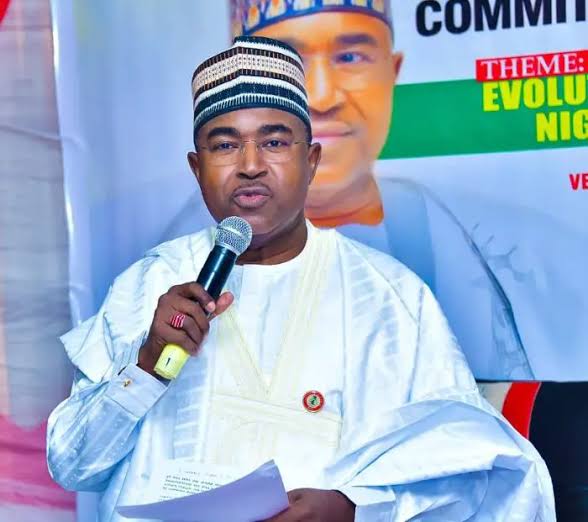
Amendment of NDLEA Act Would Position Anti-Narcotics Agency to Tackle Drug Scourge – Marwa
By: Michael Mike
Chairman/Chief Executive Officer of the National Drug Law Enforcement Agency (NDLEA), Brig. Gen. Buba Marwa (Retd) has said that the agency would be positioned to tackle drug scourge when the ongoing amendment of the NDLEA Act is accomplished.
He said the enactment of the act and subsequently passage into law, will significantly enhance the organisation capability of the agency to curb the menace of substance abuse and illicit drug trafficking in the country.
Marwa expressed the optimism while delivering remarks at the opening ceremony of the Inter-Ministerial Committee (IMC) on Drug Control meeting on Thursday in Abuja.
He said: “We have to acknowledge, however, the existence of the funding challenge, which is limiting our capabilities in various ways. Nonetheless, we are looking forward to some positive developments that will lend impetus to the attainment of our set objectives. One such is the amendment of the NDLEA Act, which will significantly enhance the organisational capability of our agency in drug supply reduction. The hearing of the amended bill is making progress in the National Assembly and we look forward to it scaling the final hurdles.”
Marwa expressed his optimism to the gathering of stakeholders from Ministries, Departments and Agencies as well as other local and international partners,
while acknowledging the tremendous work of the IMC in the implementation of the
National Drug Control Master Plan (NDCMP) 2021-2025.
He said the collaboration from stakeholders towards achieving the stated goals of the NDCMP is also deserving of appreciation. He outlined some of the activities and achievements of NDLEA in 2023 in line with the national action plan on drug control.
Marwa said: “After taking stock of key programmes implemented across the strategic pillars in 2022 and 2023, I can say that we have recorded significant progress on the 4th National Plan (NDCMP 2021-2025) compared to previous ones. Under the Supply Reduction Pillar, our operations and offensive action led to the arrest of 13, 664 drug traffickers, of whom 3,412 have been convicted in 2023. We recorded the seizure of 1.61 million kilogrammes of assorted illicit drugs, and we carried out the destruction of 206.5 hectares of cannabis farms.
“In Drug Demand Reduction, we recorded the counselling and rehabilitation of 10,904 individuals. The implementation of WADA advocacy across states, local government areas, wards, and communities boosted the attainment of some set targets under the Drug Demand Reduction Pillar. Ramping up our WADA sensitisation activities has enabled us to reach different target groups, and, by the same token, has facilitated the diffusion of shared ownership of the effort to curb the proliferation, trafficking and abuse of illicit substances in the country.
“Generally, there had been momentous developments in 2022-2023 that were helpful to the attainment of our targets. Among others, these include, one, Nigeria’s hosting of the 30th Conference of the Heads of Drug Law Enforcement Agencies, Africa, HONLEA, in September 2023; two, the commissioning of the NDLEA toll-free helpline, which has helped to bridge the gap between people who need treatment and the care provider, and three, the Drug Prevention, Treatment and Care (DPTC) training for the Governors’ Spouses, which has helped to strengthen response to drug problems across the states through the first ladies who are at the helm of the leadership of the State Drug Control Committee, SDCC. And, of course, the non-stop WADA campaign across the federation continually gives us leverage in society.”
In his remarks, Country Representative, United Nations Office on Drugs and Crime, UNODC, Oliver Stolpe said “the achievement over the past years in enhancing law enforcement, increasing accessibility to treatment and rolling out prevention, and recently including harm reduction and Alternative Development, are all milestones that the NDLEA has created. The UNODC is grateful, and hopes that during the presentation by Nigeria at IMC International midterm review, Nigeria makes a great contribution to the world and inspires others in ways to take this fight against drug use and supply to the next level.”
Also speaking, representative of ECOWAS Commission, Dr. Daniel Akwasi Amankwaah noted that “ECOWAS is excited about the NDLEA drug control master plan because ECOWAS took inspiration from the NDLEA master plan to encourage other countries to develop their own master plan. I am glad to announce that of the 15 ECOWAS countries, 14 have developed their master plans. This is to say 99% of the countries have developed theirs and it is all thanks to the template of the NDLEA.”
In his welcome remark, Special Adviser to the Chairman/CEO on NDCMP, Otunba Lanre Ipinmisho said the meeting was called to assess the efforts made by the IMC members so far, identify challenges and proffering solutions.
A communique issued by the IMC at the end of the meeting listed some of the solutions, which they want governments at all levels and other stakeholders to focus on. This includes: “a declaration of a State of Emergency in the face the overwhelming statistics of drug trafficking and abuse and its devastating consequences on the public health, economy and security of the country, to underscore the need for greater resources to be committed to fighting drugs problem and its attendant consequences such as banditry, kidnaping, assassination, insurgency, terrorism and general insecurity.
“To strengthen drug treatment support services for persons with drug use disorder, ensuring the availability, accessibility and affordability of controlled medicines for palliative care and raising awareness on the health, socio-economic implications and other related risks of drug abuse and drug trafficking.
“To strengthen cohesion, greater collaboration and coordination, amongst stakeholders to prioritise resources for activities geared towards addressing drugs problem in line with the Strategic Pillars of the NDCMP.”
Amendment of NDLEA Act Would Position Anti-Narcotics Agency to Tackle Drug Scourge – Marwa


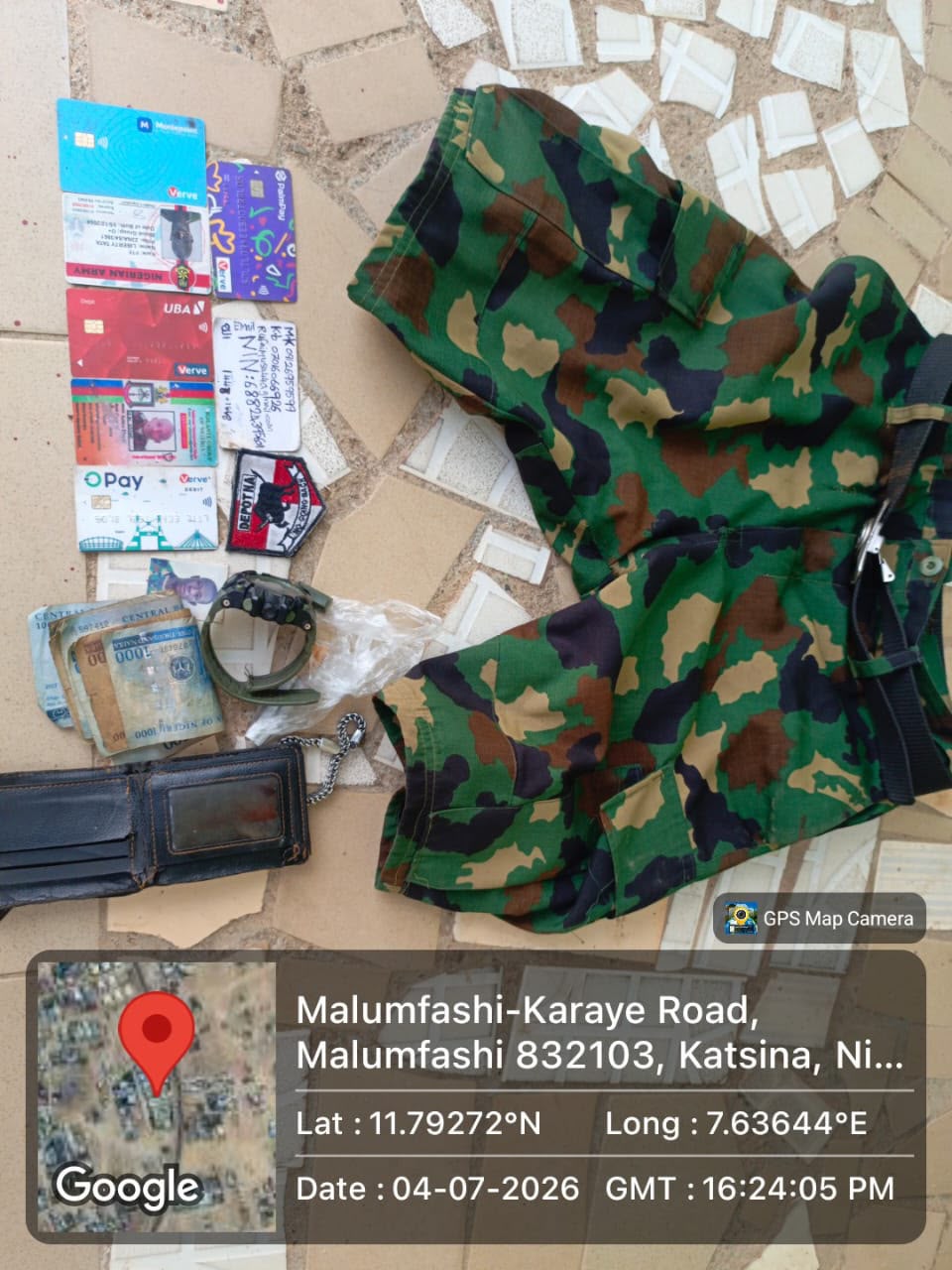
Troops Arrest Suspected Military Impostor in Katsina
By Zagazola Makama
Troops of 17 Brigade have arrested a suspected military impostor during a fighting patrol in Malumfashi Local Government Area.
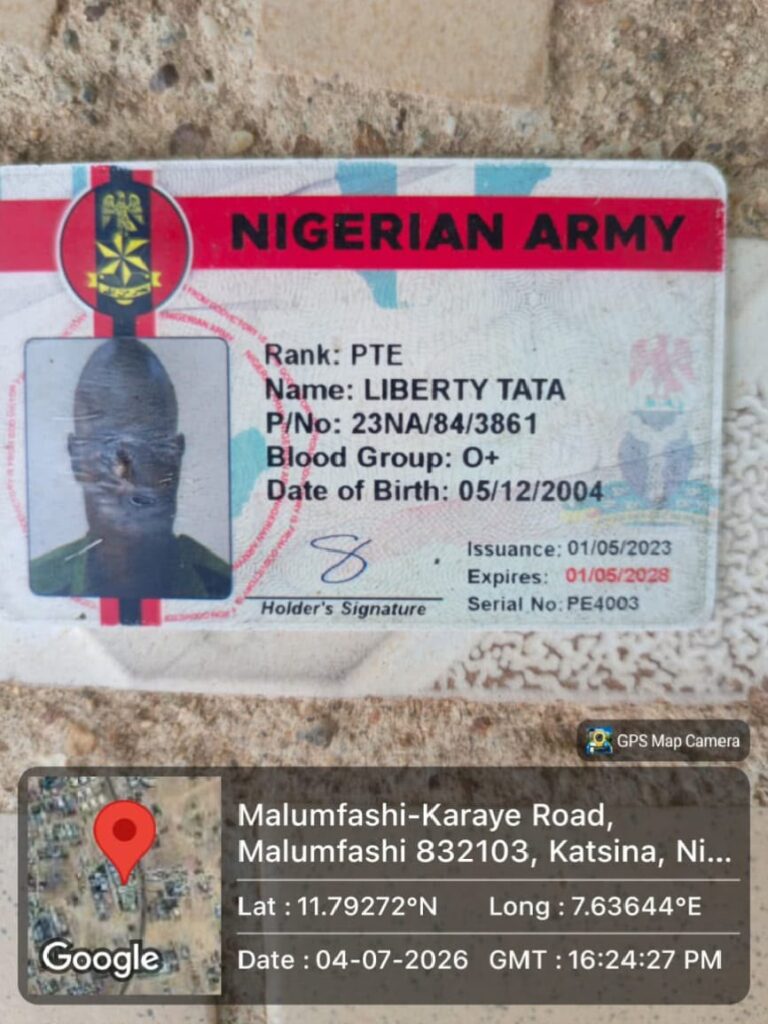
Security sources told Zagazola Makama that the suspect was apprehended at about 1:30 p.m. on July 4 by troops deployed at the Forward Operating Base (FOB) Malumfashi while conducting routine patrols within Malumfashi town.
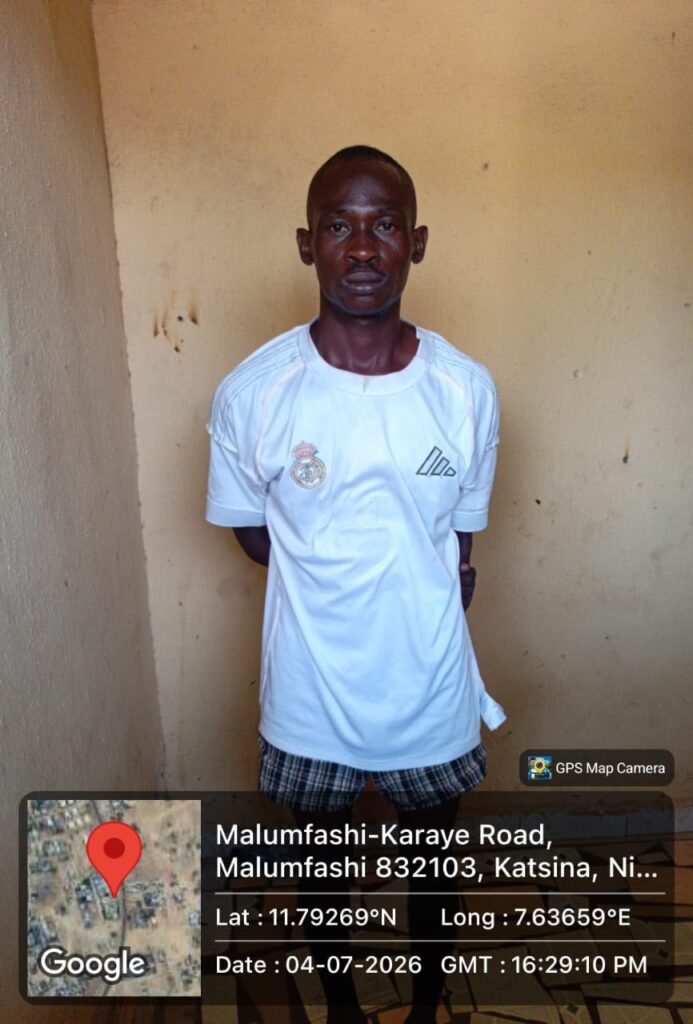
According to the sources, the suspect was intercepted while wearing a woodland camouflage three-quarter short, raising suspicion among the troops.
A search conducted on the suspect led to the recovery of a fake Nigerian Army identity card, four Automated Teller Machine (ATM) cards, one woodland camouflage three-quarter short, a wristwatch and the sum of ₦17,000.
The suspect and the recovered exhibits are currently in military custody pending further investigation.
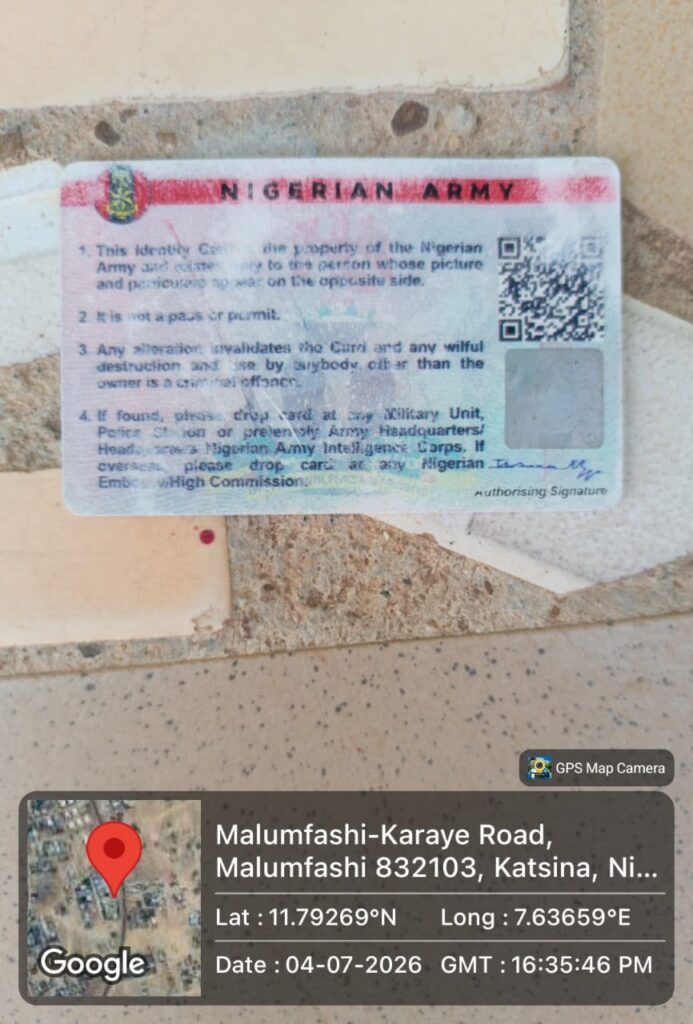
Military sources said the arrest forms part of ongoing efforts to curb impersonation of security personnel and other criminal activities within the area.
Troops Arrest Suspected Military Impostor in Katsina
Troops Recover 50 Rustled Cattle, Repel Suspected Rustlers in Kaduna
By Zagazola Makama
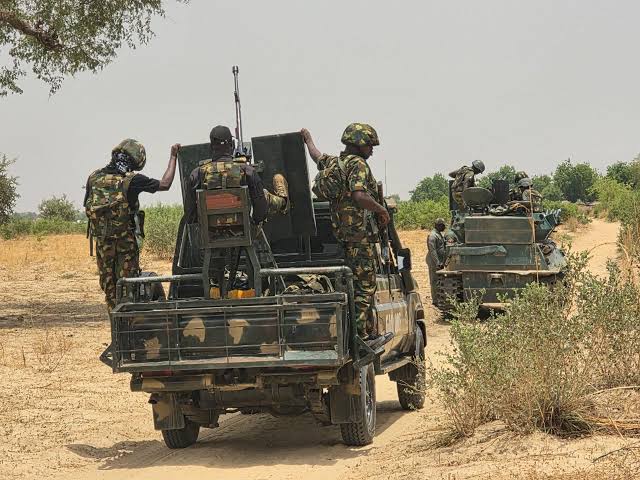
Troops deployed at the Forward Operating Base (FOB) Kankomi have recovered 50 rustled cattle after repelling suspected cattle rustlers during an ambush operation in Chikun Local Government Area.
Security sources told Zagazola Makama that the troops responded to a distress call at about 9:55 a.m. on July 4 over the activities of suspected rustlers at Ungwan Gontu community.
According to the sources, the troops swiftly laid an ambush and made contact with the fleeing suspects, forcing them to abandon the stolen livestock and escape into the surrounding area.
During the operation, the troops recovered 50 rustled cattle, which were subsequently identified and handed over to their rightful owner.
Military sources said efforts are ongoing to track down the fleeing suspects as security operations continue to combat cattle rustling and other criminal activities across Kaduna State.
Troops Recover 50 Rustled Cattle, Repel Suspected Rustlers in Kaduna
Troops Arrest Suspected Terrorist in Kogi, Suspect Confesses to Group Membership
By Zagazola Makama
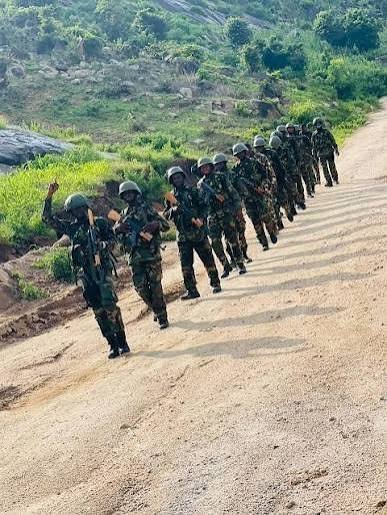
Troops of 12 Brigade, in collaboration with Office of the National Security Adviser (ONSA) Hybrid Forces, have arrested a suspected terrorist during an operation in Lokoja Local Government Area.
Security sources told Zagazola Makama that the troops responded at about 1:00 p.m. on July 4 to reports of a confrontation between local residents and a suspected terrorist at a Ruga settlement behind Obajana community.
According to the sources, the troops swiftly intervened and arrested one suspect at the scene.
During preliminary interrogation, the suspect reportedly confessed to being a member of a terrorist group led by an individual identified as Haruna, which allegedly operates within the Okene general area.
The suspect is currently in military custody and is undergoing further investigation to establish the extent of his involvement and identify other members of the group.
Military sources said the arrest forms part of ongoing security operations aimed at dismantling terrorist and criminal networks across Kogi State.
Troops Arrest Suspected Terrorist in Kogi, Suspect Confesses to Group Membership

Troops Arrest Suspected Military Impostor in Katsina

Troops Recover 50 Rustled Cattle, Repel Suspected Rustlers in Kaduna

Troops Arrest Suspected Terrorist in Kogi, Suspect Confesses to Group Membership

Roger Federer’s Shock as DNA Results Reveal Myla and Charlene Are Not His Biological Children

THE PLIGHT OF FARIDA

FAILED COUP IN BURKINA FASO: HOW TRAORÉ NARROWLY ESCAPED ASSASSINATION PLOT AMID FOREIGN INTERFERENCE CLAIMS
-
 News2 years ago
Roger Federer’s Shock as DNA Results Reveal Myla and Charlene Are Not His Biological Children
-
Opinions4 years ago
THE PLIGHT OF FARIDA
-
 News1 year ago
FAILED COUP IN BURKINA FASO: HOW TRAORÉ NARROWLY ESCAPED ASSASSINATION PLOT AMID FOREIGN INTERFERENCE CLAIMS
-

 News2 years ago
EYN: Rev. Billi, Distortion of History, and The Living Tamarind Tree
-
 Opinions5 years ago
POLICE CHARGE ROOMS, A MINTING PRESS
-

 ACADEMICS2 years ago
A History of Biu” (2015) and The Lingering Bura-Pabir Question (1)
-

 Columns2 years ago
Army University Biu: There is certain interest, but certainly not from Borno.
-

 Politics1 year ago
2027: Why Hon. Midala Balami Must Go, as Youths in Hawul and Asikira/Uba Federal Constituency Reject ₦500,000 as Sallah Gift
