
News
Amendment of NDLEA Act Would Position Anti-Narcotics Agency to Tackle Drug Scourge – Marwa

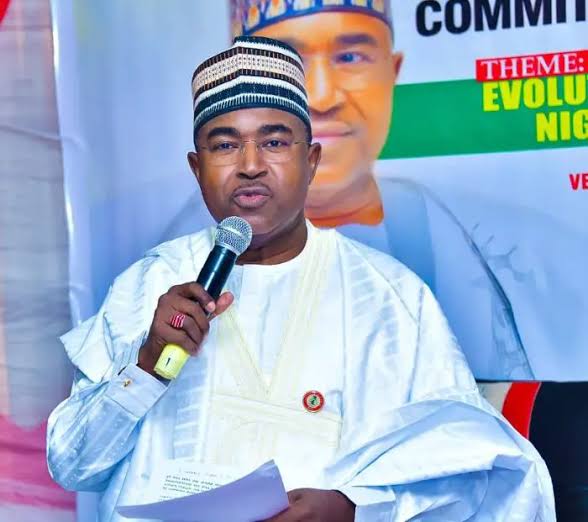
Amendment of NDLEA Act Would Position Anti-Narcotics Agency to Tackle Drug Scourge – Marwa
By: Michael Mike
Chairman/Chief Executive Officer of the National Drug Law Enforcement Agency (NDLEA), Brig. Gen. Buba Marwa (Retd) has said that the agency would be positioned to tackle drug scourge when the ongoing amendment of the NDLEA Act is accomplished.
He said the enactment of the act and subsequently passage into law, will significantly enhance the organisation capability of the agency to curb the menace of substance abuse and illicit drug trafficking in the country.
Marwa expressed the optimism while delivering remarks at the opening ceremony of the Inter-Ministerial Committee (IMC) on Drug Control meeting on Thursday in Abuja.
He said: “We have to acknowledge, however, the existence of the funding challenge, which is limiting our capabilities in various ways. Nonetheless, we are looking forward to some positive developments that will lend impetus to the attainment of our set objectives. One such is the amendment of the NDLEA Act, which will significantly enhance the organisational capability of our agency in drug supply reduction. The hearing of the amended bill is making progress in the National Assembly and we look forward to it scaling the final hurdles.”
Marwa expressed his optimism to the gathering of stakeholders from Ministries, Departments and Agencies as well as other local and international partners,
while acknowledging the tremendous work of the IMC in the implementation of the
National Drug Control Master Plan (NDCMP) 2021-2025.
He said the collaboration from stakeholders towards achieving the stated goals of the NDCMP is also deserving of appreciation. He outlined some of the activities and achievements of NDLEA in 2023 in line with the national action plan on drug control.
Marwa said: “After taking stock of key programmes implemented across the strategic pillars in 2022 and 2023, I can say that we have recorded significant progress on the 4th National Plan (NDCMP 2021-2025) compared to previous ones. Under the Supply Reduction Pillar, our operations and offensive action led to the arrest of 13, 664 drug traffickers, of whom 3,412 have been convicted in 2023. We recorded the seizure of 1.61 million kilogrammes of assorted illicit drugs, and we carried out the destruction of 206.5 hectares of cannabis farms.
“In Drug Demand Reduction, we recorded the counselling and rehabilitation of 10,904 individuals. The implementation of WADA advocacy across states, local government areas, wards, and communities boosted the attainment of some set targets under the Drug Demand Reduction Pillar. Ramping up our WADA sensitisation activities has enabled us to reach different target groups, and, by the same token, has facilitated the diffusion of shared ownership of the effort to curb the proliferation, trafficking and abuse of illicit substances in the country.
“Generally, there had been momentous developments in 2022-2023 that were helpful to the attainment of our targets. Among others, these include, one, Nigeria’s hosting of the 30th Conference of the Heads of Drug Law Enforcement Agencies, Africa, HONLEA, in September 2023; two, the commissioning of the NDLEA toll-free helpline, which has helped to bridge the gap between people who need treatment and the care provider, and three, the Drug Prevention, Treatment and Care (DPTC) training for the Governors’ Spouses, which has helped to strengthen response to drug problems across the states through the first ladies who are at the helm of the leadership of the State Drug Control Committee, SDCC. And, of course, the non-stop WADA campaign across the federation continually gives us leverage in society.”
In his remarks, Country Representative, United Nations Office on Drugs and Crime, UNODC, Oliver Stolpe said “the achievement over the past years in enhancing law enforcement, increasing accessibility to treatment and rolling out prevention, and recently including harm reduction and Alternative Development, are all milestones that the NDLEA has created. The UNODC is grateful, and hopes that during the presentation by Nigeria at IMC International midterm review, Nigeria makes a great contribution to the world and inspires others in ways to take this fight against drug use and supply to the next level.”
Also speaking, representative of ECOWAS Commission, Dr. Daniel Akwasi Amankwaah noted that “ECOWAS is excited about the NDLEA drug control master plan because ECOWAS took inspiration from the NDLEA master plan to encourage other countries to develop their own master plan. I am glad to announce that of the 15 ECOWAS countries, 14 have developed their master plans. This is to say 99% of the countries have developed theirs and it is all thanks to the template of the NDLEA.”
In his welcome remark, Special Adviser to the Chairman/CEO on NDCMP, Otunba Lanre Ipinmisho said the meeting was called to assess the efforts made by the IMC members so far, identify challenges and proffering solutions.
A communique issued by the IMC at the end of the meeting listed some of the solutions, which they want governments at all levels and other stakeholders to focus on. This includes: “a declaration of a State of Emergency in the face the overwhelming statistics of drug trafficking and abuse and its devastating consequences on the public health, economy and security of the country, to underscore the need for greater resources to be committed to fighting drugs problem and its attendant consequences such as banditry, kidnaping, assassination, insurgency, terrorism and general insecurity.
“To strengthen drug treatment support services for persons with drug use disorder, ensuring the availability, accessibility and affordability of controlled medicines for palliative care and raising awareness on the health, socio-economic implications and other related risks of drug abuse and drug trafficking.
“To strengthen cohesion, greater collaboration and coordination, amongst stakeholders to prioritise resources for activities geared towards addressing drugs problem in line with the Strategic Pillars of the NDCMP.”
Amendment of NDLEA Act Would Position Anti-Narcotics Agency to Tackle Drug Scourge – Marwa


News
FACT CHECK: No School Attack, No Student Abduction in Kautikari — What Really Happened During the ISWAP Raid
FACT CHECK: No School Attack, No Student Abduction in Kautikari — What Really Happened During the ISWAP Raid
By Zagazola Makama
A wave of alarming reports circulating across social media and some online platforms has claimed that Boko Haram insurgents attacked a school and abducted students in Kautikari community of Chibok Local Government Area, Borno State.
The claims, predictably amplified by emotionally charged references to the 2014 Chibok schoolgirls’ abduction, have generated anxiety among Nigerians following developments in the troubled region.
However, a detailed fact-check by Zagazola Makama, based on assessment from field sources, and video evidence from the scene, has found the claims to be entirely FALSE.
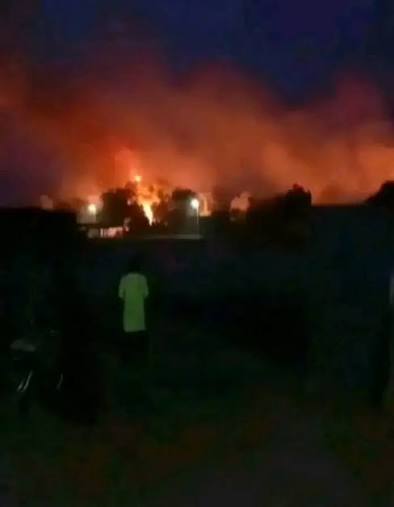
According to sources, the incident occurred at about 7:30 p.m. on June 13 when ISWAP terrorists launched an attack on a hunters’ patrol base located within the premises of a disused primary school in Kautikari.
The facility being used by the hunters was not functioning as a school at the time of the attack, nor were students present at the location. Rather, local hunters had established a patrol outpost within the structure, using some of the classrooms as temporary accommodation and operational shelters while supporting troops of Operation HADIN KAI’s efforts in the area.
The terrorists specifically targeted the hunters’ base and not a school populated by students as widely claimed. Initial resistance by the hunters successfully repelled the first assault.
However, the terrorists later regrouped in larger numbers and launched a second attack, forcing the hunters to temporarily withdraw after running low on ammunition.
Military sources disclosed that reinforcement teams comprising troops of the 117 Task Force Battalion from Kwada, supported by a Quick Response Force, local hunters and vigilante personnel, rapidly mobilized to the scene and engaged the terrorists. The coordinated response eventually overwhelmed the attackers and forced them to retreat.
No Student Was Abducted
Contrary to viral claims, there is no evidence that any student was abducted during the attack. Operational reports from the scene recorded no missing students, no reports of schoolchildren being taken away, and no indication that the terrorists targeted an educational institution in session.
Security sources confirmed that accountability checks conducted after the attack found no cases of student abduction.
In fact, the only confirmed casualties were one civilian who was reportedly struck by a stray bullet fired by the terrorists and one member of the Civilian Joint Task Force (CJTF) who sustained a gunshot wound to the arm.
Sources said also that the terrorists set fire to clothing and personal belongings belonging to the hunters stationed at the outpost. No troops were killed or injured during the engagement.
Further undermining the false reports is video footage obtained by Zagazola Makama from the aftermath of the attack. In the footage, one of the affected hunters is seen showing the damaged facility and burnt belongings while lamenting the destruction caused by the terrorists.
The hunter can be heard explaining that the location served as their place of accommodation and operational base.
“This is where we sleep,” he says while pointing to the affected section of the building.
The footage clearly supports military accounts that the target was a hunters’ outpost and not an occupied school hosting students.
The confusion likely arose because the hunters’ base was situated within the premises of a primary school building.
Photographs and videos showing damaged classrooms were subsequently circulated online without context, leading some platforms to incorrectly conclude that a school had been attacked and students abducted.
The result was the rapid spread of misinformation that failed basic verification standards.
Given Chibok’s painful history, any report involving schools and abductions naturally attracts national and international attention. This makes accurate reporting even more important.
FACT CHECK: No School Attack, No Student Abduction in Kautikari — What Really Happened During the ISWAP Raid
Police Foil IED Attack, Destroy Explosive Device in Zamfara
By: Zagazola Makama
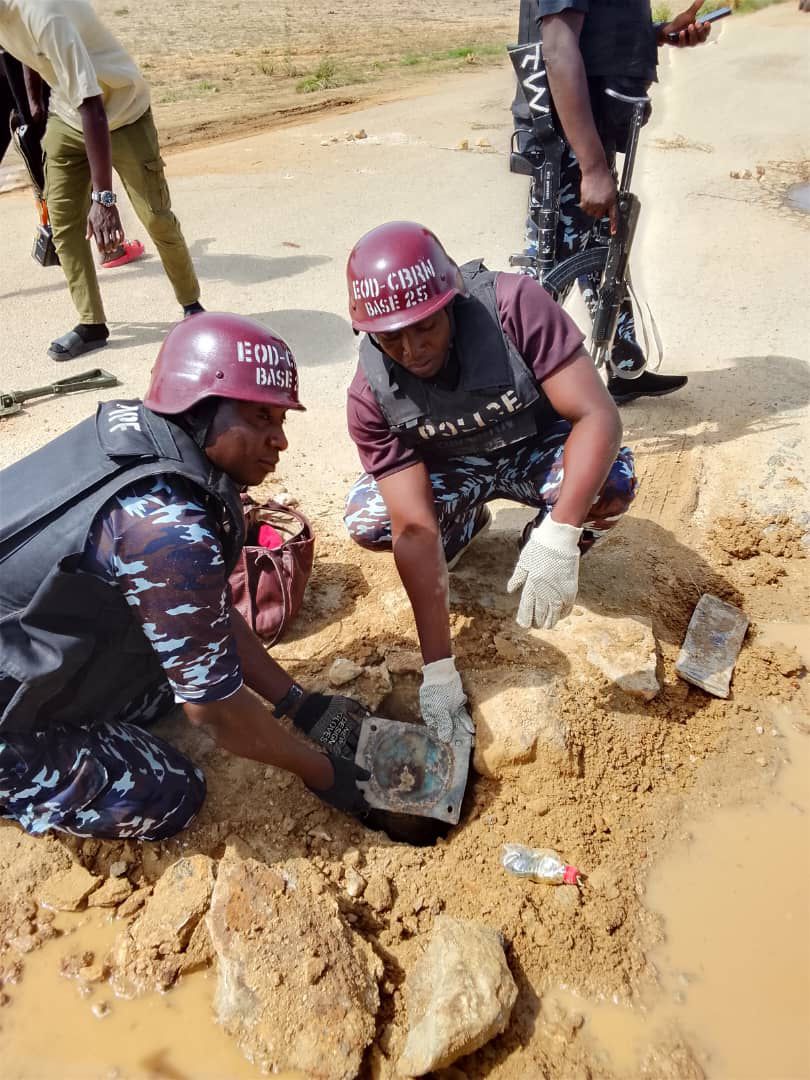
The Zamfara State Police Command says it has successfully foiled a planned attack after its Explosive Ordnance Disposal (EOD) unit discovered and safely destroyed an Improvised Explosive Device (IED) in Tsafe Local Government Area of the state.
The Command said the operation was carried out on Friday at about 4:15 p.m. along the Kunchin Kalgo axis following credible intelligence received through community engagement efforts.
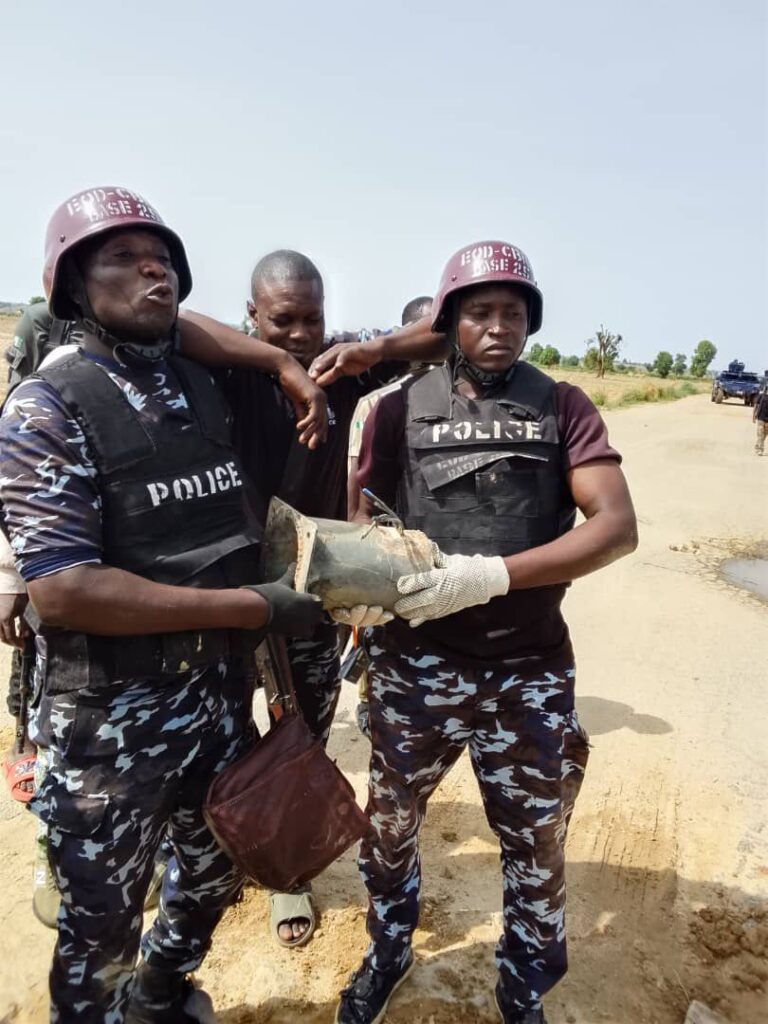
According to a statement issued by the Command, operatives of the Violence Crime Response Unit (VCRU), in collaboration with the EOD team, swiftly mobilised to the area after receiving information about a suspected explosive device planted by bandits.
Preliminary findings indicated that the device was strategically planted along the road with the intent of causing mass casualties among commuters and other road users.
The statement added that the timely response of the operatives led to the safe detection, evacuation and controlled destruction of the explosive device before it could cause any harm.
The Command commended the vigilance and cooperation of local residents, describing community support as critical to ongoing security operations in the state.
It further assured residents that efforts were ongoing to identify, arrest and prosecute those responsible for planting the device.
The police also disclosed that patrols had been intensified across vulnerable areas to prevent similar incidents and ensure the safety of road users.
The Commissioner of Police, A.M. Bello, reiterated the Command’s commitment to sustained operations against banditry and other violent crimes in Zamfara State.
Police Foil IED Attack, Destroy Explosive Device in Zamfara
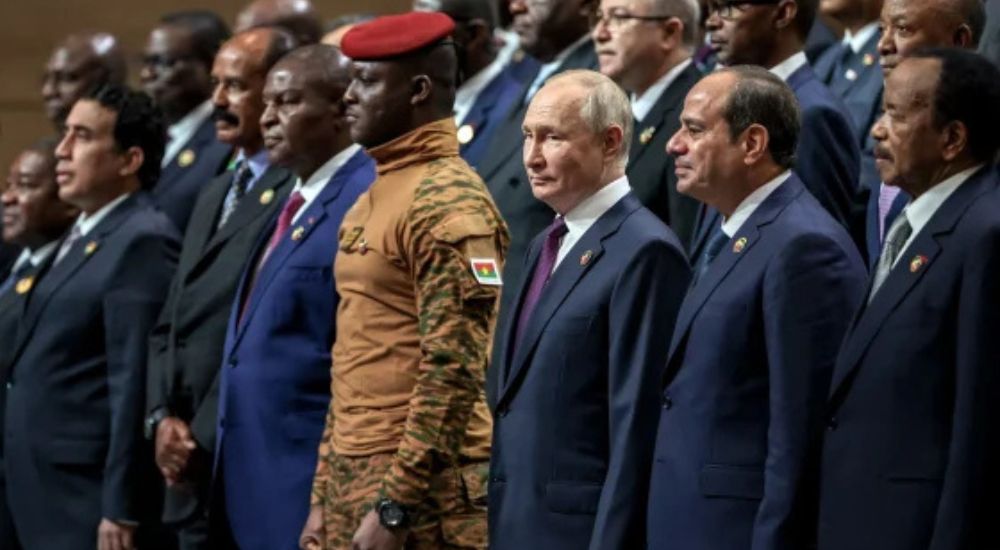
Russia’s Role in the Widening Insecurity in Africa
By Ipole Amajama
The African continent is once again at the centre of a geopolitical storm. From the Sahel to Nigeria, insecurity is spreading at an alarming speed, threatening fragile states and destabilising entire regions. While local dynamics and systemic weaknesses play a role, Russia’s involvement raises troubling questions about its motives and the consequences for Africa and beyond.
Nigeria faces a growing terrorist threat that is no longer confined to its borders. The collapse of governance in several states of the Alliance of Sahelian Juntas (AES) has created fertile ground for extremist groups. These failed states have become incubators of insecurity, exporting violence into neighbouring countries. The challenge is no longer whether to support or oppose the junta, but how to deal with their failures and the regional consequences of their isolation.
Russia’s actions in Africa reveal a clear pattern: its primary aim is not to stabilise the continent but to create a secondary frontline against the West. By fostering instability in Africa, Moscow seeks to divert European attention and resources away from Ukraine. The Kremlin’s involvement is less about partnership and more about exploiting chaos for strategic advantage.
This raises a critical question: is Russia simply incapable of offering meaningful support, or is it deliberately spreading insecurity? The evidence suggests that Moscow benefits from turmoil in Africa, whether by design or by opportunism.
Whatever happens in Africa has little direct impact on Russia. The continent is geographically distant, and Russia’s economic ties with African nations are minimal. In fact, Africa’s collapse could even benefit Moscow. African oil, gas, and mineral exports compete with Russia’s own. If insecurity disrupts African production, global prices rise—strengthening Russia’s export revenues.
Europe, however, bears the brunt of Africa’s instability. Migratory pressure from conflict zones is already reshaping European politics. Far-right parties, often sympathetic to Russia, are gaining ground in countries like France and the UK. By exacerbating insecurity in Africa, Moscow indirectly fuels migration flows that influence European voters. This strategy weakens European unity and undermines support for Ukraine.
From a Russian perspective, encouraging instability in Africa is a shrewd way to manipulate European politics. The more Africans flee insecurity and attempt to reach Europe, the greater the strain on European societies. This pressure amplifies populist narratives, strengthens far-right movements, and erodes mainstream political consensus. Since many far-right parties are pro-Russia, the Kremlin gains strategic leverage by destabilising Africa.
Russia’s record in the Sahel is damning. It has done nothing to fight terrorism. Instead, it has encouraged juntas to isolate themselves from the international community, sever ties with African neighbours, and expel Western intelligence and military support. In exchange, the Sahel states received nothing of substance. Russian involvement has failed to improve security, governance, or economic conditions. On the contrary, the situation has worsened.
It is difficult to determine whether Russia is acting with malicious intent or simply behaving irresponsibly. Either way, the outcome is the same: worsening insecurity. Moscow’s promises of support have proven empty. Its presence has deepened instability, leaving African populations more vulnerable than before.
The hypothesis of a cynical will to facilitate insecurity cannot be dismissed. Russia appears to be the only clear winner of Africa’s suffering. By exploiting chaos, Moscow strengthens its geopolitical position, increases its export revenues, and undermines European resolve.
The lesson is stark: Africa must never again rely on a self-proclaimed outside “saviour.” Russia’s involvement has shown that external powers may prioritise their own interests over African stability. The continent must instead build resilience through self-reliance and multilateral cooperation.
African nations should pursue balanced partnerships that preserve freedom of action. By engaging with multiple partners—regional organisations, international institutions, and diverse allies—Africa can avoid dependency and secure more effective support. Only through collective action can African states confront terrorism, strengthen governance, and protect their sovereignty.
Russia’s role in Africa is not about solidarity or development. It is about exploiting insecurity to advance its global strategy. By destabilising Africa, Moscow weakens Europe, strengthens far-right allies, and boosts its own economic position. Whether through negligence or deliberate manipulation, Russia has worsened Africa’s plight.
The challenge for Africa is to recognise this reality and chart a new path. The continent must rely on itself, build multilateral frameworks, and reject the false promises of external saviours. Only then can Africa safeguard its future and prevent its suffering from being weaponised to serve foreign ambitions.
Amajama, a social commentator, writes from Abuja and can be reached via amajamaip@gmail.com
Russia’s Role in the Widening Insecurity in Africa

FACT CHECK: No School Attack, No Student Abduction in Kautikari — What Really Happened During the ISWAP Raid

Yobe: APC guber candidate speaks on Buni’s confidence in him

Brazil-Based Businessman Held as NDLEA Uncovers Cocaine-Soaked Shirts at Lagos Airport

Roger Federer’s Shock as DNA Results Reveal Myla and Charlene Are Not His Biological Children

THE PLIGHT OF FARIDA

FAILED COUP IN BURKINA FASO: HOW TRAORÉ NARROWLY ESCAPED ASSASSINATION PLOT AMID FOREIGN INTERFERENCE CLAIMS
-
 News2 years ago
Roger Federer’s Shock as DNA Results Reveal Myla and Charlene Are Not His Biological Children
-
Opinions4 years ago
THE PLIGHT OF FARIDA
-
 News1 year ago
FAILED COUP IN BURKINA FASO: HOW TRAORÉ NARROWLY ESCAPED ASSASSINATION PLOT AMID FOREIGN INTERFERENCE CLAIMS
-

 News2 years ago
EYN: Rev. Billi, Distortion of History, and The Living Tamarind Tree
-
 Opinions4 years ago
POLICE CHARGE ROOMS, A MINTING PRESS
-

 ACADEMICS2 years ago
A History of Biu” (2015) and The Lingering Bura-Pabir Question (1)
-

 Columns2 years ago
Army University Biu: There is certain interest, but certainly not from Borno.
-

 Politics1 year ago
2027: Why Hon. Midala Balami Must Go, as Youths in Hawul and Asikira/Uba Federal Constituency Reject ₦500,000 as Sallah Gift
