
Politics
2027: Inside Tinubu–Shettima’s Campaign Strategy and the Battle for Advantage


2027: Inside Tinubu–Shettima’s Campaign Strategy and the Battle for Advantage
By: Dr. James Bwala
The inauguration of the 2027 Presidential Campaign Council on October 14, 2026, has introduced a new dimension into Nigeria’s political communications. Beyond the ceremony itself, the composition of the council and the public statements made by some of its leading figures have generated significant debate about the direction of the 2027 presidential contest. The presence of Nyesome Wike, Charles Soludo, and Ademola Adeleke—three politicians with distinct political identities, regional influence, and public appeal—has made the council more than an ordinary campaign structure. It has become a political statement.
At the center of this development is President Bola Ahmed Tinubu’s apparent determination to secure a second term. His supporters believe that his administration deserves the opportunity to consolidate its reforms, while his opponents are attempting to construct a coalition capable of defeating him. Yet, based on the current political alignments, the president appears to hold a commanding advantage. The endorsement and participation of influential figures such as Governor Charles Soludo, Minister Nyesome Wike, and Governor Ademola Adeleke suggest that the political terrain is already tilting in Tinubu’s favor.
Governor Soludo’s speech at the inauguration was particularly significant. He stated, “There is no time in the history of Nigeria, to my knowledge, that there is a consensus in the political arena that one man—President Tinubu—deserves to be reelected in this country.” He added that although the path Tinubu had chosen might be difficult, it was necessary, and assured the president: “We are with you, and we are a partner, and we will remain your partner.”
These were not casual remarks. Soludo is an economist, a former central bank governor, and a governor who understands the implications of political language. He chose his words carefully. His statement was not merely an expression of personal admiration. It was an attempt to frame the 2027 election as a national consensus rather than a narrow partisan contest. His endorsement is strategically important, whether you agree with his conclusion or not.
The most important message from Soludo’s speech is that Tinubu’s reelection campaign is being presented as a project of continuity. The administration’s economic policies, including the removal of fuel subsidies, the unification of foreign exchange markets, and efforts to attract investment, have imposed serious short-term difficulties on Nigerians. Inflation, rising living expenses, unemployment, and declining purchasing power have created widespread anxiety. However, Tinubu’s supporters argue that these painful measures are necessary corrections to long-standing structural problems. Soludo’s intervention reinforces this argument: the reforms may be difficult, but abandoning them, in his view, would be more damaging.
Candidates often win political campaigns not just by presenting policies but also by crafting compelling narratives. Tinubu’s camp is attempting to establish the narrative that the president is a reformer confronting problems that previous administrations avoided. If this narrative becomes widely accepted, the 2027 election may be framed as a choice between continuing a difficult but necessary transformation and returning to what supporters describe as an era of indecision. Soludo’s speech contributes powerfully to that narrative.
The participation of Nyesome Wike adds another layer to the campaign council’s significance. Wike is one of Nigeria’s most influential and unpredictable political actors. Although he belongs to the opposition Peoples Democratic Party, his political relationship with the Tinubu administration has become increasingly visible. His decision to serve as a minister in the federal government placed him in a position that transcends traditional party loyalty. Wike has demonstrated that he is prepared to pursue political influence through strategic alliances rather than rigid adherence to party expectations.
His role in the 2027 campaign is therefore important for two reasons. First, Wike commands substantial influence in Rivers State and the wider South-South region. Second, his political style attracts attention because he is willing to make bold statements and take positions that many politicians would avoid. His involvement suggests that Tinubu’s campaign is not depending solely on the structures of the All Progressives Congress. Instead, it is assembling a broader coalition that includes influential figures from outside the ruling party.
Wike’s political movement has also exposed the weakness of the opposition’s internal coordination. Rather than presenting a unified alternative, the opposition has been affected by personal ambitions, factional disputes, and disagreements over leadership. The PDP remains divided, while other opposition platforms appear more focused on negotiating alliances than developing a clear national strategy. In such an environment, Wike’s alignment with Tinubu becomes even more consequential. It deprives the opposition of a major political operator while strengthening the president’s coalition.
Governor Ademola Adeleke’s presence and public support add a different but equally important dimension. As a prominent figure in the PDP, the Accord Party, and the governor of Osun State, Adeleke possesses significant appeal among grassroots voters. His popularity, personal style, and connection with the people have made him an important political figure beyond his immediate state. His participation in a campaign council supporting Tinubu suggests that the president’s coalition is capable of attracting politicians whose political identities are not traditionally associated with the ruling party.
Adeleke is known for his energetic public persona and his ability to communicate with ordinary voters. His political appeal is less ideological and more emotional and popular. In a country where voters often respond to personal connection, visibility, and cultural familiarity, his role could help broaden Tinubu’s reach. His presence may also weaken the opposition’s claim that the 2027 contest will be a simple battle between the ruling party and a unified alternative.
The combination of Soludo, Wike, and Adeleke is significant because each represents a different political constituency. Soludo brings intellectual credibility, economic arguments, and influence in the Southeast. Wike brings strategic calculation, administrative experience, and influence in the South-South. Adeleke brings popular appeal, grassroots energy, and influence in the Southwest. Together, they create the image of a coalition that cuts across regions, parties, and political styles.
This is why the campaign council has become a major topic in political communication. Its power lies not simply in the names of the individuals involved but in the message they collectively communicate. The message is that Tinubu is not politically isolated. He is building alliances across party lines and positioning himself as the central figure around whom Nigeria’s political future may revolve.
This development should concern former Vice President Atiku Abubakar. Atiku remains one of Nigeria’s most experienced politicians and has a loyal national following. However, experience alone may not be enough to overcome the challenges before him. His repeated presidential contests have made him a familiar figure, but they have also raised questions about whether the country is ready to embrace another campaign centered on his candidacy. The emergence of new alliances and the continued movement of influential politicians toward Tinubu make Atiku’s political calculations increasingly difficult.
For his own political benefit, Atiku should carefully reconsider whether contesting in 2027 is the most strategic decision. A presidential contest requires more than personal ambition. It requires favorable political conditions, a united platform, credible allies, financial strength, a compelling message, and the ability to connect with voters across generations. If these conditions are not available, another contest could weaken rather than strengthen his historical legacy.
Atiku might serve Nigeria more effectively by helping to build a younger and more unified opposition capable of presenting a credible alternative in the future. His experience could be used to mentor emerging leaders, negotiate unity among opposition parties, and promote a national program based on economic growth, institutional reform, and social stability. Such a decision would not represent political surrender. It could demonstrate statesmanship.
Peter Obi also faces a difficult political environment. His performance in the 2023 election created a powerful movement, particularly among young Nigerians and urban voters. The Labour Party’s message of competence, accountability, and national renewal resonated with many citizens. However, turning a popular movement into a winning national political structure requires more than enthusiasm. It demands organization across all local governments, durable alliances, credible candidates, disciplined communication, and a strategy for winning outside the movement’s strongest regions.
Currently in NDC, Obi’s supporters remain energetic, but energy must be converted into electoral machinery. Meanwhile, Tinubu is demonstrating the advantages of incumbency, access to state institutions, political experience, and coalition-building. If the opposition remains fragmented, it may spend the period before 2027 debating personalities while the ruling coalition consolidates its structure.
Tinubu’s strength also comes from his understanding of political power. He has shown himself to be patient, strategic, and willing to make unexpected alliances. His administration may face criticism over economic hardship, but political victories are not determined only by public frustration. They are also shaped by organization, timing, negotiation, and the ability to prevent opponents from uniting. In this regard, Tinubu has demonstrated considerable skill.
However, the president and his supporters must not mistake political advantage for guaranteed victory. Nigerians are experiencing genuine hardship. No campaign structure, endorsement, or political alliance can permanently substitute for improved living conditions. If inflation remains high, unemployment continues to rise, and citizens feel excluded from the benefits of government policies, public dissatisfaction may eventually overcome the advantages of incumbency.
Therefore, Soludo’s argument for continuity must be accompanied by measurable results. Nigerians may accept difficult reforms when they believe those reforms will produce a better future. But patience has limits. The administration must communicate honestly, protect vulnerable citizens, reduce waste, strengthen security, and ensure that economic recovery is felt beyond official statistics. The success of the 2027 campaign will depend not only on political alliances but also on whether the government can convince citizens that its policies are working.
Nevertheless, the current political picture clearly favors Tinubu. The emergence of a broad campaign council, the involvement of powerful figures across party lines, and the absence of a united opposition have placed the president in a strong position.
*James Bwala, PhD, writes from Abuja
2027: Inside Tinubu–Shettima’s Campaign Strategy and the Battle for Advantage


Politics
BAMA, KONDUGA SPEAKS LOUD: MASSIVE 2027 TURNOUT REAFFIRMS GUBIO’S GROWING POLITICAL MOMENTUM IN BORNO
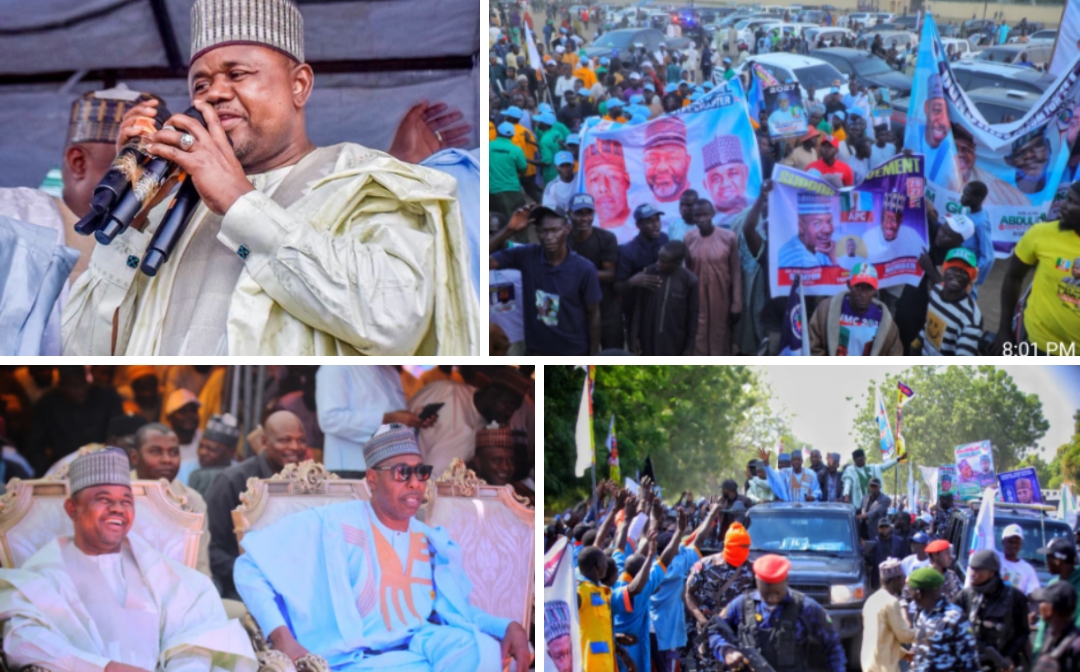
BAMA, KONDUGA SPEAKS LOUD: MASSIVE 2027 TURNOUT REAFFIRMS GUBIO’S GROWING POLITICAL MOMENTUM IN BORNO
BY: JAMES BWALA
The massive turnout witnessed in Bama and Konduga in support of Engr. Mustapha Gubio represents more than a political gathering. It is a powerful expression of public confidence, renewed hope, and a collective desire for continuity in the development of Borno State. The warm reception accorded to Engr. Gubio demonstrates that many residents recognize the importance of sustaining the progress achieved under the administration of Governor Babagana Umara Zulum while extending its benefits to communities that still require greater attention.
In his response to the impressive reception, Engr. Gubio expressed sincere appreciation to the people of Bama and Konduga for their support, hospitality, and confidence. His message was not merely one of gratitude; it was also a reaffirmation of purpose. He emphasized his commitment to building on the achievements of the Zulum administration, strengthening existing programs, addressing emerging challenges, and ensuring that development opportunities reach communities across Borno State.
This commitment is important because a society’s progress depends on not just successful policies but also on the ability to maintain, improve, and expand them. Development must be continuous. It must move beyond major urban centers and reach rural settlements, vulnerable populations, young people, women, farmers, traders, and families affected by insecurity and economic hardship. The enthusiasm displayed in Bama and Konduga therefore reflects a demand for inclusive governance—governance that places communities at the center of decision-making and treats every part of the state as an important contributor to its future.
The Zulum administration has gained recognition for its focus on rebuilding communities, improving public infrastructure, investing in education, strengthening healthcare delivery, supporting livelihoods, and restoring hope among citizens affected by years of insecurity. These accomplishments provide a foundation upon which future leaders can build. However, the existence of progress does not mean that all problems have been solved. Borno still faces significant challenges, including unemployment, poverty, displacement, inadequate access to services in some communities, and the need for sustained investment in security and economic recovery.
For this reason, the question before the people is not simply whether development has taken place, but whether that development will be protected, expanded, and made more effective. Engr. Gubio’s pledge to build on the achievements of the current administration offers a persuasive answer. Continuity does not mean refusing to improve existing policies. Rather, it means preserving what works, correcting what requires adjustment, and introducing new ideas where circumstances demand them.
Bama and Konduga’s reception is particularly meaningful because the community symbolizes both the difficulties Borno has faced and the resilience of its people. Residents have endured insecurity, disruption of livelihoods, displacement, and the destruction of social and economic infrastructure. Yet they have continued to demonstrate courage, patience, and determination. Their enthusiastic welcome for a leader who speaks of inclusive development suggests that they are ready to participate actively in the state’s recovery and transformation.
A responsible development agenda for Bama, Konduga, and other communities must begin with security. Poverty and violence made life difficult for people in El Salvador. Security, therefore, should not be viewed only as a military concern. It must also include employment opportunities, youth engagement, access to education, community dialogue, early-warning systems, and programs that reduce vulnerability to violence and criminality.
Engr. Mustapha Gubio’s commitment should consequently be understood within a broader vision of human security. Protecting communities requires creating conditions in which citizens can live with dignity and confidence. Young people need access to skills, technology, vocational training, and meaningful employment. Women need support to expand businesses and participate in decision-making. Farmers need access to inputs, storage facilities, markets, and reliable transportation. These measures can strengthen local economies while reducing the social pressures that contribute to instability.
Education must also remain at the heart of Borno’s development strategy. The future of the state depends on the quality of opportunities available to its children and young people. Investments in schools, teacher training, learning materials, science and technology, and vocational education are essential. Communities such as Konduga should not be left behind in the digital and knowledge economy. A child in a rural settlement deserves the same opportunity to develop talent and pursue a meaningful future as a child in Maiduguri.
Healthcare is equally important. Development cannot be measured only by roads, buildings, or political programs. It must also be measured by whether mothers can access safe delivery services, whether children receive immunization, whether families can obtain affordable treatment, and whether communities have trained health workers and functioning primary healthcare centers. Expanding healthcare services across Borno would improve productivity, reduce preventable deaths, and strengthen public confidence in government.
Infrastructure remains another critical area. Roads connect farmers to markets, students to schools, patients to hospitals, and communities to administrative centers. Water supply, electricity, sanitation, and communication networks are equally necessary for economic and social development. Engr. Gubio’s vision should therefore include an infrastructure plan that prioritizes both major projects and smaller community-based interventions. A borehole, a rehabilitated health center, a rural road, or a functional school may appear modest individually, but together such projects can transform daily life.
The importance of agriculture cannot be overstated. Borno has vast agricultural potential, and many communities depend directly or indirectly on farming, livestock, and trade. Supporting agriculture would promote food security, create employment, and diversify household incomes. Government can assist through improved seeds, fertilizers, irrigation, mechanization, extension services, processing facilities, and access to credit. The goal should not be limited to increasing production; it should also involve developing value chains that allow farmers to earn more from their efforts.
Furthermore, Borno’s development must be inclusive. Every local government area should be able to identify visible and measurable benefits from state policies. Inclusiveness requires transparent planning, fair distribution of resources, consultation with traditional institutions, partnership with civil society, and regular engagement with local communities. The people of Konduga and other parts of the state should not merely receive government projects; they should participate in determining priorities and monitoring implementation.
This is where Engr. Gubio’s professional background and public commitment can become valuable assets. Effective governance requires technical competence, strategic planning, financial discipline, and the ability to convert ideas into practical results. Citizens are increasingly interested in leaders who can articulate clear objectives, establish realistic timelines, measure performance, and accept constructive criticism. Appreciation for public support must therefore be matched by accountability to the people.
The warm reception in Bama and Konduga should not be interpreted as an unconditional endorsement of political promises. It should be viewed as a mandate for service. The people are expressing their willingness to support a vision, but they also expect that vision to produce tangible results. Roads must be completed, schools must function, healthcare centers must serve patients, empowerment programs must reach genuine beneficiaries, and public funds must be used responsibly.
To sustain public confidence, any future administration must communicate openly with citizens. Regular reporting on projects, budgets, outcomes, and challenges would strengthen trust. Community members should have channels through which they can provide feedback and report abandoned projects, corruption, or unequal access to services. Transparent governance is not a burden; it is an investment in stability and cooperation.
The political significance of the Bama and Konduga gathering is therefore inseparable from its developmental significance. Elections should not be treated merely as contests for power. They should be opportunities for citizens to choose the leadership and policy direction that best reflect their aspirations. The reception for Engr. Gubio indicates that many residents value a platform based on continuity, inclusiveness, and practical development. It also suggests that people are prepared to support leaders who recognize the achievements of the past while remaining focused on the unfinished work of the future.
Nevertheless, political support must be rooted in issues, not personality alone. The people of Borno deserve detailed plans, credible commitments, and measurable targets. They should ask how development will be financed, how projects will be distributed, how corruption will be prevented, how employment will be created, and how vulnerable communities will be protected. A persuasive political vision is strongest when it is specific, realistic, and open to public scrutiny.
Engr. Gubio’s message of appreciation provides an encouraging starting point. By acknowledging the people’s reception, he recognizes the central role citizens play in public leadership. By reaffirming his commitment to the achievements of the Zulum administration, he signals respect for continuity and institutional progress. By promising to extend development opportunities across Borno, he presents a vision that seeks to unite the state around shared prosperity rather than isolated advancement.
The people of Bama and Konduga have demonstrated that they are not passive observers of Borno’s future. Their turnout reflects political awareness and a desire to participate in shaping the direction of governance. Their message is clear: they want security, dignity, opportunity, and leadership that understands their realities. Other communities across the state share these expectations.
As 2027 approaches, the choice before Borno’s citizens should be guided by careful consideration of competence, character, experience, vision, and commitment to inclusive development. The state needs leadership capable of preserving hard-won gains while confronting new challenges with courage.
and innovation. It needs leaders who will not concentrate development in a few locations but will deliberately extend opportunities to every community.
Engr. Engr. Mustapha Gubio appreciates the Bama and Konduga reception and pledges to build on the achievements of the Zulum administration, offering a compelling framework for that future. If translated into transparent policies, accountable implementation, and broad-based participation, the vision can contribute meaningfully to Borno’s continued recovery and transformation.
* James Bwala, PhD, writes from Abuja.
BAMA, KONDUGA SPEAKS LOUD: MASSIVE 2027 TURNOUT REAFFIRMS GUBIO’S GROWING POLITICAL MOMENTUM IN BORNO
Politics
Beyond Public Frustration: Why Nigeria Must Judge Its Leaders by Their Records, Not Rhetoric Before 2027
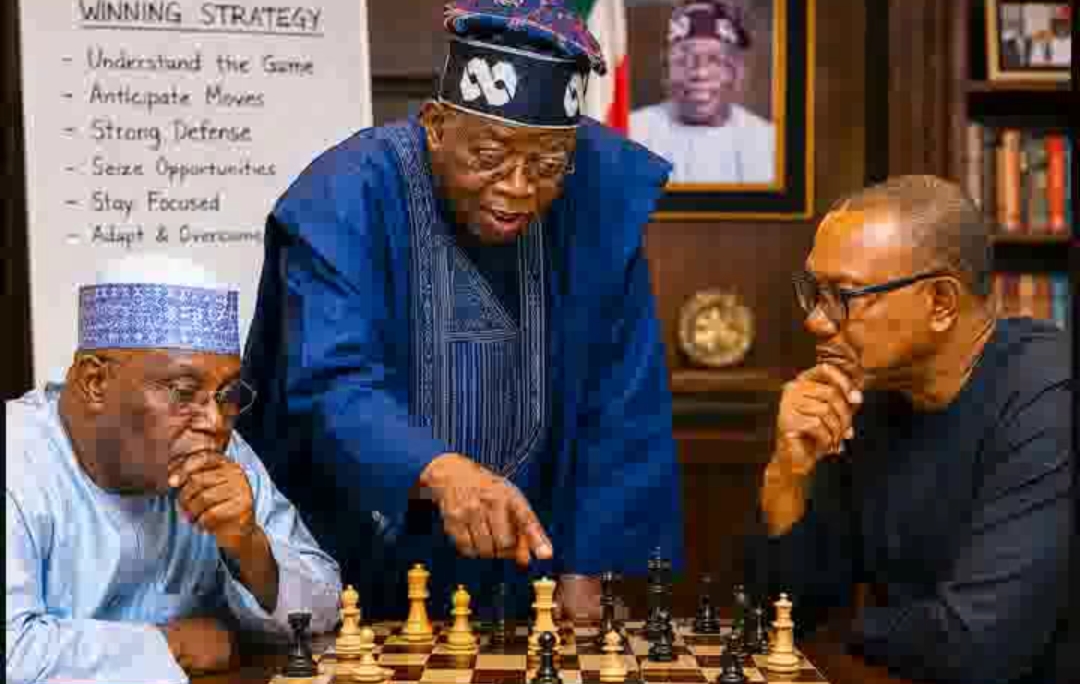
Beyond Public Frustration: Why Nigeria Must Judge Its Leaders by Their Records, Not Rhetoric Before 2027
By: Dr. James Bwala
Nigeria’s current political debate is shaped by economic hardship, public frustration, and deep disagreement over the leaders capable of moving the country forward. Many citizens are understandably dissatisfied with rising costs, unemployment, insecurity, and declining living standards. However, frustration must not replace careful judgment. Nigerians must examine the records, principles, and policy choices of political leaders rather than allowing slogans, emotional speeches, or personal popularity to determine the country’s future.
One issue that deserves serious attention is the controversy surrounding the Aluminium Smelter Company of Nigeria, commonly known as ALSCON. The facility was established through substantial public investment, reportedly involving billions of dollars, but was later sold for a fraction of its estimated value. Former Vice President Atiku Abubakar, who was involved in the administration associated with the sale, has described the transaction as a mistake. Regardless of the political explanations surrounding the deal, the central concern remains: a public asset of immense strategic and financial value was transferred at a price that many Nigerians consider grossly inadequate.
Such an outcome should not be dismissed as a minor administrative error. Government assets belong to the Nigerian people. When public property is sold cheaply, the consequences are borne by citizens through lost revenue, reduced industrial capacity, fewer employment opportunities, and diminished national wealth. A transaction that deprives the country of billions of dollars cannot simply be placed in the category of an ordinary mistake and forgotten during an election season. Leadership requires accountability, especially when decisions have lasting consequences for millions of people.
The ALSCON controversy therefore raises legitimate questions about judgment, responsibility, and the protection of national resources. If a leader participated in a decision that resulted in the sale of a major public asset far below its potential worth, Nigerians have the right to ask how such an error occurred, who benefited, what safeguards were ignored, and whether the leader has fully accepted responsibility. It is not unreasonable for voters to consider such questions before entrusting that individual with greater power.
READ ALSO: https://newsng.ng/gubio-under-political-review-borno-elites-and-electorate-deliver-their-verdict/
The concern becomes even more serious when some supporters treat the matter as irrelevant while promoting the same political figure as the solution to Nigeria’s problems. Political loyalty should never require citizens to ignore facts. A democracy becomes weak when supporters defend every action of their preferred candidate while condemning similar conduct by opponents. Nigerians should demand the same standard from every politician, regardless of party, region, religion, or personal popularity.
At the same time, criticism of one political leader should not lead to the careless glorification of another. The comparison between former Vice President Atiku Abubakar, Labour Party candidate Peter Obi, and President Bola Ahmed Tinubu must be based on evidence, competence, and realistic expectations. It is understandable that many Nigerians blame President Tinubu for the severe hardship experienced under his administration. The removal of fuel subsidies, exchange-rate reforms, inflation, and other economic policies have imposed painful burdens on households and businesses. The suffering is real, and government must respond with urgency, compassion, and measurable solutions.
Nevertheless, it is inaccurate to suggest that every problem facing Nigeria began with President Tinubu. The nation’s difficulties are the result of decades of accumulated failures, weak institutions, corruption, poor planning, insecurity, inadequate infrastructure, and inconsistent economic policies. These problems developed through successive administrations, beginning long before the present government and continuing through the eras of Shehu Shagari, military governments, democratic administrations, and Muhammadu Buhari’s presidency. Nigeria’s current crisis is therefore both immediate and historical.
Recognizing this history does not absolve the present government of responsibility. Every administration must be judged by its own decisions and results. President Tinubu must explain his policies clearly, reduce waste, protect vulnerable citizens, strengthen security, and ensure that economic reforms do not become excuses for indifference. However, the existence of long-standing national problems means that no responsible assessment should expect a complete transformation within a few months or even a single term. The scale of the damage requires sustained reform and institutional rebuilding.
READ ALSO: https://newsng.ng/gubio-under-political-review-borno-elites-and-electorate-deliver-their-verdict/
In my view, President Tinubu represents an important phase in the development of modern Nigeria. Describing him as the “father of modern Nigeria” may sound provocative to some people, but it reflects the argument that his administration is attempting to confront structural weaknesses that previous governments postponed. Economic reforms that had been avoided for years are now being implemented, even though they are painful. The removal of fuel subsidies and changes to the foreign-exchange system have revealed the weaknesses of an economic model that was already becoming unsustainable.
Reforms, however, are not automatically successful simply because they are bold. Their success depends on implementation, transparency, discipline, and social protection. If citizens are asked to endure hardship for the sake of future stability, the government must demonstrate that leaders are also making sacrifices. Public funds must be protected, corruption must be punished, and relief measures must reach the people who need them rather than becoming opportunities for political patronage. A reform agenda that burdens ordinary Nigerians while allowing waste and privilege to continue will lose public trust.
President Tinubu therefore needs time, but he also needs accountability. Patience should not mean silence, and hope should not mean blind loyalty. Nigerians can support the long-term objectives of reform while demanding better short-term management. The administration must strengthen institutions, uphold the rule of law, improve public services, and create a transparent environment for investment and employment. It must also communicate honestly with citizens instead of dismissing their legitimate frustrations.
The argument that Atiku Abubakar or Peter Obi would necessarily perform better should also be approached with caution. Both men have supporters who believe strongly in their abilities, and both have made important contributions to national political debate. However, political popularity and campaign promises are not the same as demonstrated capacity to repair a deeply damaged system. Leadership should be assessed through a candidate’s record, judgment, understanding of institutions, and willingness to accept responsibility for past decisions.
READ ALSO: https://newsng.ng/gubio-under-political-review-borno-elites-and-electorate-deliver-their-verdict/
It is possible to admire aspects of a politician’s personality or policies while still questioning his record. It is also possible to criticize President Tinubu without assuming that every alternative would automatically produce better results. Nigeria has repeatedly placed its hopes in individuals while neglecting the institutions required to control power and deliver lasting progress. This approach has produced disappointment because no leader, regardless of intelligence or charisma, can transform Nigeria alone.
The country needs strong institutions more than political heroes. An effective legislature, an independent judiciary, professional civil service, accountable security agencies, credible electoral bodies, and transparent public procurement systems are essential to national development. If institutions are weak, even a well-intentioned president may struggle to achieve meaningful change. If institutions are strong, bad decisions can be challenged, corruption can be exposed, and public assets can be protected from careless disposal.
The ALSCON controversy illustrates why institutional reform is necessary. The protection of national assets should not depend entirely on the personal integrity of a president or minister. Major transactions should undergo independent valuation, legislative scrutiny, public disclosure, and open competitive processes. Those who approve questionable deals should be held accountable, and citizens should have access to the information needed to evaluate government decisions. This is how a nation prevents one mistake from becoming a permanent loss.
Nigerians must also reject the politics of selective outrage. It is contradictory to condemn hardship under one administration while defending questionable decisions by a preferred candidate. It is equally wrong to describe every government policy as successful merely because it is associated with one’s political party. Responsible citizenship requires honesty, fairness, and consistency. Leaders should not be worshipped, and supporters should not become defenders of every failure.
READ ALSO: https://newsng.ng/gubio-under-political-review-borno-elites-and-electorate-deliver-their-verdict/
The hardship confronting Nigerians demands unity rather than endless division. Regional, religious, and ethnic competition has often prevented citizens from demanding competent governance from all political parties. Nigeria’s future cannot be secured by one region or one political movement. It requires cooperation among citizens, businesses, civil society organizations, professionals, traditional institutions, and government at every level.
Rome was not built in a day, and neither can a stable and prosperous Nigeria be built within one electoral cycle. The damage accumulated over nearly five decades will require patience, sacrifice, and sustained commitment to repair. But patience must be accompanied by vigilance. Nigerians should give reform a fair opportunity while insisting on justice, transparency, and tangible results.
President Tinubu should therefore be judged neither with blind praise nor with premature condemnation. He should be given the opportunity to implement his agenda, but that opportunity must come with firm public scrutiny. At the same time, politicians whose past decisions harmed national interests should not be allowed to erase those records simply by calling them mistakes. Before handing any leader greater authority, Nigerians must ask whether that person has demonstrated sound judgment, accountability, and respect for public resources.
The country’s future depends on making mature political choices. Nigeria does not need leaders who merely inspire passionate crowds; it needs leaders who protect national wealth, strengthen institutions, respect the law, and accept responsibility for their actions. If citizens remain informed, patient, united, and demanding, the nation can gradually overcome its difficulties. Sustainable progress will take time, but with responsible leadership and an engaged citizenry, Nigeria can build a stronger and more prosperous future.
* James Bwala, PhD, writes from Abuja
Beyond Public Frustration: Why Nigeria Must Judge Its Leaders by Their Records, Not Rhetoric Before 2027
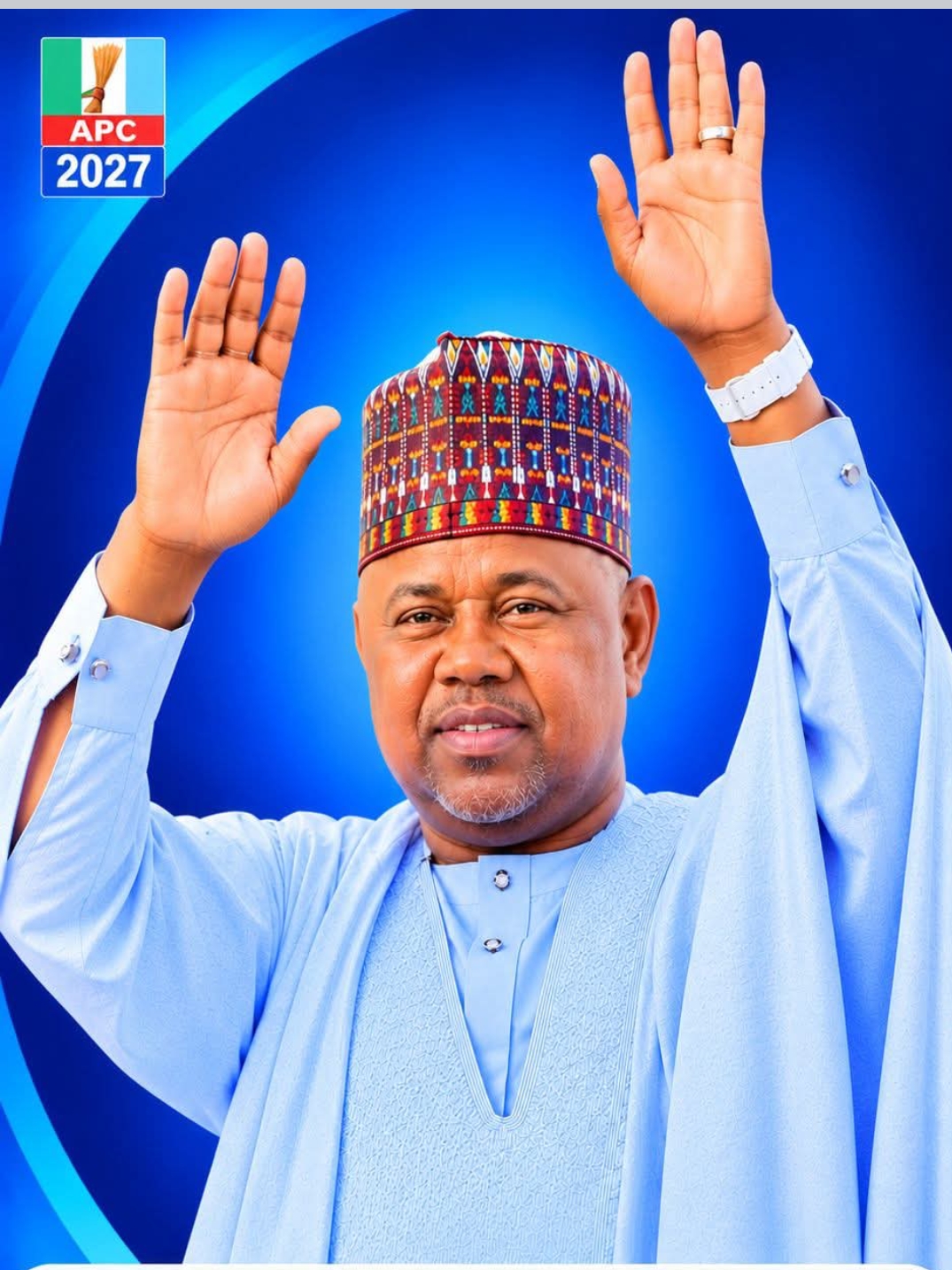
Gubio Under Political Review: Borno Elites and Electorates Deliver Their Verdict
By: Dr. James Bwala
As preparations for the 2027 gubernatorial election gather momentum, political discussions across Borno State have increasingly focused on the role of individuals who have contributed to the success of the present administration. Among those attracting public attention is the APC gubernatorial candidate Alhaji Mustache Gubio, popularly called AMG, whom political elites and residents describe as a dependable force and the “shadow behind many projects” executed under the administration of Governor Babagana Umara Zulum.
For many residents, Gubio’s influence goes beyond party politics or temporary political calculations. They believe his contributions to governance, development planning, stakeholder engagement, and the implementation of public programs have earned him genuine respect. In their view, the support being expressed for him is not merely the result of political mobilization. Rather, it is based on his record, accessibility, commitment, and perceived loyalty to the people of Borno State.
The growing public endorsement of Gubio therefore deserves serious consideration. While elections should remain competitive and democratic, the voice of the electorate must be respected. If the people have identified a candidate whom they consider capable, experienced, and committed to sustaining the state’s development, other contenders and political parties should listen carefully to that message.
Public confidence in any political figure is rarely created by slogans alone. It is built over time through service, consistency, and the ability to support meaningful development. Gubio’s supporters argue that he has demonstrated these qualities through his involvement in several programs and projects associated with the Zulum administration.
Describing him as the “shadow behind many projects” does not necessarily mean that he has sought public praise for every contribution. Instead, the expression suggests that he has worked quietly and consistently behind the scenes, helping to develop ideas, mobilize support, solve administrative challenges, and ensure that government initiatives achieve their intended objectives.
Borno is a state where governance has been shaped by insecurity, displacement, humanitarian needs, unemployment, and infrastructural deficits; effective leadership requires more than public speeches. It demands patience, technical understanding, political maturity, and the ability to work with different stakeholders. According to his supporters, Gubio has shown these qualities by remaining involved in efforts aimed at improving the lives of residents.
The electorate appears to be rewarding this behind-the-scenes role. Many people do not judge political leaders solely by their visibility. They also recognize those who contribute through planning, coordination, policy support, and problem-solving. In that regard, Gubio’s supporters see him as a person whose impact may be greater than his public profile suggests.
One of the most important aspects of the current endorsement is the claim that Gubio’s acceptance is not limited to partisan politics. Residents who support him insist that their appreciation is based on his contribution to the state rather than on party loyalty alone.
This distinction is significant. In many political environments, public endorsements are sometimes motivated by ethnic, religious, personal, or partisan considerations. However, when citizens publicly acknowledge a candidate’s role in governance and development, the endorsement takes on a different significance. It suggests that the candidate has built relationships beyond the formal structure of a political party.
Gubio’s supporters maintain that even residents who may not vote for other candidates have already developed respect for him. This assertion reflects the belief that his reputation is strong enough to survive political competition. It also indicates that some voters have already formed their opinions based on their evaluation of his character and track record.
Democracy depends on the freedom of citizens to make informed choices. Voters are not required to support a candidate merely because of party affiliation or political pressure. They are entitled to evaluate candidates based on their achievements, character, competence, and vision. If Gubio has succeeded in earning the respect of residents who may otherwise disagree politically, that is an important indication of the strength of his public image.
Borno State requires continuity and stability in governance. Years of insecurity have disrupted economic activities, education, healthcare, agriculture, housing, and social development. Although significant progress has been made in several areas, the challenges remain substantial. The state needs leaders who understand its problems and can build on existing achievements rather than begin every policy process from the beginning.
Gubio’s supporters believe that his association with projects and programs implemented under the Zulum administration gives him an advantage. His familiarity with government policies, administrative procedures, community concerns, and development priorities could enable him to provide continuity after the current administration.
Continuity does not mean the absence of innovation. A new administration must be prepared to improve existing policies, correct weaknesses, and introduce fresh solutions. However, continuity ensures that successful programs are not abandoned merely because there has been a change in leadership. It allows the government to protect investments, maintain institutional knowledge, and build on lessons learned.
A candidate who understands the foundation already laid by the current administration may be better positioned to sustain and expand it. This is one reason residents who support Gubio view his candidacy as a practical choice. They believe that he would not need to spend unnecessary time learning the basic realities of governance in Borno. Instead, he could begin by strengthening programs that are already producing results.
Modern politics often rewards visibility. Candidates who appear frequently in the media or organize large political gatherings may attract more immediate attention. However, visibility alone is not proof of competence. Effective governance requires the ability to transform promises into policies and policies into measurable results.
Gubio’s supporters portray him as a leader whose strength lies in substance rather than publicity. His reputation, they argue, has been built through work and relationships rather than constant self-promotion. This type of political personality can be particularly valuable in a state that needs calm, strategic, and responsible leadership.
A governor must be able to manage competing interests, coordinate government ministries, engage traditional institutions, work with security agencies, communicate with citizens, and attract investment. These responsibilities require emotional intelligence, administrative discipline, and a strong understanding of local realities.
The public’s description of Gubio as a quiet but influential figure suggests that they value these qualities. They see him as someone who can work within a system while also contributing to its improvement. In a complex political environment, such an approach may be more effective than aggressive self-promotion.
The appeal to contenders from other political parties to withdraw in favor of Gubio is understandably controversial. In a democracy, every qualified citizen has the right to contest, and every political party has the right to present its candidate. No candidate should be prevented from participating through intimidation or political pressure.
However, the call can also be understood as a political message: residents believe that Gubio has already emerged as the people’s preferred choice. Rather than ignoring that sentiment, competing parties should study its causes. They should ask why residents are expressing confidence in him and whether their own candidates can offer a stronger alternative.
Political parties exist to represent the interests and aspirations of the people. If public opinion is moving decisively toward one candidate, parties must respond with humility and seriousness. They can either present a clear and convincing alternative or reconsider their strategies. What they should not do is dismiss the electorate’s views as meaningless.
Withdrawal should never be demanded through coercion. It should be based on consultation, political negotiation, and respect for democratic principles. If contenders freely decide that supporting the most popular candidate is in the best interest of Borno State, such a decision could reduce unnecessary rivalry and promote unity. But the final authority must remain with the people through a free, fair, and credible electoral process.
While the public endorsement of Gubio is significant, his supporters must also hold him to a high standard. Popularity should not be treated as a substitute for accountability. If he eventually emerges as a governor, residents should expect him to present a detailed plan for governance.
Such a plan should address security, education, healthcare, agriculture, youth employment, women’s empowerment, infrastructure, internally displaced persons, urban development, and economic recovery. It should also include clear mechanisms for transparency, public participation, and evaluation of government projects.
Supporters should encourage constructive debate rather than personal attacks on opponents. Gubio’s strength should be demonstrated through ideas, competence, and character. A campaign built on respect, evidence, and a clear vision will serve both the candidate and the people better than one based on insults or intimidation.
Similarly, Gubio himself must recognize that public trust comes with responsibility. Those who describe him as a central figure behind many projects expect him to do more than inherit the achievements of the current administration. They expect him to provide leadership that is inclusive, transparent, and responsive to the changing needs of Borno State.
The 2027 gubernatorial election will be an important moment for Borno State. It will determine whether the state continues on its current path, modifies its development strategy, or adopts a completely different approach. The electorate must therefore examine all candidates carefully and choose the person most capable of protecting the state’s interests.
The growing support for Gubio reflects the belief that he possesses experience, institutional knowledge, political maturity, and a record of contribution to public development. Residents who describe him as the shadow behind many projects under the Zulum administration are essentially saying that leadership is not always measured by public visibility. Sometimes, the most valuable contributions are made through quiet coordination, thoughtful advice, and consistent service.
With this public confidence continuing, Gubio is now a formidable choice for the 2027 gubernatorial contest. His supporters believe he has already earned their respect and their votes. Whether that support will translate into electoral victory will ultimately depend on the strength of his platform, the credibility of the electoral process, and the willingness of citizens to participate actively.
* James Bwala, PhD, writes from Abuja.
Gubio Under Political Review: Borno Elites and Electorates Deliver Their Verdict

Reps FCT Committee Hails Betara at 60, Celebrates Legislative Leadership

BAMA, KONDUGA SPEAKS LOUD: MASSIVE 2027 TURNOUT REAFFIRMS GUBIO’S GROWING POLITICAL MOMENTUM IN BORNO

Troops Launch Search-and-Rescue Operation After Woman Is Kidnapped in Jos

Roger Federer’s Shock as DNA Results Reveal Myla and Charlene Are Not His Biological Children

THE PLIGHT OF FARIDA

FAILED COUP IN BURKINA FASO: HOW TRAORÉ NARROWLY ESCAPED ASSASSINATION PLOT AMID FOREIGN INTERFERENCE CLAIMS
-
 News3 years ago
Roger Federer’s Shock as DNA Results Reveal Myla and Charlene Are Not His Biological Children
-
Opinions5 years ago
THE PLIGHT OF FARIDA
-
 News2 years ago
FAILED COUP IN BURKINA FASO: HOW TRAORÉ NARROWLY ESCAPED ASSASSINATION PLOT AMID FOREIGN INTERFERENCE CLAIMS
-
 Opinions5 years ago
POLICE CHARGE ROOMS, A MINTING PRESS
-

 News3 years ago
EYN: Rev. Billi, Distortion of History, and The Living Tamarind Tree
-

 ACADEMICS3 years ago
A History of Biu” (2015) and The Lingering Bura-Pabir Question (1)
-

 Columns3 years ago
Army University Biu: There is certain interest, but certainly not from Borno.
-

 Politics1 year ago
2027: Why Hon. Midala Balami Must Go, as Youths in Hawul and Asikira/Uba Federal Constituency Reject ₦500,000 as Sallah Gift
