
National News
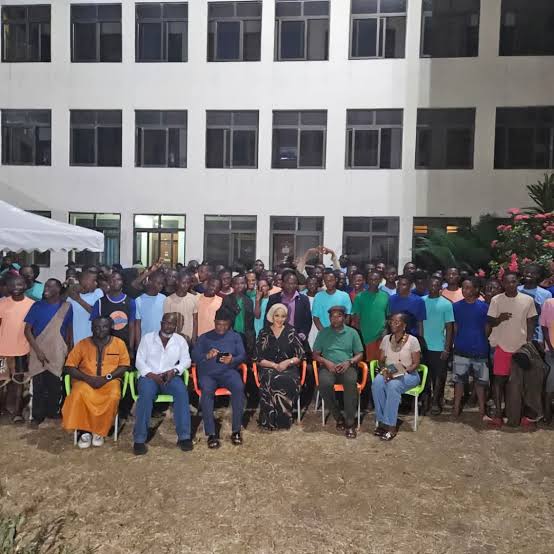
219 Nigerians Rescues from Forced Cybercrime in Ghana

219 Nigerians Rescues from Forced Cybercrime in Ghana
By: Michael Mike
The Federal Government has lauded Ghanaian authorities for rescuing at least 219 young Nigerians who were trafficked to the West African country and forced into cybercrimes.
It also restated its commitment to providing the youth with technical education and skills to curb growing unemployment.
Minister of State for Foreign Affairs, Ambassador Bianca Odumegwu-Ojukwu made the commitment when she visited the Economic and Organised Crimes Office (EOCO) in Accra, Ghana, where the victims of trafficking were being detained.
In a closed door meeting with the Executive Director of the agency, Mr. Bashiru Dapilah and two of his directors, the minister expressed gratitude to the operatives for doing their job professionally especially treating the victims with dignity.
Odumegwu-Ojukwu, who was in Ghana for the official launch of the 50th anniversary of the Economic Community of West African States (ECOWAS) and the Extraordinary Session of the ECOWAS Council of Ministers on the withdrawal of Mali, Niger and Burkina Faso, described as callous and inhuman, the exploitation of innocent young people.
She said that trafficking was modern slavery, obnoxious and man’s inhumanity to man.
She however urged Nigerian youth to shun people who promise irresistible job offers outside the shores of the country, decrying the most times these are just baits to lure them into slavery.
She stated that the Nigerian High Commission in Ghana had last Thursday, alerted her of the incident and how the victims were held under inhuman conditions by the perpetrators before the sting operation that burst the evil syndicate.
She said: “Prior to their rescue, these boys had been locked up in about 25 rooms within the estate where they were used to perpetrate cybercrimes. At the time of their arrest, many of them, being locked inside confined spaces with computers for weeks on end without being let outside, were even unable to get their eyes to adjust to the sun when they were led outside those dark rooms. Some had been serially abused with visible lacerations inflicted on them by their criminal ‘don’ while one had his legs broken for not tendering all the proceeds of his cybercrime.”
Addressing the victims at the premises of the agency, the minister said that they were lucky to have been rescued, disclosing that many had lost their lives in similar circumstances while others rot in jails in parts of the world.
She said: “Count yourselves lucky as next time, it may not be a benevolent country like Ghana. It may not be a circumstance within a location where we have excellent bilateral relations. There are countries that take cybercrimes very seriously and by the time they lock you up, they will throw away the key. We are still trying to this day to ensure that Ethiopia signs our exchange or transfer of sentenced persons MoU so that we can bring those nationals who are trapped in their prisons back to Nigeria. So we don’t lose even more of them.
“We are happy that this commission has excellent relations with NAPTIP and they have been kind enough. I was really humbled when the Executive Director said their interest is not for these young men to get back to Nigeria into the prison system; because that’s what usually happens. Under that situation, they are obliged to hand you over to law enforcement, correctional facilities in Nigeria and then you know what will happen. It’s another cycle of your relatives coming to prison to bring you food,” Odumegwu-Ojukwu said.
She however highlighted that the Nigerian government was committed to citizen-centred diplomacy as a cardinal thrust of the foreign policy of President Bola Tinubu-administration.
She said that the Renewed Hope Agenda of the Tinubu administration has laudable programmes particularly those that give skills to the youth so that they do not indulge in crimes of this nature.
She, therefore, urged the victims, to take advantage of this second chance that God has made possible for them by keying into some of the intervention programmes of the federal government.
She admonished: “Know that East, West, home is best. So, when you get home, give the government opportunity to equip you with skills.
“I am also using this opportunity to commend other Nigerians who are industrious, hardworking and law-abiding in Ghana.
“I can assure you that Ghana will have the support and cooperation of the Nigerian Government in the fight against organised crimes.
“It’s something that our own Economic and Financial Crimes Commission will want to be part of to ensure that we are not seen as headquarters of economic crimes.”
She described what happened as a success story, a model to how bilateral relations should be pursued in addressing economic and financial crimes.
Executive Director of the agency, Dapilah explained how his team acted on intelligence to achieve the feat.
He said: “We are not looking at this as a Nigerian crime because you have some backing of Ghanaian. The estate where they lived, we arrested the owner and he will be prosecuted.
“We require collaboration between our two countries. The crime is committed here in Ghana but we know that somebody in Nigeria was behind it. So, these persons have been rescued but the next thing is the collaboration to ensure that the perpetrators are apprehended.
“As you go home, take the message to our counterpart in Nigeria that we will be needing collaboration to to roundup the perpetrators,” he said.
The Ghana anti-graft boss extolled majority of Nigerians in the country who he said were law-abiding and contributing significantly to the development of Ghana and its economy.
“We have a large Nigerian population here that are law-abiding especially where they are selling spare parts. We have a lot of them running restaurants where we go to eat Nigerian delicacies,” Dapilah said.
He also thanked the Nigerian High Commission for working closely with the agency for long, detailednoting that the Chargé D’Affaires, Ambassador Dayo Adeoye collaborated with them.
Adeoye daid that over 3 million Nigerians reside in Ghana and many of them are doing well, helping the economic development of their host country.
He called for aggressive enlightenment to curb the spate of trafficking involving Nigerians.
About 231 young Nigerians are expected to arrive Lagos on Friday from Ghana and handed to government officials.
219 Nigerians Rescues from Forced Cybercrime in Ghana


UNESCO, FG Seek Ethical Framework for Neurotechnology in Nigeria
By: Michael Mike
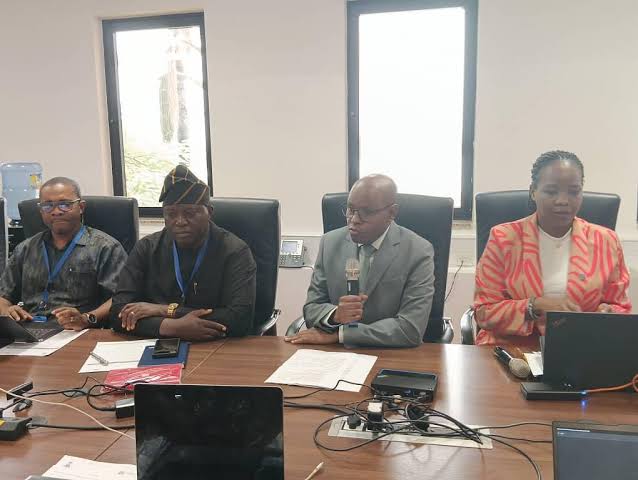
The United Nations Educational, Scientific and Cultural Organisation (UNESCO), the Federal Government and the scientific community have called for the development of an ethical and regulatory framework to guide the responsible development and application of neurotechnology in Nigeria.
The call was made on Wednesday in Abuja at a two-day stakeholders’ roundtable on the ethics of neurotechnology, where experts warned that rapid advances in technologies capable of interacting with the human nervous system could create profound challenges for human dignity, privacy, autonomy and fundamental rights.
Speaking at the event, UNESCO Representative to Nigeria, Dr. Isaias Barreto da Rosa, said neurotechnology was opening extraordinary possibilities in healthcare, rehabilitation, education and inclusion, but warned that the closer technology came to the human brain, the more fundamental the ethical questions became.
He said neurotechnology could improve understanding of the brain, enhance diagnosis and treatment, support rehabilitation and enable people living with disabilities to communicate and live more independently.
However, Barreto da Rosa said neurodata could be among the most sensitive forms of personal information, raising questions about who controls such data, how meaningful consent could be guaranteed, and how mental privacy, autonomy and freedom of thought could be protected.
He also warned against the possibility of neurotechnology widening existing inequalities rather than reducing them.
“These questions cannot be addressed after the technology has already transformed our societies. Ethics must evolve alongside innovation, not struggle to catch up with it,” he said.
The UNESCO representative recalled that the organisation’s member states adopted the Recommendation on the Ethics of Neurotechnology in November 2025, describing it as the first global normative framework dedicated to the field.
He said the recommendation built on UNESCO’s longstanding work on bioethics, science and emerging technologies, including its Recommendation on the Ethics of Artificial Intelligence.
According to him, the central principle was that scientific progress must remain at the service of humanity, human rights and the common good.
Barreto da Rosa noted that Nigeria had already contributed to the international process that produced the recommendation, with Nigerian experts and the Neuroscience Society of Nigeria participating in consultations that helped shape the global framework.
He said the task before Nigerian stakeholders was to translate the global principles into national reflection, policies and action.
“For Nigeria, this is also a question of opportunity,” he said, noting that the country’s universities, research institutions, medical community, technology ecosystem and young innovators had the capacity not only to participate in the future of neurotechnology but also to help shape its governance in Africa.
He urged stakeholders to examine who benefits from neurotechnology, who bears its risks, who has access to it, whose rights must be protected and who should be accountable when things go wrong.
The National Project Focal Point in the Federal Ministry of Innovation, Science and Technology, Dr. Adebayo Adeyemi, said the Federal Government considered the consultation timely, given the opportunities and risks associated with neurotechnology.
Adeyemi, who conveyed the goodwill of the Minister of Innovation, Science and Technology, Dr. Kingsley Udeh, said the minister was passionate about the initiative and welcomed the appointment of a national project focal point.
He said the UNESCO recommendation adopted in November 2025 provided clear boundaries and safeguards for the use, application and promotion of neurotechnology globally.
According to him, the immediate task was to interpret those recommendations within the Nigerian context.
“What is expected from this two-day meeting is that we are to be able to put those recommendations in a perspective that represents Nigeria, a perspective that will be able to speak to our realities,” he said.
Adeyemi said developing a Nigerian perspective would make it easier to formulate relevant policies and enforce regulations capable of responding to the country’s specific circumstances.
He also described the consultation as an opportunity for Nigeria to assume a leadership role in contributing to the global framework on neurotechnology.
He urged participants to bring their expertise and diverse professional experiences to the deliberations to produce practical outcomes applicable to Nigeria and Africa.
The President of the Neuroscience Society of Nigeria, Prof. Angela Danborno, said the ethical debate had become more urgent as advances in neuroscience and technology were transforming understanding of the human brain and opening new possibilities for diagnosis, treatment, rehabilitation, education and human-machine interaction.
Danborno identified brain-computer interfaces, neuroimaging, artificial intelligence, neuromodulation and other emerging neurotechnologies as areas with enormous potential to improve human health and wellbeing.
She noted that the importance of the subject was reflected in the theme of the society’s 2026 conference, “Neuroeducation and Neurotechnology.”
However, she said the benefits of emerging technologies must be weighed against their potential implications for individual rights and freedoms.
“Who owns and controls neural data? Who has the right to access information about a person’s brain? How do we protect mental privacy and cognitive liberty? How do we ensure informed consent when technologies become increasingly complex?” she asked.
Danborno stressed that the questions were not theoretical but required immediate consideration as neurotechnology continued to advance globally and found greater application in Nigerian society.
She particularly drew attention to optogenetics, an emerging neurotechnology involving the precise investigation and modulation of neural circuits.
According to her, the technology’s potential to manipulate specific neural circuits raised ethical questions around autonomy, informed consent, safety, genetic modification, identity, privacy and the possibility of altering behaviour or cognition.
Danborno said these concerns made emerging technologies particularly relevant to discussions on ethics and governance.
She called for Nigeria’s approach to be grounded in its unique social, cultural, economic and healthcare realities.
“For Nigeria, the conversation must also be grounded in our unique social, cultural, economic, and health-care system,” she said.
The neuroscientist stressed that scientific progress and ethical responsibility must advance together, warning that innovation should not come at the expense of human dignity, autonomy, privacy, justice and fundamental human rights.
Also speaking, a representative of the Federal Ministry of Health, Ado Danladi, said the ministry was particularly interested in the initiative because of the health benefits and ethical concerns associated with neurotechnology.
Danladi, who conveyed the greetings of the Minister of Health, the Permanent Secretary of the Federal Ministry of Health and Social Welfare, and the Director of Planning, Research and Statistics, said neurotechnology could play an important role in addressing a range of health conditions.
He cited Parkinson’s disease among organic conditions that could benefit from neurotechnology, while also noting its potential application in addressing conditions such as anxiety and depression.
However, he said the growing availability of neurotechnological devices and applications had raised important questions about the ethical implications of their use, particularly where they generated sensitive neurodata.
“How should this data be protected? Who uses this data? To what benefit, and all that?” he asked.
Danladi said the questions were particularly important as Nigeria sought to establish appropriate safeguards for the use of emerging neurotechnologies.
He described the UNESCO initiative as a pioneering effort and said Nigeria had an opportunity to position itself among countries taking the lead in protecting human dignity and maintaining ethical standards in scientific research.
He assured that the Federal Ministry of Health would align with UNESCO on the initiative to ensure that Nigeria was properly positioned to contribute to the emerging global governance of neurotechnology.
Danladi said the ministry would support efforts to promote ethical standards in research and the responsible application of neurotechnology in healthcare.
He urged participants to use the two-day consultation to develop recommendations capable of guiding Nigeria’s response to the opportunities and risks presented by the rapidly evolving field.
Barreto da Rosa, meanwhile, urged scientists, policymakers, medical professionals and innovators to go beyond asking whether a technological possibility existed.
He challenged them to also ask whether it should be done, under what conditions and for whose benefit.
He said the measure of scientific progress was not only what humanity could discover but how wisely and fairly such discoveries were applied.
UNESCO, he assured, would continue working with Nigeria to advance ethical governance, scientific capacity, inclusive innovation and international cooperation as neurotechnology continues to evolve.
UNESCO, FG Seek Ethical Framework for Neurotechnology in Nigeria

FG Declares October 1 Public Holiday as Nigeria Mark’s 66th Independence Anniversary
By: Michael Mike
The Federal Government has declared Thursday, October 1, 2026, a public holiday to commemorate Nigeria’s 66th Independence Anniversary.
The Minister of Interior, Dr. Olubunmi Tunji-Ojo, announced the declaration on behalf of the Federal Government in a statement issued on Wednesday by the Permanent Secretary of the Ministry, Dr. Magdalene Ajani.
The minister congratulated Nigerians at home and abroad, urging citizens to use the anniversary to reflect on the nation’s journey since independence and renew their commitment to building a more united, peaceful and prosperous country.
Tunji-Ojo emphasised the importance of peace and stability to national development, calling on Nigerians to emulate the patriotism and love for country demonstrated by the nation’s founding fathers.
He said Nigeria’s diversity remains a major strength and expressed optimism that a better and more prosperous nation is achievable through collective determination.
“As we celebrate 66 years of our independence, we should always remember that there is hope for our country and our diversity is our strength, and our collective determination remains the foundation upon which a stronger and more prosperous nation will be built,” the minister said.
The minister also reaffirmed the Federal Government’s commitment to the Renewed Hope Agenda of President Bola Ahmed Tinubu, stating that the administration would continue working towards a better Nigeria for all citizens.
He urged Nigerians to make the Independence anniversary an opportunity to demonstrate unity, patriotism, peaceful coexistence and mutual respect, while honouring the sacrifices of the country’s past heroes.
Tunji-Ojo further assured citizens that the Federal Government remains committed to strengthening national security, improving public safety and creating an environment where Nigerians can live, work and pursue their legitimate aspirations with confidence.
Nigeria gained independence from British colonial rule on October 1, 1960, and will mark its 66th Independence Anniversary on Thursday.
The minister wished Nigerians a happy 66th Independence Anniversary.
FG Declares October 1 Public Holiday as Nigeria Mark’s 66th Independence Anniversary

AT 3RD AFRICA MINERALS STRATEGY GROUP HIGH-LEVEL ROUNDTABLE
President Tinubu Rallies Aggressive Alliance To Guard Africa’s Mineral Wealth
** *Charges continent to stop exporting wealth, start profiting from its own resources
** *Says Africa’s future being fashioned from minerals must have room for continent’s ambition
By: Our Reporter
President Bola Ahmed Tinubu has called for a fresh continental push to end the historical exploitation of Africa’s critical mineral resources, urging African nations to unite and halt the export of raw materials.
Accordingly, he demanded an aggressive alliance among African countries to ensure the continent transitions from a mere supplier of raw minerals to a hub for local processing, manufacturing, and value addition.
The Nigerian leader made the call on Monday in New York, United States, during the AMSG High-Level Roundtable on Critical Minerals Development in Africa held on the sidelines of the ongoing 81st Session of the United Nations General Assembly (UNGA).
Convened and chaired by President Tinubu, his deputy, Vice President Kashim Shettima, alongside AMSG Chairman and Nigeria’s Minister of Solid Minerals, Dr. Dele Alake, the high-level dialogue, themed, “From Resources to Wealth: Continental Cooperation for Mineral Value Addition, Data Sovereignty, Innovative Financing and Critical Minerals Security,” focuses on transforming the continent’s mineral wealth into sustainable economic growth.
In his address delivered by Senator Shettima at the Roundtable, the President told African leaders and other stakeholders that the continent cannot claim to be wealthy while its children wallow in poverty amid mines that enrich the world.
“For generations, Africa has furnished the materials of prosperity elsewhere. Our duty is to ensure that the future being fashioned from African minerals has room for African ambition,” he declared.
President Tinubu regretted that mineral-rich communities lack infrastructure, jobs, and a stake in their own wealth at a time when global demand for clean energy, AI, and advanced manufacturing has made Africa’s critical minerals—like cobalt, copper, lithium, and rare earth elements—indispensable to global supply chains and economic security.
The answer to such deprivation, he observed, “must be processing, refining, batteries, components, African technologies and competitive skills,” noting that “the worth of a mine must be counted in the lives it improves.
“Jobs, industries, infrastructure, technology transfer, African enterprise participation and prosperity retained across generations must measure our progress from resources to wealth,” he maintained.
The Nigerian leader warned, however, that no African country can achieve this alone, adding that competing through lower royalties, weaker local content, and excessive concessions will only weaken the continent’s negotiating power.
“Fragmentation leaves us exporting raw materials and buying finished goods at a premium. Cooperation gives our markets scale, our industries integration, our financing reach and our negotiations authority,” he said.
Back home, the President noted that Nigeria must require local value addition for new mining licenses, strengthen geological data and investor access, organize artisanal miners into cooperatives, combat illegal mining, and improve regulatory accountability
“Revenue rose from approximately ₦6 billion in 2023 to over ₦38 billion in 2024 and between ₦68.1 billion and ₦70 billion in 2025. Major foreign investment commitments and large-scale lithium processing capacity developed and commissioned in Nasarawa State demonstrate the possibilities,” he added.
He drew attention to his administration’s mining policy direction, which stipulates that minerals extracted in Nigeria must sustain Nigerian industries, workers, skills, and communities, saying ongoing reforms indicate that “firm terms can attract serious capital.”
Offering other African nations the Nigerian experience for adaptation across the continent, President Tinubu called for “reliable partnerships grounded in mutual benefit, shared responsibility, sovereign equality and respect for our priorities, with fair market access, industrial investment and technology partnerships that build African capabilities.”
He implored member countries of the AMSG to speak with one voice to promote Africa’s collective interest, insisting that reliability must never mean dependency, and partnership must never demand inequality.
On the Continental Integration and Economic Assurance Declaration adopted and signed at the Roundtable, the President said it must establish a predictable, investment-ready environment for Africa’s Strategic Mineral Corridors, harmonised policies, responsible investment and shared infrastructure.
He stated that the Declaration’s authority must survive the signing ceremony through a binding programme with timelines, financing, implementation and public accountability, even as he urged African nations to specify national and regional contributions; development finance institutions and sovereign investors to propose financing platforms.
Declaring the Roundtable open, the Nigerian leader spearheaded an aggressive alliance to retain the continent’s mineral wealth, saying, “Africa’s power resides in its people, markets and ingenuity. No outsider will organise our continent or place our industrial interests above their own. We must integrate our markets, mobilise African capital and negotiate with one voice wherever our interests converge.
“Our industrial growth can strengthen global prosperity, the energy transition and secure supply chains. Minerals confer no automatic prosperity; vision, investment and industry must earn it. Political will must turn mineral promise into enduring African wealth.”
Earlier, Chairman of the AMSG and Nigeria’s Minister of Minister of Solid Minerals, Mr. Dele Alake, said the group is proposing a Continental Integration and Economic Assurance Declaration (CIEAD) as a landmark continental framework designed to establish a unified architecture for Africa’s critical and solid minerals value chains.
He said the strength of the gathering reflected the journey and progress made in Africa’s solid minerals sector as manifested in the growth of the Africa Minerals Stategy Group (AMSG).
Alake urged African countries that have yet to join the group to do so in the bid to ensure synergy of efforts, ideas and resources needed for Africa’s natural resources.
He observed that Africa’s minerals ambitions cannot be realised by policy implementation alone as fully integrated partnership designed across financial transactions and infrastructure development as the way forward.
On his part, Kenya’s Minister of Blue Economy and Maritime Affairs, Mr. Hassan Ali Joho, underscored the importance of domestic resource mobilisation as a catalyst for solid mineral development in Africa and beyond.
He added that for members of the AMSG to achieve holistic transformation, members must stay transparent, competitive and work towards greater alignment of licensing procedure while respecting the sovereignty of member states of the group.
There were also contributions from representatives of the governments of Liberia, Chad and Tanzania, among other stakeholders.
AT 3RD AFRICA MINERALS STRATEGY GROUP HIGH-LEVEL ROUNDTABLE

Moscow Jamboree: If Russia Cannot Protect Itself, Why Must Africa Keep Coming to It?

In Ethiopia, VP Shettima moves to strengthen Nigeria’s nutrition future through agricultural value-chain transformation.

EU Releases €225,000 Humanitarian Aid for Conflict-Displaced Persons in Kebbi

Roger Federer’s Shock as DNA Results Reveal Myla and Charlene Are Not His Biological Children

THE PLIGHT OF FARIDA

FAILED COUP IN BURKINA FASO: HOW TRAORÉ NARROWLY ESCAPED ASSASSINATION PLOT AMID FOREIGN INTERFERENCE CLAIMS
-
 News3 years ago
Roger Federer’s Shock as DNA Results Reveal Myla and Charlene Are Not His Biological Children
-
Opinions5 years ago
THE PLIGHT OF FARIDA
-
 News1 year ago
FAILED COUP IN BURKINA FASO: HOW TRAORÉ NARROWLY ESCAPED ASSASSINATION PLOT AMID FOREIGN INTERFERENCE CLAIMS
-

 News3 years ago
EYN: Rev. Billi, Distortion of History, and The Living Tamarind Tree
-
 Opinions5 years ago
POLICE CHARGE ROOMS, A MINTING PRESS
-

 ACADEMICS3 years ago
A History of Biu” (2015) and The Lingering Bura-Pabir Question (1)
-

 Columns3 years ago
Army University Biu: There is certain interest, but certainly not from Borno.
-

 Politics1 year ago
2027: Why Hon. Midala Balami Must Go, as Youths in Hawul and Asikira/Uba Federal Constituency Reject ₦500,000 as Sallah Gift
