
Education
37 children with autism, down syndrome, enrol into free school – OPM

37 children with autism, down syndrome, enrol into free school – OPM
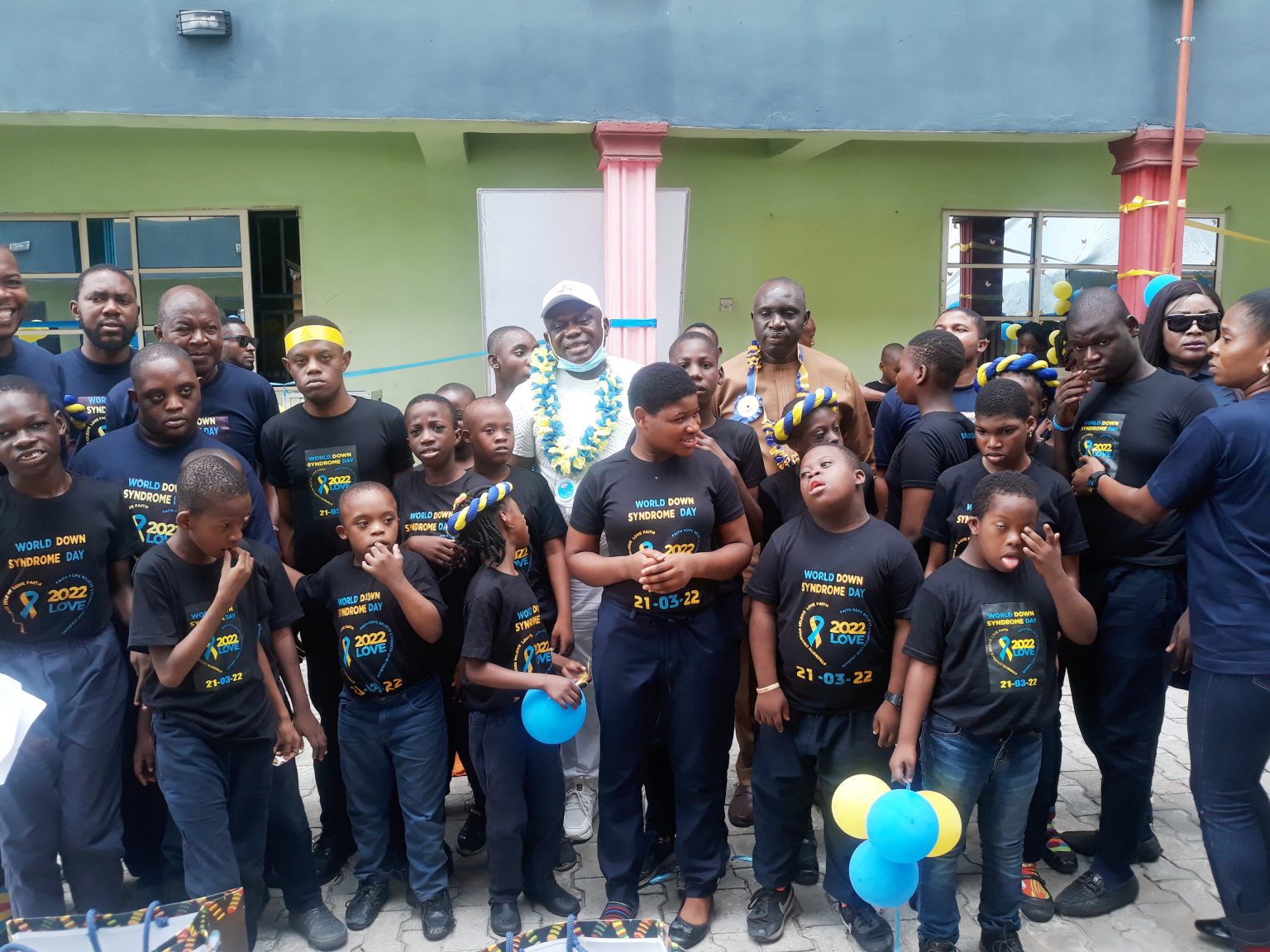
The Omega Power Ministries (OPM) says that 37 children living with Autism and Down syndrome have been admitted for study at its free special needs school in Port Harcourt.
The General Overseer and Founder of OPM, Apostle Chibuzor Chinyere, made this known during a ceremony to mark the 2022 World Down Syndrome Day on Monday in Port Harcourt.
Chinyere said that OPM had in January 2021 established a free school for children born with autism and down syndrome, to enable them to get educated and fit into society.
“We decided to open this free school, knowing that rich people whose children have special needs take them to special schools while the poor cannot afford to do so.
“The children are created by God, and as such, it is wrong to discriminate against them, and deny them education and inclusion just because of the way they were born.
“If given the enabling environment like other kids, children living with autism and Down syndrome can do and achieve great things,” he said.
He said that OPM had deliberately built the special school beside another of its free schools, to enable the physically impaired children to integrate with normal kids.
The general overseer described as wrong the perception by society that children living with autism and down syndrome are possessed by demons or are inferior.
He said: “To change this perception, we decided to bring the two free schools together, to enable the children to play together – but with different teachers.
“We believe that by doing so, the (normal) children will become familiar with autistic and down children, and as such, not discriminate against them even in their adulthood.”
According to Chinyere, the church has so far opened 18 free schools, two free hospitals as well as run free restaurants and accommodations for repentant prostitutes and destitute across the country.
He said OPM also awarded scholarships to more than 2,000 students to study in different countries in Europe, North America and South Africa.
“No fewer than 67 students will also depart Nigeria on Thursday to Cyprus on OPM scholarships. This includes the two security guards that were recently sacked for dancing on duty.
READ ALSO: JAMB Announces March 26 As Registration Deadline
“Similarly, there is no university in Nigeria that does not have at least four students studying on OPM scholarships,” he said.
He said that OPM embarked on philanthropic works to glorify God and serve humanity, adding the projects were funded through tithes and offerings of members of the church.
Speaking, the Commissioner for Education in Rivers, Prof. Kanye Ebeku, said the State Government is happy with Apostle Chinyere’s philanthropic works.
He said the Rivers State government would continue to partner with OPM and willing organisations to drive development.
“Gov. Nyesom Wike is moving to ensure the inclusion of people living with disabilities in the state through the provision of special schools and equipment to support them.
“The governor recently directed the Rivers State University to immediately employ a physically-impaired student, who holds a PhD from the university and was presented with N50 million.
Mrs Maureen Chukwu, the Director of Schools and Welfare Director, OPM Worldwide, said the students were presented with free school bags, books, uniforms and other learning aids.
She said the church acquired the school for N110 million and had in October acquired a new Innoson School Bus at the cost of N43 million for the institution.






A Time To Read, Reflect, and Learn
By: Our Reporter
As predicted by many, during his two-week leave, Vice President Kashim Shettima, by custom, takes time for study and reflection.
Leadership is sustained by the willingness to keep learning. Sometimes, stepping away from the daily rush creates the space to examine ideas more carefully and return to responsibility with greater clarity.

For the Vice President, the period is also an opportunity to deepen the knowledge required for continued service to Nigeria.

Learning does not end when responsibility begins. In many ways, greater responsibility makes learning even more necessary.
A Time To Read, Reflect, and Learn
Nigeria’s Education Crisis Now About System Capacity, Not School Enrolment – Report
By: Michael Mike
Nigeria’s education challenge has shifted from getting children into school to building an education system capable of delivering quality learning, according to a new policy report by the Athena Centre for Policy and Leadership.
The report, Nigeria’s Education Capacity Crisis: Closing the Gap Between Enrolment Growth and System Capacity, authored by Professor Temitayo Shenkoya and Anita Olatunde, argued that while the country has made remarkable progress in expanding access to education, inadequate investment in classrooms, teachers, infrastructure and governance has left the system overwhelmed and unable to translate rising enrolment into improved learning outcomes.
The publication, released on Wednesday in Abuja, described the situation as a structural capacity crisis rather than a temporary funding challenge, warning that without far-reaching institutional reforms, Nigeria risks undermining its human capital development and long-term economic competitiveness.
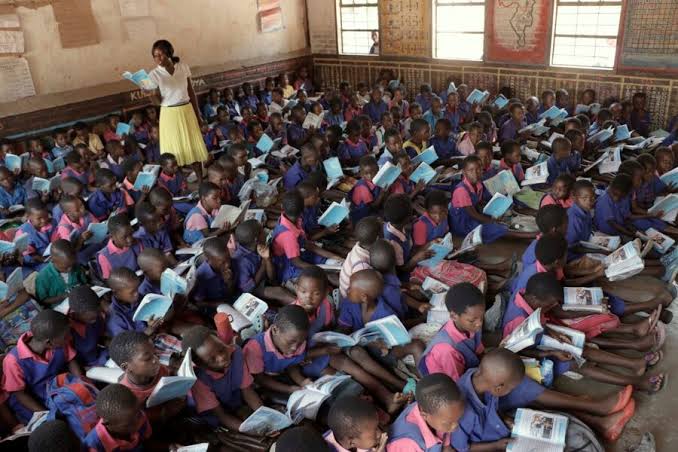
According to the report, 40.1 million pupils and students were enrolled in Nigeria’s public basic and secondary education system during the 2024/2025 academic session across 107,042 public schools.
However, the rapid increase in enrolment has far outpaced investments needed to sustain quality education.
The report revealed that an average classroom accommodates about 60 students, while roughly 66 students share a single toilet, highlighting severe overcrowding and poor sanitation in many public schools.
It also noted that Nigeria devoted only 0.3 per cent of its Gross Domestic Product (GDP) to public education in 2025, a figure significantly lower than allocations recorded in several comparable African countries.
The authors argued that the country’s education system is constrained less by enrolment than by weak governance structures, fragmented planning, inadequate teacher deployment, poor instructional quality, weak institutional coordination and limited use of education data for policy decisions.
“Nigeria’s education challenge is no longer defined solely by access; it is increasingly one of system capacity,” the report stated.
Rather than focusing exclusively on expanding school access, the report urged governments at all levels to prioritise strengthening institutional capacity, improving accountability mechanisms and adopting evidence-based planning to enhance learning outcomes.
Central to its recommendations is the development and effective deployment of the Digital Nigeria Education Management Information System (DNEMIS), which it said should serve as the backbone for planning, monitoring and evaluating education performance nationwide.
Among other recommendations, the report called for the establishment of integrated State Education Management Information Systems linked to the national platform, sustained multi-year investments in classrooms, teachers and digital infrastructure, evidence-based teacher deployment, improved instructional quality and stronger school leadership.
It also advocated annual infrastructure and learning-performance scorecards to monitor progress, targeted interventions for vulnerable learners and improved coordination among the Federal Ministry of Education, state governments, State Universal Basic Education Boards (SUBEBs), Teaching Service Commissions (TESCOMs) and Local Government Education Authorities.
The report stressed that future education spending should be guided by verified data and measurable learning outcomes rather than enrolment figures alone.
Drawing lessons from Botswana, South Africa and Namibia, the authors argued that countries achieving better educational outcomes have done so by building institutions capable of continuous planning, performance monitoring and accountability.
According to the report, the true measure of success should no longer be the number of children enrolled in school or classrooms constructed, but the ability of governments to use reliable evidence to improve teaching quality, strengthen school leadership and ensure meaningful learning for every child.
The publication concluded that addressing Nigeria’s education capacity deficit is not only an education sector priority but also a national development imperative with direct implications for economic growth, workforce productivity and global competitiveness.
Nigeria’s Education Crisis Now About System Capacity, Not School Enrolment – Report
Education
Drama at Ogun Student Election as Umpire Allegedly Swallows Ballot Papers, Police Intervene
Drama at Ogun Student Election as Umpire Allegedly Swallows Ballot Papers, Police Intervene
By Zagazola Makama
Drama unfolded during the Joint Campus Ogun State Council election held at the Nigeria Labour Congress (NLC) Secretariat in Leme, Abeokuta, after an electoral umpire allegedly swallowed some ballot papers during vote counting.
Police sources said the election, which commenced at about 8:00 a.m., was briefly delayed following a two-hour recess to resolve disputes over the number of accredited institutions.
The sources disclosed that stakeholders later reached a consensus recognising 13 institutions, after which the election proceeded.
According to the sources, tension escalated during the counting of votes when one of the electoral umpires, whose identity is yet to be confirmed, allegedly chewed some ballot papers as participants demanded the announcement of results.
They added that the umpire later fainted, prompting the Divisional Police Officer (DPO) to evacuate him in a Department of State Services (DSS) vehicle for safety and urgent medical attention.
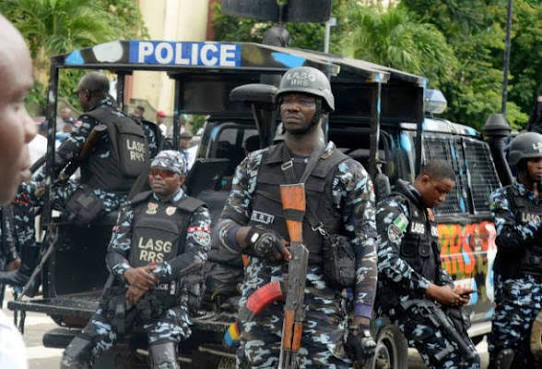
The sources further said the Chairman of the electoral commission, identified as Sileola, was also escorted to safety in a police SWAT vehicle.
They noted that three persons who attempted to cause a breakdown of law and order were arrested, while aggrieved parties were advised to channel their grievances through the appropriate authorities.
The sources said the situation was brought under control, with calm restored at the venue, while further developments are expected.
Drama at Ogun Student Election as Umpire Allegedly Swallows Ballot Papers, Police Intervene

2027: Tinubu Deserves Second Term, Says First Lady Oluremi unveils APC women campaign council, orders nationwide mobilisation for ‘total victory

After al-Minuki, Joint Army, DSS, Amotekun Operation Kills Another ISWAP Leader Planning Terrorist Attacks

Seven Passengers Reportedly Shot Near Bukuru Roundabout in Plateau

Roger Federer’s Shock as DNA Results Reveal Myla and Charlene Are Not His Biological Children

THE PLIGHT OF FARIDA

FAILED COUP IN BURKINA FASO: HOW TRAORÉ NARROWLY ESCAPED ASSASSINATION PLOT AMID FOREIGN INTERFERENCE CLAIMS
-
 News3 years ago
Roger Federer’s Shock as DNA Results Reveal Myla and Charlene Are Not His Biological Children
-
Opinions5 years ago
THE PLIGHT OF FARIDA
-
 News1 year ago
FAILED COUP IN BURKINA FASO: HOW TRAORÉ NARROWLY ESCAPED ASSASSINATION PLOT AMID FOREIGN INTERFERENCE CLAIMS
-

 News3 years ago
EYN: Rev. Billi, Distortion of History, and The Living Tamarind Tree
-
 Opinions5 years ago
POLICE CHARGE ROOMS, A MINTING PRESS
-

 ACADEMICS3 years ago
A History of Biu” (2015) and The Lingering Bura-Pabir Question (1)
-

 Columns3 years ago
Army University Biu: There is certain interest, but certainly not from Borno.
-

 Politics1 year ago
2027: Why Hon. Midala Balami Must Go, as Youths in Hawul and Asikira/Uba Federal Constituency Reject ₦500,000 as Sallah Gift
