
Health
No country met WHO air quality standards in 2021 – surveyor

No country met WHO air quality standards in 2021 – surveyor
A survey of pollution data in 6,475 cities on Tuesday showed that no country met the World Health Organisation’s (WHO) air quality standard in 2021.
The survey also showed that smog even rebounded in some regions after a COVID-related dip.
The WHO recommends that average annual readings of small and hazardous airborne particles known as PM2.5 should not exceed five micrograms per cubic metre.
The WHO announced this after changing its guidelines in 2021 saying even low concentrations caused significant health risks.
However, only 3.4 per cent of the surveyed cities met the standard in 2021.
According to data compiled by IQAir, a Swiss pollution technology company that monitors air quality 93 cities saw PM2.5 levels at 10 times the recommended level.
READ ALSO: 37 Children With Autism, Down Syndrome, Enrol Into Free School – OPM
“There are a lot of countries that are making big strides in reduction,” said Christi Schroeder, air quality science manager with IQAir.
“China started with some very big numbers and they are continuing to decrease over time. But there are also places in the world where it is getting significantly worse.”
India’s overall pollution levels worsened in 2021 and New Delhi remained the world’s most polluted capital, the data showed.
Bangladesh was the most polluted country, also unchanged from the previous year, while Chad ranked second after the African country’s data was included for the first time.
China, which has been waging war on pollution since 2014, fell to 22nd in the PM2.5 rankings in 2021, down from 14th place a year earlier, with average readings improving slightly over the year to 32.6 micrograms, IQAir said.
Hotan in the northwestern region of Xinjiang was China’s worst performing city, with average PM2.5 readings of more than 100 micrograms, largely caused by sandstorms.
It fell to third on the list of the world’s most polluted cities after being overtaken by Bhiwadi and Ghaziabad, both in India.


Health
Thousands Flood Taraba Medical Outreach as Nentawe’s Birthday Initiative Offers Lifeline to Rural Residents
Thousands Flood Taraba Medical Outreach as Nentawe’s Birthday Initiative Offers Lifeline to Rural Residents
By: Michael Mike
Beneficiaries Praise APC Chairman’s Humanitarian Gesture, Demand Bigger Investment in Healthcare System
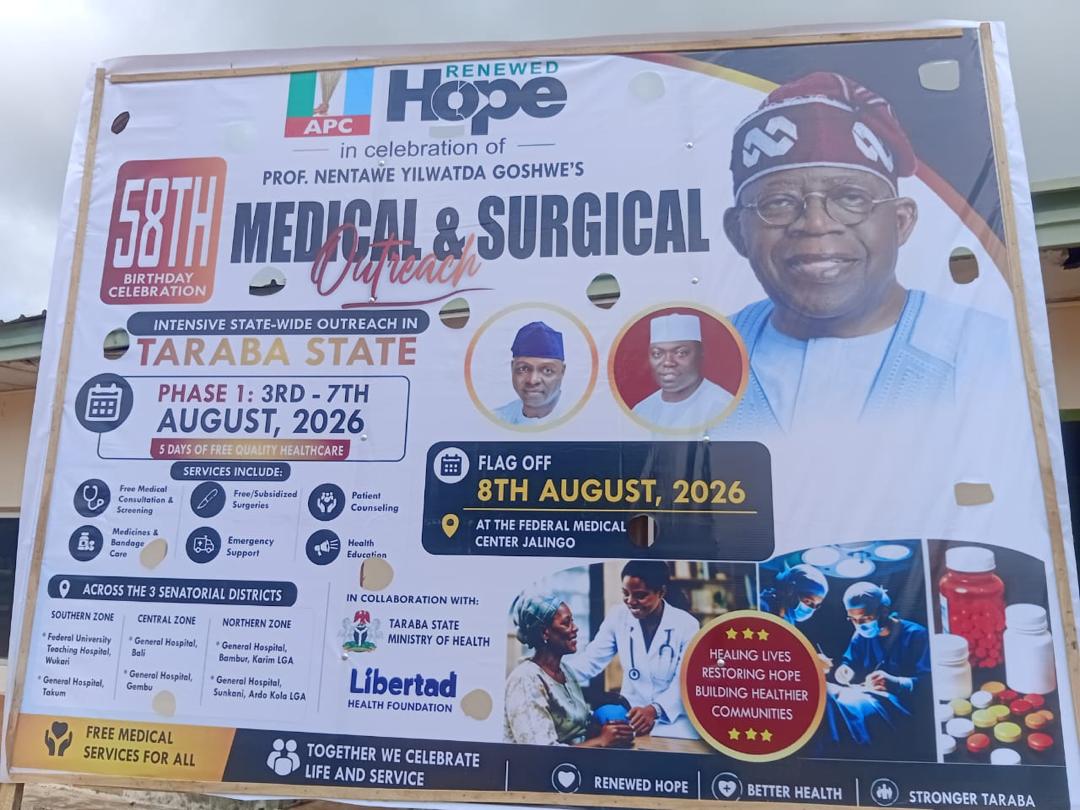
Thousands of residents across Taraba State have received a new lease of hope as the Renewed Hope Free Medical and Surgical Outreach 2026 enters its second day, with beneficiaries applauding the intervention for bringing critical healthcare services closer to vulnerable communities.
The statewide medical programme, organised to mark the 58th birthday anniversary of the National Chairman of the All Progressives Congress (APC), Professor Nentawe Yilwatda Goshwe, has provided free medical consultations, laboratory tests, drugs, specialist care and surgical services to residents who would otherwise struggle to afford such treatments.
From Sunkani to Bali, Gembu, Takum, Bambur and Wukari, hundreds of men, women, children and elderly residents were seen trooping into designated medical centres from the early hours of the day, seeking attention from teams of doctors, nurses, laboratory scientists and other healthcare professionals.
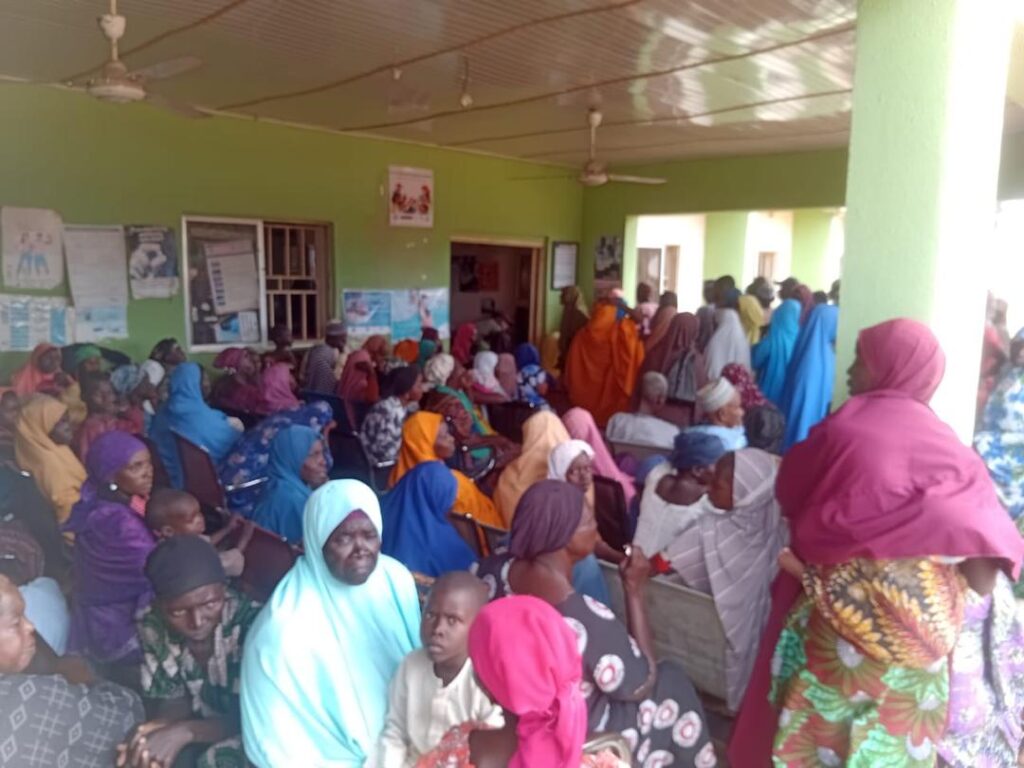
A correspondent who monitored activities at the Primary Health Care Centre, Sunkani, and other centres across the state observed a heavy turnout of patients, many of whom described the outreach as a major relief for families battling rising healthcare costs.
The beneficiaries said the intervention had not only provided immediate treatment but had also restored hope among residents in communities where access to specialist healthcare remains a major challenge.
Mrs Deborah Isah, a resident of Sunkani who received treatment for malaria and typhoid, expressed appreciation to the organisers, describing the programme as a blessing to ordinary citizens.
“I thank Professor Nentawe Yilwatda for remembering people like us. I pray God grants him wisdom, good health and greater success,” she said.
Similarly, Mr Abubakar Ahmed, a farmer treated for typhoid, stomach-related ailments and eye problems, said the outreach had removed a huge financial burden from many rural families.
He commended the initiative for taking medical services directly to the people, while urging continued collaboration between government and humanitarian organisations to strengthen healthcare delivery across Taraba.
Another beneficiary, Miss Dorcas Ephesians, who sought treatment for persistent abdominal pains, described the medical team’s approach as professional and compassionate.
She appealed to the Taraba State Government to sustain and expand partnerships that would ensure vulnerable citizens have regular access to quality healthcare services.
Speaking at the Sunkani centre, the team lead, Dr Williams Golis, said the outreach was strictly humanitarian and designed to address healthcare needs without discrimination.
“This medical outreach is non-political and non-religious. Our priority is to provide quality healthcare through advanced specialist consultations, appropriate medical treatment and surgical interventions for everyone who needs them,” he said.
The Renewed Hope Free Medical and Surgical Outreach 2026 is planned as a three-week intervention targeting thousands of residents across Taraba’s three senatorial districts.
The first phase, which runs from August 3 to 7, is being conducted simultaneously at six healthcare facilities, including the Federal University Teaching Hospital, Wukari; General Hospital, Takum; General Hospital, Bali; General Hospital, Gembu; Bambur General Hospital; and the Primary Health Care Centre, Sunkani.
The official flag-off ceremony is expected on August 8, the birthday of Professor Yilwatda, while the second phase, scheduled from August 8 to 22, will move to the Federal Medical Centre and National Orthopaedic Hospital in Jalingo for advanced specialist consultations and complex surgical procedures.
Healthcare experts say the initiative highlights the role of humanitarian interventions and public-private partnerships in bridging healthcare gaps, especially in rural areas where many residents face difficulties accessing specialised medical services.
However, beneficiaries stressed that while the outreach has provided immediate relief to thousands, sustained investment in primary healthcare centres, specialist hospitals and affordable medical services remains crucial to solving Taraba’s long-term healthcare challenges.
Thousands Flood Taraba Medical Outreach as Nentawe’s Birthday Initiative Offers Lifeline to Rural Residents

Troops foil IED threat on Dikwa–Gajibo road, safely detonate explosive
By Zagazola Makama
Troops of Operation Hadin Kai have discovered and safely detonated an improvised explosive device (IED) planted along the Dikwa–Gajibo road in Borno State, preventing what could have been a deadly attack on security personnel and commuters.
Intelligence sources told Zagazola Makama that the device was discovered at about 10:10 a.m. on July 27 by troops of the 81 Division Task Force Battalion while conducting a routine picketing patrol along the Dikwa–Gajibo axis.

The sources said the patrol team immediately secured the area and alerted the Explosive Ordnance Disposal (EOD) team, which responded promptly and carried out a controlled detonation of the IED at the scene.
No casualties or damage were recorded during the operation.
Military sources described the successful detection and neutralisation of the explosive as part of ongoing efforts to counter the use of improvised explosive devices by Boko Haram and Islamic State West Africa Province (ISWAP) terrorists targeting troops and civilian traffic in the North-East.
The operation underscores the continued vigilance of security forces in maintaining the safety of key supply routes and denying insurgents the opportunity to disrupt military and civilian movement across the theatre of operations.
Security sources added that the general security situation across the theatre remains calm but unpredictable, with troops maintaining high morale and operational readiness.
Troops foil IED threat on Dikwa–Gajibo road, safely detonate explosive
Cholera Outbreak Kills Nine ISWAP Terrorists in Timbuktu Triangle
By: Zagazola Makama
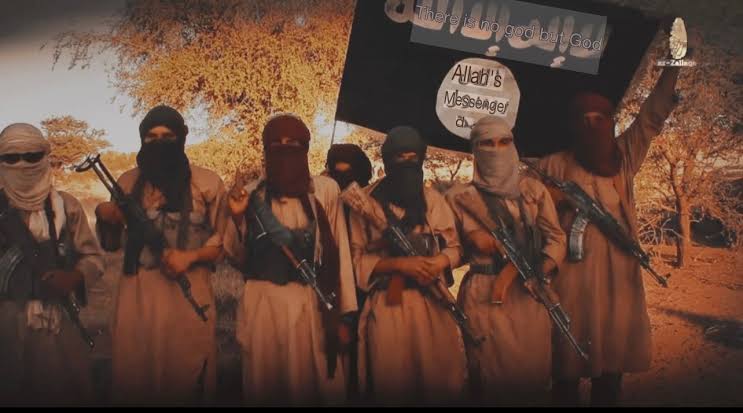
A cholera outbreak has reportedly claimed the lives of nine fighters of the Islamic State West Africa Province (ISWAP) in the Timbuktu Triangle, a known terrorist stronghold in Borno State, intelligence sources have disclosed.
The sources told the News Agency of Nigeria (NAN) that the outbreak had spread through the group’s enclaves, highlighting deteriorating sanitary conditions and limited access to medical care within the insurgents’ camps.
According to the intelligence, two additional ISWAP fighters infected with the disease were allegedly executed by fellow terrorists after attempts to manage their condition at Kimba village proved unsuccessful.
The sources said the development pointed to the worsening health conditions within the terrorist hideouts, where sustained military pressure has disrupted logistics, including access to medicines and treatment facilities.
The sources added that commanders had also been urged to intensify efforts to intercept medical supplies and pharmaceuticals intended for terrorist camps in order to further degrade ISWAP’s treatment capability and operational resilience.
The reported outbreak comes amid sustained offensives by troops of Operation HADIN KAI, who continue to target terrorist enclaves and logistics networks across the Lake Chad region in a bid to degrade the insurgents’ fighting capacity.
Cholera Outbreak Kills Nine ISWAP Terrorists in Timbuktu Triangle

Chad Accuses Sudanese Forces of Crossing Border, Bombing Convoy Deep Inside Chadian Territory

Troops Arrest 24-Year-Old Hunter With Dane Gun After Gunshots Report in Plateau

Three Cows Die After Suspected Poisoning in Plateau

Roger Federer’s Shock as DNA Results Reveal Myla and Charlene Are Not His Biological Children

THE PLIGHT OF FARIDA

FAILED COUP IN BURKINA FASO: HOW TRAORÉ NARROWLY ESCAPED ASSASSINATION PLOT AMID FOREIGN INTERFERENCE CLAIMS
-
 News2 years ago
Roger Federer’s Shock as DNA Results Reveal Myla and Charlene Are Not His Biological Children
-
Opinions5 years ago
THE PLIGHT OF FARIDA
-
 News1 year ago
FAILED COUP IN BURKINA FASO: HOW TRAORÉ NARROWLY ESCAPED ASSASSINATION PLOT AMID FOREIGN INTERFERENCE CLAIMS
-

 News2 years ago
EYN: Rev. Billi, Distortion of History, and The Living Tamarind Tree
-
 Opinions5 years ago
POLICE CHARGE ROOMS, A MINTING PRESS
-

 ACADEMICS2 years ago
A History of Biu” (2015) and The Lingering Bura-Pabir Question (1)
-

 Columns2 years ago
Army University Biu: There is certain interest, but certainly not from Borno.
-

 Politics1 year ago
2027: Why Hon. Midala Balami Must Go, as Youths in Hawul and Asikira/Uba Federal Constituency Reject ₦500,000 as Sallah Gift
