
Opinions
Tinubu, Kashim Shettima: An unwavering political ‘chef-d’oeuvre’ in the race for 2023

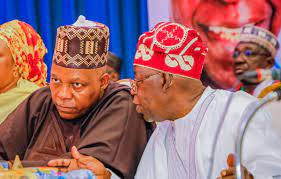
Tinubu, Kashim Shettima: An unwavering political ‘chef-d’oeuvre’ in the race for 2023
By: James Bwala
Two days ago, I read a book with the title: ‘Political Party Governance’ written by a former House of Representative and cabinet member in the Good luck Jonathan administration, Mr. Mohammed Wakil. The book, a 290 pages was handed to me on Sunday, August 7, 2022 by the Vice Presidential candidate of the All Progressive Congress, APC, Senator Kashim Shettima, the man I so admire in the political race for his courage and unyielding stand in the pursuit of victory with Asiwaju Bola Ahmed Tinubu in the buildup for 2023.
I called them President and Vice President of the Nigerian states with much confidence as the days unfold and we march towards the day of grandeur in the making of history. While I picture them in the mirror of ‘Political Party Governance’, which informed this piece, it appears clearer to me that my writings of November 4, 2021 with the title: 2023: How Kashim Shettima may become Nigeria’s Next Vice President’ indeed was coming from a scuttlebutt of pleasingly prediction with the imperceptible hand turning the tide.
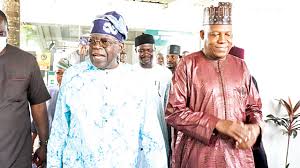
I believe that even nature has agreed with the arrangement that makes possible the emergence of Tinubu and Kashim Shettima in the race for Aso Rock come 2023. And for a number of times I keep saying that the direction of the wind carries the message that only those with discerning minds can understand the way and manner things are unfolding.
From the days of my early education, one thing I cannot forget quickly is my social studies teacher beating us on the question of the direction of the wind. Indeed, not even the teacher could claim to have seen the wind or the direction in which it flows but it was theoretically framed and the books, which informed him that the prevailing westerlies are the normal winds blowing from West to East. This theory perhaps may have justified what I have seen in the coming together of these grill minds holding sway in our political institution.
With that understanding I come to stand with that argument in the political calculations and to agree with the ruling party on the move and selection of its candidates. From the forward of the book, in which I am linking my thoughts, Professor Abubakar O. Suleiman gauged the heath and resilience of a country’s democracy from the strength of its institutions of democracy….And went further to explain the means of its symbolic integration in the making of Political Party Governance’. The book fishes out beyond the ordinary reader’s imagination something more particularly with the ongoing struggles to inch towards another big outing for the APC on the day of election.
Although I am not out to review the book by Wakil, many thoughts, thinking and things as revealed in the lines of writing keeps pulling me into linking many parts of the revelations with the Tinubu/Shettima ticket and the new face of the ruling party in the lines of the exposures in the book. Like the lion that remains focused on its target, Tinubu and Kashim Shettima have been on the same page from their defining stand on political party governance as anyone reading their profile may understand.
Also Read: 2023: When BIU turns to Tinubu, Kashim Shettima and the SWAGA dance in Lagos
I also tried to profile the four political runners in the thinking of the writer on his title: ‘Political Party Governance’ to see where they fit in. Their antecedents in the country’s politics over the years left a mark on the political ground that reveals their stability as leaders. Well, as unstable as it portrays for the others, Tinubu and Kashim Shettima no doubt have a record that portray them in positive light as progressive in their move from individual rising on the political soil to touching the political firmament with such a green ambition where all thinking stops.
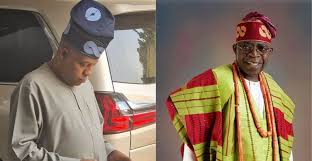
Beyond the ‘rhetoric’ as Kashim Shettima would put, the Biblical truth is that an unstable person is always a double minded personality and as such is never straight in all his ways. Those who had been moving from here and there in their political journeys have this in their records but Tinubu and Kashim Shettima we know have the history of being politically stable as such they are good examples of leaders Nigerians should follow.
On an ‘individual party level initiative’, I see the Tinubu, Shettima train putting more efforts on the key advises the book by Mohammed Wakil attempted to answer on some of the questions on challenges from a number of internal capacities suffered by political parties in the country ( if narrowed to the ongoing challenges within the Nigeria’s political parties), and to put on record I can confidently say that with the revelations across party levels, the APC is enjoying a better platform and better candidates for the Presidential role than the other poles in the race for Aso Rock.
Recently, groups have continued to run into the Tinubu, Kashim Shettima offices to register their support and solidarity. Some of these groups include Tinubu-Shettima Support Group, Arewa Christian Reawakening Network, Detribalized Tinubu Support Group with partners, NairaXi, APC Young Stakeholders and Nigeria First Movement. This indeed further revealed that the Muslim-muslim agitations was a scratch but another strength for the party to surmount the ideas and to bring Nigeria out of the woods over religious differences and other misplaced agenda and to set citizens on the pedestrian for another walk to freedom.
Tinubu, Kashim Shettima: An unwavering political ‘chef-d’oeuvre’ in the race for 2023


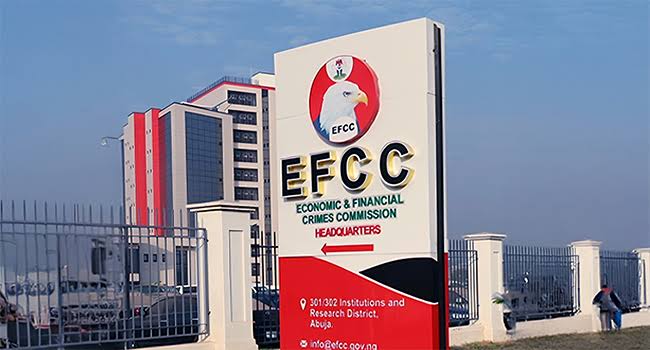
THE EFCC BILLIONS AND THE NDDC: WHAT NEXT?
By Frank Tietie
The reported recovery by the Economic and Financial Crimes Commission of substantial statutory levies owed to the Niger Delta Development Commission by defaulting oil companies is commendable. It demonstrates what determined regulatory enforcement can accomplish when public institutions act decisively.
According to disclosures made before the Senate Committee on Public Accounts, the EFCC investigated 43 oil companies following findings in the Nigeria Extractive Industries Transparency Initiative’s 2021–2023 Oil and Gas Sector Audit Report. Twenty-four companies had outstanding liabilities totalling approximately ₦76.88 billion and $81.08 million, while 19 were cleared.
The EFCC further disclosed that some companies paid ₦6.71 billion and $16.99 million directly to the NDDC. Of the sums recovered through the EFCC, ₦73.37 billion and $67.07 million had reportedly been released to the Commission, leaving ₦3.51 billion and $14.01 million in the EFCC recovery account.
These recoveries are significant, but recovering the money is only the beginning. The more important question is: what happens to the funds after they reach the NDDC?
For too long, the NDDC has failed to maximise its statutory mandate to facilitate the rapid, even and sustainable development of the Niger Delta, particularly in communities directly affected by oil and gas exploration and production.
Instead of transforming the living conditions of the people, the Commission has repeatedly been associated with allegations of political patronage, abandoned projects, inflated contracts, procurement irregularities and payments for work that was either poorly executed or never performed.
A particularly troubling example involved allegations made by the NDDC against the late Senator Peter Nwaoboshi. In 2020, the Commission alleged that he used 11 companies as fronts to secure contracts worth approximately ₦3.6 billion in September 2016. The late senator denied the allegations. The NDDC subsequently demanded the refund of about ₦2.5 billion in relation to a contract for the supply of plastic desks and chairs.
The public deserves to know whether the demanded sum was ever recovered and, if not, what steps are being taken against the estate, companies, or other persons legally responsible. Allegations involving public funds should not simply disappear because an accused person has died. Although criminal liability is personal, properly established civil claims, recovery proceedings and forfeiture orders may, where legally sustainable, continue against companies, assets or an estate.
The wider picture is even more disturbing. The forensic audit submitted to the Federal Government in 2021 reportedly identified 13,777 projects whose execution was substantially compromised, despite the NDDC receiving approximately ₦6 trillion from statutory and non-statutory sources between 2001 and 2019. This represents a profound betrayal of the people for whose benefit the Commission was established.
If the Federal Government truly cares about the Niger Delta, it cannot simply congratulate the EFCC for recovering the funds and then allow those funds to enter the same opaque system that produced thousands of abandoned and questionable projects.
The EFCC should apply comparable determination to investigating past and current NDDC contracts, particularly contracts for which substantial or full payments were made without corresponding performance. Such investigations should determine whether contracts complied with the Public Procurement Act and applicable procurement regulations and whether the projects were actually executed at the approved locations with the quality and quantity of work delivered corresponding with the sums paid;
Where criminal conduct is established, those responsible should be prosecuted. Where money was paid without value, recovery proceedings should be commenced against the contractors, their companies and any public officials who facilitated the unlawful payments.
The NDDC must move beyond the politics of loyalty and patronage. Its management should understand that the recovered funds are not a political windfall. They are statutory resources that, in practical and moral terms, belong to Niger Delta communities that continue to endure environmental degradation, poor roads, inadequate healthcare, unemployment, polluted water, and deficient educational facilities despite decades of oil production.
Priority should therefore be given to projects that have an immediate and measurable impact on the people, such as the provision of potable water, healthcare, education, environmental remediation, electricity, roads, skills development and sustainable employment.
The EFCC deserves commendation for recovering funds owed to the NDDC. However, its responsibility should not end with transferring the money. It must help ensure that the recovered funds do not become subject to the same corruption and embezzlement that have historically undermined the Commission.
The true success of this recovery will not be measured by the billions announced before the Senate. It will be measured by completed roads, functioning hospitals, equipped schools, clean water, restored environments and improved livelihoods across the Niger Delta.
The money has been recovered. The next and more difficult task is to ensure that it reaches the people.
Frank Tietie
Nigerian Lawyer, Media Personality and Executive Director of Citizens Advocacy for Social and Economic Rights (CASER) writes from Abuja
THE EFCC BILLIONS AND THE NDDC: WHAT NEXT?
Opinions
OPINION: Seven Terror Commanders Returned from Hajj. The Bigger Question Is: Who Cleared Them?

OPINION: Seven Terror Commanders Returned from Hajj. The Bigger Question Is: Who Cleared Them?
By Zagazola Makama
Seven suspected Boko Haram and ISWAP commanders reportedly completed one of the world’s most scrutinised international pilgrimages, boarded aircraft, travelled across international borders, landed at an international airport in Nigeria, and were only arrested upon arrival.
Pause for a moment. This is not merely another counterterrorism success story. It is also a frightening story about possible institutional failure. The obvious question should not only be how they were arrested. The more important question is: how did they get there in the first place?
Somewhere between the forests and the holy city of Makkah, somebody processed documents. Somebody approved travel. Somebody verified identities.
Somebody stamped passports. Somebody issued clearances. Somebody looked away.
And unless those “somebodies” are identified, arresting seven commanders may only scratch the surface of a much bigger security problem.
Last week, another controversy emerged when security analyst and Convener of the Katsina Security Community Initiative, Dr. Bashir Kurfi, alleged that the Katsina State Government sponsored some bandit leaders to Saudi Arabia as part of peace initiatives, claiming they received travel packages worth about ₦10 million each.
The Katsina State Government has categorically denied the allegation, describing it as false, baseless and politically motivated. Fair enough.
A denial is expected. But is a denial the end of the matter? Or should it be the beginning of a thorough investigation? That is the real issue.
When allegations of this magnitude are made by a known security advocate and they intersect with the later arrest of seven suspected terrorist commanders returning from Hajj, responsible institutions should not simply trade statements.
They should establish facts. Because Nigerians deserve answers. Were any suspected terrorists able to obtain Nigerian passport and other travel documents? If yes, how? Who verified their identities? Were aliases used? Did anyone inside any government institution facilitate the process?were there collaborators?
For years, Nigerians have focused almost exclusively on terrorists carrying rifles in the forests. Perhaps it is time to pay equal attention to insiders in offices. Terrorism rarely survives on guns alone. It also survives on compromised officials. It survives on insiders willing to replace patriotism with profit.
A terrorist cannot manufacture an international passport.He cannot approve immigration records.He cannot clear himself through airport procedures.He cannot erase himself from watchlists without help.Somewhere, someone opens the door.That person is just as dangerous as the man carrying the gun.
If the Interior Minister’s revelation is accurate, then this development should trigger one of the most comprehensive internal investigations Nigeria has conducted in recent years.
Nigeria has spent billions fighting Boko Haram and ISWAP.Thousands of soldiers have paid the ultimate price.Entire communities have been destroyed. Families have been displaced.
To then discover that suspected terrorist commanders were able to complete an international pilgrimage before being intercepted should concern every Nigerian.
OPINION: Seven Terror Commanders Returned from Hajj. The Bigger Question Is: Who Cleared Them?
Opinions
OPINION: The Silence After Risku’s Murder Is Dangerous — Benue Must Speak Before Violence Speaks for It
OPINION: The Silence After Risku’s Murder Is Dangerous — Benue Must Speak Before Violence Speaks for It
By Zagazola Makama
Several hours have passed since the brutal murder of the Chairman of the Miyetti Allah Cattle Breeders Association of Nigeria (MACBAN) in Benue State, Alhaji Ardo Risku, and his son, Ibrahim. Yet, what has echoed louder than the gunshots that ended their lives is the deafening silence from the Benue State Government. That silence is troubling.
According to multiple security sources, Risku was not just another community leader. He was widely regarded by security agencies as one of the most peaceful Fulani leaders in Benue State. A man who consistently stood on the side of dialogue rather than violence. He spent years encouraging restraint, persuading communities to embrace peaceful coexistence, and working closely with security agencies to prevent attacks and reprisals.
Ironically, he was murdered while returning from yet another peace meeting.If there is any definition of dying in the service of peace, this is it.Those who worked closely with him say his efforts played a significant role in keeping many parts of Benue relatively calm over the past several months.
At a time when the state had every reason to descend into another cycle of bloodshed, Risku remained one of the bridges connecting deeply divided communities. That bridge has now been targeted to be destroyed by the enemies of the state who benefits from crises.
Even more heartbreaking is the fact that Risku himself had repeatedly expressed fears that enemies of peace were after him. During previous peace engagements, he openly warned that there were individuals determined to eliminate him because of his commitment to reconciliation. On one occasion, he reportedly cancelled a peace meeting organised by a local government chairman in Benue after receiving credible security concerns about threats to his life.
Sadly, those fears became reality. One senior security official who knew Risku described his death as “disturbing, painful and entirely undeserved.” “He was a good man,” the officer said. “Throughout the years, he was never found wanting in any criminal activity. He never encouraged violence. He consistently supported every peace initiative. Ironically, peace became his death sentence,”
“This man spends years preaching peace. He convinces angry communities to embrace dialogue instead of revenge. He works with security agencies. He attends every peace meetings. He risks his own life trying to prevent bloodshed.Then he is murdered on his way home after honouring another invitation for peace talks.
In the end, his fears proved justified. The enemies of peace found him. But where were the voices of leadership? Still searching for the right press release? Or perhaps someone was calculating the political cost of condemning the murder of a Fulani man. Because these days, it appears that condemning the killing of an innocent citizen has become a political risk rather than a moral obligation.
Let’s ask the uncomfortable question. Would the condemnation have taken this long if the victim belonged to another ethnic group? That question alone should trouble every Nigerian.
Since when did ethnicity become the deciding factor in determining whose life deserves immediate sympathy?
Risku had lived in Benue for decades. He invested his energy in promoting peaceful coexistence. Security agencies trusted him enough to involve him in every peace initiatives.
Yet after his murder, official silence became louder than the bullets that killed him. What exactly are we telling other peace advocates?
Infact, hypocrites who tried to justify the killing are saying that he was killed by his own people in order to truncate the relative peace in the state.
The greatest beneficiaries of this silence are not grieving families. They are those who profit from conflict. Every peacemaker removed from the equation creates more room for extremists to recruit, manipulate and divide communities.
This is how wars are sustained, not only by those who pull triggers, but sometimes by those who cannot find the courage to condemn those who do. The murder of Ardo Risku is not simply about one Fulani man. It is about whether governments will speak only when it is politically convenient.
Governor Hyacinth Alia should rise above political calculations. He has an opportunity to demonstrate leadership at this critical moment.
Leadership is not measured by how loudly one speaks during campaign rallies. It is measured by how quickly one stands with every victims, even when doing so attracts criticism. Justice has no tribe. Condemnation has no religion. Empathy should have no ethnicity.
Is every Fulani man now to be judged solely by his ethnicity? If Risku whose record of peaceful engagement was acknowledged even by security agencies could become a victim simply because of who he was, then Nigeria is travelling down a road that no responsible society should ever accept.
Criminals should be identified by their crimes not by their ethnicity. Justice must remain individual. Collective guilt has never solved insecurity anywhere in the world. It only creates new victims and fresh cycles of revenge.
This is precisely why the Benue State Government must act, not tomorrow, not next week, but now. A clear public condemnation, reassurance to all communities, and a transparent investigation would send the message that every innocent life matters equally under the law. More importantly, security agencies must move swiftly to identify and arrest those responsible. There should be no sacred cows, no excuses and no delays.
Every security formation operating in Benue, troops of Operation Wirld Stroke, Police, the Department of State Services, the Nigeria Security and Civil Defence Corps and other relevant agencies, must immediately heighten surveillance in vulnerable communities. Intelligence gathering should be intensified, confidence-building measures strengthened, and every effort made to prevent revenge attacks.
Intelligence operations should be intensified immediately because history has shown that when respected community leaders are murdered, retaliation often follows. Stopping the next killing is just as important as investigating the last one.
Benue has bled enough. If the objective of those behind this killing was to destroy the fragile peace that had held for months, then government silence only risks helping them achieve exactly that.
Zagazola is a Counter Insurgency Expert and Security Analyst in the Lake Chad Region
OPINION: The Silence After Risku’s Murder Is Dangerous — Benue Must Speak Before Violence Speaks for It

Troops Repel ISWAP Attack on Mandaragirau FOB, Detonate IED During Clearance Operation in Borno

ISWAP Fighter Surrenders in Borno After Eight Months in Terrorist Camp

Al-Shabaab and the Emerging Debate Over a Taliban-Style Political Transition

Roger Federer’s Shock as DNA Results Reveal Myla and Charlene Are Not His Biological Children

THE PLIGHT OF FARIDA

FAILED COUP IN BURKINA FASO: HOW TRAORÉ NARROWLY ESCAPED ASSASSINATION PLOT AMID FOREIGN INTERFERENCE CLAIMS
-
 News2 years ago
Roger Federer’s Shock as DNA Results Reveal Myla and Charlene Are Not His Biological Children
-
Opinions4 years ago
THE PLIGHT OF FARIDA
-
 News1 year ago
FAILED COUP IN BURKINA FASO: HOW TRAORÉ NARROWLY ESCAPED ASSASSINATION PLOT AMID FOREIGN INTERFERENCE CLAIMS
-

 News2 years ago
EYN: Rev. Billi, Distortion of History, and The Living Tamarind Tree
-
 Opinions5 years ago
POLICE CHARGE ROOMS, A MINTING PRESS
-

 ACADEMICS2 years ago
A History of Biu” (2015) and The Lingering Bura-Pabir Question (1)
-

 Columns2 years ago
Army University Biu: There is certain interest, but certainly not from Borno.
-

 Politics1 year ago
2027: Why Hon. Midala Balami Must Go, as Youths in Hawul and Asikira/Uba Federal Constituency Reject ₦500,000 as Sallah Gift
