
Columns
PORTRAIT OF A GENERAL: MANSUR MUHAMMAD DAN~ALI (RTD)

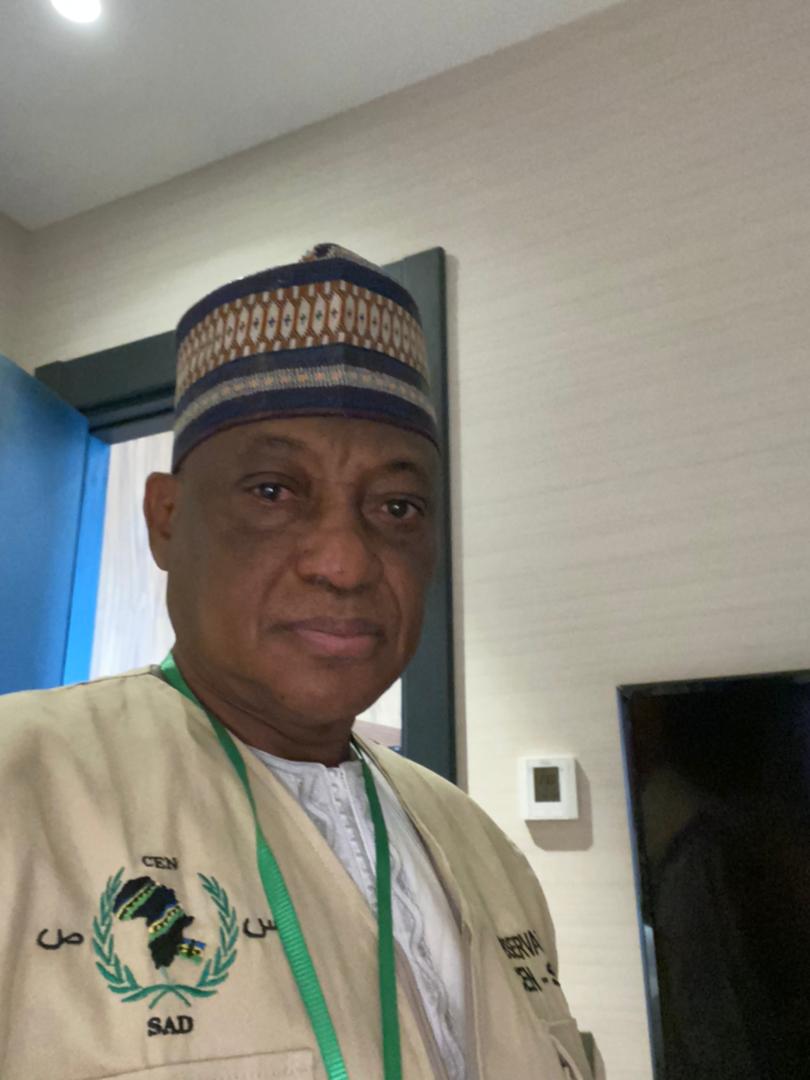
PORTRAIT OF A GENERAL: MANSUR MUHAMMAD DAN~ALI (RTD)
By Musa Dangiwa
MANSUR Muhammad Dan~Ali,
A Brigadier General, retired from the Nigerian Army in 2013 and became Nigeria’s Minister of Defence.
Upon his appointment by President Muhammadu Buhari in November 11th 2015, at a time when parts of the country were on the seethe.
The North East was under the siege of ideological extremists who have picked up arms with a ruthless ambition to create a state within the Nigerian State and were indeed, already controlling a number of local governments in Borno, Adamawa and Yobe states.
The extremist fighters, who became popularly known as Boko Haram were also already advancing their attacks to parts of the North West and North Central states.
They dared Abuja, Nigeria’s seat of Power where they bombed a mammy market at the popular Mogadishu Barracks in Abuja, the Nigerian Police Force Headquarters, the United Nations building and even motor parks, where they killed and maimed, while fear of possible attack gripped the rest of the other parts of the country.
Dan~Ali assumed office as Minister of Defence to confront the rise of all forms of criminal elements in parts of the Southern states, who engaged in militancy and economic sabotage like, kidnapping expatriate oil workers for ransom and vandalizing oil pipelines for illegal- bunkering activities in the Niger Delta and Lagos axis .
As a retired General, his challenge was to find solution to these security challenges and assure Nigerians of their security to lives and properties, as well as restoring order; peace and stability to the troubled parts of the country.
Picking up this challenge, Dan~Ali assured Nigerians on Friday November 13th 2015, at a News Conference towards the 2016 commemoration of the Nigerian Armed Forces Remembrance Day that;
“…the Armed Forces is committed to doing all within its powers to maintain the indivisibility of Nigeria…”
He demonstrated that he was on top of the task of decimating the enemies of the state when the Chief of Army Staff Conference was held at Dutse, Jigawa State in December 2016, where he declared during the closing ceremony that
“… A few months back, it would have been unthinkable or even impossible to contemplate the hosting of this conference here in Dutse; but here we are today in a very secured environment…”, saying, “…let me seize this opportunity to once again reassure you and the world of Mr President’s resolve to degrade all activities of terrorism in our nation.
To demonstrate that we are succeeding, we decided to host this Conference just at the border state to the theatre of Boko Haram activities…”
When it was time to start handing over areas liberated by the Military from Boko Haram to Civil Law Enforcement Agencies in April 2017, MANSUR Dan Ali, warned and i quote;
“… Let me also use this opportunity to warn any person or group of individuals or organizations under whatever cover who wish to test the collective will of this administration to know that we will not fold our arms and allow them to destroy our nation… adding that “… All Security Agencies of the Federal Republic of Nigeria have been mobilized and directed to swing into action to identify and crush any possible threat to our national security…”
He was concerned that the country was assailed by different degrees of crisis ranging from terrorism to kidnappings, armed banditry , cattle rustling, farmers~herders clashes, pipeline vandalism, ritual killings among others, saying “…all these are potent and sensitive crisis situations…”
He believed that the priority of government was to secure lives and property of citizens, guarantee a secured environment for socio-economic activities to thrive without hindrance, pointing out that “…our security and response agencies are constantly engaged in the essential tasks required for meeting the internal security objectives of ensuring safety and security of Nigeria’s territorial integrity, its population, all critical infrastructures and vowed that “… Government will not relent in this primary objective…”
He ensured that under his administrative watch as Minister of Defence, the Armed Forces of Nigeria made significant progress in the fight against insurgency and militancy in the country.
In the North East for example, the Nigerian Army in conjunction with other security forces were able to decimate and degrade the capacity of the insurgents.
The Armed forces further advanced the fight with the formation of “Operation Crackdown” which took the fight into the stronghold of insurgents at the Sambisa forest to clear the Boko Haram terrorists out of their camps.
There was also the “Operation Gama Aiki”, to flush out the remnants of Boko Haram terrorists within the lake Chad basin.
The Nigerian Army recaptured most of the territories previously under the control of the terrorists, reclaimed towns and villages, rescued over 12,000 persons held hostage by the Boko Haram terrorists and reopened several socio~economic and academic infrastructures that were being closed due to security risks in the North East.
Under his administrative leadership as Minister of Defence, the Nigerian Army established “Operation Safe Corridor” to deracalise and rehabilitate terrorists who renounced violence or those captured in battle and set-up a Human Rights Desk Committee of the Nigerian Army, to carry out proactive response to cases of abuse by troops in operation.
There was also the “Operation Awatse”, which was a joint operation between the Nigerian Army and the Nigerian Police and other security Agencies to flush out all manners of criminals, including; Militants and Economic saboteurs who specialized in pipeline vandalisation to steal the nation’s oil wealth in the creeks and other riverine areas.
When he turned to the Niger Delta tegions of Nigeria, where violent crime against humanity and high profile sabotage against the economy of the country was on the rise, he stormed Port Harcourt, the heart of the Niger Delta in July 2017 to operationalise the headquarters of the then; newly established 6 Division of the Nigerian Army, to handle various security challenges in the region.
Explaining that the region has suffered a lot of criminal activities like sabotage of oil facilities, illegal bunkering, kidnappings and other violent crimes against humanity and declared that the newly established 6 Division would perform its duties with the highest sense of professionalism and respect for human values, while decrying the rampant criminal activities and un- patriotic agitations which could not be tolerated, saying, ” Nigeria is greater than any individual or group…”
In Novemeber 2017 he was at the meeting of Islamic Military Counter Terrorism Coalition in Riyad, Saudi Arabia, where he appealed for humanitarian assistance Programme for the North Eastern Nigeria and other areas affected by the activities of the insurgents.
The Saudi government promptly responded to his call and offered food items worth Ten Million Dollars in aid to the internally displaced persons in the North East.
In Ankara, Turkey in 2017; Gen. Dan-Ali called for speedy ratification of the Military Training Corporation Agreement and the Defence Industry Cooperation Agreement between Nigeria and Turkey by the Parliaments of the two countries to enable the Nigerian military benefit from training at the Turkish Military Institutions and joint Military exercises with the Turkish Army.
He was at the Russian Federation Ministry of Defence, Moscow, where he called for the support of Russia, as one of the biggest economies in the world, to ensure that criminal activities at the Gulf of Guinea which constitutes threats to the existence of humanity and economic development were stamped out from Nigerian’s Maritime environment.
At the Italian Ministry of Defence, Rome in June 2017, Mansur Dan~Ali proposed agreements between the two countries in the areas of exchange of data and experiences in the field of counter piracy, held combined counter piracy exercises and other maritime security activities, training of the Nigerian Navy Personnel among others and at the G7 Friends of the Gulf of Guinea Group meeting held at Rome in Italy in 2017, he called for a viable and implementable decisions and solutions to maritime security and economic challenges in the Gulf of Guinea.
He took the campaign against security challenges in Nigeria to Egypt in August 2018, where he proposed joint military exercise between the Nigerian and Egyptian Navy and requested for intelligence on vessels coming into Nigeria’s maritime environment for close monitoring and surveillance among others.
He was also at the Xiangham Forum; Beijing China in October 2018, where he told the world that the development of a counter narrative to the ideology of Boko Haram terrorists was imperative, saying, ” …arguably, the ideology is their Centre of gravity and thus driving force for recruitment and radicalization,”
pointing out that ” …
there is the need for greater synergy and cooperation in developing a counter narrative to undermine the Boko Haram ideology.”
Also in China, he took the campaign against terrorism in Nigeria to the Special Forces Institute, Beijing China where in a Paper on Security Challenges in the Gulf of Guinea, he called for support for the Nigerian Navy, saying ” …the Chinese Government could assist in the training of technical personnel on modern ship~building techniques and providing dockyard equipment…”
In the cause of these and other high level international meetings, including his presence at the United Nations (UN) and the Economic Community of West African States, (ECOWAS), he became Chairman of the Sahel Sub~Saharan Defence Ministers….
By the time he left office as Minister of Defence, militancy in the Niger Delta area was subdued and the rampaging terrorists in the North East were in disarray and desperate due to lack of basic supplies, with many of the fighters deserting, others surrendered and were being deradicalised and rehabilitated, even as remnants terrorists continue to carry out occasional attacks on soft targets.
Born in August 25th 1959 in Birnin~Magaji Zamfara State Nigeria, he was Commissioned a Lieutenant in 1984, rose through the ranks and held various Commanding positions, including Battalion Commander at the United Nations Hybrid Mission in Sudan (UNAMID), Pioneer Commander, 32 Artillery Brigade Akure, Nigeria, Commander 32 Artillery Brigade Garrison Abeokuta Nigeria, Commander 301 Artillery General Support Regiment Gombe Nigeria, among several others during his career in the Military, with several honours to his credit; including the prestigious Harmony and United Nations Medals, Silver Golden Jubilee Medals, Passed Staff Course Daggar, Distinguished Service Star, Meritorious Service Star, Forces Service Star and a distinguished member of the National Defence College of Bangladesh.
A card carrying member of Nigeria’s ruling political party, THE ALL PROGRSSIVES CONGRESS (APC).
He was a delegate to the 2014 National Conference, where the nation’s wise men and women were assembled to proffer solutions to the country’s political problems.
He once attempted to contest election to represent his people at the Senate of the Federal Republic of Nigeria in 2015, but by providence he did not go to the Senate and rather; became the Minister of Defence.
MANSUR Dan- Ali holds double Masters Degrees in Security Studies, Bangladesh University of Professionals 2009, and Public Policy and Administration University of Abuja Nigeria in 2004/2005, respectively.
He also holds a Higher National Diploma in Photogrammetric and Survey Engineering Kaduna Polytechnic Nigeria, 1977/1982 and has presented several papers both locally and internationally, including a Paper titled, ”REGIONAL SECURITY ASPECTS’ Perspectives From Nigeria’s Fight Against Insurgency”, at the 8th Moscow Conference on International Security in April 25th, 2019.
MANSUR Dan-Ali is married with Children and Grandchildren.
He plays Polo, currently he is the Captain; Armed Forces Veteran Polo team and Founding~Member of the Nigerian Armed Forces Polo Association where he represented the Nigerian Military in various tournaments at home and abroad winning laurels and medals.
He has passion for the less privileged children for whom he built a school called El-Eman Nursery/Primary School which he donated to his community and facilitated the establishment of eight Command Secondary Schools at different locations to create more access to education by the less privileged children.
He holds the traditional titles of Yariman Birnin-Magaji and Sarkin Yakin Zamfara.
Mansur Muhammed Dan~Ali has contributed meriteriously in converging the successes of the rulling APC in his home state “ZAMFARA STATE”
He played the lead role in bringing the zamfara state governor HE” Bello Matawalle from the defunct PDP to the rulling APC.
Mansur Muhammed Dan~Ali is a househole name within the Nigerian Political Class due to his enermouse contributions to the developments of the APC Achievements..!!
Musa Mudi Dangiwa is a political analyst writes from Kaduna State Nigeria.
mudimusa15@yahoo.com.



SHOSA: Celebrating Excellence as Old Students Prepares to Rekindle Memories
By: Balami Lazarus
This piece is a flashback: a package of wholesome embodiments of amazing memories that are part of many of us who are still alive as ex-students of Plato College Sharam-Kanke, Plateau State.
Looking back at memory lane, you reading this work will concur with me that Old Students Associations of Schools has always rekindled memories of nostalgic feelings, and there you are; back to those good old days as boys and girls where our joy, happiness, laughter, jokes, and pranks reside with some bittered dots of anger triggered by disciplines/punishments from teachers and bullying seniors.
As an old boy of Plato College, Sharam has no regrets about passing through the said secondary school. Many others and I have every cause to appreciate God for being alive and in good health.
I believed that all Sharamites (Platonians, my creation) alive shall and will not easily forget Dr. Sumuila Ndayako of blessed memories, who was the Rector of the school for impacting knowledge and disciplines that have shaped our lives in many ways in line with the school motto “know thyself and the universe,” believing many of us have keyed into this.
Therefore, the Sharam Old Students Association (Shosa) of Plato College Sharam, Jos Chapter, prepares to host this year (2026) National Convention, where her boys and girls, who are today men, women, and grandparents, are looking forward to meeting and celebrating excellence.
The National Convention shall be an opportunity that will provide great reunion of togetherness to rekindle memories of secondary school days where Sharamites that I called Platonians of Plato College Sharam shall again meet in recollection of boys and girls, seniors and juniors.
In spite of current challenges, Shosa is forging ahead. And this year the National Convention has been slated for the 20th to 21st of November 2026 in the city of Jos, with the theme yet to be announced.
It is on record that most Old Students Associations on the Plateau, including Shosa, are contributing positively to the state and to nation building in both public and private sectors.
As a member of some clubs, societies, unions, and associations, I have observed that the challenges of such groups are lack of financial commitment in the payments of dues and failure to contribute when the needs arise and equally not attending meetings.
Similarly, few members are the holders of associations like my Shosa, where few are truly committed to the cause of my alma mater.
The lack of financial commitment and the unconcerned attitudes of most who claimed to be members are alarming in most ex-student associations in our nation.
Let me be raw here: whenever in any association there will be a celebration, members by default are always in large numbers. And most times outnumbering the serious ones.
What are the attractive elements of such a change of gear?
Balami, Publisher/Columnist 08036779290
SHOSA: Celebrating Excellence as Old Students Prepares to Rekindle Memories
The British Massacres and Lugard’s Punitive Expeditions in Nigerian History
By: Balami Lazarus
Are we back to the days of Lord Fredrick Lugard? Nigeria is once again bleeding with innocent bloods caused by terrorists, bandits, and kidnappers.
And that there has never been in the annals of Nigerian history a chapter or even a complete page or paragraph that fully mentioned or explained the punitive expeditions of Lord Frederick Lugard’s massacres in Nigeria. I am yet to see that. But rather, he was hailed as the hero of amalgamation, which gave birth to modern Nigeria.
Similarly, today the aforesaid criminals are recognized and are printed and electronic.
From the late 18th century to the dawn of the 19th century was a period of colonial reformations where the north and the south stood as protectorates administered by the British government from Lagos as her crown colony.
Historical developments in both the north and south of the Niger were trials of blood, bloods of innocent Nigerians; Lokoja was the confluence of these bloods. These periods were marked by Lugard’s expeditions of massacres, killings, and punitive and wastage of human lives and resources.
Lord Frederick Lugard was brutal and ruthless, a British army officer who was known to have caused the deaths of many Nigerians in the protectorates that later made up the nation known, called, and addressed as Nigeria.
Lugard’s administration of Nigeria was an expedition of atrocities, killings, and massacres where terror was the rule of law. Towns and villages that showed resistance were dealt with mercilessly, resulting in massacres.
Let me reel out a few of Lugard’s punitive and bloody expeditions.
Akassa raid/Brass oil war (1895). Hundreds were killed. Akassa burnt down. Benin raid (1897). Over a thousand men and women were massacred, and historical works of art, among other treasures, were looted. Benin City was burnt down.
Sultan Attahiru the first and his over 1000 followers were mercilessly killed at Burmi in 1903 in present Gombe state. The most annoying thing about this was that Attahiru was pursued by Lugard and his soldiers and subsequently massacred them.
The Satiru massacres of 1906 were one of the worst punitive expeditions in the then Northern Protectorate carried out by Lord Frederick, where 2000 men were killed and Satiru was wiped out completely on the map of modern Nigeria as a town.
There were the Ekumeku massacres (1898-1911). Aba women riot (1929), where women were shot and killed. There were also the Iva Valley/Enugu Colliery massacres (1949).
There were pockets of punitive expeditions in both the protectorates. However, South Bled much longer, right from 1890 to 1949. While North conquest was sharp and short (1900-1907).
The colonialization process of Nigeria no doubt came with punitive expeditions and massacres. Therefore, Lord Frederick Lugard’s presence in the history of Nigeria is a subject of study. Over to historians and researchers.
Balami, a Publisher/Columnist, 08036779290
The British Massacres and Lugard’s Punitive Expeditions in Nigerian History

UMTH: Prof. Ahmed Ahidjo, Eight Years of Productive Leadership
By Balami Lazarus
Every stage of human life opens a new chapter of experience, responsibility, and opportunity. In positions of leadership, these opportunities become particularly significant because they provide individuals with the power to influence institutions, improve systems, and contribute meaningfully to society. For Prof. Ahmed Ahidjo, his eight-year tenure as Chief Medical Director of the University of Maiduguri Teaching Hospital (UMTH) represented an important period of service, innovation, and institutional transformation.
Prof. Ahidjo served as the eighth Chief Medical Director of UMTH from 4 September 2018 to 4 September 2026. During this period, he used his professional knowledge, administrative experience, and leadership position to advance medical services, improve healthcare delivery, and provide modern infrastructure and equipment for the hospital. His tenure was marked by a clear determination to strengthen UMTH as a center of healthcare, medical education, research, and professional development.

The conclusion of his tenure was commemorated through a weeklong program of activities in Maiduguri. The program brought together government officials, medical professionals, traditional rulers, academics, hospital staff, and members of the public. It included project commissioning, conferences, lectures, inspections of medical facilities, a book launch, and an award ceremony. These events provided an opportunity to assess the achievements of the outgoing Chief Medical Director and to celebrate his contributions to the development of UMTH.
As a consultant interventional radiologist, Prof. Ahidjo brought specialized medical knowledge to the administration of the hospital. Interventional radiology is a field that uses imaging techniques to guide minimally invasive procedures for the diagnosis and treatment of diseases. It requires advanced technology, specialized training, and strong institutional support. Prof. Ahidjo’s professional background therefore influenced his vision for improving not only radiology services but also the general quality of healthcare available at UMTH.
One of the significant achievements associated with his tenure was the advancement of interventional radiology. During the period under review, UMTH hosted the first national conference of the Association of Radiologists in Nigeria in northern Nigeria. The conference brought together experts in radiology from Europe, Egypt, Asia, and Nigeria. Its location in Maiduguri demonstrated the growing importance of UMTH as a center for medical learning and professional exchange.
The conference also created an opportunity for radiologists and other healthcare professionals to examine new developments in medical imaging and minimally invasive treatment. Participants discussed ways of improving standards, expanding training, and strengthening the practice of radiology in Nigeria. By facilitating such a gathering, UMTH positioned itself as an institution capable of hosting major national and international medical events, despite the challenges associated with operating in the region.
Infrastructure development was another important feature of Prof. Ahidjo’s leadership. Among the projects commissioned during the handing-over activities were the Fertility Care Centre, the En-Suite Maternity Complex, and the Animal House. These facilities are relevant to both clinical services and medical research.
The Fertility Care Centre is expected to support individuals and families requiring specialised reproductive health services. Its establishment represents an important step in responding to the medical and emotional needs of couples facing fertility challenges. By providing services within the hospital, patients may have greater access to professional care, counselling, diagnosis, and treatment.
The En-Suite Maternity Complex is also significant. Maternity services require safe, comfortable, and properly equipped environments for mothers and newborns. A modern maternity facility can improve the quality of antenatal care, delivery services, postnatal care, and emergency obstetric interventions. In a region where maternal and child health remain important public health concerns, the development of such a facility is a valuable contribution to healthcare delivery.
The commissioning of the Animal House further reflected the hospital’s interest in research and medical education. Selected animals kept in the facility will be used by medical experts and researchers for experiments and other approved scientific activities. Research facilities of this kind help institutions generate knowledge, test ideas, and train future medical professionals. They can contribute to the development of evidence-based medicine and improve the capacity of healthcare workers to address complex medical conditions.
Prof. Ahidjo’s leadership was not limited to buildings and equipment. His tenure also encouraged academic and intellectual activities. One of the major events during the transition program was the 84th inaugural lecture of the University of Maiduguri. The lecture was delivered by Prof. Ahidjo under the chairmanship of Prof. Muhammad Laminu Mele, the vice-chancellor of the university.
The lecture, titled “Interventional Radiology in Nigeria: The Journey So Far, My Aspirations, and My Visionary Concept,” provided an opportunity for Prof. Ahidjo to reflect on his professional journey and his aspirations for the future of interventional radiology in Nigeria. He discussed the progress made in the field, the challenges that remain, and the need for continued investment in specialized training and modern medical technology.
His vision included the development of interventional radiology and the training of more radiologists in Nigeria. This emphasis on human capacity development is particularly important. Medical infrastructure can only achieve its full purpose when trained professionals are available to operate, maintain, and effectively use it. By promoting education and professional development, Prof. Ahidjo highlighted the need to combine physical infrastructure with knowledge and expertise.
The inaugural lecture also demonstrated the connection between hospital administration, professional practice, and academic responsibility. As a medical specialist and university professor, Prof. Ahidjo was able to bring together his experience in clinical medicine, teaching, research, and hospital management. His public presentation of these ideas reinforced the role of teaching hospitals as institutions that must provide healthcare while also producing knowledge and training professionals.
Another notable event was the launch of the book titled “Duty and Courage: The Story of Prof. Ahmed Ahidjo,” written by Dr. James Bwala. The book documented aspects of Prof. Ahidjo’s professional and administrative journey. Its title captured two qualities that are essential in public service: a commitment to responsibility and the courage to act in difficult circumstances.
The book launch, like the other activities, allowed colleagues, staff, and members of the wider community to reflect on the impact of Prof. Ahidjo’s leadership. It also ensured that the experiences and lessons of his tenure would be preserved for future generations. Institutional history is important because it helps succeeding leaders understand the decisions, sacrifices, challenges, and achievements that shaped an organization.
The handing-over ceremony attracted prominent personalities, including the Governor of Borno State, Babagana Umara Zulum; the Shehu of Borno, Abubakar Ibn Umar Garbai; ministers; emirs; members of the National Assembly; and other senior government officials and community leaders. Their presence demonstrated the importance of UMTH to Borno State and the wider northeastern region.
The hospital serves a large population and remains a vital institution in the provision of specialized healthcare. Its role extends beyond Maiduguri because patients from other parts of Borno State and neighboring states depend on its services. Any improvement in the hospital’s infrastructure, equipment, professional capacity, and administrative structure therefore has implications beyond the institution itself.
The climax of the weeklong program was the presentation of awards and recognitions to current and former staff members who served under Prof. Ahidjo. This gesture acknowledged the fact that institutional progress is rarely the product of one individual. Although a chief executive provides direction, the achievement of organizational goals depends on the commitment of doctors, nurses, pharmacists, laboratory scientists, technologists, administrators, cleaners, security personnel, and other workers.
Recognizing staff members also promoted a culture of appreciation and teamwork. Employees who feel valued are more likely to remain committed to their responsibilities. In this regard, the awards ceremony was not only a farewell activity but also a reminder that the progress of UMTH rests on collective effort.
Prof. Ahidjo formally handed over the administration of the hospital on 3 September 2026, one day before the official gazetted end of his tenure. In his brief speech, he expressed appreciation to the hospital community for its support. He then handed over the institution, including its staff, structures, equipment, and facilities, to Dr. Abubakar Mohammad Abiso, the Acting Chief Medical Director.
Dr. Abiso had previously served as Chairman of the Medical Advisory Committee and is a consultant family physician with extensive medical and administrative experience. In his response, he thanked Prof. Ahidjo for considering him suitable for the position. His words reflected both humility and an awareness of the responsibilities associated with leading the hospital.
One of the most symbolic moments of the transition occurred when Dr. Abiso asked how Prof. Ahidjo would be remembered. He answered by naming the Interventional Radiology Centre after the outgoing Chief Medical Director. The decision was appropriate because it connected Prof. Ahidjo’s legacy with the medical specialty to which he devoted his professional life and which he promoted during his leadership of UMTH.
Naming the center after him also created a permanent institutional reminder of his contributions. It ensured that future staff, students, patients, and visitors would encounter his name in a place associated with innovation, specialized care, and medical advancement. More importantly, it placed his legacy within the continuing work of the hospital rather than treating it as a closed chapter.
The end of Prof. Ahidjo’s tenure provides an opportunity to consider the meaning of productive leadership in a teaching hospital. Such leadership involves more than managing daily operations. It requires strategic planning, resource mobilization, staff motivation, professional competence, accountability, and the ability to respond to the healthcare needs of the community. It also requires leaders to build systems that can continue to function after their departure.
By commissioning new facilities, promoting medical conferences, supporting research, delivering an inaugural lecture, and encouraging professional development, Prof. Ahidjo contributed to several dimensions of institutional growth.
Balami, Publisher/Columnist 08036779290
UMTH: Prof. Ahmed Ahidjo, Eight Years of Productive Leadership

NUJ FCT Congratulates Lanre-Oke, Jesus Praise Ministry on 10th Anniversary

Ikpeazu at 62: Ambassador Unveils First-Class Scholarship, Says Empowerment Must Go Beyond Handouts

Man, Son Burnt Beyond Recognition, Three Injured in Jos South Crash

Roger Federer’s Shock as DNA Results Reveal Myla and Charlene Are Not His Biological Children

THE PLIGHT OF FARIDA

FAILED COUP IN BURKINA FASO: HOW TRAORÉ NARROWLY ESCAPED ASSASSINATION PLOT AMID FOREIGN INTERFERENCE CLAIMS
-
 News3 years ago
Roger Federer’s Shock as DNA Results Reveal Myla and Charlene Are Not His Biological Children
-
Opinions5 years ago
THE PLIGHT OF FARIDA
-
 News1 year ago
FAILED COUP IN BURKINA FASO: HOW TRAORÉ NARROWLY ESCAPED ASSASSINATION PLOT AMID FOREIGN INTERFERENCE CLAIMS
-
 Opinions5 years ago
POLICE CHARGE ROOMS, A MINTING PRESS
-

 News3 years ago
EYN: Rev. Billi, Distortion of History, and The Living Tamarind Tree
-

 ACADEMICS3 years ago
A History of Biu” (2015) and The Lingering Bura-Pabir Question (1)
-

 Columns3 years ago
Army University Biu: There is certain interest, but certainly not from Borno.
-

 Politics1 year ago
2027: Why Hon. Midala Balami Must Go, as Youths in Hawul and Asikira/Uba Federal Constituency Reject ₦500,000 as Sallah Gift
