
Columns
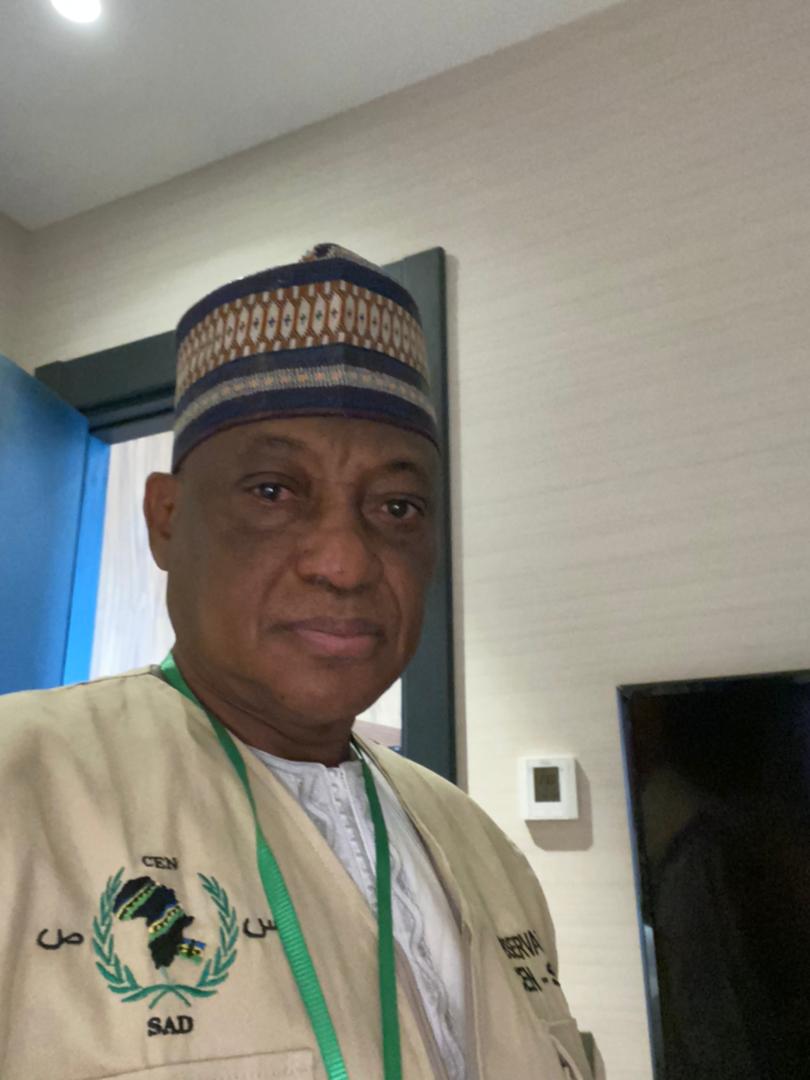
PORTRAIT OF A GENERAL: MANSUR MUHAMMAD DAN~ALI (RTD)

PORTRAIT OF A GENERAL: MANSUR MUHAMMAD DAN~ALI (RTD)
By Musa Dangiwa
MANSUR Muhammad Dan~Ali,
A Brigadier General, retired from the Nigerian Army in 2013 and became Nigeria’s Minister of Defence.
Upon his appointment by President Muhammadu Buhari in November 11th 2015, at a time when parts of the country were on the seethe.
The North East was under the siege of ideological extremists who have picked up arms with a ruthless ambition to create a state within the Nigerian State and were indeed, already controlling a number of local governments in Borno, Adamawa and Yobe states.
The extremist fighters, who became popularly known as Boko Haram were also already advancing their attacks to parts of the North West and North Central states.
They dared Abuja, Nigeria’s seat of Power where they bombed a mammy market at the popular Mogadishu Barracks in Abuja, the Nigerian Police Force Headquarters, the United Nations building and even motor parks, where they killed and maimed, while fear of possible attack gripped the rest of the other parts of the country.
Dan~Ali assumed office as Minister of Defence to confront the rise of all forms of criminal elements in parts of the Southern states, who engaged in militancy and economic sabotage like, kidnapping expatriate oil workers for ransom and vandalizing oil pipelines for illegal- bunkering activities in the Niger Delta and Lagos axis .
As a retired General, his challenge was to find solution to these security challenges and assure Nigerians of their security to lives and properties, as well as restoring order; peace and stability to the troubled parts of the country.
Picking up this challenge, Dan~Ali assured Nigerians on Friday November 13th 2015, at a News Conference towards the 2016 commemoration of the Nigerian Armed Forces Remembrance Day that;
“…the Armed Forces is committed to doing all within its powers to maintain the indivisibility of Nigeria…”
He demonstrated that he was on top of the task of decimating the enemies of the state when the Chief of Army Staff Conference was held at Dutse, Jigawa State in December 2016, where he declared during the closing ceremony that
“… A few months back, it would have been unthinkable or even impossible to contemplate the hosting of this conference here in Dutse; but here we are today in a very secured environment…”, saying, “…let me seize this opportunity to once again reassure you and the world of Mr President’s resolve to degrade all activities of terrorism in our nation.
To demonstrate that we are succeeding, we decided to host this Conference just at the border state to the theatre of Boko Haram activities…”
When it was time to start handing over areas liberated by the Military from Boko Haram to Civil Law Enforcement Agencies in April 2017, MANSUR Dan Ali, warned and i quote;
“… Let me also use this opportunity to warn any person or group of individuals or organizations under whatever cover who wish to test the collective will of this administration to know that we will not fold our arms and allow them to destroy our nation… adding that “… All Security Agencies of the Federal Republic of Nigeria have been mobilized and directed to swing into action to identify and crush any possible threat to our national security…”
He was concerned that the country was assailed by different degrees of crisis ranging from terrorism to kidnappings, armed banditry , cattle rustling, farmers~herders clashes, pipeline vandalism, ritual killings among others, saying “…all these are potent and sensitive crisis situations…”
He believed that the priority of government was to secure lives and property of citizens, guarantee a secured environment for socio-economic activities to thrive without hindrance, pointing out that “…our security and response agencies are constantly engaged in the essential tasks required for meeting the internal security objectives of ensuring safety and security of Nigeria’s territorial integrity, its population, all critical infrastructures and vowed that “… Government will not relent in this primary objective…”
He ensured that under his administrative watch as Minister of Defence, the Armed Forces of Nigeria made significant progress in the fight against insurgency and militancy in the country.
In the North East for example, the Nigerian Army in conjunction with other security forces were able to decimate and degrade the capacity of the insurgents.
The Armed forces further advanced the fight with the formation of “Operation Crackdown” which took the fight into the stronghold of insurgents at the Sambisa forest to clear the Boko Haram terrorists out of their camps.
There was also the “Operation Gama Aiki”, to flush out the remnants of Boko Haram terrorists within the lake Chad basin.
The Nigerian Army recaptured most of the territories previously under the control of the terrorists, reclaimed towns and villages, rescued over 12,000 persons held hostage by the Boko Haram terrorists and reopened several socio~economic and academic infrastructures that were being closed due to security risks in the North East.
Under his administrative leadership as Minister of Defence, the Nigerian Army established “Operation Safe Corridor” to deracalise and rehabilitate terrorists who renounced violence or those captured in battle and set-up a Human Rights Desk Committee of the Nigerian Army, to carry out proactive response to cases of abuse by troops in operation.
There was also the “Operation Awatse”, which was a joint operation between the Nigerian Army and the Nigerian Police and other security Agencies to flush out all manners of criminals, including; Militants and Economic saboteurs who specialized in pipeline vandalisation to steal the nation’s oil wealth in the creeks and other riverine areas.
When he turned to the Niger Delta tegions of Nigeria, where violent crime against humanity and high profile sabotage against the economy of the country was on the rise, he stormed Port Harcourt, the heart of the Niger Delta in July 2017 to operationalise the headquarters of the then; newly established 6 Division of the Nigerian Army, to handle various security challenges in the region.
Explaining that the region has suffered a lot of criminal activities like sabotage of oil facilities, illegal bunkering, kidnappings and other violent crimes against humanity and declared that the newly established 6 Division would perform its duties with the highest sense of professionalism and respect for human values, while decrying the rampant criminal activities and un- patriotic agitations which could not be tolerated, saying, ” Nigeria is greater than any individual or group…”
In Novemeber 2017 he was at the meeting of Islamic Military Counter Terrorism Coalition in Riyad, Saudi Arabia, where he appealed for humanitarian assistance Programme for the North Eastern Nigeria and other areas affected by the activities of the insurgents.
The Saudi government promptly responded to his call and offered food items worth Ten Million Dollars in aid to the internally displaced persons in the North East.
In Ankara, Turkey in 2017; Gen. Dan-Ali called for speedy ratification of the Military Training Corporation Agreement and the Defence Industry Cooperation Agreement between Nigeria and Turkey by the Parliaments of the two countries to enable the Nigerian military benefit from training at the Turkish Military Institutions and joint Military exercises with the Turkish Army.
He was at the Russian Federation Ministry of Defence, Moscow, where he called for the support of Russia, as one of the biggest economies in the world, to ensure that criminal activities at the Gulf of Guinea which constitutes threats to the existence of humanity and economic development were stamped out from Nigerian’s Maritime environment.
At the Italian Ministry of Defence, Rome in June 2017, Mansur Dan~Ali proposed agreements between the two countries in the areas of exchange of data and experiences in the field of counter piracy, held combined counter piracy exercises and other maritime security activities, training of the Nigerian Navy Personnel among others and at the G7 Friends of the Gulf of Guinea Group meeting held at Rome in Italy in 2017, he called for a viable and implementable decisions and solutions to maritime security and economic challenges in the Gulf of Guinea.
He took the campaign against security challenges in Nigeria to Egypt in August 2018, where he proposed joint military exercise between the Nigerian and Egyptian Navy and requested for intelligence on vessels coming into Nigeria’s maritime environment for close monitoring and surveillance among others.
He was also at the Xiangham Forum; Beijing China in October 2018, where he told the world that the development of a counter narrative to the ideology of Boko Haram terrorists was imperative, saying, ” …arguably, the ideology is their Centre of gravity and thus driving force for recruitment and radicalization,”
pointing out that ” …
there is the need for greater synergy and cooperation in developing a counter narrative to undermine the Boko Haram ideology.”
Also in China, he took the campaign against terrorism in Nigeria to the Special Forces Institute, Beijing China where in a Paper on Security Challenges in the Gulf of Guinea, he called for support for the Nigerian Navy, saying ” …the Chinese Government could assist in the training of technical personnel on modern ship~building techniques and providing dockyard equipment…”
In the cause of these and other high level international meetings, including his presence at the United Nations (UN) and the Economic Community of West African States, (ECOWAS), he became Chairman of the Sahel Sub~Saharan Defence Ministers….
By the time he left office as Minister of Defence, militancy in the Niger Delta area was subdued and the rampaging terrorists in the North East were in disarray and desperate due to lack of basic supplies, with many of the fighters deserting, others surrendered and were being deradicalised and rehabilitated, even as remnants terrorists continue to carry out occasional attacks on soft targets.
Born in August 25th 1959 in Birnin~Magaji Zamfara State Nigeria, he was Commissioned a Lieutenant in 1984, rose through the ranks and held various Commanding positions, including Battalion Commander at the United Nations Hybrid Mission in Sudan (UNAMID), Pioneer Commander, 32 Artillery Brigade Akure, Nigeria, Commander 32 Artillery Brigade Garrison Abeokuta Nigeria, Commander 301 Artillery General Support Regiment Gombe Nigeria, among several others during his career in the Military, with several honours to his credit; including the prestigious Harmony and United Nations Medals, Silver Golden Jubilee Medals, Passed Staff Course Daggar, Distinguished Service Star, Meritorious Service Star, Forces Service Star and a distinguished member of the National Defence College of Bangladesh.
A card carrying member of Nigeria’s ruling political party, THE ALL PROGRSSIVES CONGRESS (APC).
He was a delegate to the 2014 National Conference, where the nation’s wise men and women were assembled to proffer solutions to the country’s political problems.
He once attempted to contest election to represent his people at the Senate of the Federal Republic of Nigeria in 2015, but by providence he did not go to the Senate and rather; became the Minister of Defence.
MANSUR Dan- Ali holds double Masters Degrees in Security Studies, Bangladesh University of Professionals 2009, and Public Policy and Administration University of Abuja Nigeria in 2004/2005, respectively.
He also holds a Higher National Diploma in Photogrammetric and Survey Engineering Kaduna Polytechnic Nigeria, 1977/1982 and has presented several papers both locally and internationally, including a Paper titled, ”REGIONAL SECURITY ASPECTS’ Perspectives From Nigeria’s Fight Against Insurgency”, at the 8th Moscow Conference on International Security in April 25th, 2019.
MANSUR Dan-Ali is married with Children and Grandchildren.
He plays Polo, currently he is the Captain; Armed Forces Veteran Polo team and Founding~Member of the Nigerian Armed Forces Polo Association where he represented the Nigerian Military in various tournaments at home and abroad winning laurels and medals.
He has passion for the less privileged children for whom he built a school called El-Eman Nursery/Primary School which he donated to his community and facilitated the establishment of eight Command Secondary Schools at different locations to create more access to education by the less privileged children.
He holds the traditional titles of Yariman Birnin-Magaji and Sarkin Yakin Zamfara.
Mansur Muhammed Dan~Ali has contributed meriteriously in converging the successes of the rulling APC in his home state “ZAMFARA STATE”
He played the lead role in bringing the zamfara state governor HE” Bello Matawalle from the defunct PDP to the rulling APC.
Mansur Muhammed Dan~Ali is a househole name within the Nigerian Political Class due to his enermouse contributions to the developments of the APC Achievements..!!
Musa Mudi Dangiwa is a political analyst writes from Kaduna State Nigeria.
mudimusa15@yahoo.com.


Dadong: A Balanced Voice From Ungwan Rukuba
By: Balami Lazarus
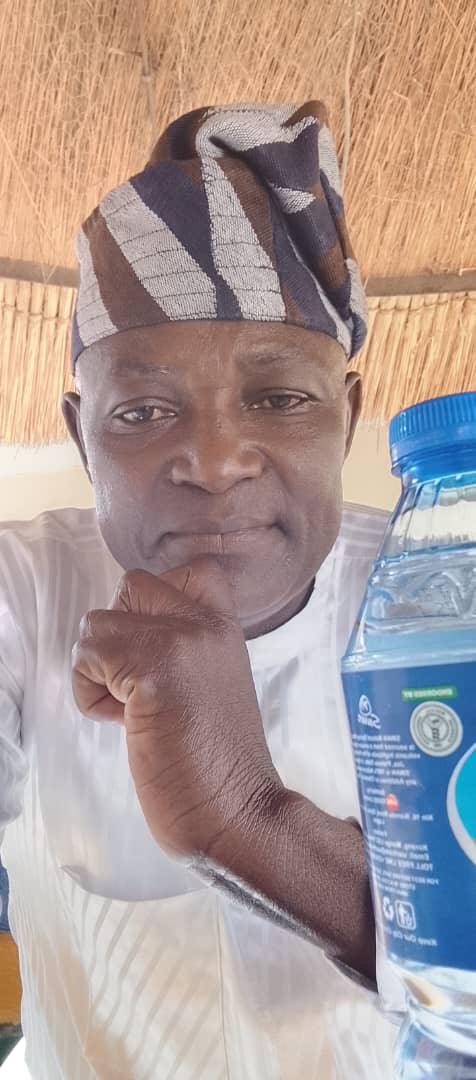
What does it take to be a public mouthpiece? That was the question I asked Comrade Dadong Solomon Antibas. My chats with him were a balanced interface. The answers can be found in the write-up for your review.
Democracy like ours has brought to the limelight public mouthpiece voices; some are weak and political, while others are strong, progressive, constructive, and fearless, demanding progress, growth, and development as dividends of good governance in a peaceful atmosphere.
Governments created by democratic processes are never left alone without citizens asking questions and demanding dividends of democracy for their community and the country at large.
Comrade Dadong Solomon Antibas is a Nigerian, law-abiding citizen. Antibas, a security expert and popular public mouthpiece on the Jos Plateau, has earned the confidence of the people of his community, Ungwan Rukuba, and most parts of the state over the years. For his community, he is their immediate mouthpiece who has been speaking on their plights, calling the attention of the government under the leadership of Governor Caleb Manasseh Mutfwang to do the needful.
Personality like Solomon Antibas’ public impression of him by some citizens of the state is all about seeking relevance and political appointments. “I have no interest whatsoever in any political appointment. My sincere concern for my dear country and my state, Plateau, is peace, progress, growth, and development for future generations.”
Nigerians should begin to speak out on good governance at all levels. Citizens are also responsible for failing to hold them accountable and demand good governance in terms of security, social amenities, and infrastructure.
Ungwan Rukuba is one of the wards in the Jos North Local Government Area. It is an integral part of the city center. Unfortunately, the peaceful Ungwan Rukuba became a flashpoint. The terrorist attack of March 29th, 2026, has put a scar of insecurity on the area.
On insecurity, he said that Mr. President Ahmed Bola Tinubu has failed Nigerians woefully. “Insecurity is a bone of contention. The federal government must take decisive measures on the insecurity challenges bedeviling the nation.”
My findings on Comrade Dadong Antibas revealed that he is not a public affairs commentator or an analyst but a progressive and active public mouthpiece, a voice of the voiceless.
For some, Dadong is attacking the government under the leadership of Governor Mutfwang. ” Is speaking the minds of citizens on bad governance and holding the government of Governor Caleb Manasseh Mutfwang a crime”?
Despite threats on Solomon Dadong, they have not deterred him from speaking for and on behalf of other citizens living in the state. “I have no other way to hold the government accountable than to publicly speak and constructively criticize the leadership’s voicing out feelings and lots of the people…In democracy, governments are made by the people, and as such, they must provide for the collective needs of the masses who voted them in.”
Comrade Antibas is one among the few indigenous people of Plateau who are outspoken and speak with passion and a patriotic mind for his state and Nigeria. “I will live and die in Nigeria speaking, advocating, demanding, and/or holding both federal and state governments accountable for good governance.”
Balami, Publisher/Columnist, 08036779290
Dadong: A Balanced Voice From Ungwan Rukuba
Facts for Understanding Capital Market Investment
By: Balami Lazarus
I grew up in an academic environment where the language is the same: study well, have good grades and be what you desire to be in the future through academic discipline and training.
Many of my contemporaries and I were not spoken to in the language of trade and commerce. But here are some of us as businessmen, entrepreneurs, investors and in other business enterprises far from the academic language we were bred with.
There has never been a market like the capital market the world over where trade per day runs into billions of cash. While market capitalisation is in trillions. The case of the Nigerian Stock Exchange (NSE), now Nigerian Exchange Group, with its trade symbol (NGX) on the floor, is a good example.
Investing in the capital market is profitable for traders and short- and long-term investors. But understanding the market requires some basic facts, which are cash, knowledge, discipline and patience, important for investors to appreciate the market.
Recently a member of my social group came to me to seek my advice on what it takes to invest in the equity market (stock exchange). I was very candid with the fellow, informing him that he needs cash, knowledge, discipline and patience to invest in the capital market after having defined his position as an investor.
First an investor needs cash in his possession set aside to invest in the capital market, the gateway into the market. You can have the other three, but without cash you are not yet an investor.
Lack of knowledge about a business or investments has made so many persons lose money worth millions.
This is typical with good number of Nigerians who attempted to start a business or invest in some going concerns without basic knowledge and understanding of the intricacies of these investments or businesses.
The information and technology age has
made acquiring knowledge very simple; therefore, understanding the stock market is easy these days.
Basically, the capital market depends on and responds to information, government policies, and economic and political happenings/events within and without, which most often determines the graphic movements of the primary market deals on the floor. ‘Bullish’ or ‘bearish’ simply means the plus or minus of the day’s transactions.
The need for monitoring of the market is important for traders and short-term investors. However, with knowledge and careful monitoring of the market, it is a suitable place for short-term gains for investors with multiple numbers of holdings in blue-chip companies like Dangote Cement, Bau Foods, Nestle, Aradel, Okumu Oil Palm, Zenith Bank, Guaranty Trust Bank and others. But for long-term investors, whether the market is bullish or bearish, his investment portfolio is for future use.
Investments like those of the capital market, discipline and being committed are necessary to build a strong, high-quality, profitable portfolio of a large number of holdings of units spread over listed companies of the stock exchange that come with capital appreciation and dividends. This is important, especially for long-term investors.
And the turn key in this type of investment is patience. Generally investments need patience for them to mature for harvest.
In stock market investment, patience plays a vital role in this business. Therefore, for an investor who lacks patience, the capital market is not a tuft for him and shall never be.
To navigate through this market, investors must at all times apply this formula and have it printed on their hearts. Cash = stock units over time + patience = capital apreciation/dividends.
Today there are changes in the exchange which have improved trading. The time of trade has been extended to transactions and payments (T+1). Other electronic applications to aid and encourage investors in the capital market in an attempt to boost the Nigerian economy.
Balami, Publisher/ Columnist 08036779290
Facts for Understanding Capital Market Investment
The ‘Hyenas’ and The Fear of Radical Changes
By: Balami Lazarus
Nigeria’s persistent security challenges, governance shortcomings, and societal stagnation were discoursed in a recent controversial work titled “Radical Approach: Ways of Ending the Menace of Insecurity in Nigeria,” which has sparked vehement reactions. These responses, saturated with insults and threats, underscore not only the resistance to transformative ideas but also reveal deeper cultural and psychological barriers inhibiting national progress.
Hyenas occupy a complex place symbolically and ecologically. Known for their powerful jaws capable of crushing bone and their fearsome appearance, hyenas possess attributes of strength and resilience. Ironically, the very qualities that should have crowned them kings of the jungle remain unrealized due to internal flaws—excessive fear and greed. This metaphor resonates profoundly with the Nigerian socio-political landscape. Many citizens and leaders embody these counterproductive traits, which sabotage collective progress. The ‘hyenas’ here are those resistant individuals who react aggressively to change, fearful of losing entrenched privileges or comfortable mediocrity.
Despite their natural capacities, hyenas do not kill their prey outright but feed until the victim is entirely consumed, a parallel to how corruption, insecurity, and dysfunctional governance gradually erode Nigeria’s potential. Nevertheless, because of this fear and greed, the true power of the hyenas remains dormant. Similarly, Nigerians possess enormous potential—humans and resources alike—but systemic fear of radical transformation prevents the nation from ascending to greatness.
Resistance to radical change is hardly unique to Nigeria; however, the scale and intensity of opposition here are particularly pronounced. The author of the initial work rightly posits that fundamental restructuring or amicable separation (balkanization) may be necessary to ensure peaceful coexistence among Nigeria’s diverse ethnic and regional groups. While this proposition unsettles many, it is grounded in historical precedents where developing nations embraced bold reforms, coupled with decisive policies and enforcement mechanisms, to dismantle corruption and oppression effectively.
For example, South Korea’s transformative journey from a war-ravaged country to a technological powerhouse was marked by radical government-led reforms, strict anti-corruption measures, and an unyielding commitment to national goals. Similarly, post-apartheid South Africa undertook sweeping constitutional and institutional reforms to redress systemic inequalities. These examples suggest that change without fear, and with a clear vision, is achievable. In Nigeria’s case, however, political leaders often prioritize personal gain over national interest, shielding corrupt practices from scrutiny and accountability—a scenario that foreign nationals sometimes benefit from more than average Nigerians.
Hence, it is not just a question of reform but an urgent call for a radical overhaul of the political, economic, and security frameworks—an overhaul that will inevitably provoke discomfort among the ‘hyenas’ who thrive on the status quo. Their hostility reflects a deeper anxiety about losing undue influence rather than genuine concern for national welfare.
Those who dare to voice radical solutions face fierce backlash. The insults, threats, and online harassment directed at the author of “Radical Approach” epitomize the perils confronting reformists. Such antagonism stems from a culture where free expression is often conflated with subversion and where critical voices are silenced through intimidation rather than engaged with constructively. This atmosphere breeds cynicism and self-censorship, retarding public discourse essential for democracy and progress.
The paradox lies in the fact that while politicians and vested interests propagate falsehoods to maintain their grip, genuine advocates of change are vilified. This creates a toxic environment where truth-tellers face social ostracism, leaving the masses bewildered about whom to trust. The condemnation of the author’s suggestion to either restructure or separate the country illustrates how deeply sensitive and contested the issue of national unity is—yet it also reveals the urgency to address unresolved grievances before they escalate into greater conflict.
It is crucial to emphasize that opinions, especially those anchored in personal conviction and aimed at national betterment, deserve respect and consideration, even if controversial. Democratic societies thrive on diverse viewpoints and vigorous debate. The author’s claim to persist as a ‘honey badger’—an animal known for fearless tenacity—symbolizes the courage required to confront entrenched systems and societal fears.
Change is seldom comfortable; it disrupts established norms and compels individuals to rethink identities and power structures. But without this discomfort, stagnation ensues, and nations risk eventual decline or disintegration. In Nigeria’s context, the failure to act decisively invites greater insecurity, economic hardship, and social unrest, ultimately threatening the very fabric of the nation.
To overcome the paralysis induced by fear and entrenched interests, Nigerians must collectively embrace the concept of radical but non-violent reform. The analogy of hyenas vividly encapsulates the paradox of strength hindered by fear and selfishness—a situation familiar to Nigeria today. The vehement backlash against radical proposals for restructuring or separation signals a collective unease but also highlights the necessity for bold action. History teaches us that radical change, enforced with fairness and resolve, is often the catalyst for national rebirth.
Nigeria stands at a crossroads. Will it continue to be prey to internal fears and greed, or will it muster the courage to embrace transformative ideas, no matter how uncomfortable they may seem? Advocates like the author of “Radical Approach” bear the burden and honor of challenging the status quo. Their persistence embodies hope that someday, rationality and justice will prevail over hostility and inertia.
In this pursuit, Nigerians must shed the fearful mindset that binds them and instead harness their inherent strengths—diversity, resilience, and youthful energy—to reclaim their destiny. Only then can the nation finally silence the cacophony of ‘hyenas’ and evolve into a stable, prosperous democracy worthy of its vast potential.
Balami, Publisher/Columnist 08036779290
The ‘Hyenas’ and The Fear of Radical Changes

NIMC, NIPOST Integrate Identity, Digital Address Systems to Revolutionise Public Service Delivery

Troops foil multiple ISWAP infiltration attempts in Maiduguri, Buratai axis

Troops foil suspected terrorist supply chain, arrest Chadian woman with drugs in Borno

Roger Federer’s Shock as DNA Results Reveal Myla and Charlene Are Not His Biological Children

THE PLIGHT OF FARIDA

FAILED COUP IN BURKINA FASO: HOW TRAORÉ NARROWLY ESCAPED ASSASSINATION PLOT AMID FOREIGN INTERFERENCE CLAIMS
-
 News2 years ago
Roger Federer’s Shock as DNA Results Reveal Myla and Charlene Are Not His Biological Children
-
Opinions4 years ago
THE PLIGHT OF FARIDA
-
 News1 year ago
FAILED COUP IN BURKINA FASO: HOW TRAORÉ NARROWLY ESCAPED ASSASSINATION PLOT AMID FOREIGN INTERFERENCE CLAIMS
-

 News2 years ago
EYN: Rev. Billi, Distortion of History, and The Living Tamarind Tree
-
 Opinions5 years ago
POLICE CHARGE ROOMS, A MINTING PRESS
-

 ACADEMICS2 years ago
A History of Biu” (2015) and The Lingering Bura-Pabir Question (1)
-

 Columns2 years ago
Army University Biu: There is certain interest, but certainly not from Borno.
-

 Politics1 year ago
2027: Why Hon. Midala Balami Must Go, as Youths in Hawul and Asikira/Uba Federal Constituency Reject ₦500,000 as Sallah Gift
