
News
Oil Theft: NSCDC CG Reads Riot Act to Commandants in Niger Delta

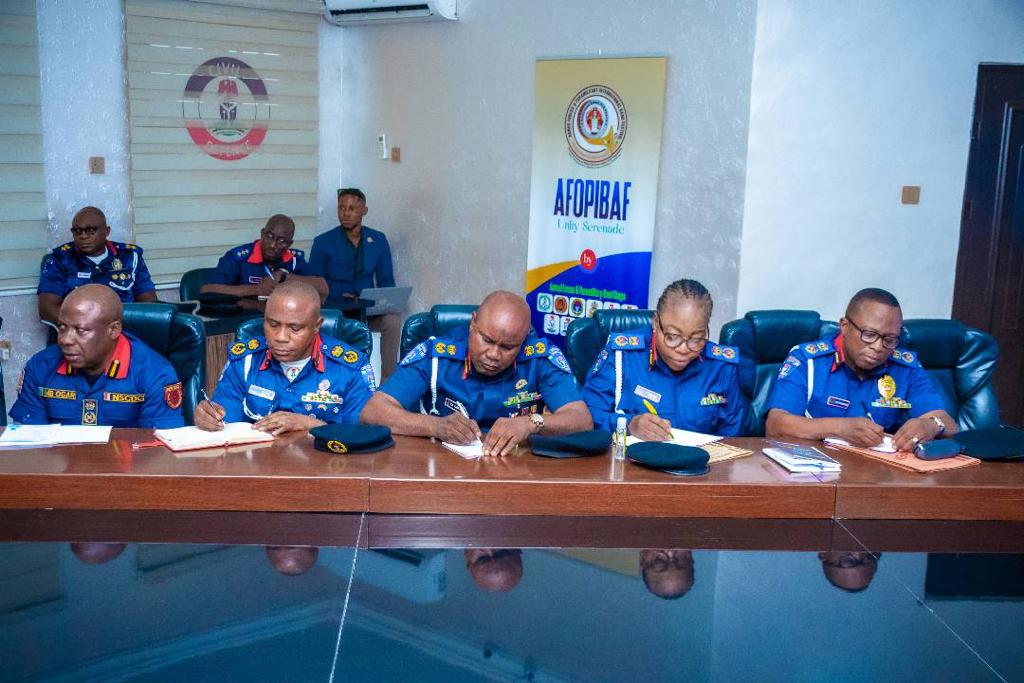
Oil Theft: NSCDC CG Reads Riot Act to Commandants in Niger Delta
…Orders Round the Clock Surveillance of Oil Facilities
By: Michael Mike
The Commandant General of the Nigeria Security and Civil Defence Corps (NSCDC), Dr Ahmed Audi has read the Riot Act to Commandants in the Niger Delta States to get of economic saboteurs, vandals, criminals, oil thieves in the area, even as he ordered for round the clock surveillance of all oil facilities.
The order followed earlier matching order by President Bola Tinubu that the oil rich region should be rid of all criminal activities inimical to the growth of the oil sector.
A statement by the spokesman of the NSCDC, Olusola Odumosu on Friday read: “Given the Presidential order to rid the nation’s oil sector of economic saboteurs, vandals, criminals, oil thieves, and other nefarious activities inimical to the growth of the sector, the Commandant General of the Nigeria Security and Civil Defence Corps (NSCDC), Dr Ahmed Abubakar Audi, mni, OFR, has read the Riot Act to Commandants of the Niger Delta States to ensure full compliance.
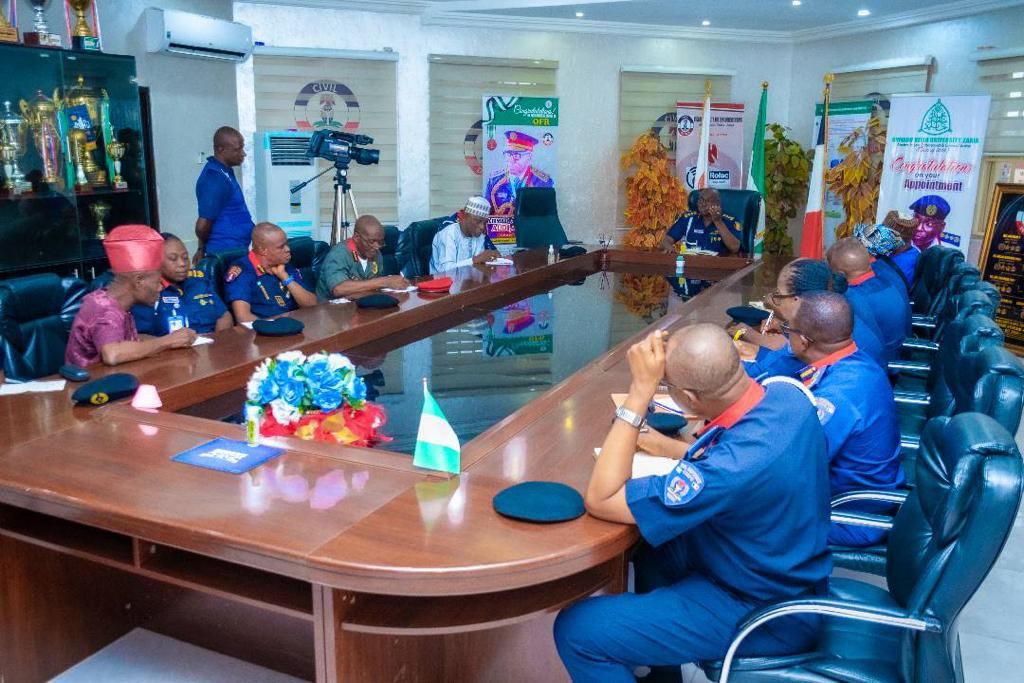
“Having summoned the concerned State Commandants to the National Headquarters of the Corps in Abuja, the CG gave them marching orders to immediately rejig their Anti-vandal units as a measure to arrest oil theft and vandalism of critical national assets.”
The spokesman said the CG warned that the President had declared zero tolerance for crude oil theft, illegal oil bunkering, and other frivolous dealings in petroleum products, therefore, anyone found aiding and abbeting economic saboteurs will face the full wrath of the law.
“This meeting became necessary to convey President Bola Tinubu’s directive on the absolute need to end all sharp practices in the nation’s oil sector.
Audi was quoted to have said: “Oil remains the mainstay of our economy, you must therefore rejig your Anti-vandal Units to end the problem of oil theft in compliance with Federal Government’s directives.
“We have a duty to protect our oil and gas sectors from vandalism and prevent illegal bunkerers from destroying our oil installations, infrastructure and earnings.”
The CG also charged the State Commandants to maintain 24 hours surveillance of the oil facilities across the country, work with host communities and gather enough credible information and intelligence to checkmate the menace.
He emphasised the need for safe keeping of all exhibits, security of exhibits centres and strict adherence to the code of ethics and standard operating procedure of the Corps.
The Corps helmsman warned that his administration will not condone any compromise or unethical conducts from any command or personnel, promising to hold any State Commandant accountable for oil theft, acts of indiscipline, breakdown of law and order in their domains.
He said: “As the lead agency in the protection of critical national assets and infrastructure, there is a need to be determined and reselient in the fight against crude oil theft.
“His Excellency, President Bola Ahmed Tinubu is already changing the narrative for good and we cannot afford to let the President and the entire nation down.”
Audi equally charged the personnel on synergy and collaboration with other security agencies as well as critical stakeholders to reduce crude oil theft to its barest minimum.
Oil Theft: NSCDC CG Reads Riot Act to Commandants in Niger Delta


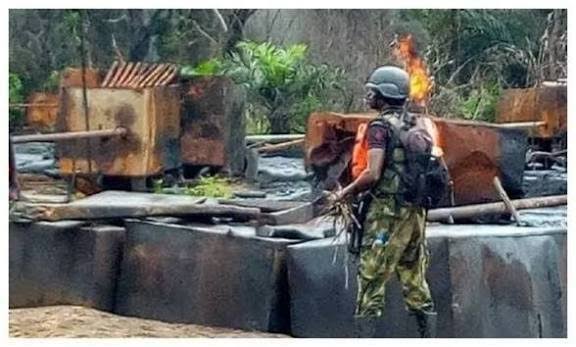
Troops Raid Illegal Bunkering Site in Bayelsa, Recover Equipment, Stolen Products
By: Zagazola Makama
Troops of Sector 2, Operation DELTA SAFE (OPDS), have raided a suspected illegal oil bunkering site at Kpansia general area in Yenagoa, Bayelsa State.
The operation, which took place at about 00:40 hours on 16 June 2026, led to the recovery of two vehicles, one pumping machine, 53 sacks of illegally refined Automotive Gas Oil (AGO) estimated at about 2,650 litres, five empty drums, and two wheelbarrows.
A military source said the troops acted on credible intelligence and stormed the location, disrupting ongoing illegal bunkering activities in the area.
The recovered items and products were evacuated to a safe location for destruction, owing to the densely populated nature of the community.
The source added that operations are still ongoing in the area to track and apprehend other members of the syndicate.
Troops Raid Illegal Bunkering Site in Bayelsa, Recover Equipment, Stolen Products
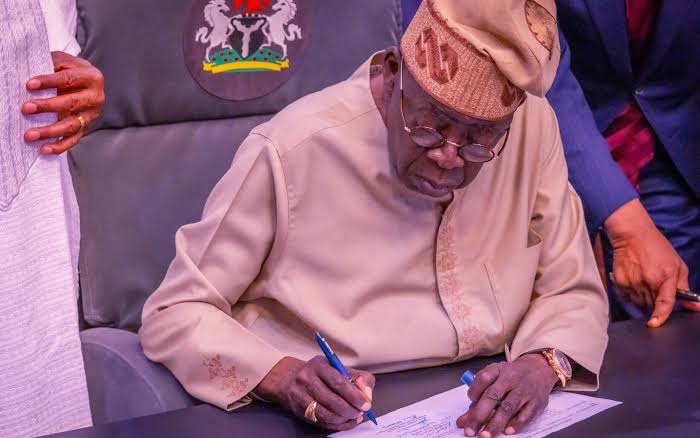
Electoral Act 2026: A New Threat to Nigeria’s Democracy
By: Victor Emejuiwe
The political environment ahead of the 2027 General Elections presents one of the biggest tests of Nigeria’s democracy since the return to civilian rule in 1999. Unfortunately, this test is taking place amid growing concerns about the shrinking space for political competition and the increasing concentration of political power in the hands of the ruling party.
In recent months, Nigerians have watched a steady movement of opposition politicians and governors into the ruling All Progressives Congress (APC). At the same time, attempts by opposition leaders to build a united front ahead of 2027 have faced legal and judicial obstacles. Internal crises and factional disputes have emerged in key opposition parties, many of which have ended up in court. The recent deregistration of the African Democratic Congress (ADC) by the Federal High Court has only added to public anxiety.
Many Nigerians believe these developments are not mere coincidences but part of a broader strategy to weaken the opposition ahead of the next elections. Whether this perception is correct or not, one thing is clear: the Electoral Act, 2026 has deepened concerns about the future of democracy in Nigeria.
These concerns came to the fore during a stakeholders’ meeting convened to examine the Electoral Act, 2026 and its implications for the credibility of the 2027 General Elections. Electoral experts, legal practitioners, civil society organisations and democracy advocates expressed serious reservations about several provisions of the Act. Among the leading voices were former Resident Electoral Commissioner, Barrister Mike Igini, and political scientist, Professor Abdulmumini Kuna.
Their concern was not simply that the law contains technical flaws. Rather, they argued that some provisions create opportunities for manipulation, weaken accountability and make it more difficult to challenge electoral wrongdoing.
One of the most controversial provisions is Section 60. The section provides that where electronic transmission of election results fails because of communication challenges, the result contained in Form EC8A becomes the primary basis for collation and declaration.
Supporters may argue that this is a practical response to network failures. However, Barrister Igini warned that it reopens the loopholes that electoral reforms were designed to close. The introduction of BVAS and electronic transmission of results was intended to reduce human interference and make election results more transparent. By creating room for manual alternatives whenever network challenges are claimed, the law creates an opportunity for abuse. In highly contested areas, electronic transmission could simply be abandoned on the excuse of technical failure, thereby weakening public confidence in election outcomes.
Section 63(2) raises another serious concern. The provision allows Returning Officers to count ballot papers that do not bear official marks if they are satisfied that such ballots came from materials supplied to the polling unit.
While the provision may have been introduced to address administrative challenges, it places too much discretion in the hands of election officials. According to Barrister Igini, election laws should reduce discretion and increase transparency. Once a Returning Officer is empowered to determine which unofficial ballots should count, the process becomes open to abuse. In a closely contested election, such decisions could influence the final outcome and trigger avoidable disputes. This is why stakeholders called for the repeal of Section 63(2) while retaining Section 63(1).
Another provision that has generated concern is Section 77. The section requires political parties to submit membership registers to INEC at least twenty-one days before party primaries and provides that only those whose names appear in those registers can vote or be voted for during primaries.
While transparency in party administration is important, stakeholders questioned whether the provision could be used to exclude candidates from participating in the political process. Nigerian politics is fluid, with political alignments and alliances often changing close to election periods. The strict timelines imposed by the law may prevent otherwise qualified aspirants from contesting elections simply because their names were not captured in a party register within the required period.
In the same light Professor Abdulmumini Kuna acknowledged that digital membership registers could improve transparency. However, he warned that the requirements may place smaller political parties at a disadvantage and could also affect citizens’ constitutional rights to political participation and freedom of association.
Even more troubling are Sections 137 and 138. Section 137(3) provides that where an election petition involves the conduct of an electoral officer, presiding officer or returning officer, such officials do not need to be joined in the petition. Instead, INEC assumes responsibility for defending itself and its officers.
This provision weakens accountability. Electoral officers are often central figures in election disputes. Their actions can determine whether electoral laws are complied with or violated. Shielding them from direct scrutiny makes it harder to establish responsibility when misconduct occurs. Barrister Igini noted that previous legal frameworks allowed electoral officials to appear before tribunals and provide evidence where necessary. The removal of this safeguard raises concerns about the ability of election tribunals to uncover the truth.
Section 138 creates another major challenge. The provision narrows the grounds upon which elections can be challenged. Under the new law, elections may largely be questioned on the basis of corrupt practices, non-compliance with the Electoral Act or failure to secure the majority of lawful votes cast.
What is particularly worrying is the removal of candidate qualification issues as grounds for challenging election outcomes. In the past, allegations involving forged certificates, false declarations and constitutional disqualifications served as important checks on those seeking public office. By excluding such issues from election petitions, the law weakens one of the key mechanisms for holding candidates accountable.
Professor Kuna warned that this creates a conflict between the Constitution and the Electoral Act. While the Constitution sets qualifications for public office, the Electoral Act appears to limit the ability of citizens and political parties to challenge candidates who do not meet those requirements.
Taken together, these provisions raise serious questions about the direction of Nigeria’s electoral system. Stakeholders warned that the Act could weaken electronic result management, reduce accountability, increase litigation and create opportunities for manipulation. There are also concerns that smaller political parties, women, young people and other underrepresented groups may be disproportionately affected.
Most worrying is the possibility that elections may gradually move away from the ballot box and into the courtroom. Democracy works best when voters determine electoral outcomes. It becomes weaker when legal technicalities become more important than the will of the people.
For this reason, stakeholders called for the repeal of Sections 60(3) and 63(2), stronger protections for electronic transmission of results and the restoration of measures that hold electoral officials accountable for their actions. They also urged citizens and civil society organisations to intensify advocacy for electoral reforms before the 2027 elections.
The defence of democracy cannot be left to politicians alone. Nigerians must demand a review of the controversial provisions of the Electoral Act and insist on a legal framework that promotes transparency, accountability and fairness. There is also a need to challenge questionable provisions in court where they appear to conflict with constitutional rights.
The National Judicial Council should develop clear guidelines for election tribunals to ensure that cases are decided on the basis of justice and the will of the people rather than technical loopholes. Likewise, development partners such as the European Union, the United States, the United Kingdom and the United Nations should engage the Nigerian government and encourage a review of provisions that threaten public confidence in elections.
The time to act is now. Once the electoral process begins, it may become much harder to correct these flaws. Democracy does not collapse in a day. It is weakened gradually when citizens fail to challenge laws and decisions that undermine accountability and the will of the people. Nigerians must ensure that the Electoral Act, 2026 does not become one of the instruments that weakens the foundations of our democracy.
Victor Emejuiwe
Program Manager
Resource Centre for Human Rights and Civic Education (CHRICED)
Writes from Abuja
08068262366
Electoral Act 2026: A New Threat to Nigeria’s Democracy
News
KACRAN Hails Buni Over Appointment of New Ngazargamu Emir, Pledges Support for Peace and Development
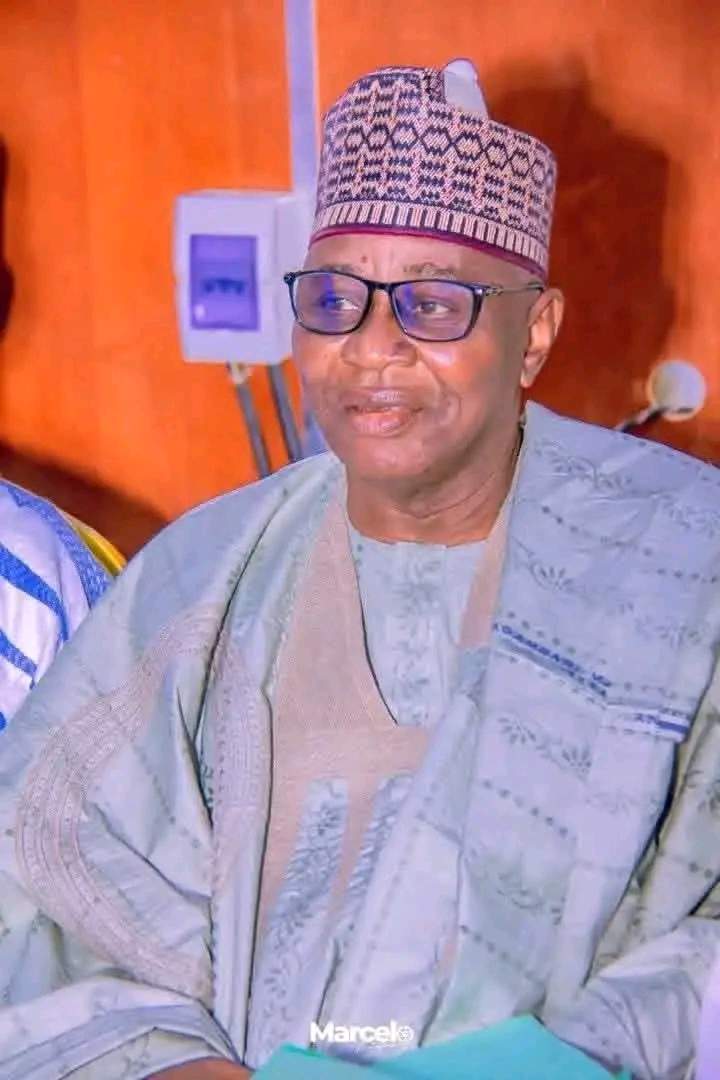
KACRAN Hails Buni Over Appointment of New Ngazargamu Emir, Pledges Support for Peace and Development
By: Michael Mike
The Kulen Allah Cattle Rearers Association of Nigeria (KACRAN) has commended Yobe State Governor, Mai Mala Buni, for what it described as a transparent and inclusive process that culminated in the appointment of a new Emir of Ngazargamu.
In a statement issued by its National President, Hon. Khalil Mohd Bello, the association also expressed deep condolences to the government and people of Yobe State, the Ngazargamu Emirate Council, and the royal family over the death of the late Emir, Ahmad Tijjani Ibn Saleh Geidam.
KACRAN described the late monarch’s passing as a great loss to the emirate and prayed for Allah’s forgiveness and eternal reward for his contributions to the development and unity of the people.
The association equally congratulated the newly appointed Emir, Yerima Ibn Mahmud, on his ascension to the throne, describing him as an experienced administrator, accomplished public servant and respected statesman whose wealth of experience would benefit the emirate.
According to KACRAN, the new monarch’s track record in public service, including his tenure as Executive Chairman of Yunusari Local Government Area, member of the Yobe State House of Assembly, Commissioner for Local Government and Chieftaincy Affairs, Special Adviser on Local Government and Chieftaincy Matters, and Commissioner in the Ministry of Livestock Development, positions him well to provide visionary leadership.
The association noted that Governor Buni’s handling of the succession process reflected his commitment to preserving cultural heritage while promoting peace, stability and inclusiveness in the state.
“KACRAN commends Governor Mai Mala Buni for the transparent, peaceful and inclusive process that produced this appointment. By upholding cherished tradition while ensuring stability, the Governor has reaffirmed his deep respect for culture, heritage and the aspirations of the people,” the statement said.
The group further described the emergence of the new Emir as a positive development at a time when the country requires stronger traditional institutions to foster unity, peace and grassroots development.
Reaffirming its commitment to the emirate, KACRAN pledged its loyalty and full support to the new monarch, assuring him of the association’s cooperation in promoting peace, security and socio-economic development across the emirate.
The association expressed confidence that the combined efforts of the new Emir and the Yobe State Government would usher in a new era of harmony, prosperity and sustainable development for the people of Ngazargamu Emirate and beyond.
KACRAN Hails Buni Over Appointment of New Ngazargamu Emir, Pledges Support for Peace and Development

Ekiti Poll: NSCDC Deploys 10,000 Personnel

Nigeria, UN Rally Global Support for Peace as IGP Honours Fallen Peacekeepers

Troops, TANTITA Operatives Recover 24,000 Litres of Illegally Refined AGO in Rivers Creek

Roger Federer’s Shock as DNA Results Reveal Myla and Charlene Are Not His Biological Children

THE PLIGHT OF FARIDA

FAILED COUP IN BURKINA FASO: HOW TRAORÉ NARROWLY ESCAPED ASSASSINATION PLOT AMID FOREIGN INTERFERENCE CLAIMS
-
 News2 years ago
Roger Federer’s Shock as DNA Results Reveal Myla and Charlene Are Not His Biological Children
-
Opinions4 years ago
THE PLIGHT OF FARIDA
-
 News1 year ago
FAILED COUP IN BURKINA FASO: HOW TRAORÉ NARROWLY ESCAPED ASSASSINATION PLOT AMID FOREIGN INTERFERENCE CLAIMS
-

 News2 years ago
EYN: Rev. Billi, Distortion of History, and The Living Tamarind Tree
-
 Opinions5 years ago
POLICE CHARGE ROOMS, A MINTING PRESS
-

 ACADEMICS2 years ago
A History of Biu” (2015) and The Lingering Bura-Pabir Question (1)
-

 Columns2 years ago
Army University Biu: There is certain interest, but certainly not from Borno.
-

 Politics1 year ago
2027: Why Hon. Midala Balami Must Go, as Youths in Hawul and Asikira/Uba Federal Constituency Reject ₦500,000 as Sallah Gift
