
Feature
Why Zulum wants permanent military bases in troubled spots in the state

Why Zulum wants permanent military bases in troubled spots in the state
Bodunrin Kayode
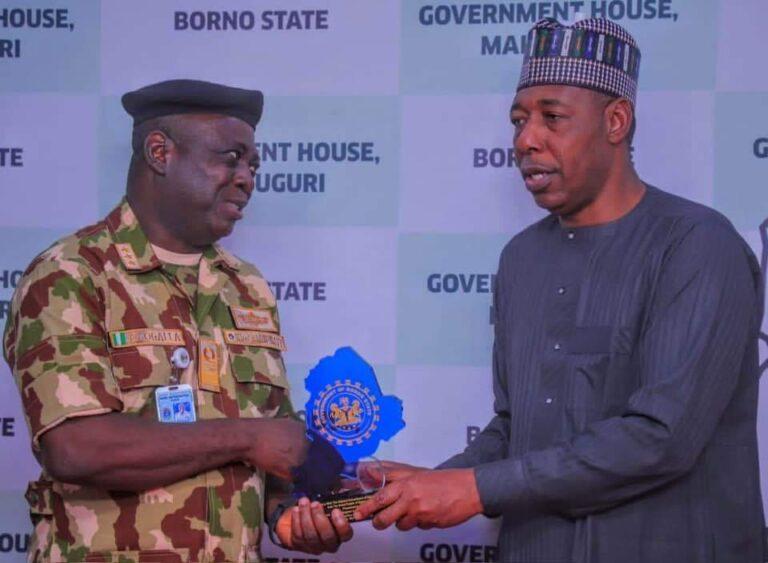
Governor of Borno State, Professor Babagana Zulum recently called for the establishment of permanent military bases in Sambisa and other known troubled spots in the state. The call was obviously one aimed at ending the insurgent war which has eaten over 15 years of the GDP of the once commercially vibrant state which should have grown more than it is now. Borno should have been competing with Kano if not for the destruction of the state by Boko Haram.
For keen observers of the insurgent war in the north east of Nigeria, “known” means that the insurgents are still milling around specific areas of the topography of the state and residents see them and avoid their locations. They have obviously been cleared from a large chunk of Borno State but still loiter around the Tumbus islands for instance. The islands are so many that nobody has record of the exact number of them since God put them there with loads of fish and crude oil underneath. The Nigerian Navy has equally not been able to make much impact progress either because of the massive thickness of hyacinth on the top of the water or lack of the right equipments which itself is a major challenge. Some security observers who spoke to this reporter on anonymity feel the navy is just being lackadaisical because it’s a lake and what if it dries up one day? But these are not tenable excuses for them not to be able to dominate their environment from Baga to the last island on the Nigerian border.
And that is why a permanent base of the Nigerian Navy must be built that will dominate the environment long after the war has ended. There presence in Baga is still very skeletal compared to the work load ahead. One agrees with Governor Zulum on this because the Nigerian section of the islands must be well secured if tourists must come in long after the war is put behind us.
The insurgents really don’t have the guts anymore to barge into the capital Maiduguri neither do they disguise and visit relatives regularly like before as sources tell us they still do in Ngamdu, Jakana and Kareto. Even the relatives some of them visit before are under watch by the intelligence services making life difficult for such relatives who used to get gifts and phone calls from them. But going by the observation of the civilian jtf boys who fight along with the troops, they are still inside the density of the savanna at alageno forest. But more noticeable is their presence on the Mandara mountains which has given them cover for a long time sending discomfort to the people of Gwoza. They always go back to Sambisa even after being chased out which is why one of the biggest permanent barracks must be built inside the place for elite forces as soon as possible.
Zulum made the statement during the last Chief of Army staff conference which took place in the 7division of the Nigerian Army in Maiduguri Borno State. Even though the Army top brass did not make any open acknowledgement to the suggestion, it obviously may have rang a bell within the ranks of defense policy makers and the Commander in chief of the Armed forces, President Bola Tinubu who were present during the occasion.
The establishment of a special forces military base in the Sambisa forest for instance will assist in ending the lingering insurgency which has paralyzed development in the entire Borno State and North East Nigeria. As a matter of fact, this is exactly where special forces trained for counter insurgency should be asked to pin down now before the war ends. There are so many natural resources placed under the ground by God apart from oil which has been confirmed in adjoining areas for troops to be pinned down permanently under the 7 division of the Nigerian Army, the Airforce and Navy components. Imagine the Airforce with one of the biggest bases in the country on the Mandara mountains which can enable them to see anyone entering the country on espionage mission. By the time the right resources are put together to mount sophisticated platforms, a complete surveillance of the border territorial areas can be guaranteed.
Nigeria’s hundreds of porous borders will begin to get special attention to ward off the next set of aggressors.
Looking back with hindsight, even though the military has been able to retrieve a large chunk of the nation’s territory from the hands of the insurgents in Borno Adamawa and Yobe (BAY) states, it is obvious that it is not yet uhuru for the ordinary resident because the insurgents keep tormenting them by instilling fear and making life difficult for them in the hinterlands. That is why it is difficult to predict when the war will end even after 15 years of this lingering asymmetric war. A war that has caused so much pains for Nigerians and our troops. Hundreds of our troops have paid the supreme sacrifice in the last 15 years and the counting continues. And that is why it makes sense for the three arms of the military to take over these sensitive territories and pin down permanently. That to me is what Zulum meant by the creation of bases in the comfort zones of the enemy and pitching our elite troops against them once and for all. After they must have been cleared the expansion of the base with all the sophistication of a modern army will begin to fall in place.
Also the relaxation of troops seen by observers is like getting 60 percent marks in an examination and just when you want to relax with your pass, you are told that the external examiner is saying that you are not worth more than 40%. A lot of gains were made by the present Defense Chief General Chris Musa while he was theatre Commander. Many more were added when he became the Chief of the Nigerian infantry under the management of Lt. General Farouk Yahaya. Major General Ibrahim Ali who took over the theatre after General Musa also did his best in the kinetic and non kinetic aspects but they all suffered from the same malaise of not having enough boots on the field because there were no strong bases around these strategic locations to assist. Bringing troops from all the way maiduguri is usually a long process when one considers the dangerous roads constantly endangered by improvised explosive devices (IED’s).
Equipment matters in war but when you don’t have enough boots on the ground in some areas, it is a disadvantage in non conventional wars like this. As a matter of fact if there were bases on those three designated areas of lake Chad, Mandara mountains and Sambisa forest, this war would have long been concluded at this axis and the bandits would not have been emboldened at the north west axis of the country by boko haram or Islamic state of west Africa (iswap) within the Bay states. The iswap have more refined rules of engagement but any armed person in uniform is a common enemy.
The north east end of the country is a vital portion which is why the Commander in Chief President Tinubu must listen to this timely call of the Chief security officer of Borno State who is Governor Zulum to establish these bases to end this war once and for all.
Indeed, a large chunk of the boko haram insurgents and their Commanders have been decimated including the notorious Shekau but the inability of the security agents to finish the job has given the insurgents enough operational space to re-strategize and return to vacuums left unfilled by the security forces. Creation of these bases would be done as soon as defense headquarters makes up its mind to do so. As for progress made in the war, one expected the last theatre Commander to have improved on what his last two predecessors did but unfortunately he was very weak in the kinetic and paid more attention to the non kinetic aspect of his job.
Why Zulum wants permanent military bases in troubled spots in the state


BETWEEN DESPERATION, MISCHIEF AND PROFESSOR ZULUM’S PASSION FOR TINUBU/SHETTIMA
By: Inuwa Bwala
I have refrained from lending my voice to the controversies surrounding some developments in Borno in the last few weeks, believing time will heal the wounds.
I wanted to also establish the truth or mischief, there in, so that I do not draw the wrong conclussions.
I have spent a week in Maiduguri, visiting and investigating some of the issues, and everything points to a calculated political mischief. I spoke to those I believe could give me an objective view from what I read in the social media and all were of the view that, it was a calculated distraction targeted at the governor in particular, not even the state govetnmeny.
At the end of it, it became obvious to me, that, the achievements of the Borno state governor, Professor Babagsna Umara Zulum, seem to overwhelmed event is arch rivals and have closed the doors of any meaningful opposition in Borno.
It is also apparent, that, the sustained, attempt by some social media and political hirelings, acting out the scripts of their failed paymaster politicians is a narrative that has long been envisaged.
To link Professor Babagana Umara Zulum, to the recent arrest of some individuals in Maiduguri for allegedly wearing T-shirts with the inscription “TINUBU MUST GO”, in particular, seems to give an alibi to the seeming mischievous intents of the schemers.
I obtained the full record of Zulum’s interview, in which he vowed to go after miscresnts, masquarading as interest groups, as well as criminals and drug addicts, threatening the wellbeing of citizens, with the full weight of the law.
Tried, as I did to establish any material evidence, or police atribution to him, neither official correspondence, that links the Borno State Government or Governor Zulum to, the said arrest led to a blank wall.
By now, I am sure, that, every right thinking person who carefully looks at the issues, is more likely to come to the same conclussion, as I did, to the effect that, the allegations against governor Zulum, were neither here nor there.
The Nigeria Police Force is a federal institution, that does not take instructions from Zulum, even as the chief security officer, because, it has its coomand structure, and operational schedules. To ascribe their action on every security action in Maiduguri to Governor Zulum is not only illogical, but most uncharitable.
It is mischief clothed in political activism, which seems to have been taken too far.
Professor Zulum, as perhaps everyone knows, means well for the people of Borno, and Nugeria. He has often taken risks in his efforts at checking lawlessness, thuggery and vandalism. I know, he derides any form of lawlessness, and often takes charge, in trying to calm frayed nerves.
He is on record as the only governor in Nigeria who has consistently said that he will not harass the opposition because his performance will speak for him, niw and in the future.
In Borno, opposition parties have always held their meetings, granted press interviews, and criticized government freely without any molestation.
It will seem out of place for the same man who tolerates direct criticism of his own government, to be accused of ordering an arrest over a T-shirt against the President?
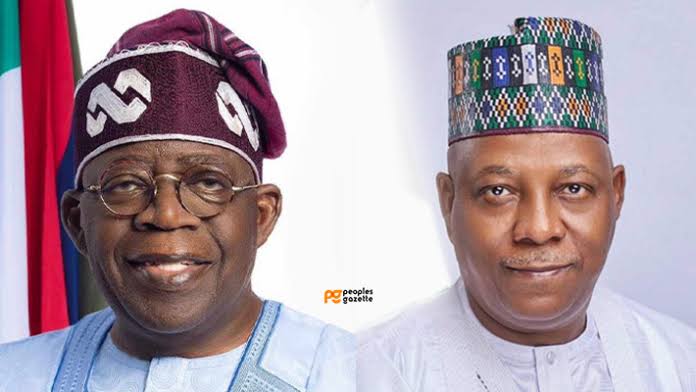
There is no doubt about the fact that, govetnor Zulum has been very passionate about the Tinubu/Shettima ticket, but certainly will not extend that passion to ordering for such an action.
It may be true, that,”uneasy always lies the head that wears the crown, but Zulum does not have to carry this cross, about which he knows nothing.
I have asked him personally to tell ne how much he kniws about the incident and he confirmed that he did not know about the srrest, untill his attention was called to nedia reports about it. I have no cause to doubt him, especially when he swore to that effect.
Those peddling this narrative are are either doing so because they have no cogent message to take to the people of Borno, or are so obbessed with anything decent and progressive, to the extent of crucifying the man for an iffence he knew nothing about.
I have often said it, that no one can fault
Zulum’s achievenents in Borno, either in the quality of infrastructural development, human capacity development, resettlement, rehabilitation or recontruction.
It is evidential that he exudes a rare courageous leadership in the face of insurgency. In the absence of credible alternative to his style of leadership, it has become so fashionable for some people to atribute to him every real or imagined wrong.
Laughable snd infantile, as it serms, is the circulation of a clearly AI-generated image, purporting that the Governor said the APC will rig the 2027 elections and heavens will not fall. This is the height of desperation and political forgery. Everyone who knows Professor Zulum knows he is a professor with integrity. He has never and will never associate himself with election rigging or any illrgitmate pursuit. I will not have to defend
He won his elections in 2019 and 2023 with overwhelming, verifiable margins because the people of Borno love him, not because he rigged.
What I am witnessing is an emerging industry of calumny attempt to rubbish Zulum because his towering achievements have rendered the opposition irrelevant in Borno. They want to put him at the crnter of a national controversy, where there is those eho may have heard about him, but not prrviledged to mert him, will lump him with emerging reckless speakers.
The people of Borno and indeed Nigerians are by now aware, that, falsehoods and mischief cannot diminish the stature Governor Zulum has attained.
Such distractions, as seems to be unfolding in Borno may be normal and I advice the governor to
remain focused on governance and on delivering the Tinubu/Shettima mandate through performance, not persecution. He believes in the ballot, not in intimidation.
History will vindicate him, as always.
I come in peace.
BETWEEN DESPERATION, MISCHIEF AND PROFESSOR ZULUM’S PASSION FOR TINUBU/SHETTIMA

Twelve years on: A tribute to Braimoh, Hedima and other fallen heroes
By Edward Gabkwet
The month of September 2026 marks 12 years since two Nigerian Air Force (NAF) pilots took to the skies on a mission from which one would never return, while the other would disappear into the uncertainty of war.
Group Captain Abdulrasheed Bamidele Braimoh and Wing Commander Chimda Hedima were flying an Alpha Jet aircraft, NAF 466, on a combat mission against Boko Haram terrorists in the Northeast when their aircraft went down near Kauri in Konduga Local Government Area of Borno State on September 12, 2014.
Hedima was subsequently captured and killed by the terrorists, while Braimoh has since been declared killed in action, in line with the provisions of the Armed Forces of Nigeria.

Twelve years later, their story deserves more than a passing mention. It deserves to be remembered. More importantly, it should compel us to confront an uncomfortable question: How much do Nigerians truly appreciate the men and women who stand between the nation and those who seek to destroy it?
Many would agree that we have become too accustomed to casualty figures involving soldiers killed or maimed, aircraft lost or another funeral taking place. This is a sad reality that risks making tragedies appear ordinary.
But it must not be so.
Behind every military or para-military casualty is the story of a child who will grow up without a parent, parents who will bury their sons or daughters, spouses who suddenly become widows or widowers, and comrades who must return to the battlefield knowing that the colleague who stood beside them yesterday will not be there tomorrow.
Oftentimes, Nigerians criticise military operations, especially when there are setbacks. Such criticism is understandable, particularly in a democratic society like ours. However, in the intensity of these arguments, we sometimes forget the men and women at the centre of these operations.
The pilot who straps himself into a combat aircraft does not know with certainty whether the mission will end with a safe landing. In the same way, the soldier or sailor who moves into a forward position cannot be certain that he or she will return home to family.
Yet, they proceed.
They serve with honour and courage, accepting the enormous burden and consequences that come with their duty. The willingness to place one’s life in danger for the survival and security of others is one of the noblest obligations a citizen can undertake.
Braimoh and Hedima did precisely that on September 12, 2014.
Nigeria’s counterterrorism and counterinsurgency efforts have produced heroes whose names are well known, as well as many others whose sacrifices have barely entered the national consciousness.
Some died in heroic battles, while others paid the supreme price in ambushes, improvised explosive device attacks or assaults on isolated outposts, with their stories receiving little national attention.
Neglecting the legacies of such heroes who paid the supreme price strikes at the heart of a nation’s sense of responsibility. A nation that ignores its fallen heroes risks losing its sense of national obligation, and the consequences of such neglect can extend far beyond the immediate grief of their families.
Honouring our heroes must therefore go beyond ceremonies associated with the annual Armed Forces Remembrance Day or occasions when their coffins are draped in the national flag.
There should be a permanent and accessible national record of Nigeria’s fallen military personnel. Their names, photographs and stories should be preserved. Their families should be recognised, and their sacrifices should form part of our national history.
Perhaps most importantly, young Nigerians should be taught that citizenship is not only about what one receives from the nation, but also about what some citizens have sacrificed for its survival.
As we evoke the memories of Group Captain Abdulrasheed Bamidele Braimoh and Wing Commander Chimda Hedima, we should also remember the many other Nigerian military and para-military personnel who have made the ultimate sacrifice.
Twelve years after NAF 466 disappeared from the skies over the Northeast, the memories of Braimoh, Hedima and many others should remind us that the fight against terrorism has never been merely about recovering lost territory or counting casualties.
It has always been about those who leave home in uniform, venture into dangerous environments so that others can remain safe, and sometimes do not return.
Today, let us pause and remember the pilots, soldiers, airmen, sailors and para-military personnel who sacrificed their lives for our safety. Let us also remember their families, who continue to live with their absence.
And let us remember that behind every military casualty is a Nigerian life given in the service of our nation.
May we never become so accustomed to the sacrifices of our Armed Forces and other security agencies that we cease to be moved by them.
May we never forget Braimoh, Hedima and the many others who went before and after them.
And may Nigeria always remain worthy of the sacrifices made in her defence.
Gabkwet, an Air Vice Marshal, writes from Abuja.
Twelve years on: A tribute to Braimoh, Hedima and other fallen heroes
Feature
The Sahel at War: Inside the Interlocking Networks of Terrorism, Banditry Amidst State Fragility in West Africa
The Sahel at War: Inside the Interlocking Networks of Terrorism, Banditry Amidst State Fragility in West Africa
By Zagazola Makama
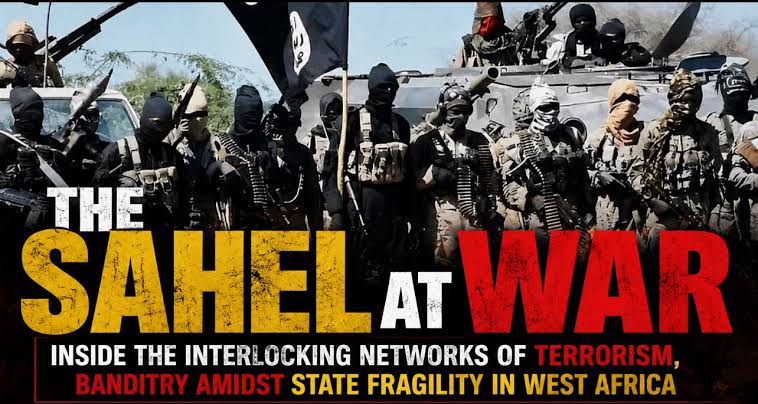
West Africa and the Central Sahel are no longer confronting isolated insurgencies. They are confronting the emergence of an integrated conflict ecosystem stretching from the shores of Lake Chad through the Sahelian heartland to the northern fringes of the Gulf of Guinea. The violence that once appeared compartmentalized Boko Haram in northeastern Nigeria, jihadists in northern Mali, criminal bandits in Zamfara, or communal clashes between farmers and pastoralists has evolved into a mutually reinforcing network of terrorism, organized crime, illicit finance, governance failure, and regional geopolitical competition.
Today’s conflict cannot be understood just by counting attacks or measuring how much land militants control. The real fight is happening in areas where the government is absent, where illegal businesses replace official systems, and where extremist groups are stepping in to provide security, justice, taxes, and economic opportunities more effectively than the state.
This evolution has transformed the security crisis from a collection of national emergencies into one of Africa’s most consequential strategic challenges.
The current conflict is driven by three distinct but increasingly interconnected actors: violent extremist organizations, criminal syndicates, and state or quasi-state military actors.
Each operates differently. Yet each increasingly influences the operational environment of the others.
The Jihadist Expansion
Among violent extremist organizations, Jama’at Nusrat al-Islam wal-Muslimin (JNIM) has emerged as arguably the most adaptive insurgent movement in the region. Unlike earlier extremist organizations whose campaigns depended primarily upon spectacular terrorist attacks, JNIM has steadily shifted toward governance-oriented insurgency. It exploits local grievances, negotiates with communities, arbitrates disputes, regulates commerce, and selectively employs violence to consolidate influence. Its operational success derives less from superior firepower than from political agility.
Where governments disappear, JNIM frequently arrives with its own version of administration.
This explains its steady expansion beyond Mali into Burkina Faso, Niger and increasingly toward the northern territories of Benin, Togo and, potentially, Ghana. Rather than conquering cities, JNIM captures strategic corridors transport routes, border crossings, grazing areas and commercial networks that gradually reshape political authority. Its principal competitor, the Islamic State Sahel Province (ISSP), formerly known as ISGS, pursues a markedly different strategy.
ISSP emphasizes uncompromising violence.
Its campaigns frequently involve mass killings, collective punishment and deliberate intimidation designed to destroy resistance rather than cultivate legitimacy. Competition between JNIM and ISSP has itself become one of the defining characteristics of Sahelian instability, with both organizations fighting each other almost as frequently as they confront state forces.
Meanwhile, farther east, the Lake Chad Basin remains dominated by the Islamic State West Africa Province (ISWAP) and the residual Boko Haram faction known as Jama’atu Ahlis Sunna Lidda’awati wal-Jihad (JAS). Unlike the fluid insurgencies of the western Sahel, ISWAP has developed an increasingly sophisticated quasi-state structure. Its taxation systems, logistical networks, intelligence apparatus and shadow governance enable it to maintain influence despite years of sustained military pressure by regional forces.
Criminality Without Ideology
Running parallel to the jihadist insurgencies is another formidable threat: organized armed banditry. Northwestern and North-central Nigeria have become the epicentre of highly militarized criminal networks whose objectives are economic rather than ideological.
These groups increasingly possess military-grade capabilities. Rocket-propelled grenades, anti-aircraft weapons mounted on technical vehicles, heavy machine guns and sophisticated communications equipment have transformed what once resembled rural criminal gangs into mobile armed organizations capable of overwhelming isolated security positions.
Kidnapping has evolved into an industrial enterprise. Unlike earlier phases of criminal abduction that focused primarily on expatriates or wealthy elites, today’s bandits conduct mass kidnappings involving schoolchildren, farming communities, religious institutions and entire villages. Ransom payments generate enormous revenue. That revenue fuels arms purchases, recruitment, logistics and territorial expansion.
Banditry has therefore become not merely a criminal phenomenon but a strategic destabilizing force with regional implications.
The greatest danger confronting West Africa lies not in any single organization but in the growing convergence between extremist violence and organized criminality. The relationship is best understood as a marketplace rather than an alliance. Bandits generate money. Extremists generate military expertise. Both benefit.
JNIM, for example, has increasingly exchanged tactical instruction, weapons handling and operational knowledge for logistical access, intelligence and freedom of movement provided by criminal groups. This arrangement does not require ideological alignment. It requires only mutual benefit. The distinction between terrorist financing and organized crime has therefore become progressively blurred. Weapons purchased with ransom proceeds frequently circulate across multiple armed actors. Traffickers move guns, ammunition, fuel, narcotics and gold using identical smuggling routes. The same criminal infrastructure serves jihadists, bandits and transnational organized crime simultaneously. The result is a conflict economy capable of sustaining violence indefinitely.
The Fulani Question: Identity, Marginalization and Manipulation
Perhaps no issue within the regional security debate has generated more misunderstanding than the relationship between Fulani pastoralists and armed violence. Reducing the crisis to ethnicity obscures its deeper structural foundations. The overwhelming majority of Fulani communities remain peaceful pastoralists. Yet prolonged environmental degradation, climate change, shrinking grazing corridors, cattle rustling, weak governance and chronic insecurity have created conditions under which segments of marginalized pastoral youth became progressively militarized. What began in many areas as localized self-defence groups gradually transformed into organized criminal formations.This evolution did not occur in isolation. It emerged within environments where state institutions failed to provide security, resolve disputes or regulate access to land and water. As farmer-herder conflicts intensified, collective punishment frequently replaced targeted law enforcement. Communities perceived to share ethnic identity with criminal actors increasingly became targets themselves.
It is within this environment that JNIM has demonstrated remarkable strategic sophistication. Rather than recruiting primarily through ideology, it recruits through protection.
When communities believe they are abandoned or worse, indiscriminately targeted extremist organizations present themselves as defenders.
Protection gradually becomes allegiance. Allegiance becomes recruitment. Recruitment becomes insurgency. The conflict therefore evolves from a dispute over grazing land into participation in transnational jihad. This cycle represents one of the most significant strategic challenges confronting governments throughout the Sahel. Military victories alone cannot dismantle recruitment systems built upon unresolved grievances.
Gold: The Conflict’s Hidden Currency
If kidnapping finances today’s bandits, artisanal gold increasingly finances tomorrow’s insurgencies. The discovery and rapid expansion of informal gold mining across Mali, Burkina Faso, Niger and parts of Nigeria fundamentally altered the economics of regional conflict. Extremist organizations rarely conduct mining themselves. Instead, they regulate it.
By controlling access to remote mining sites, imposing taxes on miners, charging transit fees and monopolizing protection, armed groups have established remarkably resilient revenue streams. Gold possesses advantages that narcotics and conventional financial transfers do not. It is anonymous. It is portable. It is difficult to trace. It retains value internationally.
Smuggled through regional trading hubs and international markets, illicit gold enters legitimate global supply chains with relative ease. Revenue subsequently returns to conflict zones as cash, fuel, vehicles and weapons.
Mining camps simultaneously function as recruitment centres, logistics hubs and operational sanctuaries. As long as these informal economies remain outside effective government regulation, they will continue to finance insurgency irrespective of battlefield outcomes.
A Fragmented Security Architecture
The security landscape has become further complicated by changing regional alliances.
The emergence of the Alliance of Sahel States (AES) comprising Mali, Burkina Faso and Niger has fundamentally altered West Africa’s collective security framework. The withdrawal of these states from ECOWAS and their shift toward closer security cooperation with Russian military elements have introduced new political realities into regional counterterrorism efforts.
Although the AES governments emphasize sovereign security strategies and aggressive military operations, political fragmentation has simultaneously weakened regional intelligence coordination. This fragmentation creates opportunities for extremist organizations.
Terrorist groups do not recognize political disagreements between governments. They exploit them. The absence of seamless intelligence sharing across borders enables armed groups to attack in one jurisdiction before relocating into another beyond immediate pursuit. No counterterrorism campaign can succeed while terrorists enjoy greater operational mobility than the states pursuing them.
Why Military Success Alone Is Not Enough
Military operations remain indispensable.
No government can negotiate away organizations committed to systematic violence against civilians. Yet experience across the Sahel demonstrates that battlefield victories alone rarely produce durable stability.
Territory may be retaken. Governance often is not. Where governments fail to restore justice, education, healthcare, infrastructure, markets and policing, insurgents frequently return. The vacuum persists. Only the actors occupying it change. Counterterrorism therefore requires simultaneous security, governance and economic interventions. Without this integration, tactical victories risk becoming temporary interruptions rather than strategic success.
Building an Integrated Regional Response
A sustainable security strategy requires far more than increased troop deployments. First, regional intelligence cooperation must be restored regardless of political disagreements.
Functional information-sharing mechanisms between the AES, ECOWAS and Lake Chad Basin states remain essential if cross-border insurgent mobility is to be disrupted. Second, governments must formalize the artisanal mining economy. Licensing miners, establishing transparent state purchasing systems and regulating mineral exports would significantly reduce extremist access to illicit gold revenues.
Third, pastoralist integration must become a security priority rather than solely an agricultural issue. Protected grazing corridors, modern livestock infrastructure, impartial dispute-resolution mechanisms and equal legal protection for farmers and herders are not simply development initiatives they are counterterrorism measures. Finally, security institutions must prioritize precision over collective punishment. Every indiscriminate operation risks creating tomorrow’s recruits.
Every community protected strengthens the legitimacy of the state. Counterinsurgency succeeds not when insurgents fear the government, but when civilians trust it more than they trust armed groups.
Conclusion: Winning the Governance War
The future of West Africa’s security will not be determined solely on battlefields. It will be determined in villages where governments either return or fail to return. The central contest is no longer simply between states and terrorists.
It is between competing systems of governance.
Violent extremist organizations understand this reality. Their objective is not merely to kill soldiers but to replace governments. Military operations can destroy camps. They cannot, by themselves, replace institutions. The challenge confronting West Africa and the Central Sahel is therefore not only defeating insurgencies, dismantling criminal economies or securing borders. It is rebuilding the legitimacy of the state itself. Until governance fills the vacuum now occupied by violence, instability will continue to migrate across borders, adapt to new pressures and regenerate in new forms.
The battle for the Sahel is ultimately a battle over political authority, economic opportunity and public trust. Whoever succeeds in providing those three elements will shape the future security architecture of West Africa for decades to come.
Zagazola Makama is a Counter Insurgency Expert and Security Analyst in the Lake Chad Region
The Sahel at War: Inside the Interlocking Networks of Terrorism, Banditry Amidst State Fragility in West Africa

Global Partnerships, Local Impact: Nile University of Nigeria Transforming Medical Education

Nigeria Moves to Strengthen Disability Inclusion, Enforce Rights of Persons with Disabilities

“I’m Sorry for Leaking Official Matters,” Ex-DSS Officer Begs DG, Colleagues, Threatens to Sue SaharaReporters

Roger Federer’s Shock as DNA Results Reveal Myla and Charlene Are Not His Biological Children

THE PLIGHT OF FARIDA

FAILED COUP IN BURKINA FASO: HOW TRAORÉ NARROWLY ESCAPED ASSASSINATION PLOT AMID FOREIGN INTERFERENCE CLAIMS
-
 News3 years ago
Roger Federer’s Shock as DNA Results Reveal Myla and Charlene Are Not His Biological Children
-
Opinions5 years ago
THE PLIGHT OF FARIDA
-
 News2 years ago
FAILED COUP IN BURKINA FASO: HOW TRAORÉ NARROWLY ESCAPED ASSASSINATION PLOT AMID FOREIGN INTERFERENCE CLAIMS
-
 Opinions5 years ago
POLICE CHARGE ROOMS, A MINTING PRESS
-

 News3 years ago
EYN: Rev. Billi, Distortion of History, and The Living Tamarind Tree
-

 ACADEMICS3 years ago
A History of Biu” (2015) and The Lingering Bura-Pabir Question (1)
-

 Columns3 years ago
Army University Biu: There is certain interest, but certainly not from Borno.
-

 Politics1 year ago
2027: Why Hon. Midala Balami Must Go, as Youths in Hawul and Asikira/Uba Federal Constituency Reject ₦500,000 as Sallah Gift
