
Feature
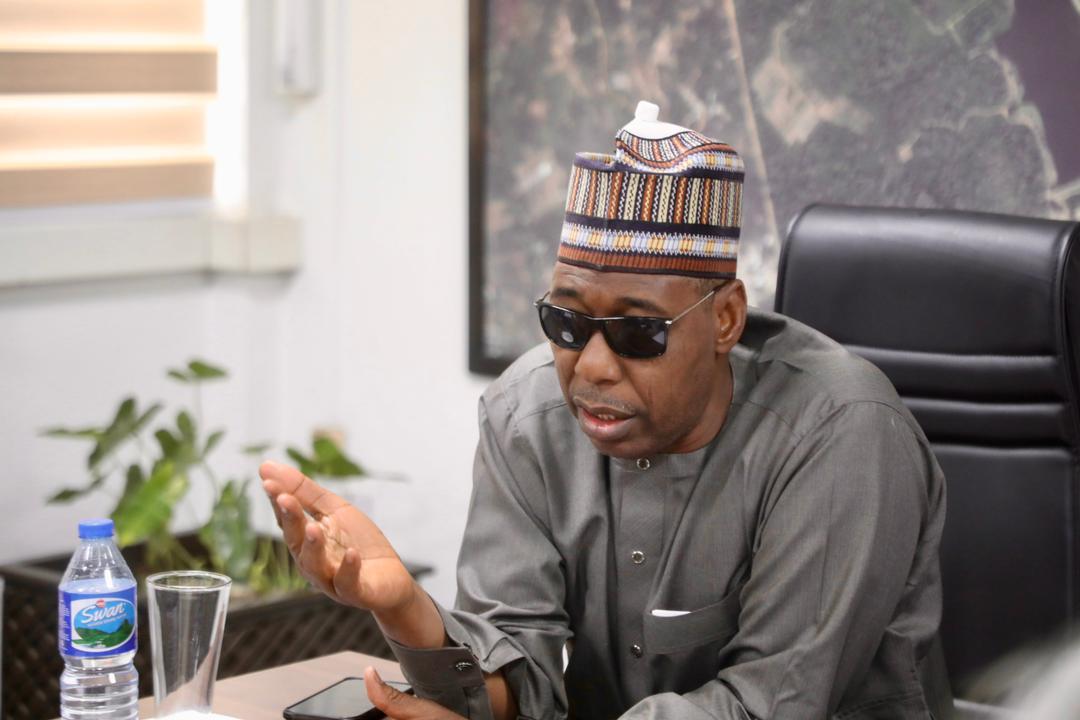
After the damage of Boko Haram: Battling with the battered health sector in Borno state using the partnership model for emergencies

Special features
After the damage of Boko Haram: Battling with the battered health sector in Borno state using the partnership model for emergencies
By: Bodunrin Kayode
Reporting the health sector within the web of humanitarian crisis in Northern Nigeria is my hobby. Health is one of the beats I have chosen to ensure that I contribute to further the cause of humanity before I say good bye to this world and to enhance excellence my calling journalism. Reporting health up here means one must have enough empathy for the people who are at the mercy of the terrorized health sector in Borno state and North Eastern Nigeria. This sector is so important to humanity that each time the insurgents want to plunder primary health centres, they cart away the drugs and skilled workers before bringing down the structure by fire. That is an indicator that even the wrong doers in the bush know the value of health in our shared humanity.
Prying into the Borno Health Partners Forum
I do not attend the Borno health partnership forum to report on everything that is happening but to contribute my quota to the best of my ability to belp rebuild the sector which has been battered by lingering years of insurgency. By this I mean about 14 years of insurgency where almost every infrastructure was destroyed by the insurgent Boko Haram in their trail.
And that I have been doing to the best of my ability especially the guidance of the meeting as a catalyst in the “risk communications pillar.” The subsector where massive enlightenment is given to the people whenever emergencies like sickening cholera out breaks chokes the medical practitioners or the recent diphtheria which has killed over 67 people in its trail. Sadly the ” risk communication” is one of the most badly managed pillar because the bank rolling world partners refuse to allow the Borno State Government to lead as it should. Deciding which path to walk at any given time and even choosing where to go with the permission of the health Commissioner who is equally guided by the Governor of the state Professor Babagana Zulum. Representatives of the two world health bodies have rather decided to turn themselves into a cabal or a caucus who meet separately and impose their decisions on the rest of the partners regardless of the interest of the Commissioner who is represented by the incident manager (IM) at any given time. That itself has created a shaky foundation for that pillar and the mounting of lingering lacuna which strips them bare whenever their own managers are in need of action or solutions in certain ways.
Out of interest, I have seen many non medicals like myself in the house and they all do their best to help out in one way or the other to make things work out. The only pillar which has not existed in the last seven years is that of “security” which will go a long way to act as a liaison between the military, police and the health sector. But I have a belief that with the evolution of the sector over the coming years, we would soon have a sitting security personnel who would be an instant reference point whenever challenges of that nature falls on the table of the IM.
One also realizes that it’s time to begin to analyze on a yearly basis some of the developments in the sector so that the world gets to know those that are behind the heavy toil for the sector to be moved from where it was when boko haram struck capturing 22 council areas in the entire state to the envisaged level of excellence we are trying to take it to. And there are many non medical professionals with like minds whose contributions to crushing emergency challenges over the years have been invaluable to astounding emergencies like cholera which has harassed health managers and kept them on their toes. Looking back into the sector, I remember that there was one year of the cholera scourge that everyone who was a doctor in the ministry had to abandon their files, put on their coats and gloves and were lined up at the muna garage axis ensuring that they helped slow down the mortality rate which was screaming to high heavens. That is an indication that the medical workers both serving and retired have also managed to stay above board at the primary health care level.
Pending challenges to be crushed in Borno state
There are many pending challenges before the health partners working as a team to make things better for Borno state. One of the challenges before them is the inability sometimes to understand the fact that change is the only permanent phenomenon in life and we must all prepare to embrace it. A lot of partners still do not understand why change from the old order of doing things to the new is important. Some so called financial partners want to completely adjust the ideal narrative by wrongly taking the drivers seat in almost every pillar including risk communication and sometimes, the good old surveillance. Two sensitive pillars which are supposed to go together. 90 percent of the time I have sat in that meeting, Abdu Mbaya or Modu Kyari who is the deputy head of the communications pillar in the primary health board are hardly carried along. One little brat or the other in the United Nations international children’s fund (UNICEF) and world health organization (WHO) will stand up to speak for the entire Borno State which they know nothing about. And most times when they speak, they do not impress the IM or the meeting because they talk only about what they understand in their own foreign designed system. They hardly display knowledge on how to solve problems in the 27 Council areas of the state. One particular one, name withheld in the WHO who used to be a tea boy for a previous disgraced communication expert is the most confused of them all because of his obvious limitations of what to do for the good of the state. He parades himself with some air of importance that does not align with his rascally and rude persona badly polluted with the trial and error syndrome associated with road side mechanics.
I don’t blame them completely. Its simply because the state has been unable to sit on the drivers seat all these years in some of these pillars before the advent of Dr Lawi Meshelia. Some of us who should know are equally to blame too because we saw these dysfunctional nitwits play with the intelligence of the state and we did not raise alarms to the Commissioner or the Governor of the State, Professor Babagana Zulum knowing in his disposition towards mediocrity regardless of who is involved. It is change in the old order that will bring about what will benefit the state when it comes to enlightening people on how to get the best out of the web of complex information needed to make the operations at the primary health care get better for instance.
The management of emergencies at the primary care level have seen many administrators on and off the forum of partners and each one, foreign or Nigerian did his or her best to better the system. But that does not mean that they do not have their limitations. One is talking about constraints ranging from management style to low capacity based on background training and sometimes downright timidity in stamping their feet to getting certain things right based on contemporary practices. And that is the reason why some partners used to jump into the drivers seat without permission from the State which is supposed to be the driver for everything as it concerns the building of the health sector and crushing emergencies like the on and off Polio, monkey pox, COVID-19 or Diphtheria as it is announced by the state epidemiologists from time to time.
The numerous interventions of emergency manager Beatrice Muraguri
Most of the partners have done their best. It’s not just bad news all the way because most critics of journalists believe they only do bad news without seeing the good sides of anything. I wish to report to you that we have seen quite a good number of good managers in the system. I can never forget the frantic efforts of Dr Collins Ovilli who jumped into the trenches with other doctors like Mohammed Guluze then emergency manager to ensure that the cholera mortality figures do not scream more than it was then. To us poisoned by insurgency in our backyard 50 dead is noise but 100 is really a screaming figure.
At present, Dr Beatrice Muraguri is one of the good souls of the WHO and has been making her presence felt in all the three states badly influenced by the lingering insurgency. Sometimes I have sat in that meeting hall in Damboa road, watching and listening to all her contributions and they are always for the common good of humanity. Sometimes she used to ponder and literally pressing the state to hurry up and sit tight on the drivers seat to crush these emergency headaches. To her as a clinical epidemiologist nothing is impossible if minds and hearts are brought together. Diphtheria for instance has reached 67 deaths as at the time of writing this report, do we want to wait until it gets to 100 before we deal with the challenges bedeviling the management of the disease? In as much as people are not perfect, Dr Beatrice is one woman who means well for Borno state. I have watched her from my binocular and I have seen her as an extremely transparent professional who has water tight empathy for the people of the entire BAY states. She is a distinguished African woman who understands how to serve humanity using the template of the state or council areas accordingly. She is not one of those whose bosses had questionable records before being asked to leave the WHO because of dubious activities aided by a commissioner name withheld sacked suddenly from the government. We have seen a theatre Commander here who shut down the activities of three non Governmental activities NGO’S when they ran foul of the laws of the land, “so none of them will tell us they are better than the people they met on ground” said General Adeniyi the then TC.
Co management of the sector with WHO
In spite of all these challenges for instance, since the advent of Dr Lawi Meshelia, a lot of things have changed for the better. Some of them were procedures which had to change even though with difficulty. Lawi drives the system like a task master and some of the partners used to the old system do not likne him for doing the right thing. But Lawi a foreign trained public health specialist like Beatrice is getting tremendous results. Even though I could read from his body language sometimes that he is not happy with the trickles of results he has been having in areas like the risk communication and surveillance pillars which have terribly shaky foundations going by what we see from the cholera and now diphtheria torments of the people. Since Lawi arrived as the incident manager, he has succeeded in gradually changing the old ways of doing a lot of things. Obviously this foreign trained public health specialist understands that emergencies in a system where most of the infrastructure has been destroyed by insurgency you virtually have to be regimented to get results. That means he must step on some toes if he must get results. Emergency is not the “na so we de do am” kind of phenomenon in which obvious mistakes are tolerated as the norm. It must be a near perfect phenomenon and that is what the distinguished university of Maiduguri (unimaid) trained Dr Lawi is tying to achieve. Before his advent, the ministry officials allowed pillar heads to just do what they wanted without proper capacity to back the system. Then came Shafiq Muhammad a Pakistani who for the first time between 2017 and 2018 tried to fix a suitable template in which the emergency system could work without forming themselves into a parallel ministry of health that would be dabbling into non emergencies. That system has stood the test of time till this day because it was a transparent system. But like a disease it relapsed into the old system with the exit of Dr Shafiq because the very foundation was not properly fixed in such a way that pillar heads who are ministry officials will own the system and drive the steering and change gears at their convenience. It was literally in disarray because nobody had dug the right hole for the pillars to be firmly rooted. Safiq learnt very fast from Martinez Jorge and drove the system from 2017 to 2018.By the time Jorge left Safiq was running at a speed faster than he met on the ground but there was a lot to be defined properly. When safiq left, we have had several other managers including Dr Kida who had to act as IM even at retirement. His style was actually different because he tolerated most of the excesses of the partners. Always smiling and not wanting to step on toes. With the advent of Dr Lawi, pillar heads and deputies meet regularly with him to state what they have achieved and he freely directs if he thinks they are driving down the wrong way. This kind of proactive professional on the drivers seat has come at a time when he is most needed. He is trusted by his permanent secretary Mohammad Guluze and Commissioner Professor Baba Mallam Gana a consultant Oncologist. Lawi has an almost regimented managerial style which most of them had not gotten used to. But one believes that as time goes on, they will surely get used to his style and we would wake up one day to discover that all the emergencies are gone with the dry wind of the sahel savanna.
Ex Raying the background of the current IM Lawi Meshelia
Dr Lawi Meshelia is one of those medical practitioners who benefitted from the extension of service years by five years by Governor Babagana Zulum which is why he is still in service. He was equally the arrow head in charge of the primary health care agency when Borno won the best primary health care agency prize money of $1.2m attached to a competition created to bring primary health care under one roof in Nigeria.
He holds a Masters Degree in Public Health (MPH) from Royal Tropical Institute, KIT in Amsterdam, Netherlands. And of course an MBBS from the University of Maiduguri. His exposure and broad mindedness to tolerate people stems from the fact that he did his secondary school at the Federal Government College Odogbolu in Ogun State and has traveled to almost all the states of the Federation. Dr Mshelia has attended courses with certificates in different aspects of public health in countries in Europe, East Africa, West Africa and South-Central Africa. He also attended numerous public health courses across Nigeria to stream line his focus. He has actually brought a semblance of stability and order since he took charge as IM.
Battling the second challenge which is the red tapes in the Ministerial system
I had to mention Lawi’s background so partners understand why he is so suited for the job and if care is not taken you may call him a slave driver because you must do things the right way he wants you to do it. If at the end of the day the results is tremendous, he hardly takes the glory but transfers it like a dutiful civil servant to his superiors in the ministry where he had worked all his days as a medical doctor. Ever ready for emergencies and working towards solving any red take that will stand in his way as long as it is not finance which he does not have power over. By the way, it is this finance that used to make some ngos misbehave and tend to want to take the steering wheel from state health managers.
Handling the first visit of the commissioner and his desires to win the next prize for the best primary health in Nigeria
When the Commissioner of Health paid his first visit to the emergency operation centre EOC recently, it was excitement galore all the way. He obviously never anticipated that so many partners will be lined up one by one introducing themselves and taking it upon themselves to uplift the health sector of Borno State which has been badly battered by insurgency. He came across as a very lively and friendly medical practitioner shaking hands with partners and thanking them for a job well done.
Professor Baba Gana commended the partners for being very supportive in their contributions to moving the sector from where they found it to where it should be. He assured that the molecular laboratory in Umaru Shehu Hospital will soon become a reference lab for the future of the sector especially in dealing with emerging emergencies. That to him will relax the delay in going to competent labs outside the state to get results of suspected cases as at when due. On vaccinations the British trained oncologist said that left to him, the country should begin to develop its own local capacity to produce vaccination which will go a long way in trampling upon stubborn emergencies like Diphtheria, Cholera and measles so that they do not linger longer than expected. How soon that will happen? Only time will tell.
After the damage of Boko Haram: Battling with the battered health sector in Borno state using the partnership model for emergencies


The Blood We Have Normalised
By U.K. Umar
It happens in many parts of Nigeria, particularly across the North-West and North-Central, but I write this from the perspective of someone who has spent considerable time on the frontlines in Plateau and Benue States. I have walked through communities still smelling of burnt homes. I have spoken with soldiers who had barely returned from operations before heading out again. I have sat with grieving families whose only crime was waking up on the wrong side of an endless cycle of violence. The stories differ only in names and locations. The pain is identical.
Almost every week, another community buries its dead. Men, women and children are killed in attacks and reprisal attacks, many hacked to death in ways that defy human conscience. Yet the official response has become painfully predictable. Government condemns the killings. Officials promise that perpetrators will be brought to justice. Security agencies launch investigations. Then everyone waits until the next massacre. We have repeated this script for years while the cemeteries continue to expand.
What worries me even more is that much of the country seems to have adjusted to this reality. It is as though the killings in Plateau, Benue, Zamfara, Katsina, Sokoto or parts of Kebbi have become distant headlines rather than a national emergency. But all is not well with Nigeria. Not even close. A nation that becomes comfortable with burying dozens of its citizens every other week is a nation slowly losing its collective humanity.
In the past few weeks alone, we have witnessed renewed violence around the National Institute for Policy and Strategic Studies (NIPSS) in Kuru, Plateau State. Security forces have had to repel repeated attacks targeting one of the country’s foremost strategic institutions. Before that came attacks around Vom, deadly assaults on security personnel, and fresh recoveries of military weapons stolen from fallen soldiers. Across the border in Benue State, communities continue to count their dead after successive attacks, with entire settlements displaced and livelihoods destroyed. These are not isolated incidents. They are symptoms of a much deeper crisis.
Having recently visited military formations in both Plateau and Benue States, one truth became impossible to ignore. The Nigerian Armed Forces are carrying a burden that no military alone can solve. I met exhausted officers and soldiers who spend weeks away from their families, operating under difficult terrain and enormous psychological pressure. Many have paid the ultimate price. Others continue to fight despite losing colleagues in brutal ambushes. Their sacrifices deserve recognition, not constant vilification.
But another truth also confronted me.
In community after community, I found fear. I found anger. I found suspicion. Most painfully, I found a hatred that has become deeply entrenched between many indigenous farming communities and Fulani pastoralists. It is a hatred born from years of killings, displacement, cattle rustling, destruction of farms, revenge attacks and mutual distrust. Both sides have suffered losses that cannot simply be measured in statistics. Every family seems to have a story of someone murdered, displaced or permanently scarred.
That reality makes peace infinitely harder.
When grief is inherited from one generation to another, revenge begins to masquerade as justice. Every fresh attack becomes justification for another reprisal. Every funeral plants the seeds for another burial.
This is why simplistic narratives do not help.
Reducing the crisis to farmers versus herders, Christians versus Muslims, or indigenes versus settlers ignores the complex web of criminality, historical grievances and political failures that sustain the violence. Criminals exploit genuine community fears. Communities, in turn, increasingly shield criminals whom they perceive as protectors of their own people.
Perhaps one of my biggest observations from these visits is the alarming proliferation of arms in civilian hands. There are simply too many sophisticated weapons circulating among non-state actors. These weapons are not manufactured in villages. They arrive through organised trafficking networks and remain hidden within communities.
Unfortunately, many community members know who possesses these arms. They know who participates in attacks. They know who provides logistics and intelligence. Yet they remain silent, often out of fear, ethnic loyalty or expectation of future retaliation. That silence has become one of the greatest obstacles confronting security agencies.
No intelligence operation can succeed where communities refuse to cooperate.
Equally disturbing is the conduct of some political and community leaders whose public utterances sometimes amount to subtle calls to arms. In moments that demand restraint, they choose inflammatory rhetoric. They cast security forces as enemies rather than partners. They reinforce ethnic victimhood while carefully avoiding any condemnation of criminals operating within their own constituencies.
Words matter.
Every careless speech delivered from a podium has consequences in villages where emotions already run dangerously high. Every attempt to delegitimise the military without evidence weakens public confidence and emboldens armed groups.
This is not to suggest that the Armed Forces are infallible. Like every human institution, mistakes occur. Allegations of misconduct should always be investigated transparently and professionally. But there is an important distinction between demanding accountability and deliberately undermining the very institution standing between communities and complete anarchy.
The military can only do so much.
The larger solution sits on the tables of elected leaders—from the President to state governors and local government authorities. They alone possess the constitutional powers to drive coordinated political, economic and social interventions capable of addressing the roots of these conflicts.
Security operations must continue with greater intelligence support and improved inter-agency coordination. But security alone cannot heal communities where trust has collapsed.
Justice must be impartial.
Compensation must not depend on ethnicity.
Prosecution must not depend on political convenience.
Victims deserve equal recognition regardless of whether they are farmers or herders, Christians or Muslims, indigenes or settlers.
Government must reward those who choose peace and punish those who profit from violence without fear or favour. Anything less simply reinforces the perception that violence works.
The country also needs an aggressive programme for arms recovery, community reconciliation, youth engagement and economic revitalisation in the affected areas. Entire generations are growing up knowing nothing except conflict. That should frighten every Nigerian.
Nigeria cannot continue to normalise mass burials.
We cannot continue issuing statements while villages disappear.
We cannot continue allowing children to inherit hatred as though it were family property.
The bloodshed in Plateau and Benue is not just their tragedy. It is Nigeria’s tragedy.
History will not judge us by the number of condolence messages we issued. It will judge us by whether we found the courage to stop the killing while there was still a country united enough to save.
The Blood We Have Normalised
Building a Developmental State: What Nigeria Can Learn from China’s Revolutionary Journey
By Raymond Na’anlep Delmut
Dongfang Scholar, Peking University, China
Nigerian Diplomat, Policy Analyst, and Author
Development is often measured by economic statistics, towering skylines, high-speed railways, and technological breakthroughs. Yet beneath every enduring national transformation lies something far more fundamental, strong institutions, visionary leadership, disciplined governance, and a society united around a long-term national purpose. These are the enduring lessons that emerge from China’s revolutionary history and modernization journey, lessons that hold particular relevance for Nigeria as it seeks to strengthen its institutions and accelerate national development.
Much of the global conversation on China’s rise begins with the economic reforms introduced in 1978. While those reforms undoubtedly transformed the country into one of the world’s leading economic powers, they tell only part of the story. China’s remarkable achievements were built upon institutional foundations laid decades earlier during one of the most difficult periods in its history. The experiences of the Chinese Soviet Republic, the Long March, and the revolutionary base at Yan’an created a culture of resilience, organizational discipline, strategic planning, and leadership development that would later underpin one of history’s most remarkable modernization projects.
During the PKU Dongfang Scholars Programme at Peking University, scholars from across Africa, Asia, Latin America, and the Middle East examined this historical evolution through lectures, policy dialogues, field visits, and engagements with academics and government institutions. One lesson consistently emerged: sustainable development is rarely accidental. It is built patiently through institutions capable of surviving political transitions, adapting to changing realities, and maintaining a consistent national vision.
China’s transformation illustrates that modernization begins long before economic growth becomes visible. The revolutionary administration established in Jiangxi during the early 1930s experimented with governance despite extreme resource constraints. It developed systems of local administration, public health, taxation, education, agricultural management, and judicial administration while confronting military pressure and political uncertainty. When circumstances forced the revolutionary leadership to embark on the Long March, these institutions were not abandoned. Instead, they were preserved, refined, and strengthened.
The Long March itself has become a symbol not simply of endurance but of institutional survival. It demonstrated the importance of preserving leadership, protecting organizational knowledge, and adapting strategy to changing realities. The subsequent establishment of the revolutionary base at Yan’an transformed the movement into a centre of political education, leadership training, policy experimentation, and governance innovation. Many of the principles later associated with China’s modernization including merit-based leadership development, long-term planning, organizational discipline, and continuous policy learning were cultivated during this formative period.
Nigeria’s own historical trajectory has been markedly different. Since independence in 1960, the country has demonstrated enormous resilience despite periods of political instability, civil conflict, constitutional transitions, and changing development priorities. As Africa’s most populous nation and one of its largest economies, Nigeria possesses exceptional human capital, abundant natural resources, entrepreneurial dynamism, and considerable regional influence. Yet these strengths have not consistently translated into sustained institutional effectiveness or broad-based economic transformation.
The comparison between Nigeria and China is not intended to suggest institutional imitation. The two countries differ profoundly in their political systems, historical experiences, constitutional structures, and social realities. Rather, the value of comparison lies in identifying transferable principles that can strengthen governance within Nigeria’s democratic and federal framework.
Perhaps the most significant lesson concerns long-term strategic planning. China’s successive Five-Year Plans have provided continuity across generations of leadership while remaining aligned with broader national development objectives extending several decades into the future. In contrast, Nigeria has produced numerous ambitious development plans, many of which have been weakened by inconsistent implementation, shifting political priorities, and institutional discontinuity. Development becomes more sustainable when national priorities remain consistent regardless of changes in political leadership.
Leadership development represents another important lesson. China has invested systematically in preparing public officials through specialized institutions dedicated to continuous education, strategic planning, and governance. Nigeria already possesses respected institutions such as the National Institute for Policy and Strategic Studies, the Public Service Institute of Nigeria, the Foreign Service Academy, the National Defence College, and the Administrative Staff College of Nigeria. The challenge is not institutional absence but ensuring that leadership development becomes a continuous, merit-based process fully integrated into national governance.
Equally important is the role of institutional discipline. China’s experience demonstrates that effective governance depends upon accountability, performance evaluation, ethical public service, and administrative coordination. Nigeria has established important institutions to promote transparency and combat corruption, including the Economic and Financial Crimes Commission, the Independent Corrupt Practices and Other Related Offences Commission, and the Code of Conduct Bureau. Continued reforms aimed at strengthening coordination, consistency, and public confidence will remain central to building a more effective state.
Infrastructure also emerges as more than an economic asset. China’s investments in transport networks, logistics corridors, industrial parks, and digital infrastructure have served not only economic purposes but also strengthened national integration and state capacity. Nigeria’s continued investment in roads, railways, ports, power, and digital connectivity can similarly contribute to economic growth while reinforcing national cohesion.
Perhaps the most enduring lesson concerns human capital. China’s sustained investment in education, science, technology, engineering, research, and innovation has enabled its transition from labour-intensive manufacturing to a knowledge-driven economy. Nigeria’s greatest strategic resource is not oil, gas, or minerals, but its youthful population. Unlocking that potential will require substantial and sustained investment in education, technical skills, research, entrepreneurship, and digital innovation.
China’s modernization also illustrates the importance of national purpose. Throughout its developmental journey, public institutions have remained broadly aligned around shared national objectives. While democratic societies naturally accommodate political competition and ideological diversity, development itself need not become a partisan issue. Nigeria’s political parties may legitimately differ in policy preferences and governing philosophies, yet education, infrastructure, industrialization, food security, healthcare, technological advancement, and youth development should remain enduring national priorities.
The broader significance of China’s experience extends beyond economics. It demonstrates that modernization is fundamentally a process of building capable institutions, cultivating effective leadership, maintaining policy continuity, and investing in people. These principles are not exclusive to any political ideology. They represent universal foundations of successful state-building.
For Nigeria, the path forward lies not in copying another country’s model but in adapting proven governance principles to its own constitutional, democratic, and cultural realities. The country’s diversity, entrepreneurial energy, diplomatic influence, and youthful population provide immense opportunities for transformation. What remains essential is the sustained commitment to strengthening institutions, promoting accountability, investing in human capital, and maintaining a long-term national development vision.
History reminds us that great nations are rarely built within a single political administration. They are constructed patiently through generations of disciplined leadership, institutional learning, and collective national purpose. China’s revolutionary journey illustrates how resilience, strategic planning, and organizational discipline can eventually produce remarkable modernization. Nigeria possesses the human and material resources to achieve comparable national transformation through its own democratic path.
The future of Nigeria will ultimately depend not on the abundance of its resources but on the strength of its institutions, the quality of its leadership, and the willingness of its citizens to place long-term national development above short-term political interests. The challenge before Nigeria is therefore not simply economic; it is institutional. Building a developmental state begins with building institutions capable of sustaining national progress for generations to come.
Raymond Na’anlep Delmut
is a Nigerian diplomat, policy analyst, Dongfang Scholar Peking University, and author of several books. His research focuses on diplomacy, governance, leadership, modernization, development policy, comparative public administration, and South–South cooperation.
Building a Developmental State: What Nigeria Can Learn from China’s Revolutionary Journey
Africa and France: From Colonial Shadows to a Partnership of Equals
By: Michael Mike
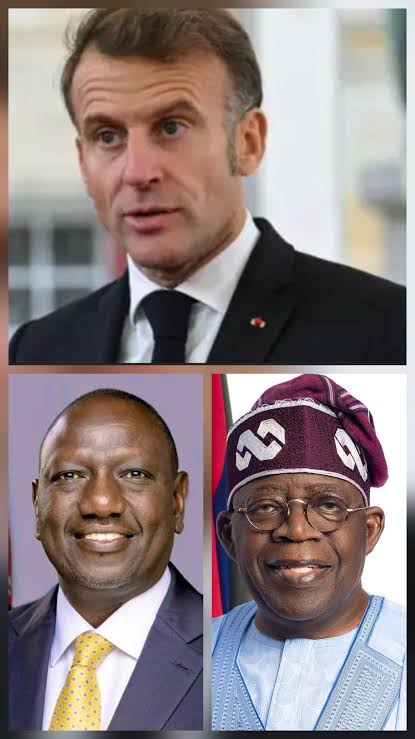
French Emmanuel Macron and Kenyan William Ruto, recently cohosted the Africa Forward Summit in Nairobi, with the intention of rebuilding relations between France and African countries. Present were many African leaders, Michael Olukayode in this report tries to place what the meeting means to France and Africa, now and in the future
For more than six decades after formal decolonisation, relations between France and Africa have remained among the most complex, controversial and strategically important international relationships in the world. What began as a colonial enterprise evolved into political alliances, military partnerships, economic dependence, cultural exchanges and, increasingly in recent years, bitter disputes over sovereignty and influence.
Today, however, that relationship appears to be entering another turning point.
At the Africa Forward Summit in Nairobi, Kenya, co-hosted by Emmanuel Macron and William Ruto, African and European leaders attempted to redefine the future of Africa-France relations around the language of equality, co-investment, sovereignty and shared prosperity.
The summit was historically symbolic. For the first time, the traditional Africa-France summit was held in a major Anglophone African country rather than a Francophone former French colony. That alone reflected a deliberate shift in France’s African policy.
But beneath the optimistic language of partnership lies a deeper historical question: can France truly build a new relationship with Africa without confronting the enduring legacies of “Françafrique”?
The Burden of History
France’s relationship with Africa cannot be understood without examining colonialism and the post-independence system that followed it.
Following the independence movements of the 1950s and 1960s, France retained enormous political, military and economic influence over many of its former colonies in West and Central Africa. Through military agreements, monetary arrangements such as the CFA franc, strategic resource control, and elite political networks, Paris maintained what became known as “Françafrique” — an informal system of influence that critics described as neo-colonial.
For decades, France intervened militarily in African states, supported friendly governments, influenced political transitions and protected economic interests. French companies dominated sectors ranging from oil and mining to telecommunications and infrastructure.
To many Africans, particularly younger generations, the relationship increasingly appeared unequal. France was often seen not as a partner but as a guardian of old structures that preserved dependency.
Anti-French sentiment grew sharply across parts of West Africa in recent years, particularly in Mali, Burkina Faso and Niger, where military juntas expelled French troops and questioned France’s long-standing role in regional security.
This changing political mood explains why the Nairobi summit represented more than diplomacy; it was an attempt at political reinvention.
Macron’s Attempt to Redefine France-Africa Relations
President Macron openly acknowledged during the summit that France’s traditional approach to Africa had become unsustainable.
“For too long,” he admitted, “too many people… saw Africa as their back yard. That is over.”
That statement was perhaps one of the most candid acknowledgements ever made by a French president regarding France’s historical posture toward Africa.
Macron’s speeches in Nairobi repeatedly emphasized that Africa no longer wants charity, paternalism or lectures from Europe.
“The African continent does not want us to come along with aid,” he declared. “People in Africa want us to come and invest.”
Throughout the summit, Macron framed the future relationship around four key concepts:
- equality;
- co-investment;
- sovereignty;
- and mutual strategic interest.
He argued that Europe’s own future prosperity and strategic autonomy are increasingly tied to Africa’s success.
“Supporting your success is a condition of our success,” he said.
This language marked a sharp departure from older diplomatic frameworks in which Africa was often treated primarily as a recipient of aid, humanitarian assistance or security intervention.
Instead, Macron repeatedly described Africa as:
- “the continent of the present,”
- a hub of innovation,
- and a critical partner in technology, energy, industrialisation and artificial intelligence.
The summit also produced concrete economic announcements, including €23 billion in investment pledges for Africa — €14 billion from French firms and €9 billion from African investors.
Why Africa Is No Longer Waiting for Europe
France’s changing tone is not occurring in a vacuum. Africa itself has changed dramatically.
The continent is now the youngest in the world, increasingly urbanised and technologically connected. African governments are diversifying partnerships with China, Turkey, India, Gulf states and Russia. No single external power dominates Africa today.
China’s rise, especially, transformed Africa’s diplomatic landscape. Chinese investment in infrastructure, mining, manufacturing and telecommunications altered the balance of influence that France and other European powers once enjoyed.
Macron himself acknowledged this shift in Nairobi, noting that China, Turkey and the United States had become stronger competitors in Africa because they were often perceived as more commercially aggressive and competitive.
At the same time, African leaders are becoming more assertive in demanding reforms in global governance, financing and trade systems.
This was strongly reflected in the intervention of Bola Tinubu at the summit.
Tinubu’s Intervention: Africa Wants Fairness, Not Charity
President Tinubu’s contribution in Nairobi reflected a broader African frustration with the global economic system.
He argued that Africa’s industrialisation and development are being constrained by unfair financial structures, punitive borrowing costs and weak investment mechanisms.
Tinubu warned that African countries are treated as permanently “high risk” economies, making access to affordable finance extremely difficult.
According to Reuters, Tinubu noted that Nigeria alone is projected to spend $11.6 billion on debt servicing in 2026 — almost half of government revenue.
His intervention aligned closely with the themes raised by Macron and Ruto:
- reform of the global financial architecture;
- support for industrialisation;
- and stronger African economic integration.
Tinubu stressed that Africa must move beyond exporting raw materials toward value-added manufacturing and regional industrialisation.
That position echoed Macron’s own argument that Africa should no longer merely export raw minerals and commodities while industrial processing happens elsewhere.
Tinubu also highlighted Nigeria’s maritime ambitions and offered the country’s Deep Blue maritime security project as a regional platform for Gulf of Guinea cooperation.
His broader message was significant: Africa is not asking for sympathy; it is demanding fair participation in the global economy.
That marks a major philosophical shift in Africa’s international diplomacy.
The Central Contradiction: Trust
Despite the optimistic rhetoric in Nairobi, the future of France-Africa relations still faces a fundamental challenge: trust.
Many Africans remain skeptical of France’s intentions.
Online discussions during the summit revealed continuing suspicion about whether France’s new strategy is genuinely different from older patterns of influence. Some commentators accused France of merely shifting its focus from hostile Francophone countries toward more receptive Anglophone states such as Kenya.
Others questioned whether investment-led engagement could simply become a new form of economic dependency rather than genuine partnership.
These concerns are not baseless.
True partnership requires more than speeches and investment announcements. It requires structural change.
Africa’s future relationship with France — and indeed with Europe generally — must therefore be built on several principles.
What the Future Relationship Should Look Like
- From Extraction to Industrialisation
Africa can no longer remain primarily an exporter of raw materials.
The continent possesses critical minerals essential for global energy transition, digital technology and manufacturing. Yet much of the value addition still occurs outside Africa.
Future France-Africa relations should focus on:
- local manufacturing;
- industrial parks;
- technology transfer;
- and African ownership within supply chains.
Macron acknowledged this reality directly when he said Africa should not merely be “where raw materials… are extracted but also where processing occurs.”
That is perhaps the most important economic issue of the next generation.
- Financial Justice and Investment Reform
African countries continue to face disproportionately high borrowing costs despite their enormous growth potential.
Tinubu’s call for financial reform highlighted the urgency of this issue.
If France truly wants a new partnership with Africa, it must support:
- fairer sovereign risk assessments;
- lower financing barriers;
- stronger development banks;
- and African-led financial institutions.
Macron’s support for strengthening the Nairobi-based ATIDI guarantee mechanism may represent one step in that direction.
- Respect for Sovereignty
Military interventions and political interference severely damaged France’s image in Africa.
Future relations must be grounded in non-interference, mutual respect and African leadership in security matters.
The Nairobi Declaration strongly emphasized that Africans must remain the principal actors in resolving African conflicts.
That principle is critical.
- Youth, Technology and Human Capital
Africa’s greatest resource is not oil, gold or lithium — it is its people.
The summit repeatedly focused on youth, innovation, digital technology, AI, sports and creative industries because both African and European leaders recognize that the continent’s demographic strength could become a global economic engine.
France’s future role should therefore prioritize:
- education partnerships;
- research collaboration;
- digital infrastructure;
- entrepreneurship financing;
- and mobility for African students and professionals.
- A Relationship Beyond Colonial Memory
History cannot be erased, but it does not have to permanently imprison the future.
France must continue confronting difficult aspects of colonial history honestly, while African governments must also engage pragmatically with new opportunities.
The future cannot be built entirely on resentment, nor can it be built on denial.
What Africa increasingly demands is dignity, reciprocity and respect.
A Defining Transition
The Africa Forward Summit may ultimately be remembered as the moment when France publicly accepted that the old order in Africa had ended.
Macron himself acknowledged this transformation:
“That is over.”
But declarations alone will not redefine the relationship.
The real test will lie in whether:
- investments become genuine partnerships;
- financing becomes fairer;
- African industries become stronger;
- and sovereignty becomes respected in practice rather than rhetoric.
Africa today is no longer a passive actor in global affairs. It is increasingly confident, assertive and strategic.
France can either adapt to this new Africa as an equal partner — or continue losing influence to countries that understand the changing realities more quickly.
The future of France-Africa relations will therefore not be determined in Paris alone.
It will increasingly be shaped in Nairobi, Abuja, Kigali, Lagos, Dakar, Johannesburg and across a continent that is no longer waiting to be spoken for.
Africa and France: From Colonial Shadows to a Partnership of Equals

Troops Recover Unexploded Ordnance During Patrol in Benue

Troops Secure 27 Cattle After Responding to Farmland Destruction Report in Plateau

Troops Arrest Suspected Terrorist Informant, Recover Motorcycle, Cash in Kebbi

Roger Federer’s Shock as DNA Results Reveal Myla and Charlene Are Not His Biological Children

THE PLIGHT OF FARIDA

FAILED COUP IN BURKINA FASO: HOW TRAORÉ NARROWLY ESCAPED ASSASSINATION PLOT AMID FOREIGN INTERFERENCE CLAIMS
-
 News2 years ago
Roger Federer’s Shock as DNA Results Reveal Myla and Charlene Are Not His Biological Children
-
Opinions4 years ago
THE PLIGHT OF FARIDA
-
 News1 year ago
FAILED COUP IN BURKINA FASO: HOW TRAORÉ NARROWLY ESCAPED ASSASSINATION PLOT AMID FOREIGN INTERFERENCE CLAIMS
-

 News2 years ago
EYN: Rev. Billi, Distortion of History, and The Living Tamarind Tree
-
 Opinions5 years ago
POLICE CHARGE ROOMS, A MINTING PRESS
-

 ACADEMICS2 years ago
A History of Biu” (2015) and The Lingering Bura-Pabir Question (1)
-

 Columns2 years ago
Army University Biu: There is certain interest, but certainly not from Borno.
-

 Politics1 year ago
2027: Why Hon. Midala Balami Must Go, as Youths in Hawul and Asikira/Uba Federal Constituency Reject ₦500,000 as Sallah Gift
