
News
The Inevitability of Kashim Shettima: The Loyal One

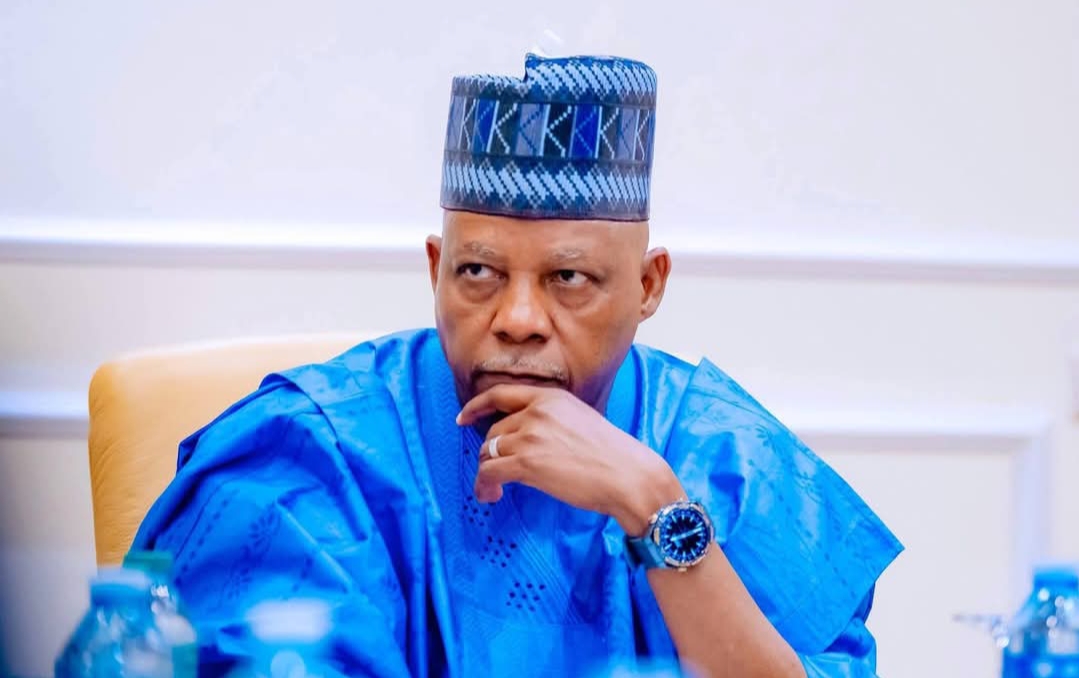
The Inevitability of Kashim Shettima: The Loyal One
By: Ameen Amshi
In politics, loyalty is often praised in speeches but rarely rewarded in practice. Yet some political figures distinguish themselves not through constant maneuvering for personal advantage, but through unwavering commitment to a cause, a team, and the leader they serve. Vice President Kashim Shettima belongs to this category.
Since assuming office, Shettima has demonstrated an uncommon level of loyalty to President Bola Ahmed Tinubu and the administration’s agenda. While political speculation has become a recurring feature of Nigerian politics, he has remained focused on governance rather than succession politics. His public engagements, policy interventions, and representation of the government have consistently reflected a commitment to collective success rather than personal ambition.
History shows that political systems value different qualities at different times. There are moments when charisma dominates, moments when popularity is decisive, and moments when loyalty becomes indispensable. In periods of uncertainty, leaders often rely most heavily on trusted allies who have demonstrated consistency under pressure.
For many supporters of the administration, Shettima’s political relevance is not merely a product of his office but of his reliability. He has served as governor, senator, and now vice president, accumulating experience across different levels of governance. More importantly, he has cultivated a reputation for standing firm with allies through difficult periods and remaining steadfast when circumstances demand resilience.
The argument for Shettima’s inevitability is therefore not based on entitlement or political sentiment. It rests on the reality that loyalty remains one of the most valuable currencies in politics. In a landscape often defined by shifting alliances, competing ambitions, and political uncertainty, the individual who consistently places the collective interest above personal gain naturally becomes difficult to ignore.
Politics is not only about winning elections; it is about sustaining coalitions. Electoral victories are often achieved through alliances, but governing successfully requires keeping those alliances intact. In this regard, Vice President Kashim Shettima has emerged as one of the most important bridge builders within the current administration.
Nigeria’s political landscape is complex, diverse, and often fragile. It requires leaders who understand regional sensitivities, appreciate different political interests, and can maintain dialogue across various constituencies. Shettima’s political journey has equipped him with precisely these skills.
As Governor of Borno State, he governed during one of the most difficult periods in Nigeria’s modern history. As Senator, he built relationships across party and regional lines. As Vice President, he has consistently demonstrated an ability to engage stakeholders from different parts of the country while remaining firmly aligned with the administration’s objectives.
What makes a bridge builder valuable is not the ability to dominate every conversation, but the ability to connect people who may otherwise struggle to find common ground. Shettima’s role within the administration increasingly reflects this function. He serves as a link between regions, between generations of political actors, and between various interest groups that make up the broader governing coalition.
Political stability often depends on such figures. Governments rarely succeed through the efforts of a single individual. They require trusted partners who can communicate the administration’s message, manage relationships, and ensure that political support remains intact during challenging periods.
For supporters of the administration, Shettima’s significance lies not merely in his constitutional office but in his ability to reinforce the coalition that brought the government to power. His value is measured not only by policy contributions but also by his capacity to preserve unity where fragmentation would be politically costly.
In an era where political divisions are frequently amplified, bridge builders become increasingly important. They may not always attract the loudest headlines, but they often play a decisive role in determining whether political projects endure or collapse.
That is why Kashim Shettima’s continued relevance is not simply a matter of office. It is rooted in his ability to connect, unite, and stabilize. His loyalty has earned trust, and his ability to build bridges has transformed that trust into political value. In a system where alliances are constantly tested and coalitions must continuously be maintained, such qualities become increasingly indispensable.
And in politics, while power may change hands, interests may evolve, and alliances may shift, the leaders who remain loyal, unite diverse interests, and hold coalitions together often leave the most enduring legacy.
For all the speculation, calculations, and political noise that accompany every electoral cycle, some qualities remain timeless. Loyalty is one of them.
And in politics, while power may change hands and alliances may shift, loyalty often outlasts noise.
The Inevitability of Kashim Shettima: The Loyal One


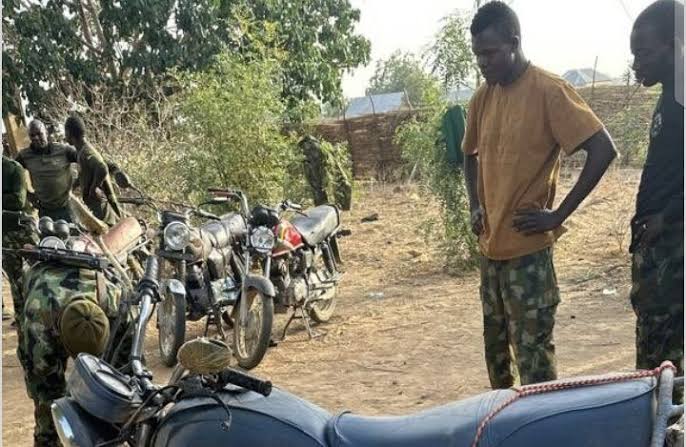
Farmer Injured in Machete Attack by Herder in Plateau
By Zagazola Makama
A farmer, Mr Charles Tuwan, has sustained machete injuries following an alleged attack by a herder during a dispute over grazing on farmland in Pankshin Local Government Area of Plateau State.
The incident occurred at about 6:53 p.m. on August 23, 2026, at Tekas Community, where troops of Sector 8, Operation ENDURING PEACE, operating under Operation HARD KNOCK, responded to a report of an assault.
Security sources said the dispute reportedly started after the farmer refused to allow the herder to graze cattle on his farmland.
On arrival at the scene, the troops found Tuwan with machete cuts sustained during the attack.
The alleged attacker, identified as Abdullahi Saleh, had reportedly fled the area with his cattle before the arrival of the troops.
The injured farmer was evacuated to Pankshin General Hospital for medical attention.
Troops are currently intensifying efforts to locate and arrest the suspect for investigation and possible prosecution.
The incident comes amid heightened tensions between farming and herding communities in parts of Plateau State, underscoring the need for early intervention in disputes over farmland and grazing to prevent isolated incidents from escalating into wider communal violence.
Farmer Injured in Machete Attack by Herder in Plateau
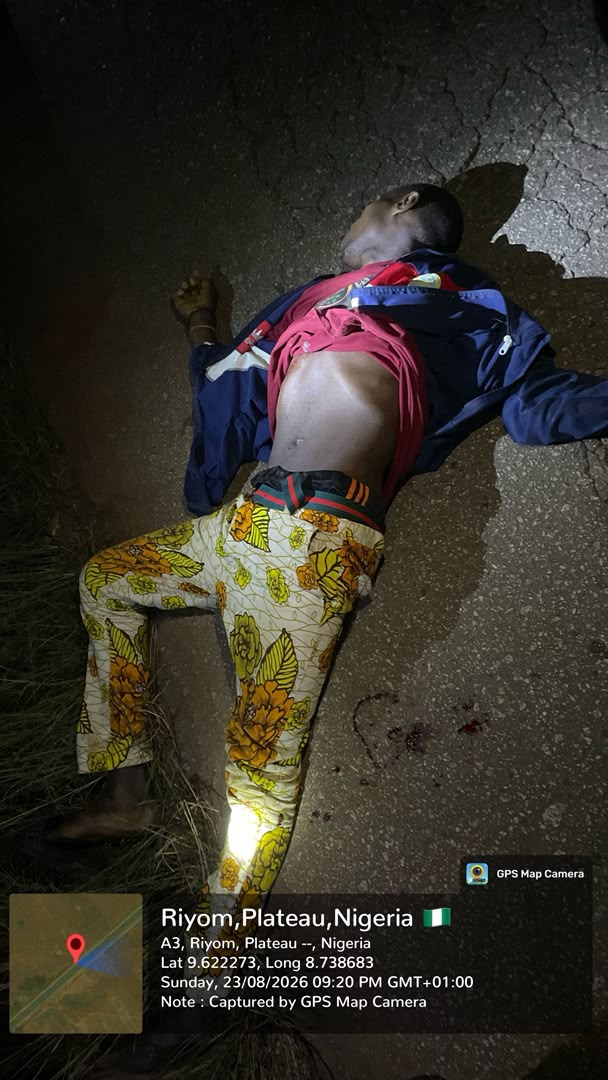
Unidentified Corpse with Gunshot Wound Found Along Road in Plateau
By Zagazola Makama
Troops of Operation ENDURING PEACE have recovered the corpse of an unidentified person bearing a gunshot wound along a roadside in Riyom Local Government Area of Plateau State.
The corpse was discovered at about 9:30 p.m. on August 23, 2026, along the Farin Lamba axis, close to the Primary Health Centre in Riyom.
Troops of Sector 6, Operation ENDURING PEACE, responded to the report and found the body with an apparent gunshot wound to the stomach.
However, security personnel observed that there were no visible traces of blood or spent ammunition casings around the scene.
The circumstances led investigators to suspect that the body may have been transported from another location and dumped at the scene.
The corpse was evacuated to the Primary Health Centre mortuary in Riyom, while the youth leader of Tahoss Community was contacted to assist in identifying the deceased.
Troops have continued to dominate the general area as investigation into the circumstances surrounding the death and possible identity of the victim continues.
Unidentified Corpse with Gunshot Wound Found Along Road in Plateau
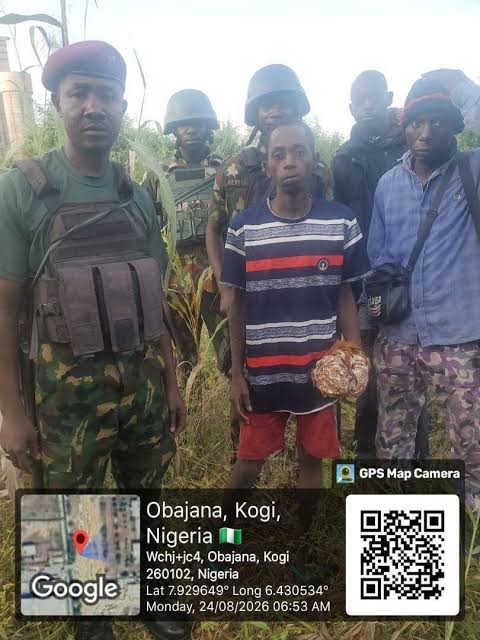
Troops Rescue Kidnap Victim, Recover AK-47 Rifle After Gun Battle in Kogi
By Zagazola Makama
Troops operating under the Joint Security operation in the 2 Division Area of Responsibility have rescued a 28-year-old kidnap victim and recovered an AK-47 rifle following a gun battle with suspected kidnappers in Kogi State.
The operation, according to security sources, took place at about 0300 hours on August 24, 2026, when troops from Patrol Base Obajana intercepted the victim, identified as Hussaini Shehu.
Preliminary questioning revealed that Shehu had allegedly been abducted from the Abaji general area of the Federal Capital Territory about five days earlier.
The rescued victim subsequently led the troops to the location where he had been held captive.
Security sources said the troops made contact with the suspected kidnappers and engaged them in a firefight, forcing the criminals to abandon an AK-47 rifle and flee into the surrounding area.
The weapon was recovered by the troops, while the victim was evacuated to the military medical centre for medical attention.
Security forces have continued operations in the area to track the fleeing kidnappers and prevent them from regrouping.
The latest operation underscores the importance of intelligence-led patrols and rapid exploitation of information obtained from rescued victims in disrupting kidnapping networks operating across the FCT-Kogi corridor.
Troops Rescue Kidnap Victim, Recover AK-47 Rifle After Gun Battle in Kogi

Farmer Injured in Machete Attack by Herder in Plateau

Unidentified Corpse with Gunshot Wound Found Along Road in Plateau

Troops Rescue Kidnap Victim, Recover AK-47 Rifle After Gun Battle in Kogi

Roger Federer’s Shock as DNA Results Reveal Myla and Charlene Are Not His Biological Children

THE PLIGHT OF FARIDA

FAILED COUP IN BURKINA FASO: HOW TRAORÉ NARROWLY ESCAPED ASSASSINATION PLOT AMID FOREIGN INTERFERENCE CLAIMS
-
 News2 years ago
Roger Federer’s Shock as DNA Results Reveal Myla and Charlene Are Not His Biological Children
-
Opinions5 years ago
THE PLIGHT OF FARIDA
-
 News1 year ago
FAILED COUP IN BURKINA FASO: HOW TRAORÉ NARROWLY ESCAPED ASSASSINATION PLOT AMID FOREIGN INTERFERENCE CLAIMS
-

 News2 years ago
EYN: Rev. Billi, Distortion of History, and The Living Tamarind Tree
-
 Opinions5 years ago
POLICE CHARGE ROOMS, A MINTING PRESS
-

 ACADEMICS2 years ago
A History of Biu” (2015) and The Lingering Bura-Pabir Question (1)
-

 Columns2 years ago
Army University Biu: There is certain interest, but certainly not from Borno.
-

 Politics1 year ago
2027: Why Hon. Midala Balami Must Go, as Youths in Hawul and Asikira/Uba Federal Constituency Reject ₦500,000 as Sallah Gift
