
News
DSS Has Become Nigeria’s Most Proactive Agency, Says Tonnie Iredia

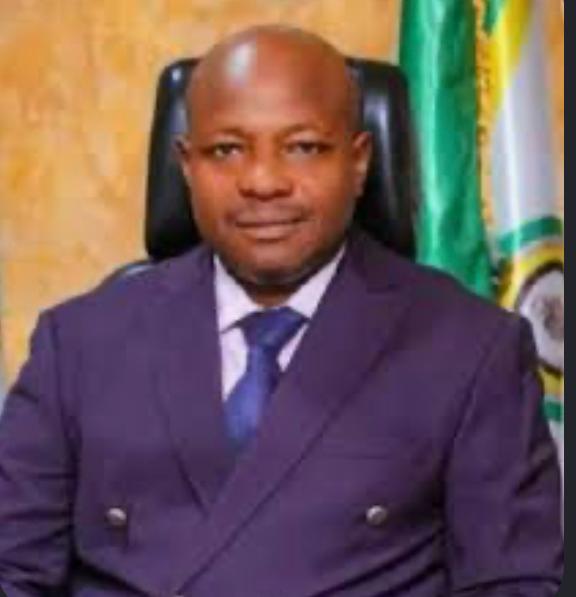
DSS Has Become Nigeria’s Most Proactive Agency, Says Tonnie Iredia
By: Michael Mike
Veteran broadcaster and public affairs analyst, Tonnie Iredia, has described the Department of State Services (DSS) as Nigeria’s most proactive public institution, attributing the transformation of the intelligence agency to the leadership of its Director-General, Adeola Oluwatosin Ajayi.
In an article titled “DSS Has Become Nigeria’s Most Proactive Agency,” Iredia argued that the agency, once largely known for operating in secrecy and attracting public suspicion, has evolved into what he described as a pragmatic and people-oriented institution that is earning commendations from diverse segments of society.
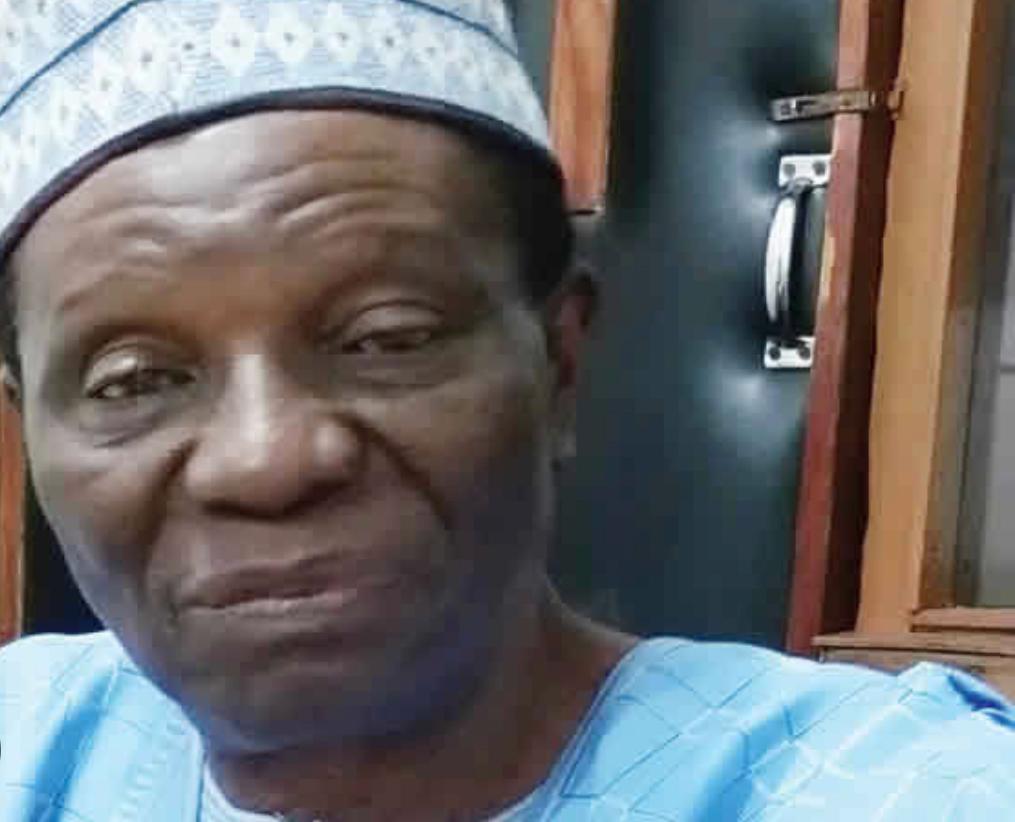
According to him, the DSS, formerly known as the State Security Service (SSS), was for many years viewed as a secretive organization whose personnel operated without public visibility.
Iredia recalled that one of the incidents that brought the agency into public focus was the investigation into the killing of Comrade Olaitan Oyerinde, Principal Private Secretary to former Edo State Governor, Adams Oshiomhole.
He noted that the DSS and the police produced different investigation reports on the murder, with Oshiomhole publicly rejecting the police findings and questioning the arrests made in the case after it emerged that some of those accused were reportedly already in detention when the crime occurred.
According to Iredia, the incident helped shape public perception that the DSS possessed stronger investigative credibility.
The columnist, however, said the agency’s most remarkable transformation has occurred under the leadership of Ajayi, whom he described as receiving more public commendations than most heads of Ministries, Departments and Agencies appointed since the commencement of President Bola Tinubu’s administration.
Among the recognitions cited by Iredia was the commendation by the International Press Institute (IPI) following the release of journalist Adejuwon Soyinka.
He noted that the IPI praised Ajayi for fostering a new relationship between the media and the DSS, stating that under his leadership, disputes involving journalists are increasingly resolved through engagement rather than coercive measures.
Iredia also referenced the decision of the Broadcasting Organisations of Nigeria (BON) to honour the DSS boss, as well as commendations from the National Association of Nigerian Students (NANS) for the agency’s role in ensuring a peaceful and credible 2026 national convention of the student body.
According to the article, NANS President Akinteye Afeez commended the DSS for what he described as professionalism, patriotism and operational excellence, noting that the agency deployed a unique security architecture and strategic coordination that differed from previous experiences at student gatherings.
The commentator further highlighted the case of Ya’u Mohammed of Gashua, Yobe State, who was released from DSS custody after investigations reportedly established his innocence.
According to Iredia, Ajayi not only ordered Mohammed’s release but also approved N2 million to support his reintegration into society. He quoted Yobe State Governor’s Special Adviser on Security Matters, retired Brigadier-General Dahiru Abdulsalam, as describing the gesture as evidence of the agency’s commitment to justice, compassion and rehabilitation.
The article also cited commendation from the Northern Christian Association following the arrest of five suspects linked to the November 2025 abduction of students and staff of St. Mary’s Catholic School in Papiri, Niger State.
Iredia quoted the association’s chairman, Reverend Joseph John Hayab, as urging Nigerians to acknowledge positive government actions whenever they occur, particularly in the area of security.
According to him, many citizens have welcomed the DSS’s growing use of intelligence gathering and ballistic analysis to expose criminal networks responsible for insurgency, banditry, kidnapping and other violent crimes across the country.
He specifically praised the agency’s role in investigations and prosecutions linked to attacks on worshippers at Deeper Life Church in Okene, Kogi State, St. Francis Catholic Church in Owo, Ondo State, and the killings in Yelwata community of Benue State.
Iredia also noted that President Bola Tinubu had formally congratulated Ajayi on the growing recognition being accorded to the agency, particularly by media organisations.
He said the President viewed the commendation from the International Press Institute as evidence that the DSS was changing the narrative of hostility between security agencies and journalists while creating an atmosphere of dialogue and constructive engagement with citizens.
The Kogi State Government was also cited as having praised Ajayi’s leadership qualities, recalling his service in the state before his elevation to head the nation’s domestic intelligence agency.
According to Iredia, the state government described Ajayi’s current achievements as a reflection of the discipline, fairness, professionalism and respect for institutional processes he demonstrated while serving in Kogi.
While applauding what he called the transformation of the DSS from a feared agency into a stabilising national institution, Iredia urged other security and law enforcement agencies to emulate its approach.
He argued that intelligence provided by the DSS should not be ignored, recalling that intelligence warnings reportedly issued before the 2022 Kuje prison attack were not adequately acted upon, leading to the escape of hundreds of inmates.
The columnist also cautioned DSS personnel against actions that could undermine the reputation being built by the current leadership.
He pointed to one of Ajayi’s earliest reforms, which reportedly involved the dismissal of 115 personnel over various infractions, including corruption, diversion of operational funds, falsification of credentials and unauthorised disclosure of security information.
According to Iredia, officers of the service have a responsibility to sustain the institution’s growing reputation as Nigeria’s premier intelligence agency.
He concluded that if Ajayi succeeds in implementing plans to recruit more first-class graduates into the service, the operational excellence and effectiveness of the DSS could reach even greater heights.
DSS Has Become Nigeria’s Most Proactive Agency, Says Tonnie Iredia


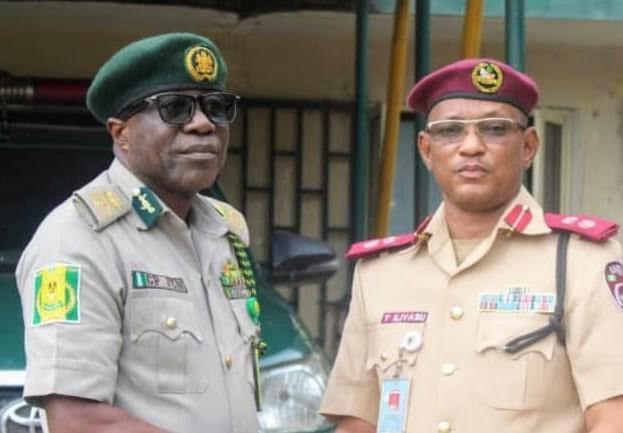
FRSC Credits Correctional Service for Decline in Road Crashes, Traffic Offences in FCT
By: Michael Mike
The Federal Road Safety Corps (FRSC) has attributed the decline in road crashes and traffic violations in the Federal Capital Territory (FCT) to its growing collaboration with the Nigerian Correctional Service (NCoS), particularly through the non-custodial sentencing system.
FCT Sector Commander of the FRSC, Corps Commander Tijjani Iliyasu, made the assertion on Thursday during a courtesy visit to the Controller of Corrections, FCT Command, Christopher Peter Jen, at the Command Headquarters in Abuja.
Iliyasu said the establishment of a Non-Custodial Desk Office at the FRSC FCT Sector Command and the deployment of Correctional Officers to the Corps’ mobile courts had significantly improved compliance with traffic regulations.

According to him, the prompt prosecution of traffic offenders through the mobile courts has served as a deterrent, leading to a marked reduction in traffic offences and road crashes across the FCT.
“With the establishment of the non-custodial desk office here at the FCT Sector Command and the presence of Correctional Officers in our mobile courts that punish traffic offenders almost immediately, we have witnessed a remarkable reduction in traffic offences and road crashes in the FCT,” he said.
The Sector Commander, however, noted that recklessness, indiscipline and disregard for traffic laws remain major contributors to road accidents. He urged motorists and road users to take safety seriously and avoid allowing ignorance or poor driving habits to endanger lives.

Responding, Controller of Corrections Christopher Peter Jen thanked the FRSC leadership for the visit and reaffirmed the commitment of the Nigerian Correctional Service to strengthening collaboration with the road safety agency.
Jen outlined the Service’s mandate of reformation, rehabilitation and reintegration of offenders, adding that the NCoS would continue to support the FRSC’s efforts to improve road safety and reduce crashes in the nation’s capital.
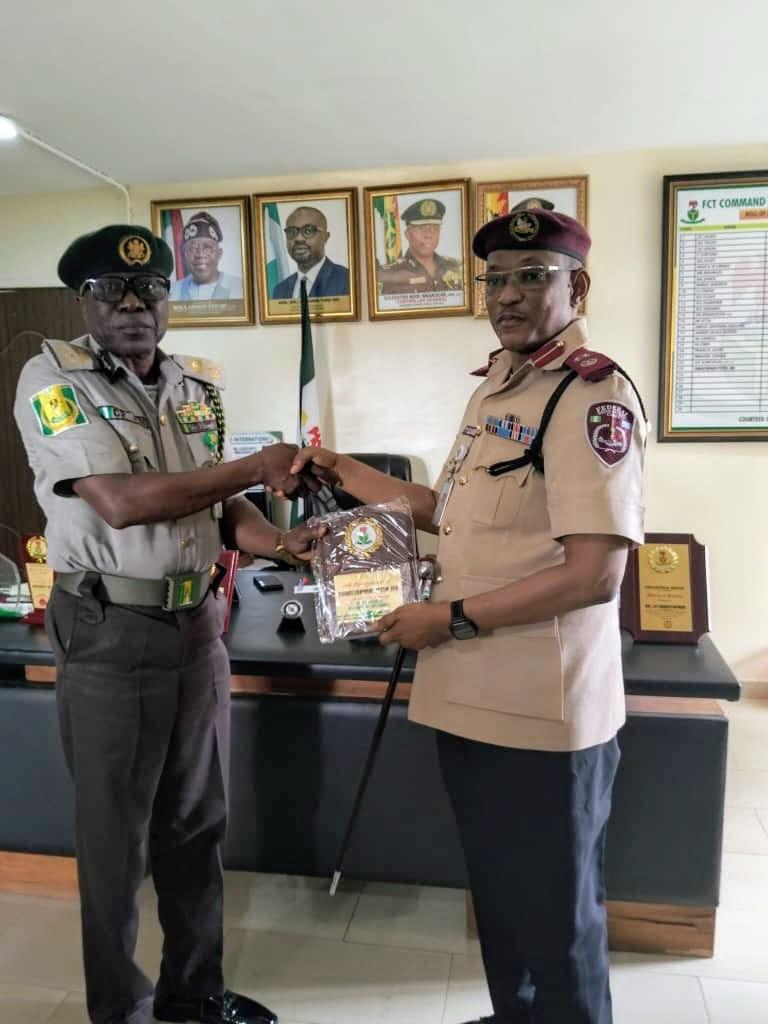
The meeting also explored additional areas of cooperation between the two agencies aimed at enhancing public safety and promoting greater compliance with traffic laws.
FRSC Credits Correctional Service for Decline in Road Crashes, Traffic Offences in FCT

Fubara Pushes for Sweeping Public Service Reforms, Digital Transformation
By: Michael Mike
Rivers State Governor, Sir Siminalayi Fubara, has called for sustained investment in public service reforms, capacity development and digital transformation, warning that Nigeria must reposition its public institutions to meet the demands of a rapidly changing world.
Speaking on Thursday at the opening of the 48th Meeting of the National Council on Establishments (NCE) in Port Harcourt, Fubara said the country’s public service must become more agile, technology-driven, accountable and performance-oriented to effectively deliver on government policies and national development goals.
The meeting brought together the Head of the Civil Service of the Federation, Mrs Didi Esther Walson-Jack, alongside Heads of Service from the 36 states and the Federal Capital Territory.
The governor stressed that advances in technology, changing workforce dynamics and rising public expectations require governments to rethink the structure and operations of the civil service.
According to him, public institutions should not merely respond to change but anticipate and lead it through policies that reward competence, innovation, integrity and outstanding performance.
Describing the public service as the “engine room of government,” Fubara said it remains the institution through which government policies are translated into programmes and essential services delivered to citizens.
He noted that no administration can achieve sustainable development without a competent, motivated and efficient workforce.
“The strength of any government is ultimately reflected in the quality of its public service,” he said, adding that a disciplined, innovative and performance-driven civil service is fundamental to economic growth, institutional stability and public confidence.
Fubara challenged members of the National Council on Establishments to ensure that their deliberations produce practical and implementable recommendations capable of strengthening institutional capacity, promoting transparency, deepening professionalism and improving productivity across the Nigerian public service.
Highlighting reforms undertaken by his administration, the governor said Rivers State has continued to prioritise the welfare and professional development of civil servants through improved remuneration and better working conditions.
He disclosed that the state pays a minimum wage above the nationally approved benchmark while maintaining prompt payment of salaries, pensions, gratuities and Christmas bonuses.
The governor also said regular staff promotions have been restored to reward competence and years of service, while work is nearing completion on the comprehensive renovation and modernisation of the State Secretariat Complex to provide civil servants with a technology-driven and conducive work environment.
According to him, these measures reflect his administration’s belief that a motivated and well-equipped workforce is critical to efficient governance and improved service delivery.
Fubara also commended the Head of the Civil Service of the Federation, Mrs Didi Esther Walson-Jack, for what he described as her bold leadership in driving reforms aimed at improving professionalism, innovation, performance management and institutional excellence within the Federal Civil Service.
He expressed optimism that the resolutions of the 48th National Council on Establishments meeting would shape the future of public administration in Nigeria by strengthening institutions, improving career management systems and enhancing governance nationwide.
Fubara Pushes for Sweeping Public Service Reforms, Digital Transformation
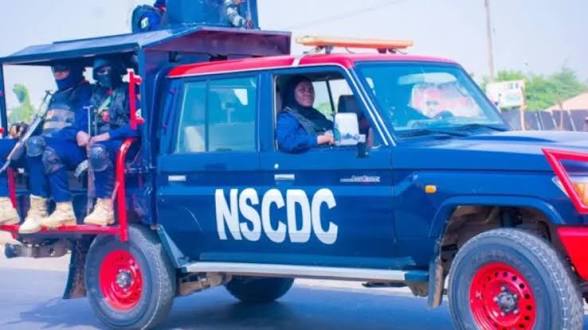
NSCDC Arrests Six Over Abuja Pipeline Vandalism, Fuel Theft
By: Michael Mike
The Nigeria Security and Civil Defence Corps (NSCDC) has arrested six suspected petroleum pipeline vandals allegedly caught siphoning Premium Motor Spirit (PMS) from vandalised Nigerian National Petroleum Company (NNPC) pipelines in the Federal Capital Territory (FCT), Abuja.
The suspects, all males aged between 20 and 32, were paraded on Thursday at the crime scene in Pagada I, Dobi Ward, Gwagwalada Area Council, where the illegal operation was uncovered.
Addressing journalists, the FCT Commandant of the NSCDC, Dr. Olusola Odumosu, said operatives of the Command’s Anti-Vandal Squad acted on credible intelligence and a tip-off about suspicious activities around the pipeline corridor.
According to him, the suspects were apprehended while allegedly scooping petrol from pipelines they had punctured using drilling equipment and loading the product into jerrycans and plastic bags.
Recovered exhibits included two motorcycles, two locally fabricated firearms, four 25-litre jerrycans containing suspected stolen PMS, two empty jerrycans, a shovel and hand drilling machines used to puncture the pipelines.
Odumosu disclosed that preliminary investigations revealed the suspects had carefully studied the terrain and identified points where underground pipelines contained fuel residue. He added that one of the suspects, an indigene of Pagada I, allegedly recruited two accomplices from the Lambata area to participate in the operation.
He further alleged that three members of a local vigilante group were involved in the crime by providing protection and support for the vandals during the illegal operation.
The commandant said investigations were ongoing to track down other members of the criminal network, while the Nigeria Petroleum Storage Company had been notified to repair and secure the damaged pipelines.
Describing pipeline vandalism as economic sabotage, Odumosu warned that the Corps would not tolerate the destruction of critical national infrastructure.
“We condemn in strong terms any form of vandalism in the FCT, whether it involves petroleum pipelines, manhole covers, crash barriers, bridge aluminium, streetlights, armoured cables, transformers or railway sleepers. These are deliberate acts intended to undermine and cripple the nation’s economy,” he said.
He noted that pipeline vandalism not only contributes to fuel scarcity and environmental degradation but also exposes nearby communities to the risk of devastating fire outbreaks and threatens agricultural activities in affected areas.
The NSCDC boss vowed that anyone found vandalising public assets for personal gain would face the full weight of the law.
Odumosu also appealed to residents and traditional institutions to support security agencies with timely and credible information, assuring that informants’ identities would be protected.
“When you see something, say something, and we will do something,” he said.
Speaking at the event, the Councillor representing Dobi Ward, Gado Shuaibu, commended the NSCDC for its swift response and urged residents to desist from acts of vandalism, warning that he would not intervene on behalf of anyone arrested for such offences.
Similarly, the Village Chief of Pagada I, Abubakar Ibrahim, pledged the community’s continued cooperation with security agencies to protect critical infrastructure and prevent future incidents.
The latest arrests come amid renewed efforts by security agencies to curb pipeline vandalism and the theft of petroleum products, crimes that have continued to undermine Nigeria’s oil sector, threaten public safety and inflict significant economic losses on the country.
NSCDC Arrests Six Over Abuja Pipeline Vandalism, Fuel Theft

ECOWAS boosts Guinea-Bissau healthcare with new maternity, paediatric complex

FRSC Credits Correctional Service for Decline in Road Crashes, Traffic Offences in FCT

Fubara Pushes for Sweeping Public Service Reforms, Digital Transformation

Roger Federer’s Shock as DNA Results Reveal Myla and Charlene Are Not His Biological Children

THE PLIGHT OF FARIDA

FAILED COUP IN BURKINA FASO: HOW TRAORÉ NARROWLY ESCAPED ASSASSINATION PLOT AMID FOREIGN INTERFERENCE CLAIMS
-
 News2 years ago
Roger Federer’s Shock as DNA Results Reveal Myla and Charlene Are Not His Biological Children
-
Opinions4 years ago
THE PLIGHT OF FARIDA
-
 News1 year ago
FAILED COUP IN BURKINA FASO: HOW TRAORÉ NARROWLY ESCAPED ASSASSINATION PLOT AMID FOREIGN INTERFERENCE CLAIMS
-

 News2 years ago
EYN: Rev. Billi, Distortion of History, and The Living Tamarind Tree
-
 Opinions5 years ago
POLICE CHARGE ROOMS, A MINTING PRESS
-

 ACADEMICS2 years ago
A History of Biu” (2015) and The Lingering Bura-Pabir Question (1)
-

 Columns2 years ago
Army University Biu: There is certain interest, but certainly not from Borno.
-

 Politics1 year ago
2027: Why Hon. Midala Balami Must Go, as Youths in Hawul and Asikira/Uba Federal Constituency Reject ₦500,000 as Sallah Gift
